


Renewed Vitality and Fresh Purpose
The iconic Osram House in Essen has undergone comprehensive renovation and expansion
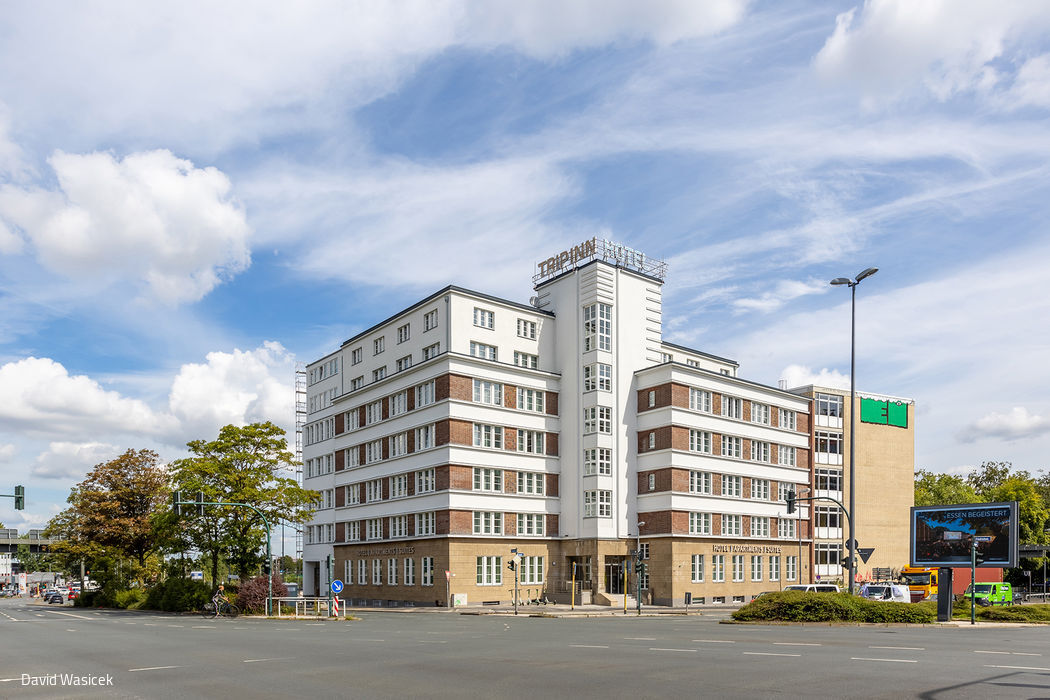
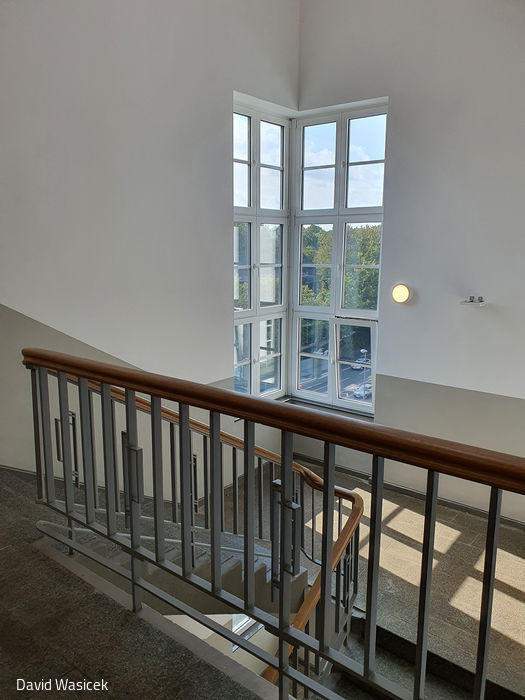
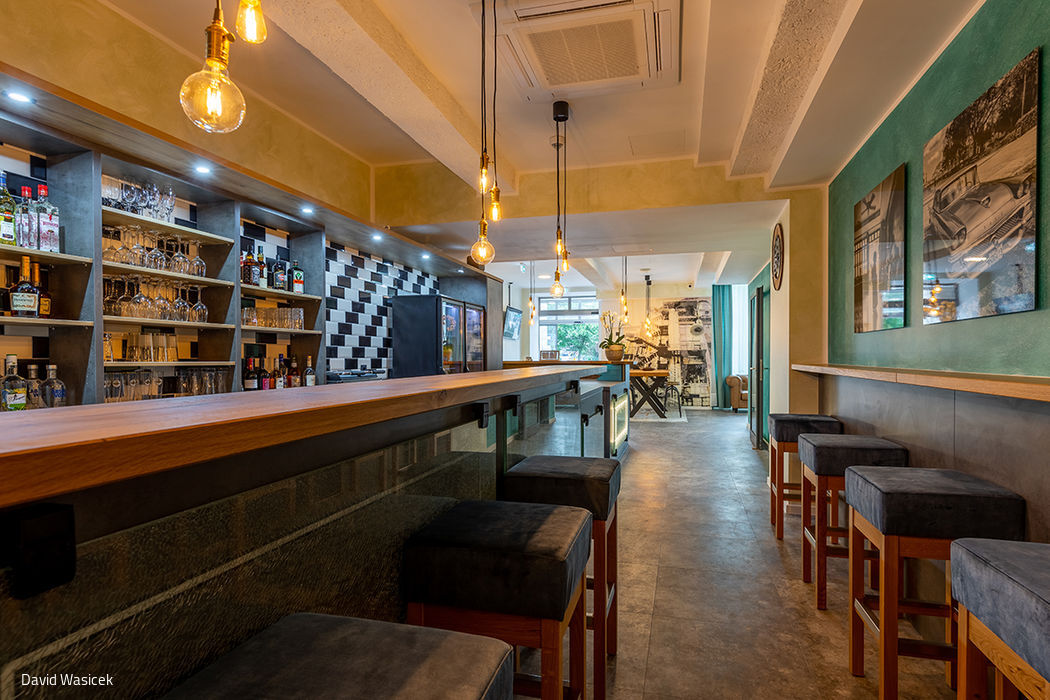
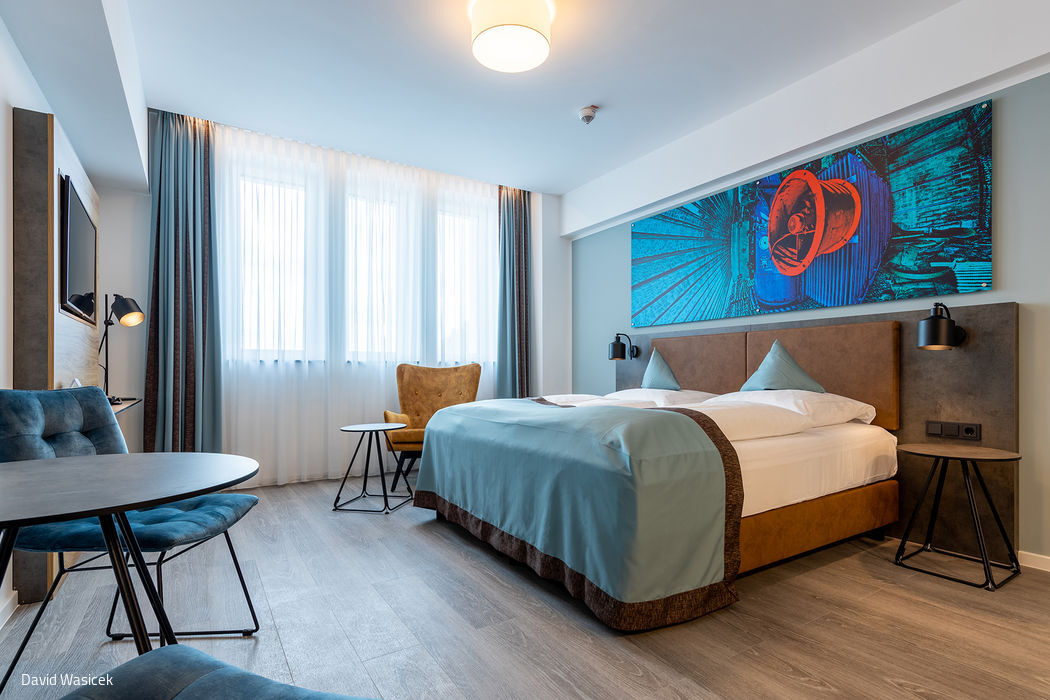
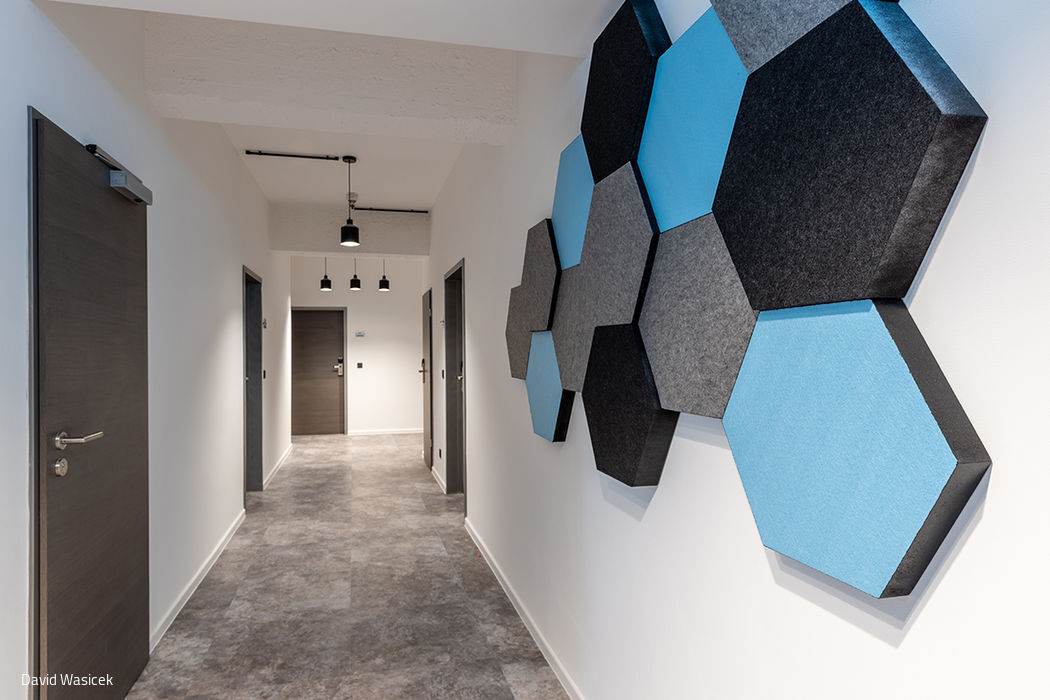
Built in 1928/1929 by architect Ernst Knoblauch for furniture wholesaler Rosendahl & Bachrach, the Kruppstraße building in Essen exemplifies New Objectivity design. It has witnessed a remarkable transformation. Beginning in 1930, Berlin's Osram lighting manufacturer occupied several floors and installed a striking illuminated Osram sign on the stair tower, its distinctive cornices and pilasters serving as a commanding backdrop. After decades of varied use, this protected landmark fell into decline, standing vacant for years. A Frankfurt-based investor's acquisition in 2016 marked the turning point. Karmalker Ritterbach Architekten from Düsseldorf was commissioned to design a Hotel Trip Inn conversion.
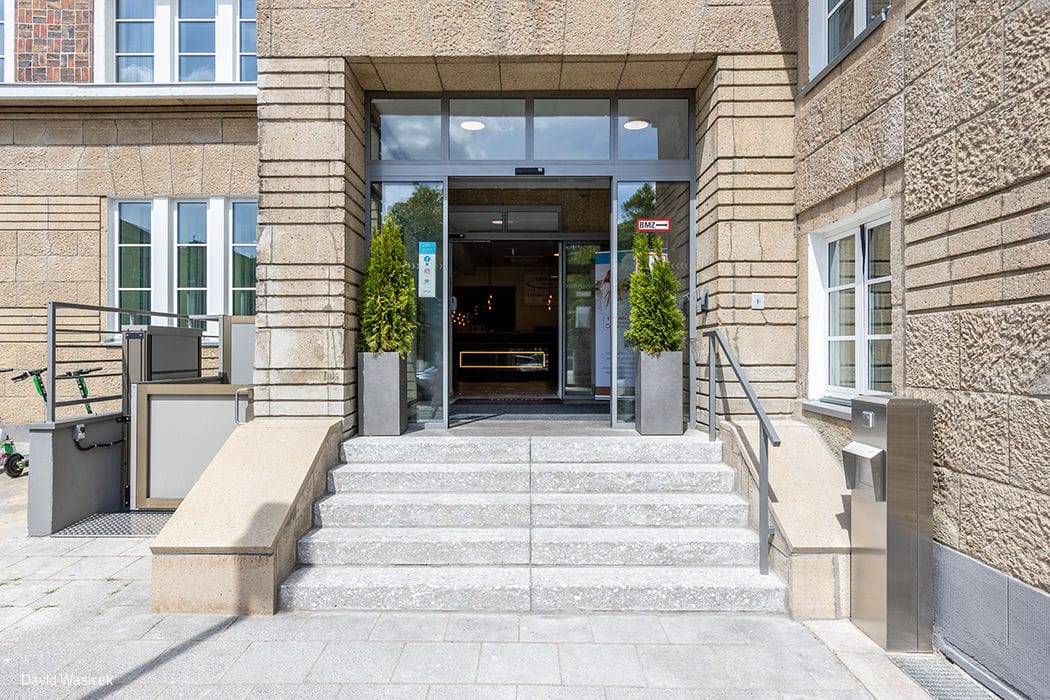
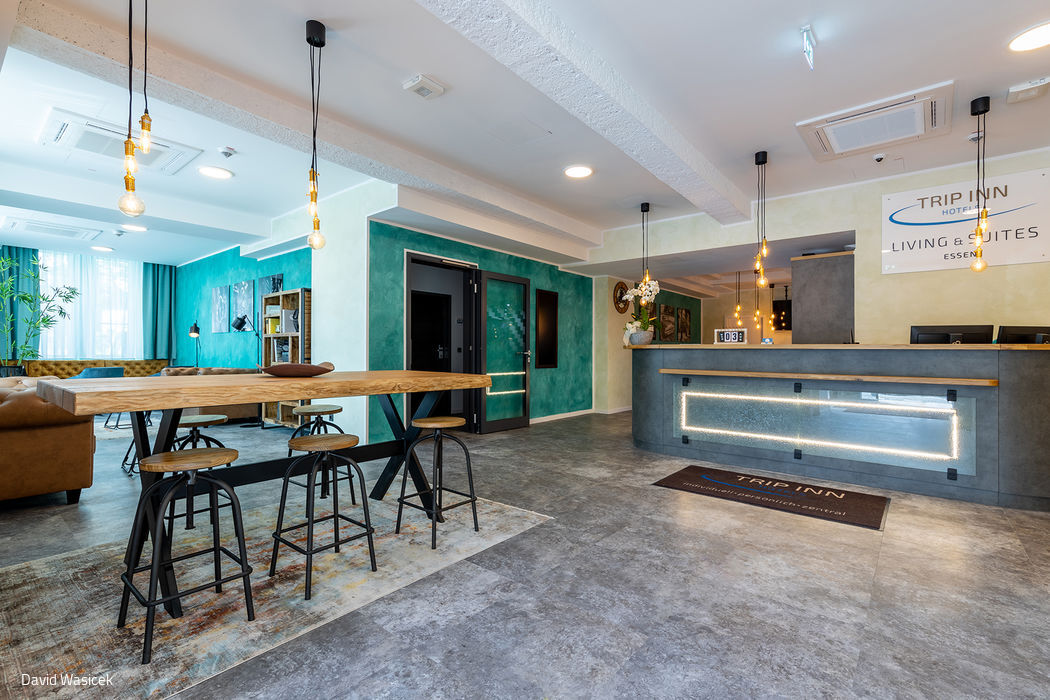
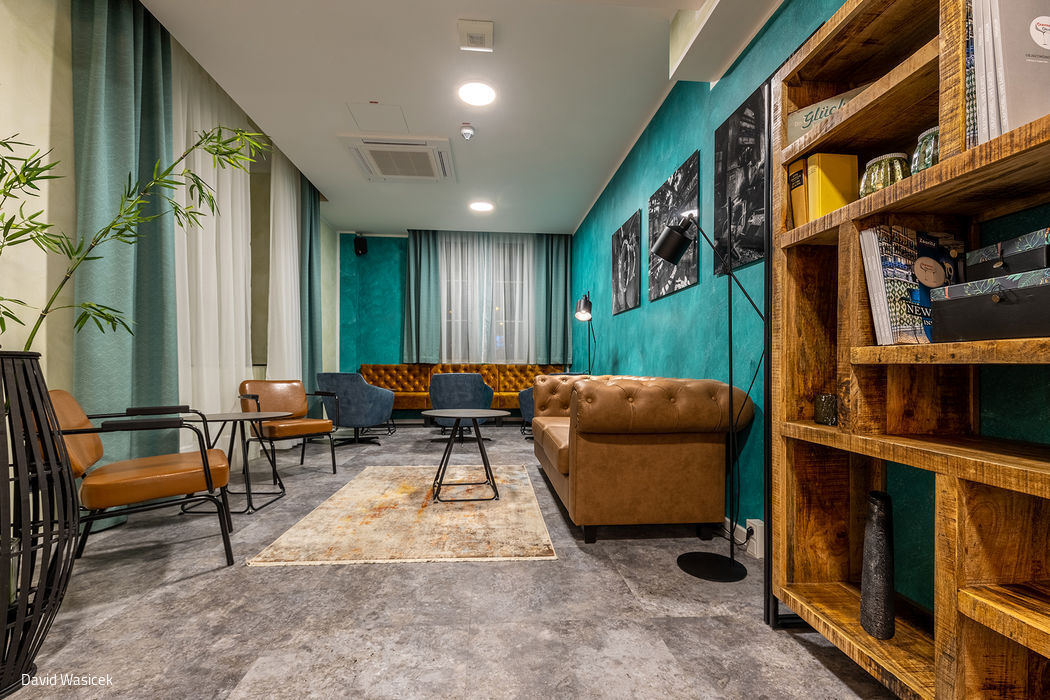
Modernization commenced in 2018, completing in summer 2020. The result: 109 hotel rooms and apartments, with Trip Inn's name now gracing the façade. The architects encountered substantial unforeseen restoration demands: complete removal of approximately 5,000 m² of existing plaster to assess exposed concrete for damage; sandblasting roughly 6,000 m² of concrete slabs and beams; extensive concrete crack remediation; and restoration of 1,700 m of concrete beams. Façade work proceeded in close coordination with the heritage authority, which approved acoustically engineered aluminum windows. Standard off-the-shelf units proved inadequate, necessitating custom sizing and concrete mullions cast into openings to accommodate the windows' three-part articulation. The ground floor features Etringer tuff cladding, while upper floors display horizontal banding created by slender cornices. White-plastered parapet bands contrast beautifully with the exposed brick infill panels between windows. The original gable roof along Friedrichstraße was demolished, replaced by three additional full stories. Internally, the redesign was comprehensive. The basement was excavated and lowered to accommodate dining, sauna, and staff facilities. The ground floor hosts reception, office, and meeting spaces. Stairwells were meticulously reconstructed to original specifications, with the historic banister preserved and flooring authentically replicated. Trip Inn assumes responsibility for interior furnishings.
Photography Credits:
David Wasicek
(Featured in CUBE Ruhrgebiet 04|20)

Stacked Elegance
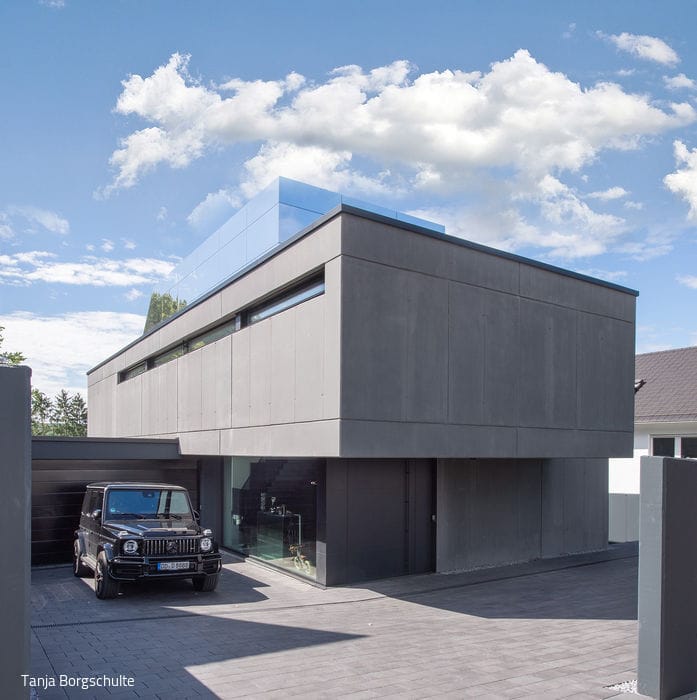
A compact home that guards privacy while embracing openness.
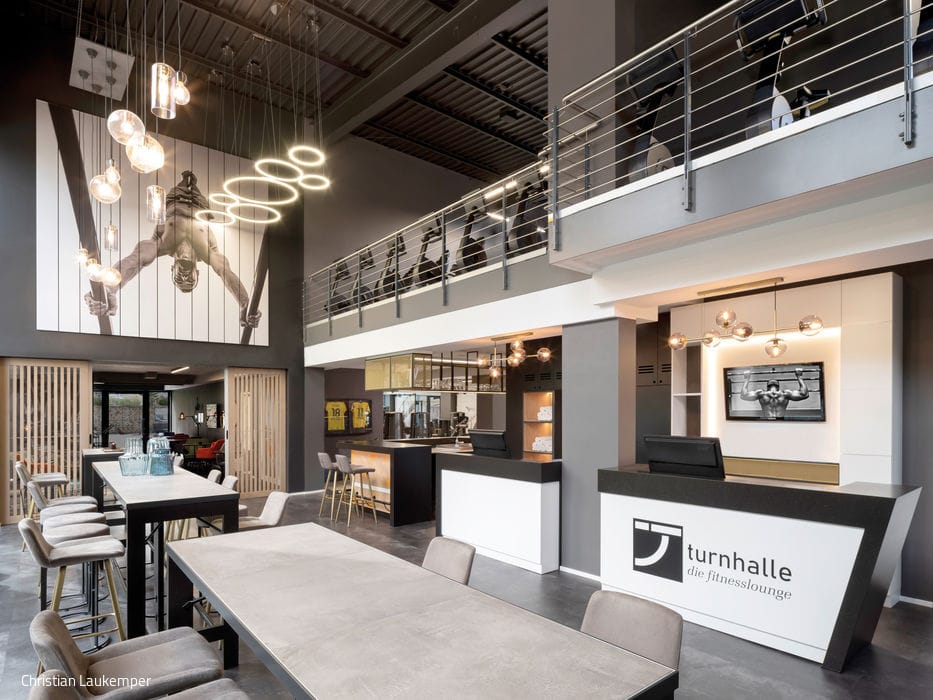
Designed for Leisure
Dortmund Fitness Lounge Reimagined as a Wellness and Performance Destination
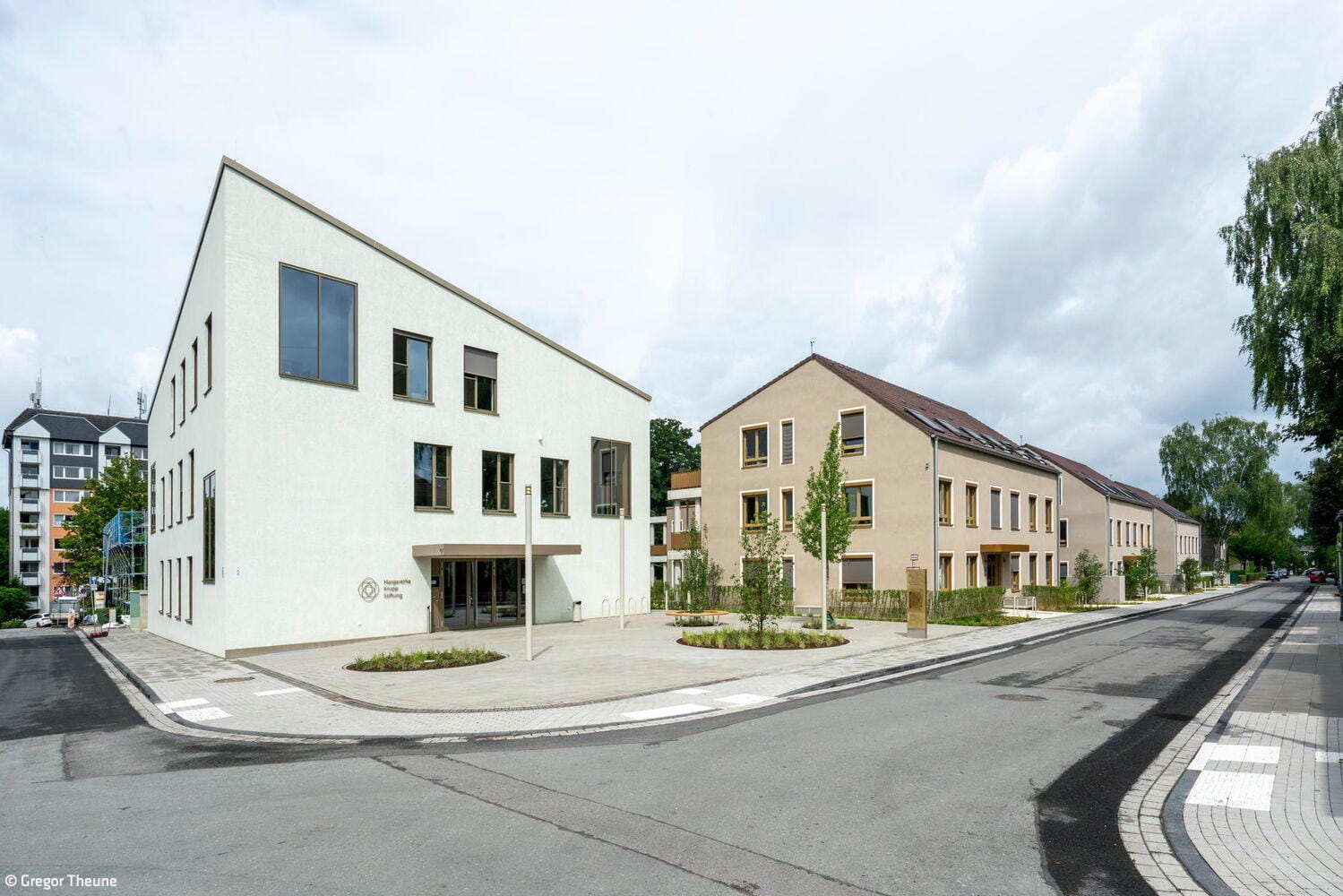
Vernacular Settlement Ensemble
New residential space and administrative building for the foundation on Margarethenhöhe in Essen
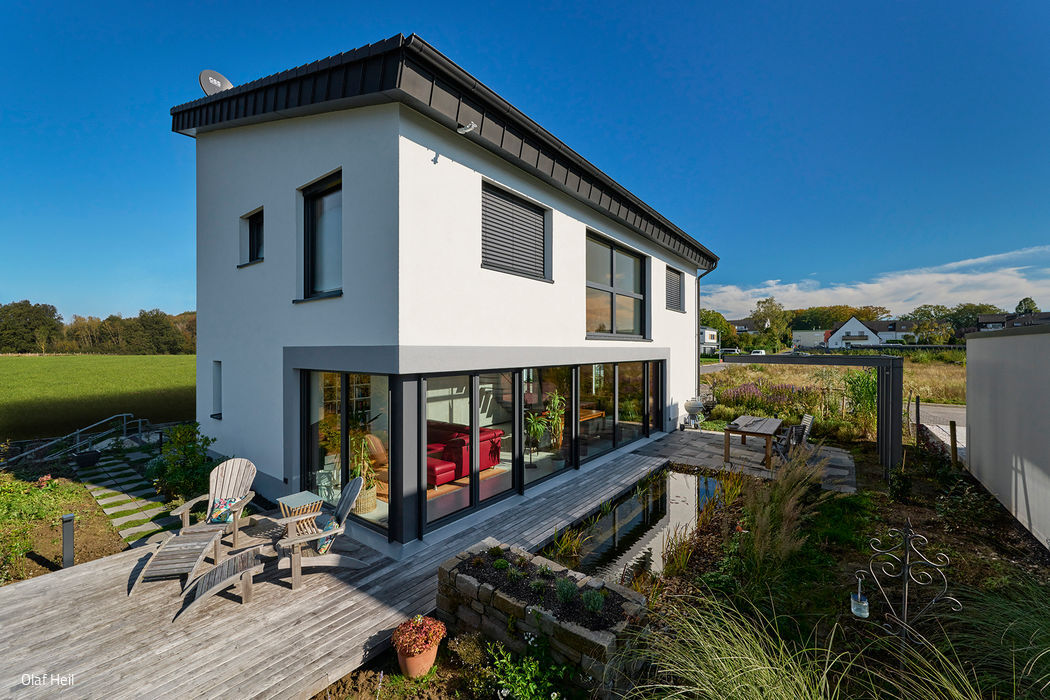
Inspiringly Sustainable
Passive House Living: Comfort and Character Combined