


Two Wings, One Journey
Architect Joachim Sieber discusses the transformation of Düsseldorf's Kunstpalast
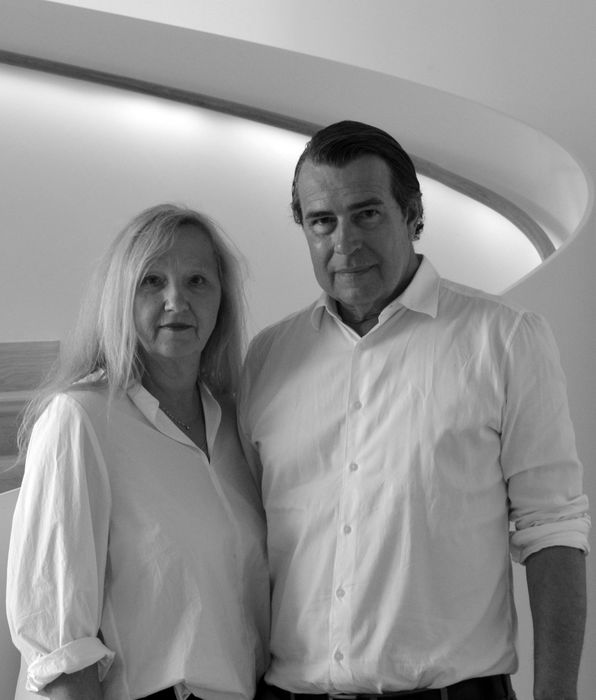
CUBE: When your firm won the commission to renovate the Kunstpalast's collection wing four years ago, what was your first reaction?
Joachim Sieber: For any architect, it's a remarkable privilege to reshape such a significant building in your own city – and to breathe new life into something that's been shuttered and in poor condition for far too long. So yes, it was absolutely fantastic – an incredible feeling.
Yet you lead a relatively small – albeit exceptional – practice. This project was essentially a mammoth undertaking – with its elongated wings, it bears more than a passing resemblance to the Louvre of the state capital. How did you end up in the running?
Primarily through our track record in museum design – this certainly isn't our first. Early in my career at the Ungers office, I led the Galerie der Gegenwart in Hamburg as project manager. We also completed the Hubertus Wald Forum there, and here in Düsseldorf, we realized the Philara Collection. We understand how museums function, and we know that size isn't what matters – expertise is. That confidence proved justified when we secured the commission.
Let's dig into specifics – what were the core challenges at the Kunstpalast?
We set out to unify the visitor experience and collection presentation. The building felt fragmented – partly because nearly half the exhibition space had been off-limits to the public for two decades. Our vision was to make the museum function as a cohesive whole. Historically, it operated almost like two separate institutions: an exhibition wing and a collection wing, each with its own rhythm, and the public barely recognized them as connected. We also had to rethink what a contemporary museum needs to thrive: storage and technical infrastructure, yes, but equally crucial are education programs and dining options – both now play central roles. We're creating opportunities for visitors to experience art as woven into daily life. One significant barrier existed before: the restaurant couldn't be accessed independently of museum admission. That's changed now.
Where exactly have you situated the dining facilities within the complex?
The restaurant occupies the center of the ensemble on the ground floor of the Belvedere. Originally, the building consisted of two distinct sections connected only on the first floor. In the 1980s, architect Helmut Hentrich enclosed the open passage with a façade and inserted a second story behind the high attic of the wings.
The main restaurant moves to the ground floor of that section and opens directly onto the Ehrenhof courtyard?
Exactly. The restaurant will occupy a central position with a south-facing terrace overlooking the fountain, and it will also have direct access to the Rhine promenade from outside.
How will visitors navigate the museum, and what will their journey through the collection be like?
Most arrive by bicycle or on foot, entering the courtyard to find the main entrance on the right. The collection tour now begins from a shared foyer on the first floor, flowing through the entire building – first level, then second – in a continuous loop. Visitors won't retrace their steps through any gallery space.
Listen to the full interview as a podcast here.
Joachim Sieber
Born 1962 in Konstanz. After studying architecture in Düsseldorf, he worked for Haus-Rucker-Co, Paul Schneider-Esleben, and Oswald Mathias Ungers, becoming project manager on major commissions including the Galerie der Gegenwart at the Hamburger Kunsthalle and Terminal Mitte at Messe Frankfurt. In 1996, he founded Sieber Architekten in Düsseldorf with Anja Sieber-Albers. His practice has earned numerous teaching posts and accolades, including the 2018 Architecture Prize North Rhine-Westphalia. Recent major works include the Philara Collection (2017) and Musikbunker (2015), both in Düsseldorf.
(Published in CUBE Düsseldorf 04|23)
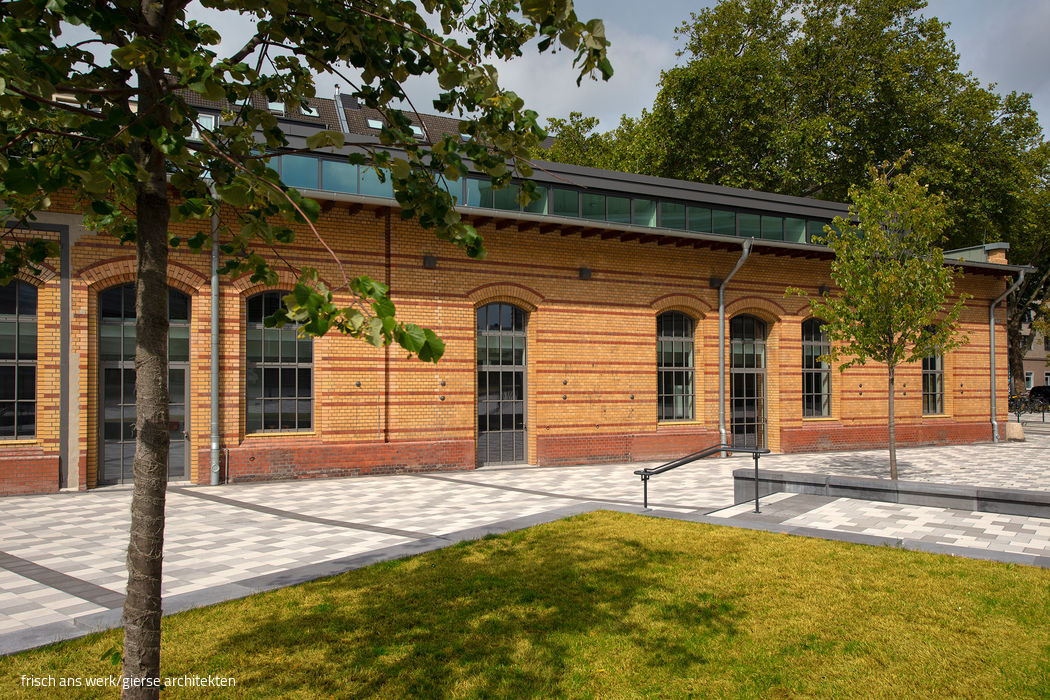
Heritage Reimagined
Derendorf's historic horse slaughterhouse transforms into a dynamic learning and student centre

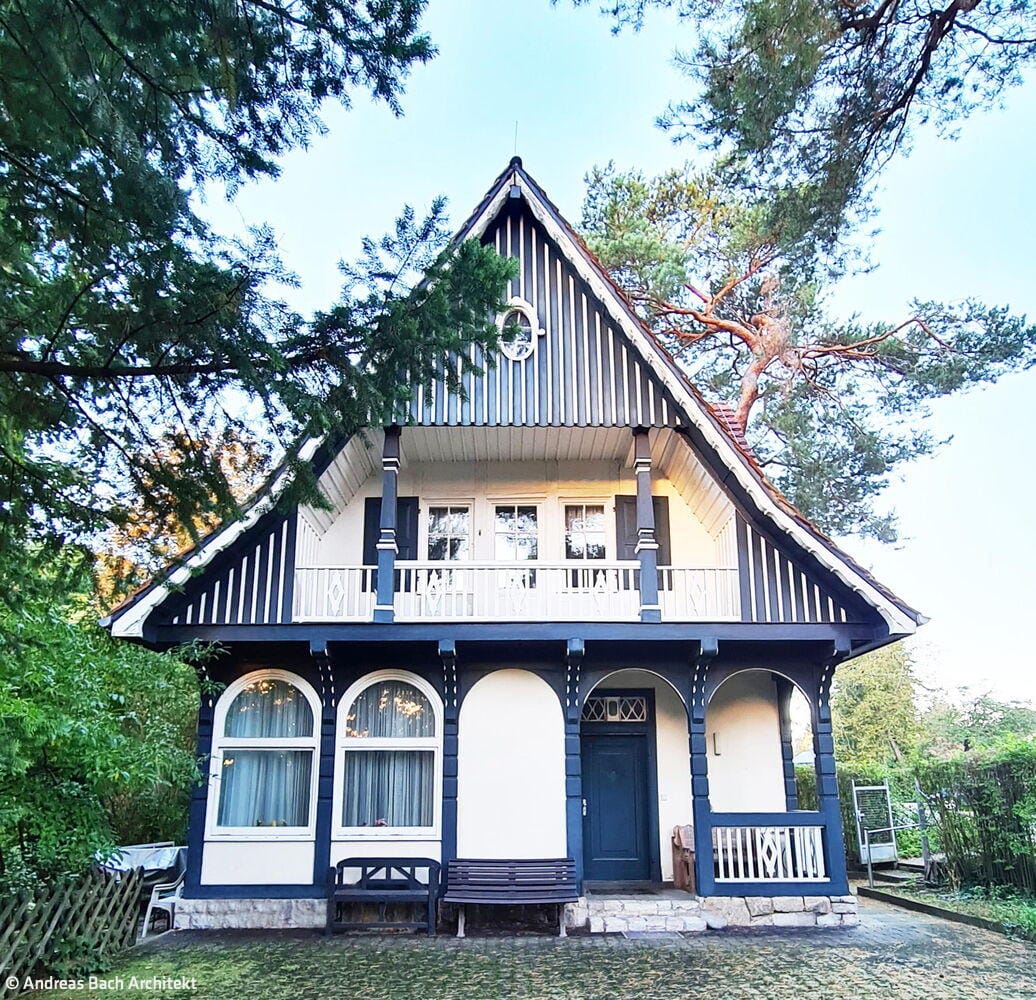
Commanding presence
Where tradition and modernity converge—a thoughtfully designed family residence
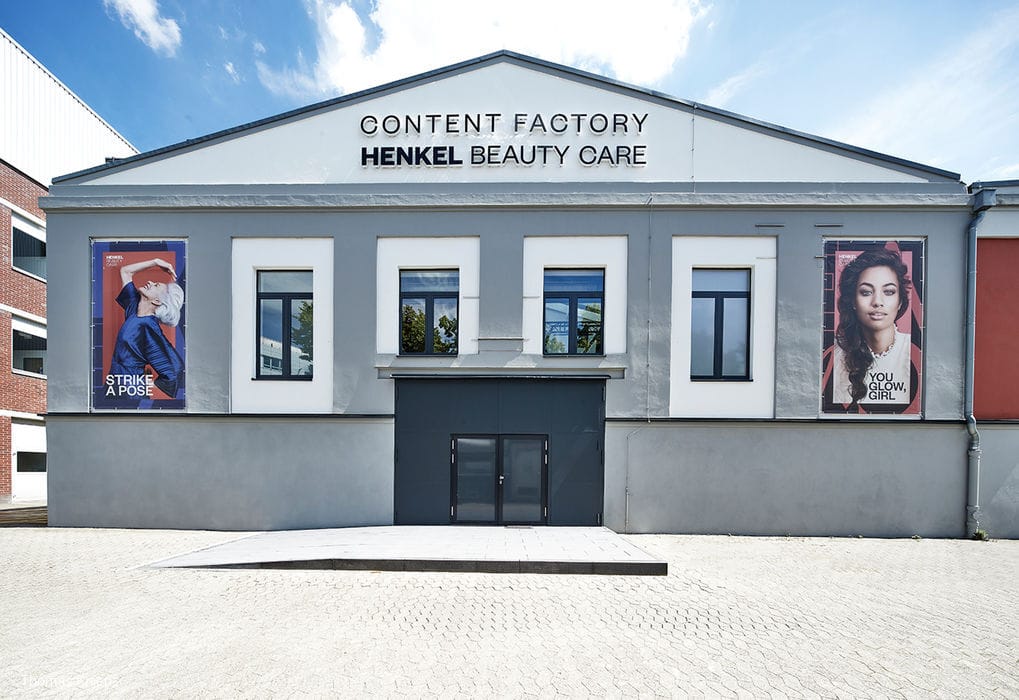
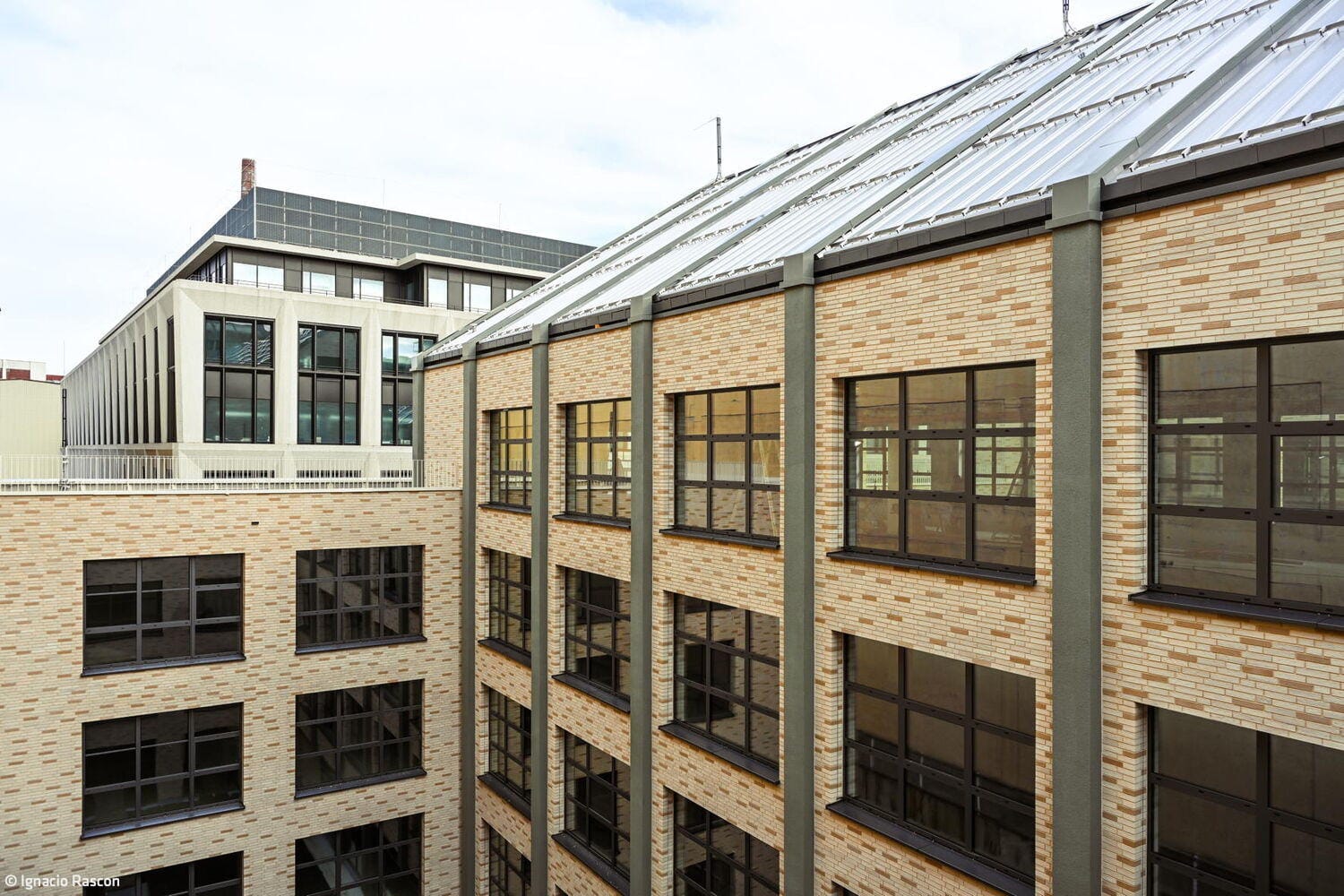
The Content Forge
A former warehouse building in Reisholz becomes Henkel's creative studio

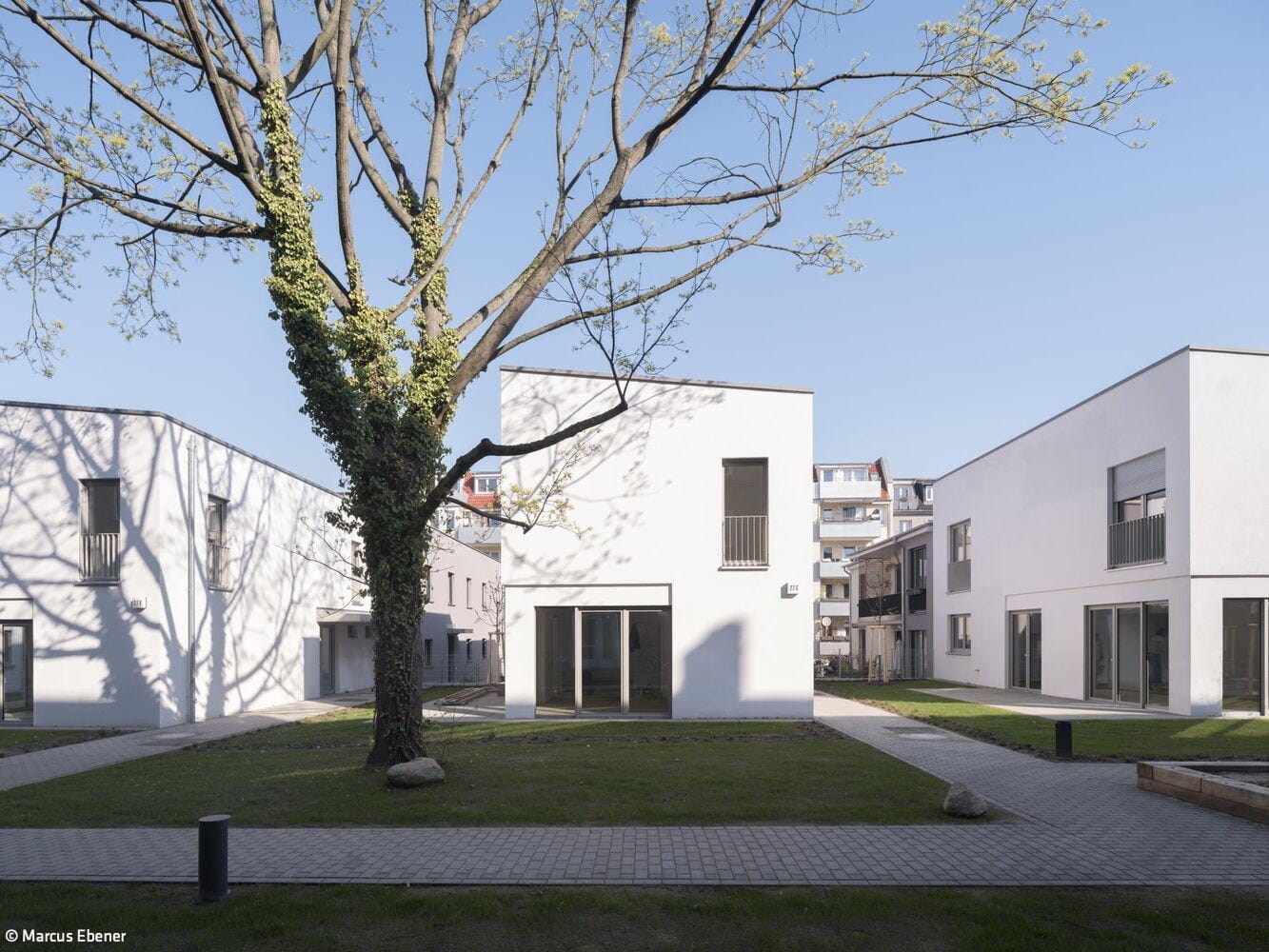
A Dialogue in Façades
New residential development completes a fragmented urban edge in Pempelfort