


Façade Dialogue
A residential development that restores a broken streetscape edge in Pempelfort


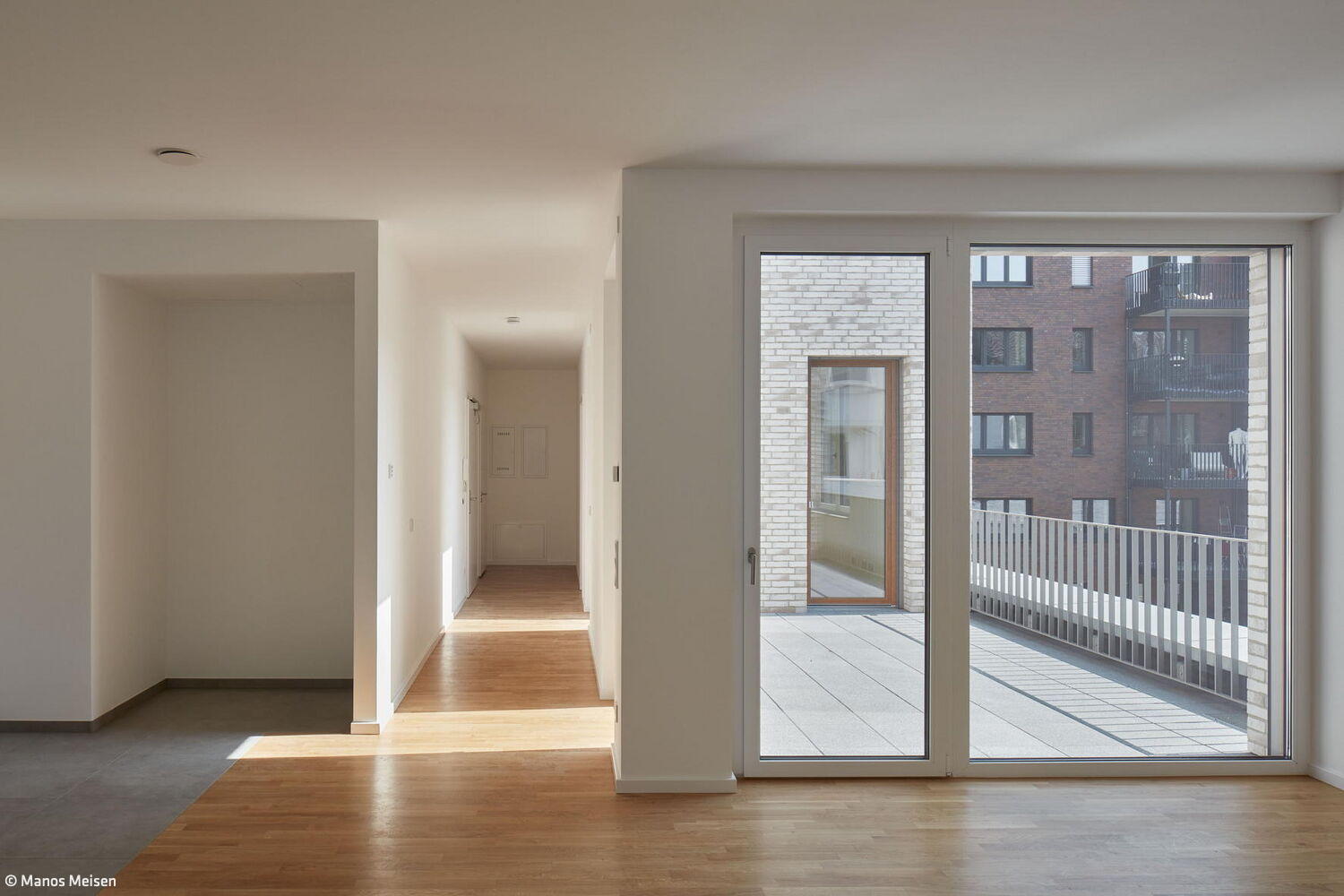

Since the postwar era, Schirmerstrasse had featured a significant gap in the street-facing block perimeter development: a building complex from the 1950s, neighboring the Quartier Central, encompassed the commercial building of the adjacent Moll automotive dealership with an attached repair workshop, as well as a residential building and underground parking. The commercial use in particular, combined with vehicular access and adjacent street traffic, generated considerable noise within the block's interior. Following the cessation of business operations on the site, an opportunity emerged to demolish the old workshop halls and garage, transforming the location into a premium residential quarter. The commissioned architects Döring Dahmen Joeressen from Düsseldorf developed an infill project comprising 51 individual rental apartments, predominantly family-oriented, which through the closure of the block, also accomplished a small urban repair.
The former vacant lot was completed into a continuous street-facing perimeter through a five-story block development with a recessed upper story and pitched roof. The existing eaves and gable heights of the immediately adjacent buildings were incorporated. The residential building from the 1950s, which had already been integrated into the block perimeter prior to construction, underwent core renovation and energy retrofitting. The interior block also received a two-story residential building with a recessed upper story and private green spaces at ground level. The central courtyard passage in the street-facing building provides access to the courtyard building and the green area with playground above the underground parking. Both the existing and new buildings are characterized by brick facades, whereby not only different color tones but also the design details of execution underscore each building's individual character: the existing structure, renovated with an insulating composite system, received a facade of dark red brick slips that preserved the typical understated facade image of the 1950s. For the new buildings, by contrast, light-colored facing brick masonry was chosen, tonally mediating between the surrounding rendered structures from the Gründerzeit and postwar periods. Relief-like beveled window reveals that change direction by floor impart considerable plasticity and depth to the street facade of the new building, which harmonizes well with the loft facades of the opposite New York-style ensemble. This high-quality, articulated facade design extends to the courtyard facades, which are characterized by variously arranged balcony and loggia configurations. Both the new buildings constructed to Passive House standard (KfW 40) and the renovated existing building (KfW 70) are supplied with district heating.
Photos:
Manos Meisen
www.manosmeisen.de
(Published in CUBE Düsseldorf 04|24)

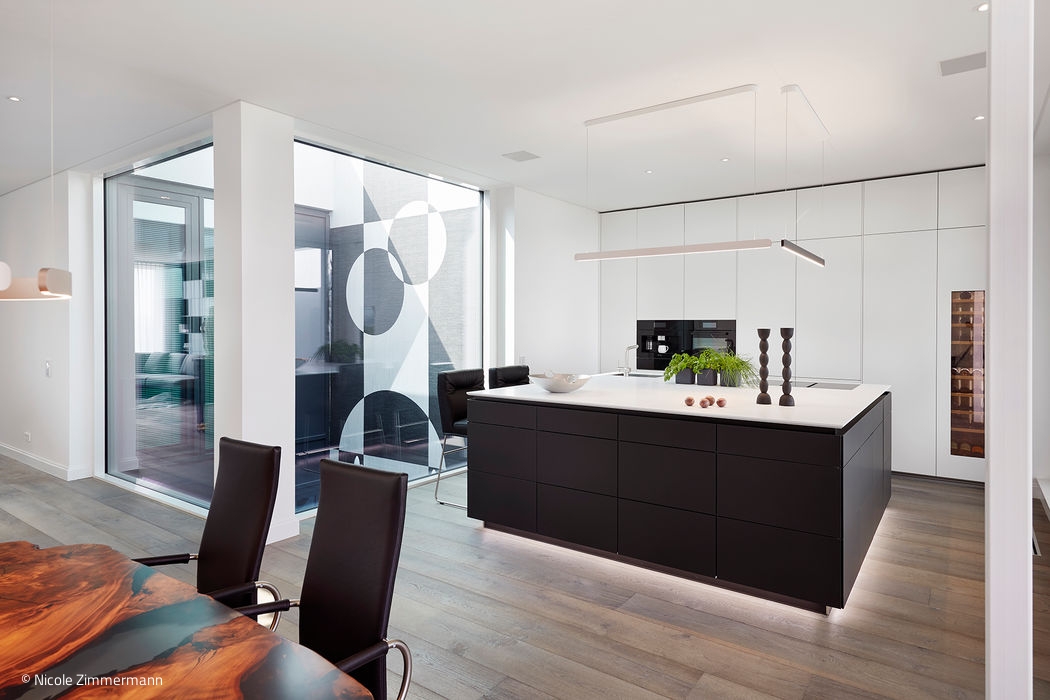
Fully Styled
A streamlined yet sophisticated penthouse overlooking the Rhine

Flexibly Connected
Medical Research Centre I fuels interdisciplinary collaboration at the University Hospital
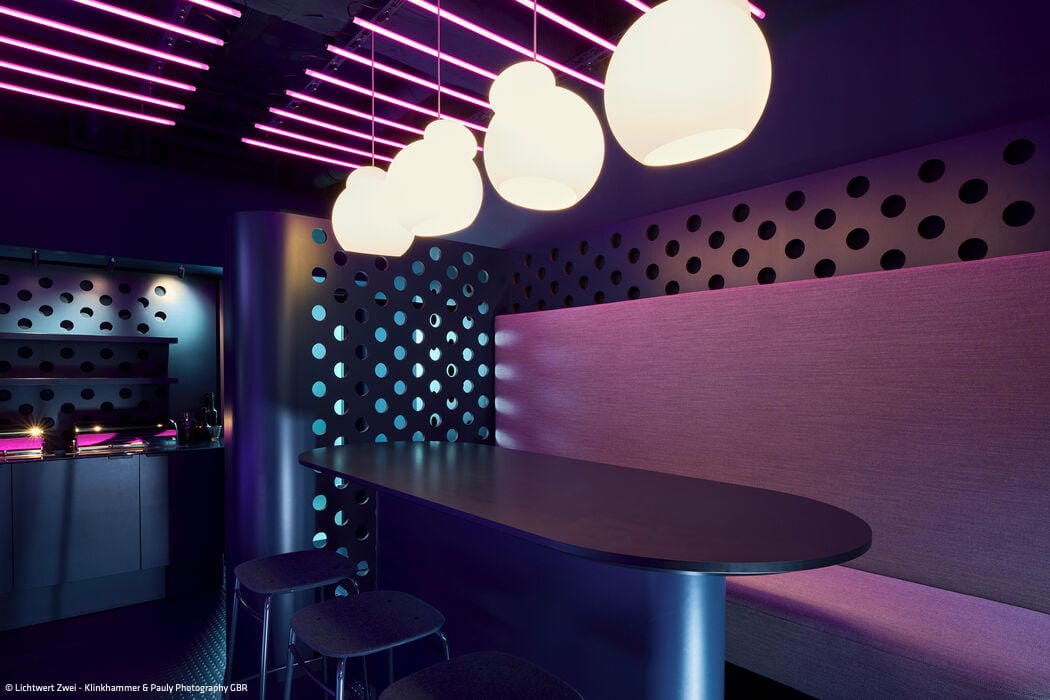
electrifying
A VIP lounge at Borussia Park that channels the game's energy into spatial experience
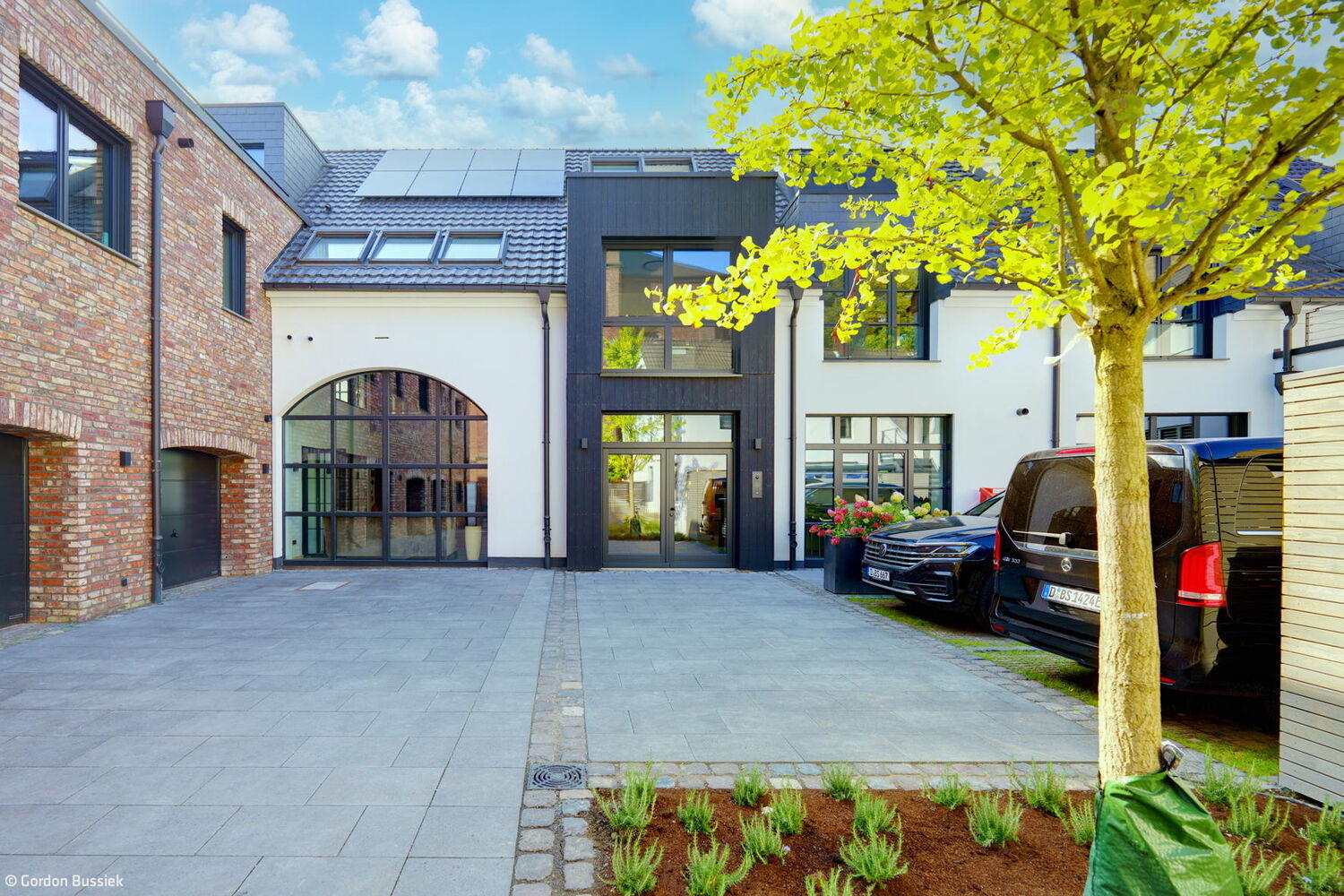
Since 1833: The Mäschig Estate
Writing the next chapter of architectural history in Heerdt