


Façade Dialogue
A residential development that restores a broken streetscape edge in Pempelfort


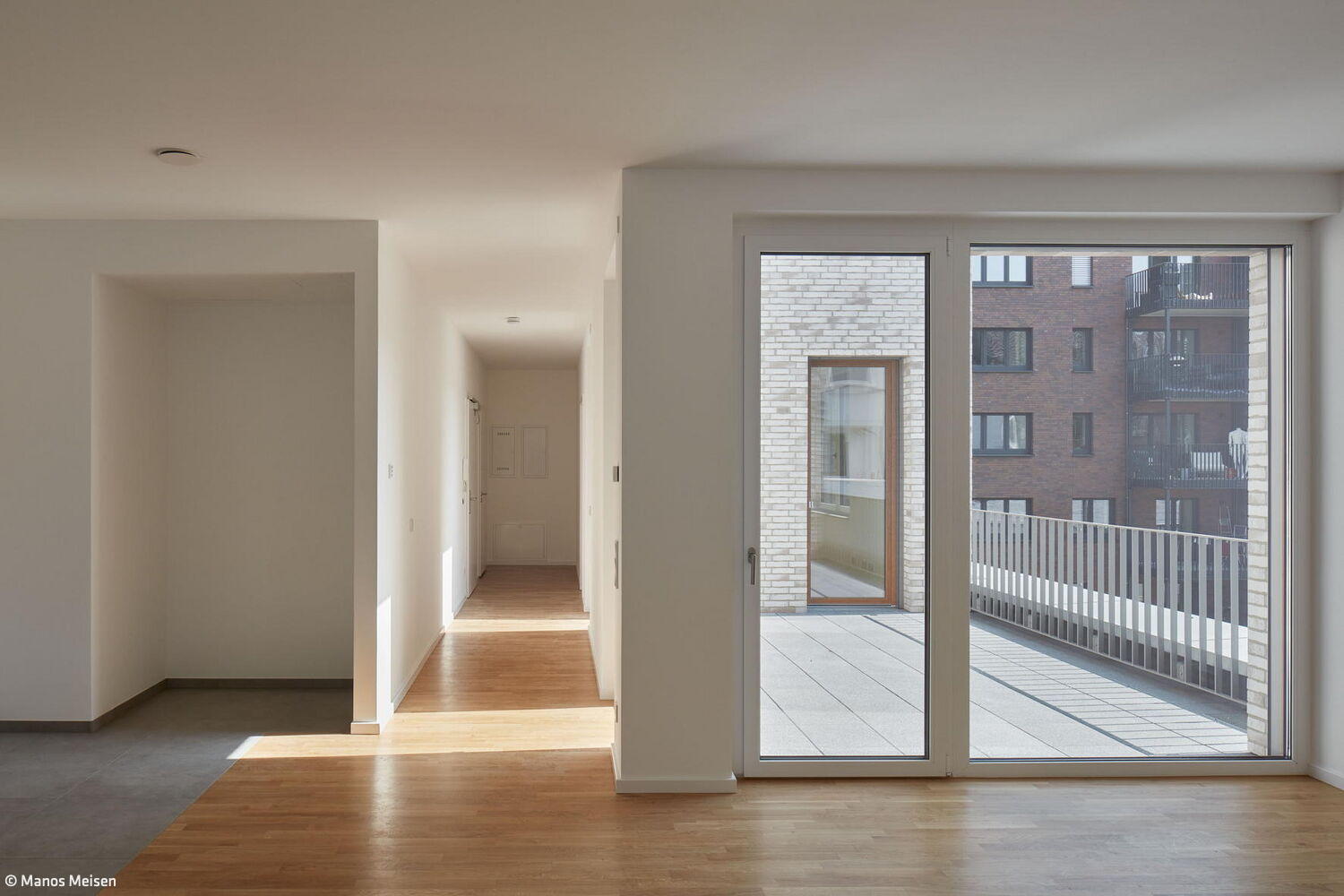

Since the post-war era, Schirmerstraße had been marked by a significant gap in the perimeter block structure. A 1950s building ensemble—comprising the Moll automotive dealership and repair workshop, along with residential units and an underground parking garage—neighboured the Quartier Central development. The commercial operations and associated vehicular traffic generated considerable noise within the block's interior. When the business relocated, the site presented an opportunity to demolish the aging workshop buildings and parking structure, transforming the location into a premium residential destination. Düsseldorf-based architects Döring Dahmen Joeressen designed a densification scheme featuring 51 individually designed, predominantly family-oriented rental apartments. The development closes the streetscape while simultaneously performing a subtle act of urban repair.
The former gap has been resolved with a five-storey perimeter block building, stepped back at the top floor, crowned with a pitched roof to create a seamless streetscape. The design respects the existing eave and gable heights of adjacent structures. The 1950s residential building, already anchoring the perimeter block, underwent complete renovation and energy modernization. The courtyard received an additional two-storey residential block with staggered upper floors and private garden spaces at ground level. A central passage through the street-facing building provides access to the courtyard structure and green space—complete with playground—situated above the underground car park. Both existing and new buildings are unified by clinker brick façades, where color variations and meticulous detailing reinforce each building's distinct character. The renovated structure sports dark-red brick slips, preserving the restrained 1950s aesthetic. By contrast, the new buildings feature light-toned brick facing that bridges the surrounding stucco architecture of the Wilhelmine and post-war periods. Relief-cut window frames that shift direction floor by floor create pronounced plasticity and depth on the street façade, harmonizing beautifully with the loft aesthetic of the neighboring New York-style ensemble opposite. This refined, articulated façade language extends to the courtyard elevations, where varied balcony and loggia arrangements establish visual rhythm. Both the new construction—built to Passive House standards (KfW 40)—and the retrofitted existing building (KfW 70) are supplied with district heating.
Photography:
Manos Meisen
www.manosmeisen.de
(Published in CUBE Düsseldorf 04|24)

Dynamic and Biodiverse
The Opus: where architectural ambition meets sustainability

Raw elegance
A basement car park becomes a flexible conference and event venue – at the Merkur Spiel-Arena
Restored Farmhouse
Historic heritage in Niederkassel interpreted for today, preserved with care
Robust and Authentic
A residential home emerges from a low-tech design philosophy