


Colour spaces as design framework
The new central library makes the floor its primary wayfinding device
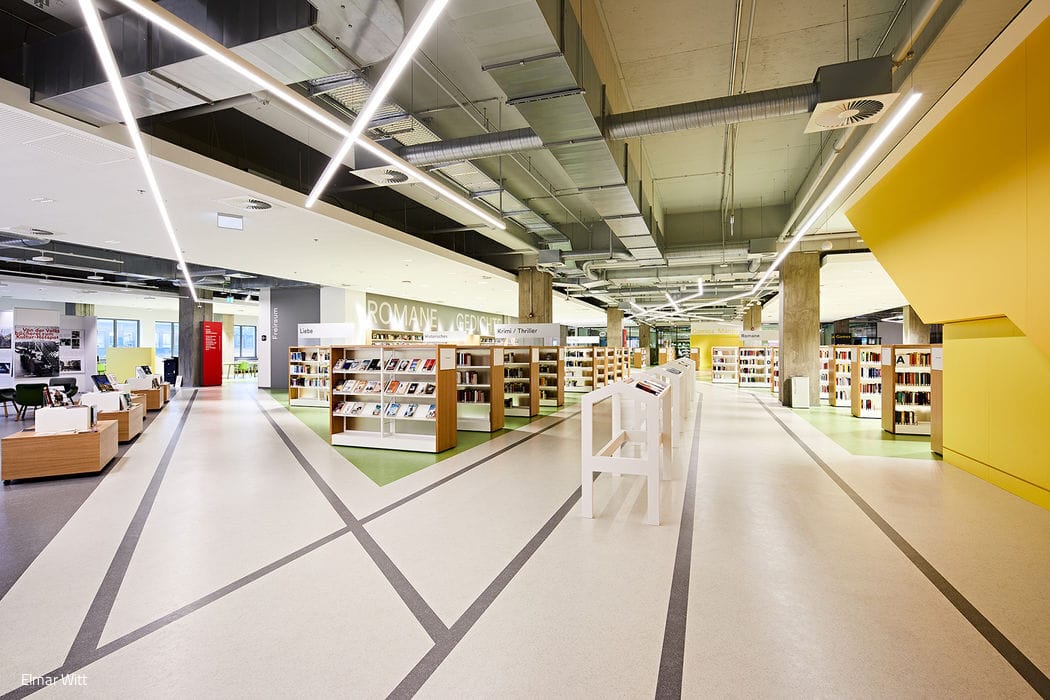
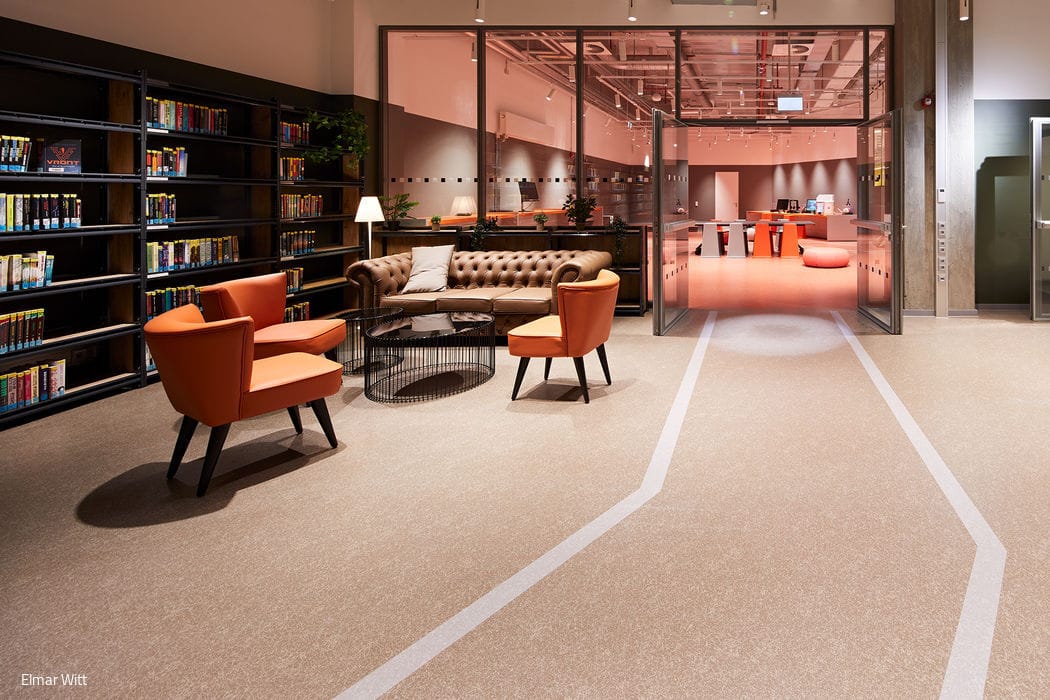
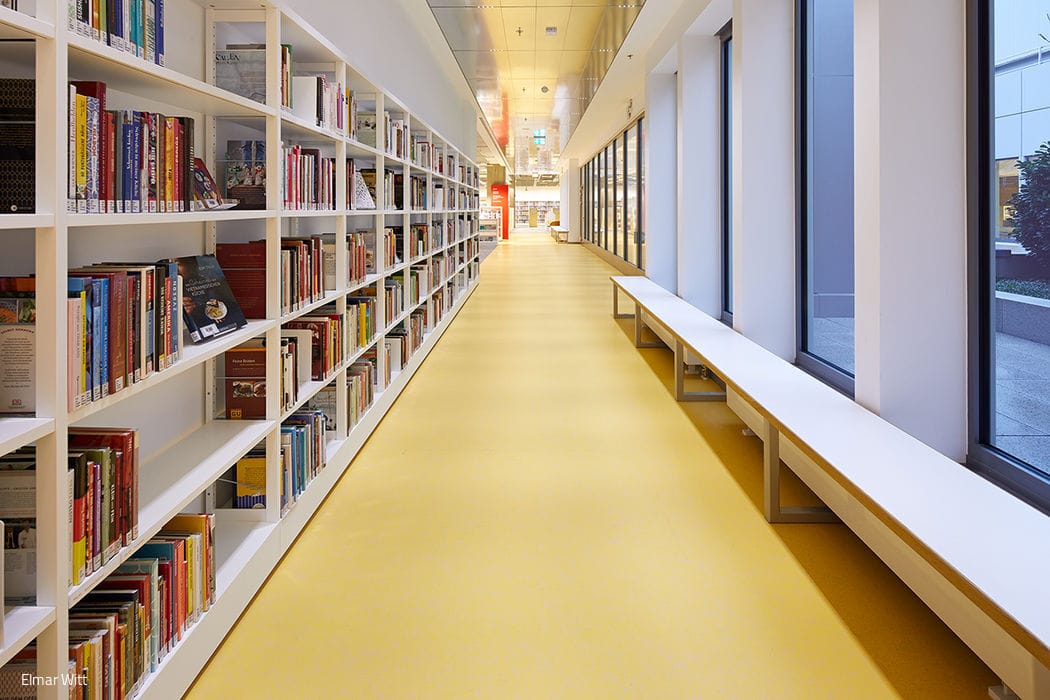
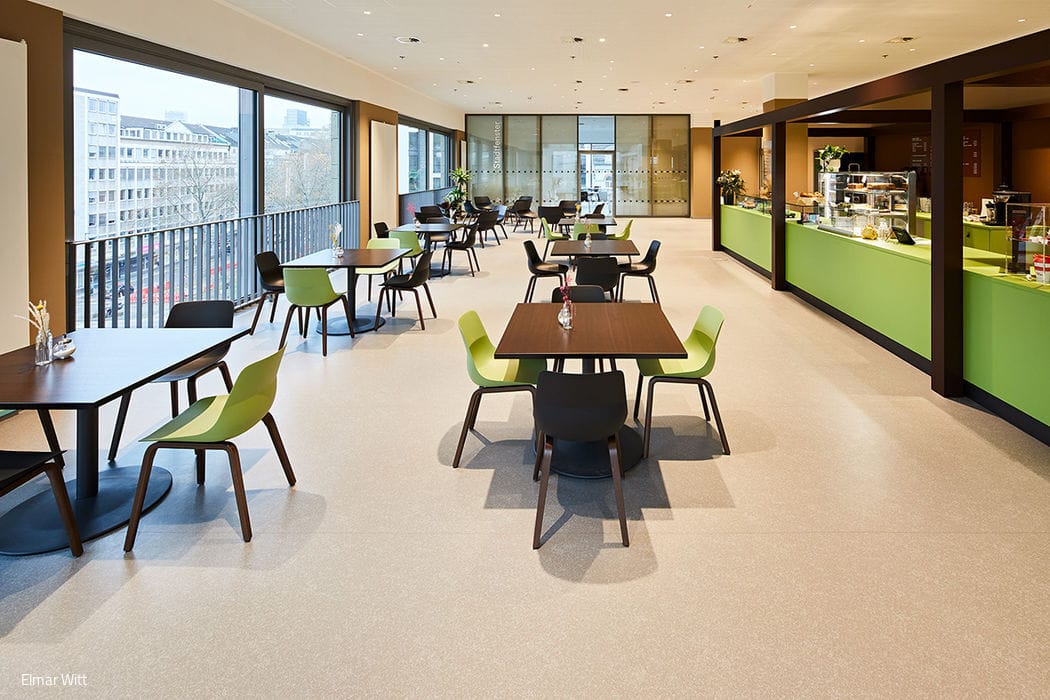
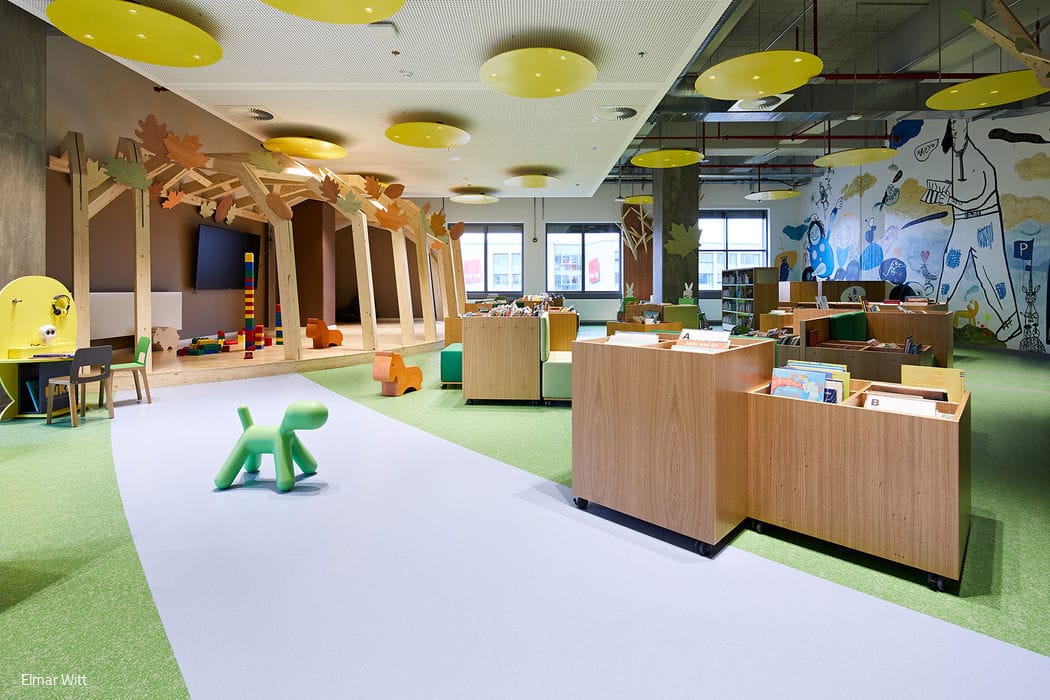
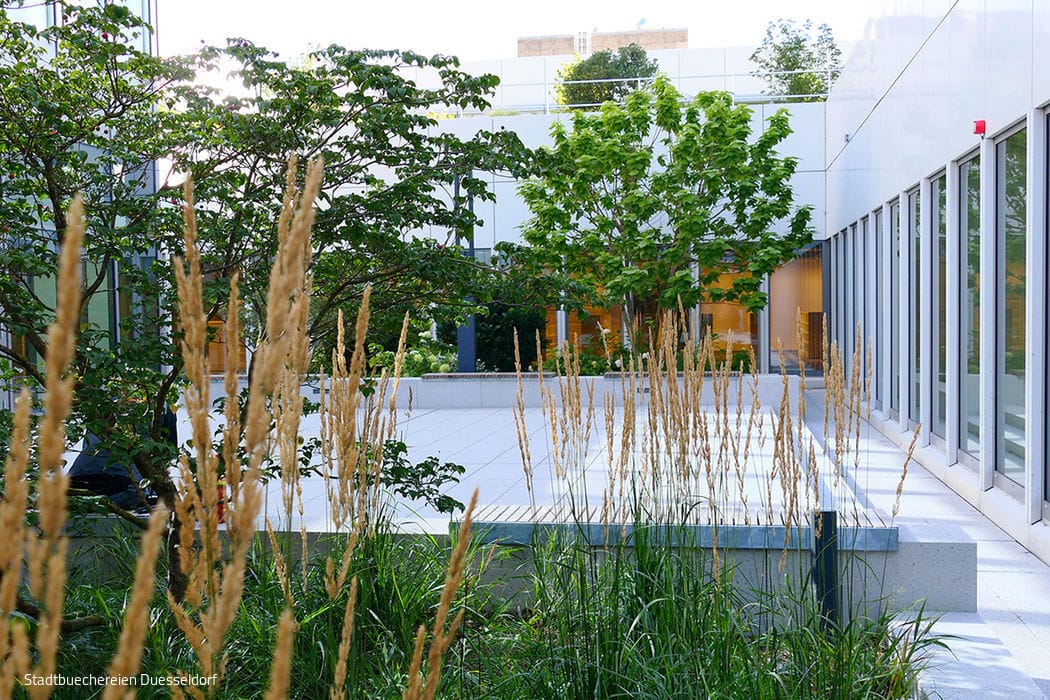
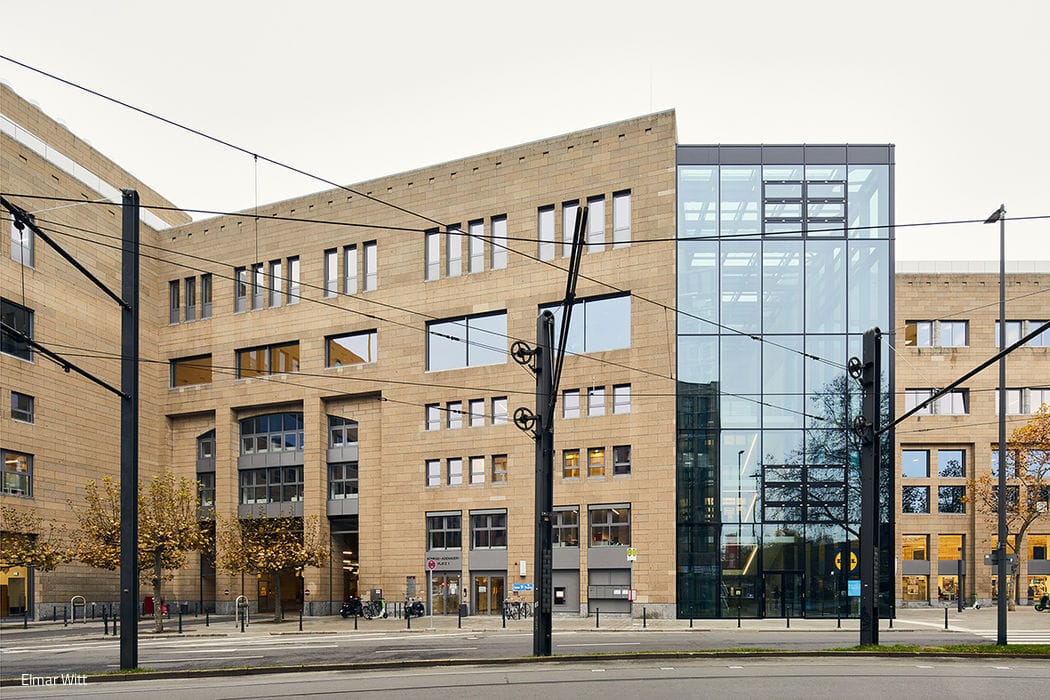
Düsseldorf has unveiled a striking new cultural landmark: the former post office building on Konrad-Adenauer-Platz (KAP 1) has been reimagined as a contemporary cultural and educational hub after four years of comprehensive renovation. Its centrepiece is the significantly expanded Central Library, which opened in November 2021 and has become a vibrant destination for reading, learning, and community engagement. Spanning the second and third floors, it encompasses approximately 7,750 m² — equivalent to two football fields stacked together. The library invites visitors to settle in and linger, offering over 300,000 media items, abundant comfortable seating, a café, and a roof garden.
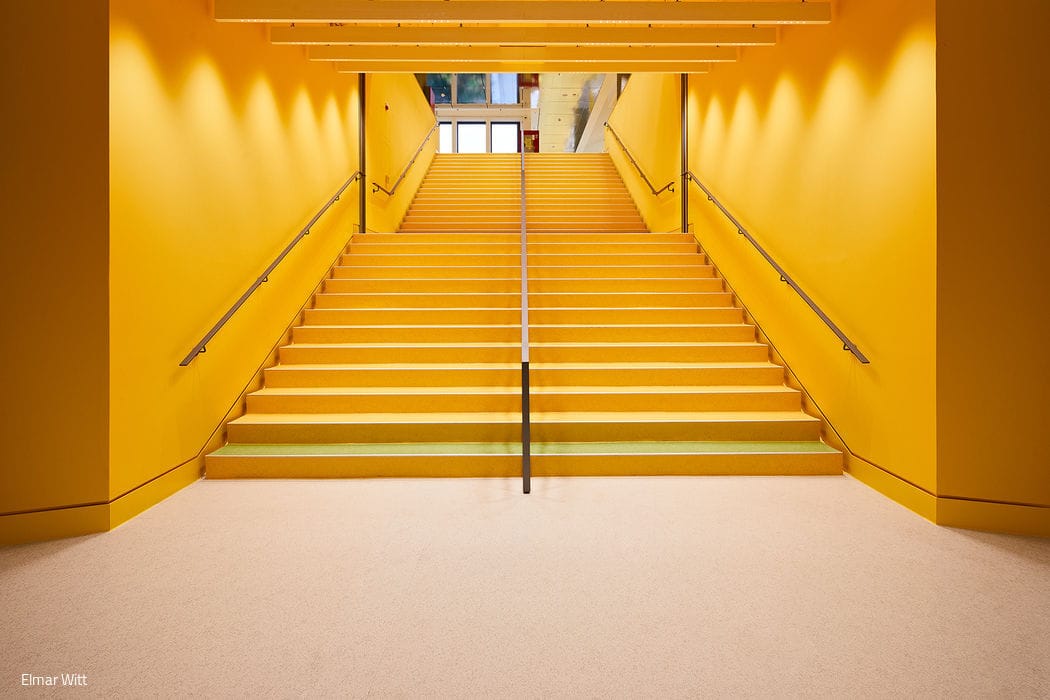
Designed by Schrammel Architects of Augsburg, the interior orchestrates flooring and lighting to create expansive, intuitive spatial sequences. The anthracite "rail" pattern woven into the light grey rubber surface functions as both wayfinding system and architectural reference — subtly evoking the building's proximity to the main train station. This compelling floor language extends to the children's library, where a sweeping blue inlay set into green rubber symbolises the Rhine's flow. "The rubber flooring is integral to our spatial concept," notes project director Gabriele Ackermann of Schrammel Architects. "By treating the entrance inlays as railway tracks, the floor becomes more than signage — it carries meaning. The rail pattern also unifies the entire space." Each zone has its own colour narrative: soft greens and earth tones define the adult reading areas; warm browns populate the youth library; the "LibraryLab" glows in red; and the children's section is enveloped in green. A showstopper nearly five metres wide, the open staircase in vivid sunshine yellow ascends from the generously scaled foyer to the third floor. Environmental and health considerations shaped every material choice. The elastic, durable floor coverings are phthalate-free and emit minimal volatile compounds, ensuring superior indoor air quality. Remarkably, they achieve complete CO₂-neutrality across their entire lifecycle — from sourcing and manufacturing through deconstruction and disposal.
Photography Credits:
Elmar Witt
www.elmar-witt.de
(Published in CUBE Düsseldorf 02|22)

Diversity in harmony
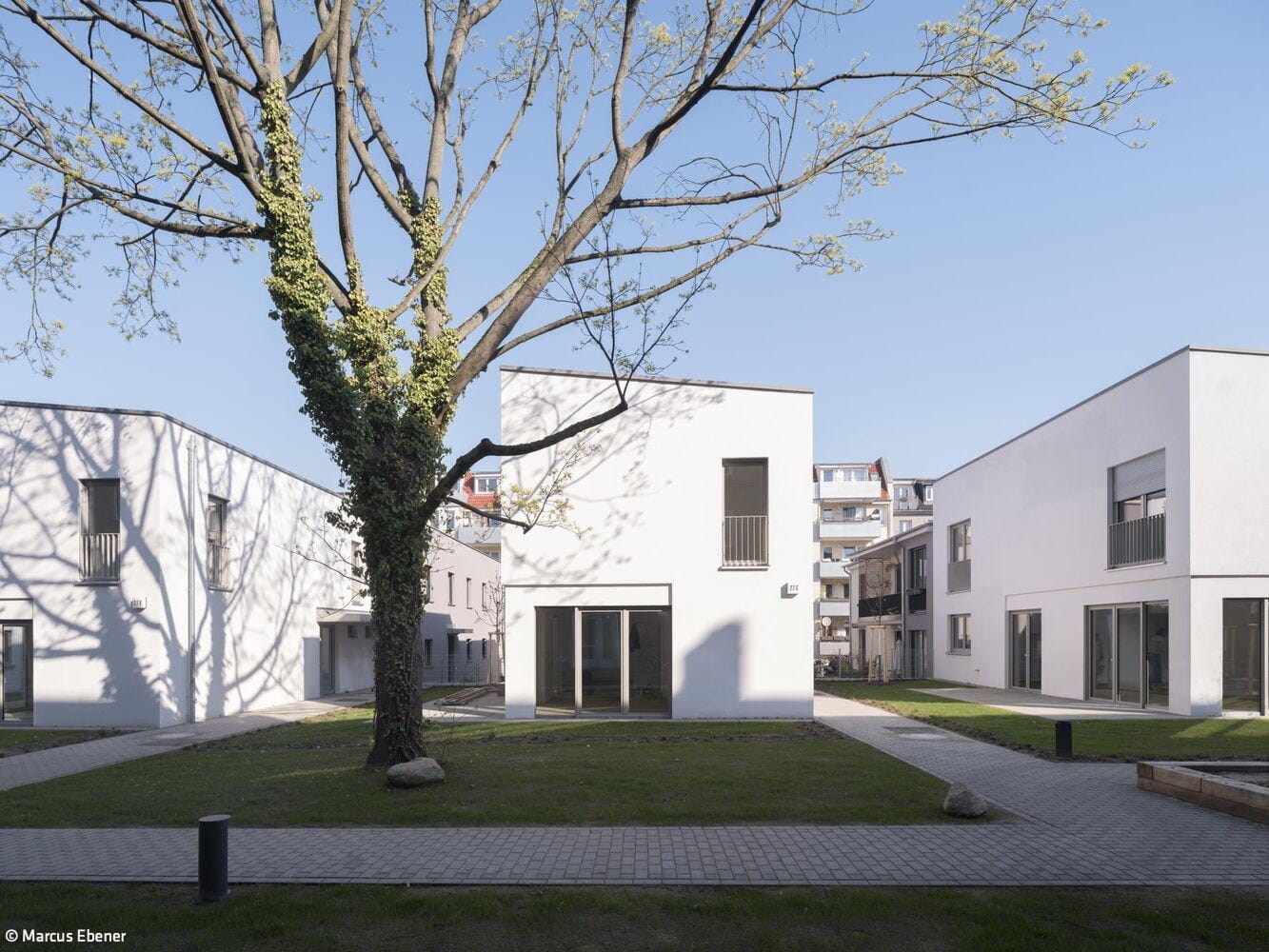
A vibrant new residential quarter with generous green space has emerged on Ulmer Höh' in Derendorf.
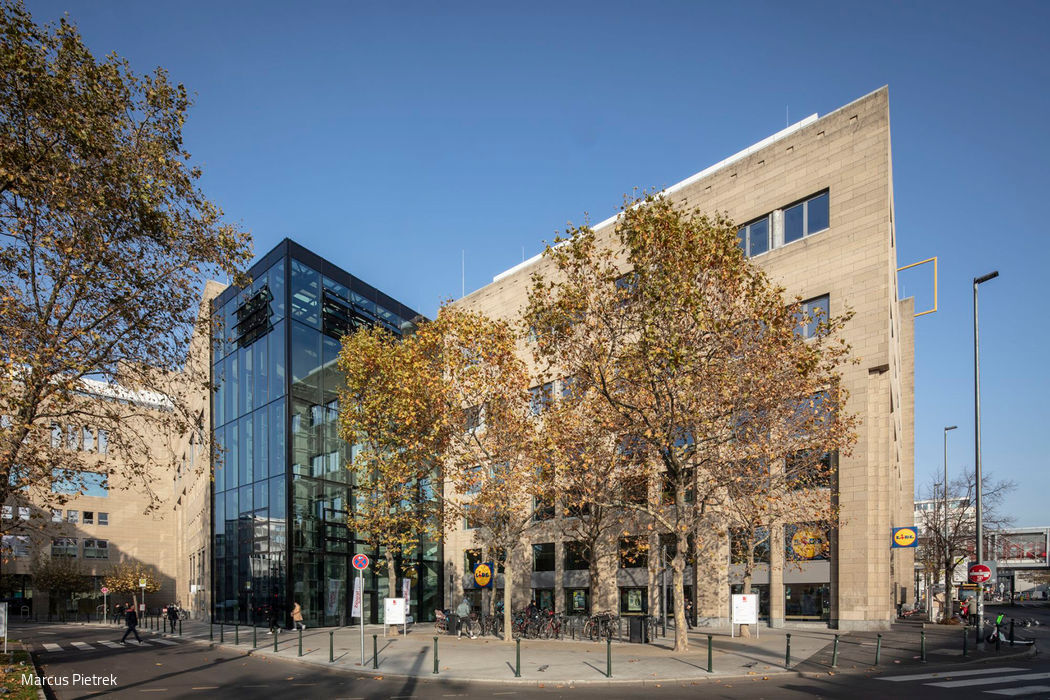
From Historic Post Office to Cultural Destination
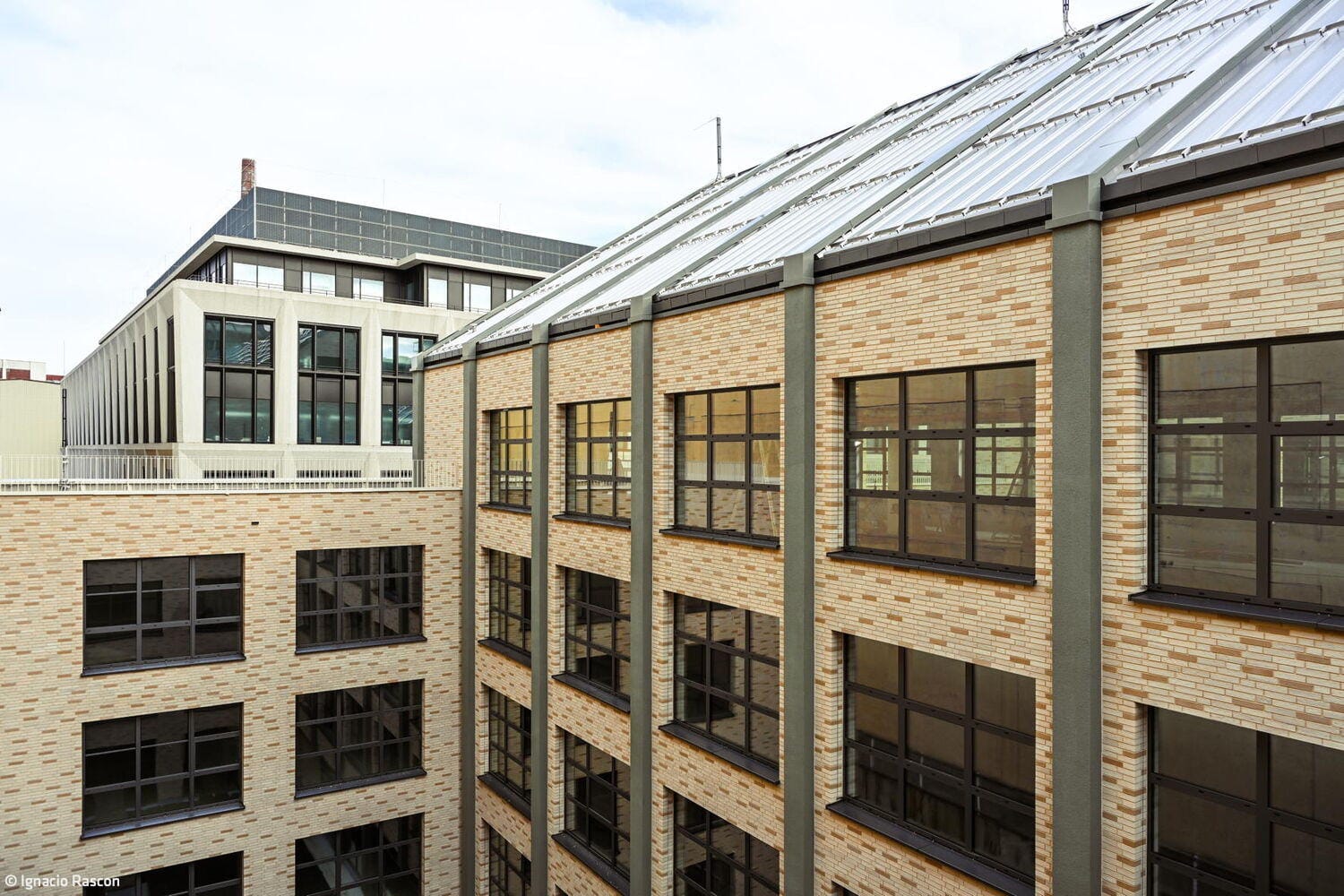
RKW Architektur + was commissioned to reimagine the historic building as a contemporary hub for Düsseldorf City Library's main branch and...
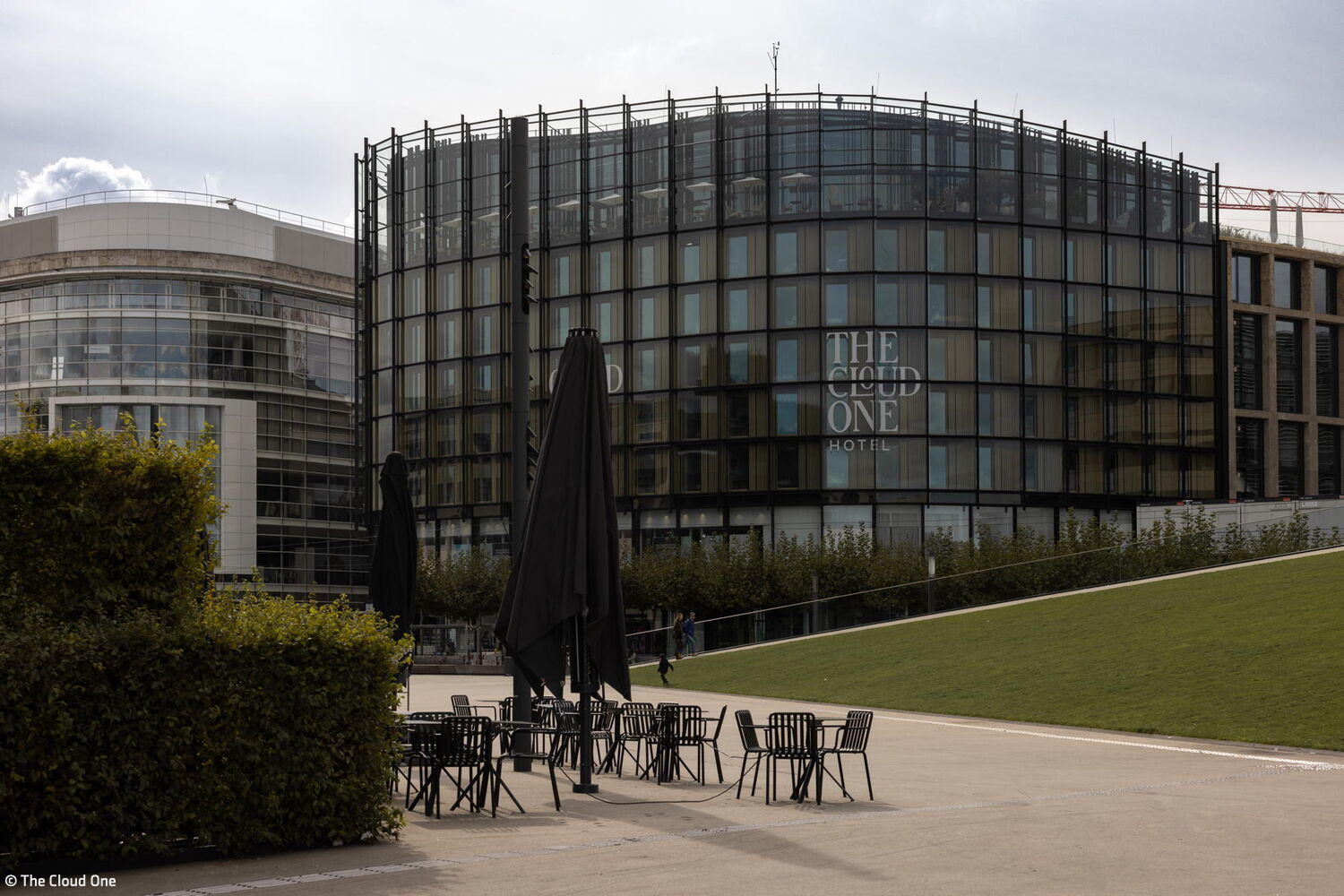
Sustainable and central
The new hotel The Cloud One captivates with its elegant transparency and commanding urban vistas.
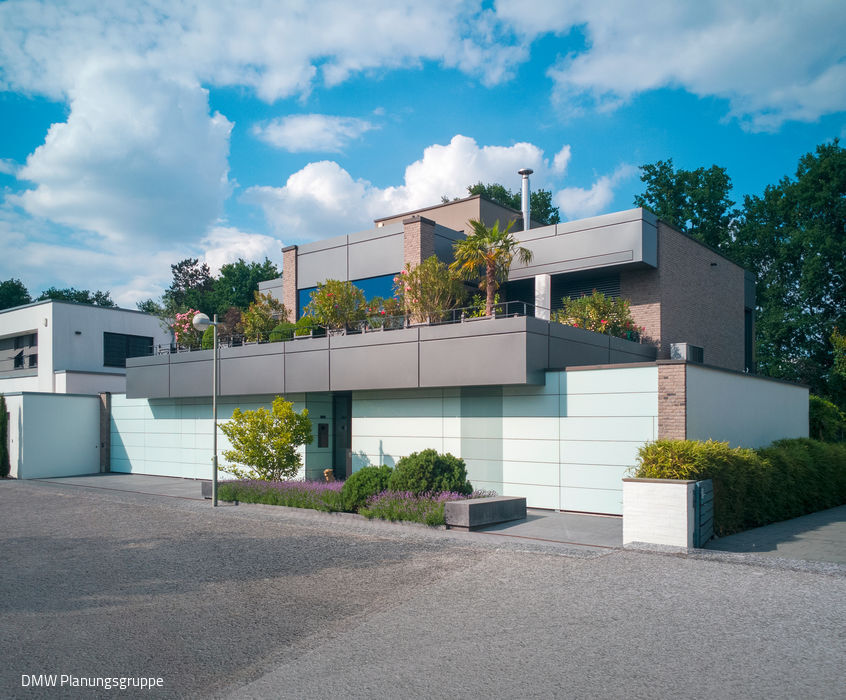
Bespoke Design
This expansive two-story residence opens generously onto a sprawling garden, its landscape enriched by mature trees selectively preserved...