


Discover the Art of Watchmaking
A luxury watch showroom designed to elevate the shopping experience
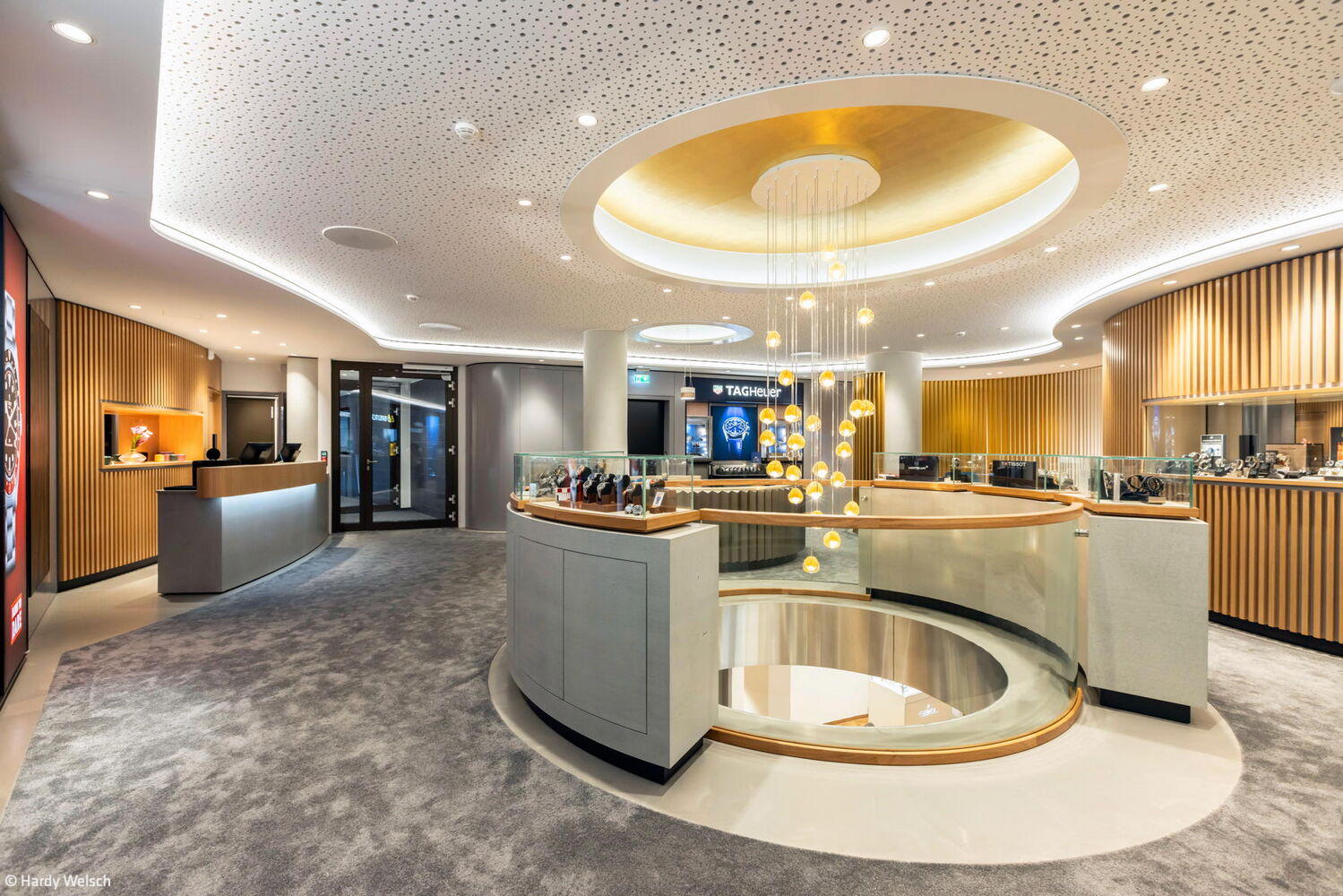
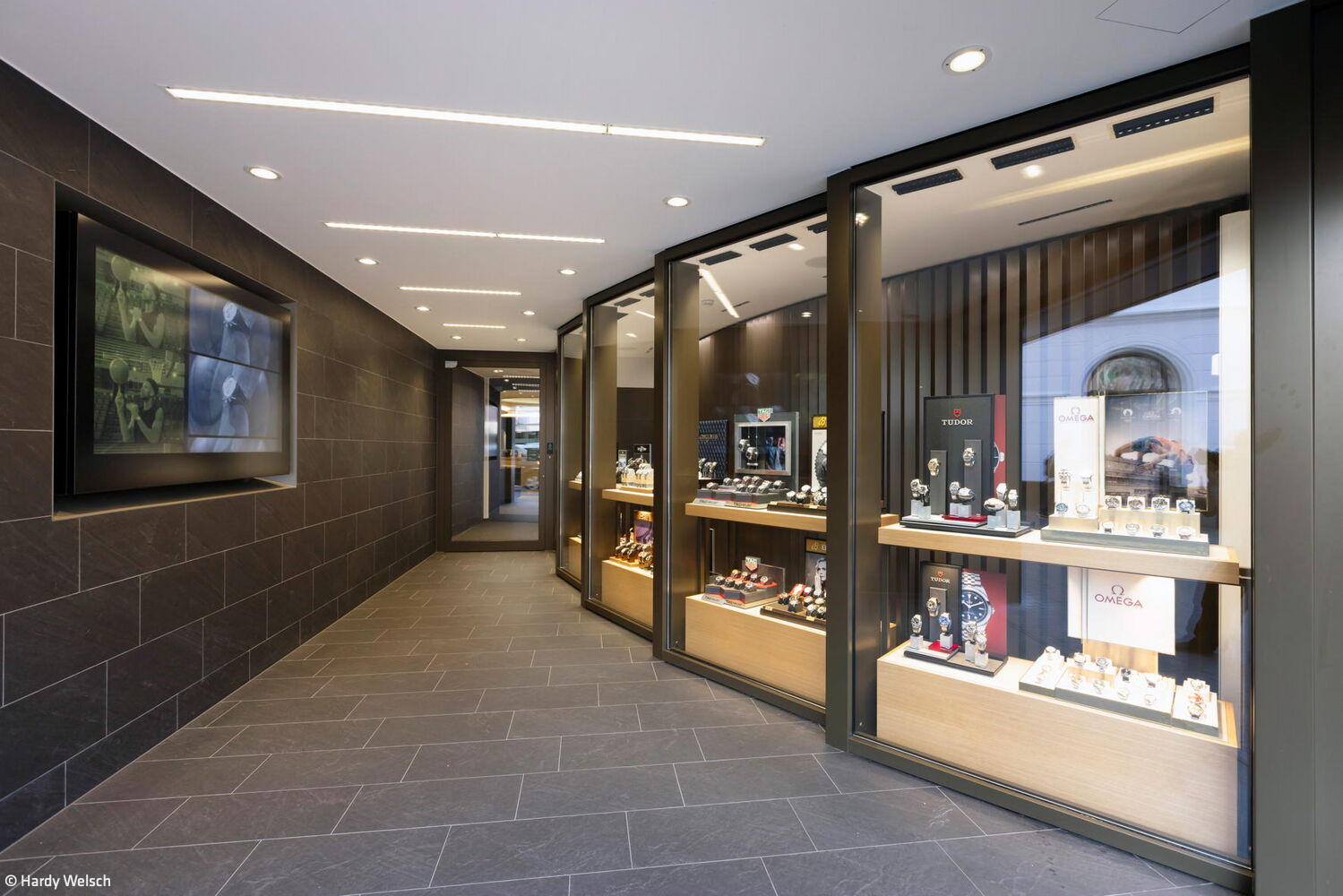
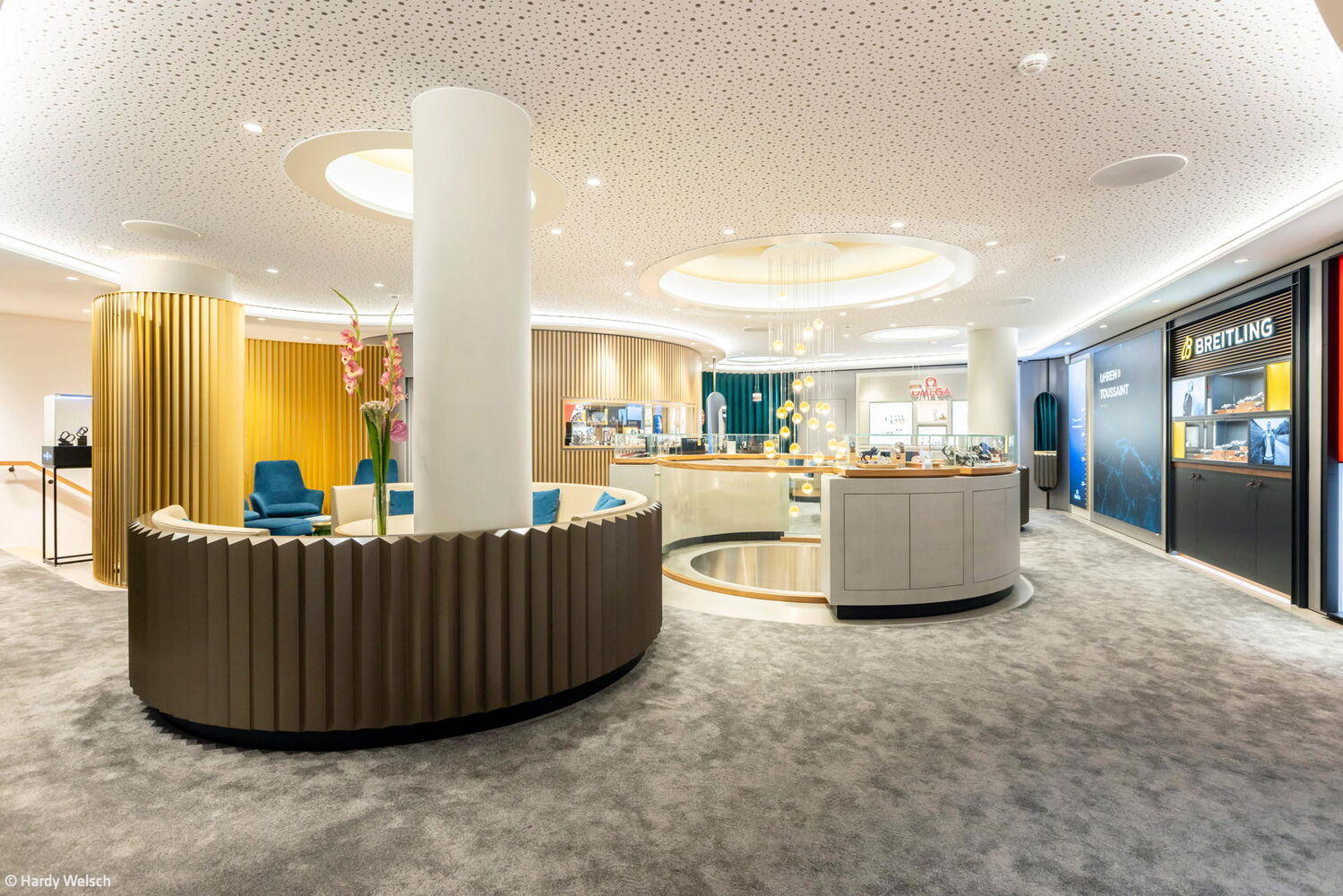
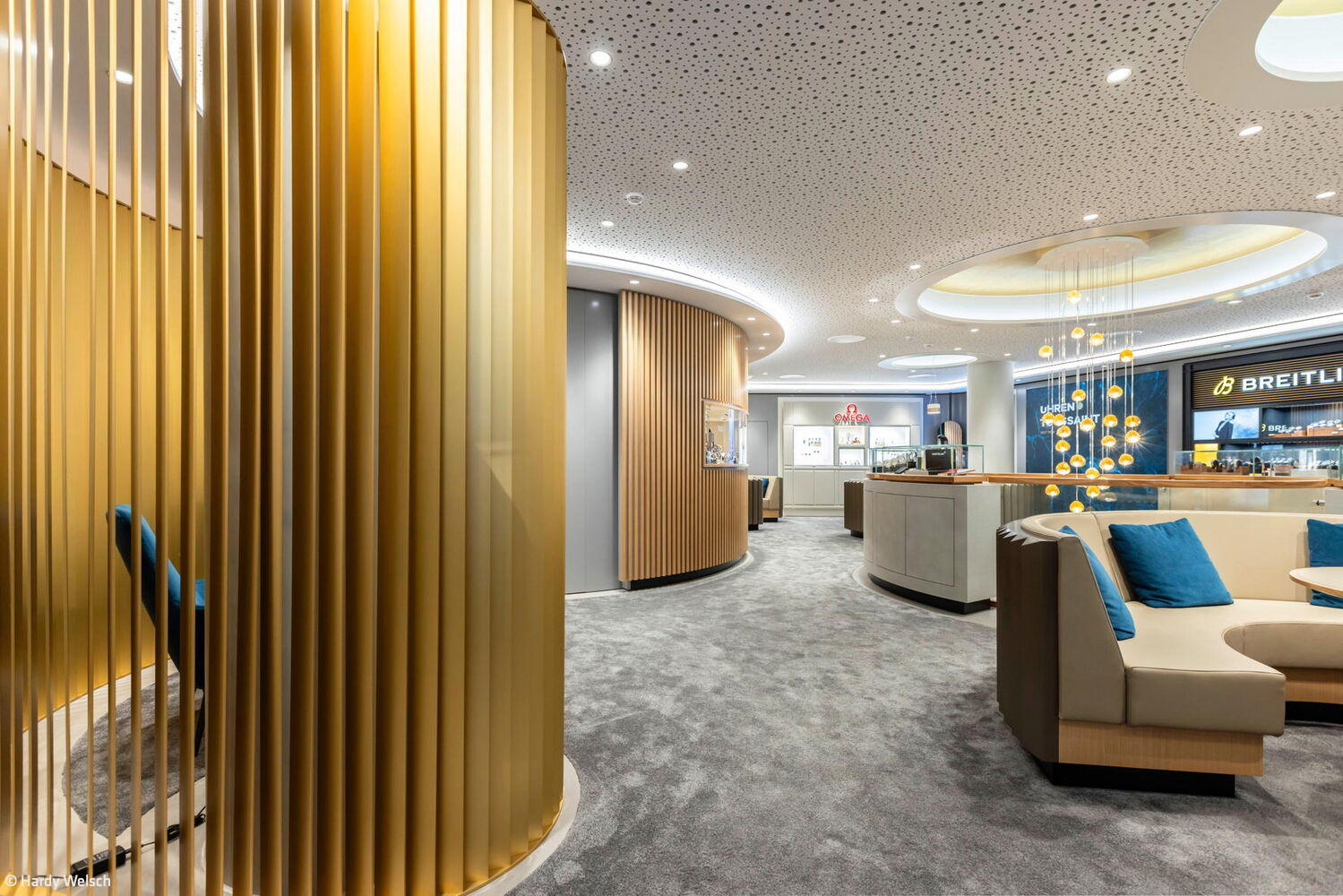
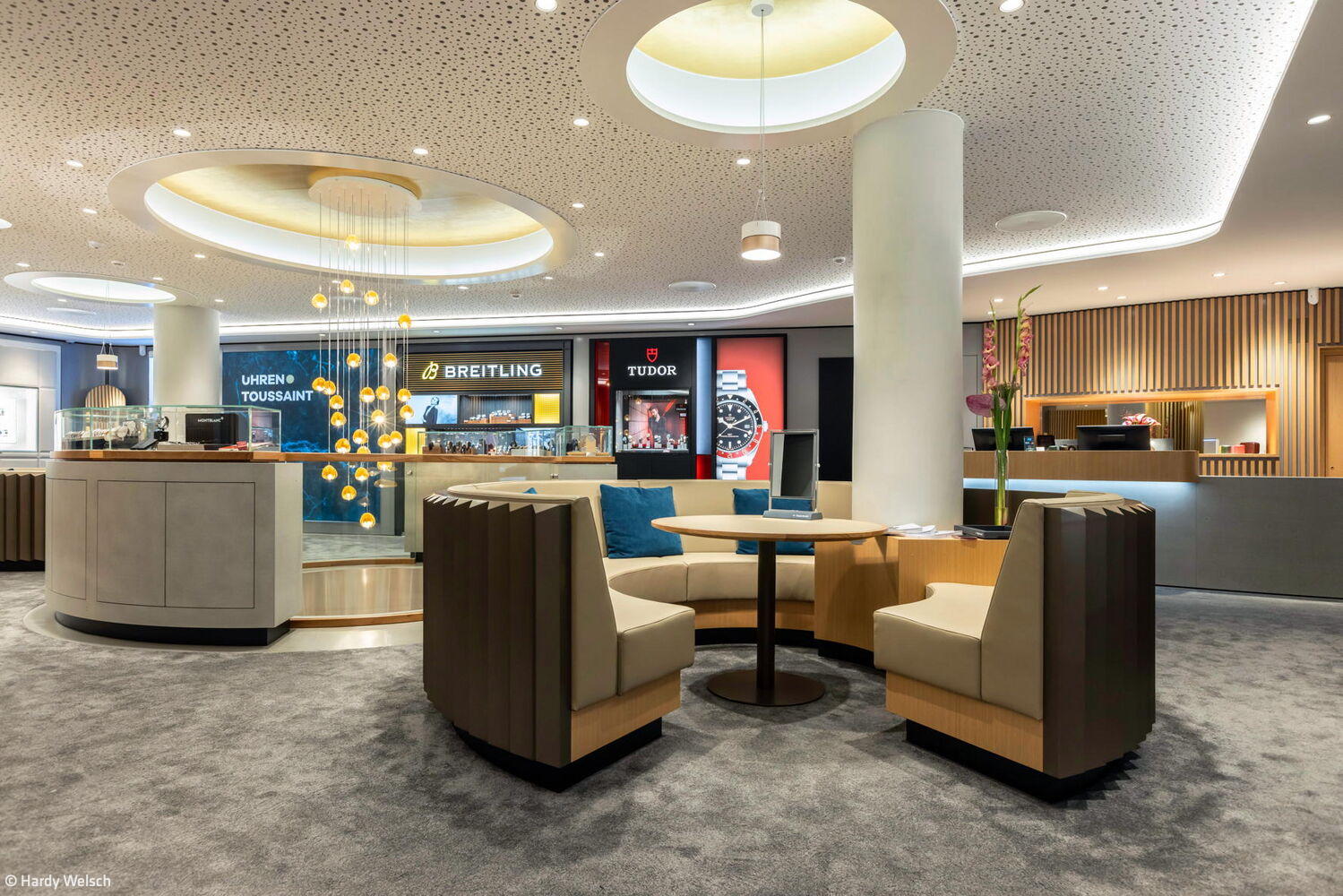
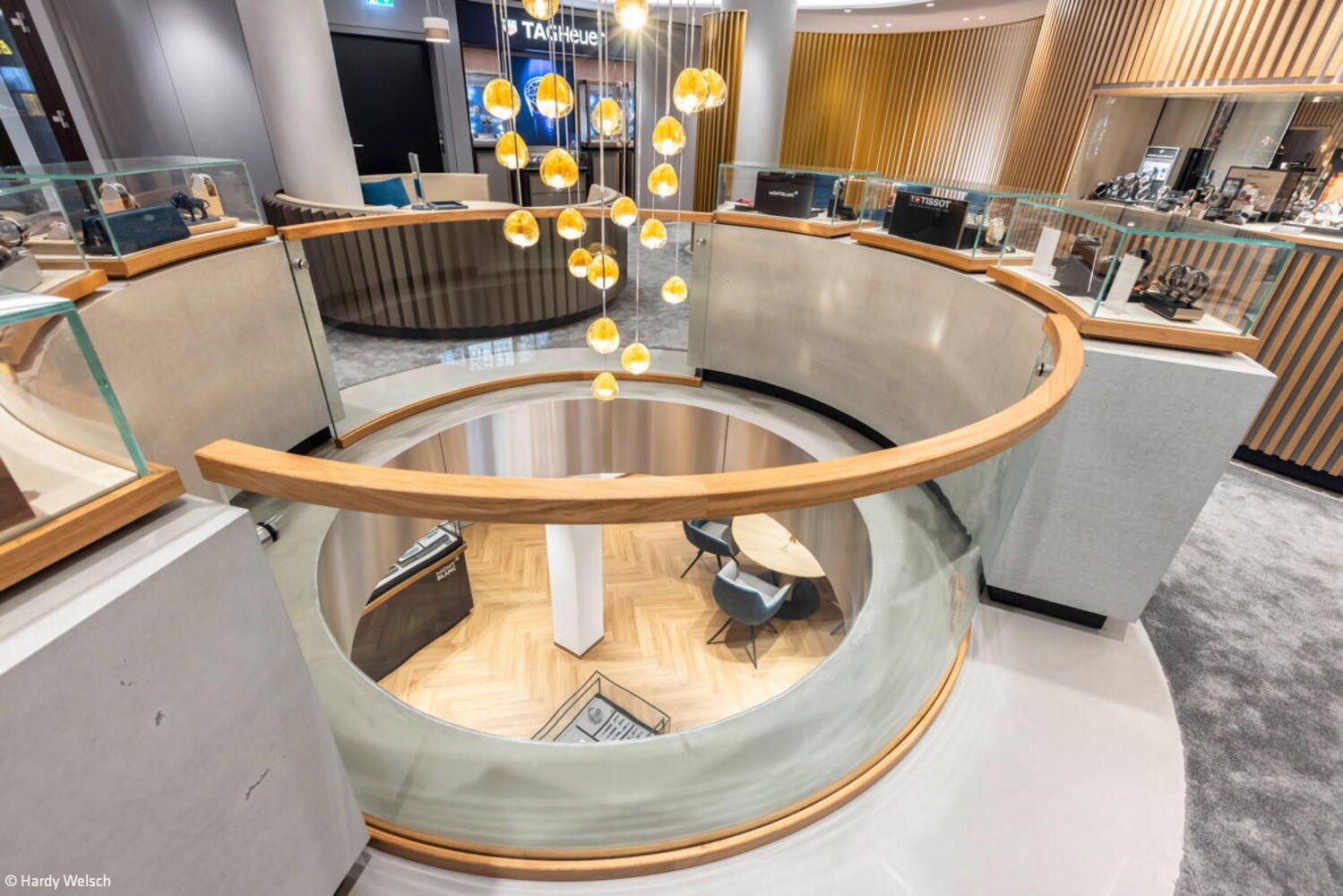
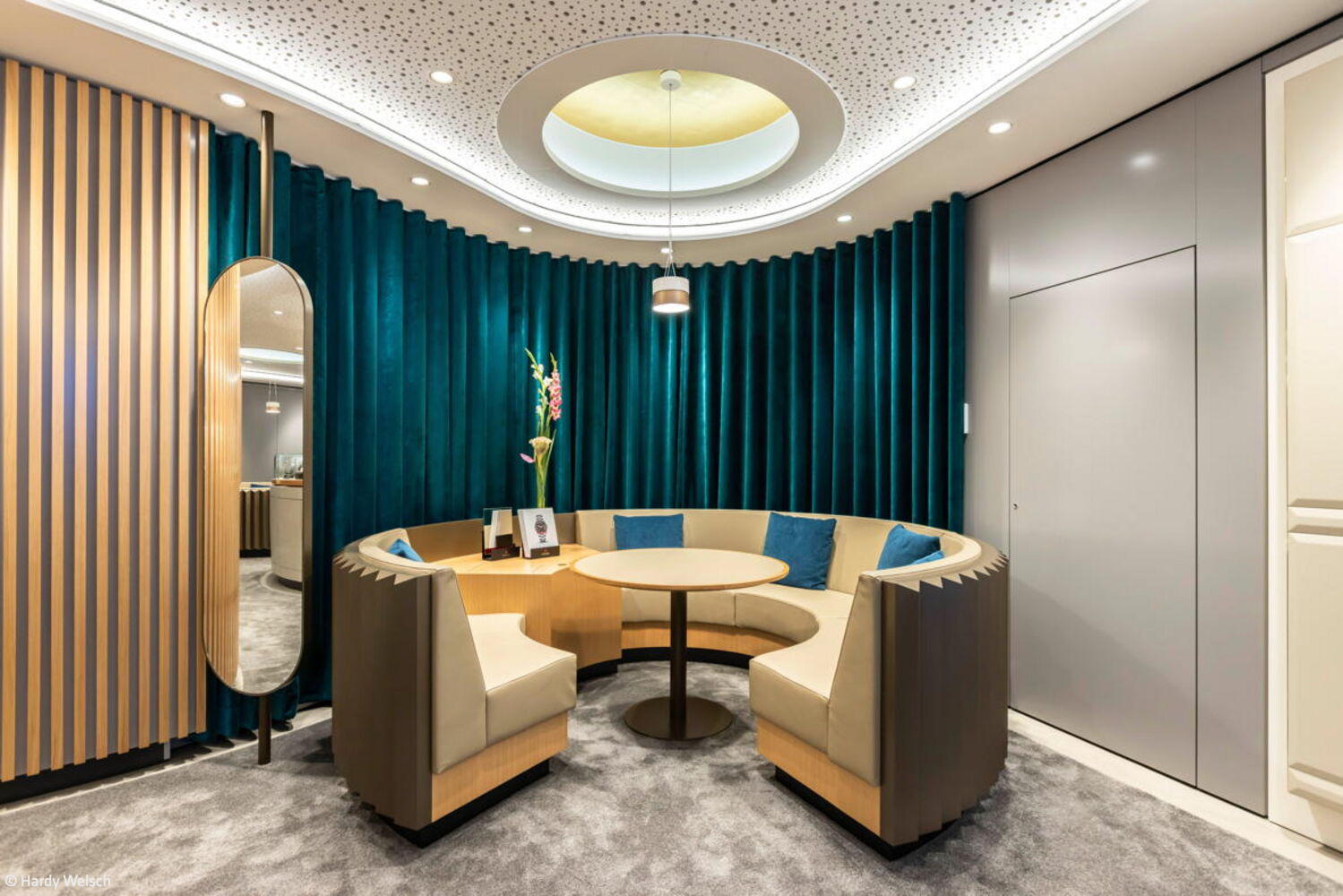
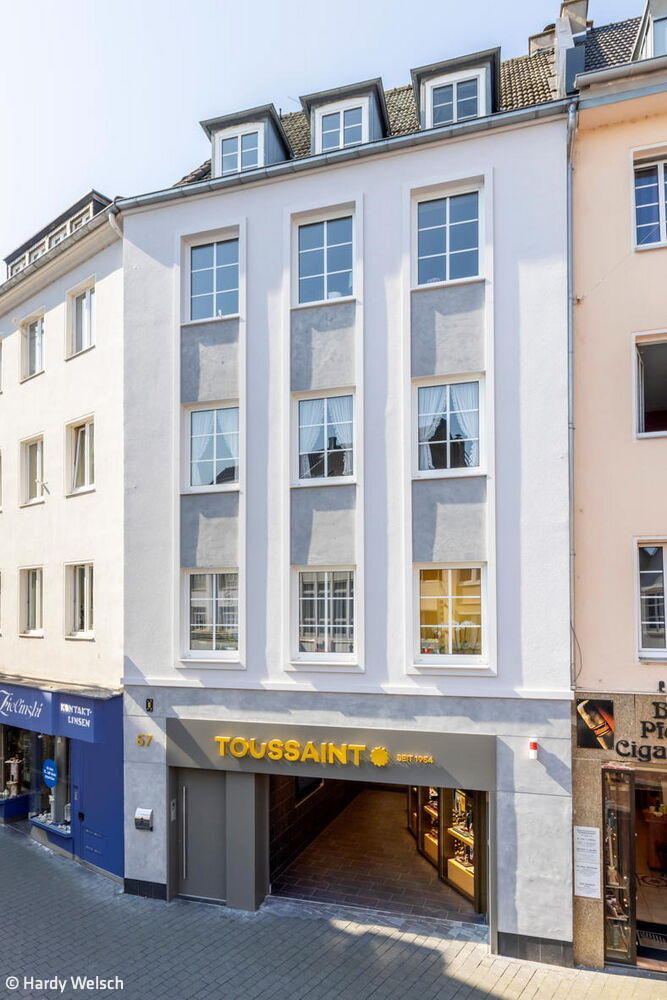
The watch experience formed the centerpiece of the interior design concept for a new Toussaint showroom in Bonn's historic old town—a space crafted for connoisseurs of fine timepieces seeking an exclusive shopping atmosphere. The vision for this second location emerged from practical considerations: the original shop directly across the street, though well-established, had become too confined—a long, narrow footprint that no longer served the retailer's ambitions. By expanding to a second location, Toussaint could specialize its offerings and significantly increase its selling space.
The design's defining feature is the watch crown—that iconic small screw on a timepiece's side—which serves as the conceptual anchor for the entire interior. This form echoes throughout the space: in the welcoming reception desk, consultation zones, and ceiling fixtures, all echoing the circular watch dial and the crown's characteristic fluted edges. Circular seating arrangements invite customers to linger and discuss horology with companions, creating intimate spaces within the "watch crown." Where the old location struggled with acoustic challenges, the new showroom employs acoustic ceiling treatments and plush carpeting to create crystal-clear acoustics. Slatted rear walls with integrated sound diffusers and textile accents ensure excellent hearing clarity even during busy hours—a crucial detail that fosters trust during consultations. The color palette centers on metallics, but rather than cool aluminum tones, warm gold and copper dominate. To avoid visual clutter and let these metals breathe, the design employs restrained materials and neutral backgrounds: a striking silvery starfield adorns the white ceiling; gray carpet grounds the floors. Raw concrete frames the central island's frieze, whose circular opening reveals the basement level—a sophisticated material choice that anchors the scheme. Wooden details bring warmth and tactility: handrails on the central island, display case undersides, rear wall paneling, and counter surfaces. The redesigned façade completes the narrative: previously glazed clinker brick, the window surrounds now feature matching materials to the adjacent shop frames, uniting the basement with upper floors into a cohesive architectural statement.
Photography:
Hardy Welsch
www.hardy-welsch.de
(Published in CUBE Cologne Bonn 04|24)


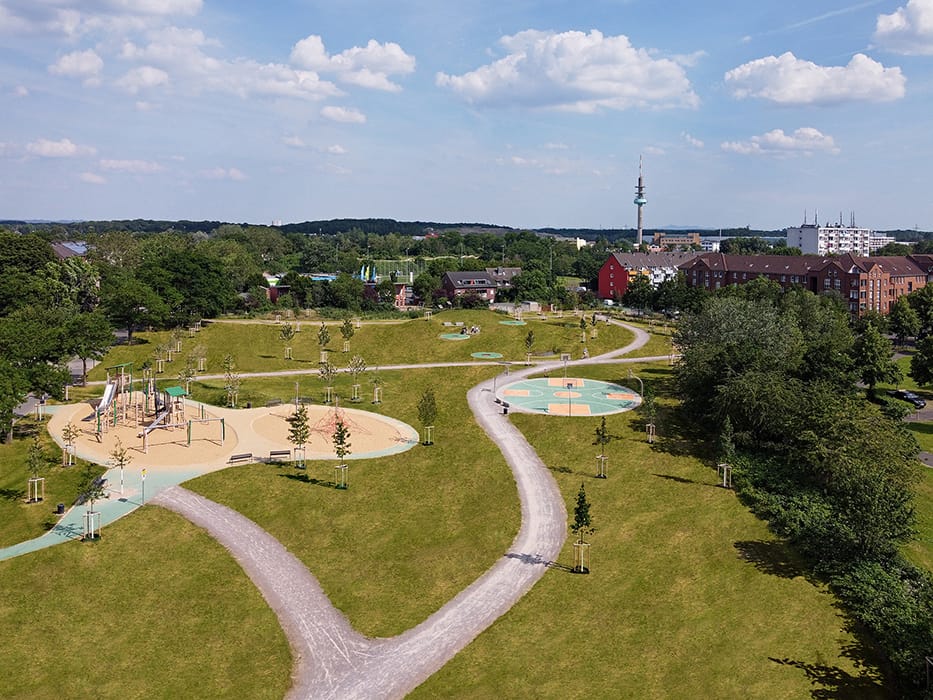
Green transformation
Revitalizing a brownfield in Deutz: Creating spaces for community sport and thriving ecosystems
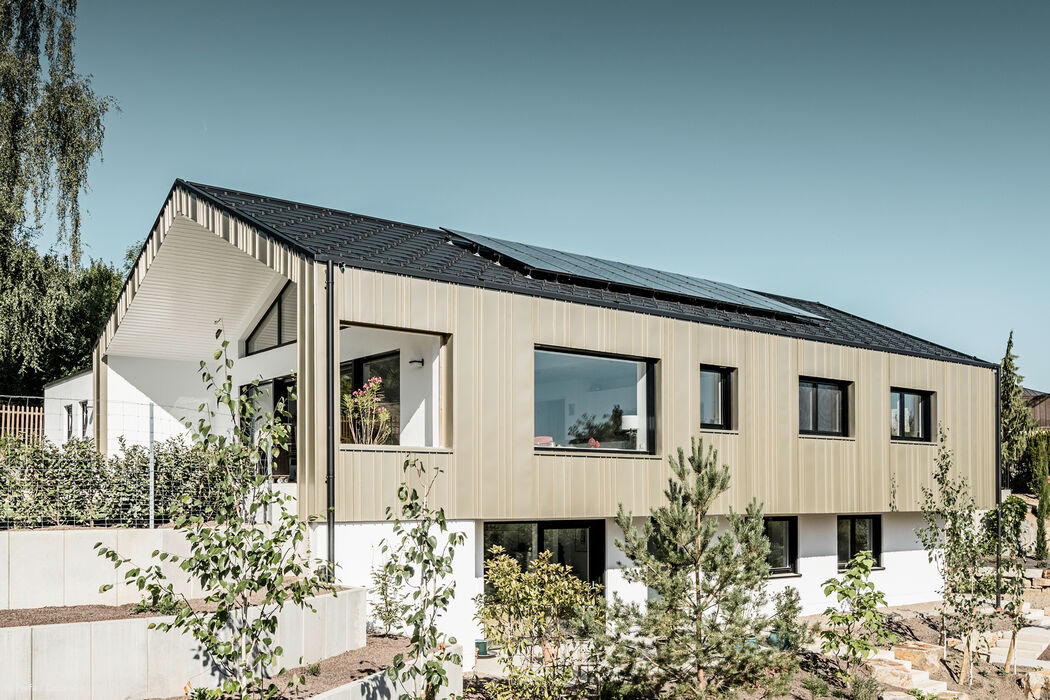
Interplay of Light and Shadow
Modern Hillside Gabled Roof Home with Bronze Metal Façade
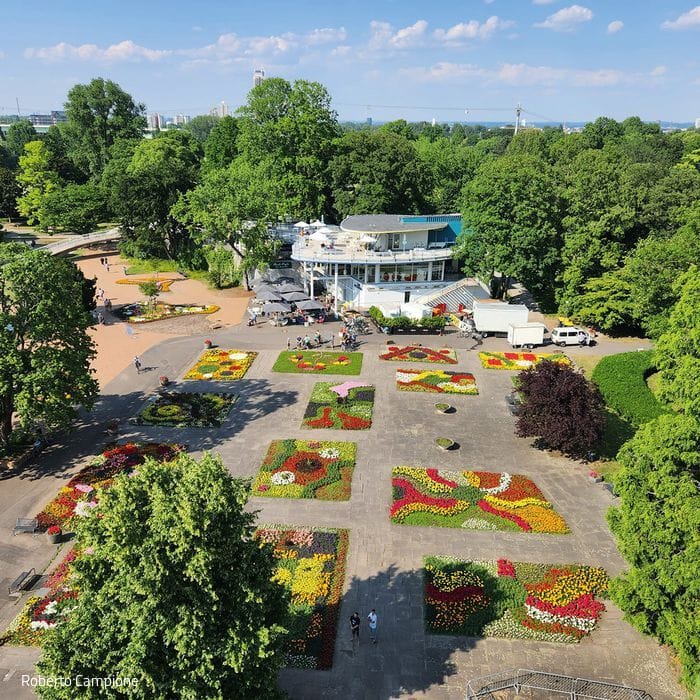
Reinventing the Kidney Table
The Park Café in Deutz's Rheinpark Resurrects the Spirit of the 1950s
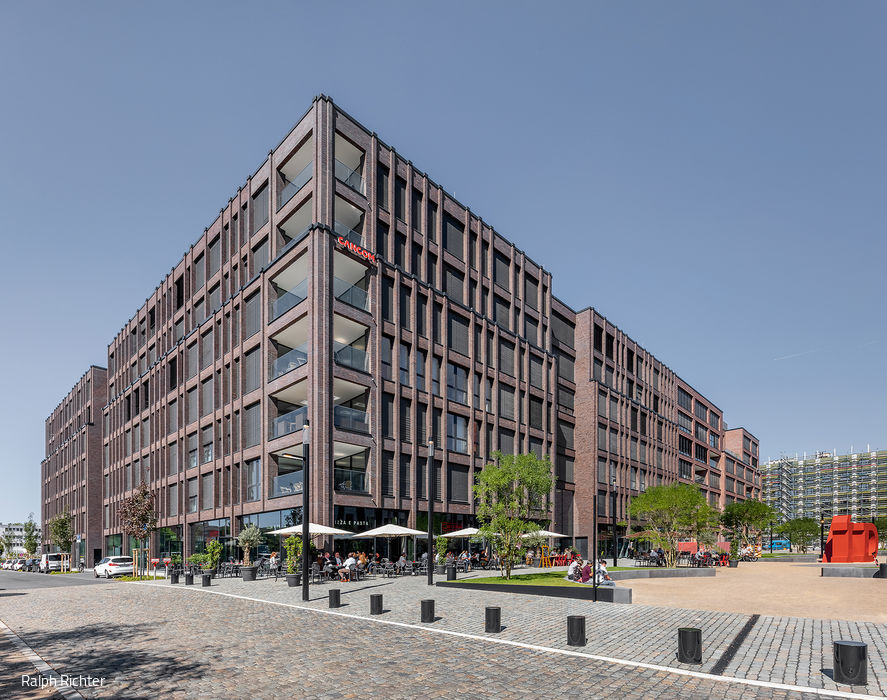
Creative Industrial Character
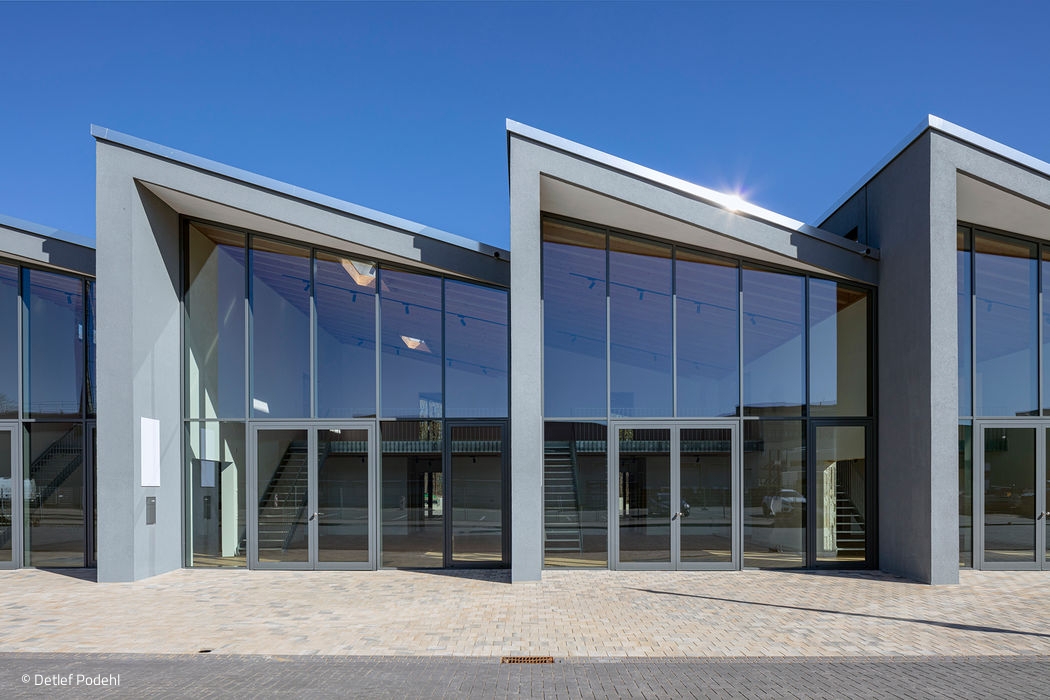
Studio-style commercial units that adapt to tenants' evolving needs