


Following the Fire Wall
Interior design brings abundant wood, nooks, and even a water feature into this historic apartment


Watching aged properties transform into contemporary living spaces never gets old. This 205 m² seven-room apartment in an early 20th-century Charlottenburg building is a compelling example. True to its era, the property embodies the classic old building: soaring ceilings, an intricate floor plan, and a rather labyrinthine spatial layout. But how do you create something entirely new from this starting point? Studio Loes faced exactly this challenge. "Our concept hinges on using intelligent design and strategically positioned custom-built furniture to harmonize the space's fragmented character," explains project manager Lukas Specks. "We've anchored these built-ins at key interior locations and along the fire wall that runs the length of the entire west side."
The result is an intuitive spatial flow connecting each room. Importantly, original architectural details—stucco moldings, cornices, and rounded archways—remain untouched, establishing a continuous conversation between the building's heritage and contemporary design. Where the apartment's bones once offered only awkward niches and offset corners, the entrance now showcases functional, ceiling-height built-in cabinetry in light-glazed oak. The original stucco molding above serves as a subtle nod to the building's past. Moving through the foyer into the living area, you're immediately drawn to a custom walnut bookcase that spans the entire fire wall. Its tapering shelves cleverly double as a climbing feature. The kitchen continues this design language, with wooden built-ins running along the fire wall complemented by a central island and stainless steel shelving, creating an overall sense of refined minimalism. The 15-meter-long, narrow hallway extends from living room through kitchen to the dressing room—a transition space leading to the bedroom and bathroom. Bespoke rock crystal and stainless steel "silent servants" here serve both as sculptural focal points and understated storage. The bathroom crowns the sequence: a freestanding "water pavilion" containing sink, shower, and toilet niche sits as a sculptural object in the room's center. This approach freed the walls from plumbing fixtures and recovered access to the former servants' staircase, now reimagined as a sculptural sauna.
Photography:
Studio Loes
(Published in CUBE Berlin 02|25)
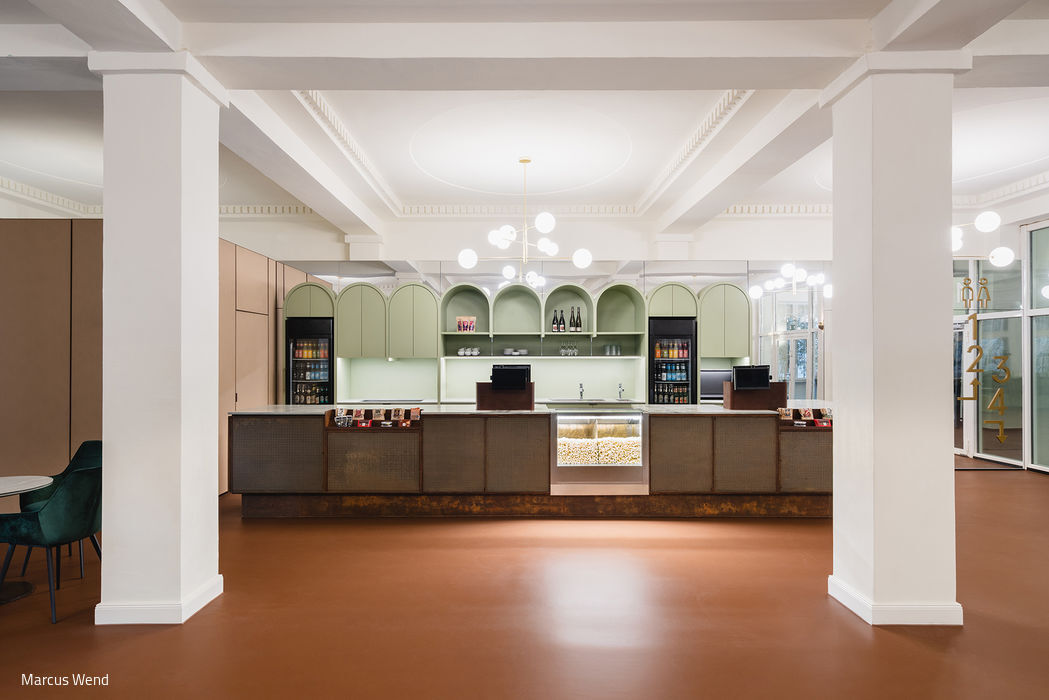
Retro charm
A Historic Cinema Reborn in Radiant New Life
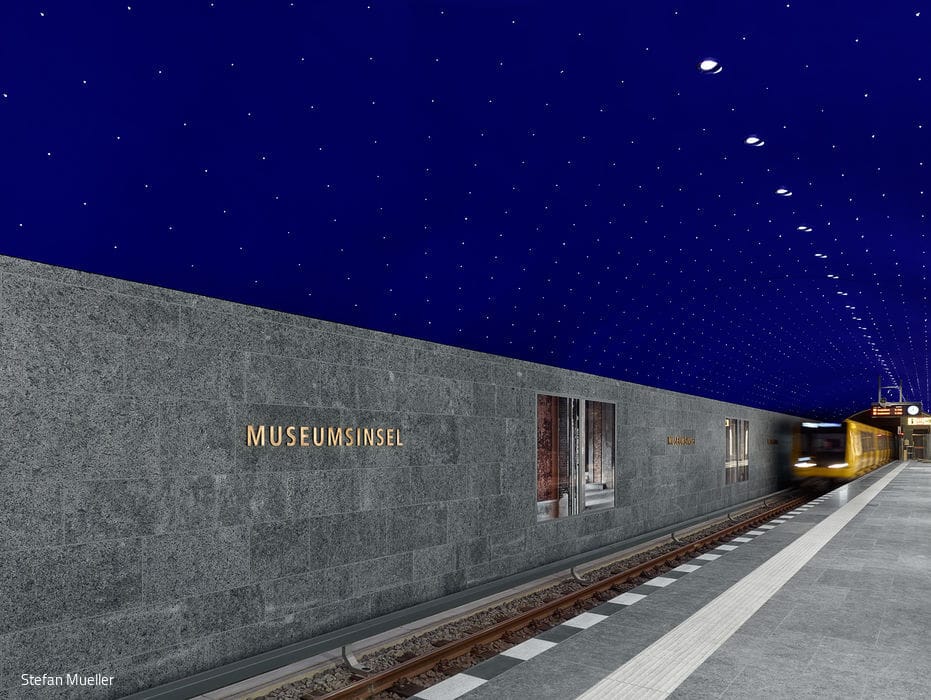
Architecture as Cultural Icon
Where Mozart, Schinkel, and Dudler Converge: The New Museumsinsel Underground Station
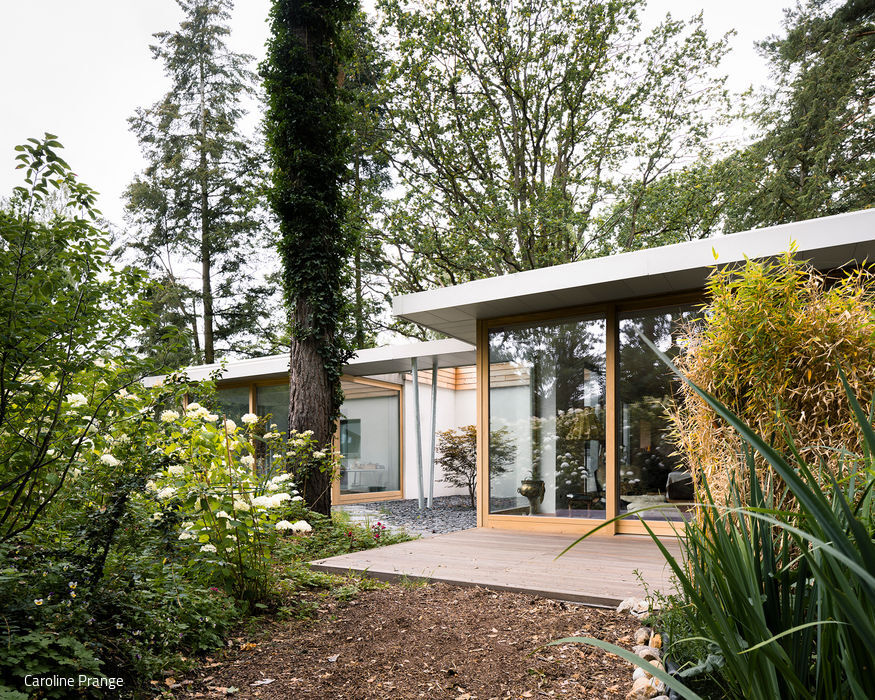
Among the trees with a view of the water
Through thoughtful interventions, the house glows anew, appearing light and transparent.
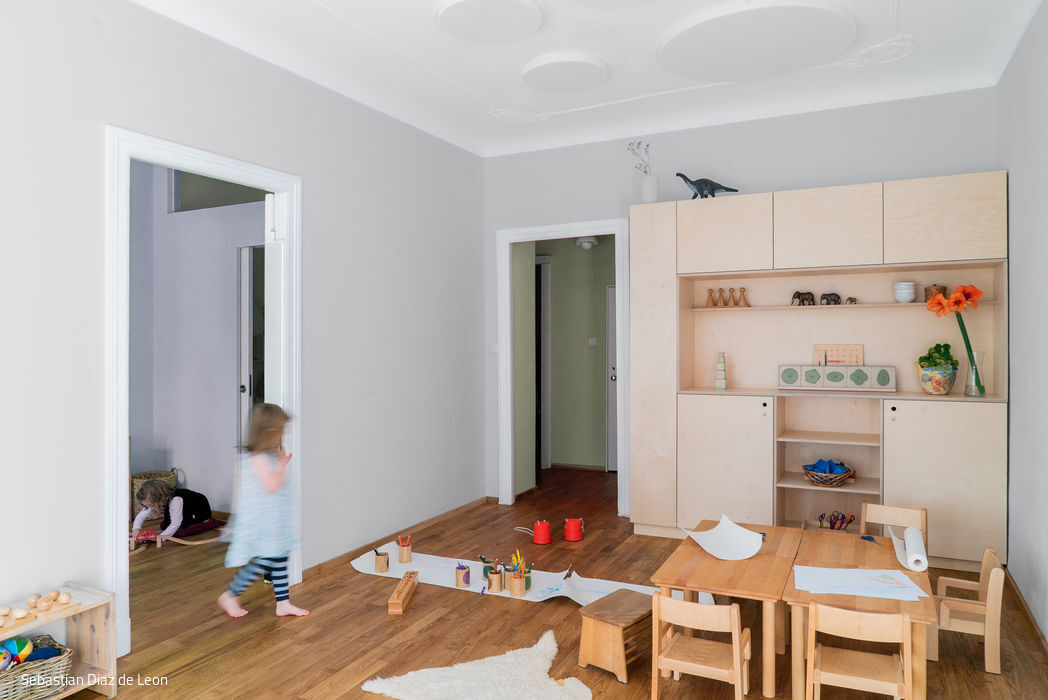
A world designed for little people
A New Montessori Kindergarten in Wedding