


Housing First Düsseldorf
People experiencing homelessness receive a new home without preconditions
CUBE: How does Housing First differ from other approaches to homelessness support?
Alexandra Didszun: Housing First ends homelessness immediately. That's what sets us apart from other models that work in stages, placing people living on the street first in emergency shelters. From there, they move to another facility where they get their own room. If they're lucky, there might eventually be what's called a training apartment. And only at the end of this model—structured as a step-by-step progression—comes their own apartment. For many, that's a difficult path. Without permanent housing, many end up back on the street. Housing First flips this approach. The apartment comes first. After that, we work together as social workers to address all the other challenges. Once people have settled into their own apartment, we often see a kind of mental shift. Many have lived on the streets for decades, sharing public space with others. Then suddenly, from one day to the next, they have an apartment and experience real rest for the first time in years. Naturally, thoughts resurface, old problems reemerge. Sometimes the people affected themselves have very high expectations—wanting to transform their entire lives overnight. That's where we step in and help them take things one step at a time.
What does the ongoing support look like in practice?
Our social workers are always available as points of contact. This ranges from processing various experiences and trauma, to practical help furnishing the apartment, to managing substance use disorders. We offer debt counseling and other services. But always only to the extent that the people affected actually want them. Which means our support has no predetermined plan, no deadline. It's always tailored to the immediate, individual needs of each person. We completely understand if someone says they need time to settle into their apartment and want some peace and quiet for a while. That's not a problem at all.
Funding currently comes largely from art sales.
Exactly. The street magazine fiftyfifty operates an art gallery in Düsseldorf. We regularly receive art donations from top artists worldwide—including Imi Knoebel, Sabine Moritz, Thomas Ruff, and Gerhard Richter. We then sell these artworks at the gallery. Additionally, a weekly art auction takes place online at www.fiftyfifty-galerie.de. The proceeds go toward purchasing apartments in Düsseldorf for homeless individuals. We currently have 147 apartments available. Some we've purchased as an association ourselves, others have been donated to us, and some are rented to us. Our goal is to grow that number significantly. So we can largely end homelessness in Düsseldorf. Since the association was founded in 2021, we've successfully reintegrated around 160 people into normal life. That keeps us motivated to continue.
If you had one wish, regardless of whether it's realistic or not, what would need to change to effectively tackle homelessness in the long term?
Many things. First and foremost, we desperately need affordable housing. In major cities like Düsseldorf, that's a massive problem. There simply aren't enough apartments, especially affordable social housing. We need to actively use the vacant properties that do exist in Düsseldorf. Housing must be affordable. The job center here allocates 546 euros per person for accommodation costs. This covers base rent plus utilities. Costs can't exceed that amount. And that makes it extremely difficult to find an apartment in Düsseldorf. As far as I know, the price per square meter is around 18 euros. You simply can't go far with 546 euros. That's why our association has had to largely purchase the apartments ourselves. But that shouldn't really be our job, because realistically, there are enough apartments out there. The issue is affordability—there just aren't enough at a price people can actually pay.
Alexandra Didszun, thank you for this conversation. This interview was conducted by Daniela Endrulat, freelance editor, for CUBE Magazine.
Listen to the full interview, excerpted here, as a podcast.
Alexandra Didszun
Alexandra Didszun is project manager of Housing First Düsseldorf e. V., an association founded in October 2021 and supported by the City of Düsseldorf. The organization permanently houses people experiencing homelessness by leveraging synergies across the business, academic, social work, and private sectors. Individuals receive housing without preconditions, and the association provides them with ongoing housing support services. The association's concept was developed in collaboration with the initiative "Runter von der Straße," fiftyfifty, Düsseldorf Drug Assistance, and Prof. Dr. Anne van Rießen at Düsseldorf University of Applied Sciences.

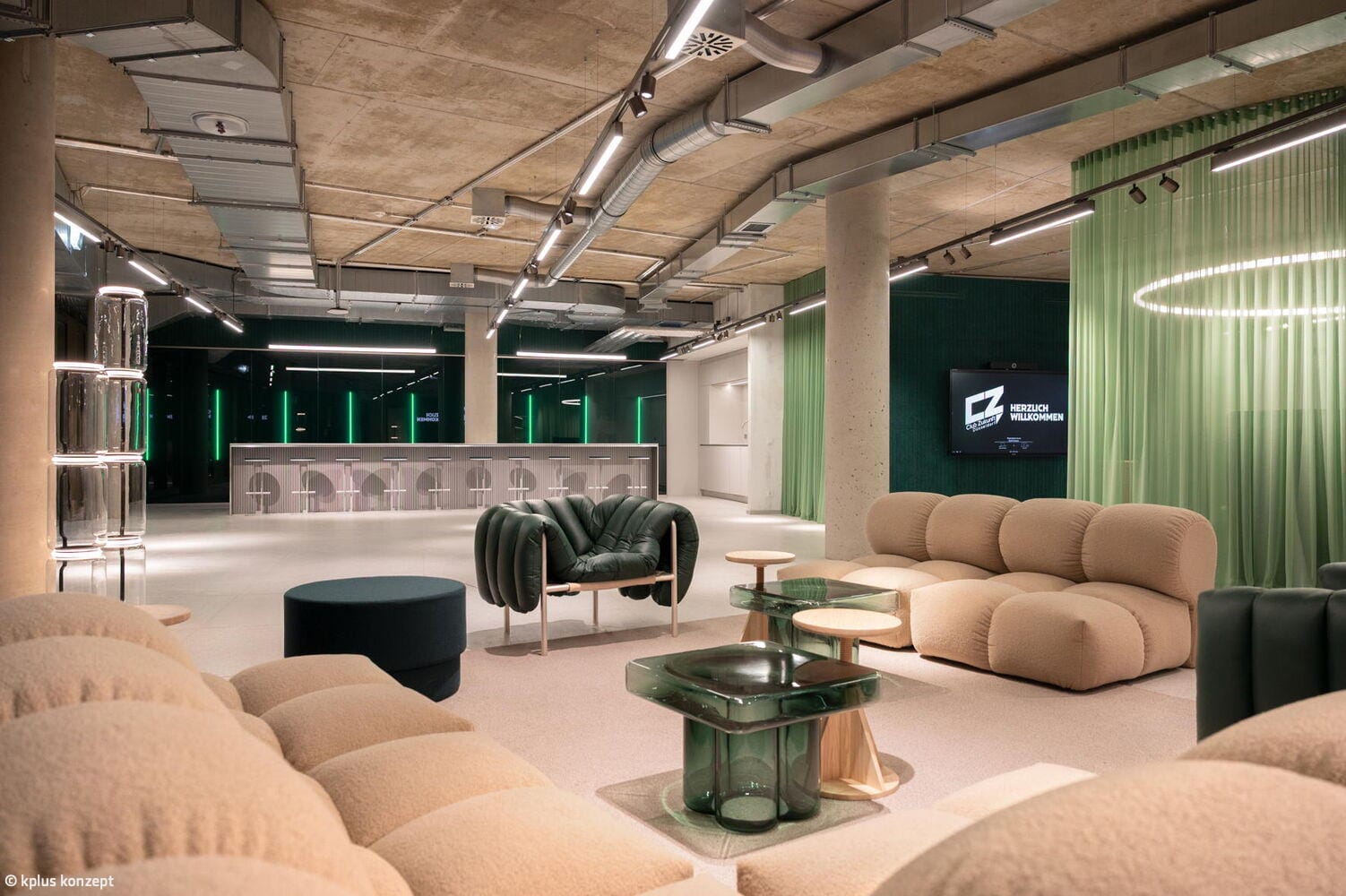
Less is more
The “Club Zukunft Düsseldorf” on the EUREF Campus is shaping the climate-neutral city
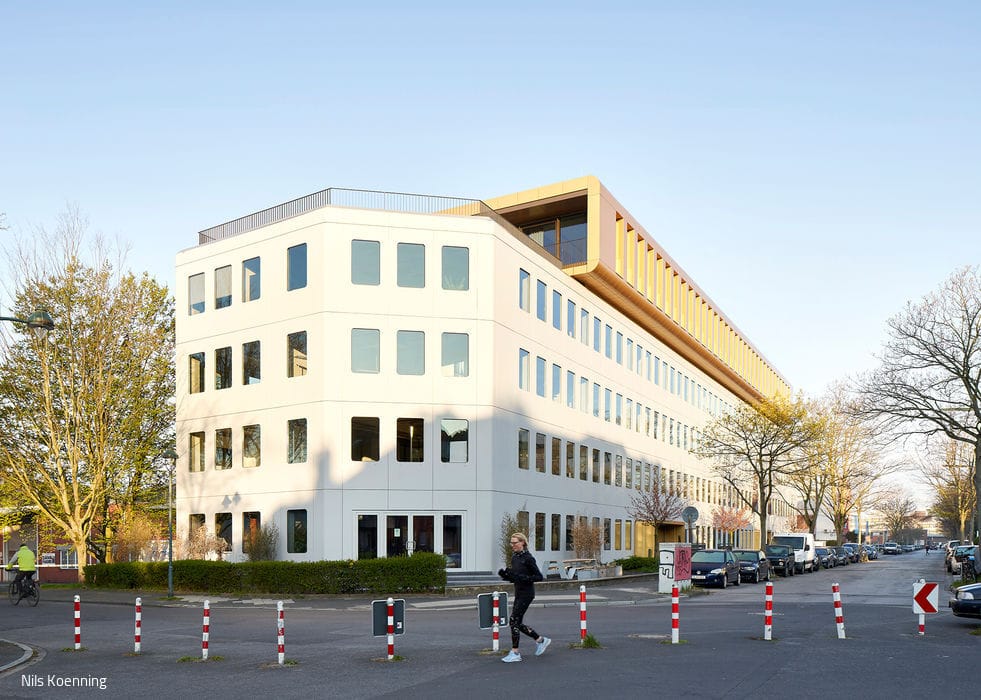
Community as a Guiding Principle
New Work and Community Spirit: A Striking Office Transformation in Heerdt
Tailored Precision
A conversation with Düsseldorf architect Georg Döring on single-family homes, mentors, and fathers
The real estate agent 4.0
In this interview, the agent discusses how digital business processes are reshaping the profession and why it's thriving even in uncertain times.