


Seamlessly Integrated
New building ensemble that honors its historical context while establishing its own distinct identity
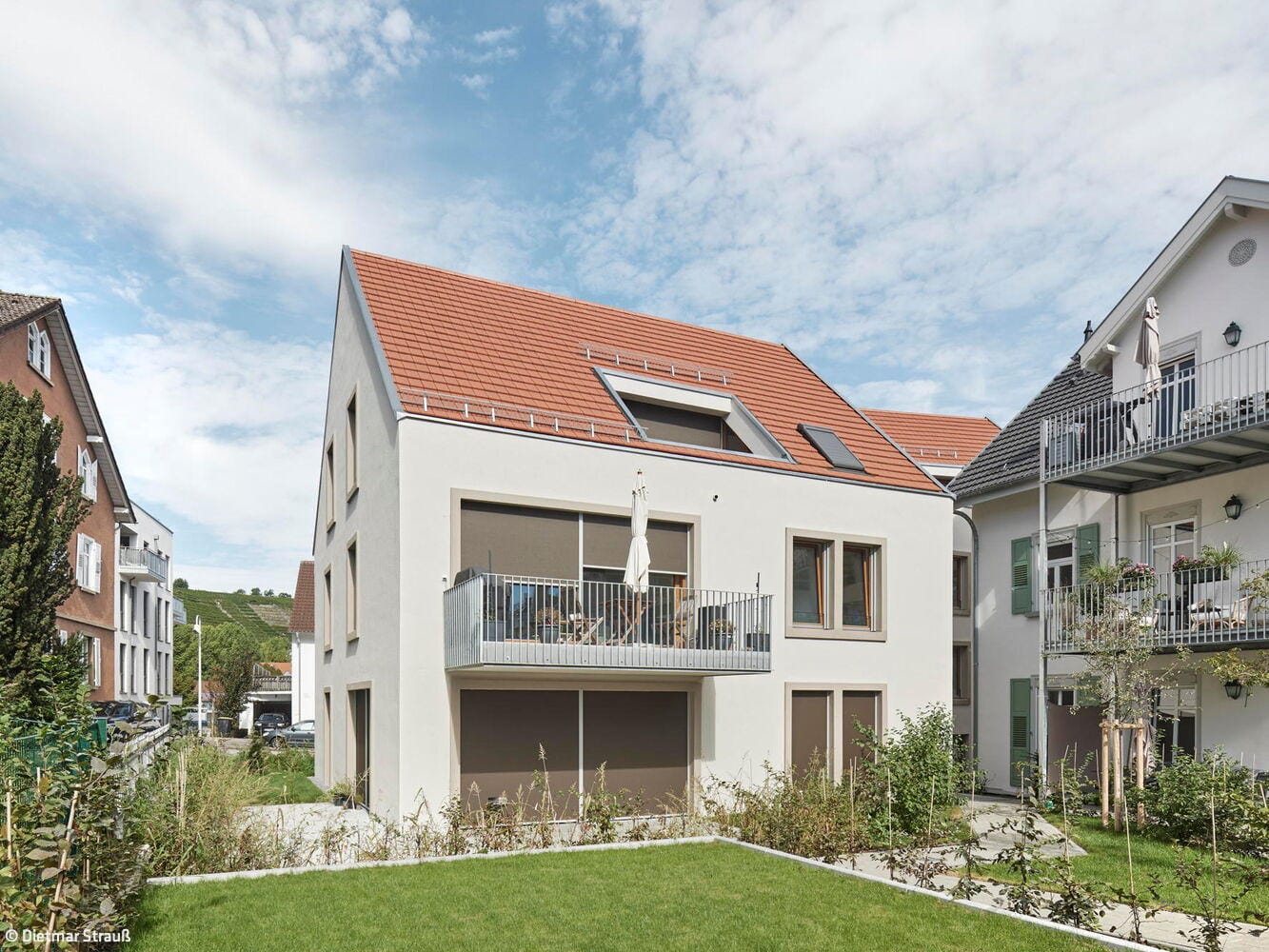
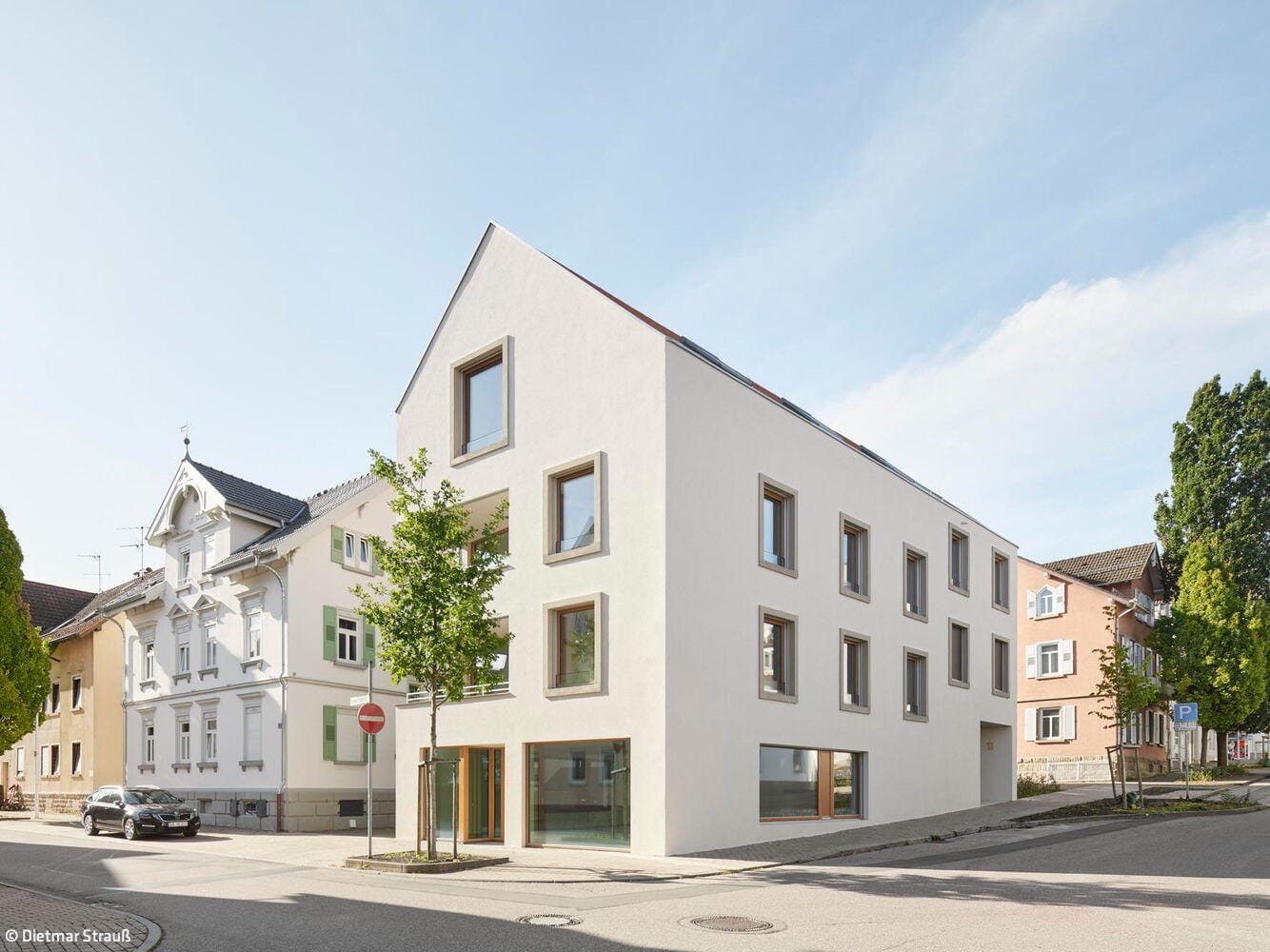
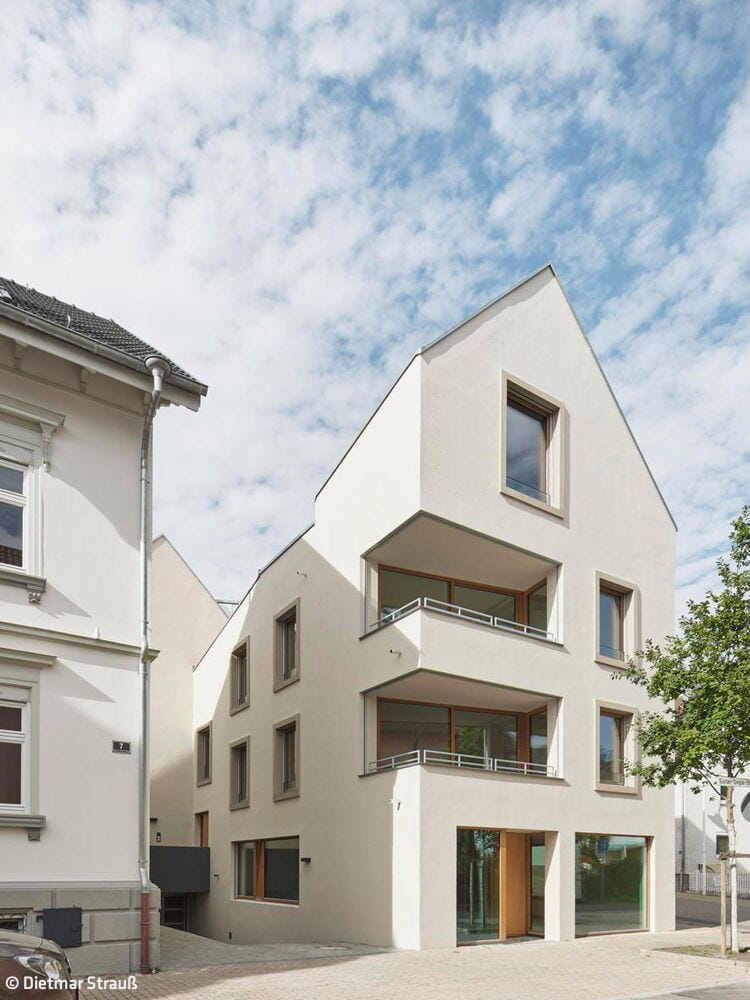
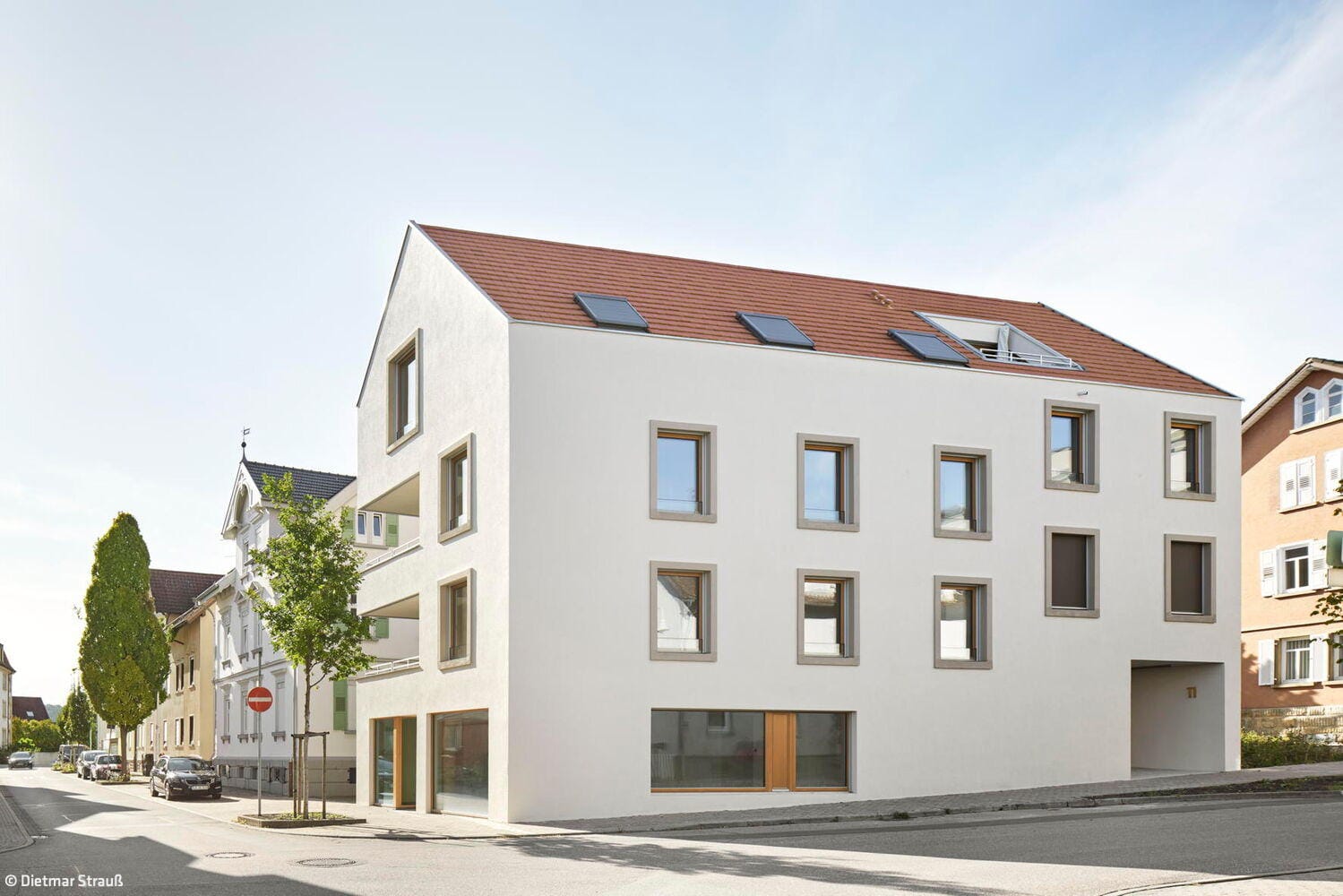
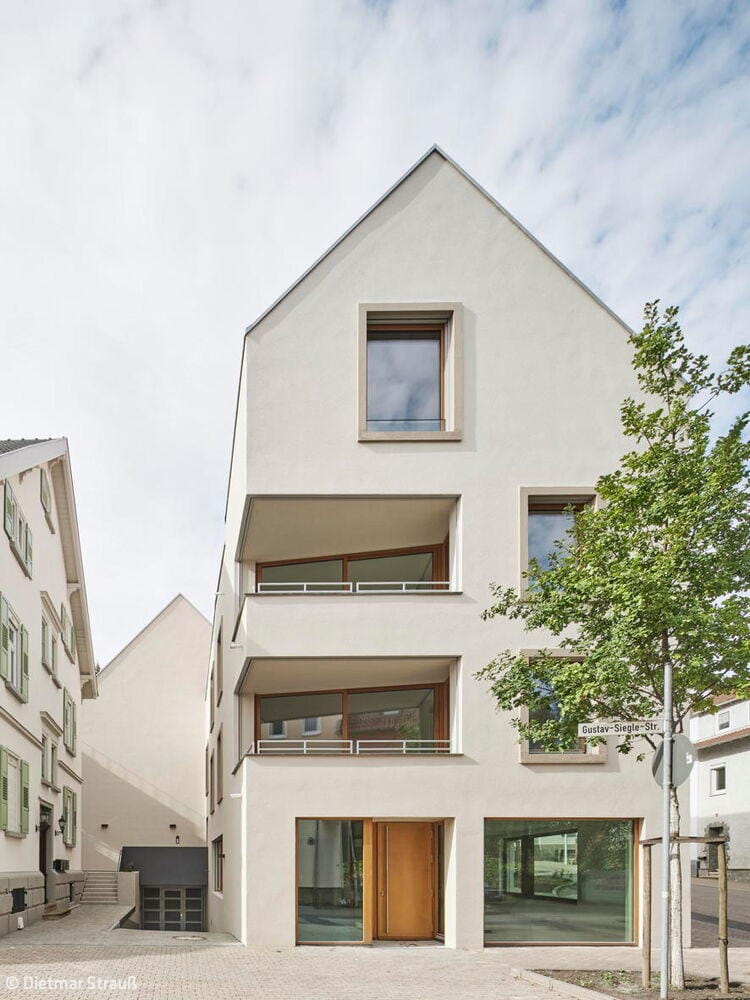
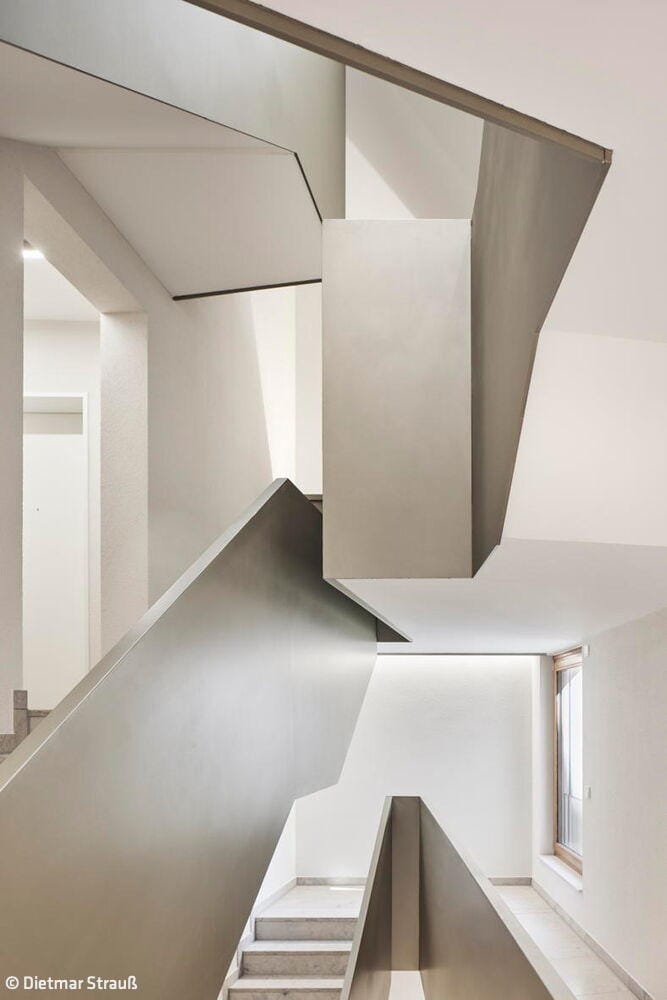
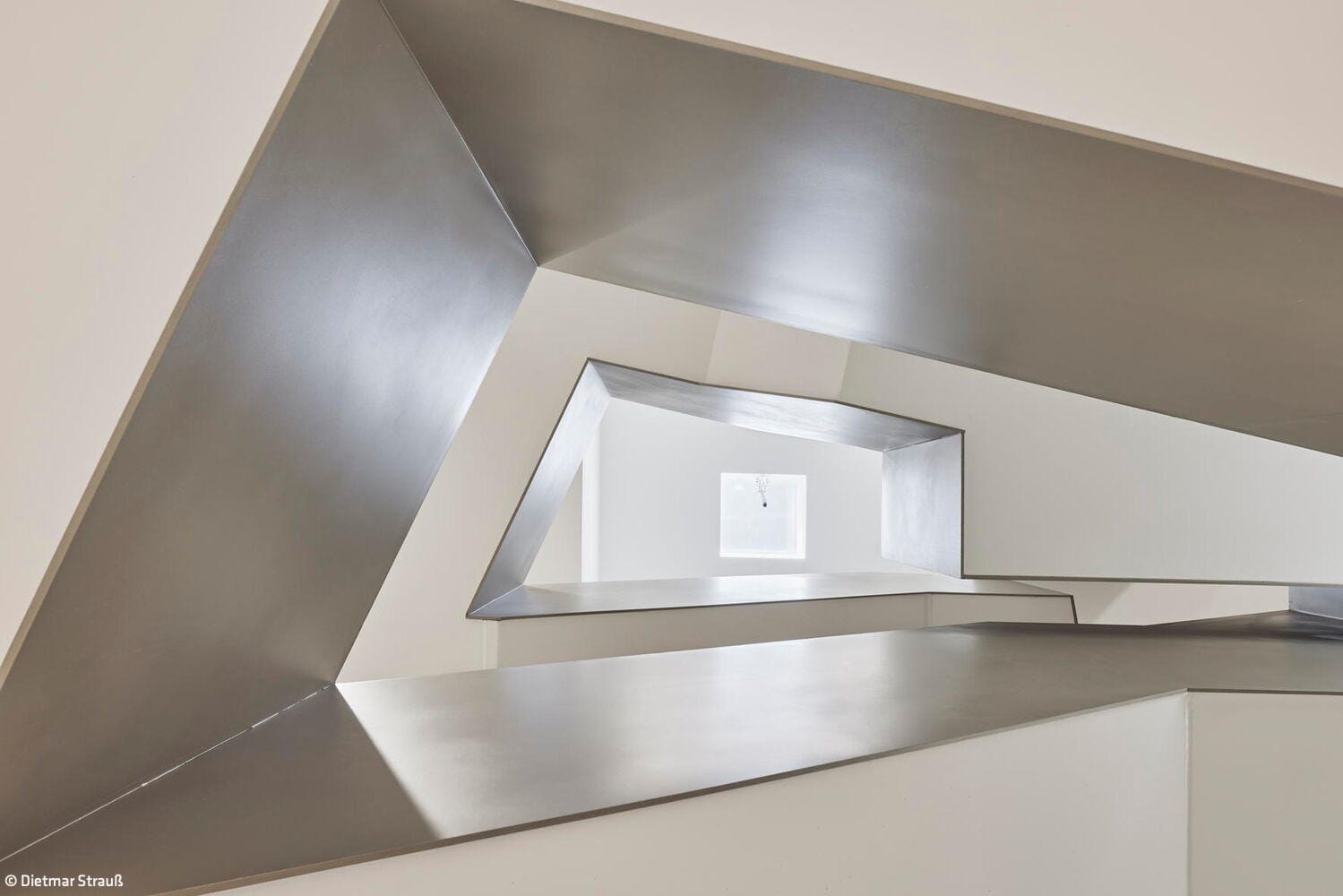
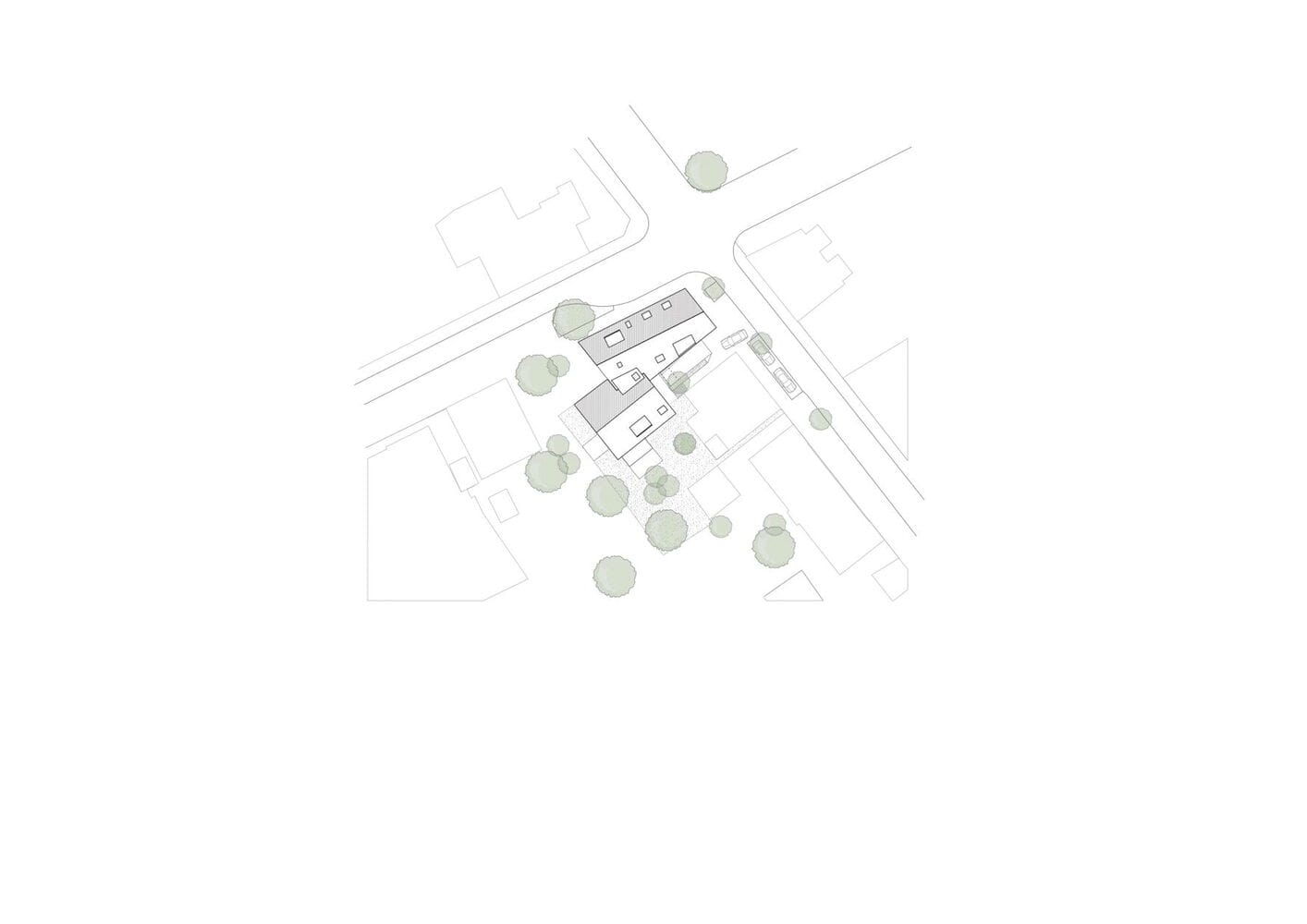
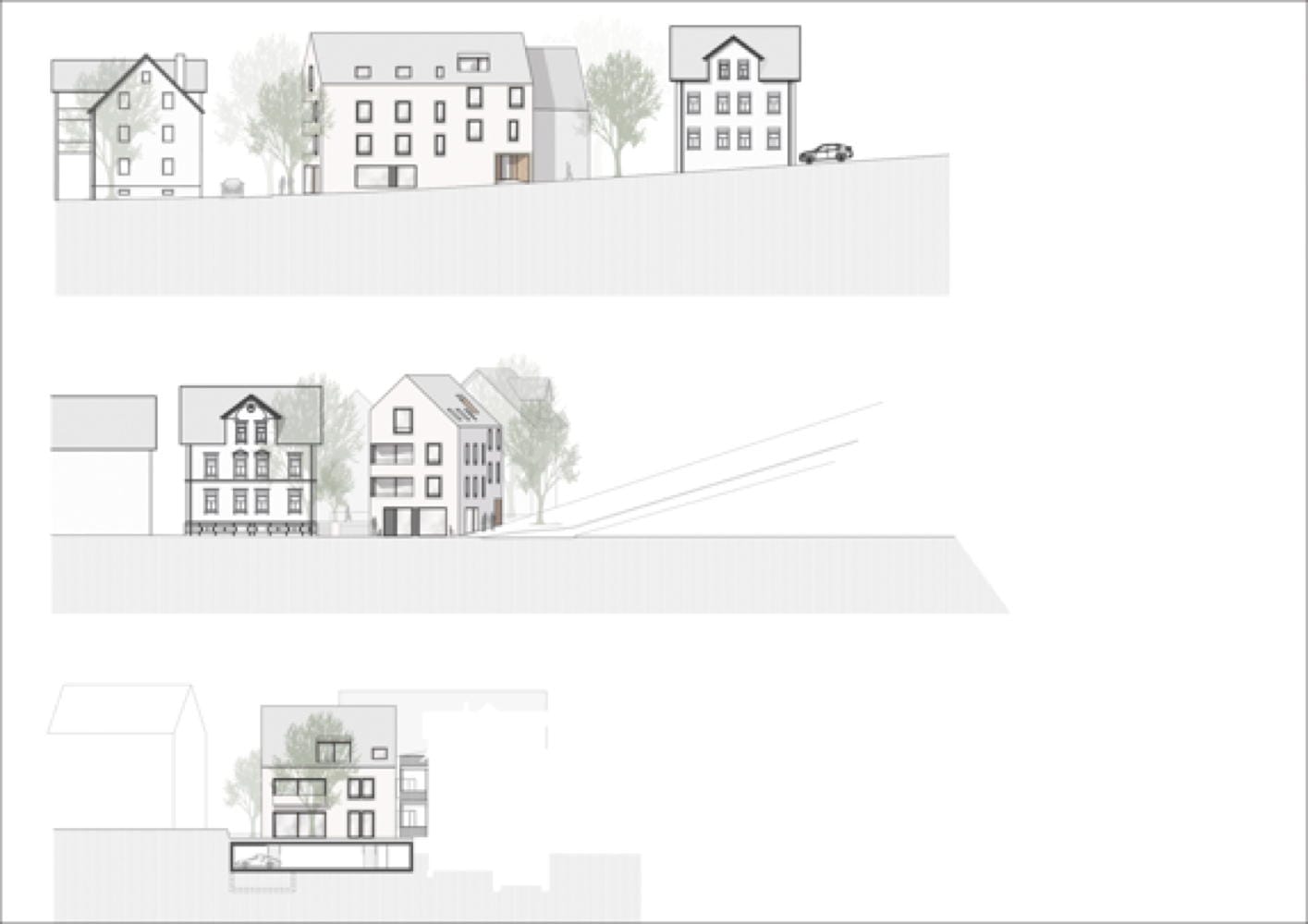
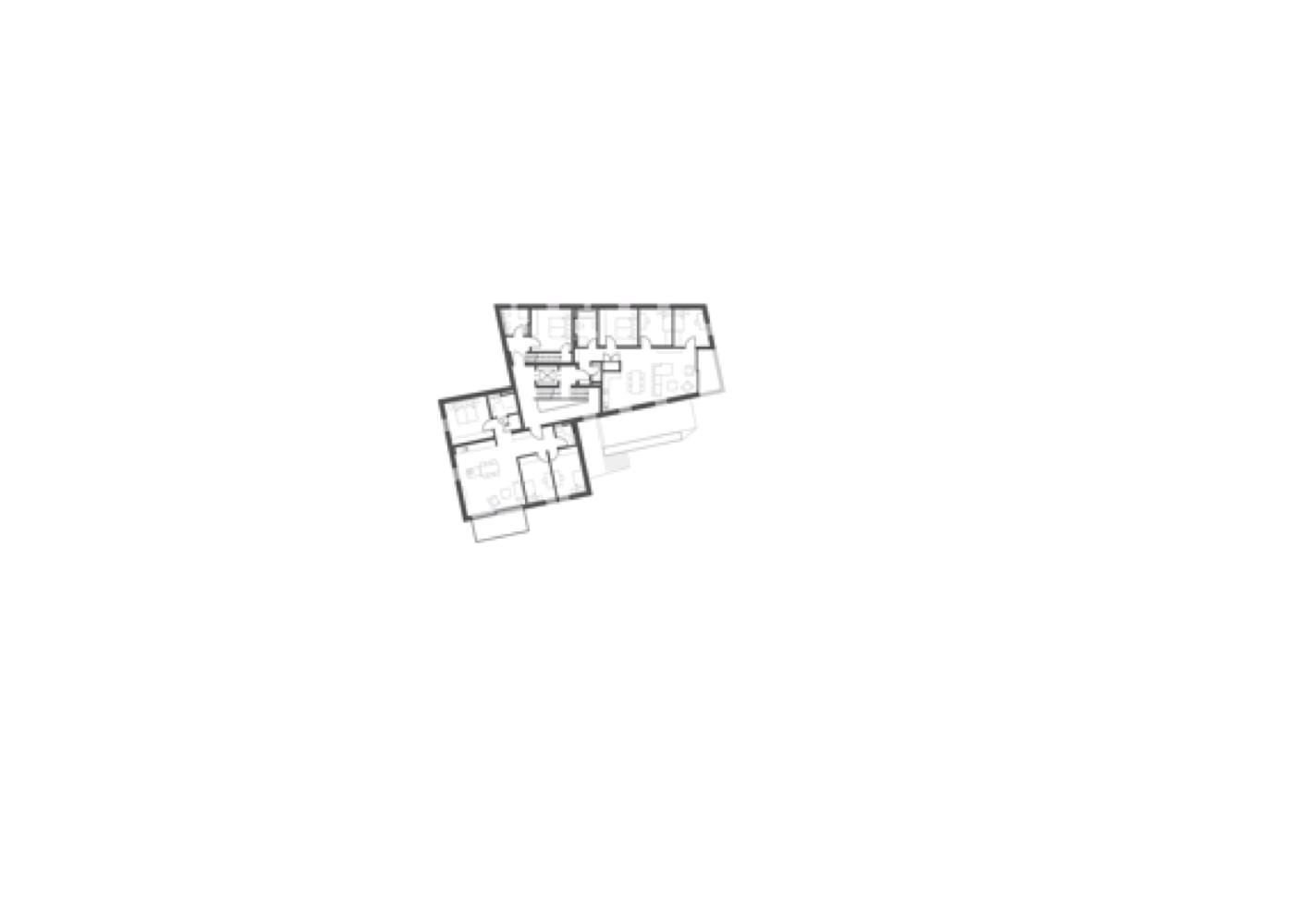
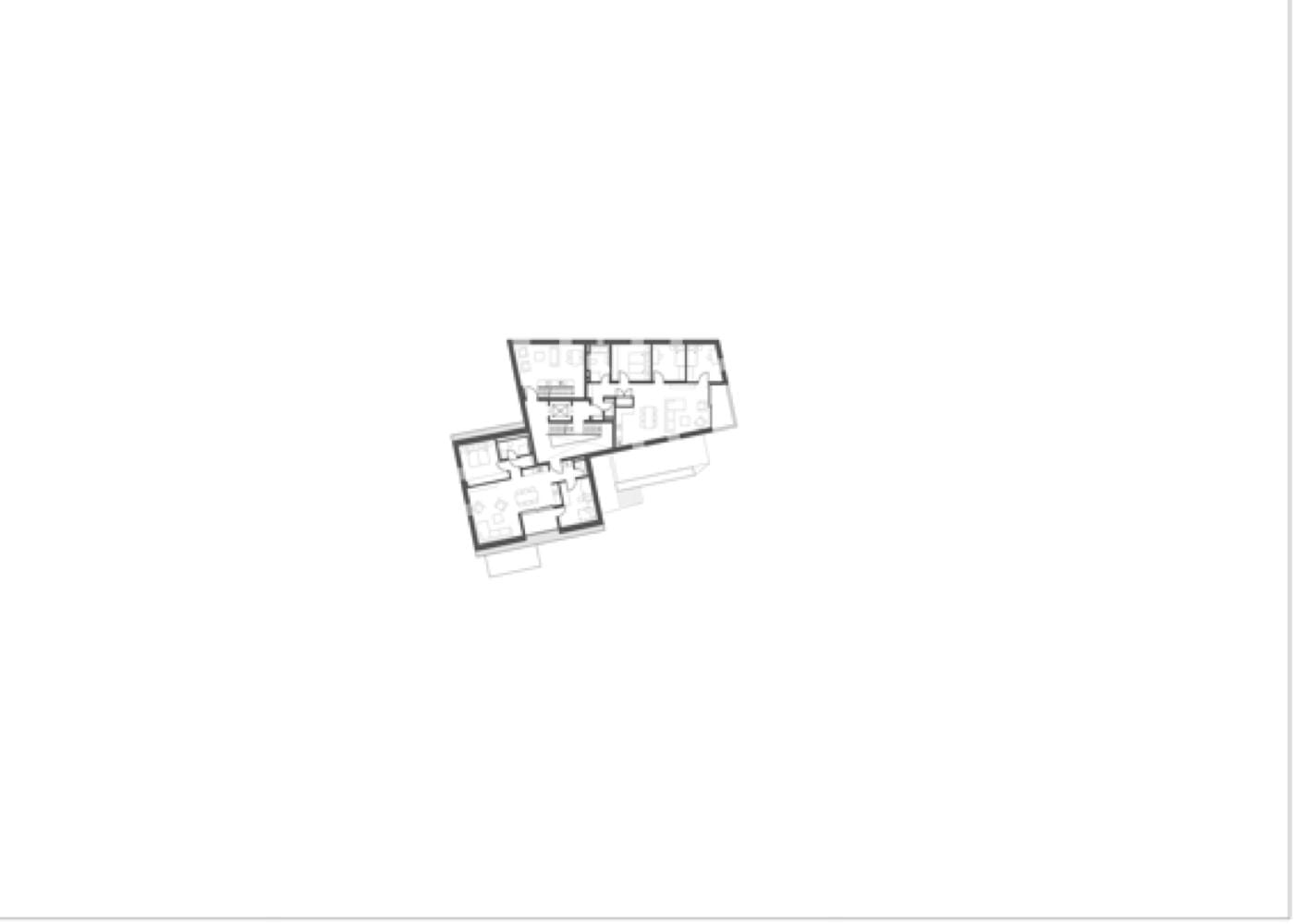
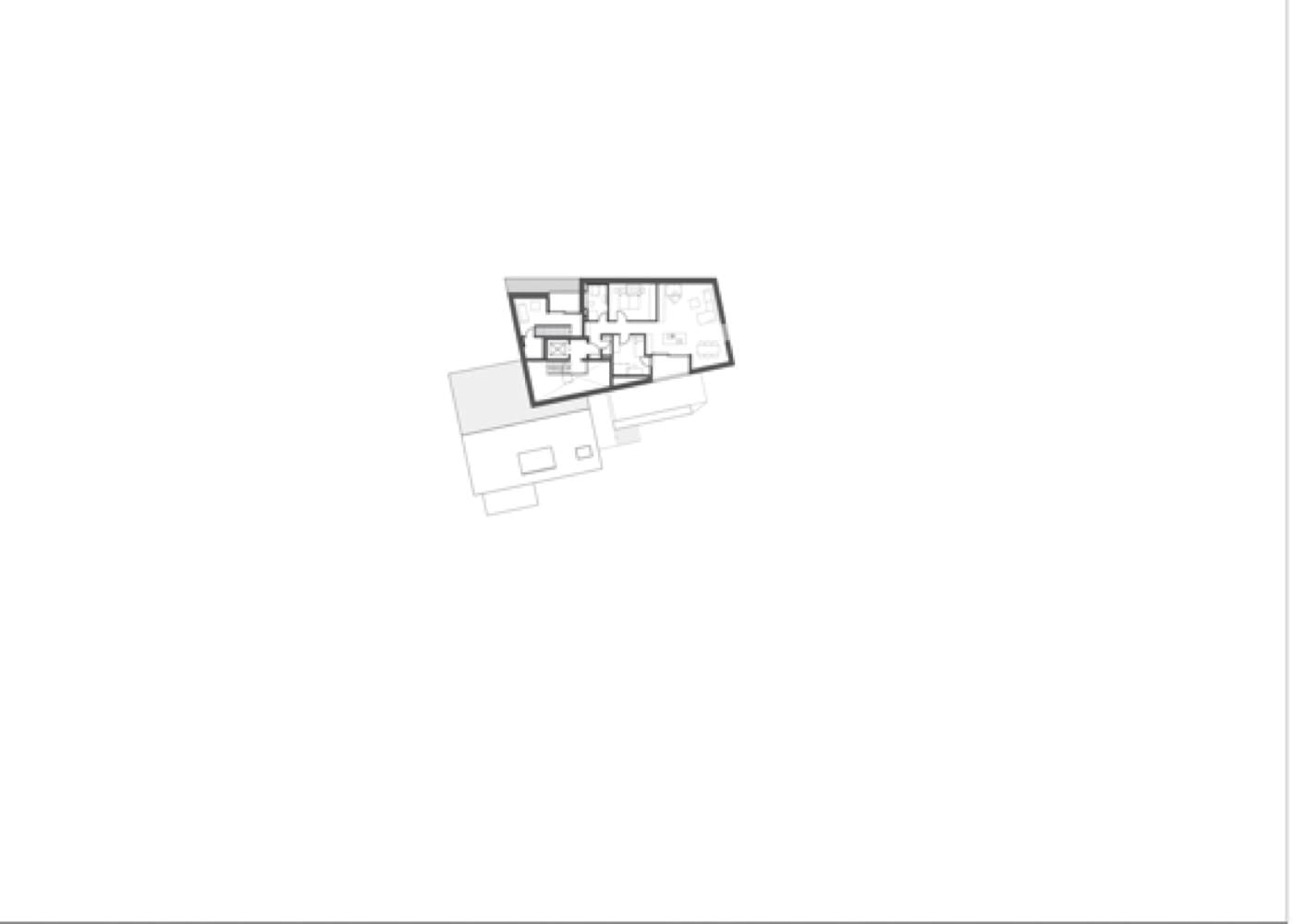
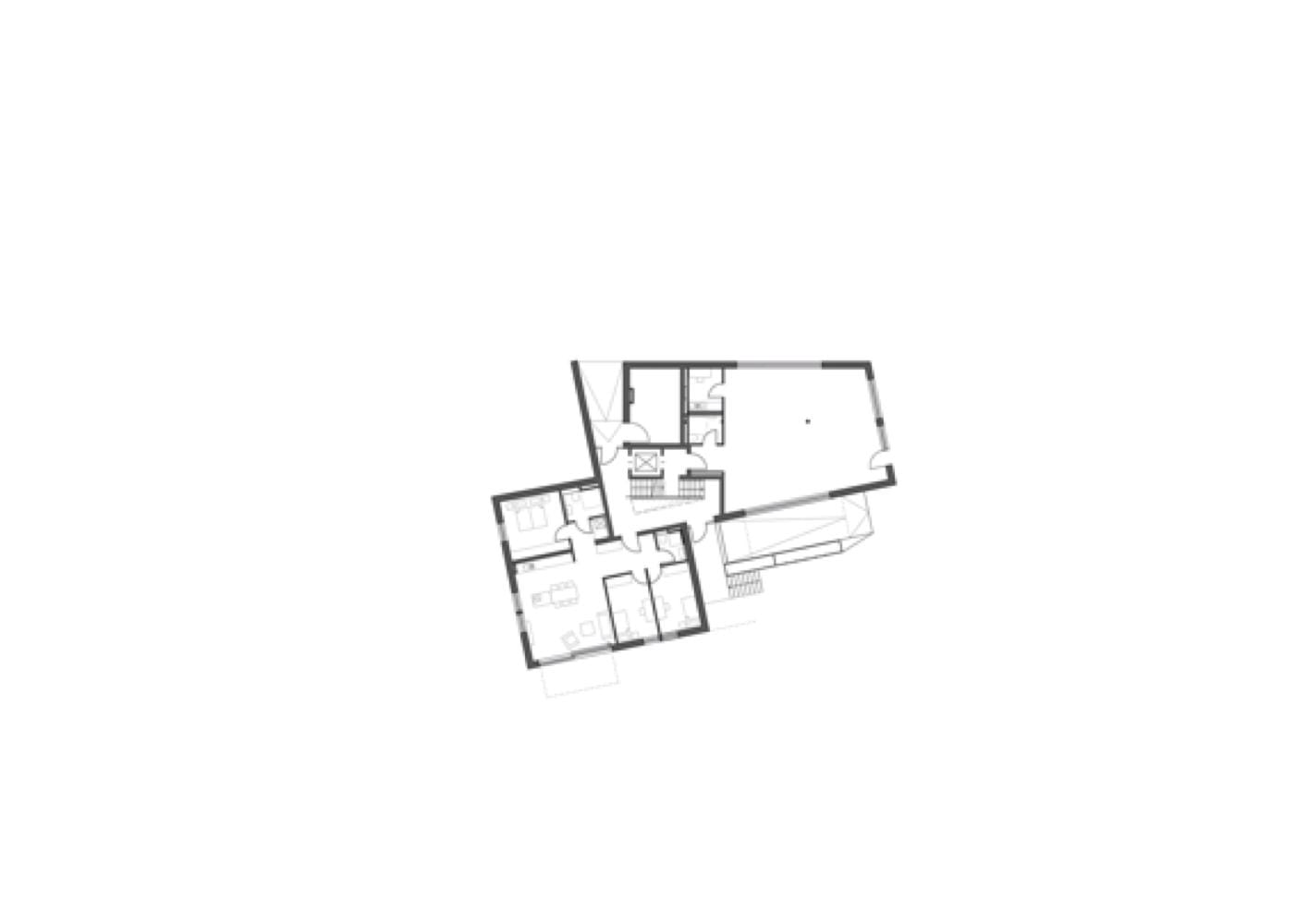
The second residential ring in Besigheim benefits from its proximity to the historic town center and the railway station—a compelling location. To complete the street perimeter at a corner site while respecting the surrounding context, architect Kai Dongus developed a deceptively clever design: from the street, it reads as a single, narrow volume; from the north and rear, it reveals its true form—three subtly rotated structures that integrate harmoniously with their neighbors. The plastered perforated façades, tiled roof, window proportions, and sandstone-colored trim all reference the surrounding architecture with consistency and restraint. The 3.20-meter setback from the northeastern neighbor aligns with established street distances, preserving both the street edge and natural light on all facades. Entry is accessible at grade level, with a connecting staircase leading along the existing building. Within the three gable-roofed volumes sit seven residences and a ground-floor retail space. The half-story stagger between units creates unexpected spatial richness and intriguing sightlines. The sculptural stairwell opens upward into a generous void, where the rotation of the circulation becomes unmistakably apparent.
A through-passage lift and staircase connect all levels accessibly, ensuring seamless circulation throughout. Apartments are oriented primarily south and west, maximizing natural light and solar gain. A compact three-level unit on the northwest corner benefits from unexpected warmth via a roof loggia. Parking is discreetly positioned in the basement—serving both the new building and the neighboring listed structure—with 12 weather-protected bicycle spaces nearby. The building's passageway creates barrier-free access to the adjacent green space, designated for the required community playground. The result is a compact, luminous ensemble that honors the block's historic character while asserting a distinctly contemporary identity through spatial refinement and meticulous detailing.
Photos:
Dietmar Srauß
www.dietmar-strauss.de
(Published in CUBE Stuttgart 04|25)

New Qualities
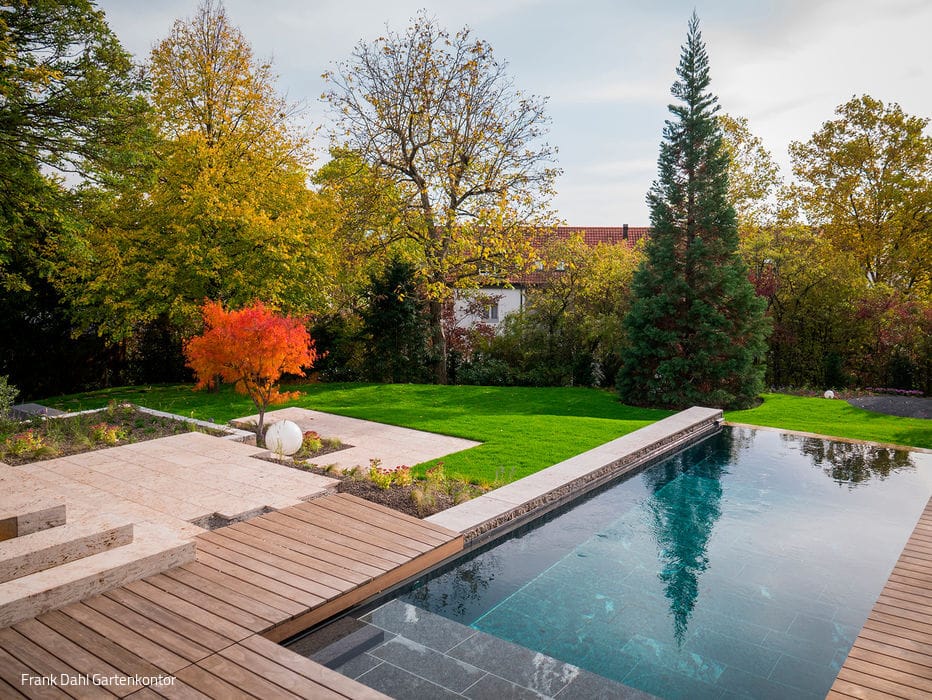
A complete garden transformation: pool, walkways, and endless discovery around every corner.
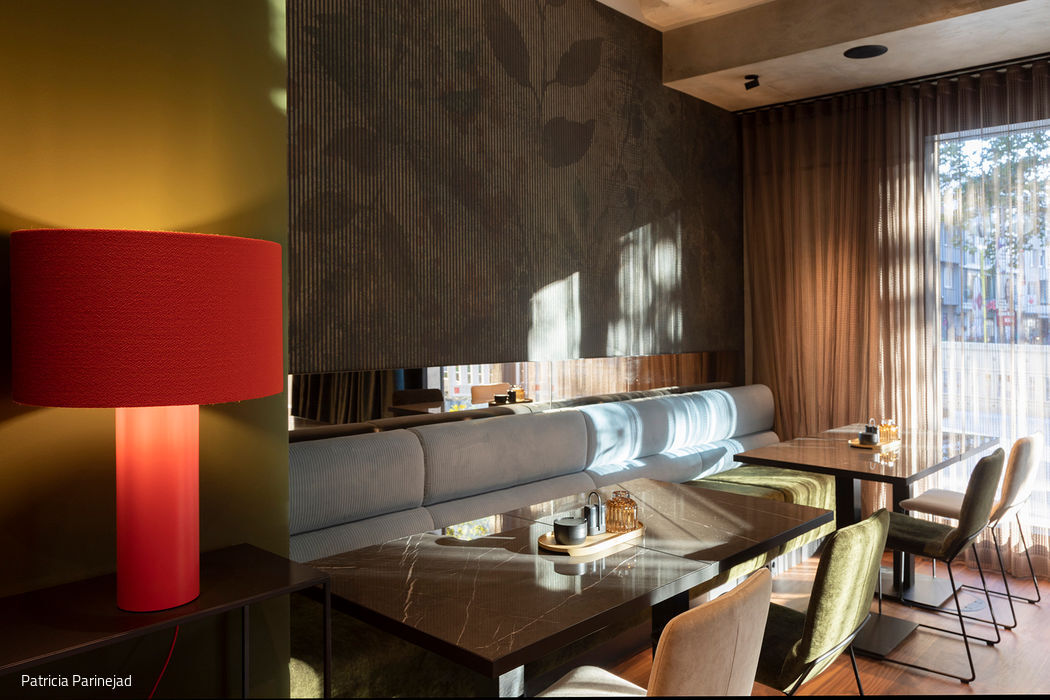
A Hotel Takes a Stand on Color
A Reimagined Design Hotel in Stuttgart with Unmistakable Character

By the Flowing Stream
A contemporary garden with pool surrounds a restored mill, thoughtfully echoing its historic character.
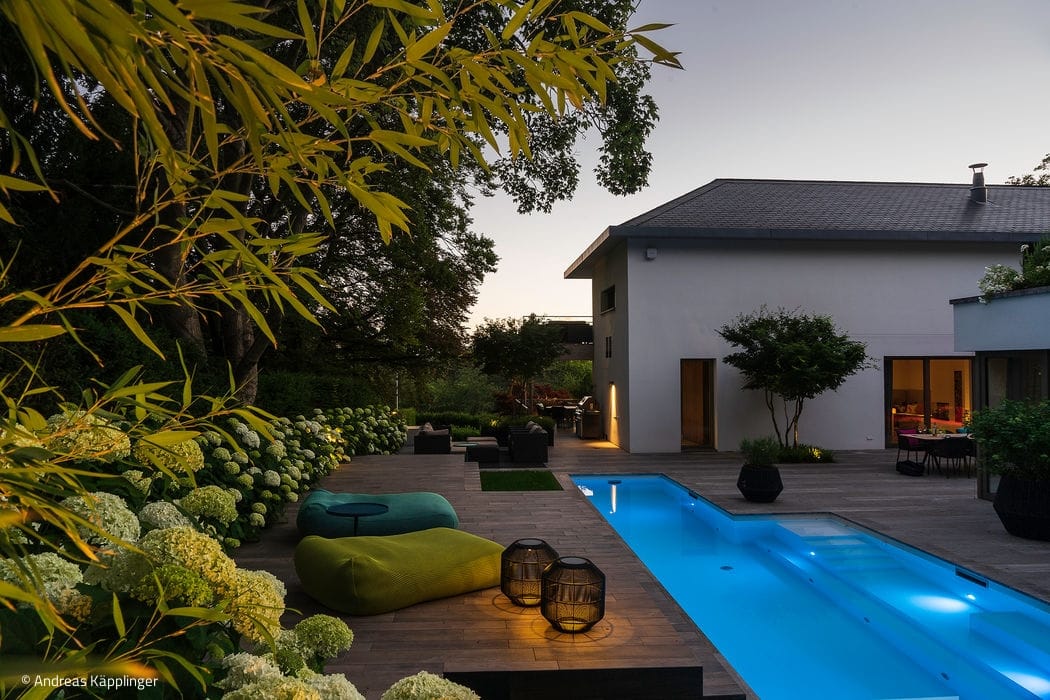
Casual, Relaxed, Beautifully Lit
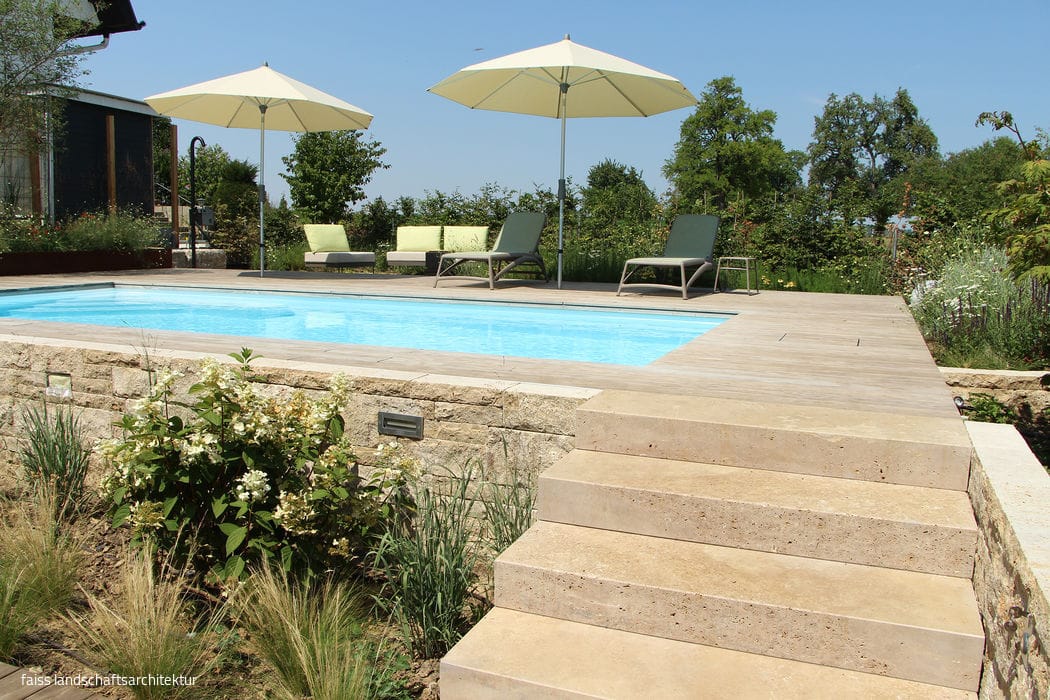
Redesigned garden with pool and sunbathing areas on a motorized sliding deck