


Innovation in Circular Design
Thoughtfully Designed – Every Square Meter of World Heritage Is Sacred Ground
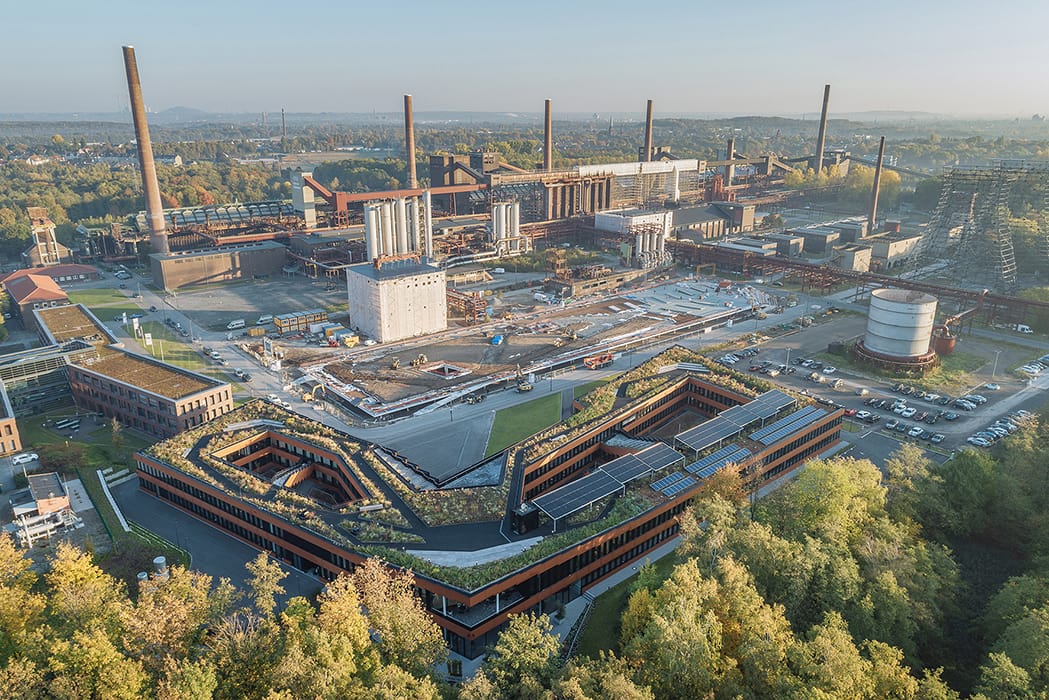
Die Zeche und Kokerei Zollverein in Essen ist zugleich Wahrzeichen des Ruhrgebiets, Monument der Industriekultur und Symbol für den Wandel der einst größten Steinkohlenzeche der Welt zu einem Ort für Kultur und Freizeit, Bildung und Wirtschaft. Rund 100 ha umfasst das Gelände der Zeche und Kokerei Zollverein. Seit der Stilllegung der letzten Zeche von insgesamt rund 290 in Essen im Jahre 1986 und der Kokerei 1993 wurden die Anlagen sukzessive saniert und für neue Nutzungen ertüchtigt. 2001 nahm die UNESCO die Zeche und Kokerei Zollverein offiziell als „Industriekomplex Zeche Zollverein“ in ihre Welterbeliste auf. Die Produktionsanlagen repräsentieren exemplarisch die soziale, ökonomische, ästhetische und industrielle Geschichte des Kohle- und Stahlzeitalters.
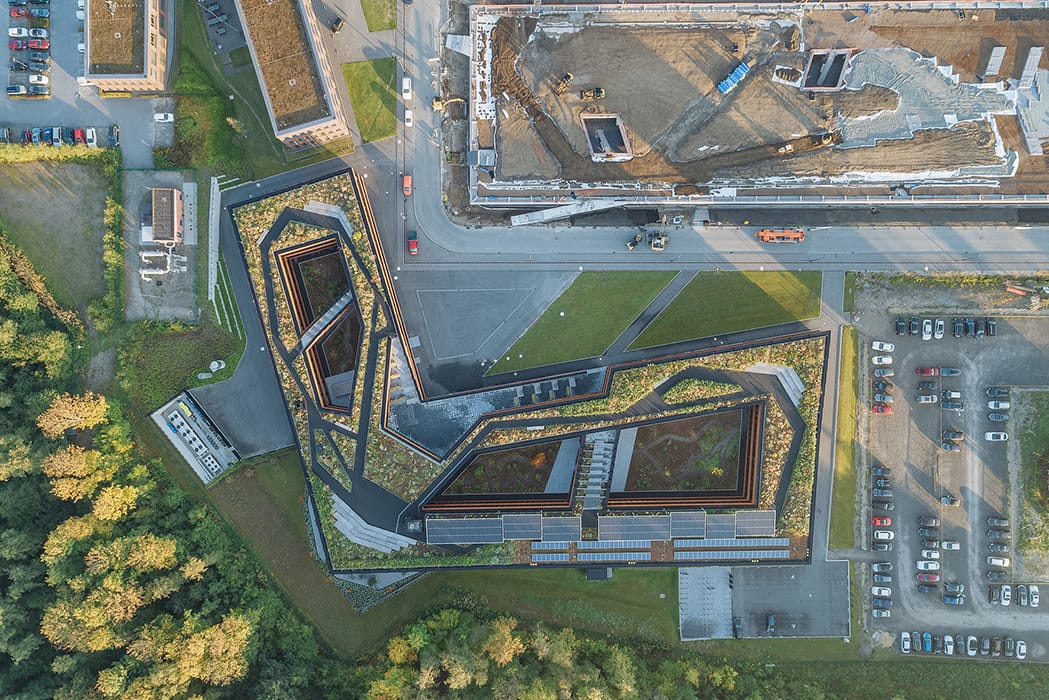
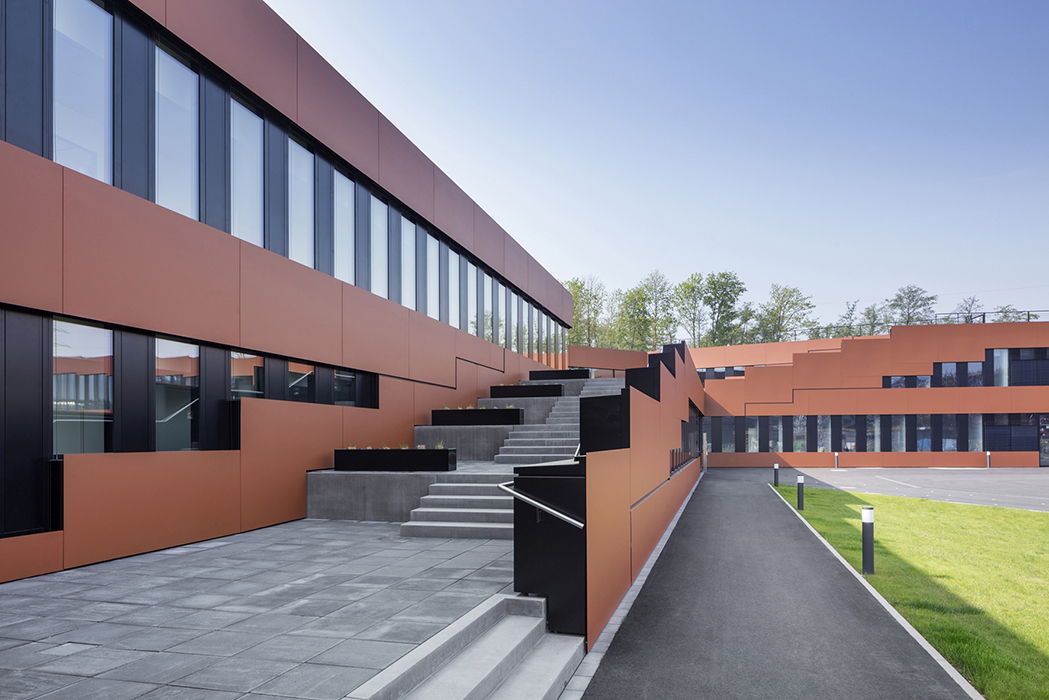
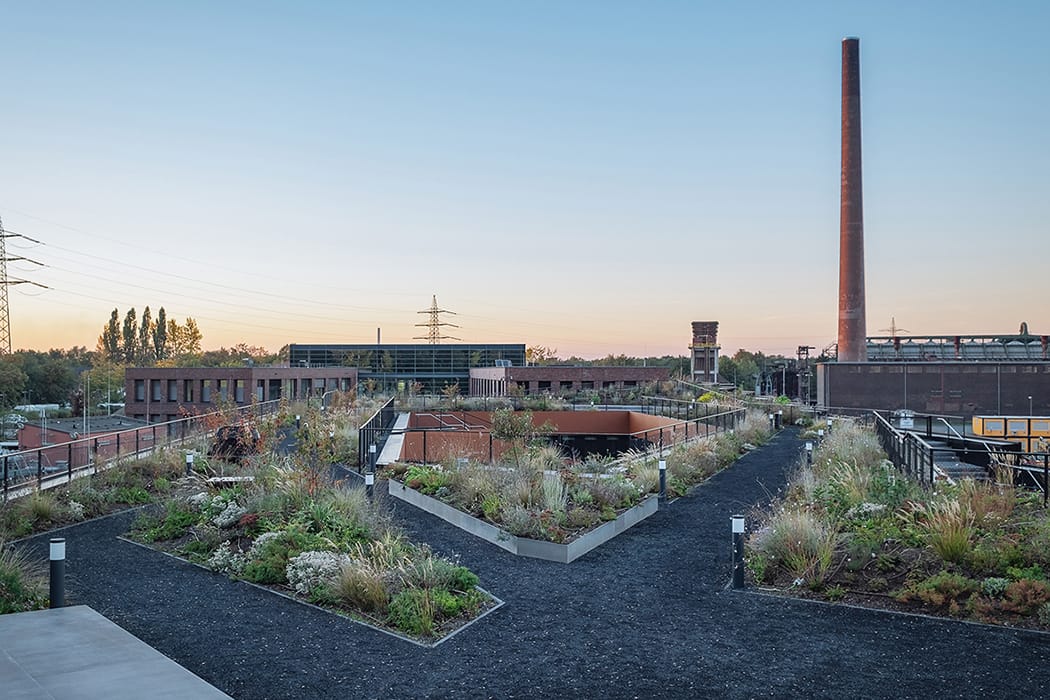
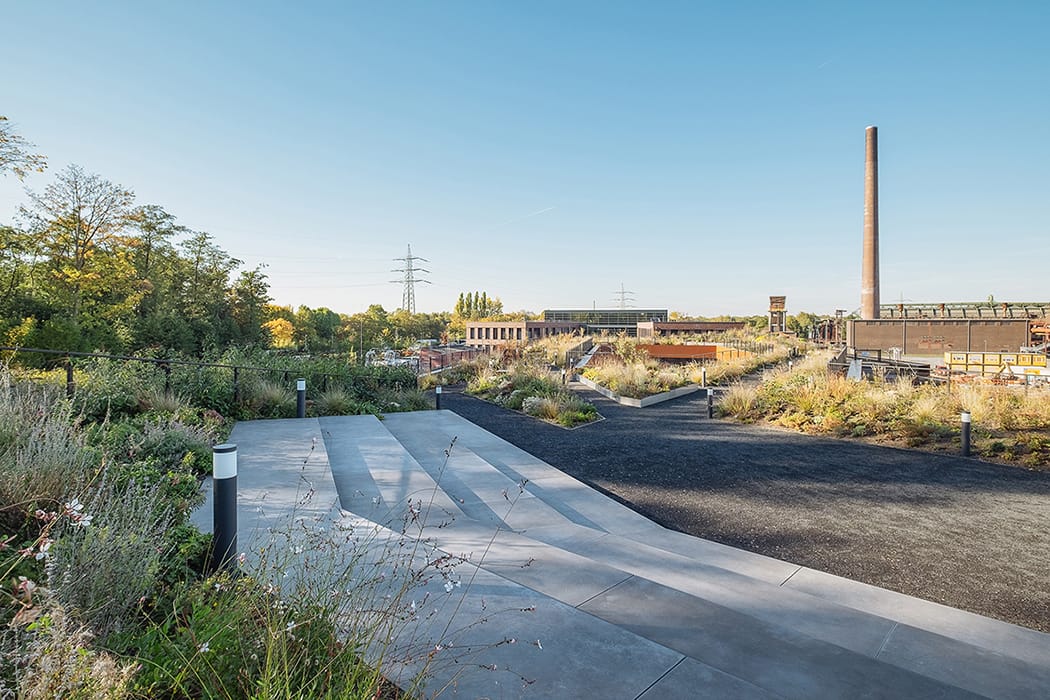
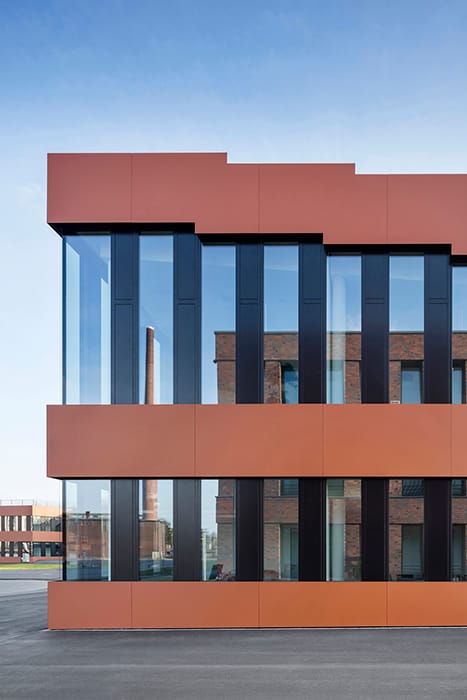
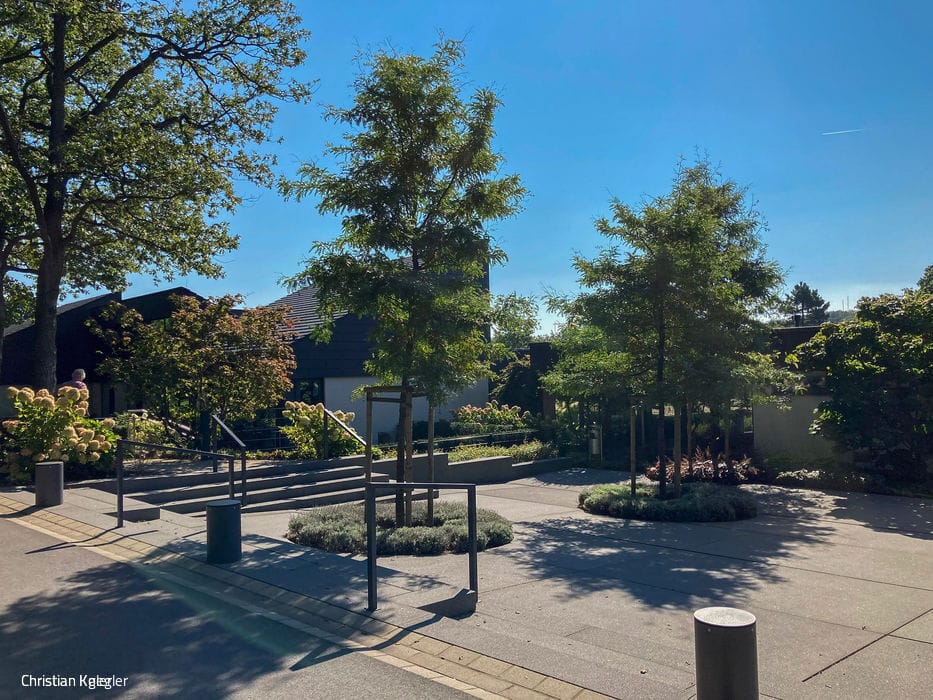
Westlich des ikonischen Zechenturms und vis-à-vis der mächtigen ehemaligen Kokerei liegt das neue Verwaltungsgebäude von kadawittfeldarchitektur als gemeinsamer Sitz der RAG-Stiftung und der RAG AG, die als ehemalige Ruhrkohle AG für die „Ewigkeitsaufgaben“ in Folge des Steinkohlebergbaus zuständig sind. Die RAG-Stiftung finanziert diese Bergbaufolgen, die im Wesentlichen mit Wasser zu tun haben und unbefristet – also für „ewige Zeiten“ – technische und logistische Maßnahmen erfordern. Der Neubau schließt die Ecke des Terrains am Übergang zum angrenzenden Waldstück. Die gewinkelte Gebäudeform nimmt die Grenzen des Eckgrundstücks auf und bildet eine Adresse zum vorgelagerten Weißen Platz. Von hier aus setzt eine großzügige Treppenanlage die umgebende Landschaft fort und führt hinauf auf das intensiv begrünte Dach. Dieser Dachgarten kompensiert die versiegelte Grundstücksfläche und bietet den Mitarbeiter:innen mit Spazierpfad, kleineren Platzsituationen, verschiedenen Sitzgelegenheiten und diverser Bepflanzung ein abwechslungsreiches Angebot an der frischen Luft samt Blick auf Natur und Zechengelände.
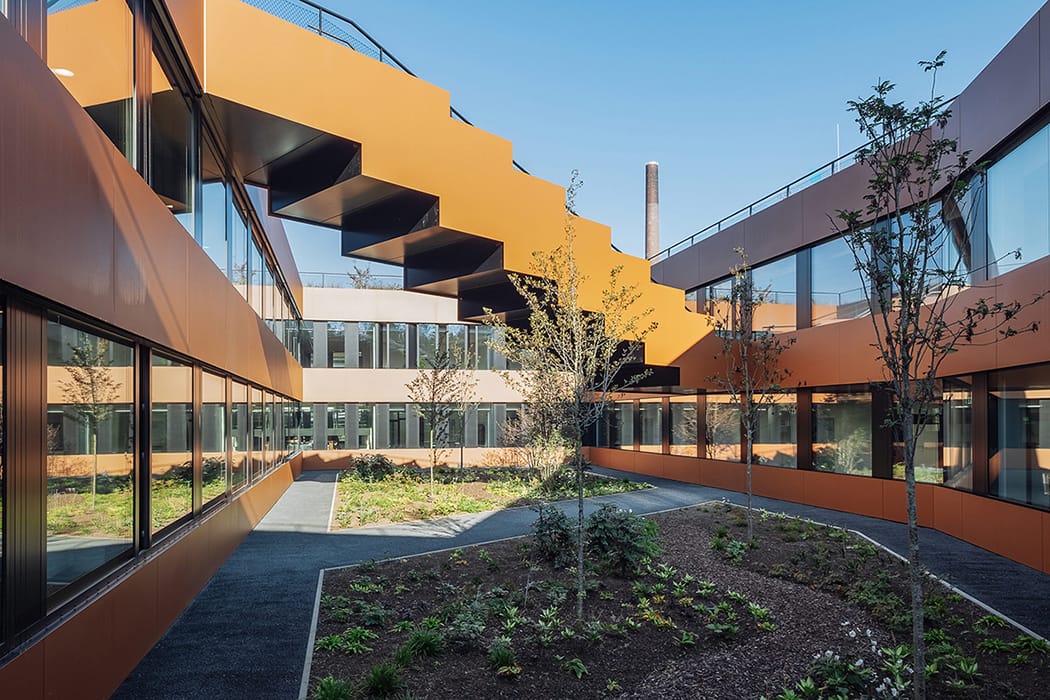
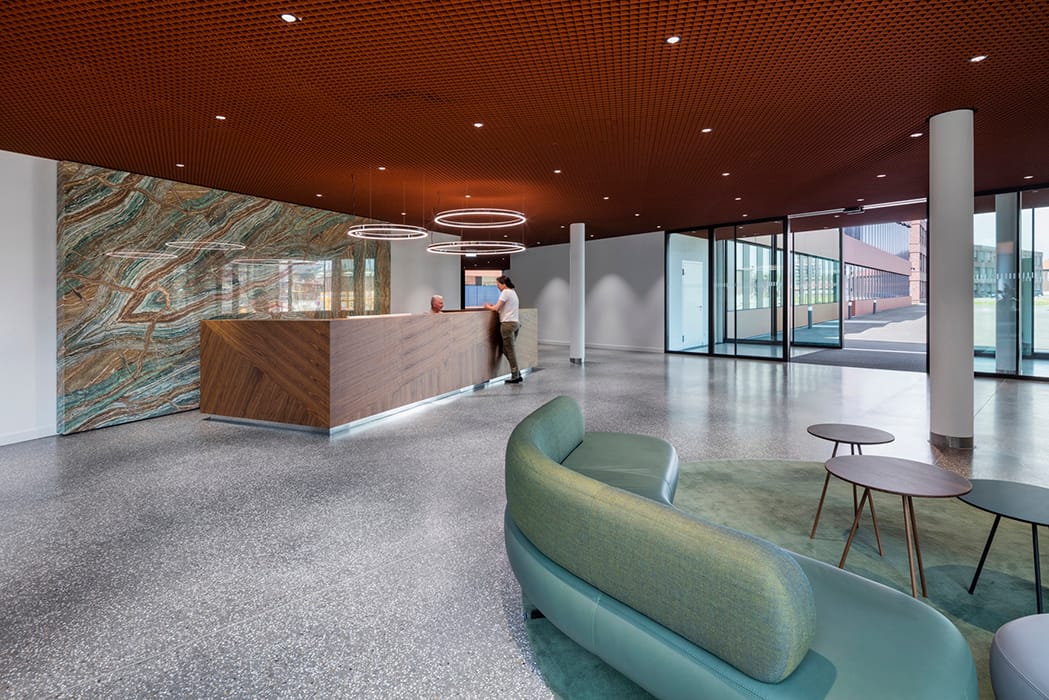
Die Büroräume der beiden Nutzer sind um zwei ebenfalls begrünte Innenhöfe angeordnet, die von einem Steg überspannt werden. Ansteigende Dachflächen an den Ecken des Gebäudes sind als abgestufte Sitzbereiche ausgestaltet. Die Räumlichkeiten der RAG-Stiftung und der RAG AG befinden sich im nördlichen und östlichen Flügel, während die gemeinsam genutzten Bereiche wie Mitarbeiterrestaurant, Konferenzbereiche und Haustechnikzentrale mittig im Gebäudegelenk untergebracht sind. Alle Materialien und Bauteile wurden neben gesundheitlichen und ökologischen Aspekten im Sinne des Cradle-to-Cradle-Prinzips vor allem nach ihrer Kreislauffähigkeit ausgewählt. Das Gebäude erhielt die höchste DGNB-Zertifizierung in Platin.
www.kadawittfeldarchitektur.de
Photography Credits:
Nikolai Benner
www.nikolaibenner.de
Jens Kirchner
www.jens-kirchner.com
(Published in CUBE Ruhrgebiet 04|22)

A Breathing House
A Model for North Rhine-Westphalia and Beyond: The Multi-Storey Timber Building in Haltern am See
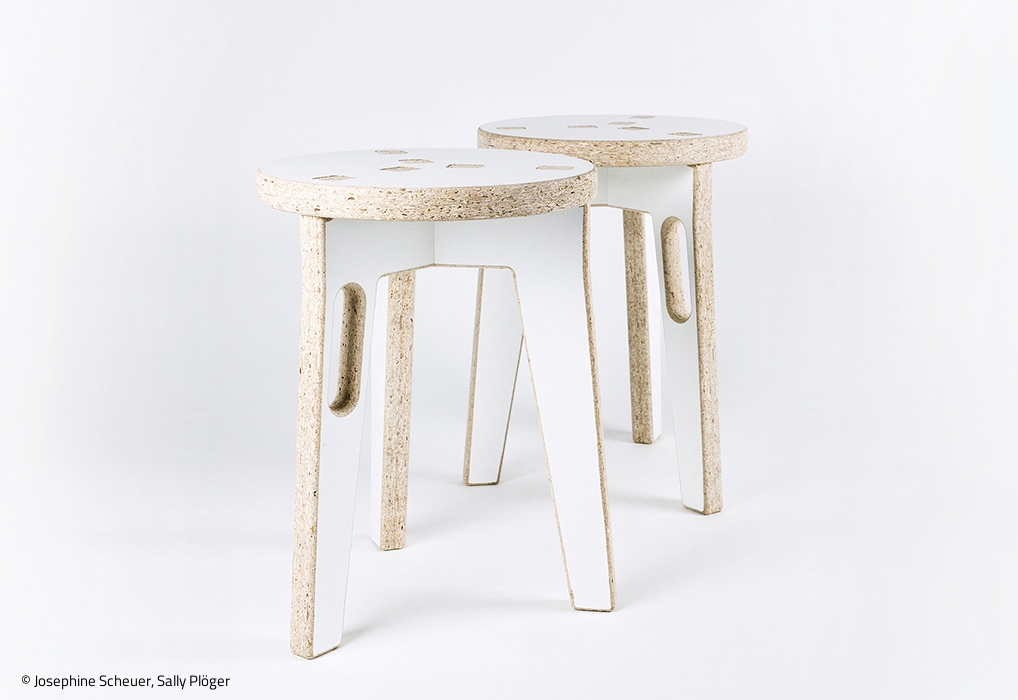
Local and Sustainable
Industrial designers Lena Halbedel and Florian Krohm create furniture from reclaimed wood sourced across the Ruhr region.
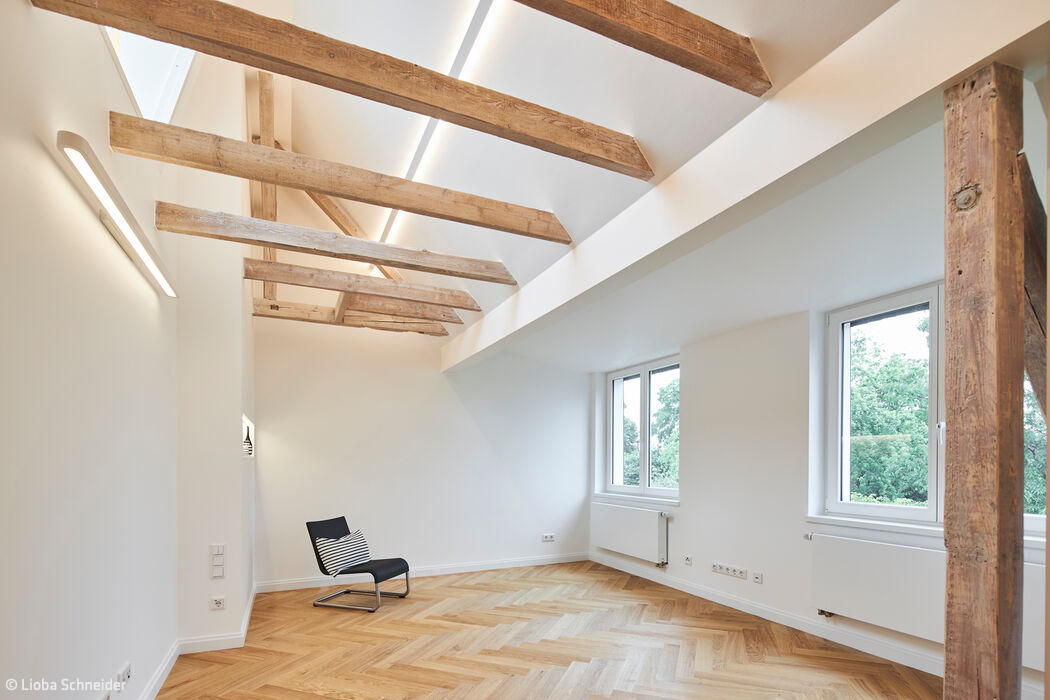
Nothing Stops the View
A historic villa's attic reimagined as a magnificent spatial experience.
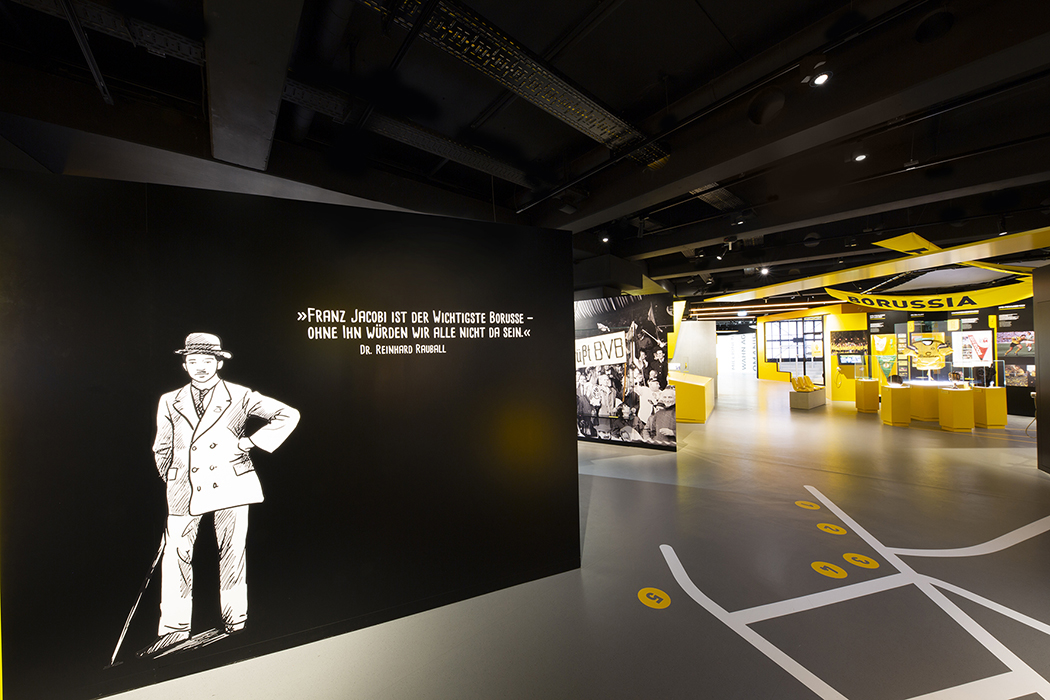
The BVB Yellow Challenge
The Borusseum Steps Into the Digital Age