


Bridging Past and Present
A Historic Villa Transformed into a Vision for Tomorrow
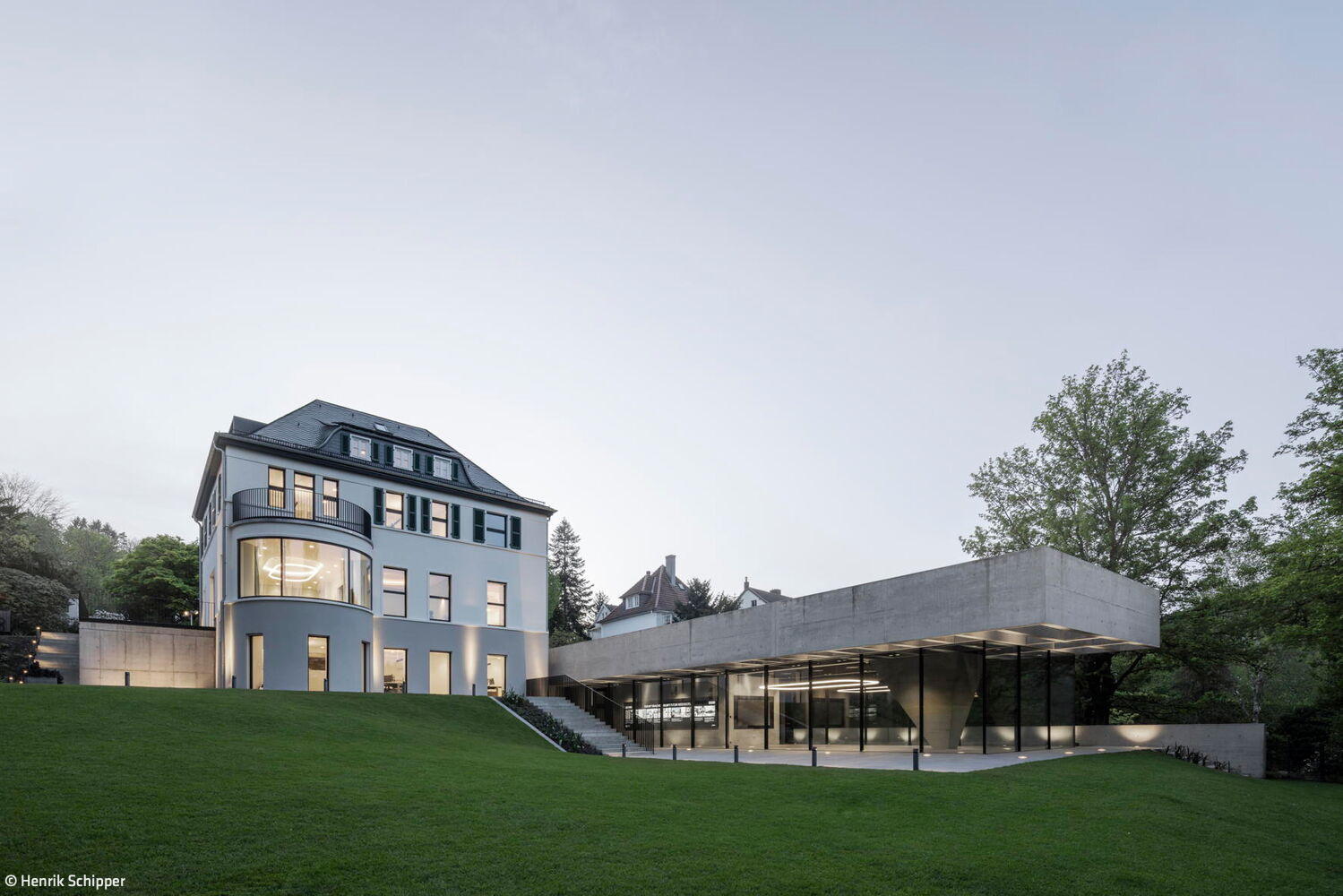




The former residence of company founder Albrecht Jung in Schalksmühle has found new purpose as a think tank and vibrant hub for Jung, a leader in building technology. Rather than a traditional showroom, the Jung Gründervilla now functions as a multifunctional workspace and events venue. Nehse & Gehrstein Architekten BDA masterfully transformed the 1928 historic villa through careful renovation and the addition of a contemporary extension.
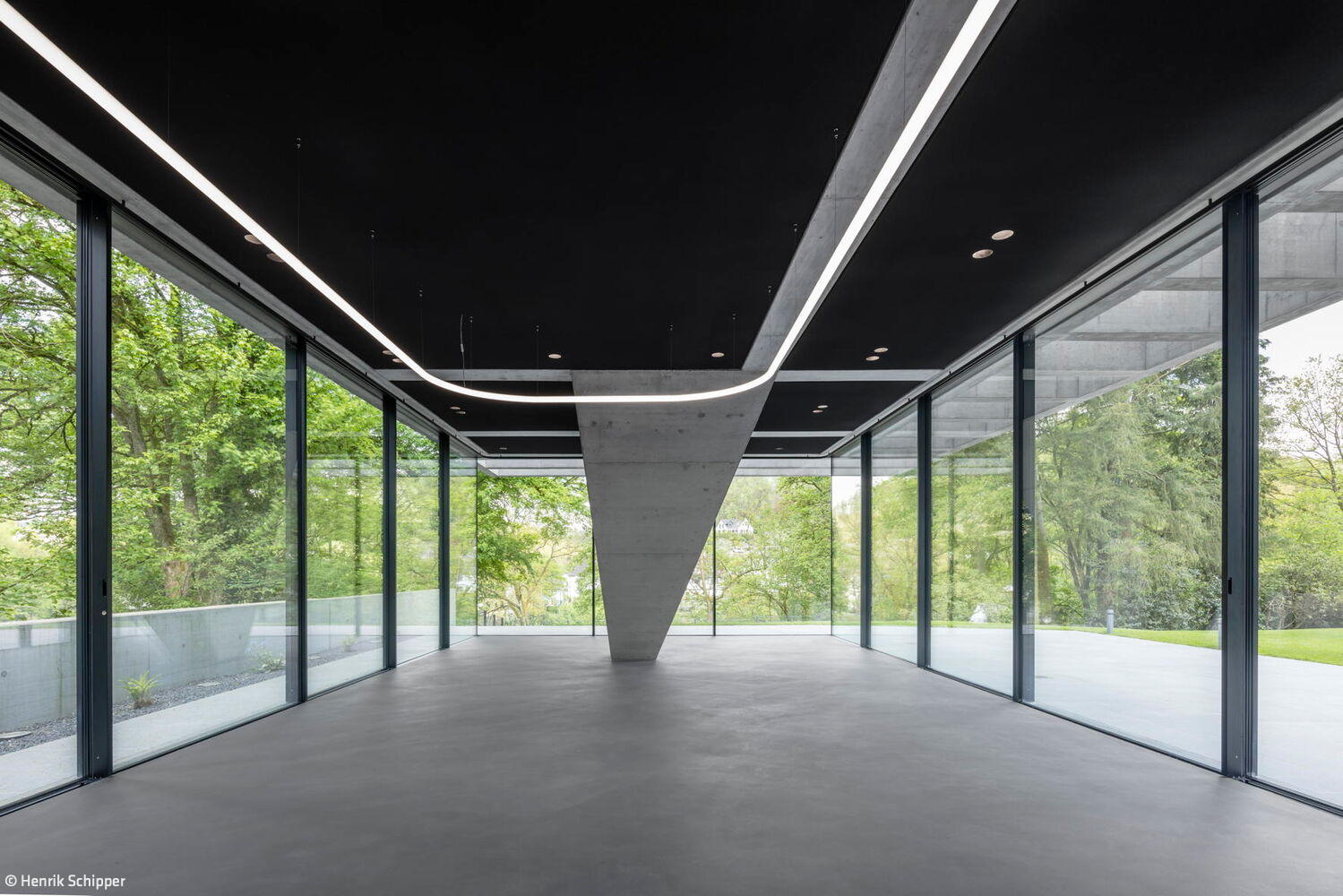
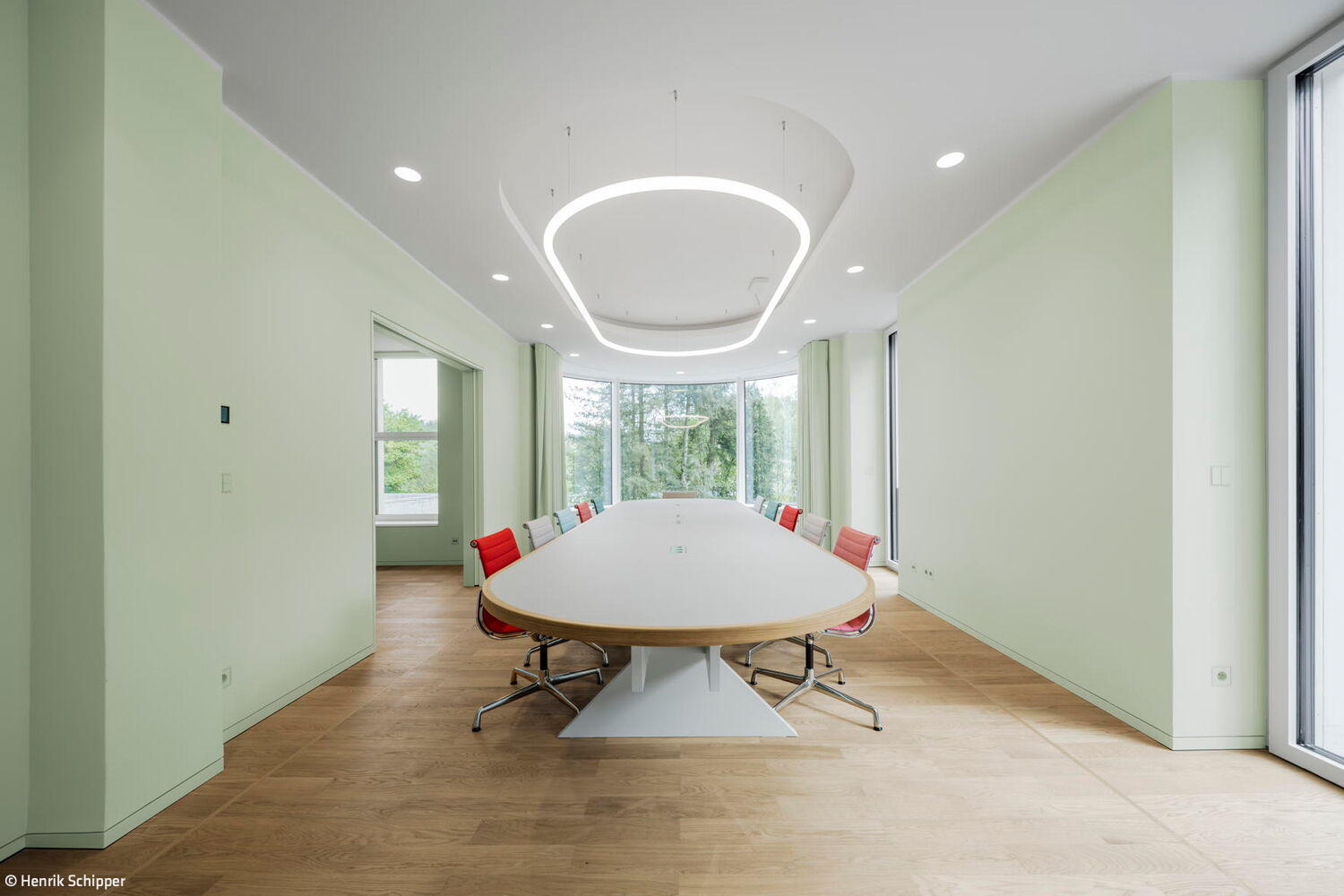
The Hanover office won the 2017 competition, which was specifically designed for emerging architectural practices. The distinguished jury praised the approach: "The design strengthens the site holistically by giving prominence to the existing villa, introducing new sightlines and spatial perspectives, and substantially elevating the garden through thoughtful spatial composition. The new structure sits recessed as an elongated form, anchored to the villa at basement level. Its roof becomes a generous terrace at entry height, offering visitors compelling views across the valley." During renovation, the identity-defining villa was respectfully adapted for contemporary use. The original structure was largely preserved while distinctive historical elements were carefully restored—not reconstructed—then reinterpreted and evolved into something new. The large conference room exemplifies this approach: the conference table and ceiling fixture subtly echo the newly designed semicircular bay window through their curved radius. The roof of the new wing—known as the Schalterhalle—functions as an extended outdoor space. The approach road mirrors the building's proportions while creating a purposeful contrast with the surrounding landscape. Three structural cores organize the floor plan, supporting the roof while accommodating diverse functions within a flexible, flowing space: ideal for events, exhibitions, and presentations.
The conical column stands as the defining element of both structure and spatial organization, its form derived from the load patterns above and below, unified through diagonal connections. A striking sculptural staircase—multi-curved and finished in white lacquered steel—bridges the villa and the recessed new building, which opens seamlessly to the garden through expansive glass. Where the villa draws its atmospheric character from Le Corbusier's carefully chosen color palette, the new wing embraces the purity of black and grey, allowing concrete, steel, glass, and brushed timber to speak for themselves. A masterful dialogue between historical integrity and contemporary vision.
Photos:
Henrik Schipper
www.henrikschipper.de
(Published in CUBE Ruhrgebiet 01|25)
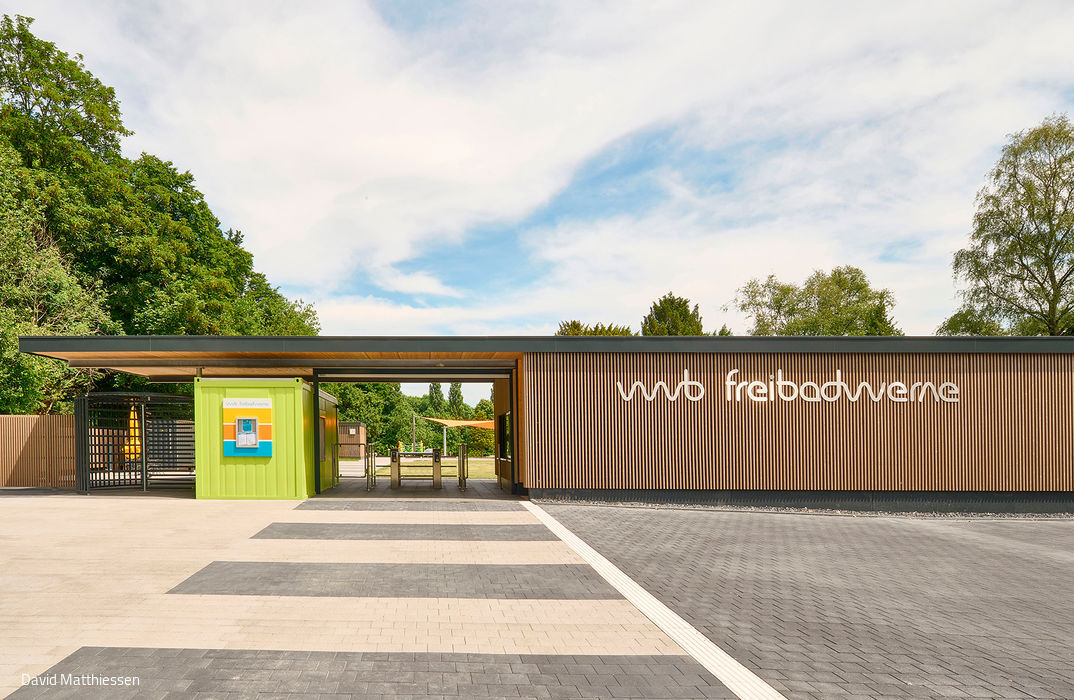
Fast track to aquatic joy
Bochum-Werne's Outdoor Pool: The First "Pool Out of the Box"
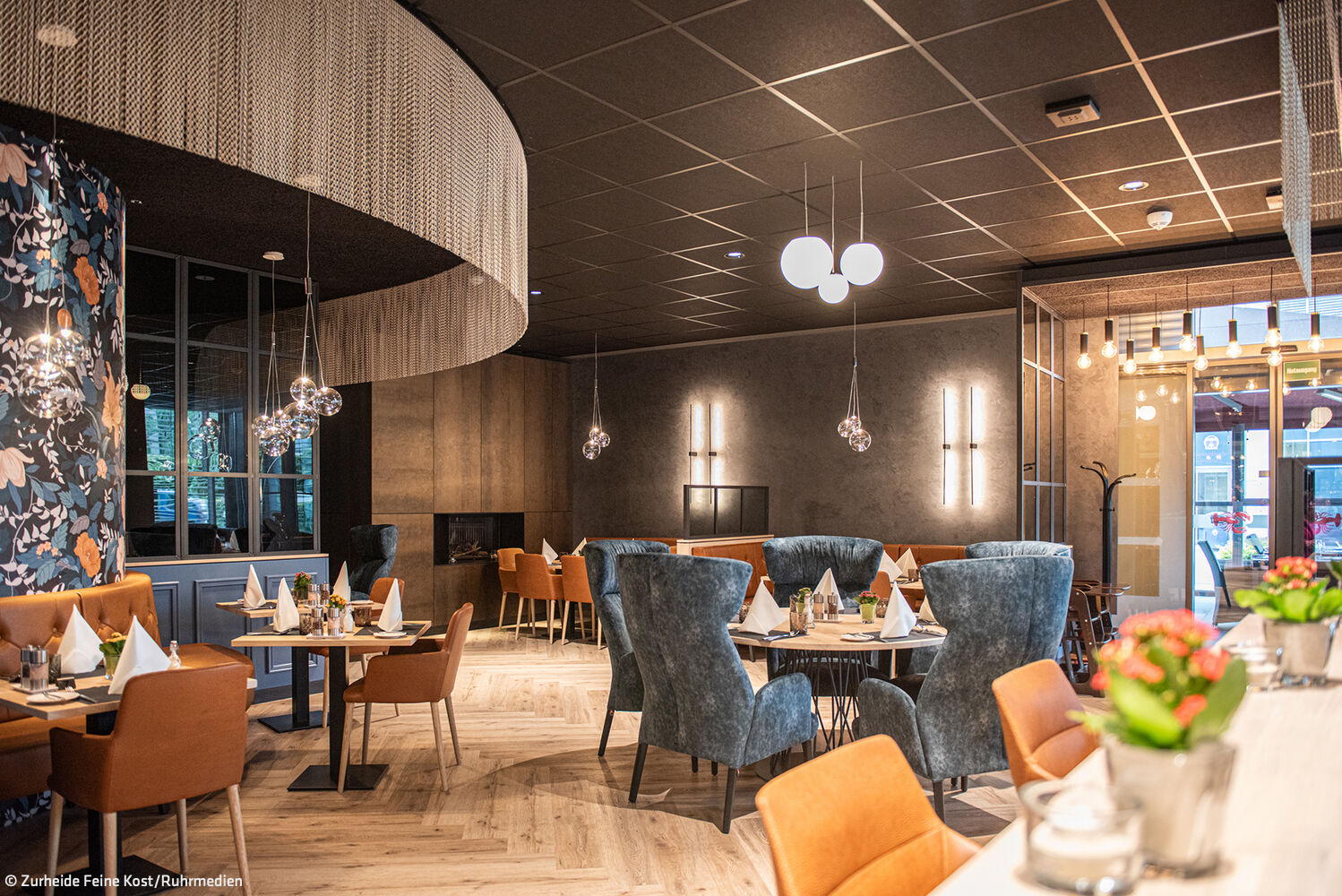
Contemporary Elegance & Taste
After a comprehensive redesign, Bottrop's gourmet restaurant emerges radiant and renewed.
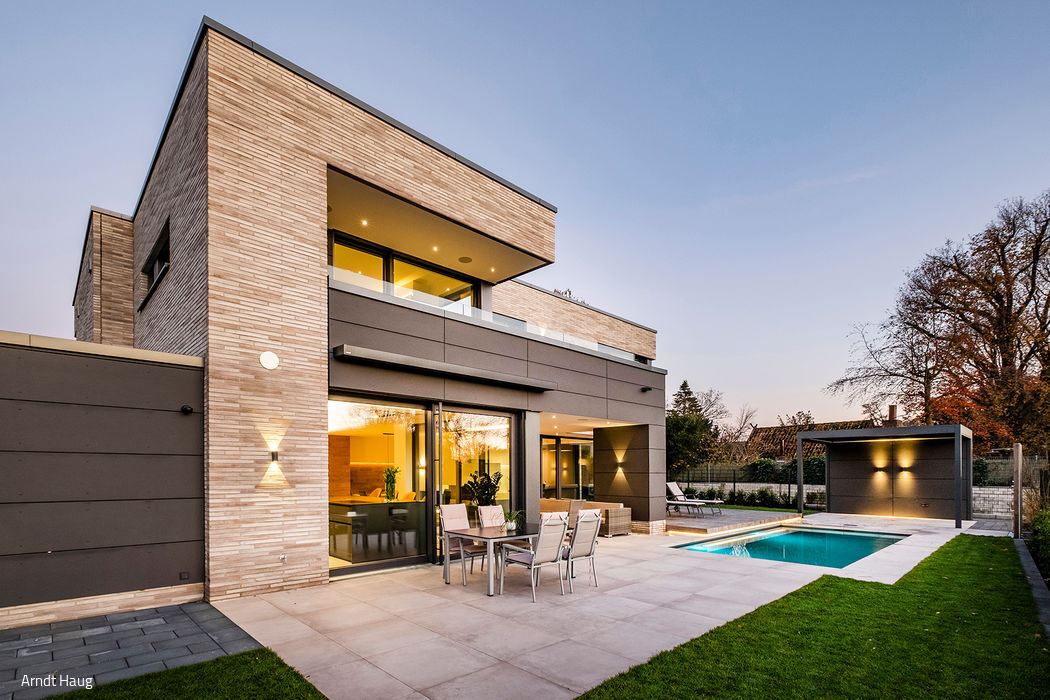
The Perfect Family Home
The Ideal Home: Modern and Inviting, Sustainable and Smart