


Ready for Tomorrow
New school building creates space for learning, collaboration, and personalized development


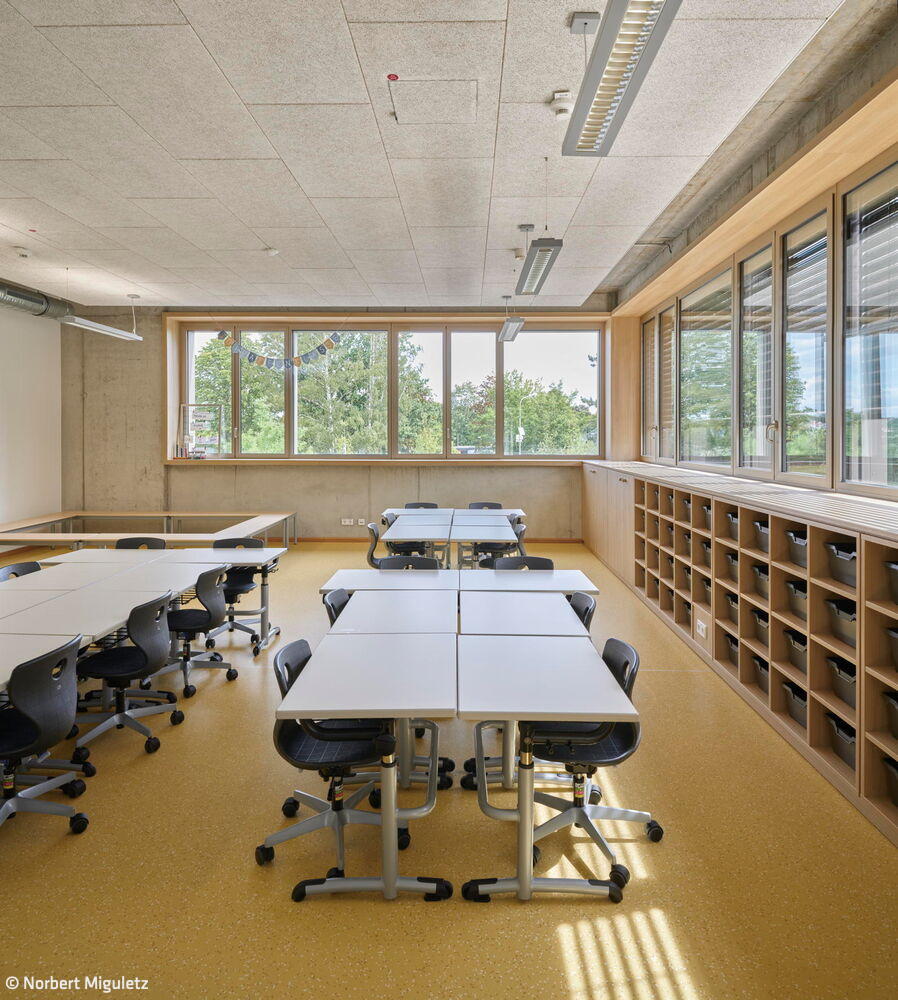


In Giessen district, a new primary school stands as a testament to how contemporary architecture and forward-thinking pedagogy can work in harmony. This matters—education is a vital asset as we face future challenges. And that requires thoughtfully designed spaces. As Norbert Kissel, the district education director, aptly noted at the school's inauguration: "People make spaces, spaces make people."
Frankfurt-based architects Christl + Bruchhäuser Architekten designed and built this modern four-wing replacement facility for approximately 300 primary students and 27 teachers. It's a full-day school with integrated dining facilities—a living demonstration of how architecture can actively enhance the educational experience. To create a welcoming learning environment, the design centers on a luminous entrance hall that serves as both the functional and emotional heart of the school. From this hub, students naturally flow into different zones: open stairwells connect all floors and guide intuitive navigation. Following the school's pedagogical vision, year-group clusters function as self-contained units, each directly accessible from every level. These four-stream clusters foster learning, collaboration, and personalized development—nurturing both academic growth and social connection. Every cluster includes four classrooms, two flexible learning spaces, and a central learning corridor with a movable partition wall. Rather than replacing the traditional classroom, this corridor extends its potential, creating an environment that balances structure with adaptability.
Learning demands more than focus—it requires breaks and fresh air. Covered outdoor areas shield students from the elements, while all grounds are fully accessible and designed with nature in mind. The solid construction meets KfW 40 energy standards, exemplifying efficient building practices. A mechanical ventilation system maintains optimal indoor air quality, and activated concrete ceilings naturally cool the building in summer. Underfloor heating, fed by the municipal district heating network, provides sustainable warmth—complemented by extensive green roofs and photovoltaic panels that further reduce the building's environmental footprint.
Photos:
Norbert Miguletz
www.miguletz.de
(Published in CUBE Frankfurt 01|25)
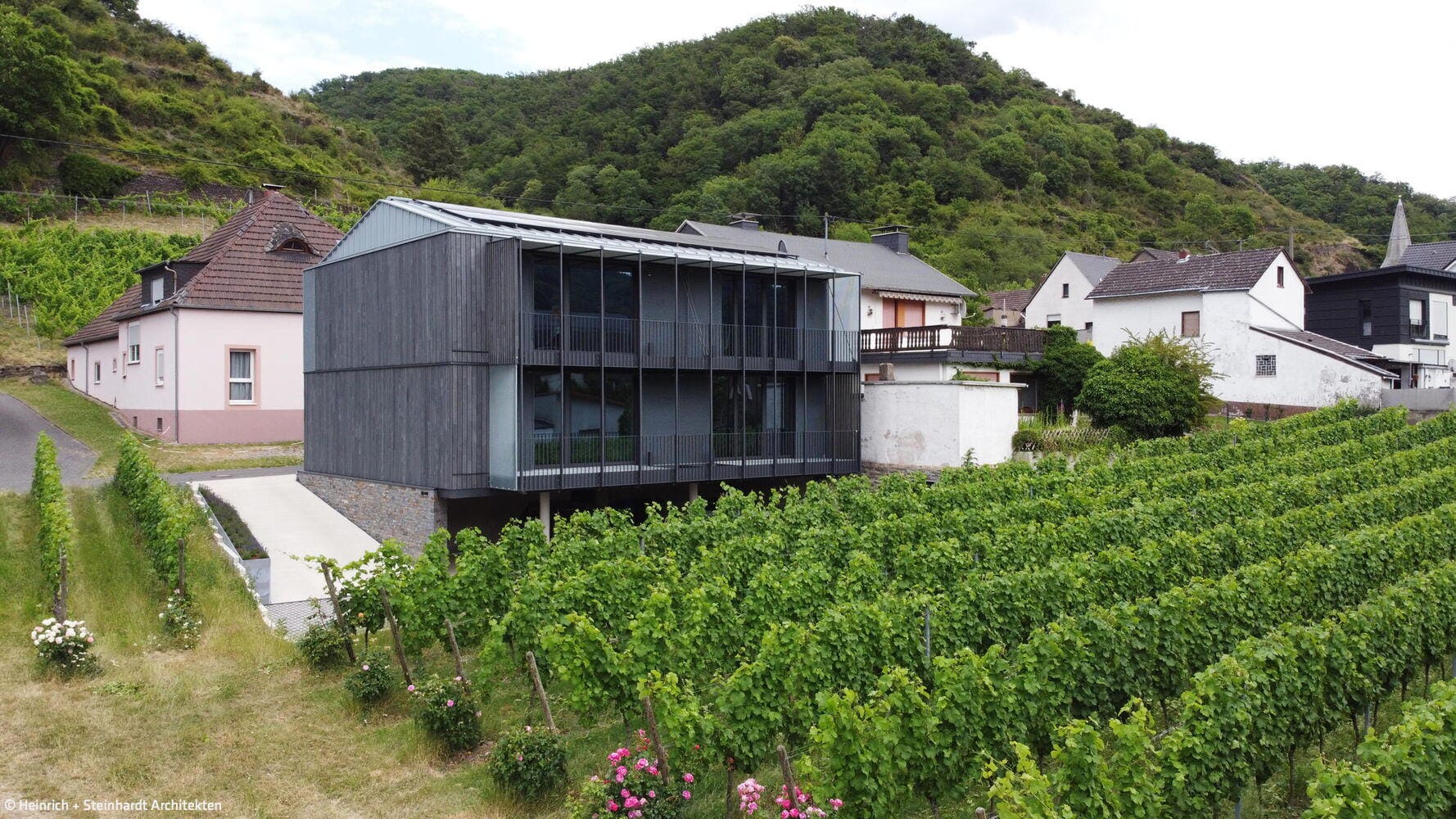
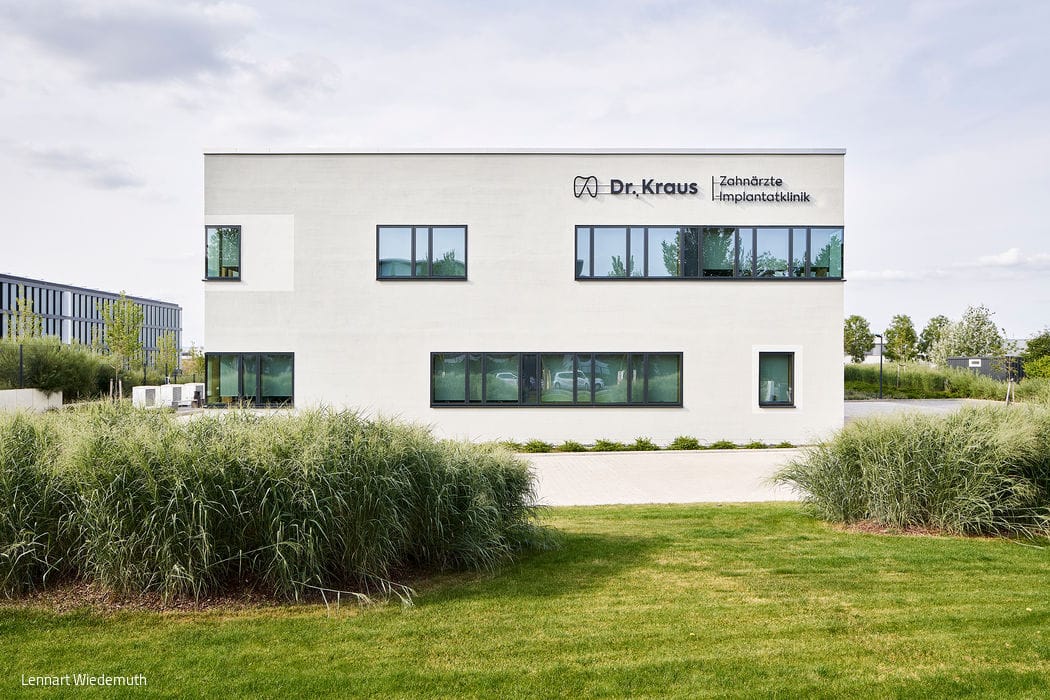
Functional Standalone Structure
Compact Design, Efficient Workflow: A Dental and Implant Centre Built for Shorter Distances

Infill Development
Adding a storey: sustainable design meets urban challenges
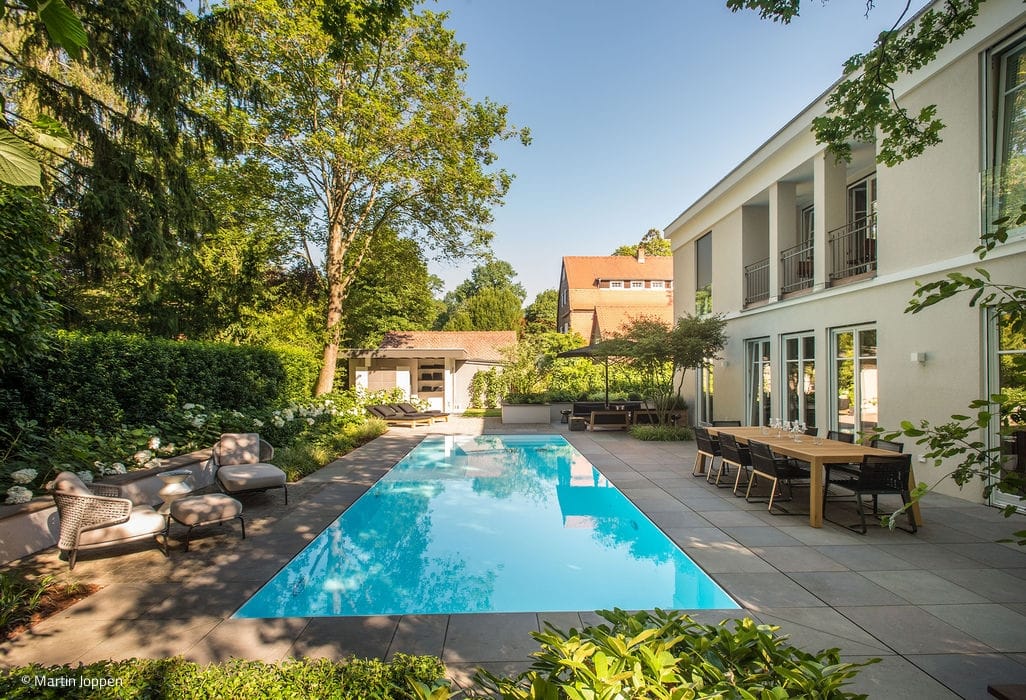
Adapted to Light Conditions
A striking urban garden that seamlessly balances form and function
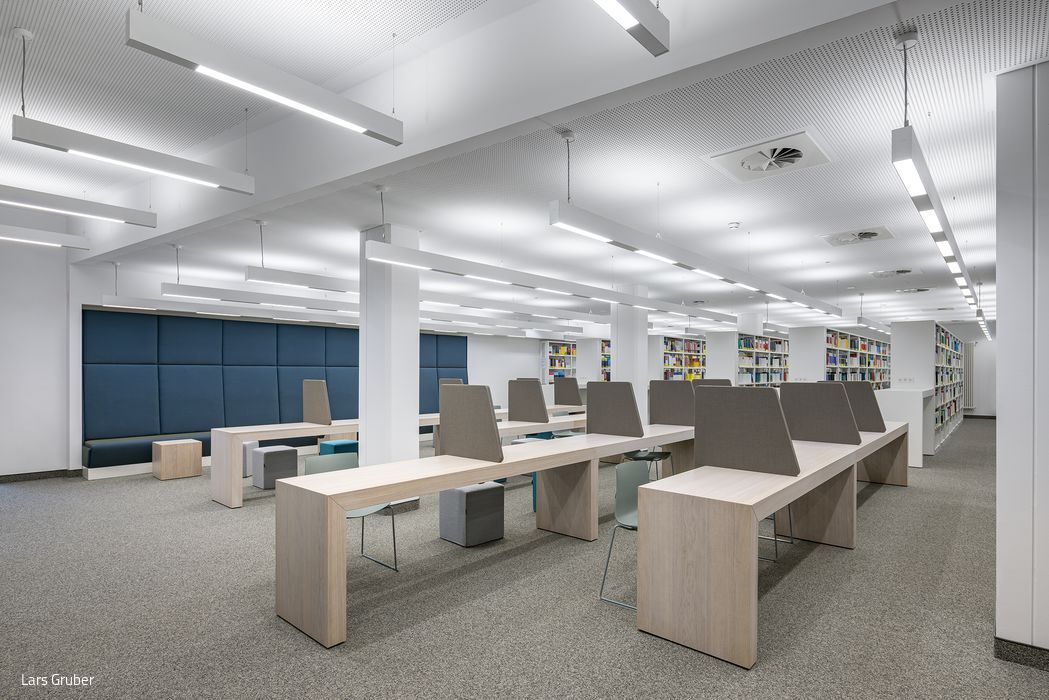
Modern Learning Continued
Demand Builds: Expanding Success at Mainz University