


Colour doesn't have to mean bright
Atmosphere in urban spaces, architecture, and interior environments profoundly shapes human well-being.

CUBE: Why did you never consider a career as a traditional architect?
Prof. Dr. Axel Buether: The day-to-day reality of architecture struck me as rather disillusioning. As an assistant teaching residential and social building design at Brandenburg Technical University, I had to show my students how to design – yet there was no systematic methodology for creating atmospherically compelling spaces. It was pure intuition: one person prefers colour, another likes simplicity. But why we need atmosphere at all, what it does to us, how we perceive colour, how to systematically embed all of this into architecture, urban design, buildings, and interiors – that knowledge was almost entirely absent.
CUBE:
So rejecting classical architecture wasn't about standing out – it was about finding answers?
Exactly. I pursued a doctorate at the intersection of perception psychology and neuroscience because I wanted to understand how we experience space. We now know that views of green outdoor spaces and sky support our health – people have better health outcomes, live more actively, and feel more at ease. Conversely, whether a space is monotonously grey or garishly overwrought – both extremes are equally damaging – we feel uncomfortable. These places go underused and often struggle with high crime and poverty rates. This is what drives me: atmosphere in urban spaces, architecture, and interiors directly influences human behaviour and experience. It can meaningfully improve well-being, health, and motivation.
You're recognized internationally as a leading colour expert and researcher. What drew you to colour in the first place?
Curiosity, initially. I never imagined I'd dedicate 25 years – my entire career – to this field. Now, with Germany's entire healthcare landscape being redesigned, the implications for my research are enormous. Classical colour theory remains primarily artistic in orientation. We need to shift toward evidence-based, scientifically rigorous, functionally grounded colour design.
How did you begin questioning conventional colour wisdom?
Colour doesn't always have to be bright. I consider achromatic colours – black, white, grey – equally important. We work with 30 to 40 white tones and hundreds of grey variations. Sunlight itself isn't pure white; it shifts throughout the day and directly correlates with our brain chemistry. Cool white light, which leans blue, triggers serotonin release – we become alert and focused. Our entire environment is inherently colourful. In architecture, every surface – floor, walls, ceiling, furnishings – demands a colour decision. It's remarkably complex: a single object might involve 40, 50, or 60 colour choices yet still read as understated. The problem with traditional training is fear of colour, which leads to equally significant mistakes.
Can you give us a concrete example?
My early evidence-based work focused on hospital environments. By implementing colour redesigns across several intensive care units, we reduced staff absenteeism by 30 percent and psychotropic drug consumption by 35 percent. That research shaped our approach ever since: identifying measurable goals. Architectural design, to me, is fundamentally about this: what do I want to achieve in this space, and for these people? We always begin with intensive conversations with the actual users – or, if they're unknown, with representative user groups.
Professor Buether, thank you for your time today.
Interview by Kelly Kelch
Photo:
Martin Jepp
www.martinjepp.de
Listen to the full interview as a podcast.
(Featured in CUBE Berlin 04|24)
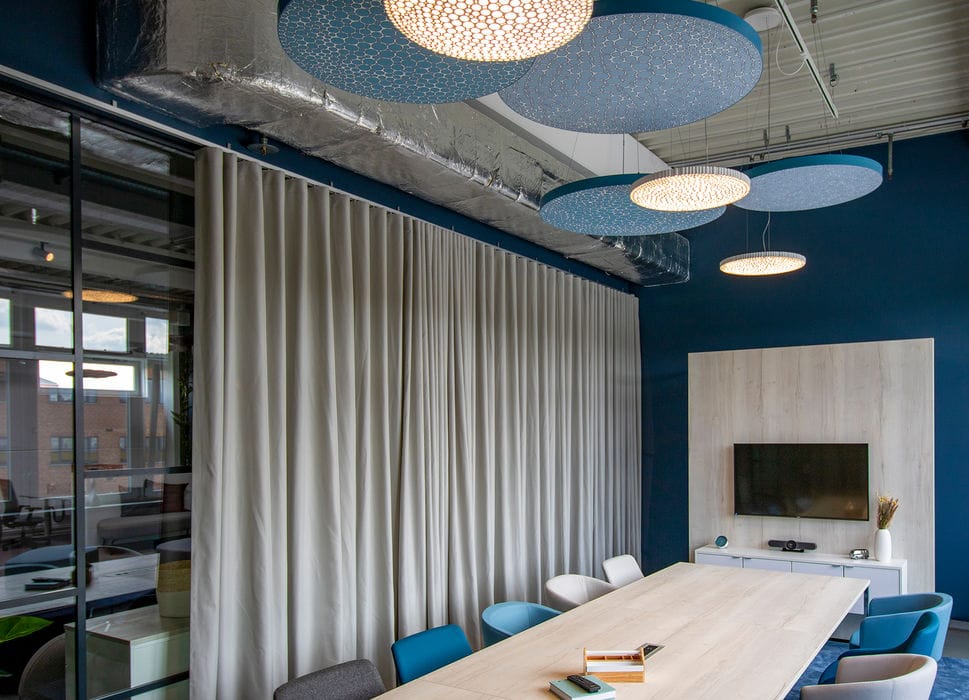
Coming to Berlin
From Lighting to Flooring: Netzwerk Berlin Presents Innovative Spatial Solutions
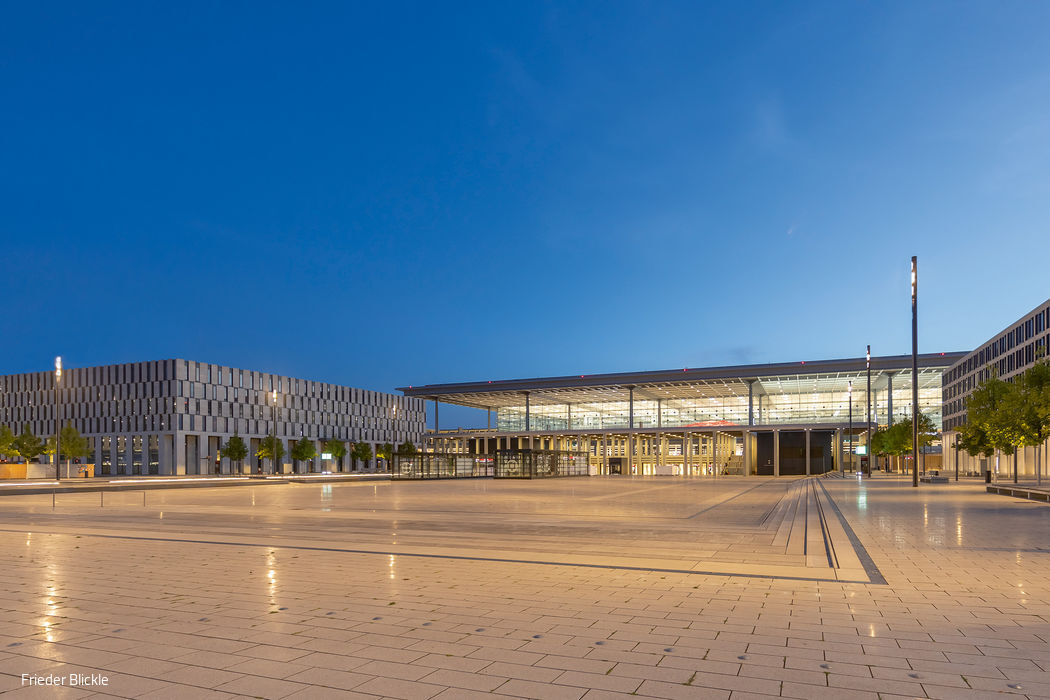
Illuminating BER in the Best Light
Two rows of just four elegant light columns each provide seamless illumination across the open space, yet soft brightness gradients ensure it remains...
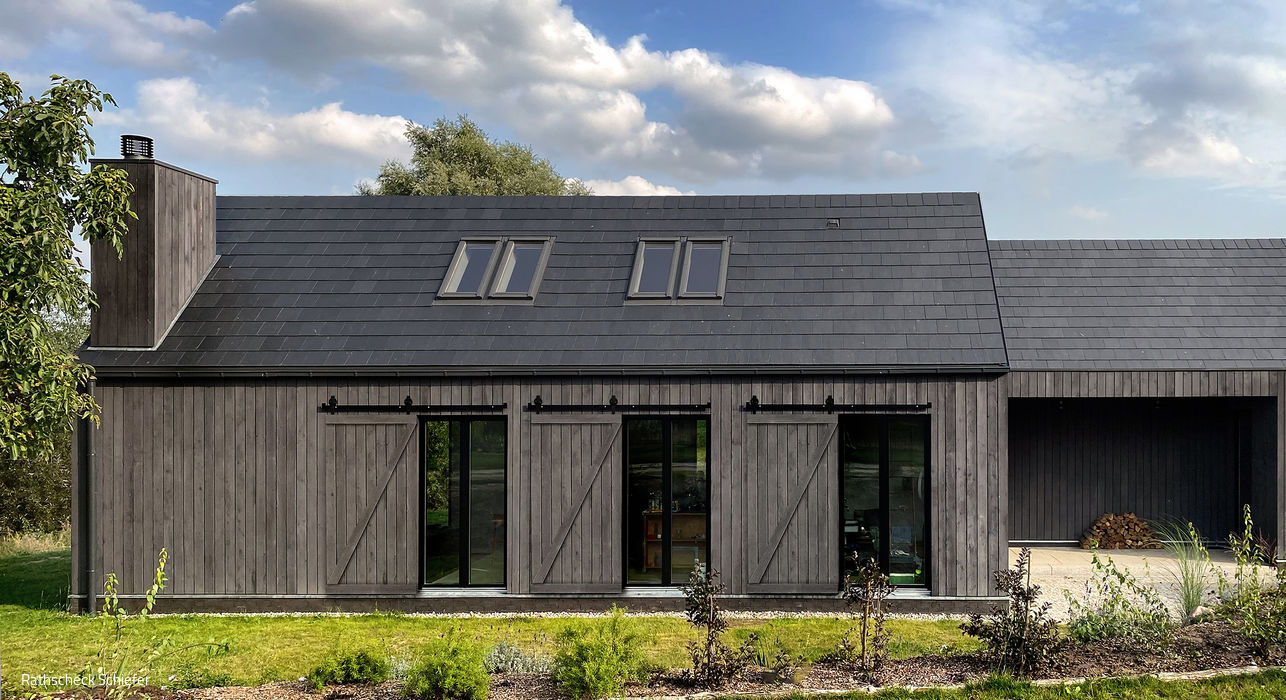
Barn Doubled
Sustainable Wood and Slate: A Modern Barn Retreat
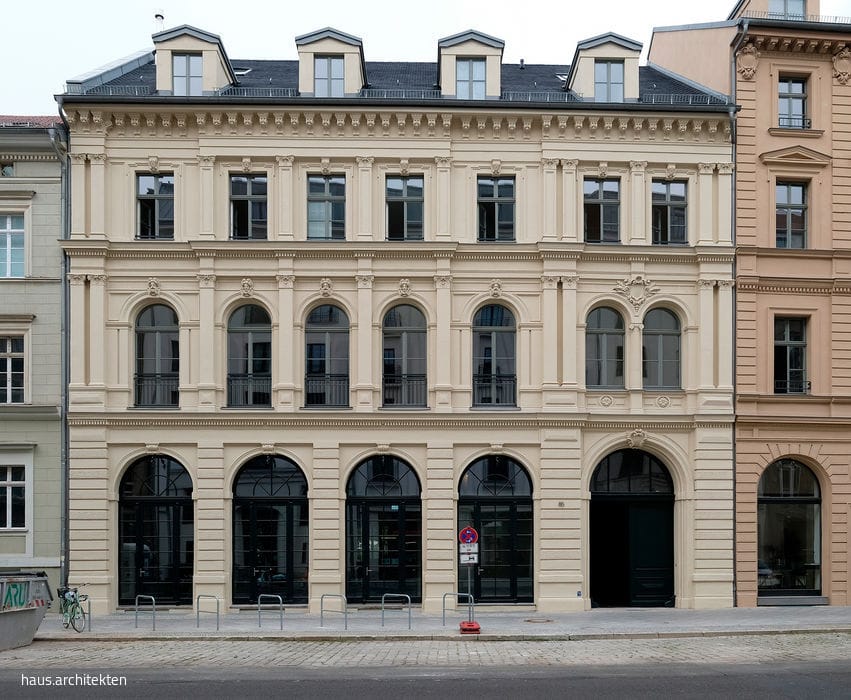
Restored to Former Glory
Historic Showrooms and Sales Spaces—Restored to Their Original Character