


Village or town?
Infill development draws inspiration from the historic village core
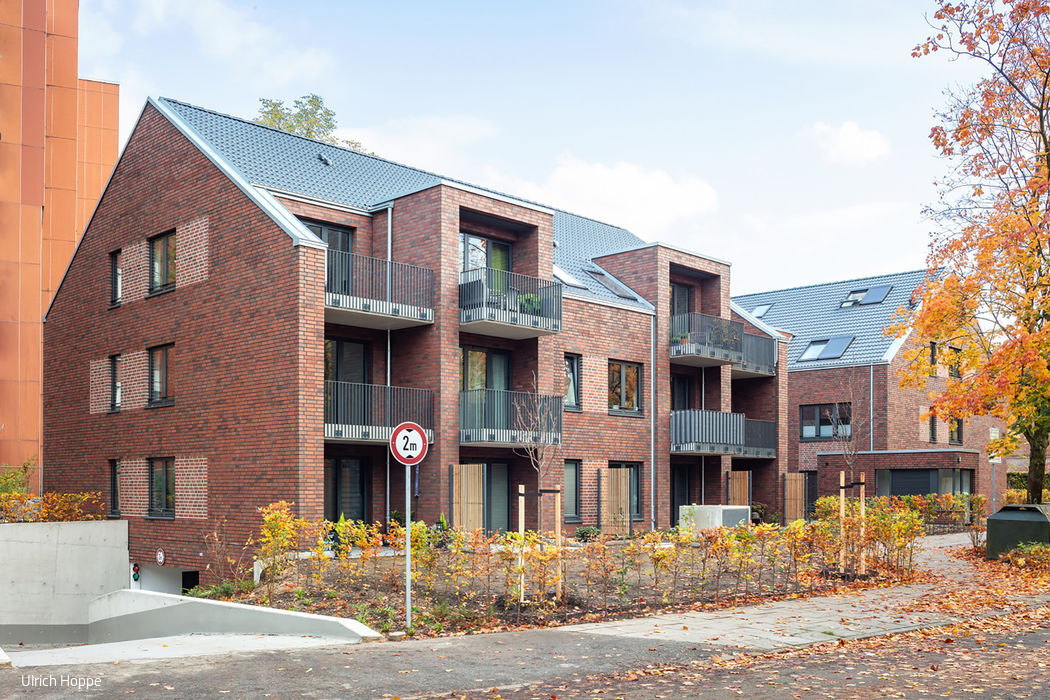
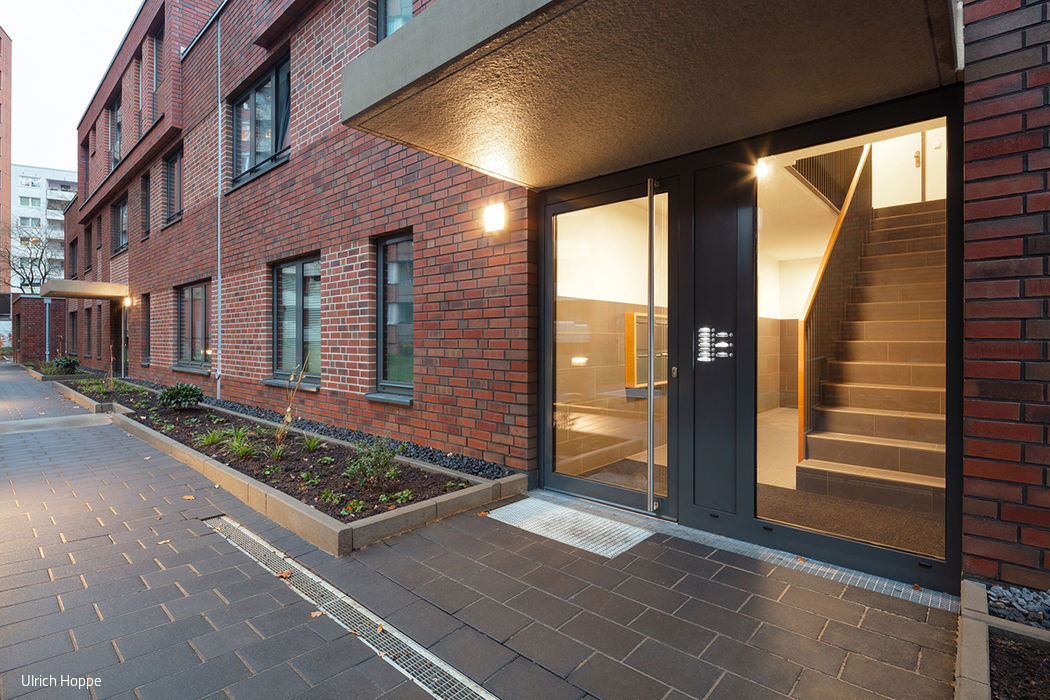
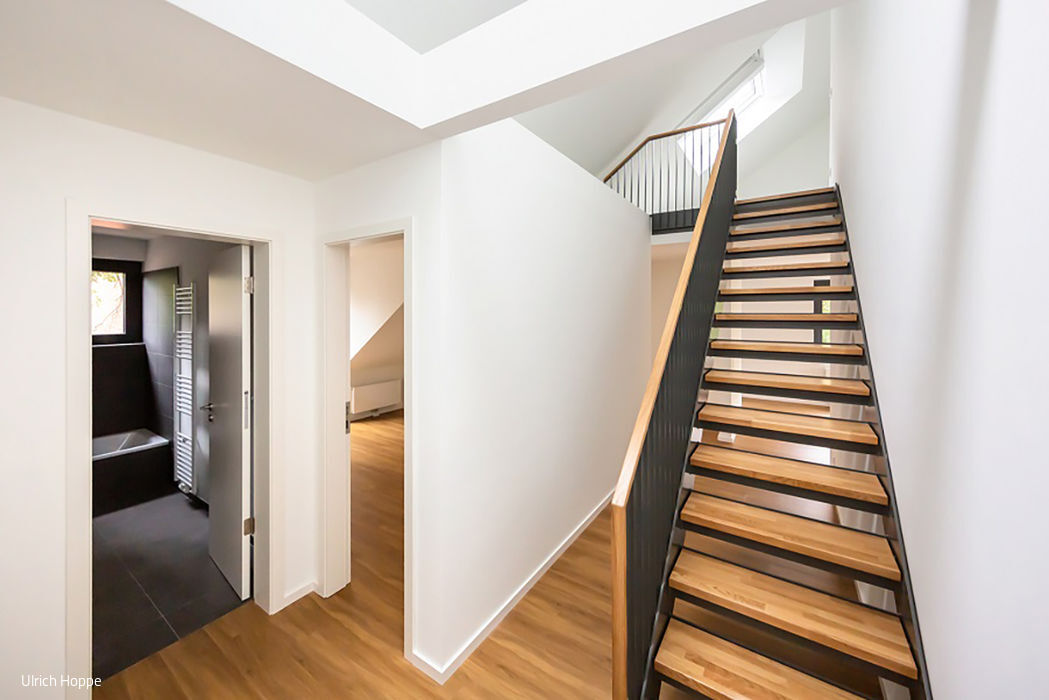
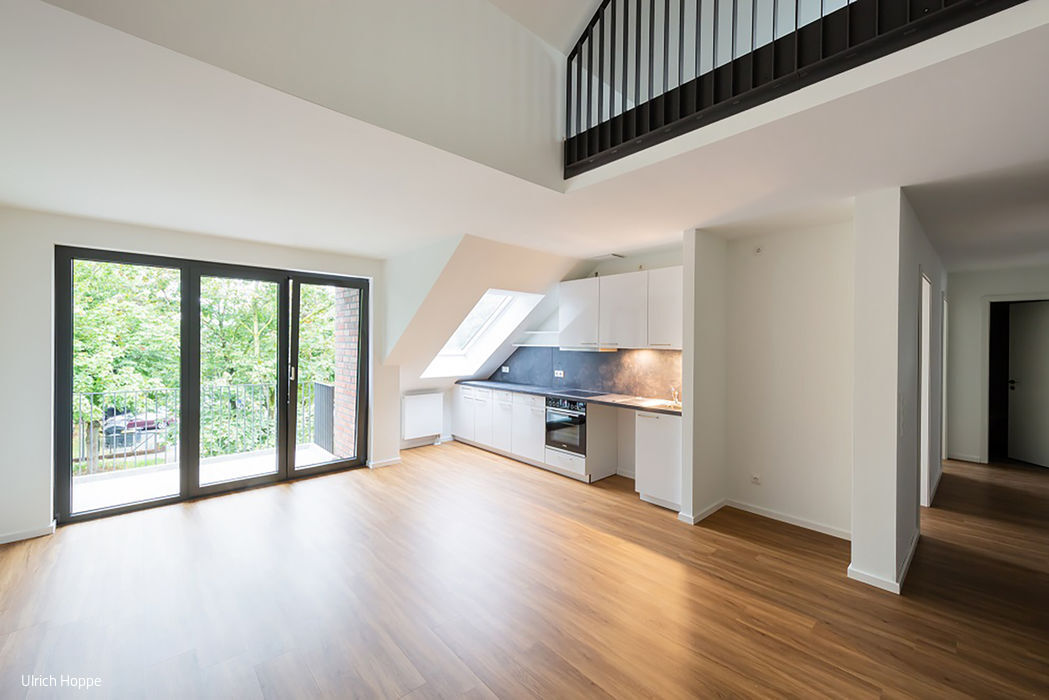
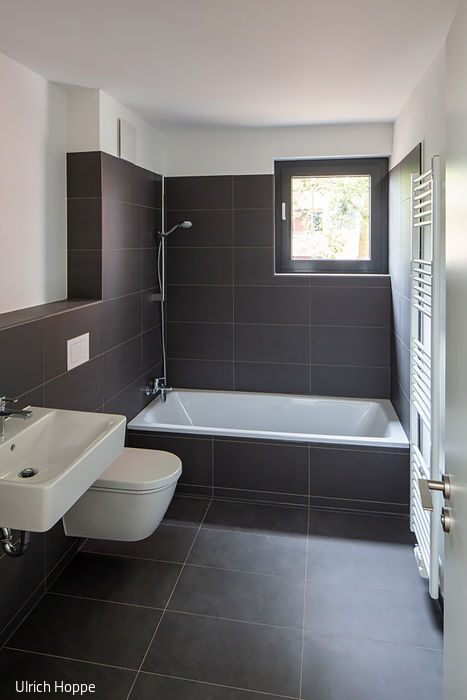
First documented in 1319 as Humersbotle, the Holstein village of Hummelsbüttel became a northern district of Hamburg in 1937, complete with extensive nature reserves and protected landscapes. The village character that persisted until the early 1960s is now barely visible, replaced by an eclectic architectural landscape—from exclusive villas and scattered manor homes to traditional family residences with gardens, alongside the large-scale Tegelsbarg housing estate built in the 1970s.
Along Hummelsbüttler Dorfstraße, charming original farmhouses with orchards stand alongside the imposing eight-storey subsidized housing blocks that tell the story of shifting urban planning priorities. While the 1970s saw rapid expansion on the city's verdant periphery to meet growing housing demand, a shift came in the mid-1990s with new master planning that committed to preserving the district's remaining historic farmsteads.
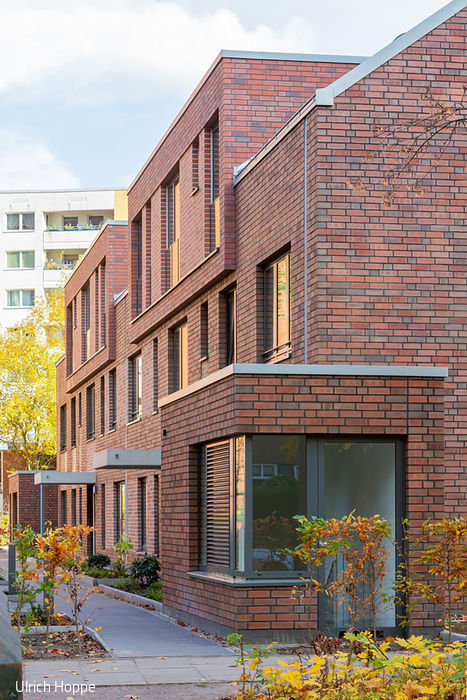
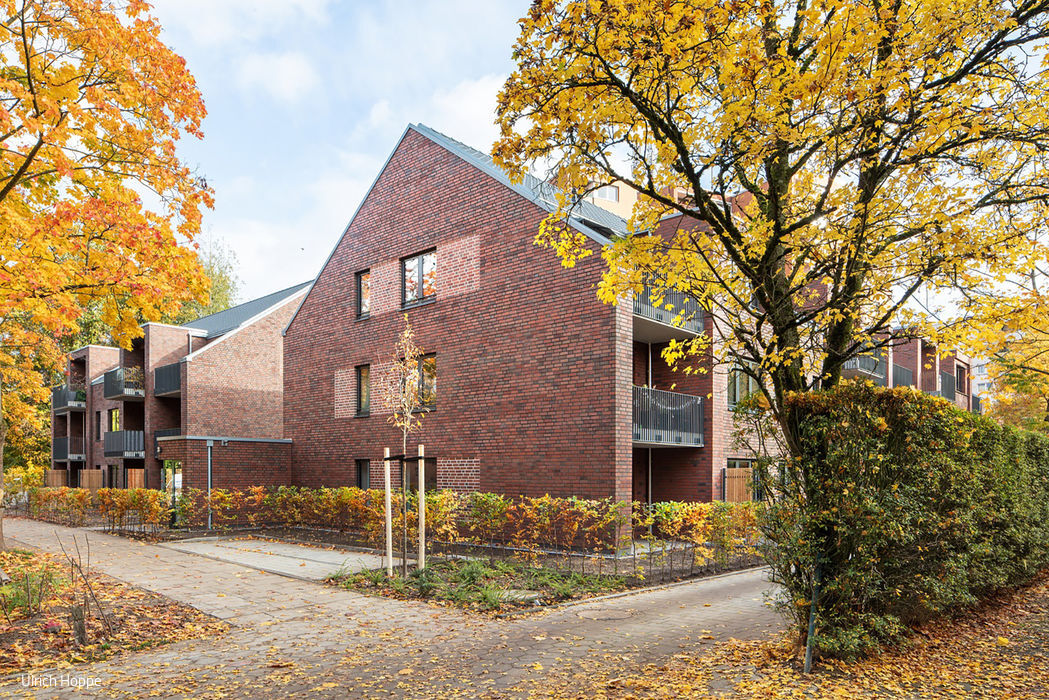
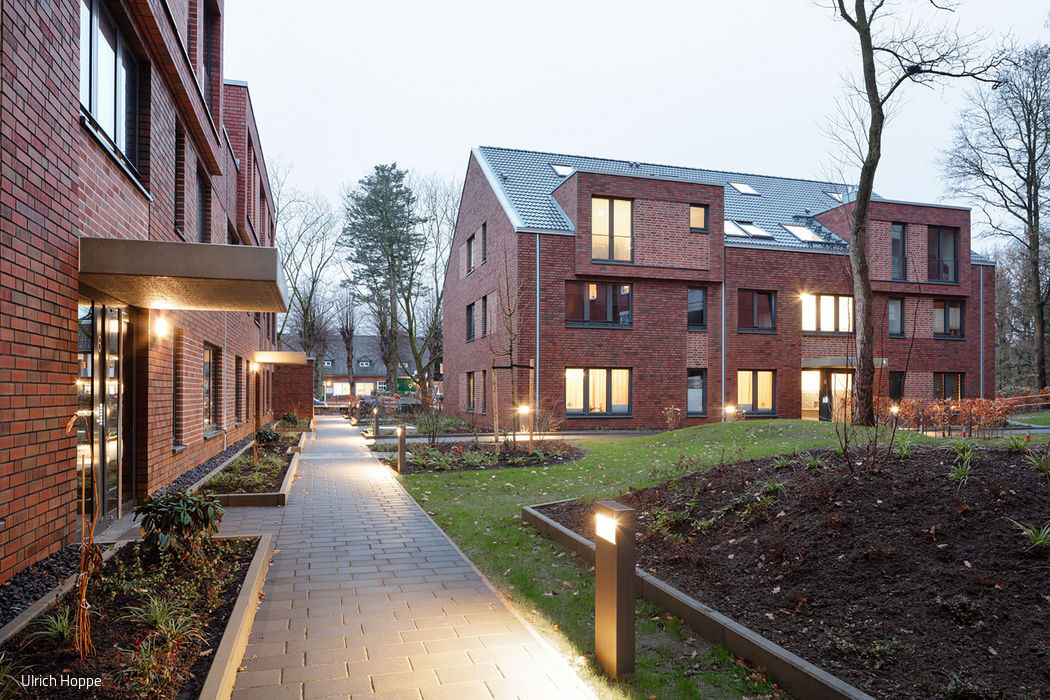
Navigating this diverse architectural landscape, Elbsand Architects drew from the historic village core to create 29 rental apartments on a remediated underground parking site. The new building bridges different eras without pastiche, harmonizing with its context while maintaining distinct character. Close collaboration between the architects, district officials, and client Kleinwohnungsbau St. Pauli Fischer und Hornbogen yielded a solution that was both architecturally compelling and economically viable: parking retained, new housing delivered, village center revitalized. The 40–80 m² units accommodate individuals, couples, and families. The project sold out before construction even began and was fully occupied upon completion. The 29 apartments occupy two three-storey gabled structures arranged around a garden and play area. Forty-four basement parking spaces serve residents and neighbors; twelve more are at grade. Ground-floor units are barrier-free. Upper-storey volumes create sightlines and spatial generosity, complemented by refined bathrooms and premium kitchens. Unconventional dormers articulate the three-storey rhythm and echo the brick detailing's playful vocabulary. Premium materials ensure durability; subtle touches—grout color, reveals, continuous bands—animate the façade. The result: a textbook example of thoughtful infill development.
Photography Credits:
Ulrich Hoppe
www.ulrich-hoppe.de
(Featured in CUBE Hamburg 01|22)


Making a Splash in Heritage
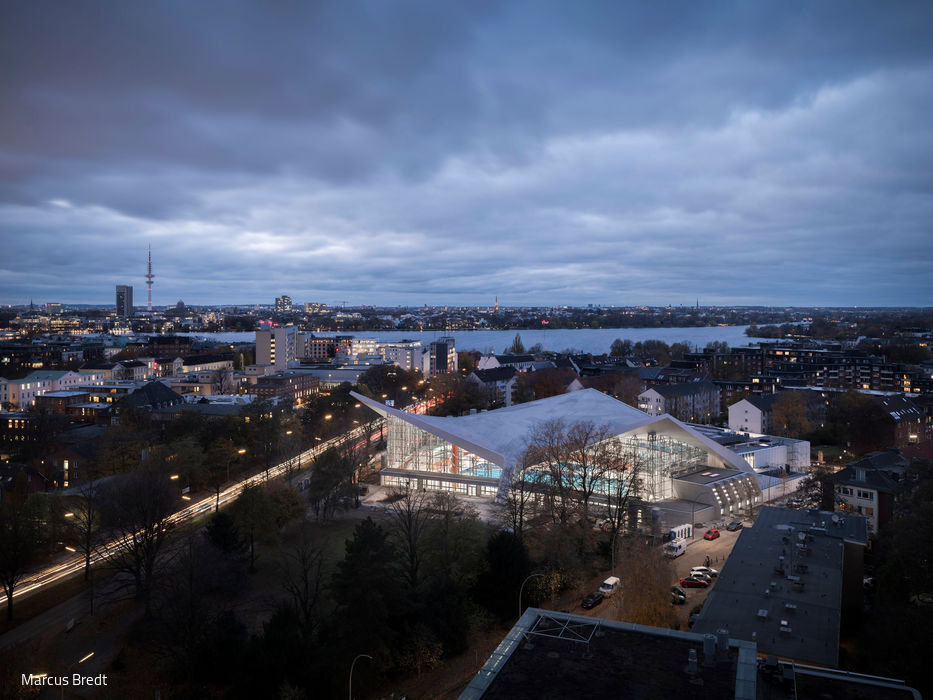
Hamburg's Beloved "Swimming Opera" Restored to the Highest Technical Standards

Restrained Confidence
The new school building and its heritage counterpart create a harmonious architectural whole.
In the Heart of It All
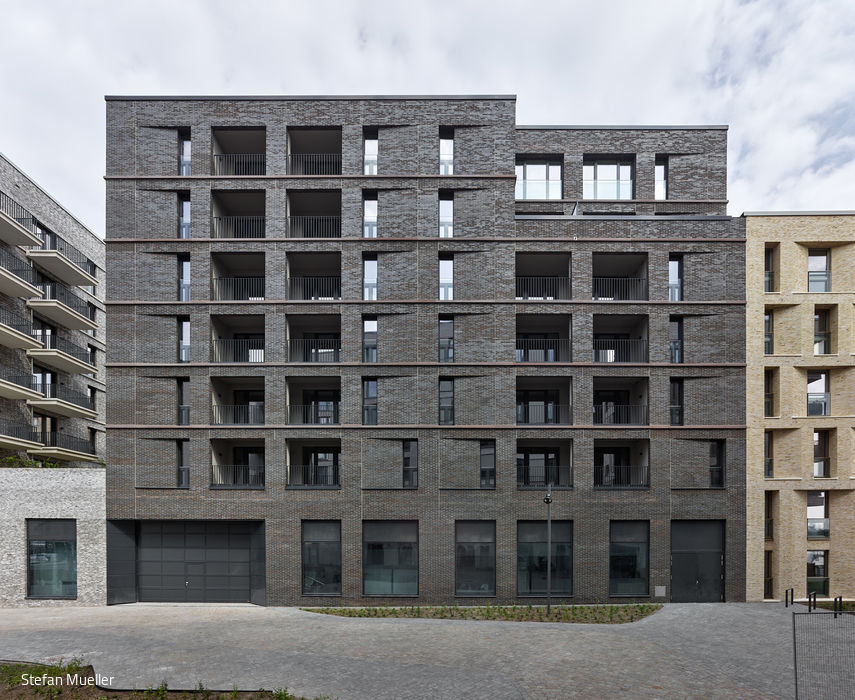
Vibrant Diversity and Public Housing in the Multigenerational Quarter
Forward-thinking
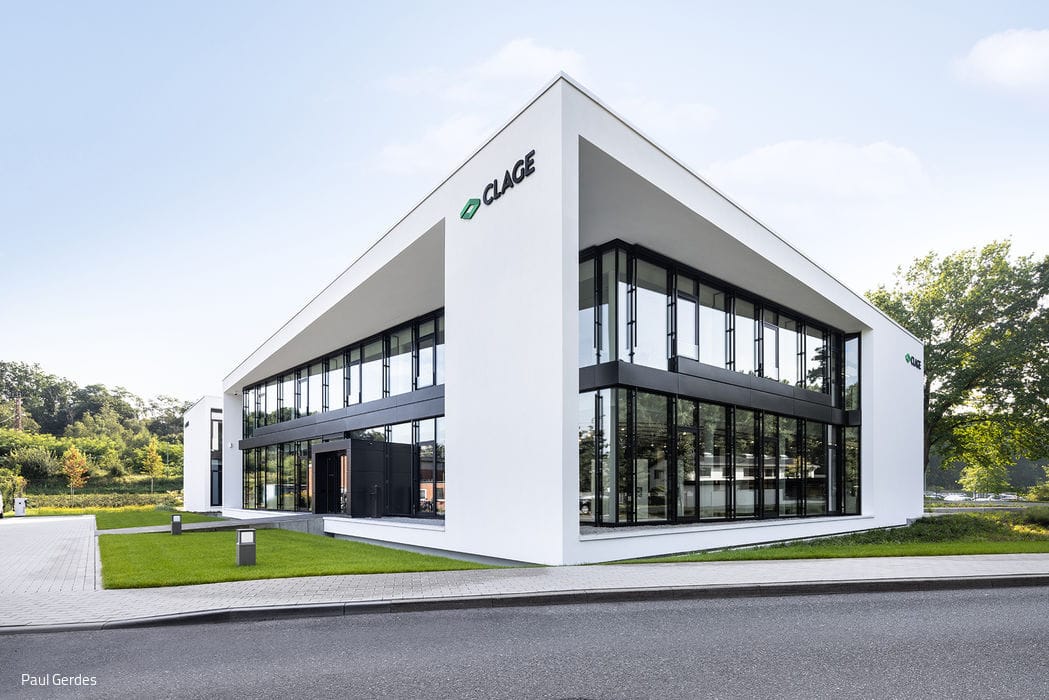
A unified design vision: administrative center and exhibition world that inspire both employees and visitors