


Making a Splash in a Historic Landmark
Hamburg's beloved "Swimming Opera" has been restored to the highest technical standards
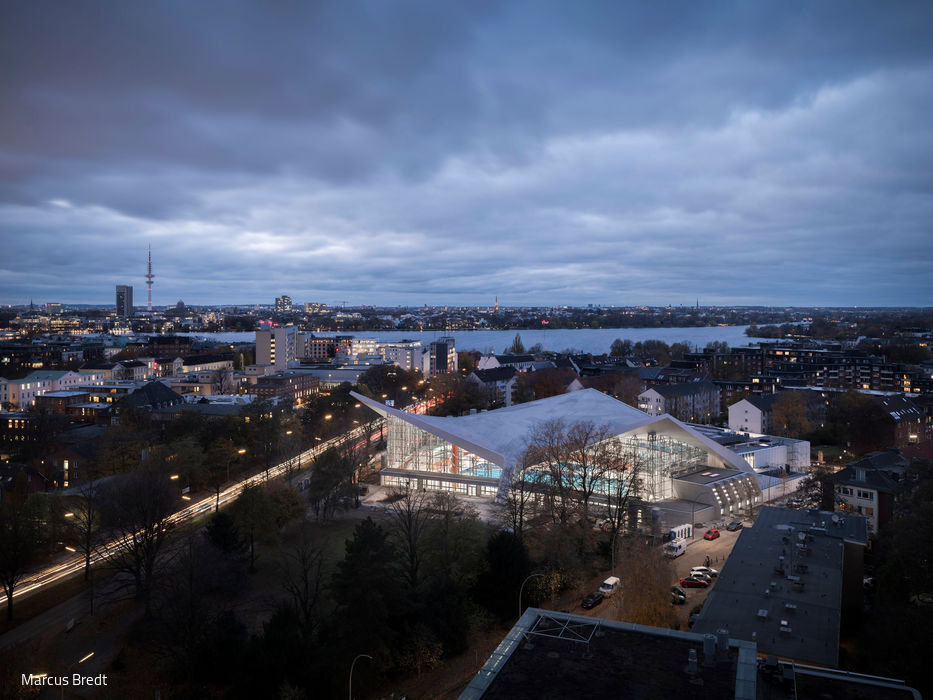
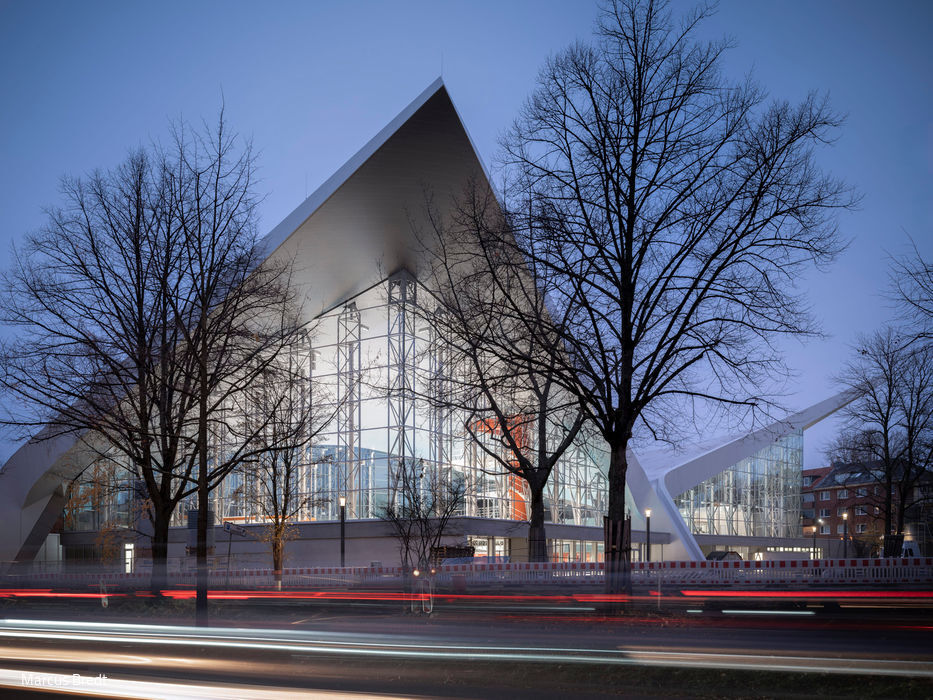
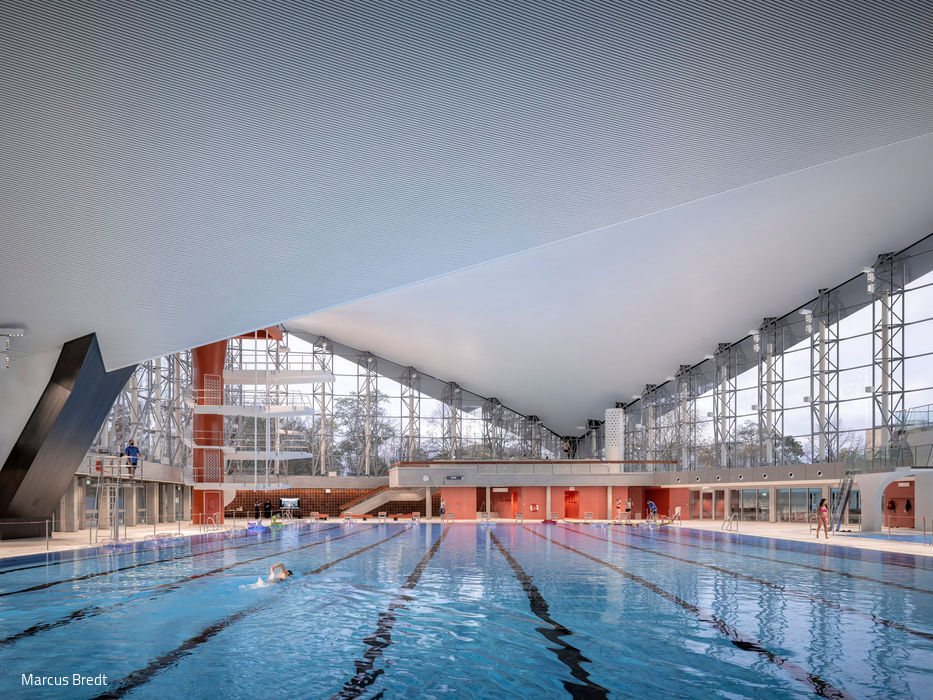
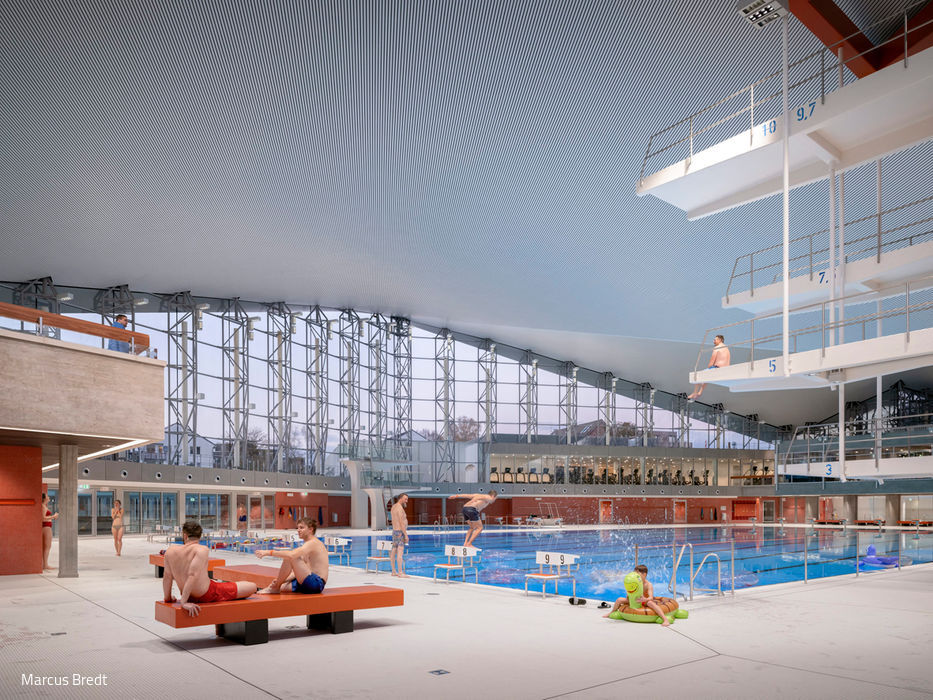
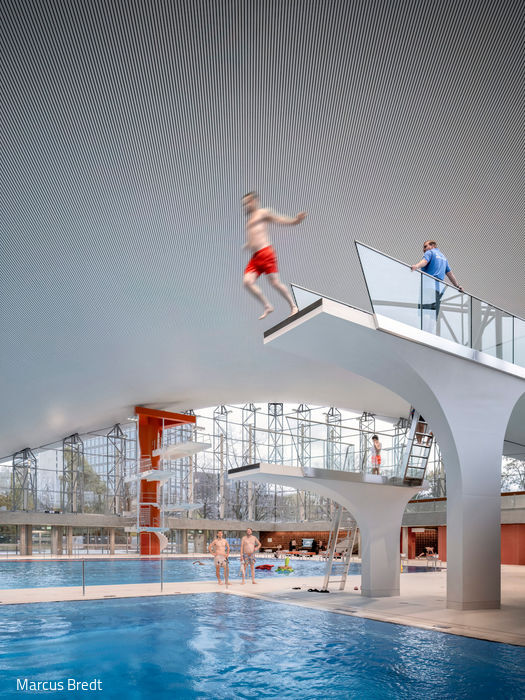
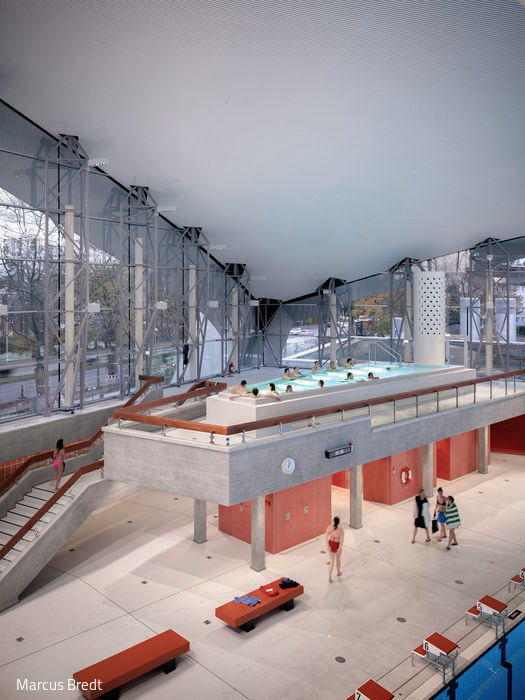
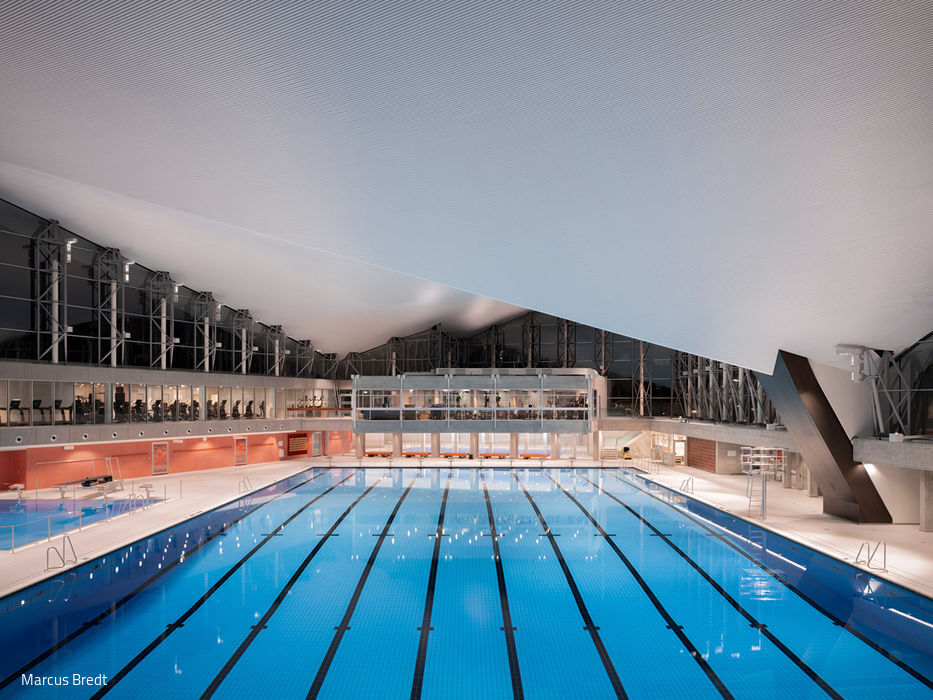
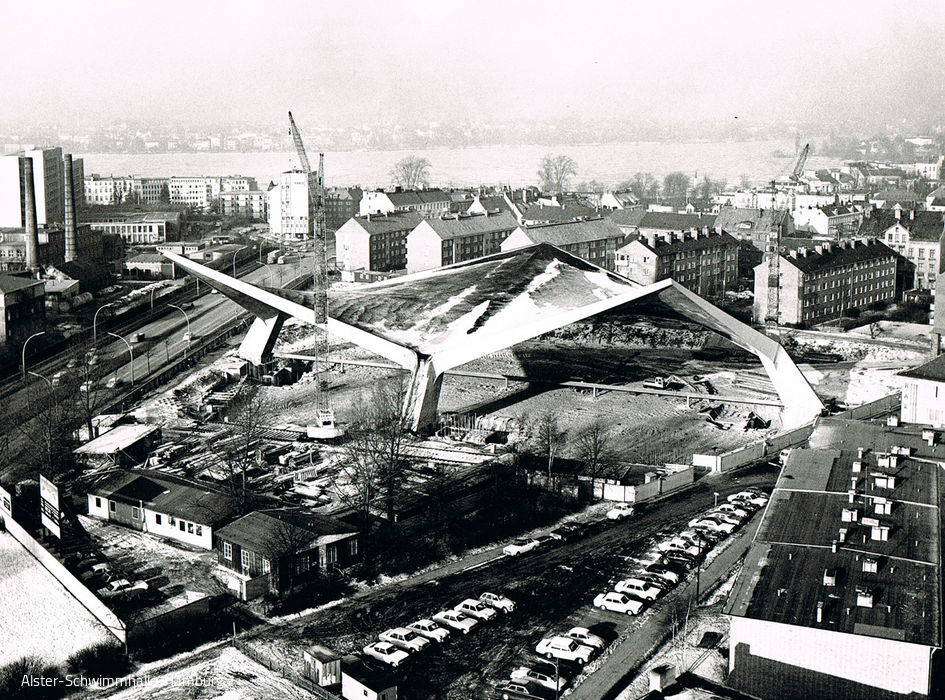
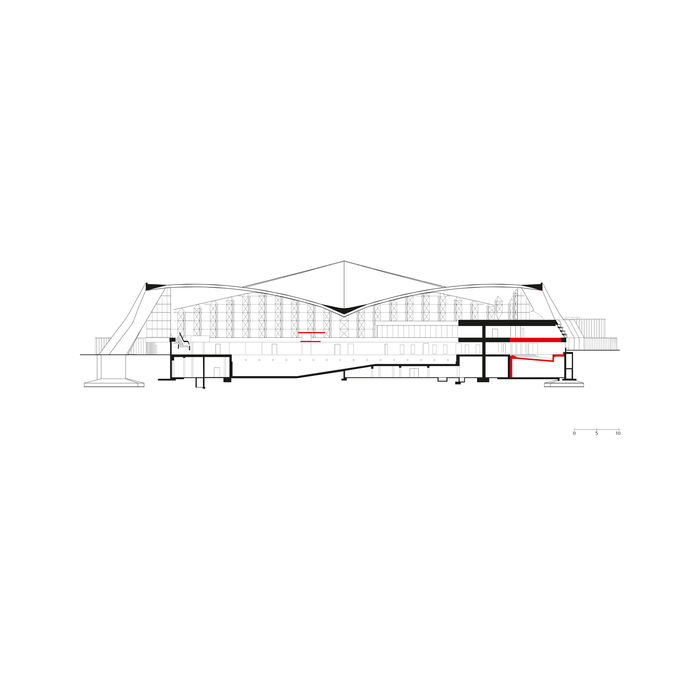
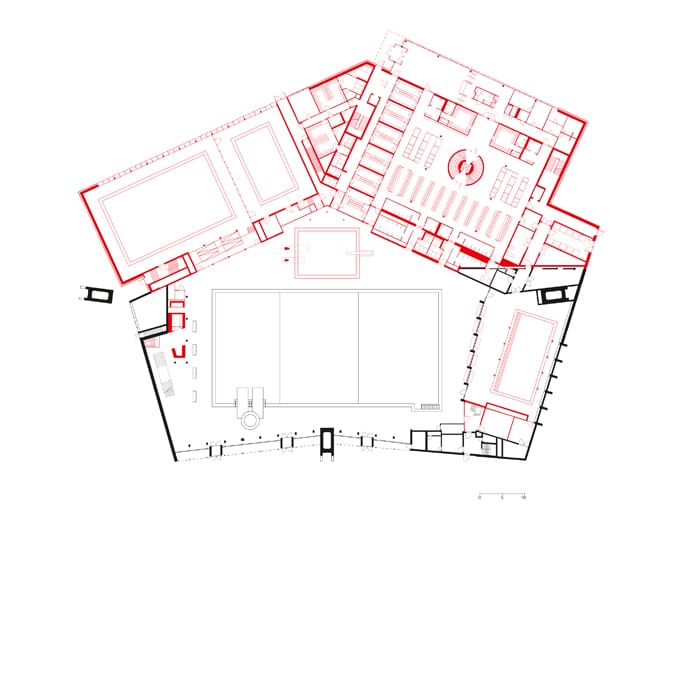
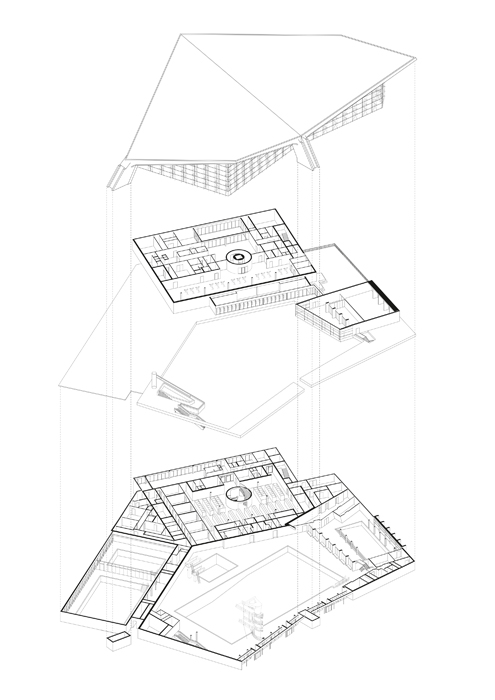
One of Europe's most impressive shell structures, the Alster Swimming Hall was designed by architects Horst Niessen, Rolf Störmer, Walter Neuhäusser, and engineer Jörg Schlaich. This postwar modernist landmark takes its nickname from its distinctive concrete shell roof—two hyperbolic paraboloid shells supported by three pillars—which reminded Hamburg residents of the Sydney Opera House when it opened. The building has now undergone comprehensive renovation, conversion, and expansion by the architectural firm Gerkan Marg and Partners.
The spectacular shell roof, vast interior with its 50-meter pool, and façade structure have been preserved. Simultaneously, the sports facilities received their first integrated redesign, contemporary amenities were added, and the water surface expanded by approximately 25 percent. Originally conceived as a competition venue, the swimming hall evolved into a beloved recreational and family destination. By 2014, rising costs prompted discussions about demolition and reconstruction. In partnership with engineering firm Schlaich Bergermann Partner (sbp), gmp developed a feasibility study that ultimately became the foundation for the decision to preserve and restore the building—with the iconic roof's heritage status playing a decisive role. Spanning 4,500 m², the roof rises 24 meters at its peak, supported by three diagonal struts and just 8 centimeters thick. Two of the three pillar foundations are connected by a tension cable running beneath the pool. With spans reaching up to 96 meters, it remains one of the world's largest structures of its kind. The renovation presented a major engineering challenge: demolishing and reconstructing parts of the existing pool without compromising the overhead roof or subjecting it to excessive vibration. The tension cable between foundations proved particularly critical—it could not be disturbed and required continuous monitoring throughout construction. Since completion, the roof benefits from innovative protections including a new cathodic corrosion prevention system that uses low-voltage current to guard against moisture damage, and a custom-engineered telescopic support bearing that accommodates movement between the façade and roof. By balancing preservation with functional redesign and contemporary use, the swimming hall's architectural identity has been secured for generations to come.
Photography Credits:
Marcus Bredt
www.marcusbredt.de
(Published in CUBE Hamburg 01|24)
Subtle Elegance
Refined restraint and an intriguing twist define this maisonette.

Live in Design
Discover an entire design universe at Hotel Heimhude

Everything Extraordinary
The "Holzrotonda" Demonstrates Innovative Approaches to Future Single-Family Home Design
Between Tradition and Modernity
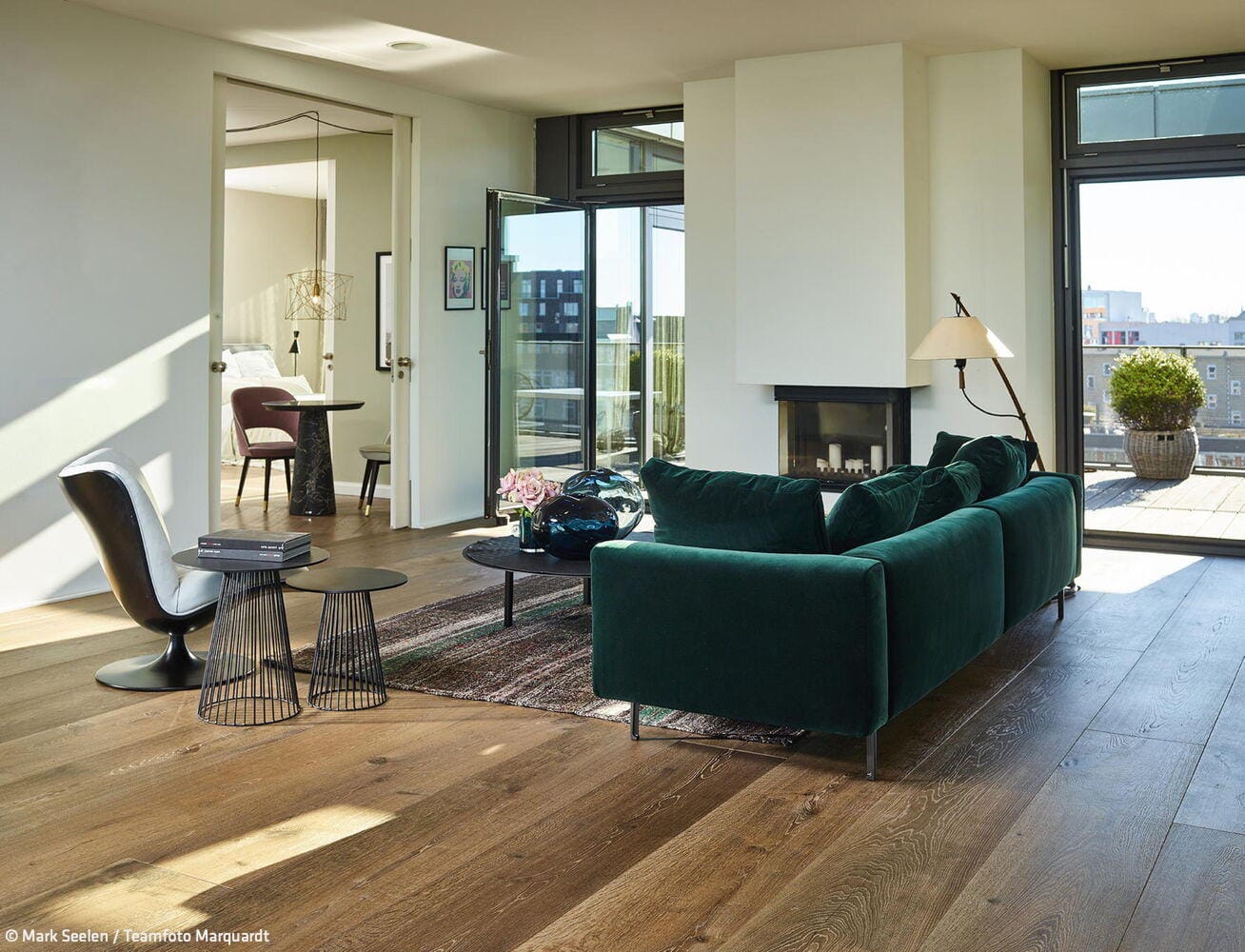
History and the present meet at the Parketthaus in Eppendorf