


A Place Apart
Material, colour, and light reveal the essence of space


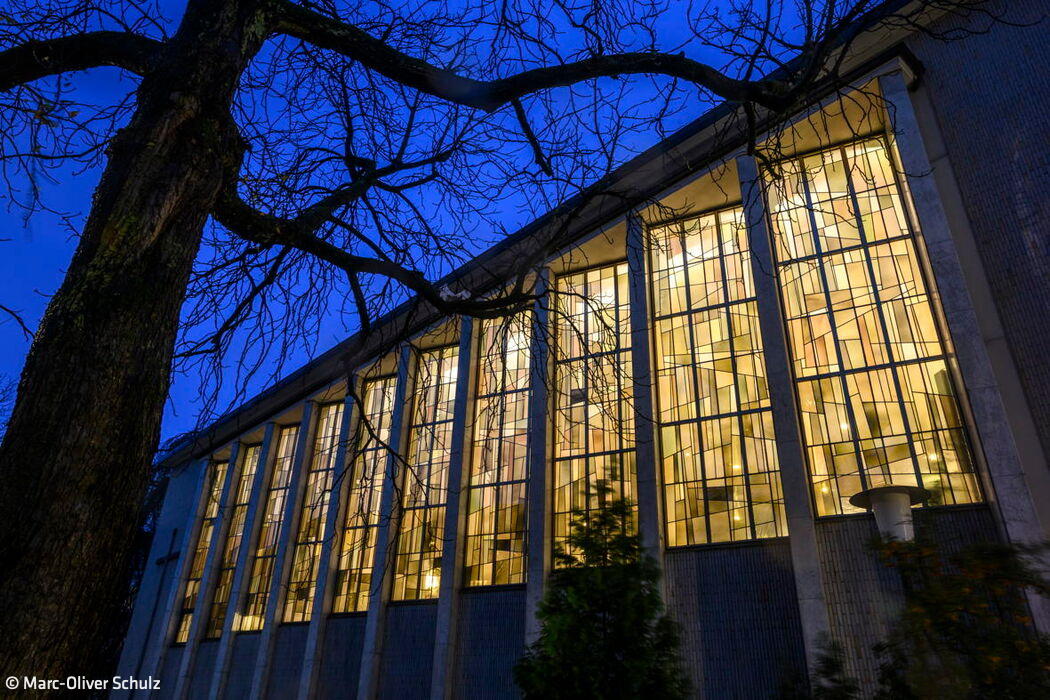
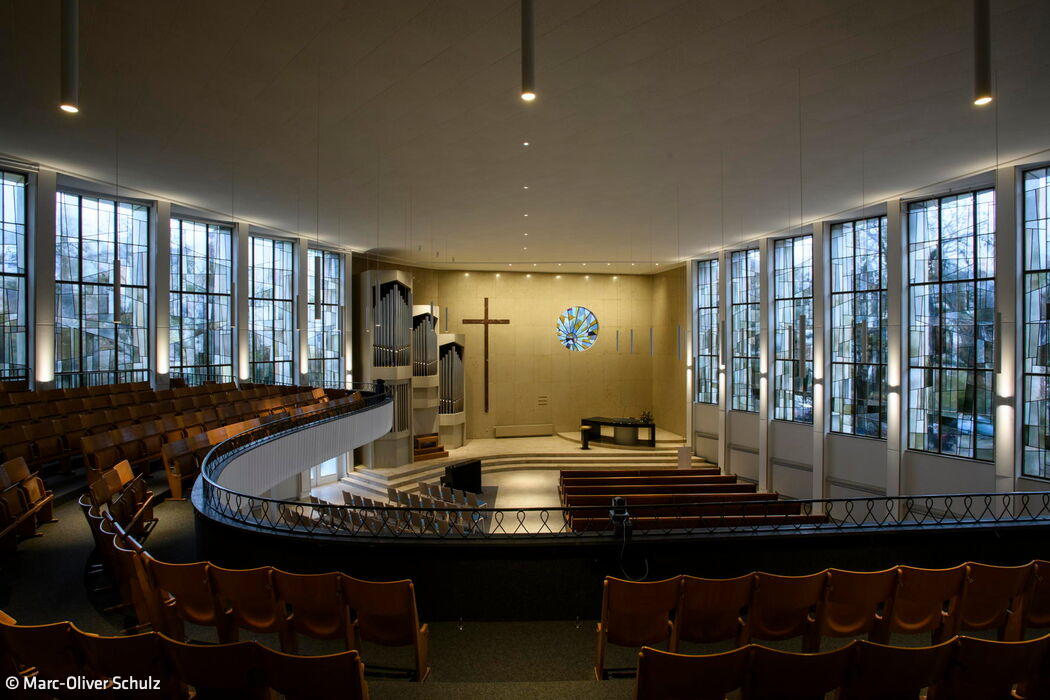
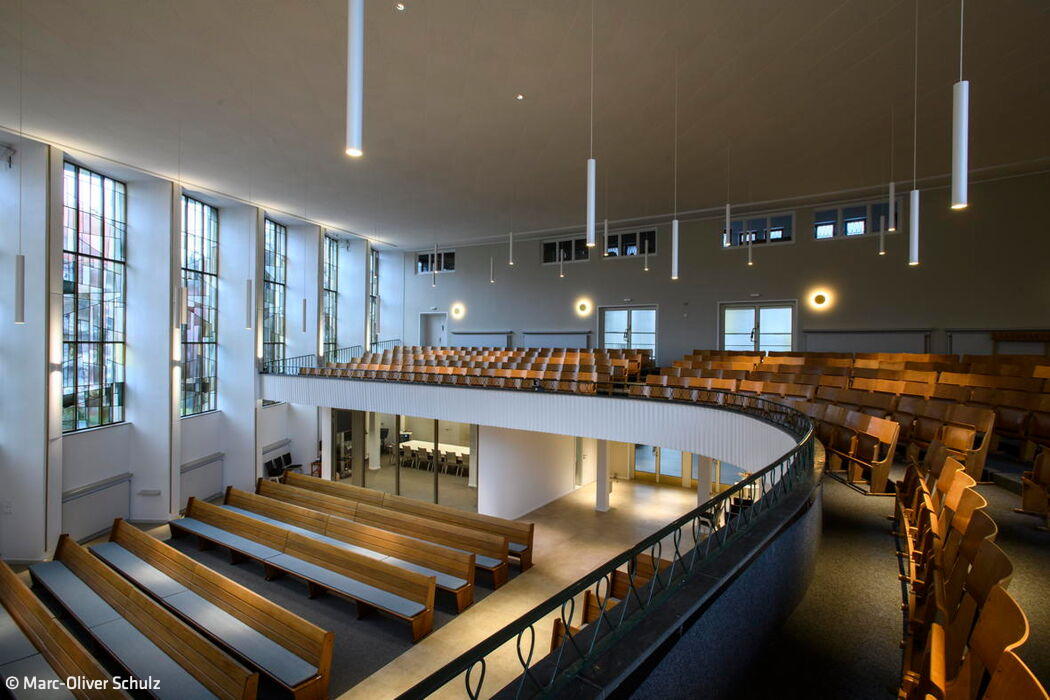
Completed in 1956 from architect Theo Hirte's design, the New Apostolic Church in Hamburg-Eppendorf stands as a landmark of modernist sacred architecture. Together with its adjoining rectory, this protected ensemble captivates visitors with its period authenticity—the crisp light clinker brick, the understated flying roof, and the expressive interior language all speak to an era of architectural confidence. The asymmetrical sanctuary draws the eye inward through its tapering longitudinal walls that converge toward the altar, while the gallery sweeps boldly into the space, its elegant staircase a masterwork of refined geometry. Originally designed to accommodate over 1,000 worshippers, the church was conceived not only to serve a growing congregation but also to reunite scattered branch communities under one roof. Successive renovations throughout the following decades culminated in major work in the early 1970s. By 2002, with the installation of the Hüfken organ, the sanctuary's exceptional acoustics had established it as a premier concert venue far beyond the parish's own musical life.
After 65 years in service, the building underwent a comprehensive renovation and modernisation between 2021 and 2023, guided by the Korb office in close collaboration with the heritage conservation authority. The intervention balanced sensitivity with pragmatism—necessary additions and modifications were thoughtfully woven into the existing interior architecture while enhancing key areas, improving functionality, and meeting fire safety standards. With renovation and cleaning complete, the church windows have regained their former luminosity. Yet the true transformation lies in the reimagined floor finishes and lighting scheme, which breathe new life into this complex sacred space. Previously, the parish hall and gallery were entirely clad in grey needle felt, with no visual distinction between circulation paths and functional zones—save for the altar platform. Now, the altar's materiality extends visually throughout the traffic areas. Large-format porcelain stoneware tiles create a chromatic bridge between the limestone altar space and the new rubber flooring in the foyer, which itself echoes the limestone of the staircase. This unified approach clarifies wayfinding, emphasises the primary circulation route, and elevates the act of moving through the church to something altogether more solemn. The lighting design marks an equally decisive shift, replacing clustered opaque spheres with geometrically precise, directional cylindrical fixtures. The concrete pillars of the longitudinal façades, like their 1950s predecessors, are now emphasised in their verticality. Supplementary indirect lighting complements the scheme, allowing space and architecture to achieve their full expression. The result: a church interior that achieves rare equilibrium—contemplative yet charged with quiet intensity, shaped by a refined understanding of material, colour, and light.
Photography:
Marc-Oliver Schulz
www.moschulz.de
(Published in CUBE Hamburg 03|24)

A Clear Statement
A family home that frames the landscape through carefully orchestrated sightlines.

Welcoming Atmosphere
Designing a medical practice with surgical facilities requires balancing both form and function.
A dream location
Reimagining a Settlement House: How Thoughtful Renovation and Extension Create Space for Growing Families
Industrial Heritage Preserved
New Life in an Old Tower: How Adaptive Reuse Transforms Industrial Heritage