


A Special Learning Environment
Using interior design to create spaces where learning becomes a rewarding experience
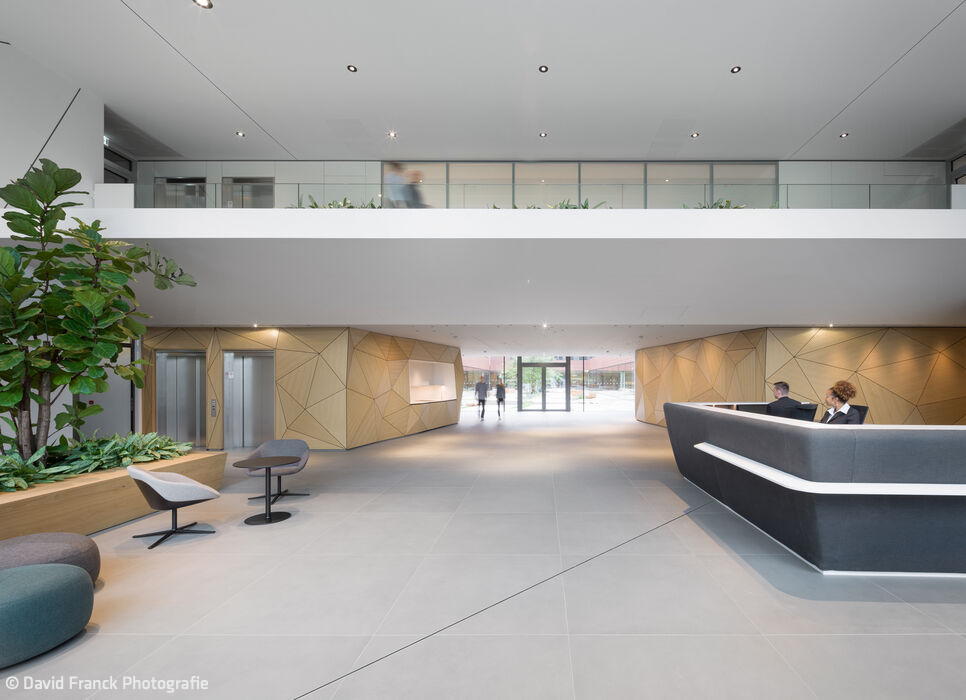
Networking lies at the heart of Vector Informatik GmbH's mission—from developing vehicle control units to their underlying software. This vision inspired the interior designers at Geplan Design, led by twin brothers Cord and Rolf Glantz, to translate the concept of intersecting vectors and networked structures into the spatial experience of the new VectorAcademy. Just as learning rewires neural pathways in the brain, the academy's design at Vector's Stuttgart-Weilimdorf headquarters creates optimal conditions for those new connections to flourish. The interior architecture elegantly transforms networking from abstract concept into tangible space. Through thoughtful spatial design, the planners sought to cultivate openness, curiosity, and a genuine love of learning—making this academy distinctive in every way.
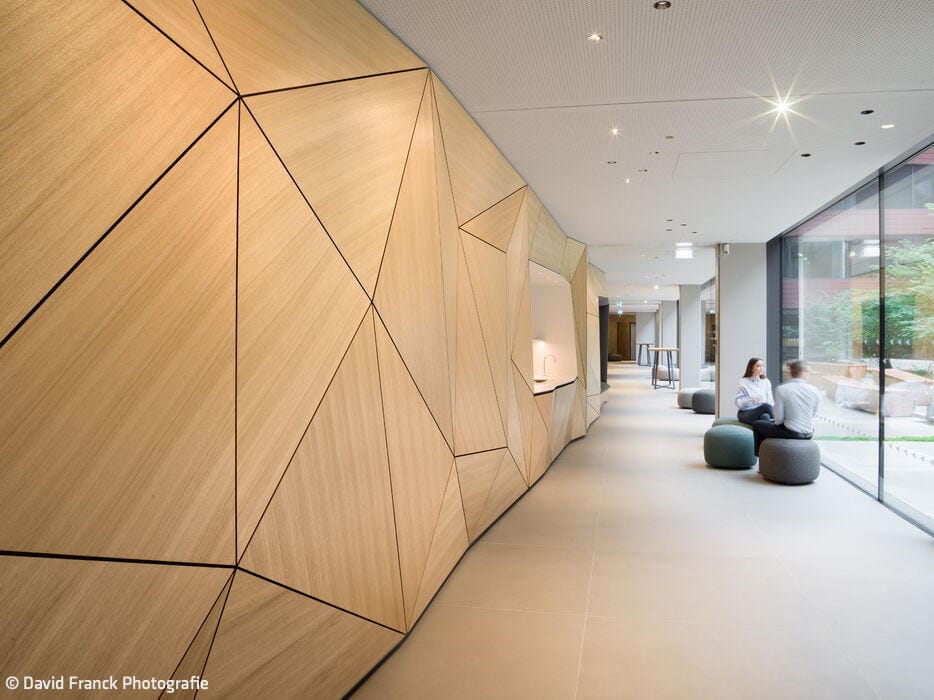
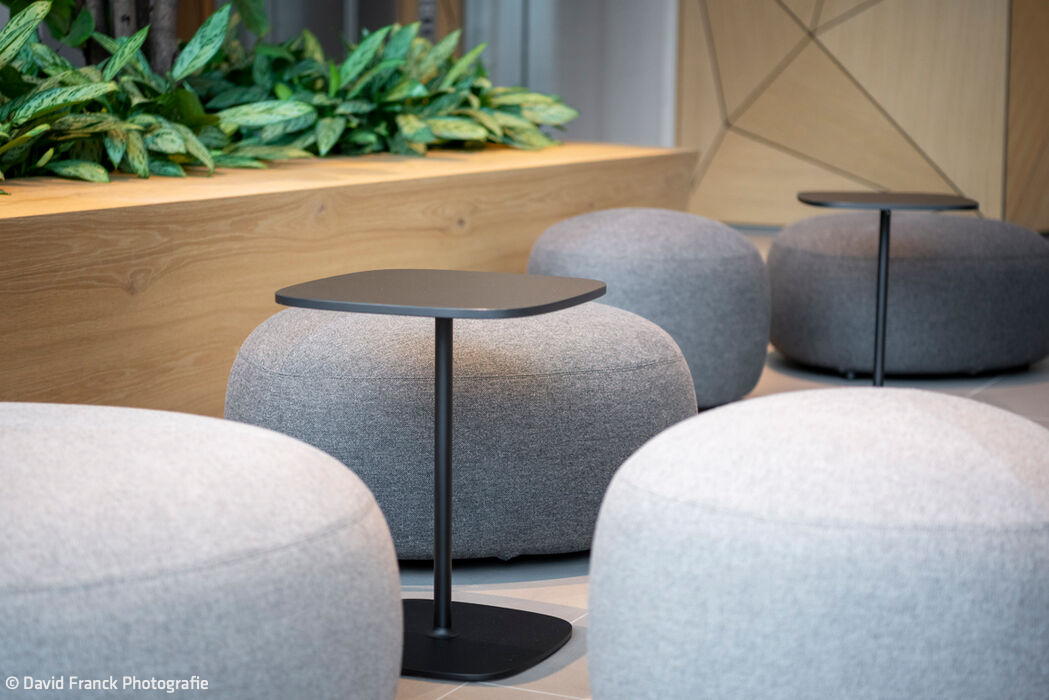
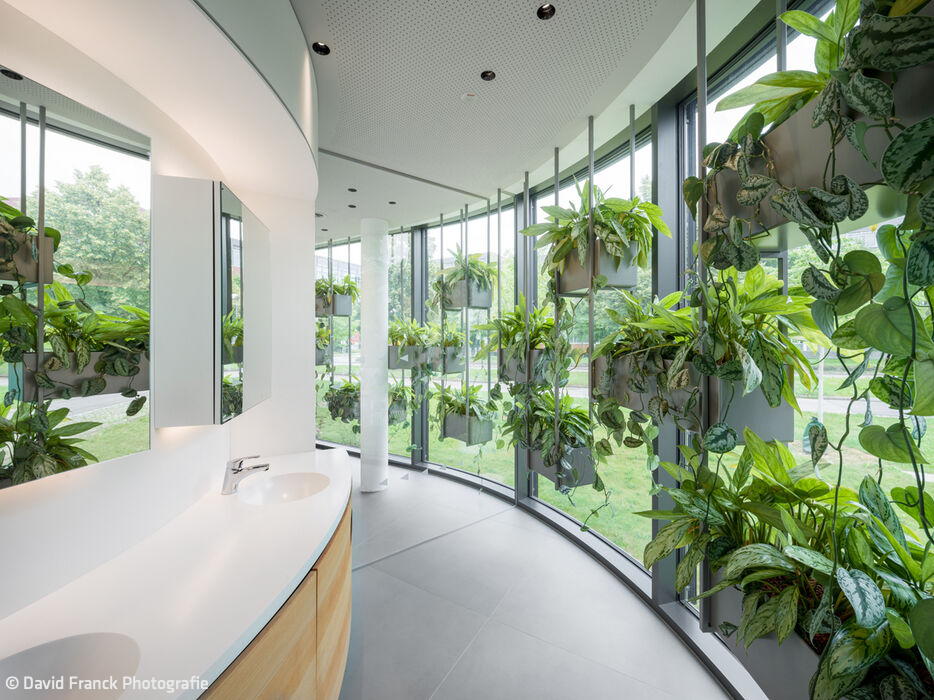
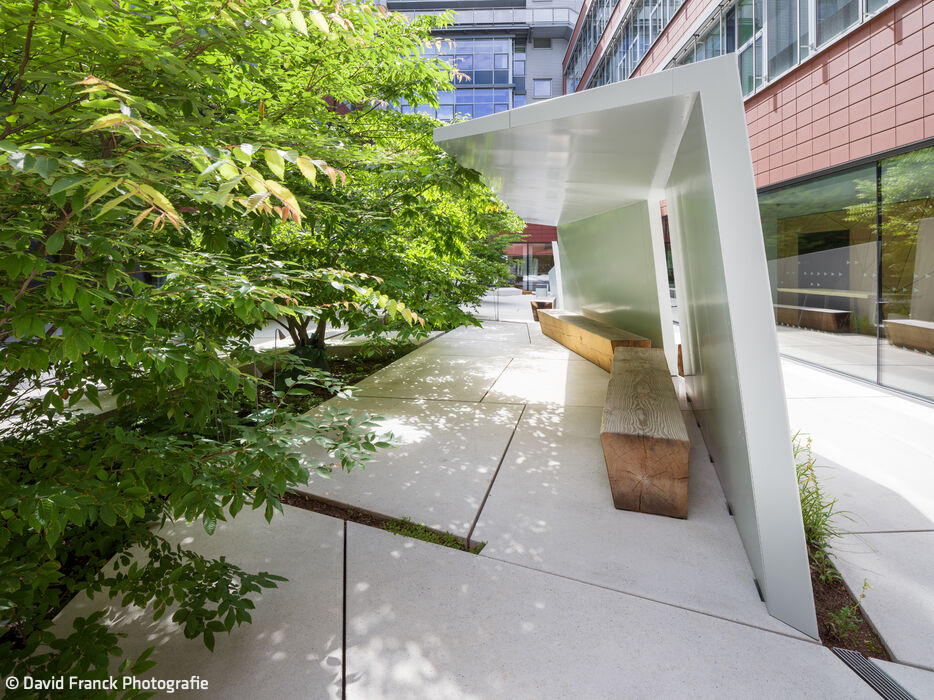
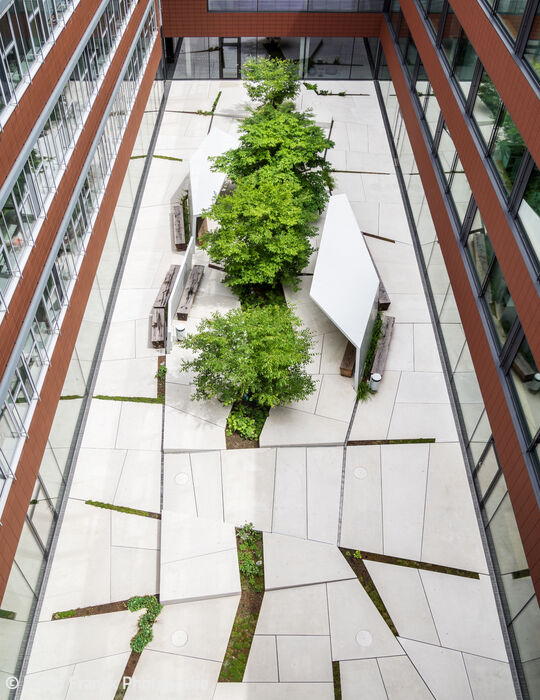
From the moment visitors enter the expansive two-story lobby, they encounter a striking three-dimensional sculptural wall of oak veneer. Its intricately folded surface seems to undulate in gentle motion, wrapping around the academy's central courtyard to create an inviting gathering space for training participants from around the globe. The intersecting vector motif is unmistakable—a visual metaphor that fits the company's identity perfectly. Yet this sculptural wall transcends mere aesthetics: it rhythmically expands and contracts the space, modulating how visitors move through it, while carving out intimate zones for connection and quiet reflection. Cleverly integrated niches accommodate comfortable seating and functional kitchenettes, while all technical installations—including retractable fire safety walls—disappear seamlessly behind the sculptural form. The vector concept extends consistently into the open courtyard, echoing in floor joints and wooden benches. Miriam Köpf's imaginative living plant installation provides a striking emotional counterbalance to the geometric precision.
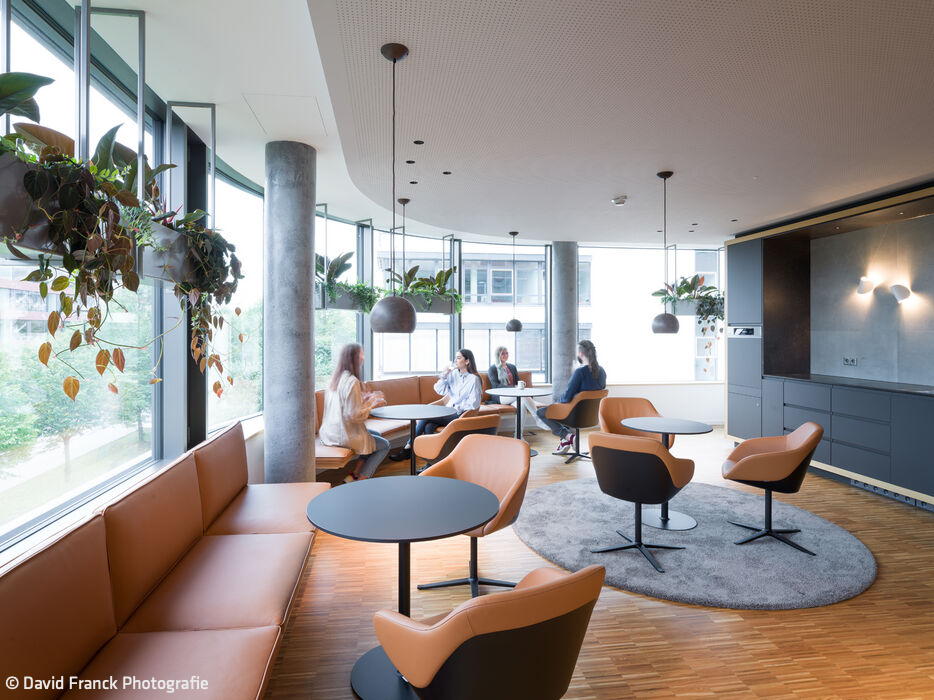
The Academy serves as Vector's physical embodiment—the space where most clients first encounter the company in person. The nine training rooms along the ground-floor façade maximize natural daylight, creating spaces that feel inherently energized. Through thoughtful interior design and material selection, learning becomes more than instruction; it becomes a memorable, positive experience. The Academy also functions as a human-centered environment that encourages genuine connection, awakens the senses, and simultaneously provides a calming, restorative atmosphere.
Photography:
David Franck Photography
www.davidfranck.de
(Published in CUBE Stuttgart 02|24)
Treasure Chest
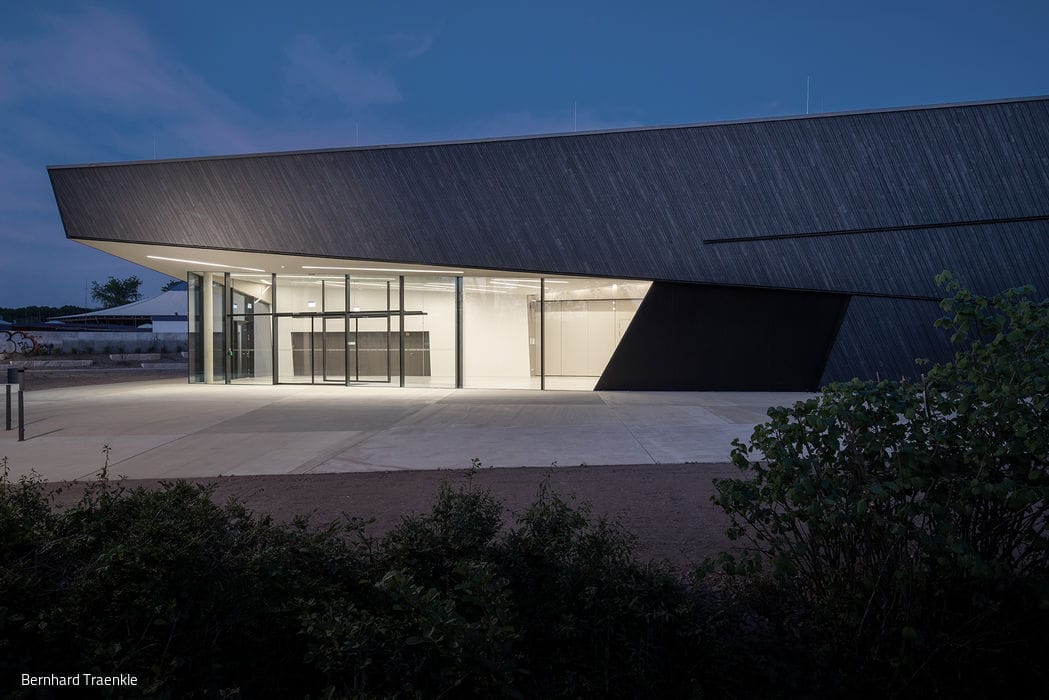
Event hall: where dynamic tension shapes the space between inside and out
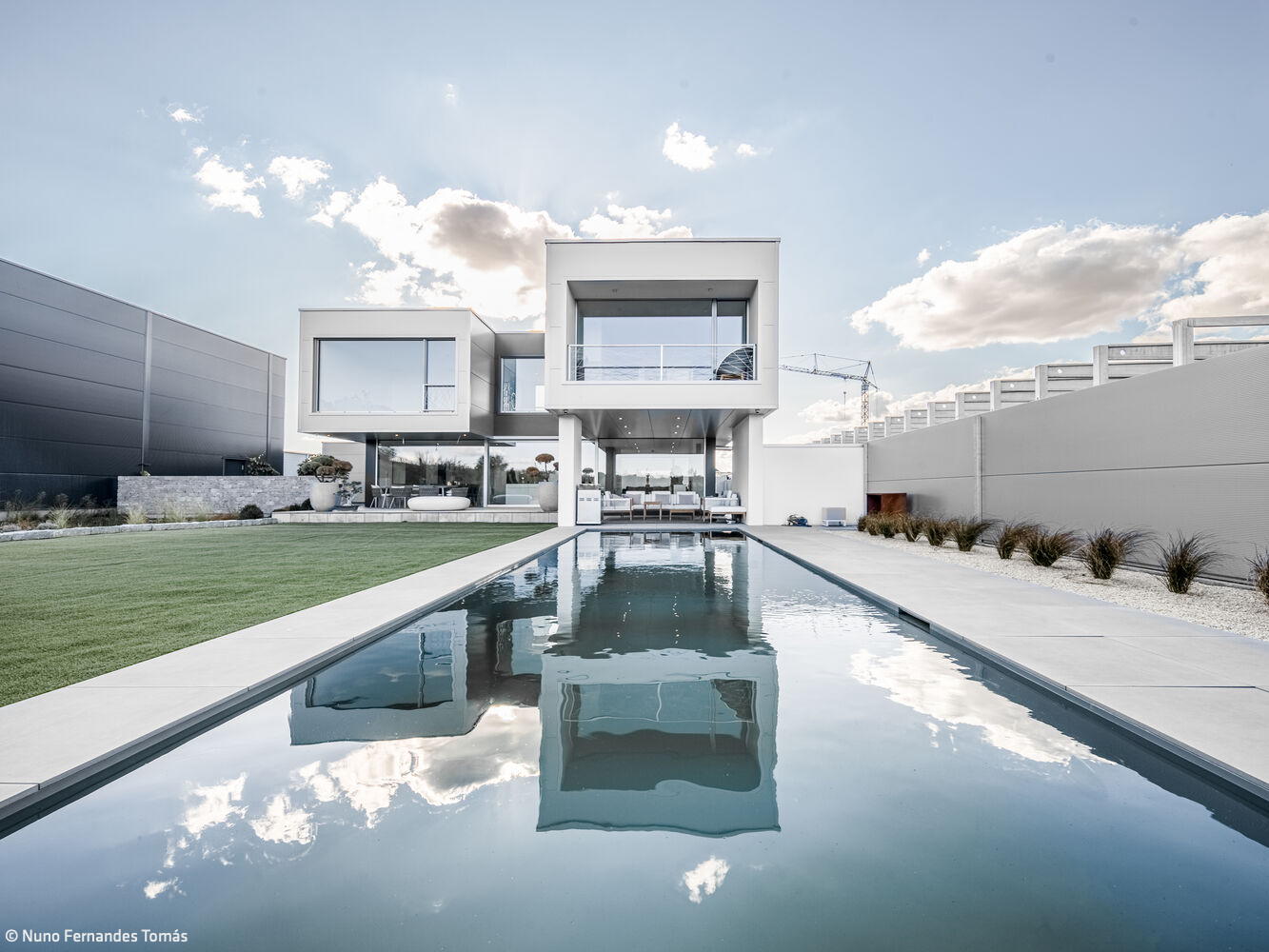
Dynamic Composition
Where Innovation Meets Upcycling – A New Building Reimagined

Functional and Aesthetic
Redesigned city library creates identity-building space for communication and learning
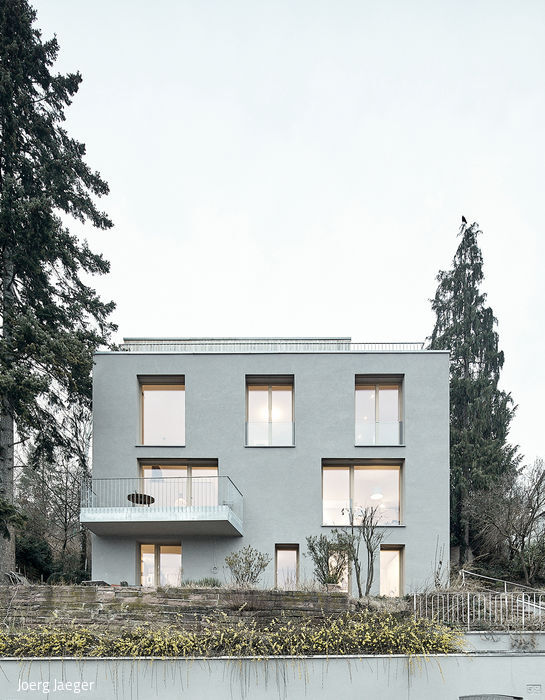
Inside and Out
A Cohesive Design Vision for Villa Renovation