


Inserted with sharp edges
A detached house reflects the village context while still appearing very modern.
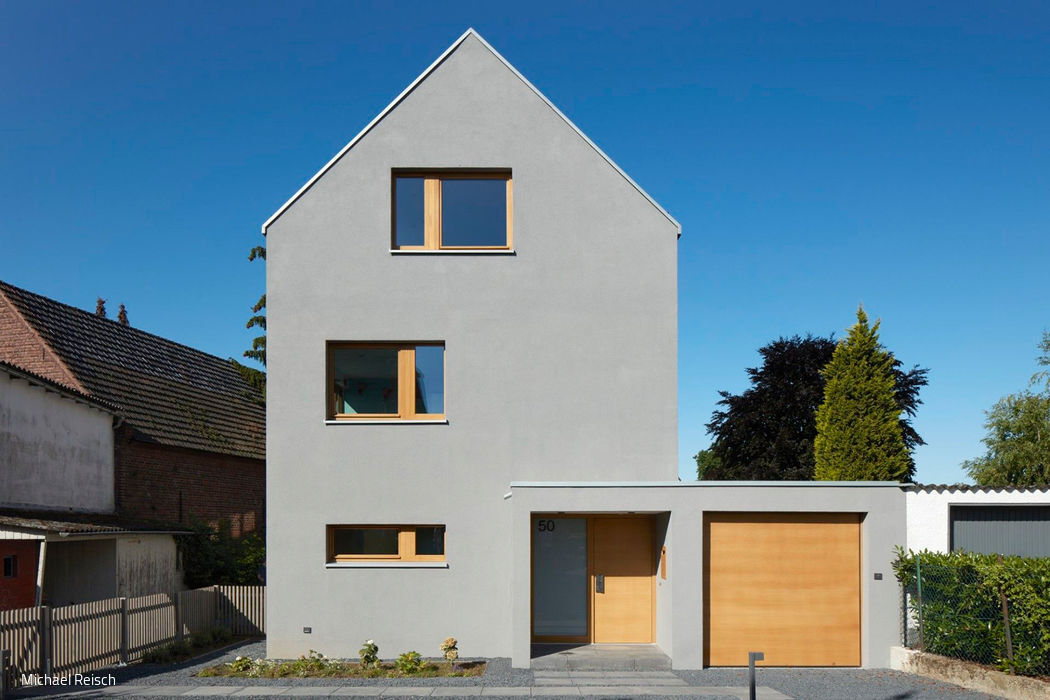
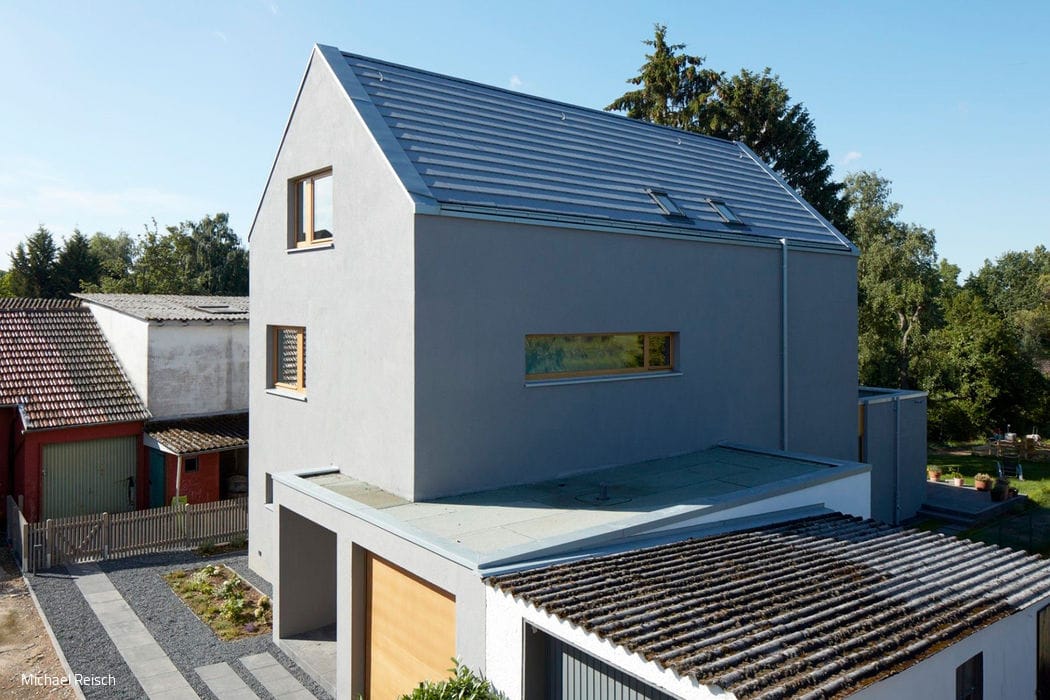
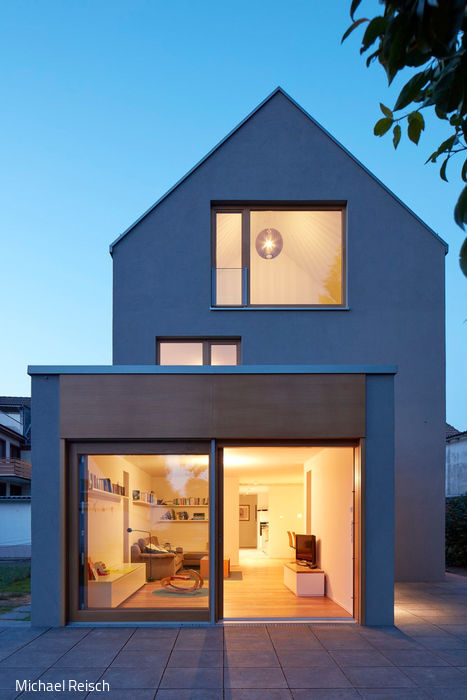
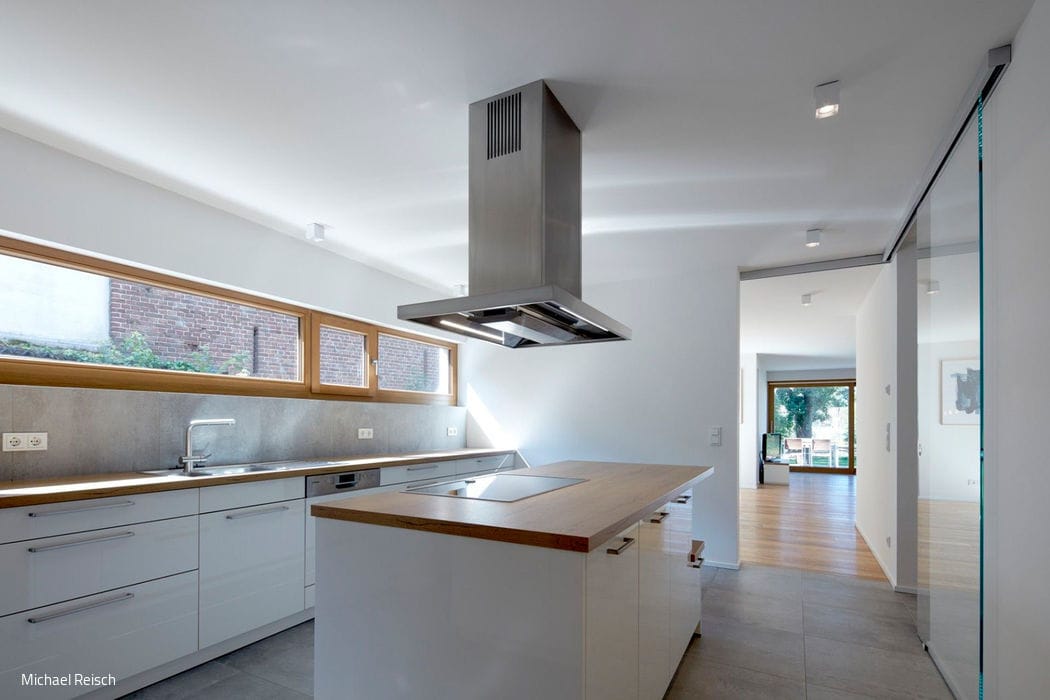
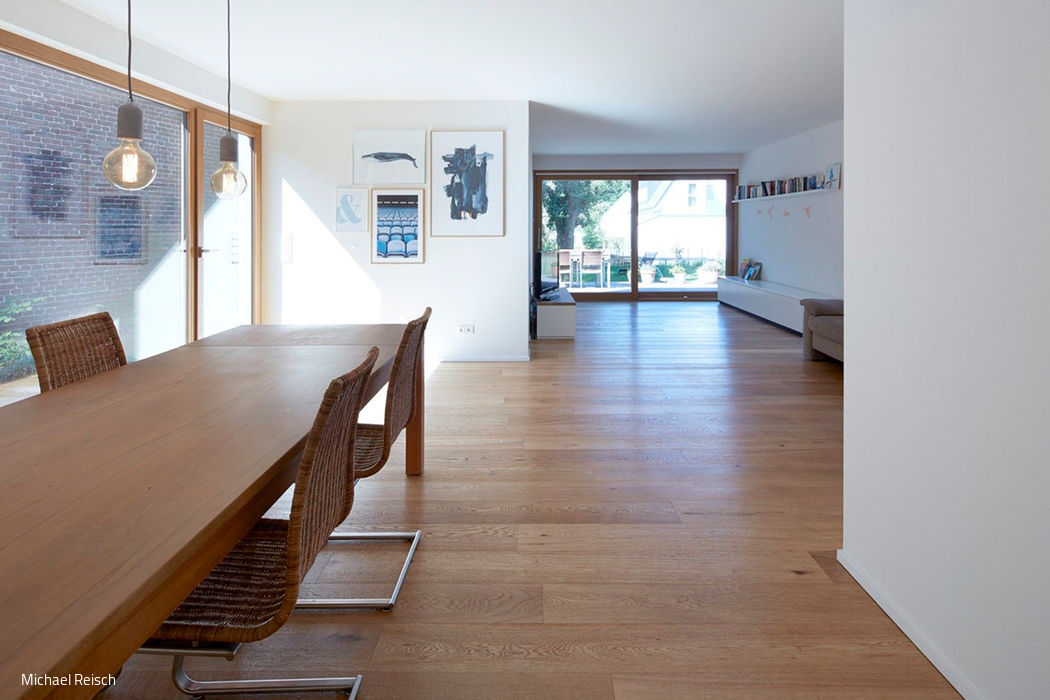
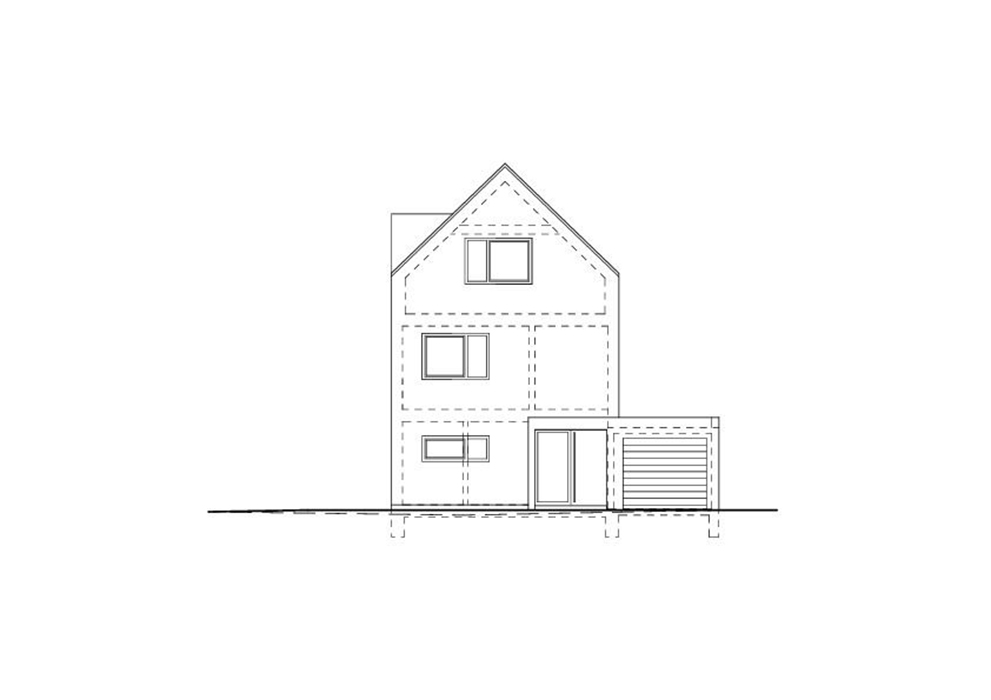
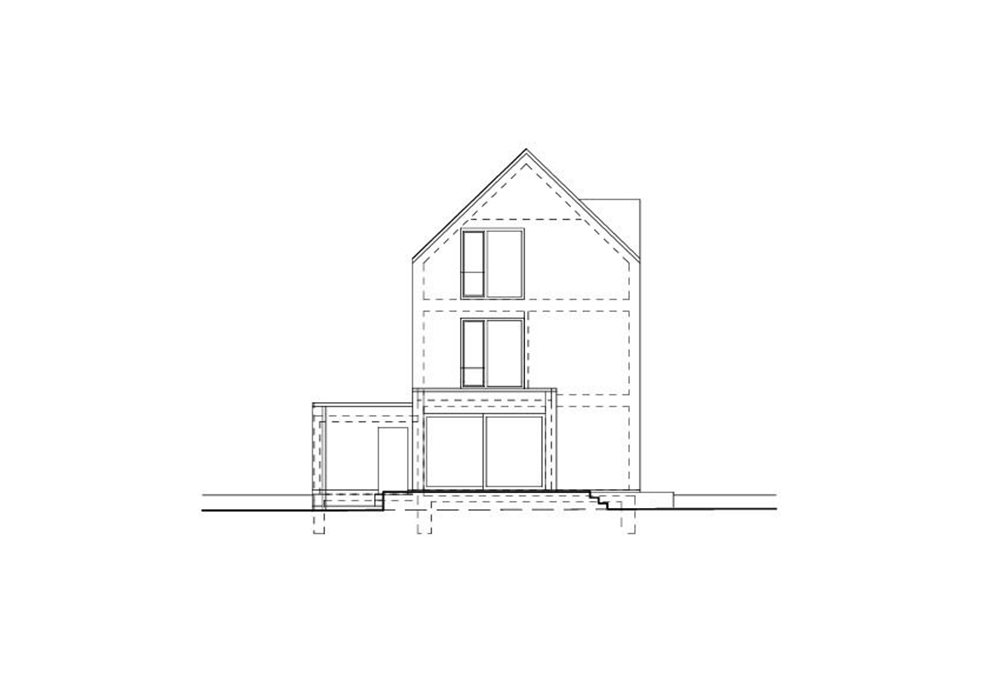
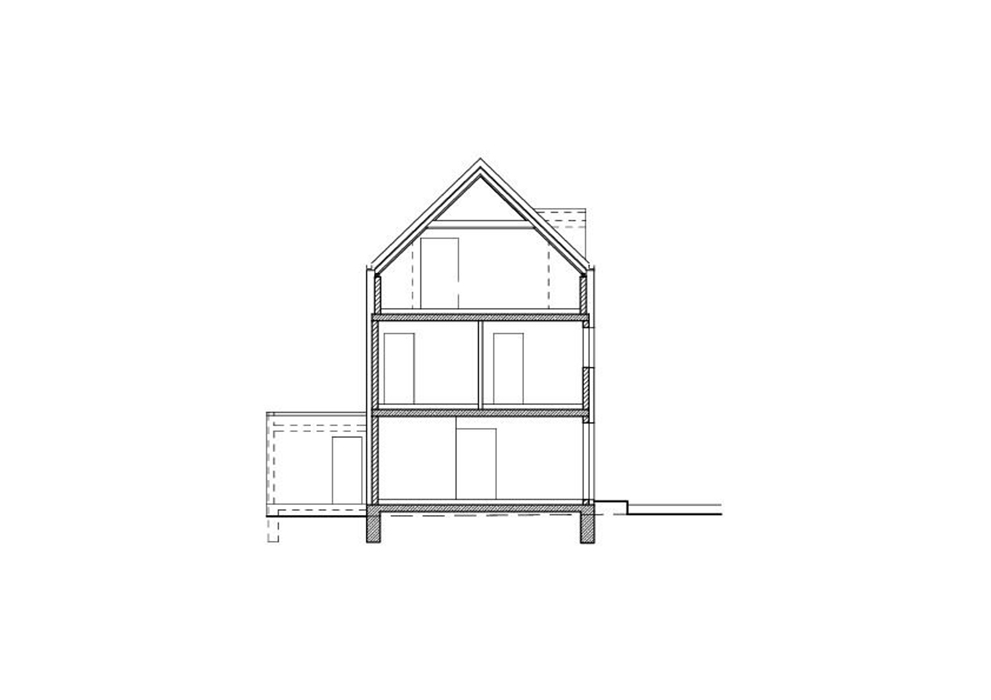
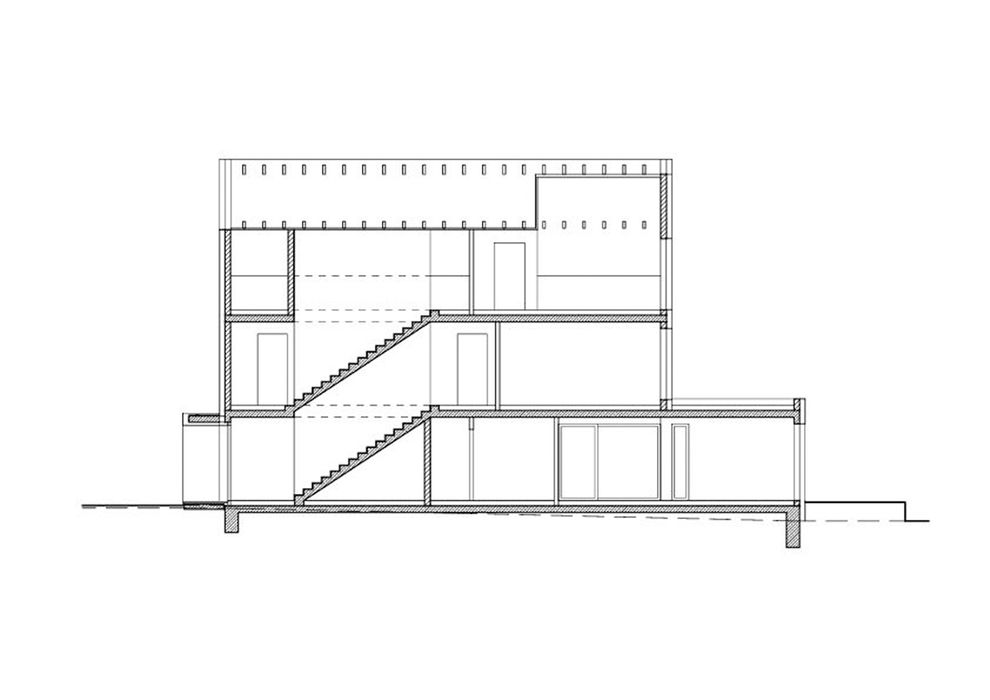
The project began with an acquired residential lot in Monheim, where the clients wanted to build a detached home for their family of six. Set back from the street and accessed via a narrow drive, the tapered site presented a spatial constraint—even accounting for all setback requirements, only a slender building volume could fit.
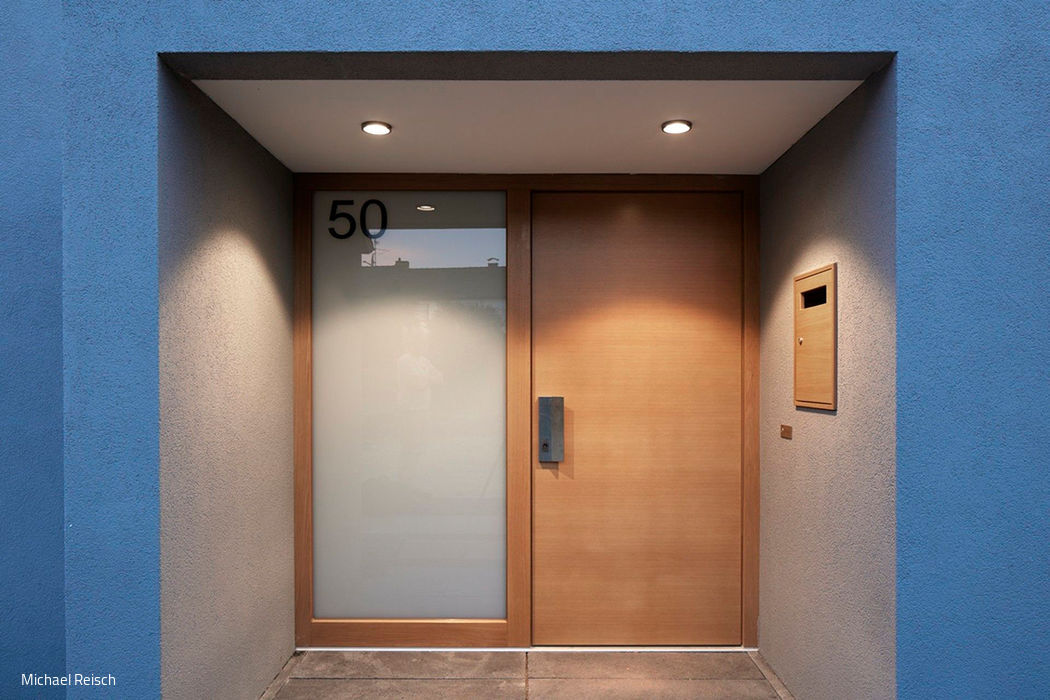
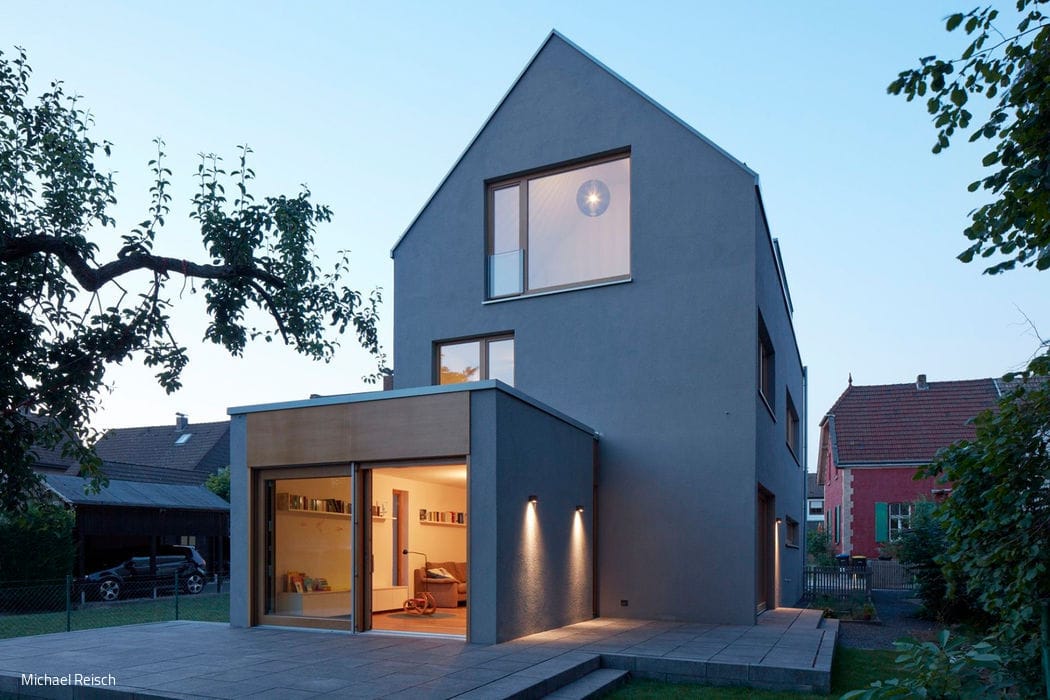
The commissioned E2 architects from Meerbusch analysed the special role of the property in the urban structure and developed a building that is economical in its construction and impresses with its clear typology and design language. In dialogue with the clients, the architects pursued the approach of integrating the building into the rather village-like surroundings without sacrificing contemporary architecture. Reflecting the construction style of the neighbouring barns, the building was deliberately designed with a gable facing the street, in stark contrast to the eaves-facing buildings along the roadside. The gable roof echoes the historical design of the existing neighbouring buildings, but the details feature a modern, linear and even sharp-edged design: the gable roof has no overhang, either at the gable or the eaves. It was therefore only logical to integrate the gutter into the roof structure. The façade design also emphasises a rather restrained style: all windows (Bröcking), the front door and the garage door, as well as the external venetian blind boxes, are made of natural oak. The warm grey colour of the plaster façade harmonises beautifully with the wooden elements. It has the same colour value as the concrete roof tiles, which in turn reinforces the abstract, sharp-edged impression of the house. Inside, the warm material design continues with oak parquet flooring and grey porcelain stoneware tiles. All rooms in the house, which offers over 200 m² of living space, are accessed via the three-storey staircase, which serves as a hallway on the ground floor and becomes a corridor on the upper floor and attic. Built-in furniture was integrated into the design as far as possible to save space: on the ground floor, for example, a staircase cupboard serves as storage space and a substitute for a cellar. The house is heated by a geothermal heat pump. Non-essential building services equipment that would have placed an excessive strain on the budget, such as controlled ventilation, was deliberately omitted – due to the narrow layout of the house, every room has a window that can be opened manually.
(Published in CUBE Düsseldorf 04|20)
One into two
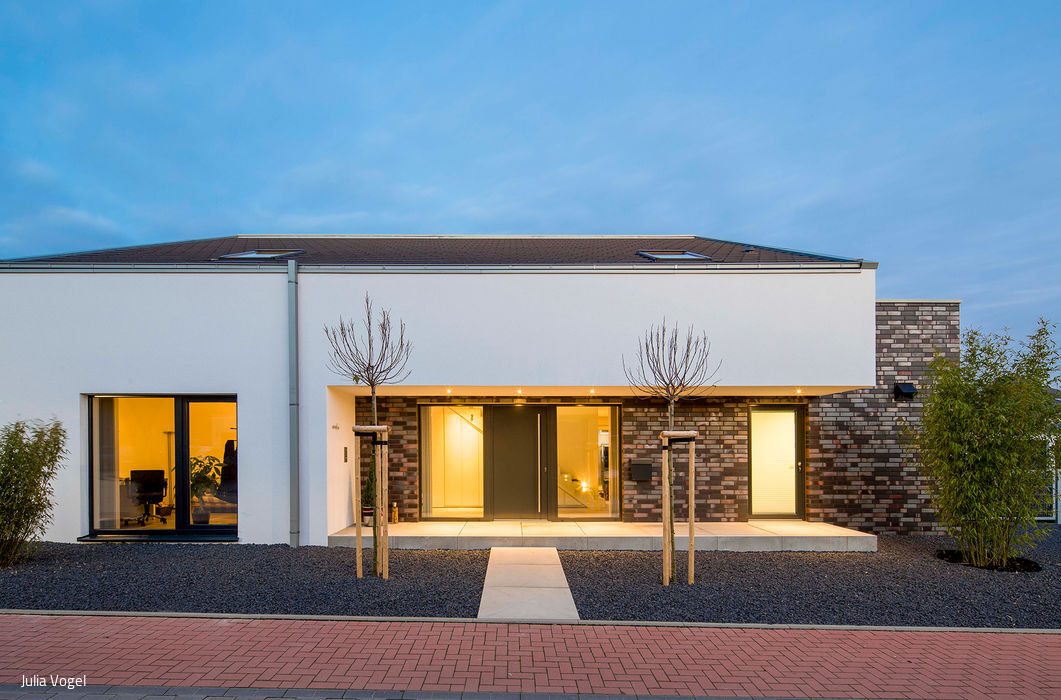
A single-family home that creatively reconciles building codes with design ambition
Open and Identity-Defining
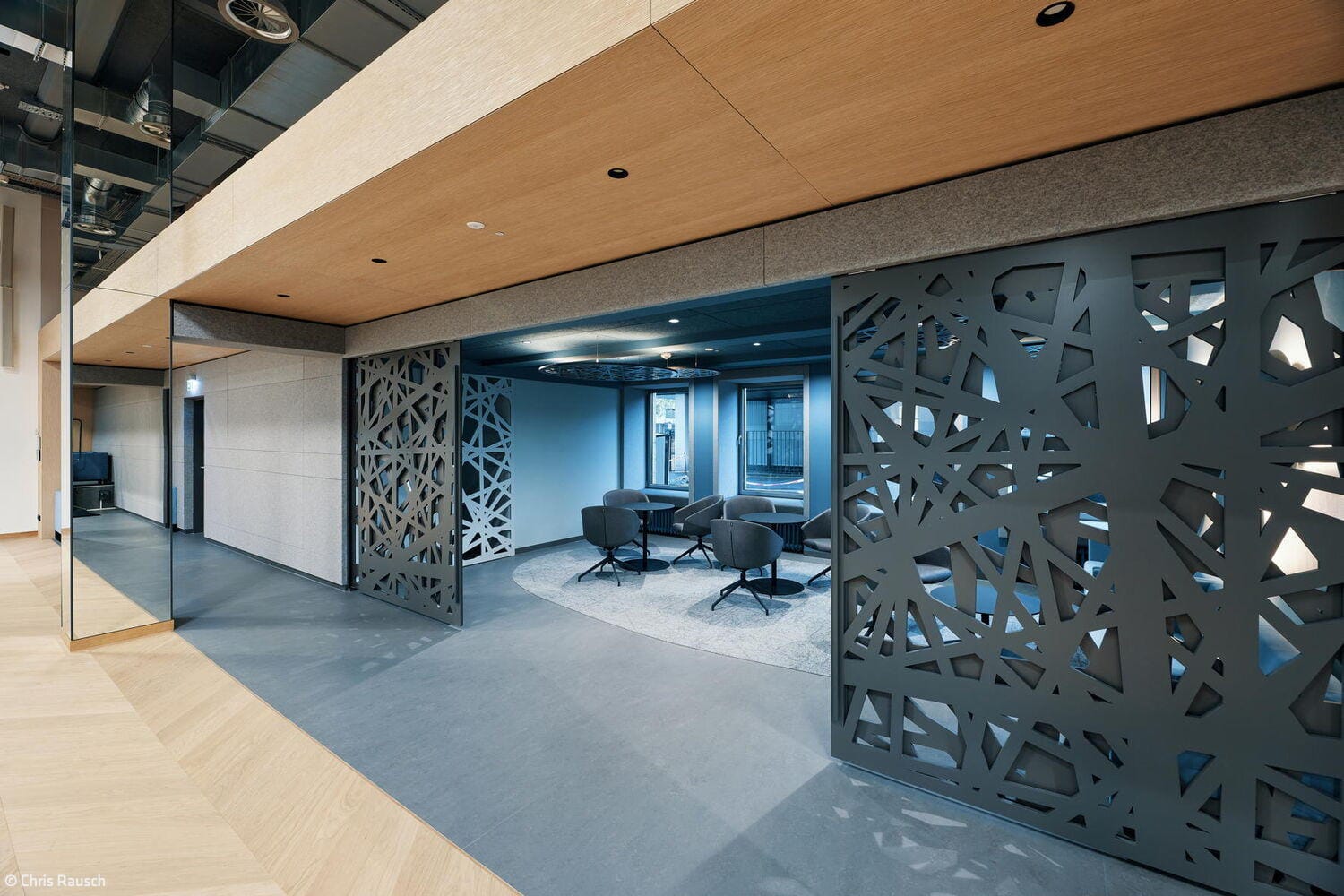
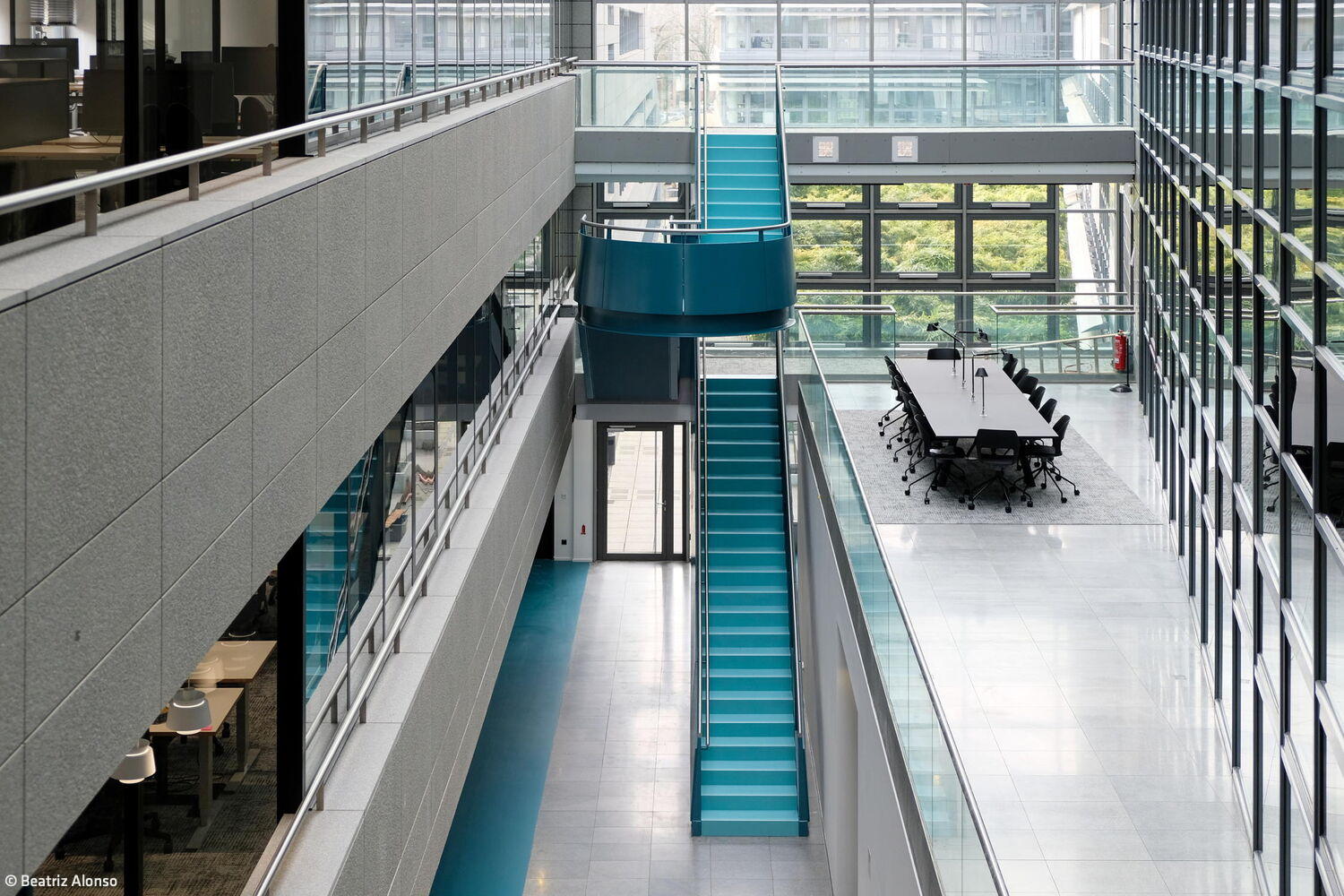
The renovation of the State Media Authority in the Media Harbour champions sustainable, thoughtful evolution
Unexpected openings
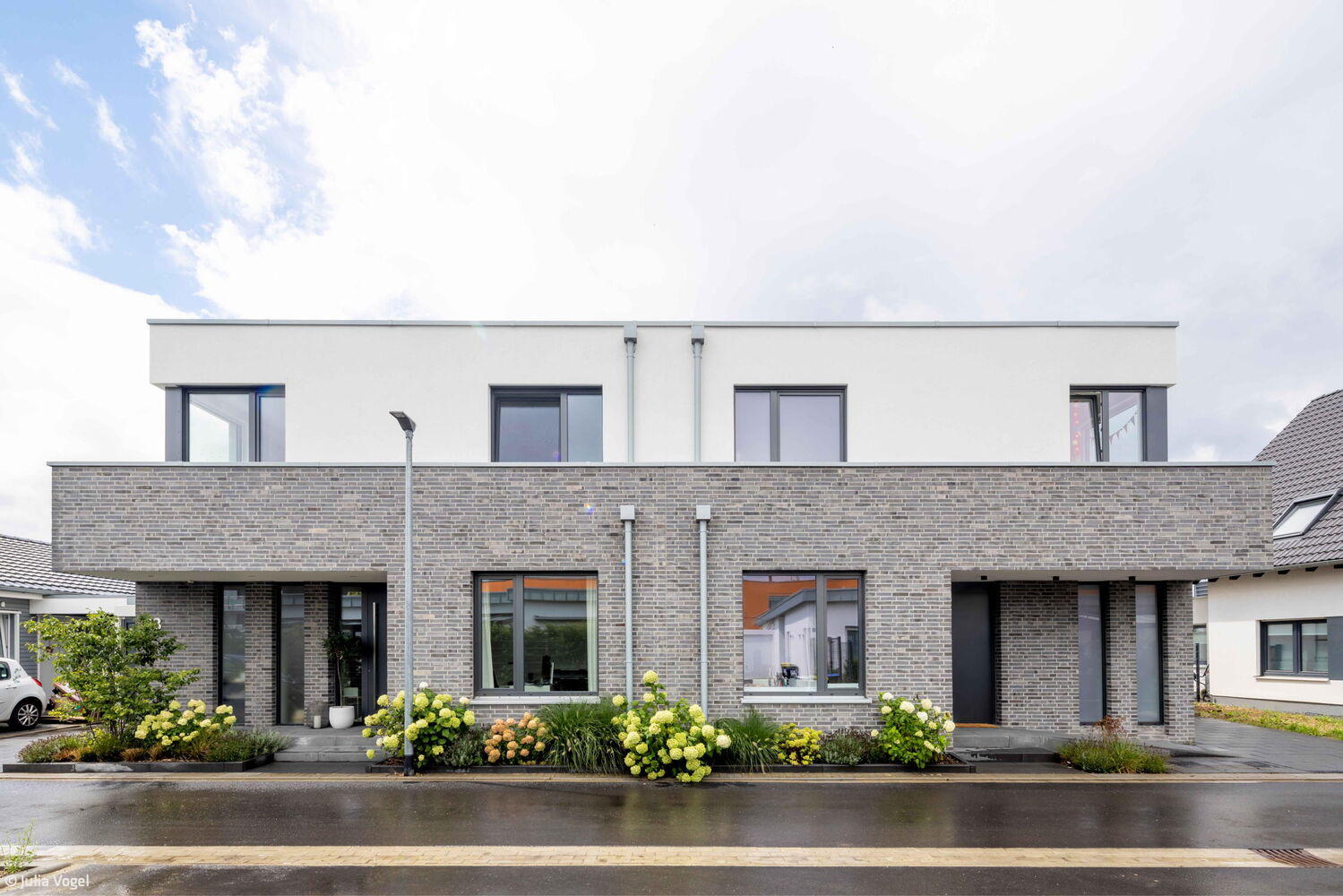
One semi-detached half captivates with fluid spaces, abundant light, and compelling sight lines.
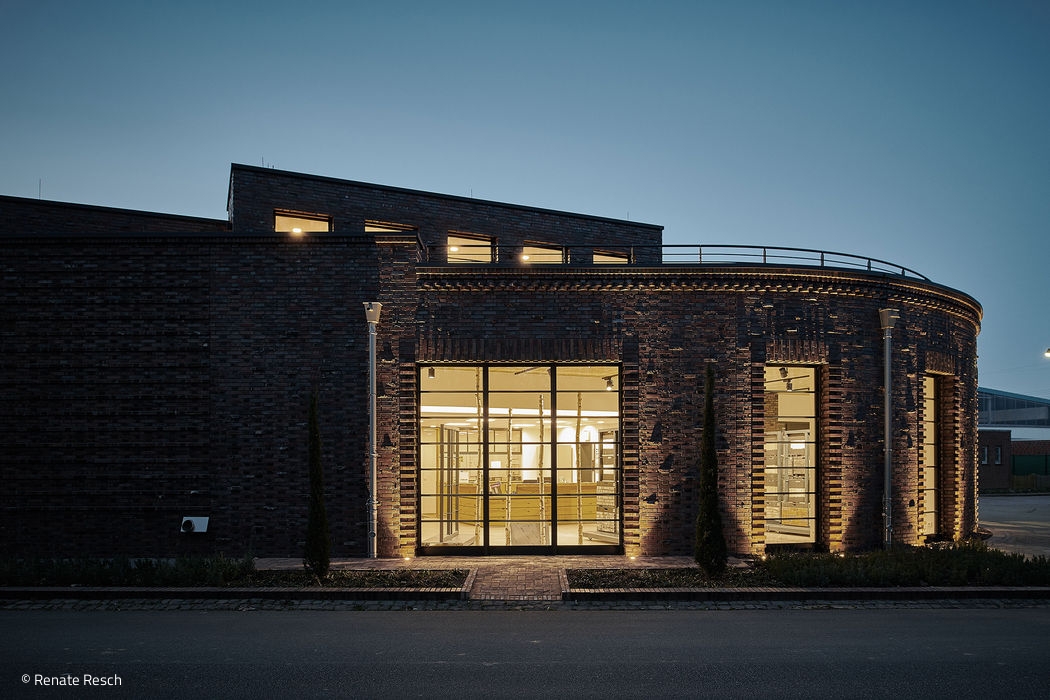
A Matter of Circles
Timeless Architecture for a Traditional Clinker Manufacturer