


Casual and pragmatic
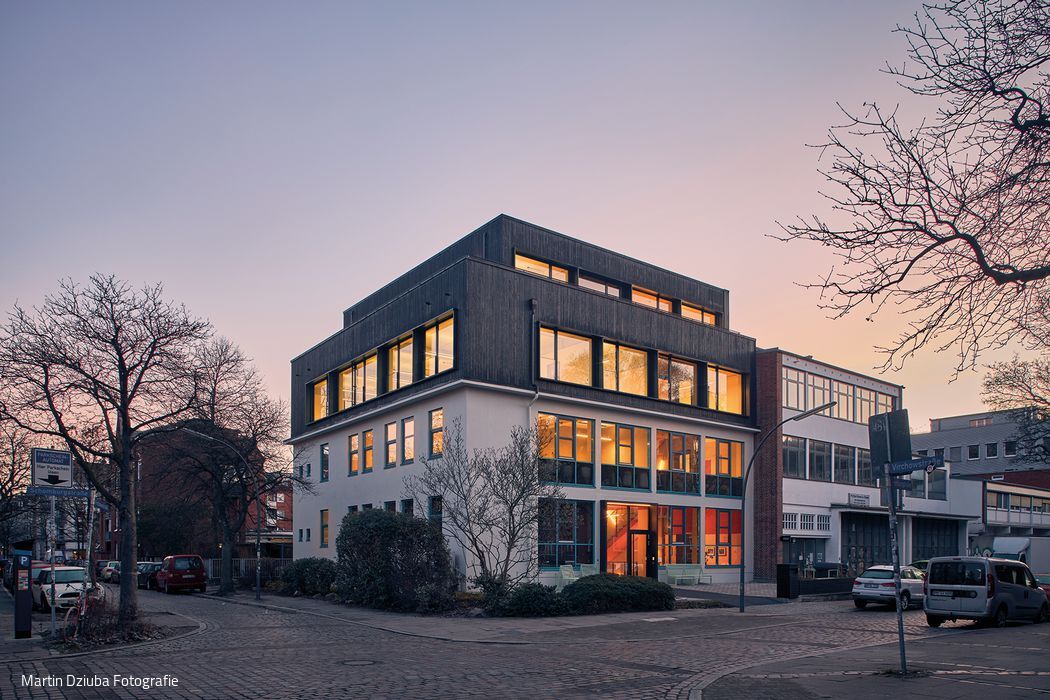
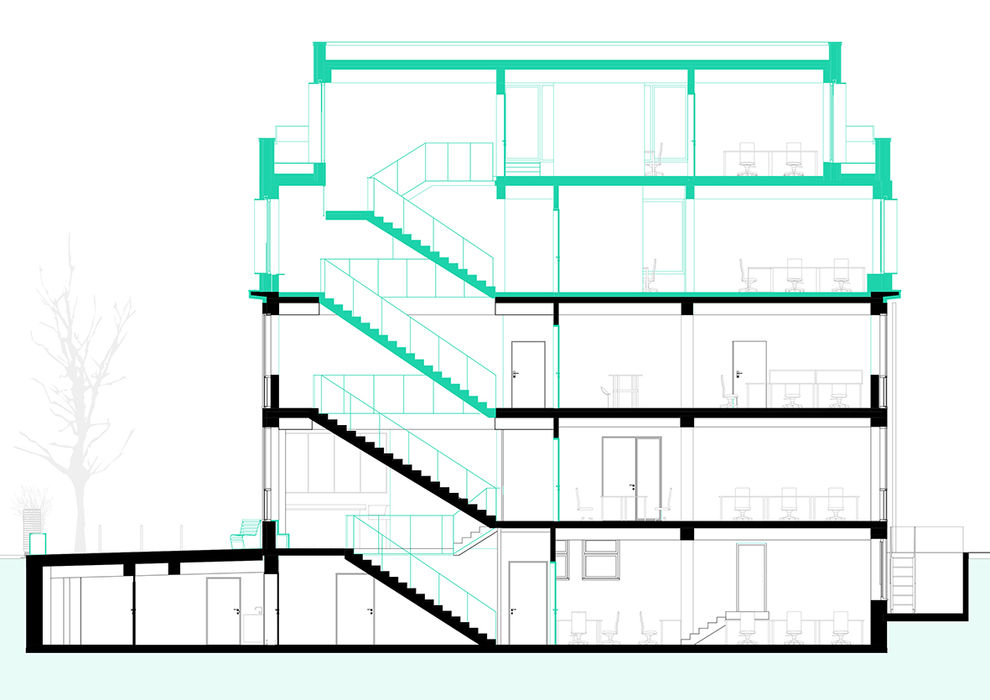
The Berlin-based architectural firm dreigegeneinen was directly commissioned to convert vacant practice space in a former coffin factory in the heart of Altona into modern co-working space. Rooms for a start-up hub were created on over 1,300 m² of floor space. The existing building from the 1980s on Schomburgstraße was comprehensively but carefully adapted to its new use and extended by two storeys. The basic idea was – also in the interests of sustainability – to preserve the two-storey existing building with all its peculiarities as far as possible and to further develop its character. For this reason, the addition of the extra storeys follows the structure of the existing building in terms of its construction and design logic. The new façades reflect the strict grid of the existing windows.
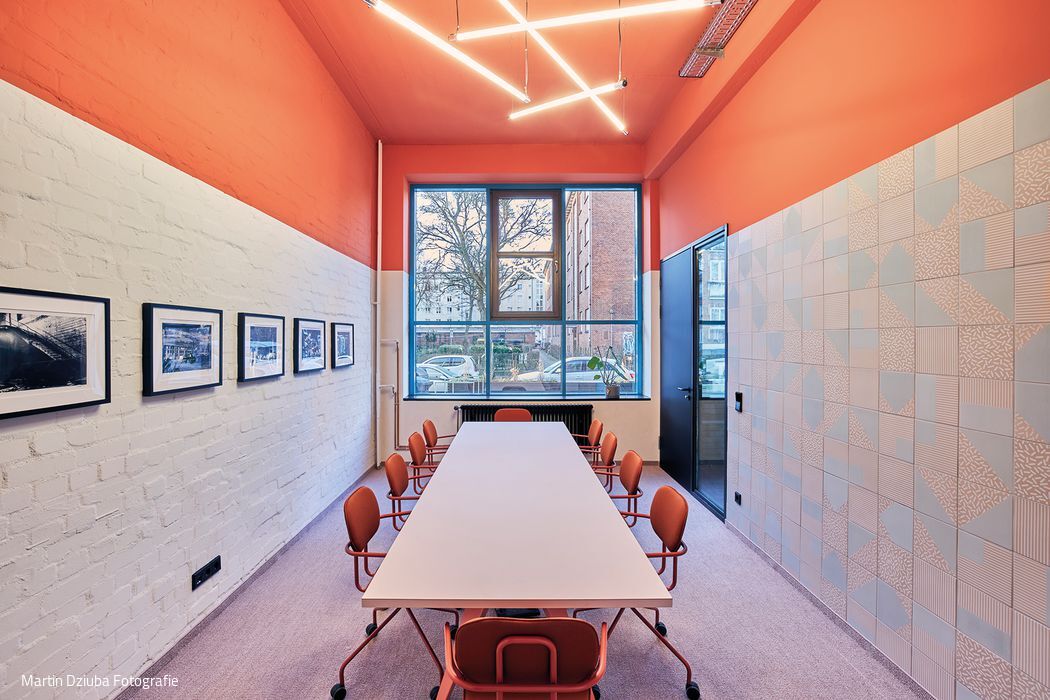
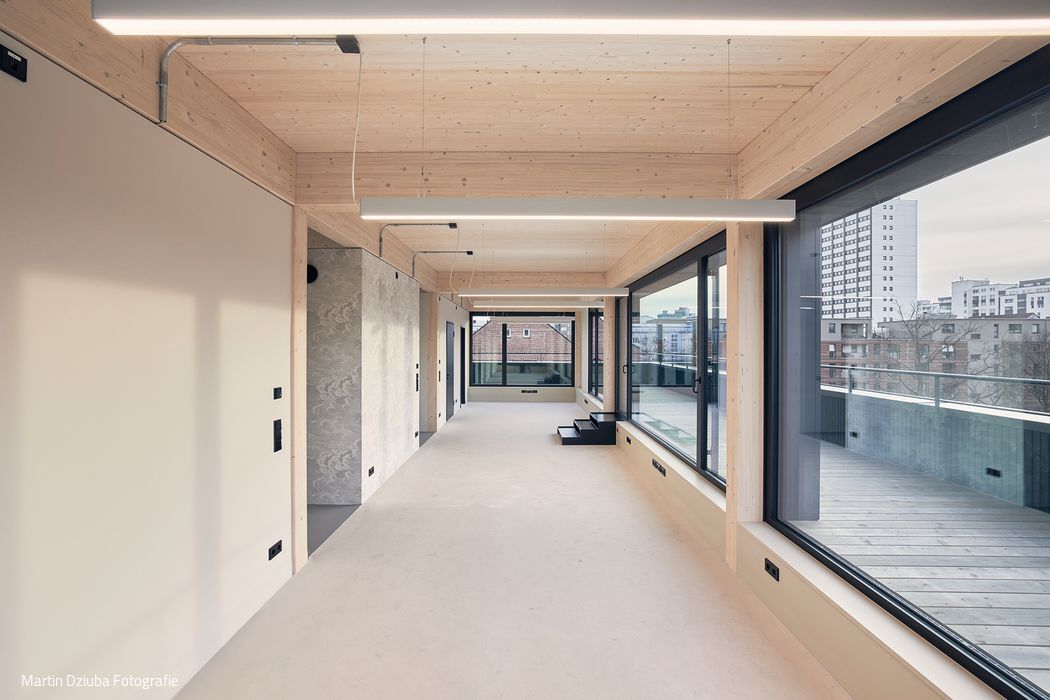
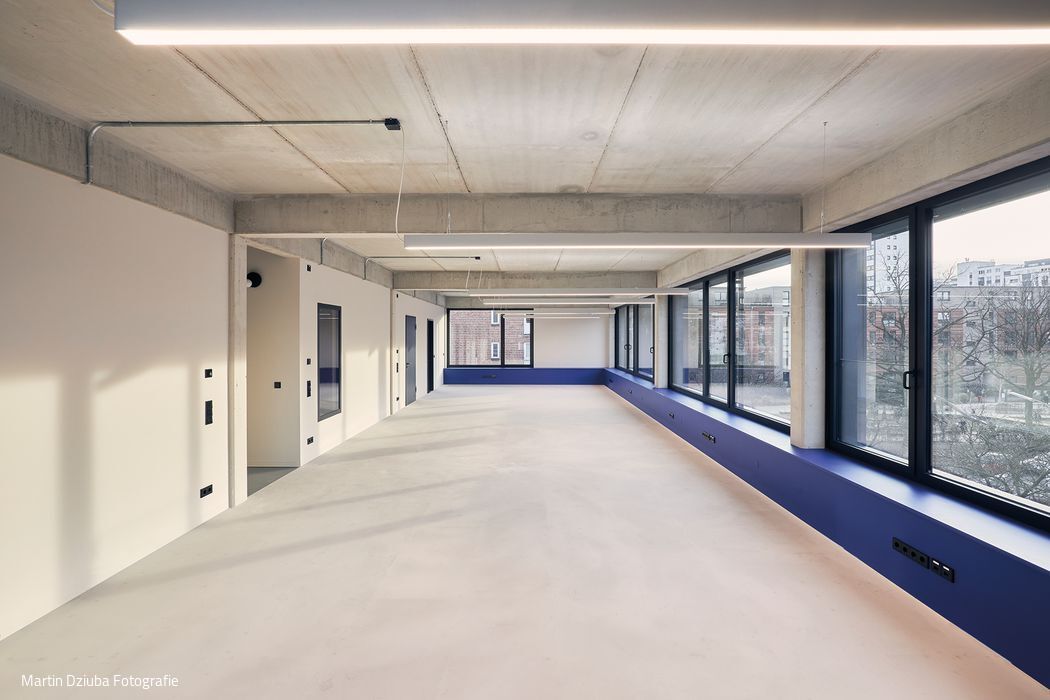
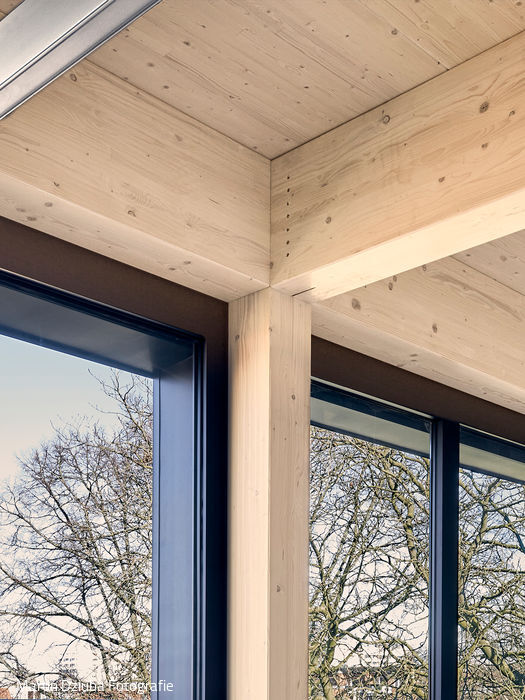
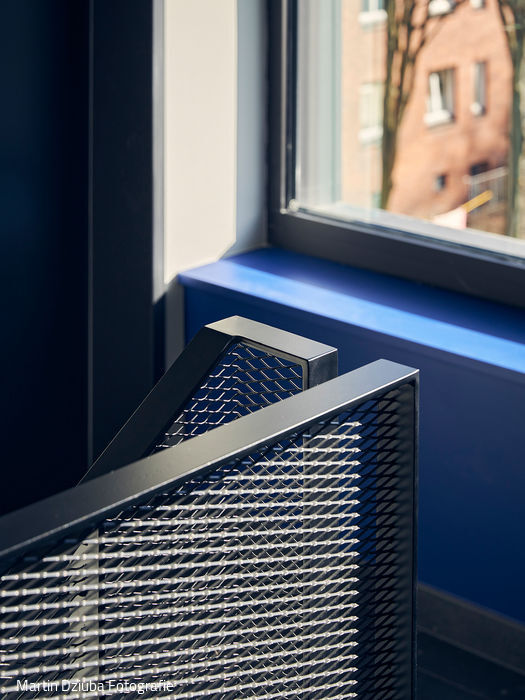
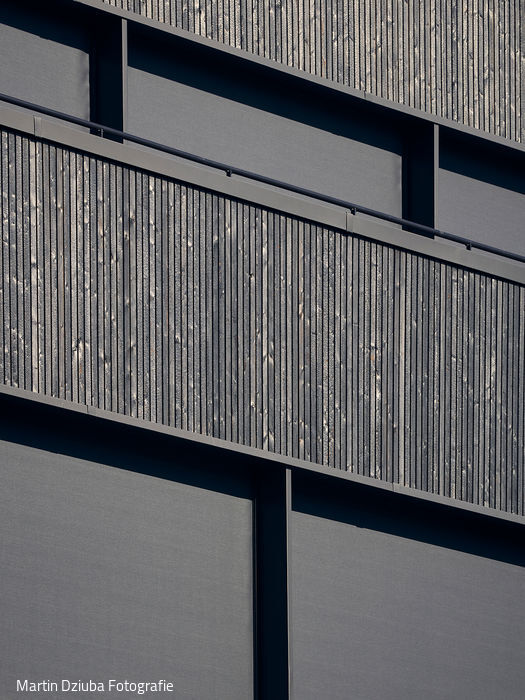
In terms of its external materiality, however, the structure stands out sharply from the base as a clearly superimposed cubic volume. Carbonised larch formwork (by Mocopinus) contrasts here with the light-coloured plastered existing façade. The centuries-old Japanese Yakisugi method involves the controlled charring of wood. This seals the surface and makes it resistant to external influences, making the dark wood suitable for use as façade cladding. The former eaves cornice forms a clear break between the new and the old. The penthouse floor is set back on three sides, creating a spacious terrace. The interior construction remains raw and reveals its originality in the reinforced concrete structure up to the first new floor and the entire wooden construction of the penthouse floor with its wooden supports, beams and ceilings. This is complemented by a specially coordinated colour and furnishing concept. Based on the existing turquoise windows, a complete colour palette of complementary coral and blue tones was developed. This colour scheme formed the basis for the conceptually interconnected design of the individual floors. The office spaces evolve from smaller units on the ground floor to shared, open spaces on the penthouse floor, with the aim of creating a mix of uses. The hub has a lift and offers four co-working areas, fifteen team offices, five meeting rooms, four event and workshop rooms, two kitchens and a roof terrace. The bold colours connect old and new spaces and encourage interaction and creativity. The entrance area is complemented by a barista bar, serving as a central meeting point and place of communication.
Photography Credits:
Martin Dziuba Photography
www.martin-dziuba.com
(Published in CUBE Hamburg 02|23)



The Power of Green
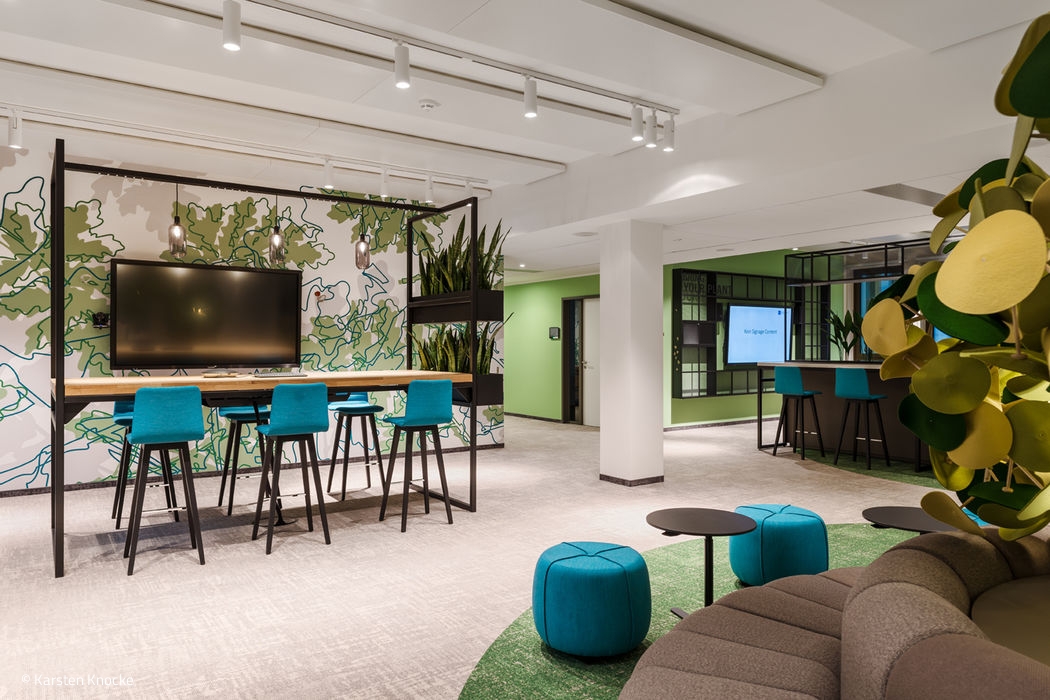
Sustainability and a reimagined workplace grounded in openness and genuine collaboration
A microcosm of urban living
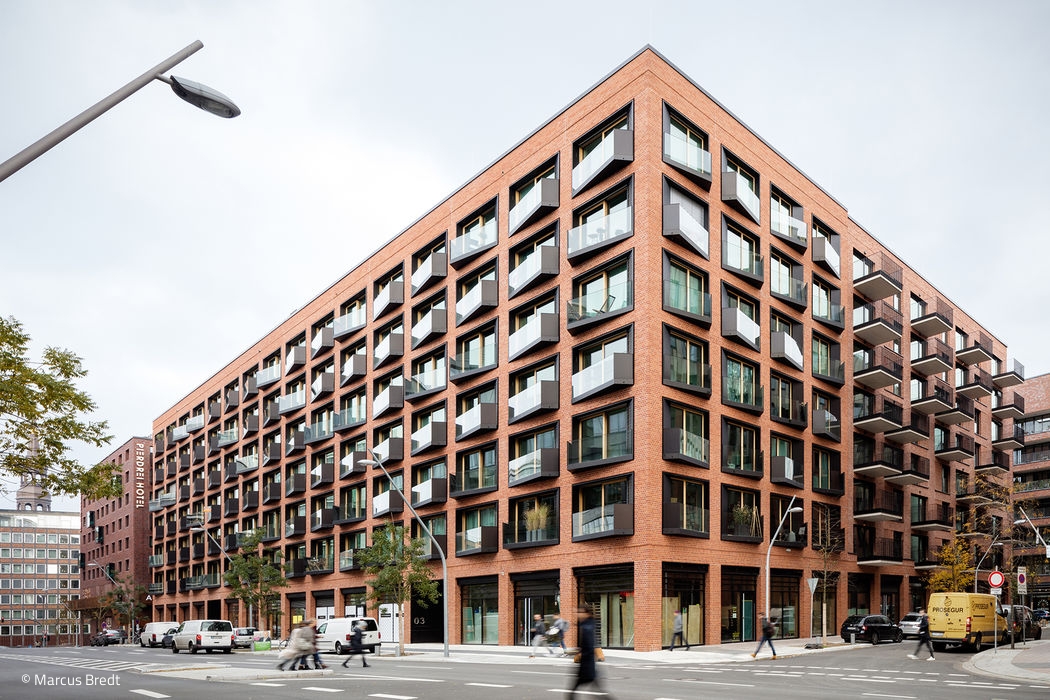
Around a dozen different uses are integrated throughout KPTN.
Revived
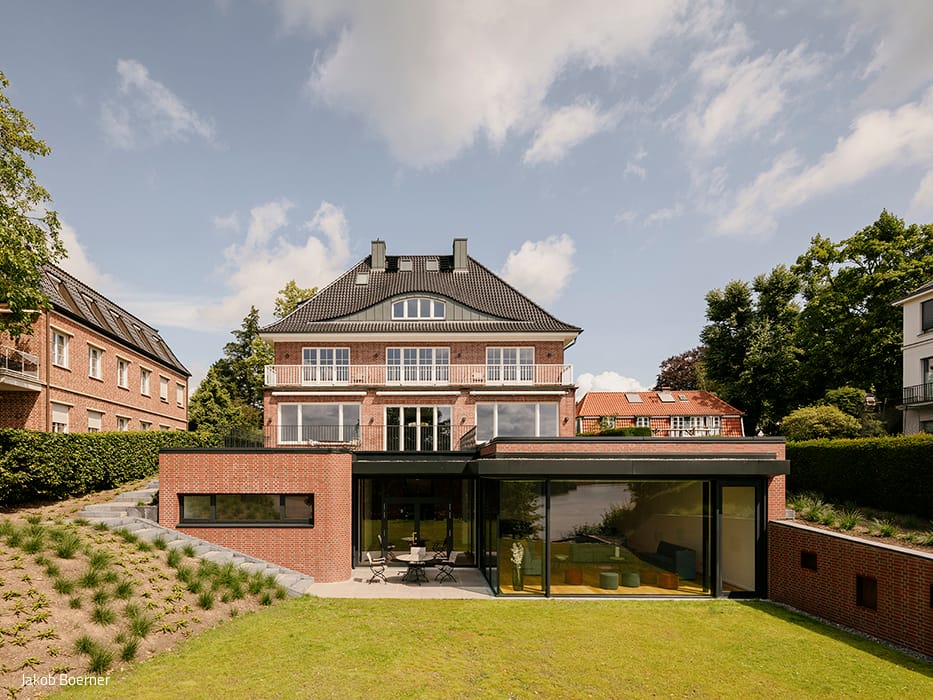
Scholarship fellows live and work in the historic country house on Elbchaussee

Restrained Confidence
The new school building and its heritage counterpart create a harmonious architectural whole.