


Renewed
Scholarship fellows live and work in the historic country house on Elbchaussee
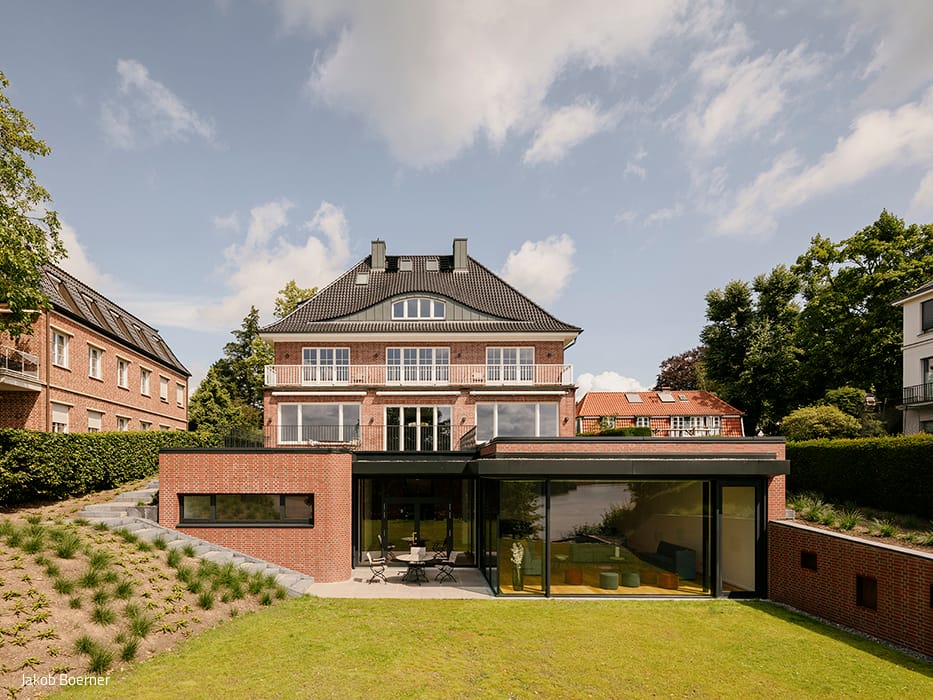
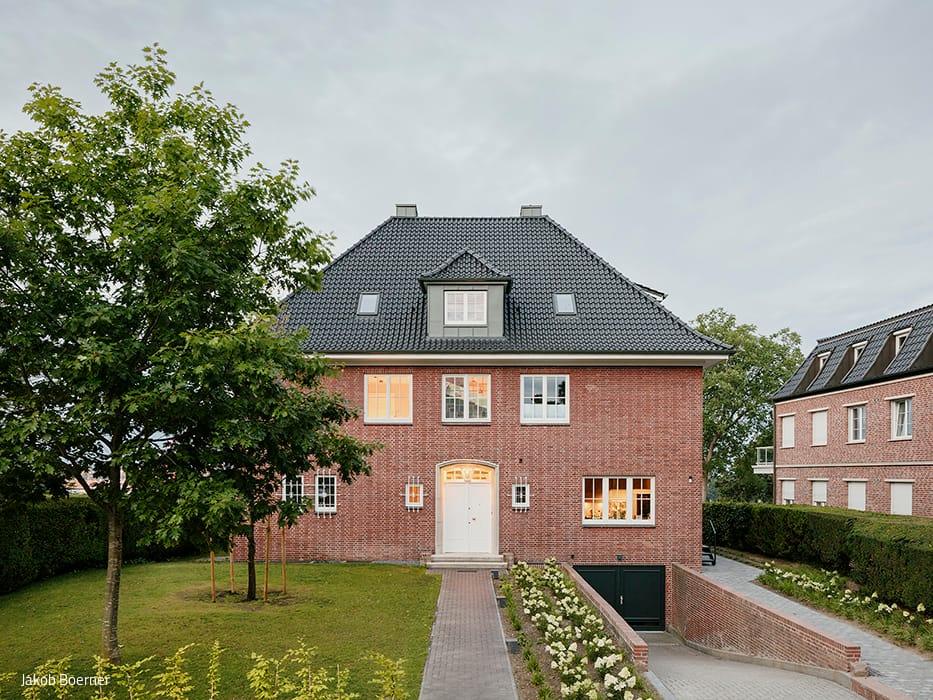
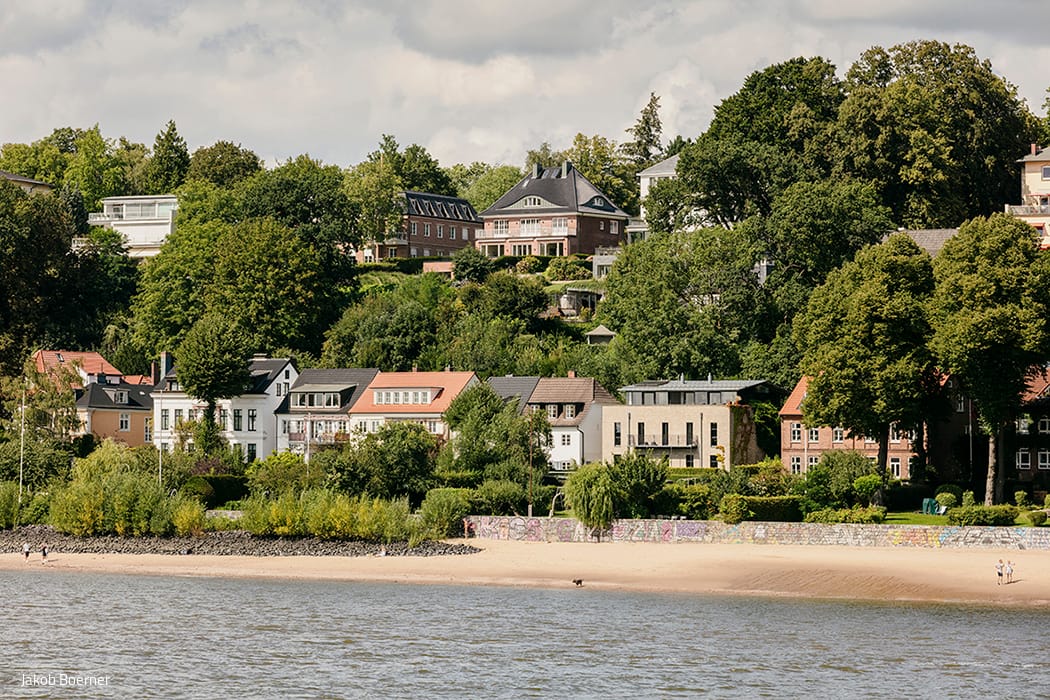
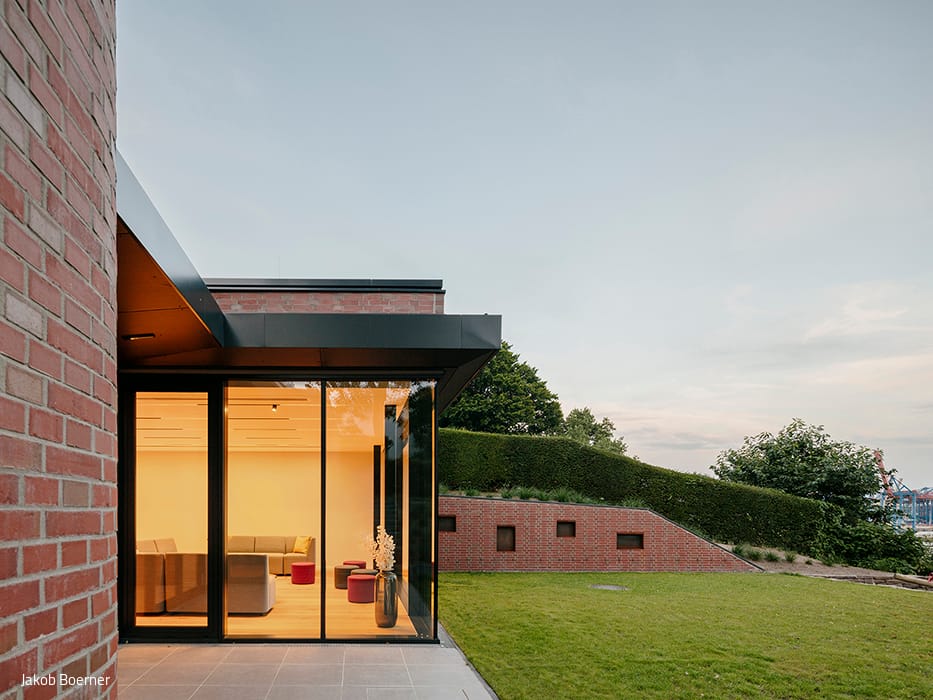
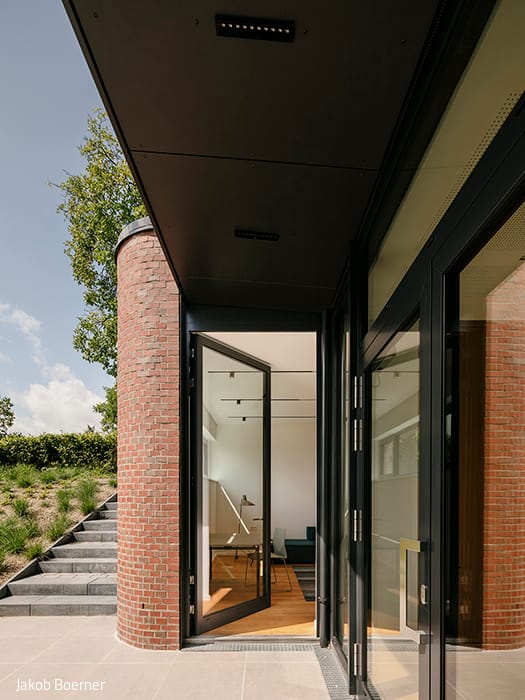
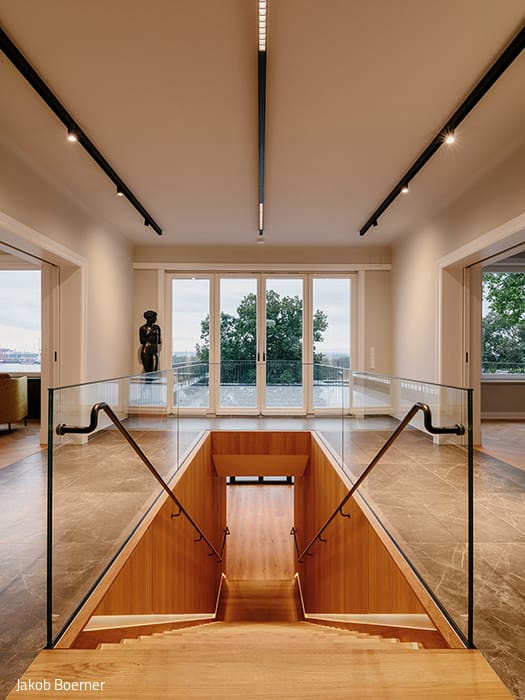
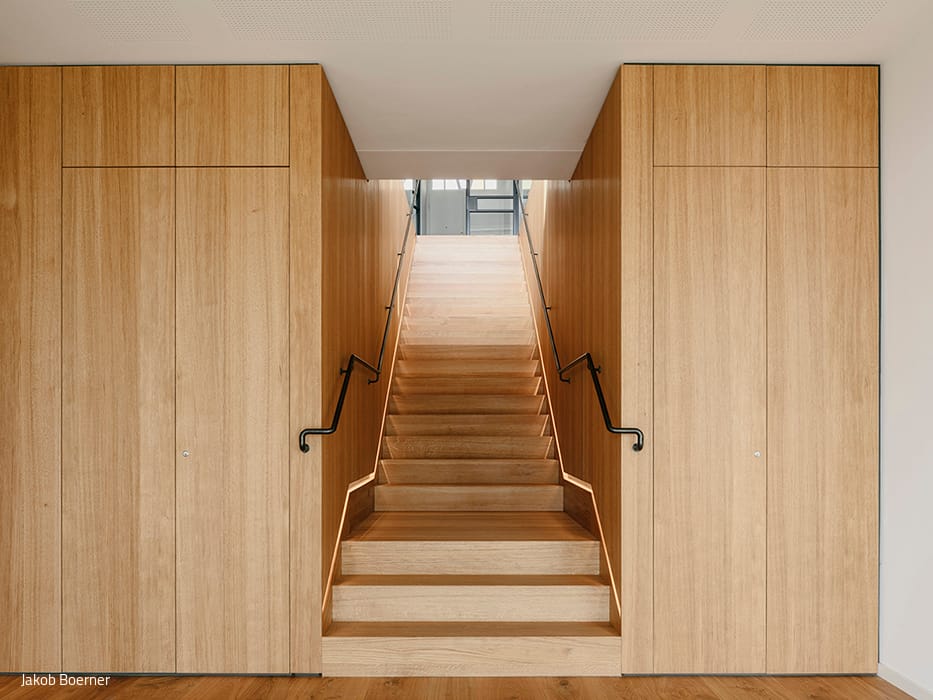
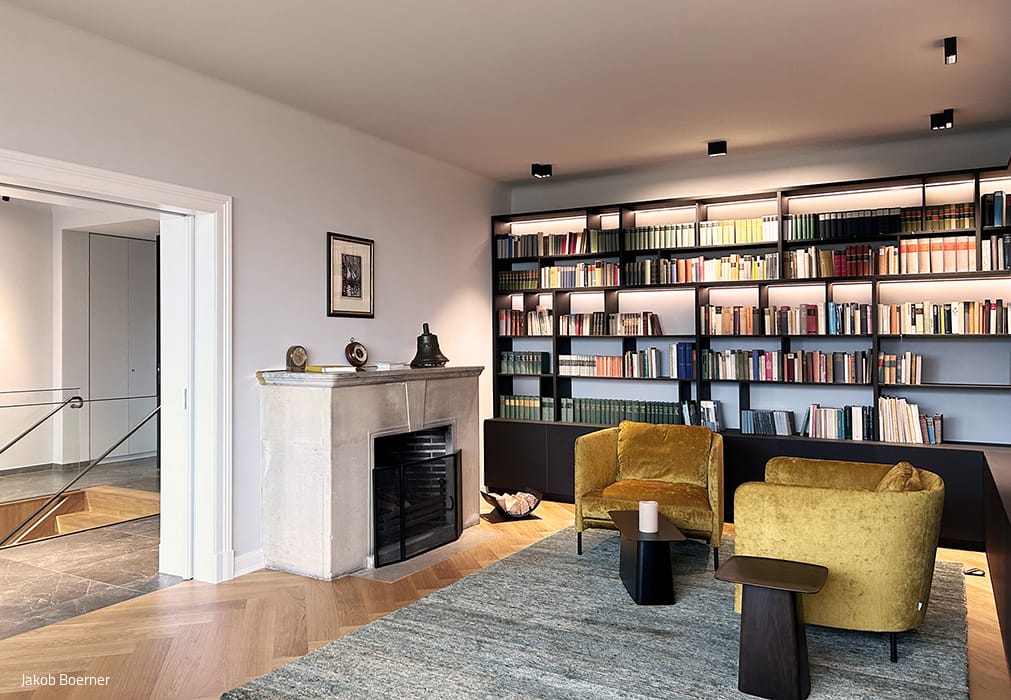
The Alfred Toepfer Foundation F.V.S. commissioned Cattau Architects to transform the foundation's former guest house on Elbchaussee into a four-unit residential building. Designed in 1937 by architect Max Zoder, the original structure was built as a private residence for entrepreneur Alfred Toepfer's parents. This two-storey red brick villa—with its characteristic white windows and hipped roof—exemplified the traditional country house aesthetic of its era. Following World War II, the building served first as municipal housing for Hamburg, then as a guest house for the foundation.
Following severe water damage that destroyed the interior entirely, Cattau Architects undertook a complete renovation of the historic villa. The prime location on the "river side" of Elbchaussee—commanding sweeping views of Hamburg's harbour and the Elbe—presented both an opportunity and a constraint. To maximize this advantage, the architects excavated the riverbank slope to create an additional level below grade, yielding a generously proportioned living and studio space for the lower residence. This solution proved technically demanding: the existing structure required extensive foundation work and deep excavation along the slope. The challenge was to enhance rather than compromise the villa's signature riverside presence as a Hamburg merchant's residence. The modern architectural intervention achieves this balance, enriching the entire structure. Expansive panoramic windows frame the façade, offering residents an exceptional vista across Hamburg's harbour entrance. A new central staircase serves four apartments: one flows from entrance level through to the hillside floor, two occupy the upper storey, and one sits within the attic. These spaces welcome selected fellows who spend weeks or months here pursuing projects aligned with the foundation's commitment to art and culture, education and civic engagement, science, and sustainable land stewardship. Cattau Architects extended their vision to the interiors, privileging premium materials and refined craftsmanship throughout: oak built-ins and flooring, steel railings, natural stone surfaces, and glazed balustrades. A measured colour palette establishes serene surroundings—fostering both deep focus and appreciation for the expansive river views.
www.cattau-architekt.de
www.toepfer-stiftung.de
Fotos:
Jakob Börner
www.jakobboerner.com
(Featured in CUBE Hamburg 04|23)
Where Elbchausee Meets Reeperbahn
Boutique for Paper and Writing Instruments Unveils Fresh Identity

A Labor of Love
How a 1746 Frisian Farmstead Seamlessly Bridges Historic and Contemporary Design
Smart and beautifully red
Three Townhouses Hide Within This Minimalist Home
One Becomes Seven!
A real surprise: Kolibri Studios in Barmbek's "bird district"