


Existing building repurposed with character
Basement of a residential building converted into individual office spaces
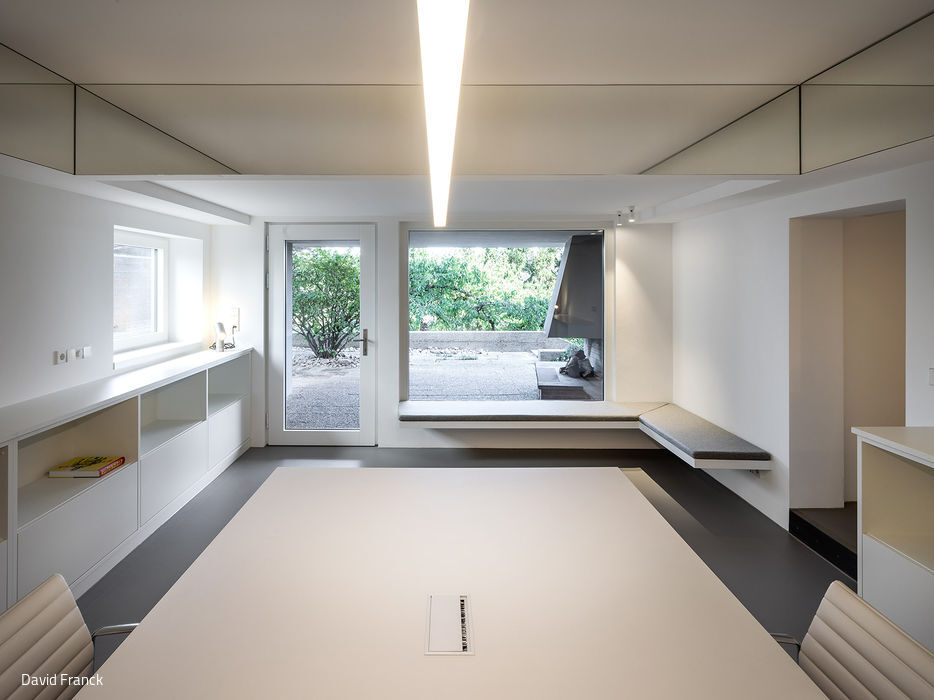
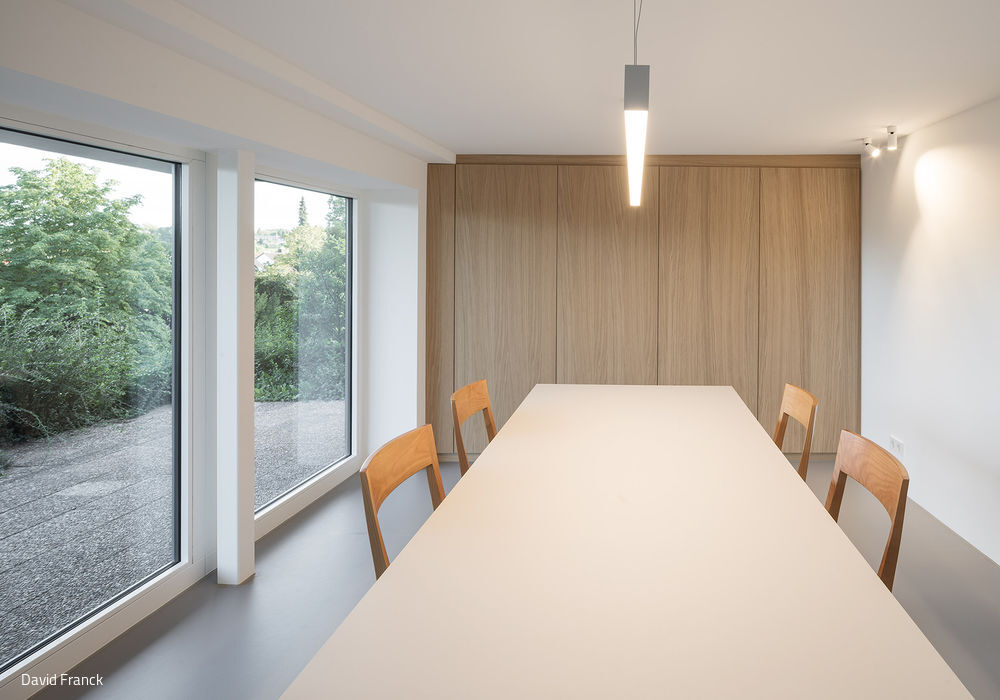
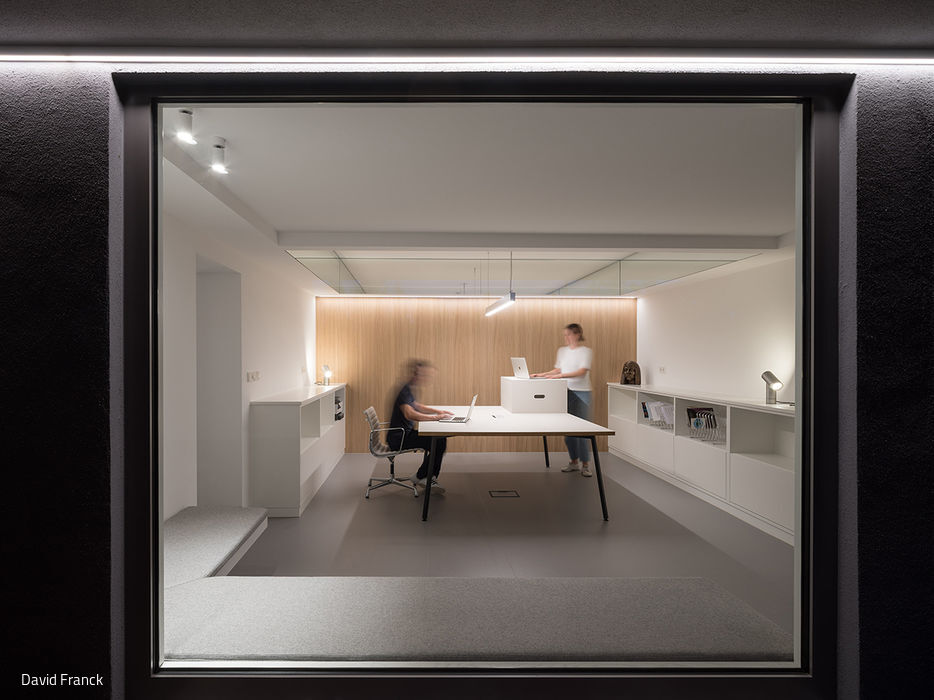
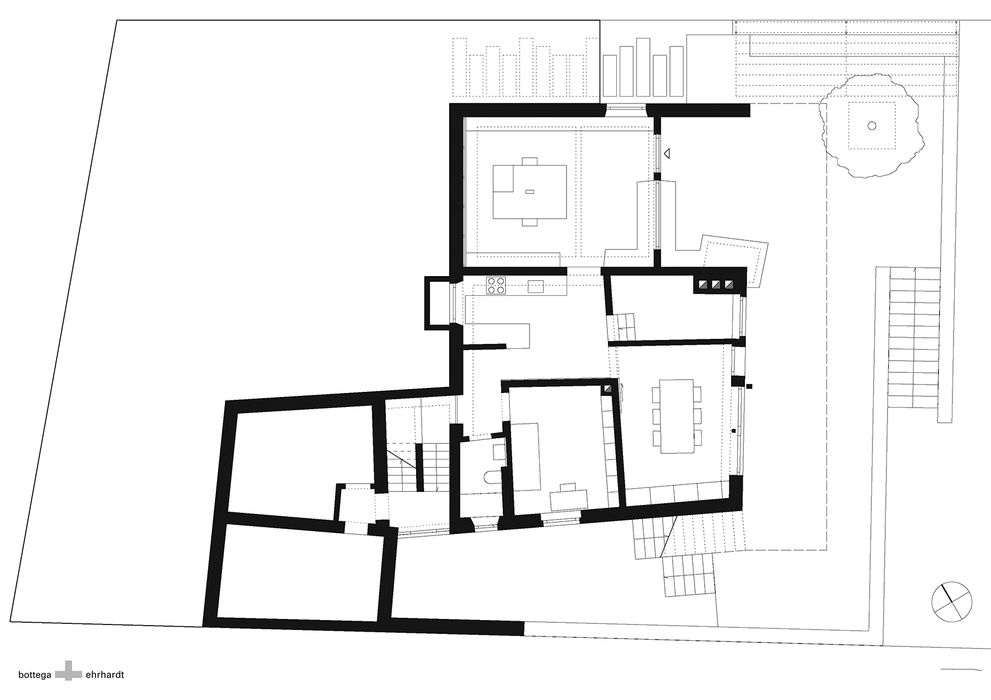
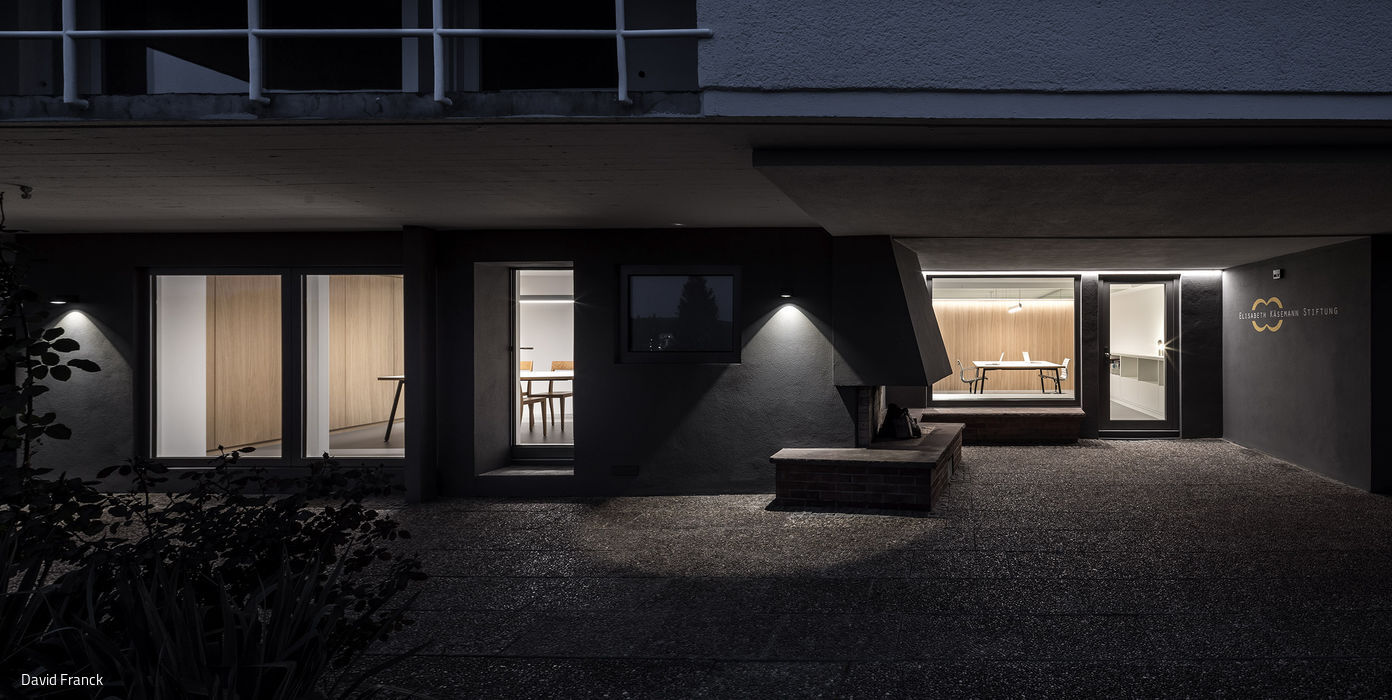
The approximately 75 m² basement of the 1950s residential building was converted into office space. Partially demolished exterior walls and new large-format glazing open up the rooms of an international foundation for democratic education to the terrace and garden. Anthracite-coloured wood-aluminium windows form a homogeneous surface with the facade of the basement, which is the same colour, emphasising the solitary character and new use of the building.
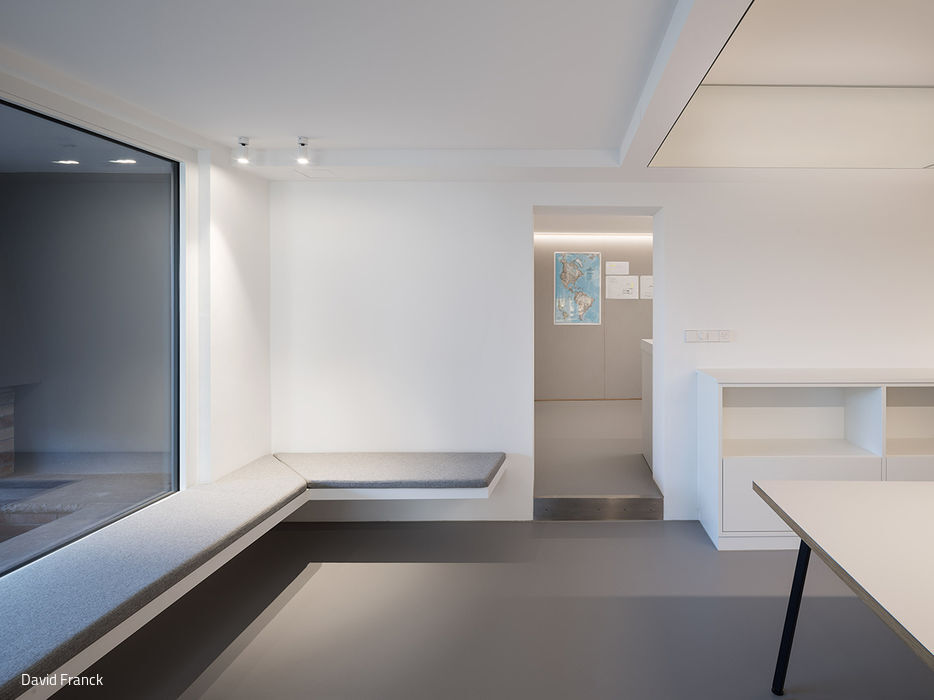
Bottega + Ehrhardt Architects preserved the striking original structure of the recessed basement with its fireplace and brick bench. Inside, existing differences in height in the raw floor and ceilings required individual solutions: the ceiling was lowered slightly, the floor was raised minimally and underfloor heating was integrated. This created maximum room height. The interplay of cement-grey linoleum flooring, recurring materials and colours of the built-in furniture and the consistent lighting concept allows the rooms to flow into one another visually and conveys a clear design line. The built-in and loose oak furniture creates a cosy atmosphere in the office spaces.
Circular casings not only bundle pipes and cables, but also cleverly compensate for differences in height in the existing structure. Refined in this way, they become a design element with integrated lighting and enclosed inspection openings. In the office, ceiling panels visually divide the space into a reception area and a workspace. The outer corner bench in the entrance area extends into the interior like a ribbon, providing additional seating. A mirror frieze along the casing visually expands the space above the large work table with several seats.
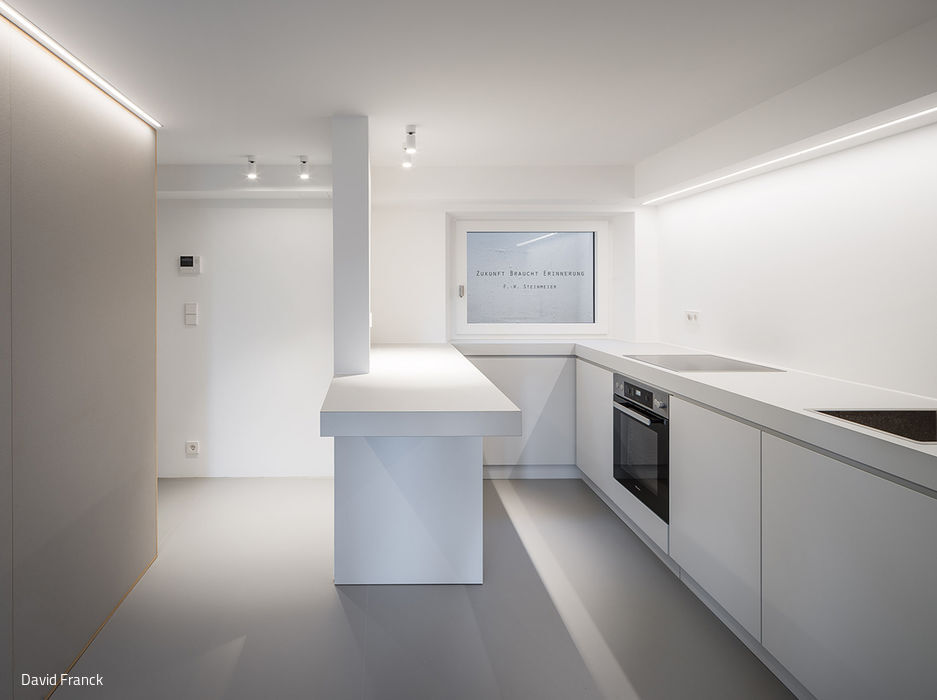
The old laundry room, naturally lit by a light well, has been transformed into a new staff kitchen and the centre of the office. The U-shaped, monolithic kitchen unit with a cantilevered standing table fits seamlessly into the room. It offers plenty of space and can be used in a variety of ways. The floor-to-ceiling pinboard adds material accents and can be used both individually and interactively. The meeting room can be separated by a sliding door. An additional room with an adjoining modernised bathroom offers storage space and enables the foundation to accommodate its guests.
Photography Credits:
David Franck
www.davidfranck.de
(Published in CUBE Stuttgart 01|21)
Connecting Urban Element
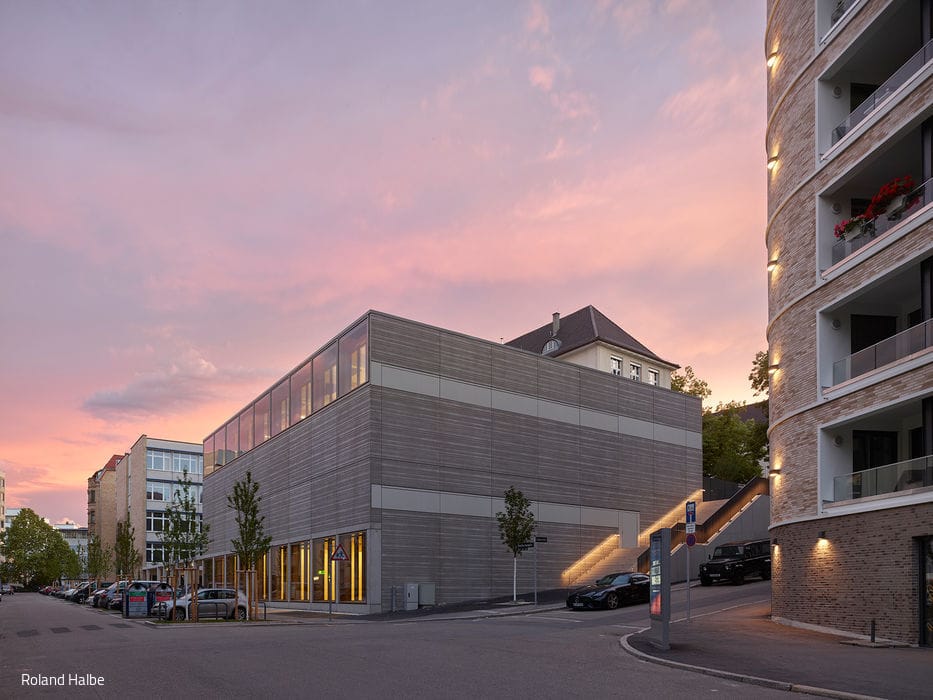
Double sports hall with pergola forms a new ensemble with two schools
Sustainable and Human-Centered
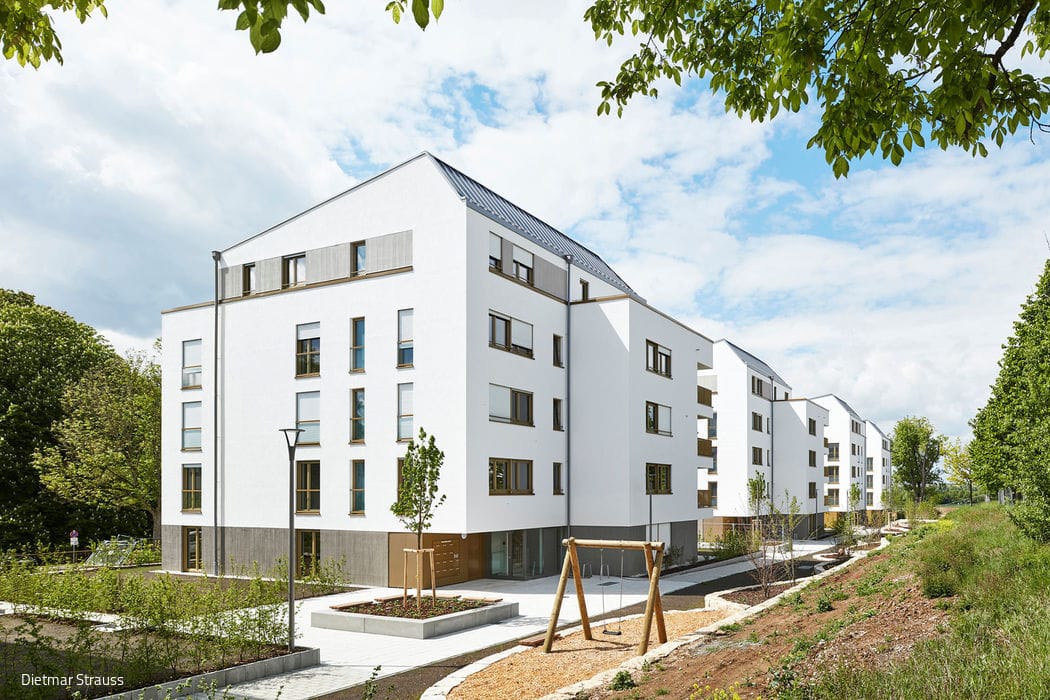
Developer Chooses Climate-Friendly Brick and Innovative "Fair Housing" Model
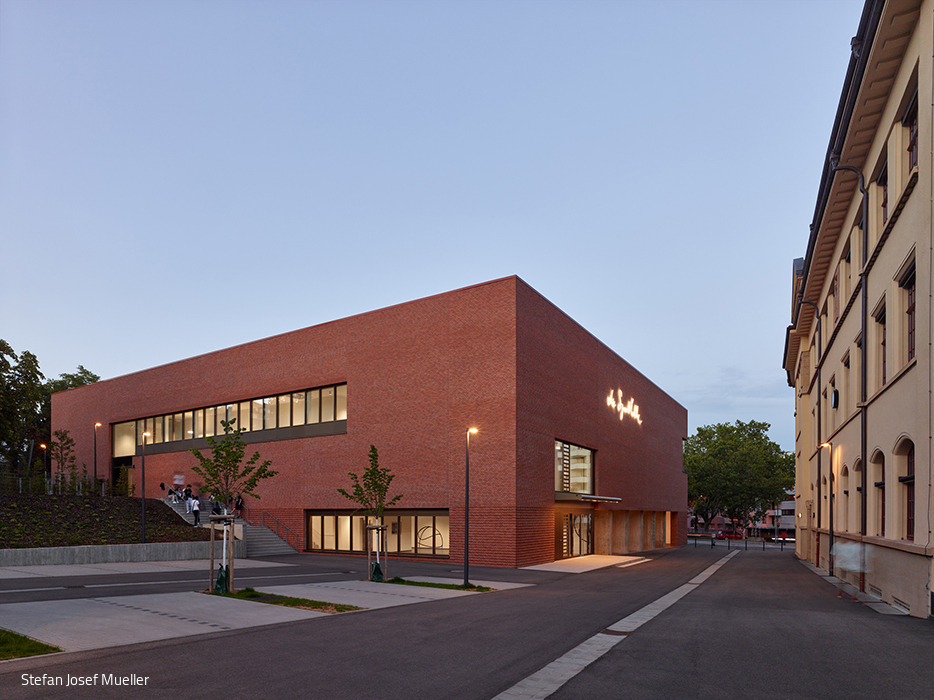
Thoughtful Reference
A new triple-court sports hall becomes a thoughtful architectural accent for a historic school campus.
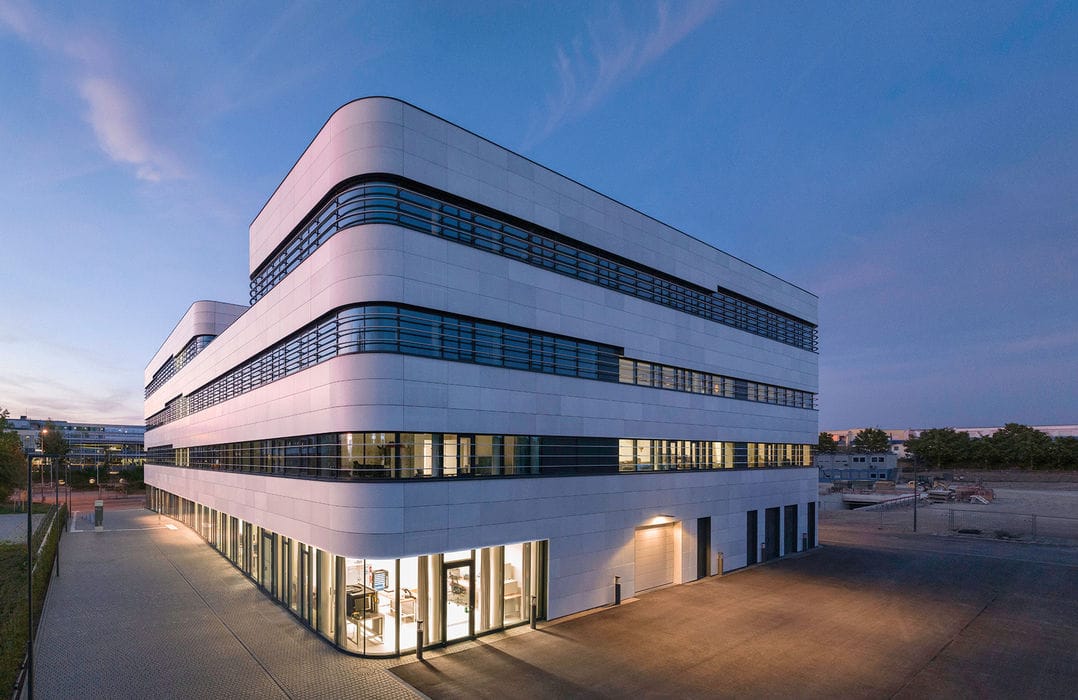
Recycled Glass Façade
A New Institute Building: Offices, Laboratories, and Technical Spaces in Compact, Dynamic Harmony