


A town within a city
KPTN brings together roughly a dozen distinct uses
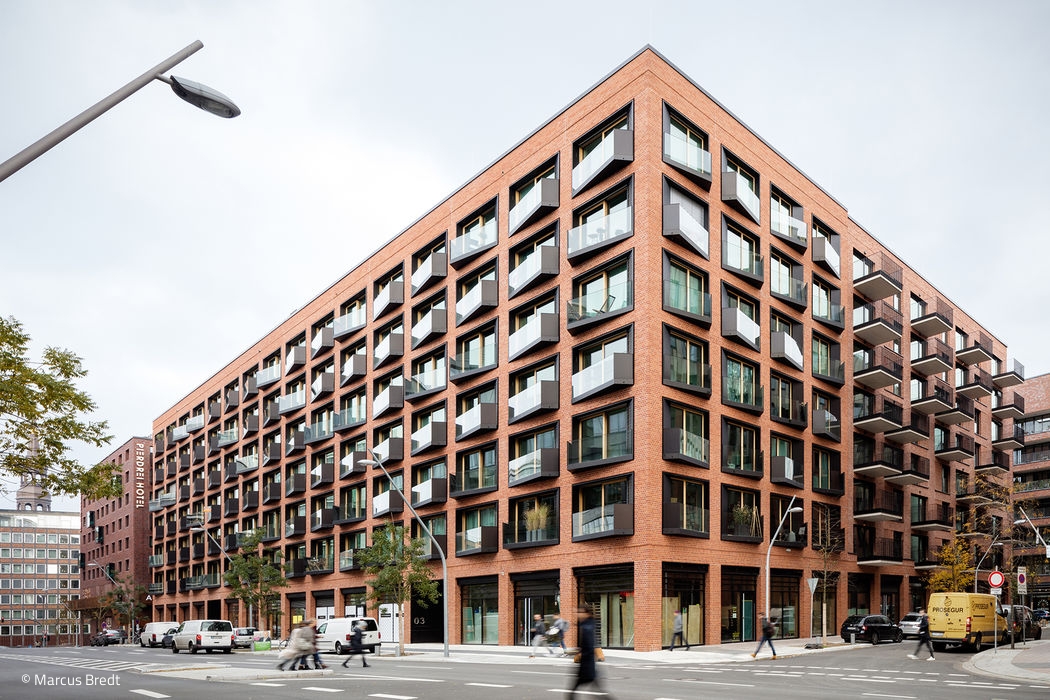


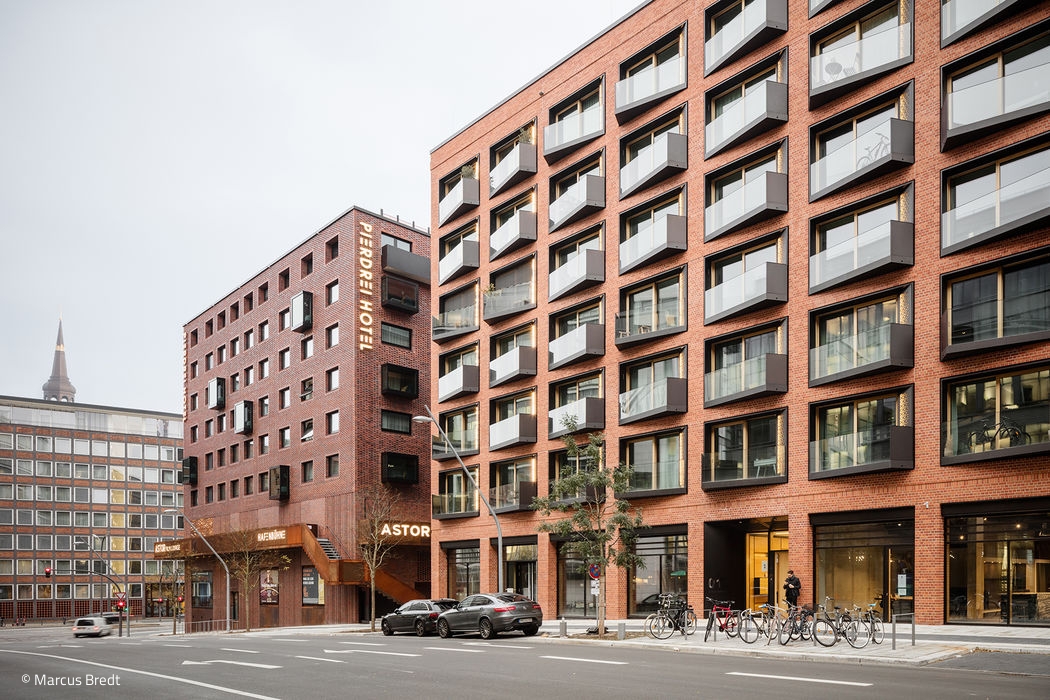

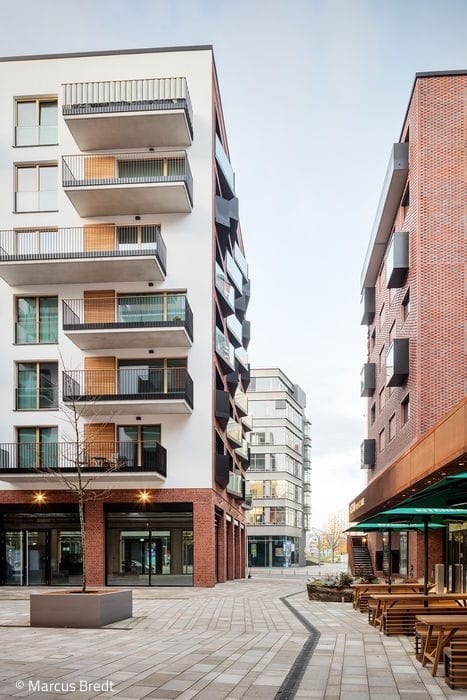

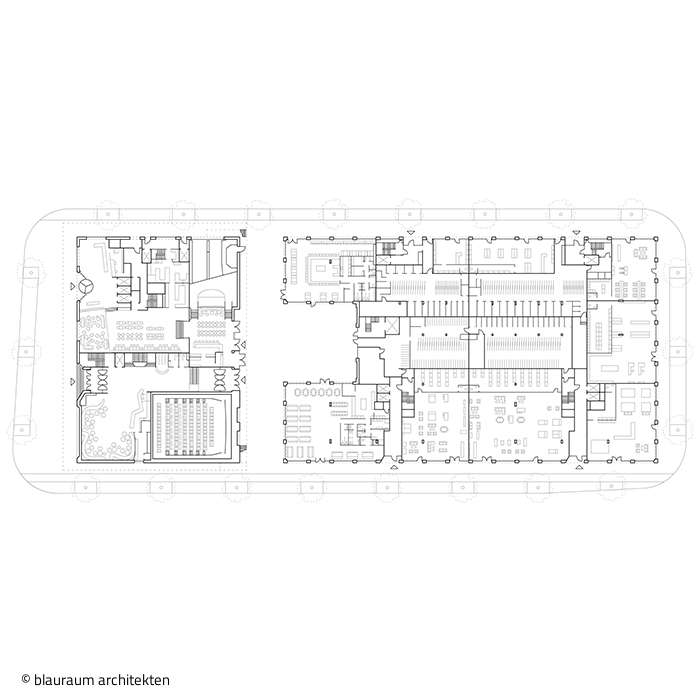


The KPTN complex in HafenCity is conceived as a socially and functionally mixed, compact urban district. This intimate quarter—five buildings in total—consolidates roughly a dozen distinct uses under one roof. The cinema, harbor stage, restaurants, and bars energize the space, especially in the evenings. Paired with a hotel, long-stay apartments, shops, and public underground parking, they create a constantly shifting mix of visitors. Simultaneously, it's home to a diverse community of 220 residents, housed in both subsidized and market-rate apartments, ranging from compact studios to spacious four-room family units. The rooftop gardens with play areas and gazebos, along with a verdant inner courtyard, offer residents both private refuge and social gathering space. A public passage cuts through the quarter, opening into a central piazza with generous outdoor seating and dining options.
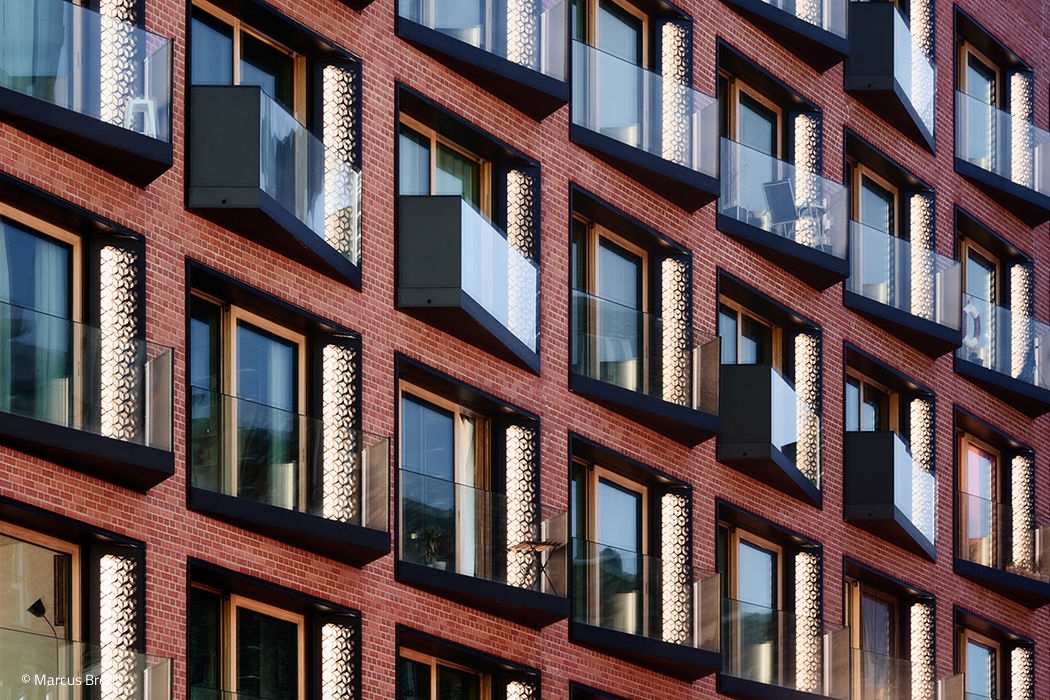
From the outside, the ensemble reads as a unified composition with clean, decisive geometry. The hotel-cinema complex, designed by Nalbach & Nalbach architects, draws on brick expressionism through its articulated façade of projecting and recessed stone elements. The residential and commercial portions, designed by architects blrm, are anchored in a precise, symmetrical grid—a nod to the nearby Speicherstadt warehouses—where floor-to-ceiling windows are rhythmically arranged.
The site accommodates 48,700 m² of gross floor area across a 6,400 m² plot, distributed over seven to eight above-ground levels plus two below ground. A particular challenge emerged from the location: the complex sits on a reclaimed harbor basin, positioned up to 2.50 m below storm surge protection levels. This demanded specialized solutions—notably, a flood defense balcony that wraps the hotel-cinema complex as a distinctive architectural element. Hotel rooms occupy the space above the cinema. To protect guests' sleep, the cinema halls—engineered for rock-concert volumes up to 110 dB—are constructed as acoustically isolated room-within-room assemblies. Street-facing micro-apartments feature custom-designed windows with floor-to-ceiling, sound-rated glazing that admits fresh air while maintaining acoustic performance.
The detailed design and planning also fell to blrm architects. The new building exemplifies modular room design, sustainable and resource-conscious materials, and high energy efficiency—credentials recognized by its HafenCity Gold environmental certification.
Photography Credits:
Marcus Bredt
www.marcusbredt.de
(Published in CUBE Hamburg 01|20)

Young and Old Together
A foundation born from sisterhood revitalizes the Schnelsen district

Sensory Tactility
Sandra Nitz crafts distinctive porcelain designed for everyday living.
Infill with Added Value
Redensification creates new living space and urban renewal

A Peaceful Retreat in the Urban Hustle
The Hotel Europäischer Hof's pool and spa have undergone complete renovation and redesign.