


A Triumphant Debut
The Flowers Hotel stands out in Essen's city centre – remarkable in every respect
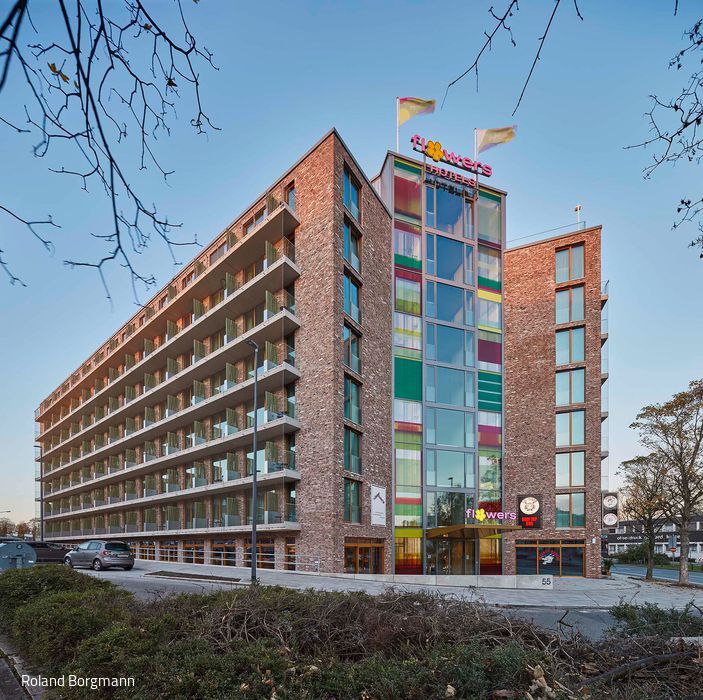
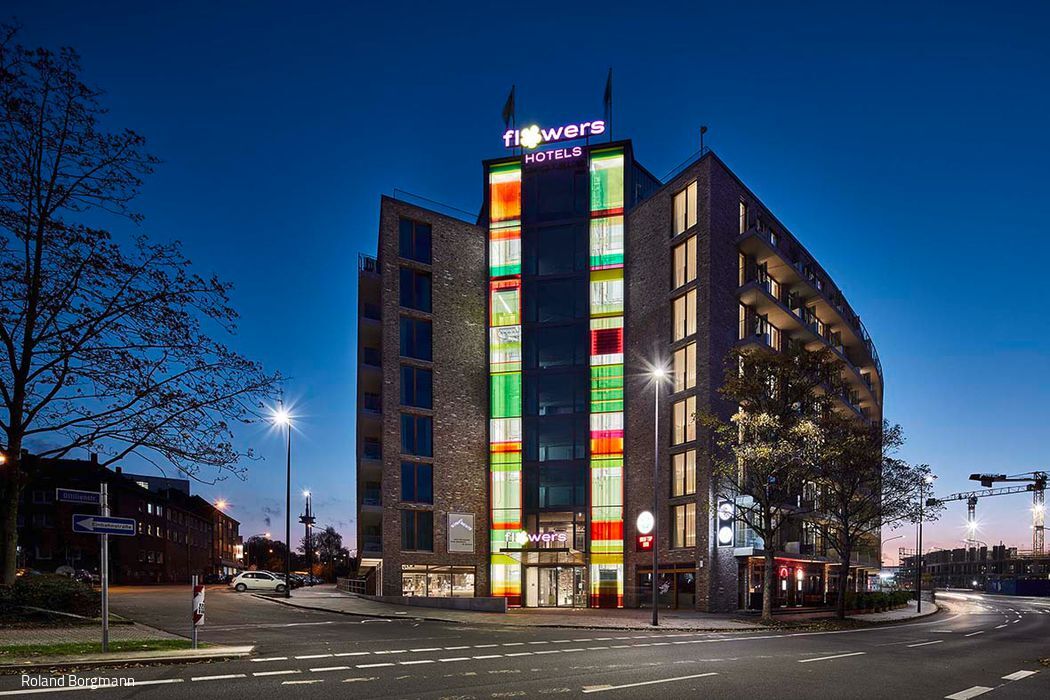


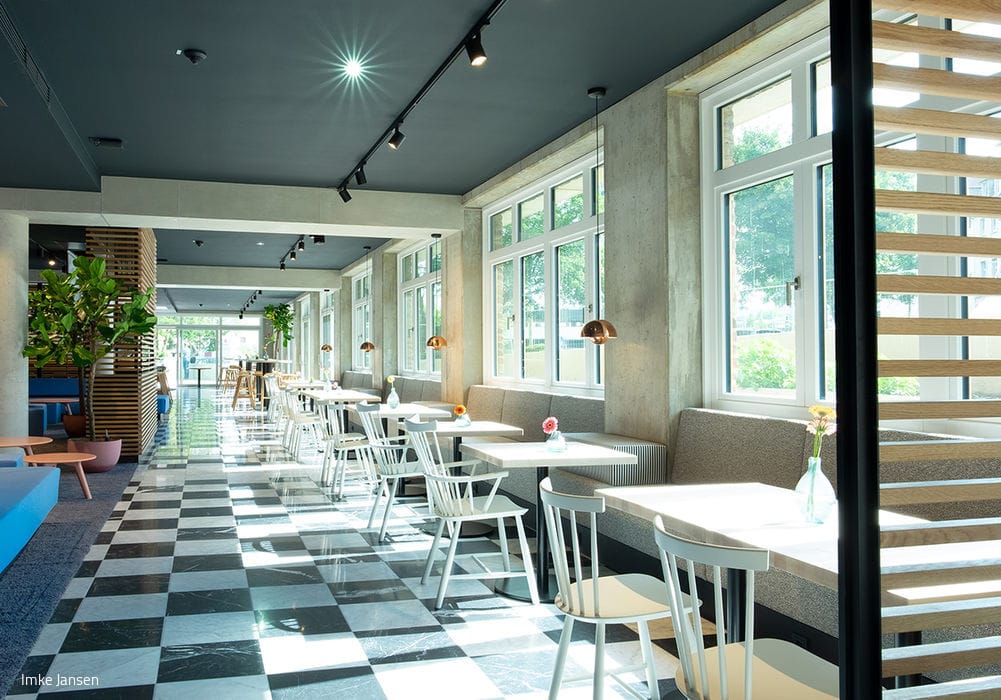
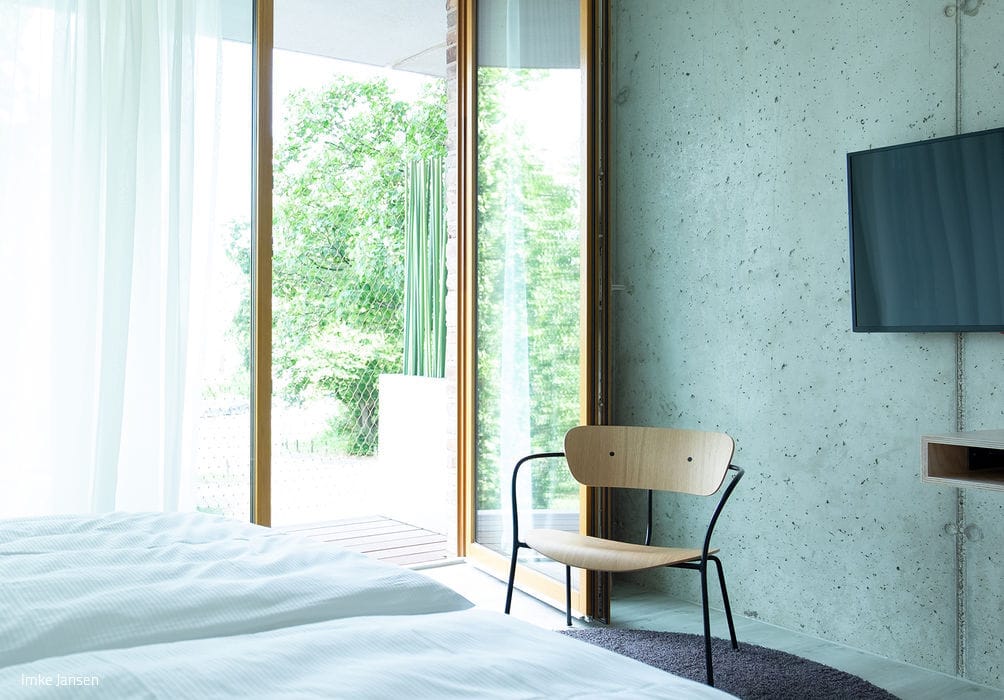
Located at Frohnhauser Straße 55, the Flowers Hotel marks Andreas Deilmann's debut project in the Ruhr metropolis. Just steps from Essen's city centre, the Münster-based architect created this striking corner building in just two years with a €40 million investment – a modern, industrial-inspired structure defined by bold architectural and artistic gestures. Spanning 17,500 m² of floor space, the building encompasses a 140-room hotel, 193 furnished apartments for extended stays, a restaurant, and a rooftop terrace. Visitors enter through a generous lobby with bar and delicatessen concept – an inviting gathering space for both hotel guests and locals alike.
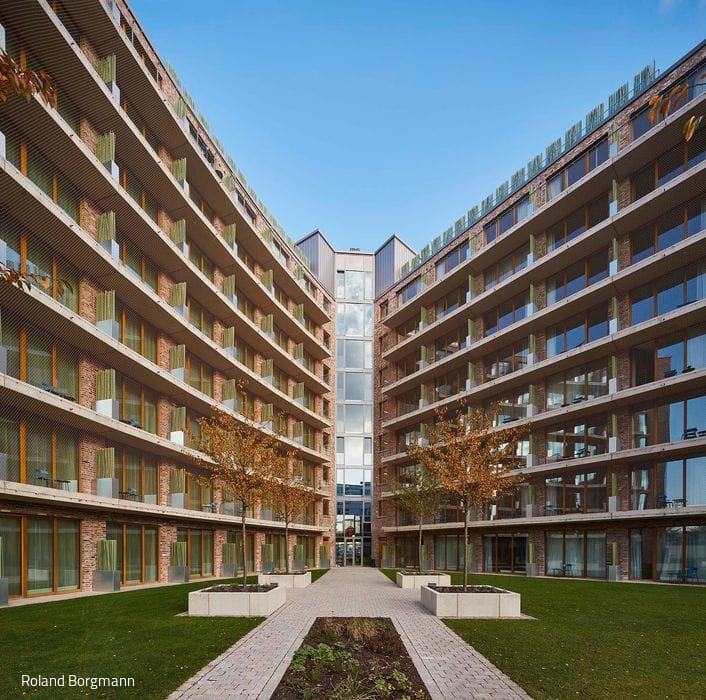
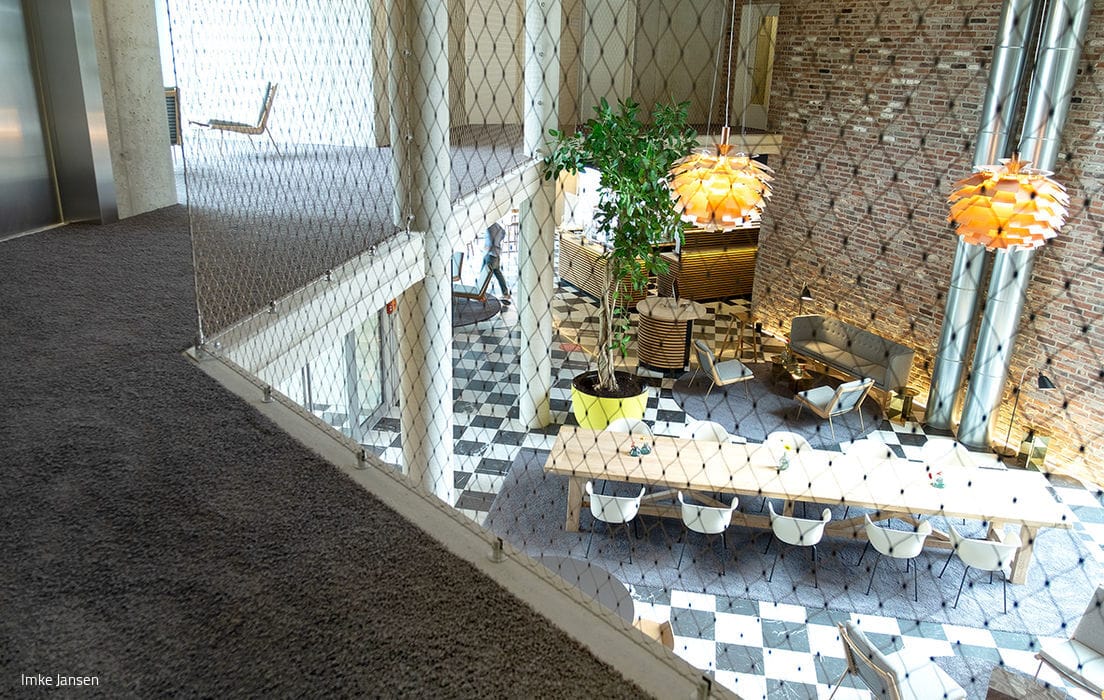
The building's silhouette – viewed from the entrance – unfolds like a butterfly in flight. Two wings define the composition: one houses the hotel, the other the apartments. The glass elevator shaft, serving as the connective spine throughout all levels, anchors the entry sequence. Berlin-based artist Margareta Hesse transformed these glazed shafts into a striking chromatic artwork that glows with particular intensity as daylight fades – a tangible reflection of the Deilmann family's deep commitment to art. Following the site's natural contours, the structure settles gracefully into its urban context. The warm-toned brick façade commands attention, composed entirely of recycled salvaged bricks. Security for the balconies takes an unconventional approach: rather than conventional railings, stainless steel mesh wraps the balconies – a refined design solution that recedes visually from afar while adding visual lightness and reinforcing the building's industrial aesthetic. Bangkirai wood decking and timber-framed windows amplify the façade's warm character. Bamboo screening creates natural boundaries between balconies and interior spaces. The inner courtyard has been transformed into a verdant retreat with mature trees and generous pathways – a serene sanctuary for guests nestled within the city. The lobby makes a powerful impression through its soaring height and expansive windows overlooking the courtyard. As the central hub for all building functions, it channels traffic seamlessly across zones. The interplay of exposed brick, concrete, and gleaming steel piping infuses the space with authentic character. A grand black-and-white marble floor in a chequerboard pattern delineates distinct zones for arrival, work, and leisure.
Photography Credits:
Roland Borgmann
www.rolandborgmann.com
Imke Jansen
www.imkejansen.com
(Published in CUBE Magazine Ruhrgebiet 02|21)


Identity Meets Innovation
The Lensing Media Port in Dortmund Harbor

Living heritage
Historic Salt Facility at Hansa Coking Plant Transforms into Dynamic Event Venue
A whole new living experience
A Character-Filled Home Emerges with Fresh Appeal After Its Transformation
Green Living Haven in Rüttenscheid
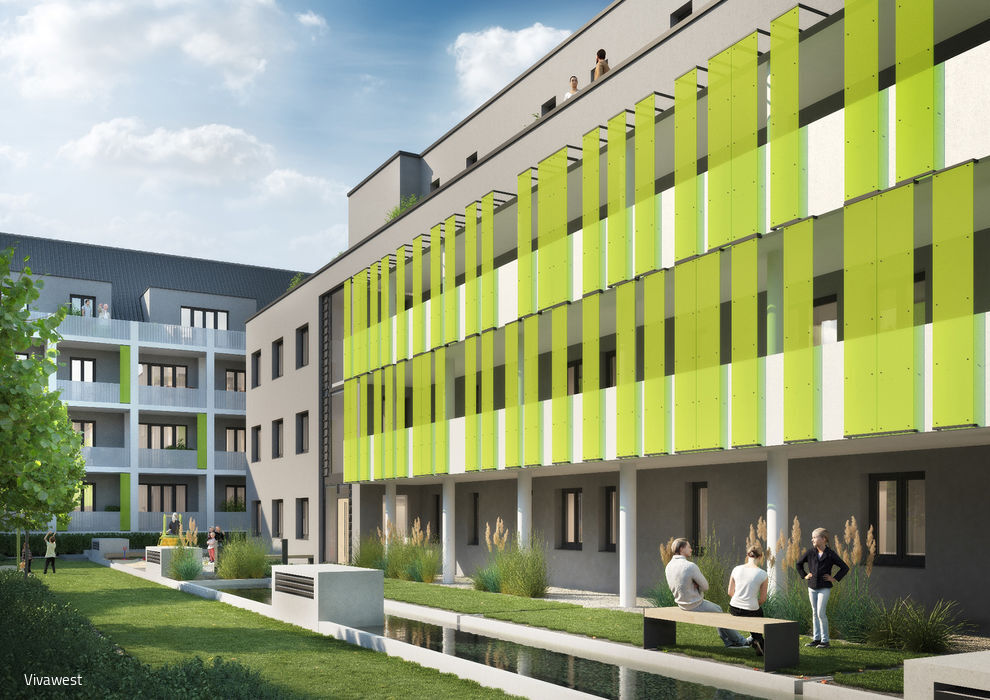
The location's proximity to Essen's green heart—the Grugapark—and to Rüttenscheider Straße makes it particularly compelling.