


A Bold Statement
These six houses masterfully weave together old and new.
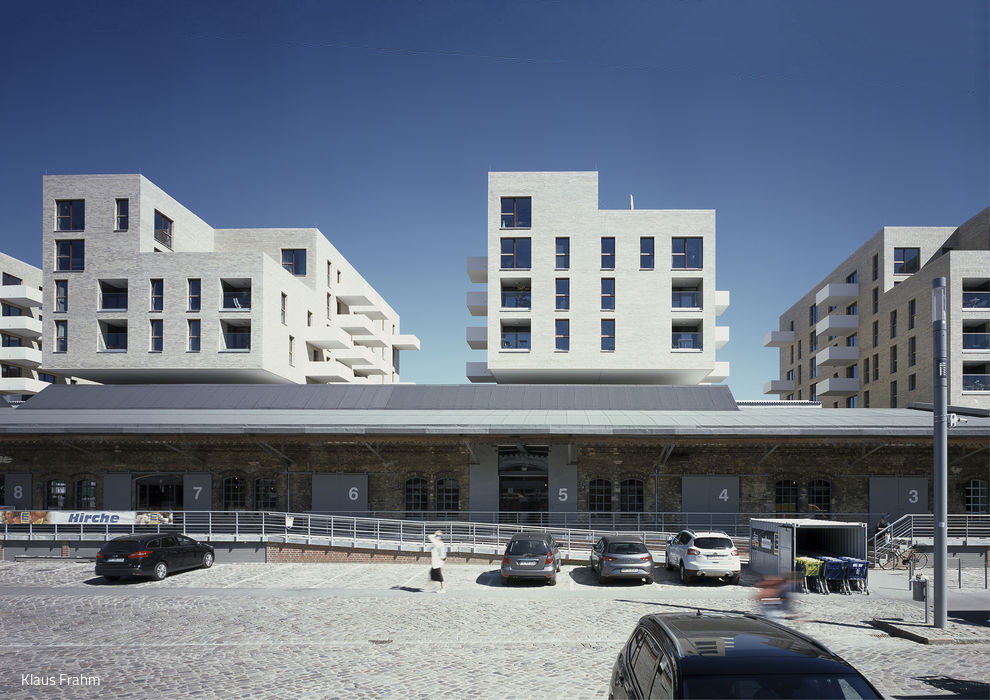
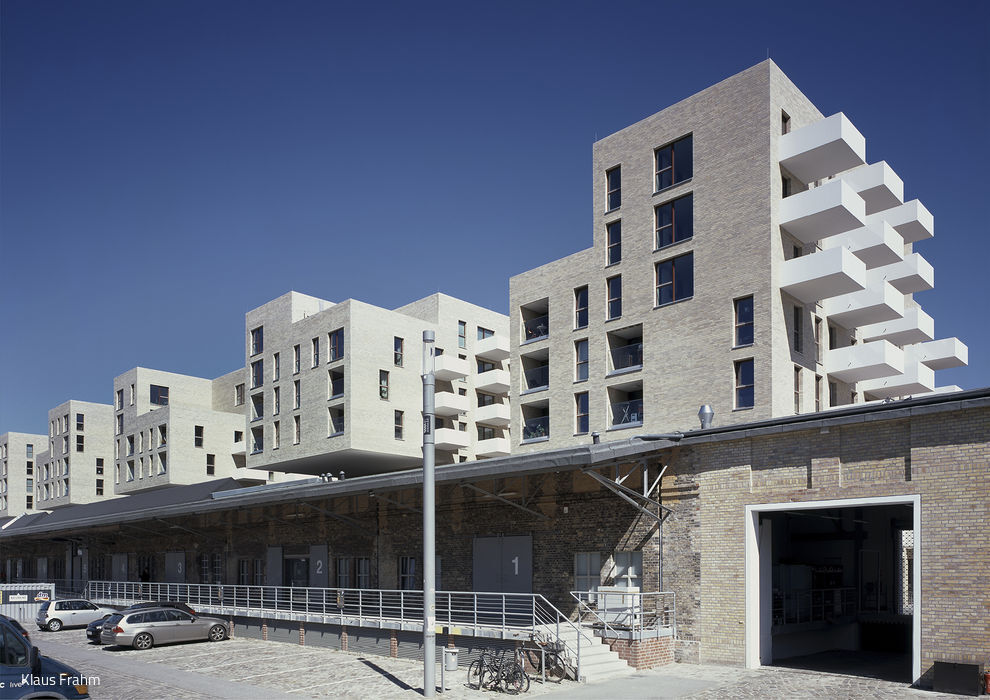
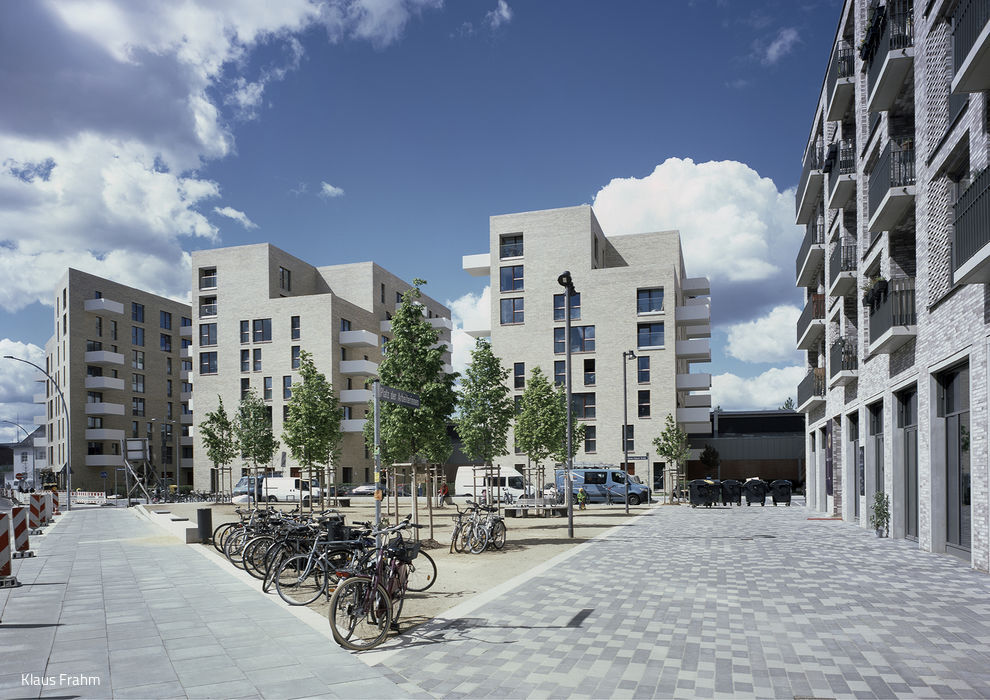



Auf dem rund 13 Hektar großen Areal des ehemaligen Güterbahnhofs ist der erste Bauabschnitt des Quartiers Mitte Altona mit rund 1.600 Wohnungen, Park, Stadtteilschule, sozialen Einrichtungen und gewerblicher Nutzung nahezu fertiggestellt. Mit der Sanierung und Umnutzung der denkmalgeschützten Bauten Kleiderkasse und Güterhallen bleiben historische Spuren lebendig.
Im östlichen Teil des Quartiers setzen die sogenannten Kranbauten des Architektur- und Stadtplanungsbüros André Poitiers, das zusammen mit Arbos Freiraumplanung auch für den Masterplan verantwortlich zeichnet, einen kraftvollen Akzent, der dem gesamten Quartier gut tut. Mit den sechs Häusern gelingt hier eindrucksvoll eine Verwebung von Alt und Neu. Die Neubauten schieben sich von Osten in die historischen Güterhallen und überlagern sich so mit der dahinter liegenden Bestandswand. Dabei fassen die zur Straße und zum Platz orientierten Teile der Baukörper das Ensemble städtebaulich und geben einen klaren Rahmen vor. Dagegen docken die Richtung Bahnhof orientierten Baukörperanteile an die sanierten Backsteinhallen an und kragen mit großer Geste wie Krane über sie hinaus. Erinnerungen an avantgardistische Architekturentwürfe werden wach. Die komplexe Tragwerksplanung leistete das Ingenieurbüro Wetzel & von Seht. Diese Konstruktion bewahrt auch den Charakter der historischen Hallen, insbesondere das typische Oberlichtband kann in jedem Hallenschiff erlebt werden. Insgesamt befinden sich in den sechs Häusern 242 Mietwohnungen mit einem bis fünf Zimmern und acht Maisonettewohnungen, die für Arbeiten und Wohnen ausgelegt sind, sowie vier Kleingewerbeeinheiten. Durch die Verzahnung der Hallen mit den Kranbauten entsteht zudem eine Freiraumstruktur von privaten Innenhöfen.
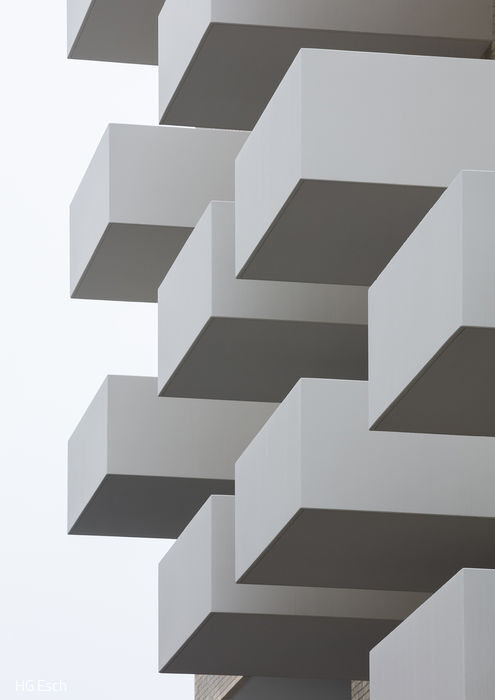
Die Wahl eines hochwertigen Vollklinkers in beigegrauen Farbnuancen ist eine Reminiszenz an die historischen Backsteinhallen und betont die Zusammengehörigkeit. Das Fassadenbild der Wohnbauten ist geprägt von den geschosshohen Fensteröffnungen, den Balkonen nach Norden und Süden sowie den Loggien nach Westen und Osten, die in einem spielerisch interpretierten Raster angeordnet sind. Sie rhythmisieren die Fassade und geben ihr Tiefe. Durch die außergewöhnliche und überaus großzügige Form der Balkone und die unterschiedliche Dachterrassengestaltung in den oberen beiden Geschossen erhält jeder der sechs Kuben eine eigene Identität. Die mehrfach ausgezeichneten Kranbauten ergeben ein überaus differenziertes Bild im Stadtraum.
Photography Credits:
HG Esch
www.hgesch.de
Klaus Frahm
www.klaus-frahm.de
(Published in CUBE Hamburg 01|21)


Simple and Functional
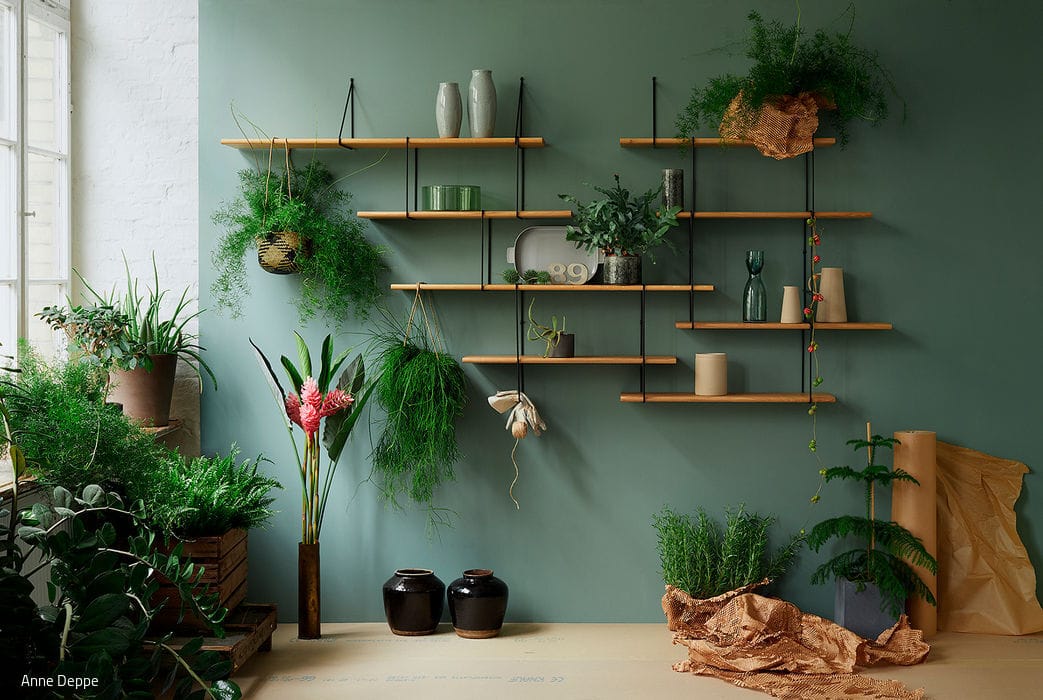
Studio Hausen's sustainable furnishings embody purposeful design—nothing more, nothing less
Where elegance meets energy
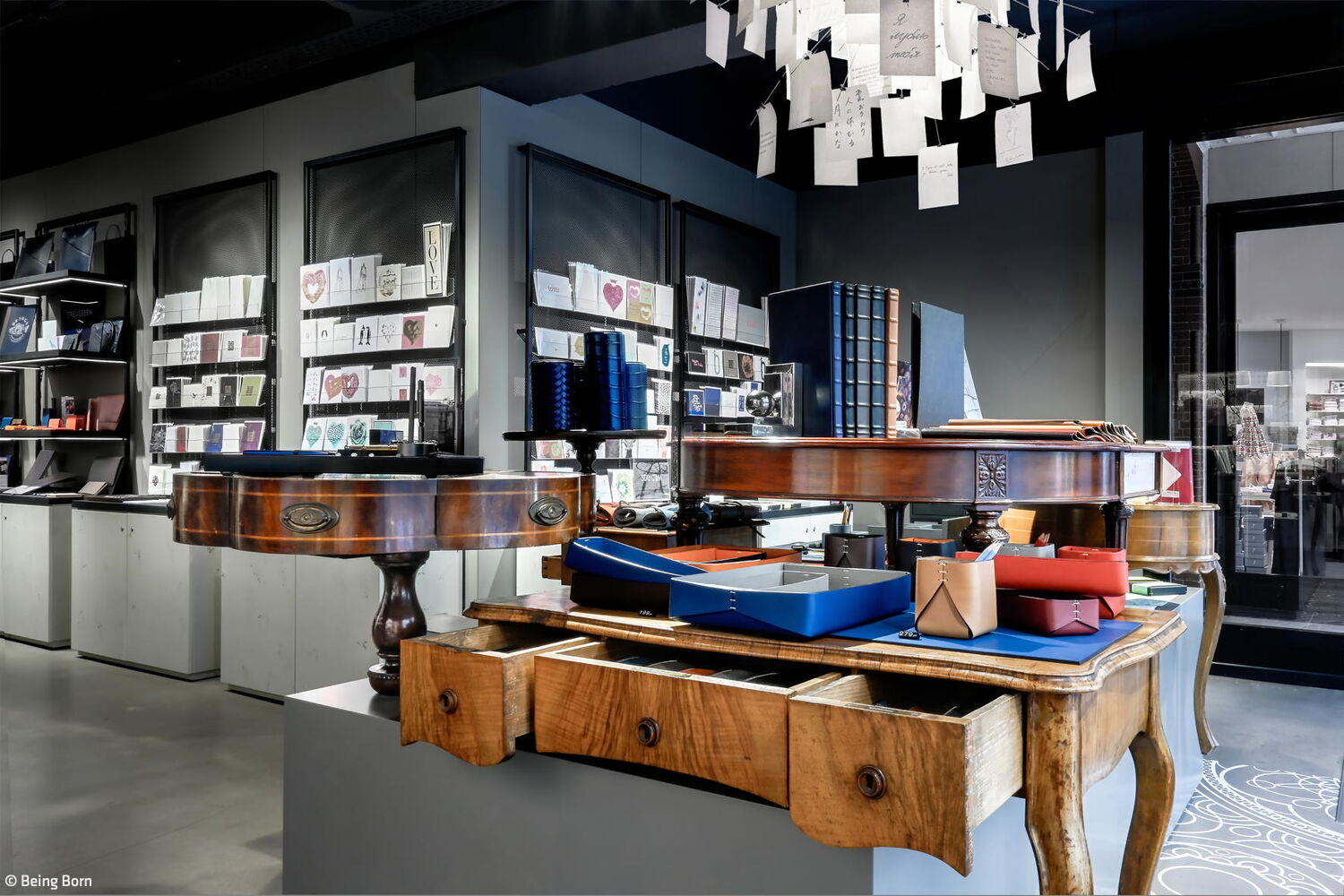
Boutique for Paper and Writing Instruments Unveils Fresh Identity

Light Defines Space
The building's design principles shaped the entire lighting strategy.
Light and Space
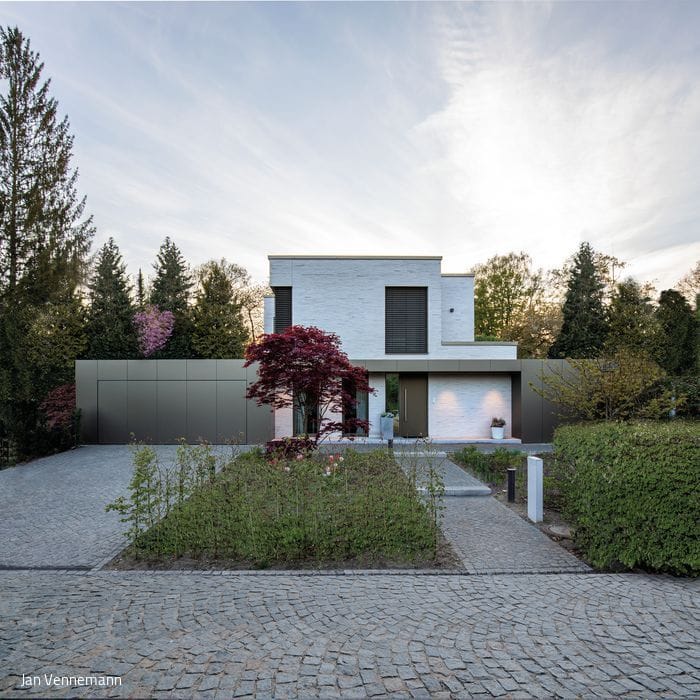
Classical forms and refined details—a striking home.