


Architect, draughtsman, global citizen
Reading the soul of cities
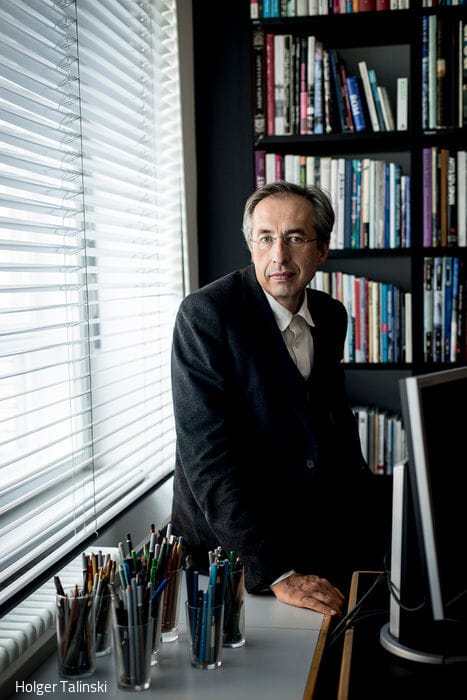
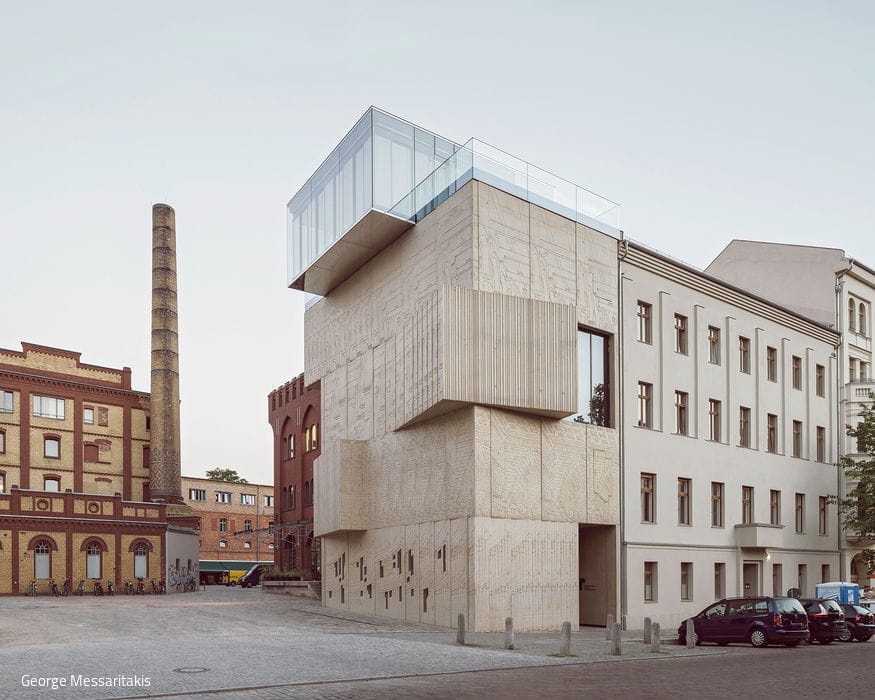
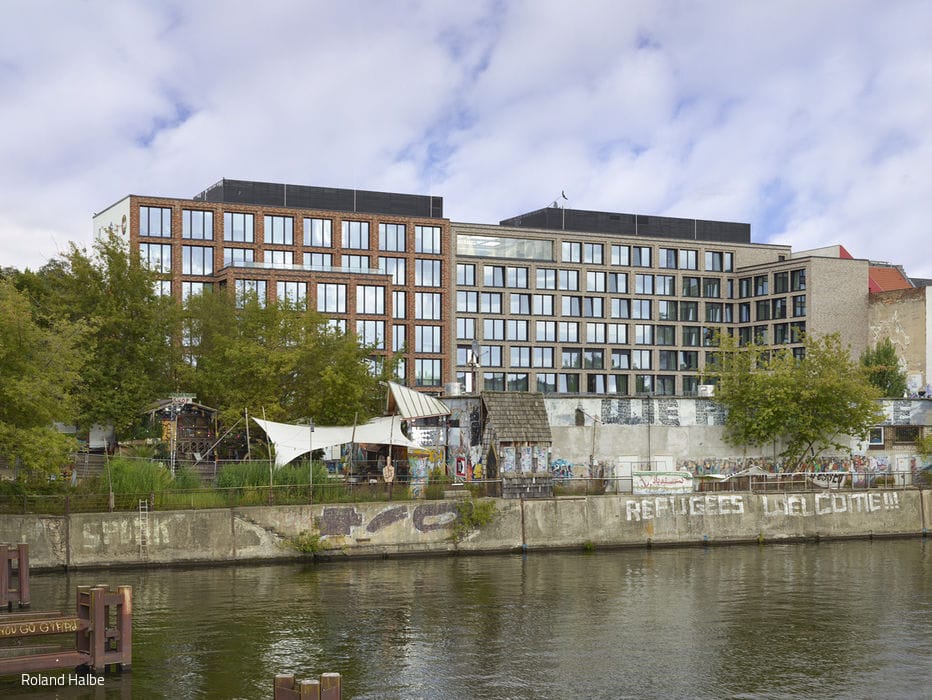
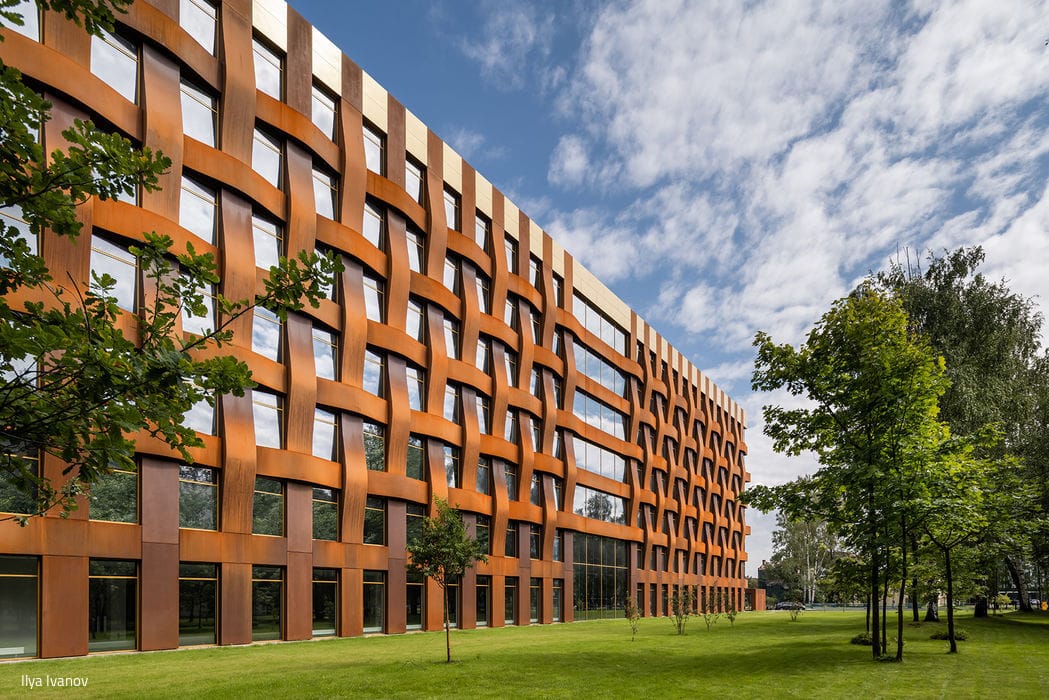
CUBE: Mr. Tchoban, you were born in Leningrad (known as Saint Petersburg from 1703 to 1924, and again since 1991) in 1962, studied there, and began your career as an architect. You were shaped by Soviet society, came from a Jewish family of intellectuals, and grew up in a city that stands as one of Europe's most significant cultural capitals—one that has drawn thinkers, writers, and artists for centuries. It showcases the grandeur of the Tsarist era, houses the Hermitage, one of the world's oldest and greatest art museums, and its historic center—featuring some 2,400 classicist buildings with strong Western influences—has been a UNESCO World Heritage Site since 1991. Quite a remarkable confluence of influences! How have these circumstances shaped you both as a person and as an architect?
Sergei Tchoban: Saint Petersburg and its architecture have profoundly shaped who I am and who I remain. The concept of a carefully orchestrated urban fabric—creating ensembles with select iconic landmarks at key locations, balanced against a significant backdrop of equally important but more modest contextual buildings—has always been central to my architectural practice. This philosophy is rooted in my hometown. Through the buildings of Saint Petersburg, I also came to understand the critical role of façades: their depth, their materiality, their presence. My studies at the Department of Architecture of the Russian Academy of Arts were equally formative, particularly the discipline of drawing—which I've come to see as the architect's essential language of expression.
You moved to Germany in 1991 and joined the respected Hamburg firm Nietz Prasch Sigl as an architect in 1992. What drew you to Germany, and specifically to Hamburg?
In 1991, I had the opportunity to exhibit my Russian projects at the Hamburg University of Applied Sciences—an exhibition called "Architectural Representation and Architectural Visions," organized with support from the Association of German Architects. Through architect Steffen Adam (then a student), Professor Gutdeutsch, Volker Roscher of the BDA Hamburg, and Wolfgang Nietz—one of the three principals at NPS—I discovered both Hamburg and the very office where I would eventually work. Hamburg and Saint Petersburg have been sister cities for decades, and I was captivated by the city and its vibrant architectural scene. During the perestroika era in Saint Petersburg, opportunities for a young architect to grow were extremely limited. That realization led me to relocate to Hamburg and begin at NPS in 1992—a decision I remain deeply grateful for.
Three years later, you became a partner at NPS alongside Ekkehard Voss. Since 2015, you've led the firm together; it's been operating as Tchoban Voss Architects since 2017. You oversee the Berlin office, have been a partner at Speech in Moscow since 2006 (which also publishes its own architecture journal), and have completed countless projects across Germany and Russia with both firms. In 2009, you founded the Tchoban Foundation devoted entirely to architectural drawing—anchored by your own work and collection—which led to the Museum of Architectural Drawings in Berlin in 2013, designed by you. Beyond that, you teach, serve on design boards and juries, mentor emerging Russian architects, and curate exhibitions. Just reading this list is exhausting—when do you actually sleep?
At NPS, I worked alongside Wolfgang Nietz, Alf Prasch, and Peter Sigl—colleagues, friends, and mentors who profoundly shaped my career. It was an exceptionally intense and formative period, filled with memorable collaborations on compelling projects across Hamburg, Dresden, Berlin, Leipzig, Görlitz, and beyond. I met Ekkehard Voss the evening he arrived in Hamburg, and we clicked immediately. The generosity and support of these people have been instrumental in my professional journey. What continues to bring me real joy is the work itself—the ability to use drawing as my primary language across so many different contexts. I see architecture as a holistic discipline, one that encompasses all the areas we've discussed. That's simply how I approach it.
You live and work across Germany and Russia. Do you see these two worlds as opposing forces or as complementary? Are there fundamental differences in architectural practice between these countries? Is there a distinctly regional architecture, or what informs your design process?
The cities where I work matter most to me. Each city is a living organism—one I want to comprehend fully as an integrated aesthetic and ecological whole. It's no coincidence that I design extensively for Berlin, Saint Petersburg, and Moscow. I believe—or perhaps I hope—that I can sense and grasp the spirit of these cities. At least, that's my intention. I want to witness how the buildings I've created age over time, and to understand that process. I want to learn from it, including from any shortcomings that emerge. It's always evolving. Yet one thing remains constant everywhere: clients, politicians, and citizens alike must be convinced by the architectural vision and its enduring value.
Mr. Tchoban, thank you for your time.
Interview by Bettina Schön
Sergei Tchoban is a German-Russian architect with an international practice. Born in Saint Petersburg in 1962, he studied at the city's Academy of Arts before establishing himself as an architect in Russia. He joined NPS Nietz – Prasch – Sigl in Hamburg in 1992, becoming managing partner in 1995. Since 2017, the firm—with offices in Hamburg, Berlin, and Dresden—operates as Tchoban Voss Architekten. Tchoban has directed the Speech architectural practice in Moscow since 2006. He founded the Tchoban Foundation in 2009, which led to the establishment of the Museum of Architectural Drawing in 2013. He has twice curated the Russian Pavilion at the Venice Architecture Biennale, as well as installations at the Milan and Dubai EXPOs. A member of Moscow's Design Advisory Board since 2013, Tchoban has been part of the American Society of Architectural Illustrators (ASAI) since 1992, serving as its president in 2020. In 2018, the Chicago Athenaeum Museum of Architecture and Design awarded him the European Prize for Architecture in recognition of his lifetime achievement.
(Published in CUBE Hamburg 04|21)
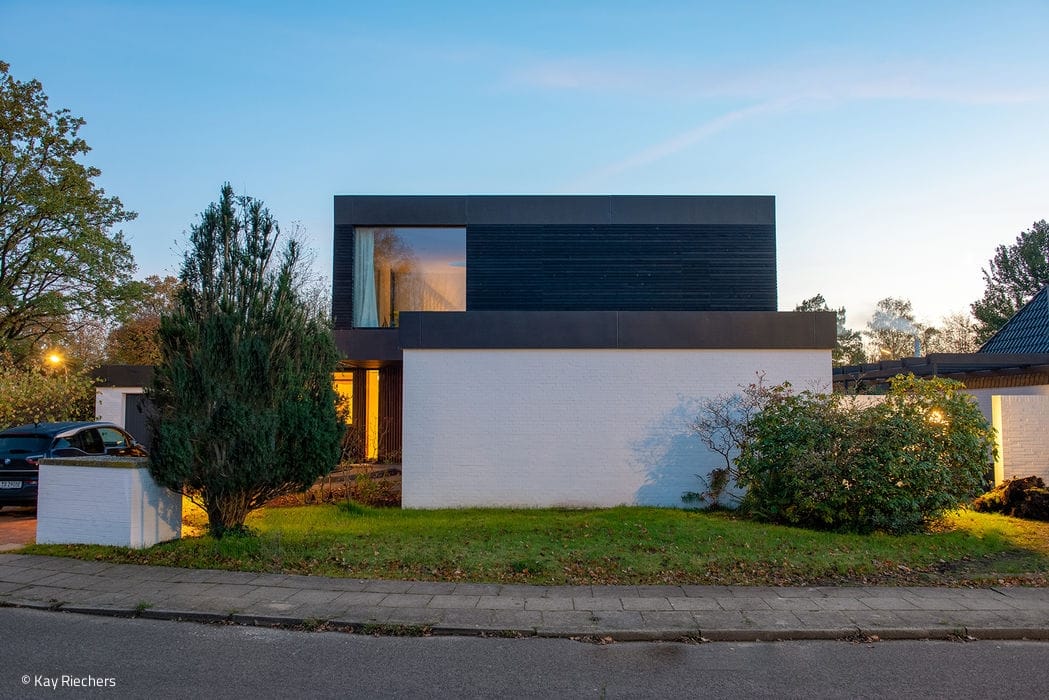
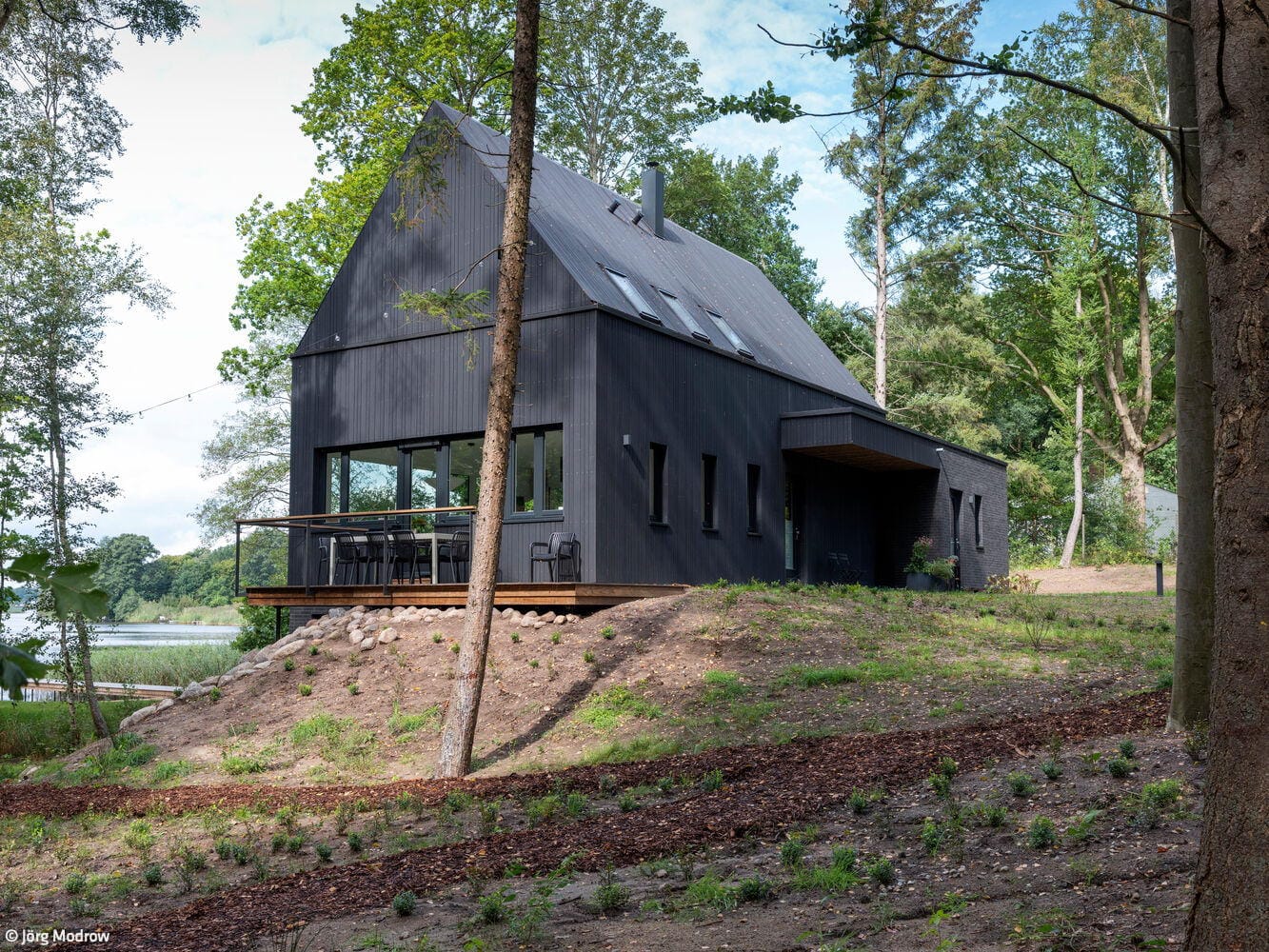
Black Diamond by the Lake
This house embodies a seamless fusion of nature and architecture.
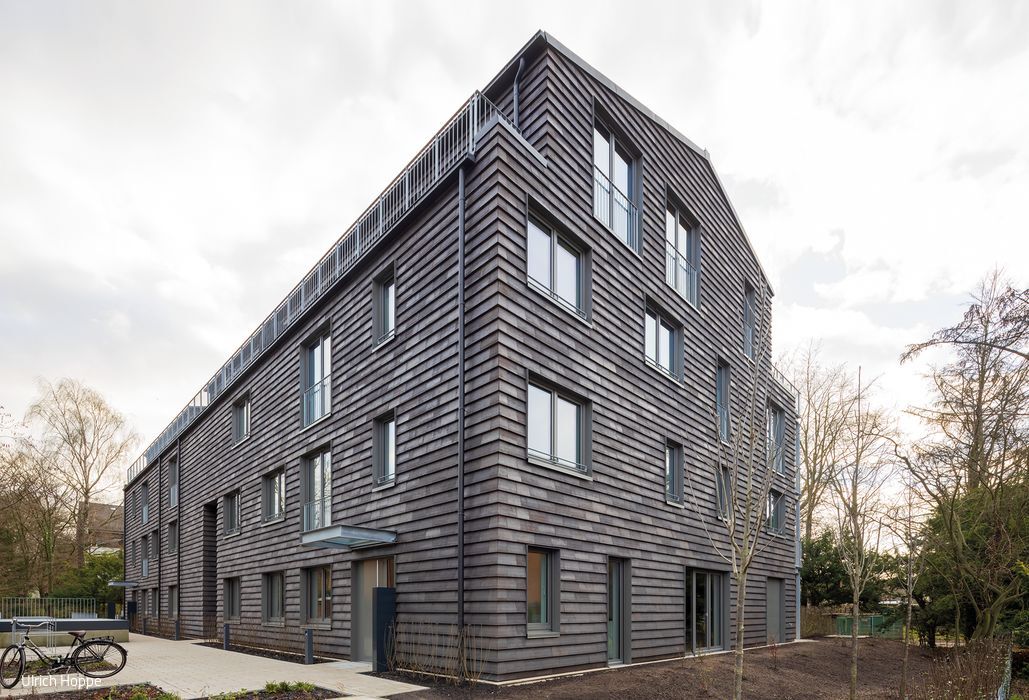
Sustainable and partially reversible
Living in Harmony with Nature
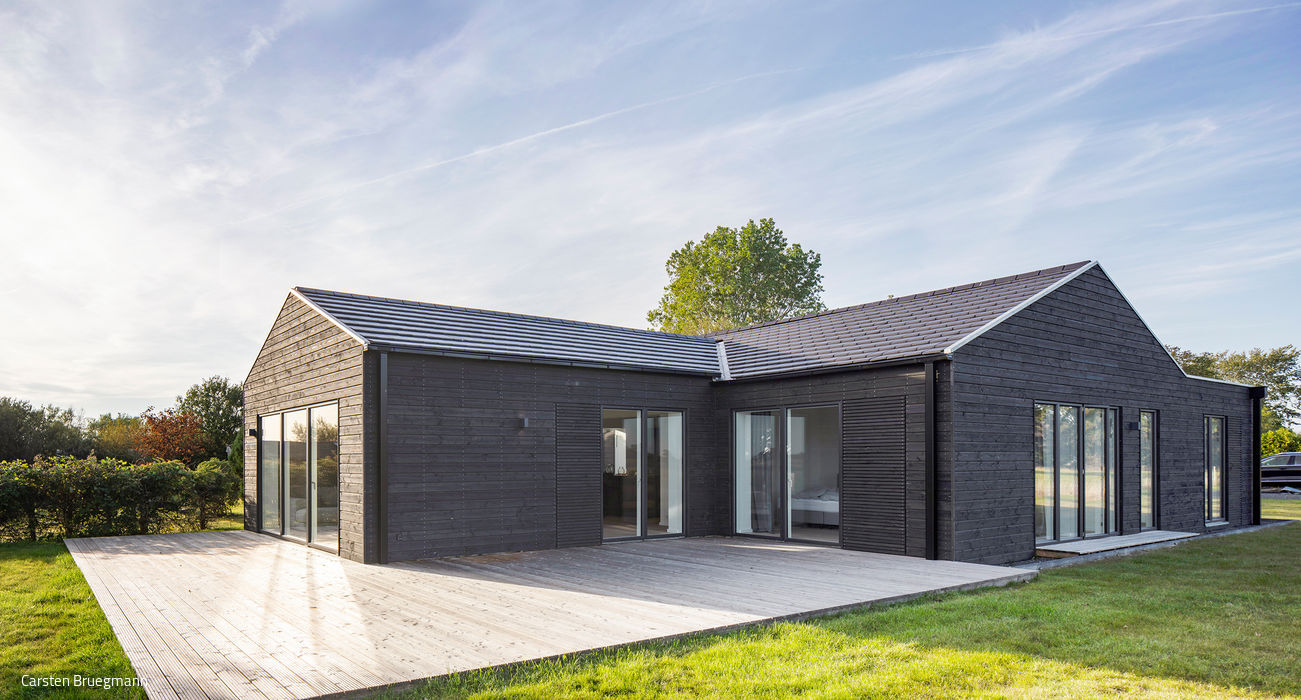
Dark and Refined
Minimalist Seaside Escape: Holiday Living on the North Sea
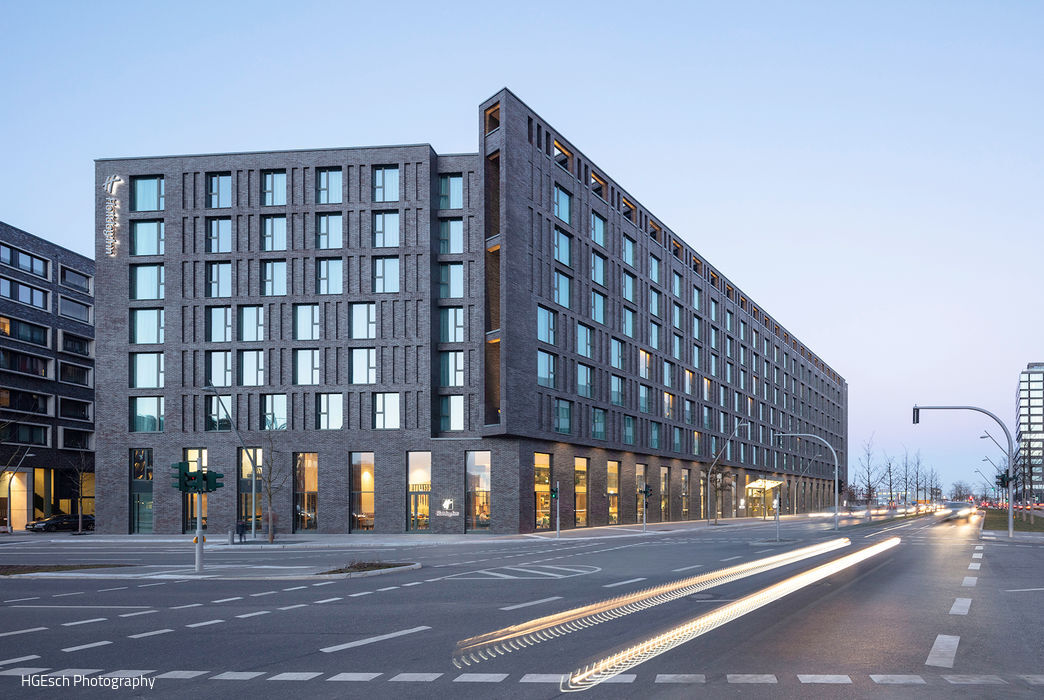
A Hanseatic legacy
The hotel's stone and façade echo the spirit of Hamburg's historic Kontorhäuser in contemporary form.