


Modernly refined
A detached house from the 1930s is being reorganised and redesigned.
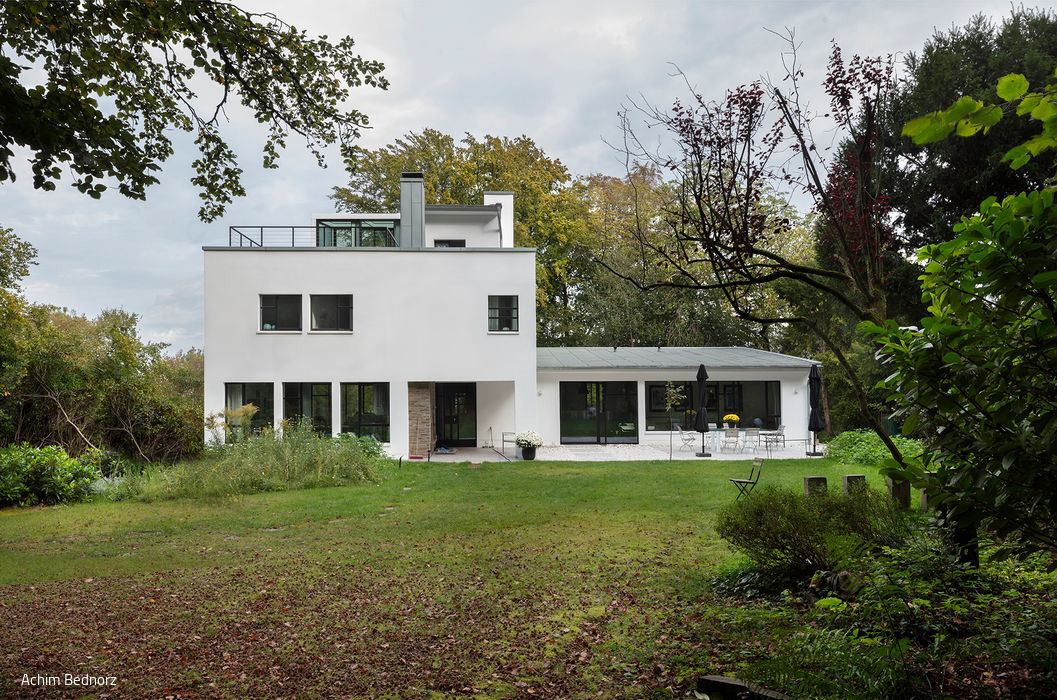


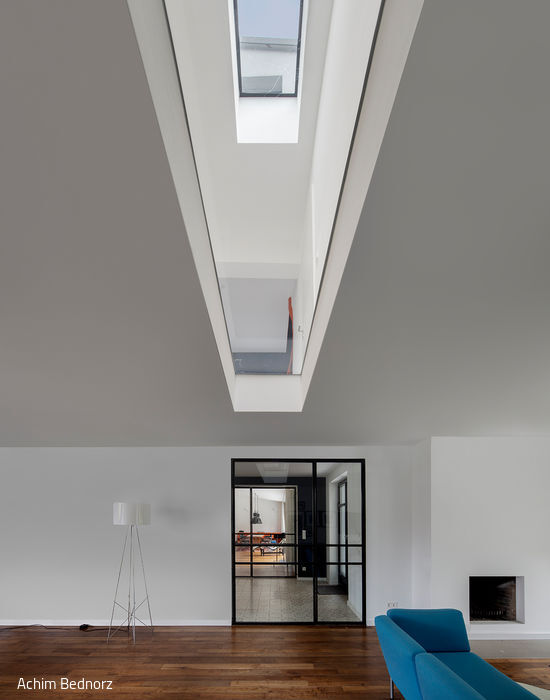

Das Wohnhaus, das eine vierköpfige Bauherrenfamilie am Ortsrand von Schildgen in Bergisch Gladbach erworben hatte, wirkte idyllisch – mitten auf einem großzügigen Grundstück mit altem Baumbestand in nächster Nähe zu einem Landschaftsschutzgebiet. Zugleich erzeugte es aber auch einen etwas verwirrenden Eindruck: Die Komposition der Baukörper hatte Unstimmigkeiten, wirkte heterogen und im Gesamteindruck verbaut.
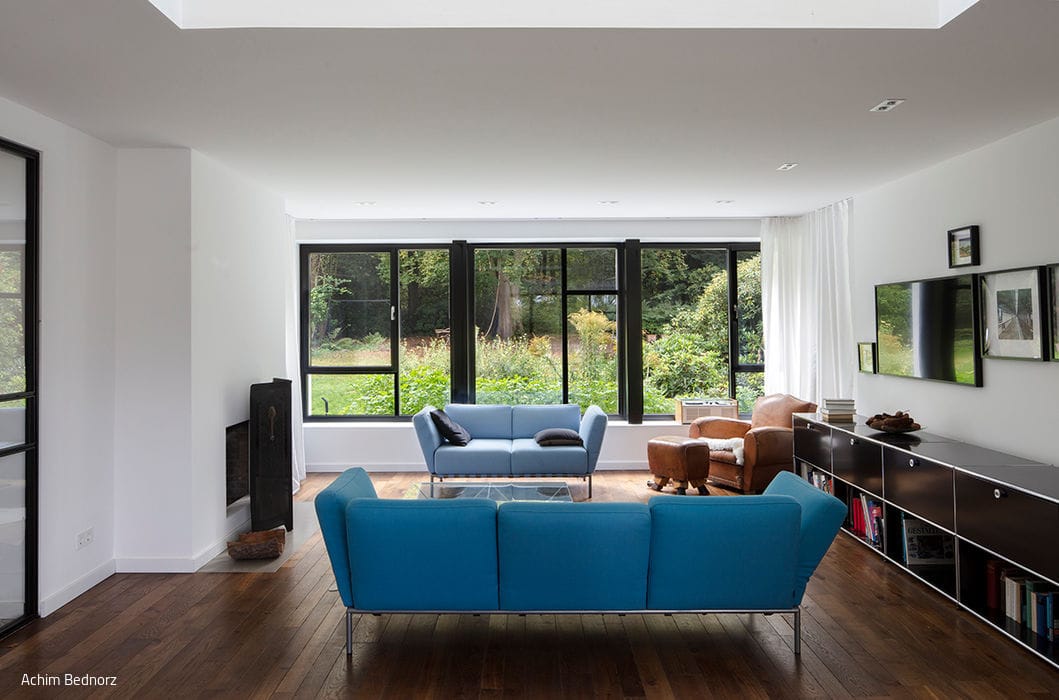
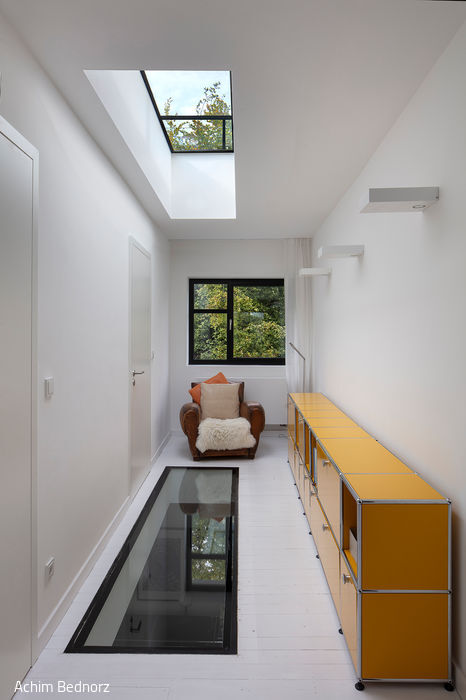
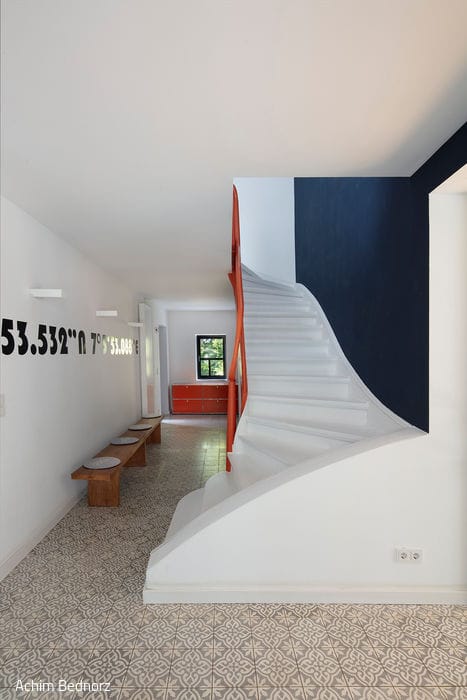
Das Gebäude, Baujahr 1930, war von dem für seine Kölner Nachkriegsbauten bekannten Architekten Ernst Nolte (1897–1973) zunächst als eingeschossiges Sommerhaus realisiert worden. Noch im Folgejahr plante er dazu hangseitig eine Erweiterung: Ein zweigeschossiger Kubus und ein Treppenturm wurden ergänzt, um der Bauherrenfamilie einen ständigen Wohnsitz zu ermöglichen. Der mit Sanierung und Umbau beauftragte Kölner Architekt Wolfgang Rettberg fügte die drei Volumen erstmals zu einem klaren Fassadenbild mit stimmigen Proportionen zusammen. Das Raumprogramm passte er dabei den individuellen Wohnbedürfnissen der Bauherren an. Die Familie wünschte, dass das Erdgeschoss durch größere Fenster weiträumig geöffnet wird. Neu eingefügte Fensterfronten mit filigranen Stahlprofilen vereinheitlichen die Sturzhöhen in dem Bereich der Wohnküche und des Wohnzimmers. Speziell im Erdgeschoss erlaubten die schmalen Profile, lange „Sitzfenster“ auszugestalten. Alle erneuerten Fensteröffnungen wurden zudem nach den Proportionsverhältnissen des Goldenen Schnittes ausgeführt. Im Zusammenspiel mit der weißen, glatt verputzten Fassade und der filigranen Dachreling ergibt sich dabei ein deutlich klareres Fassadenbild, das sich gestalterisch am Neuen Bauen der zwanziger Jahre orientiert. Das großzügige Wohnzimmer mit Konzertflügel wird gelegentlich auch für Hauskonzerte mit Publikum genutzt. Durch ein vertikal in den Baukörper eingeschnittenes Oberlicht baut der Raum im Erdgeschoss eine Beziehung zum Himmel auf: Einmal im Jahr lässt sich hier das Spektakel der Sommersonnenwende erleben. Der Schlafbereich der Bauherren wurde schließlich als volltransparenter Glaskubus mit Sonnenschutz auf der Dachterrasse errichtet. So wird der Sternenhimmel nachts zum Greifen nah.
Photography Credits:
Achim Bednorz
www.achimbednorz.com
(Published in CUBE Cologne Bonn, 04|21)

Metamorphosis in Clay
A semi-detached home in Lindenthal, reinvented as a masterclass in sustainable, biologically conscious renovation
Loft Character for Art
A redesigned floor plan creates functional freedom

Modular and Sustainable
Two primary schools in Flittard and Eil have been expanded with speed and style.

Furniture with a History
Where Sustainability, Design, and Function Converge