


Urban Living
Quality affordable housing takes shape in Essen's Weststadt
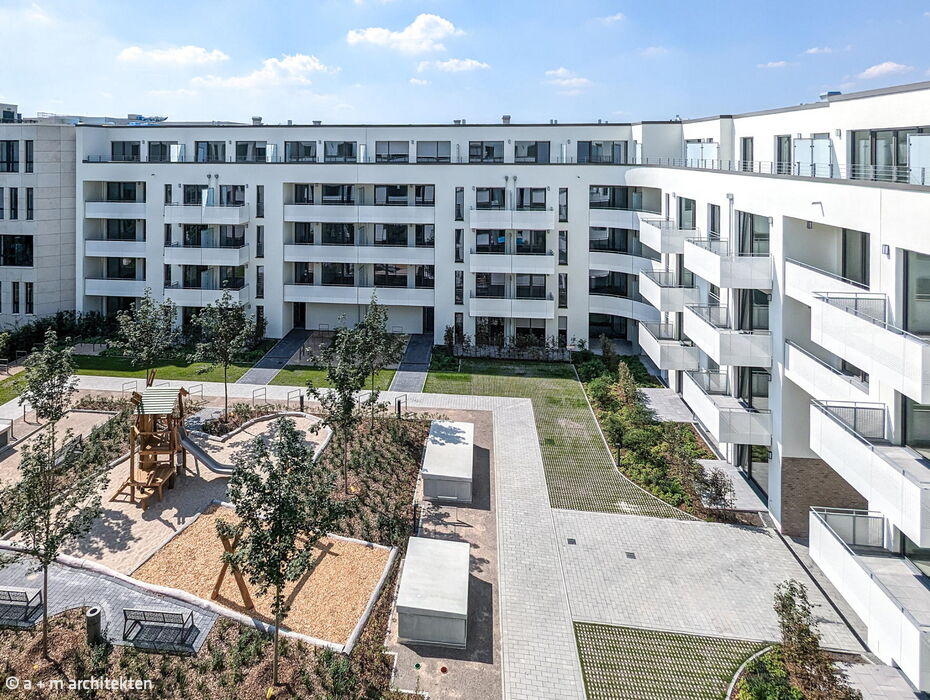
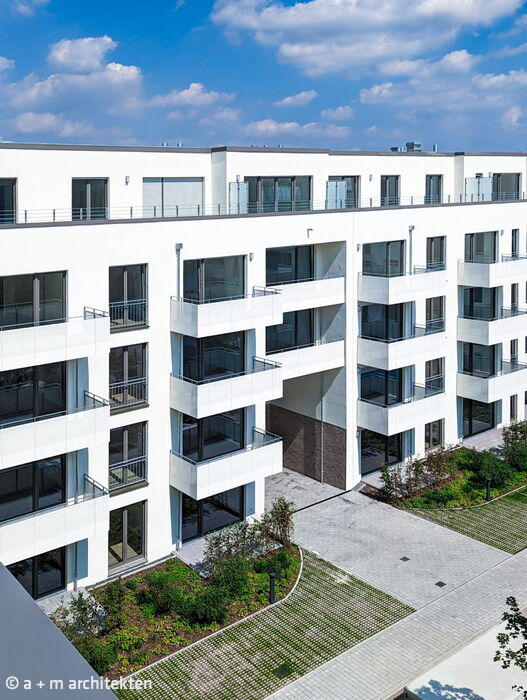




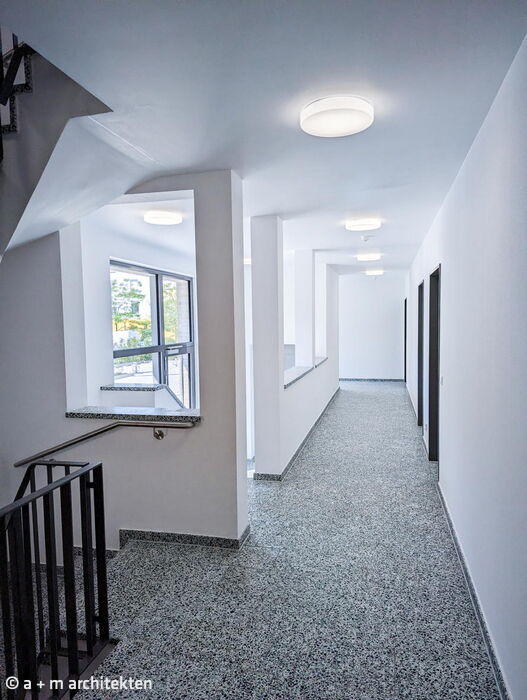
Essen's Weststadt now features 100 new flats just steps from the city centre. On a former 5,000 m² AEG Kanis industrial site, a + m Architekten Ingenieure from Cologne designed a U-shaped residential complex for developer LEG NRW. Built partially underground with six stairwells and an underground car park, the building connects to an adjacent office structure, creating a unified block with a generous inner courtyard.
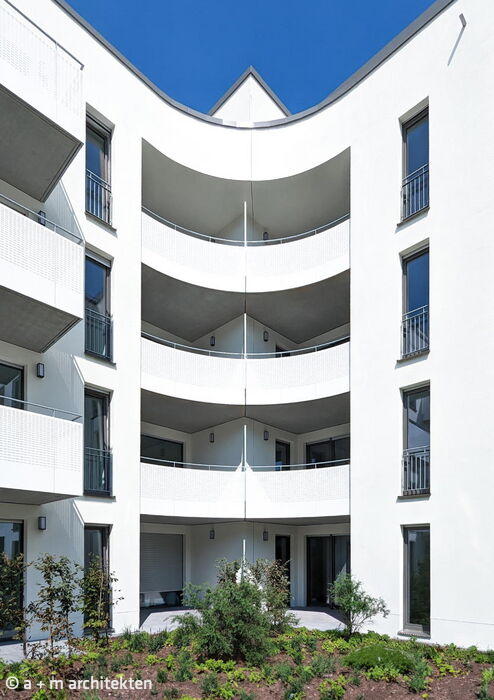
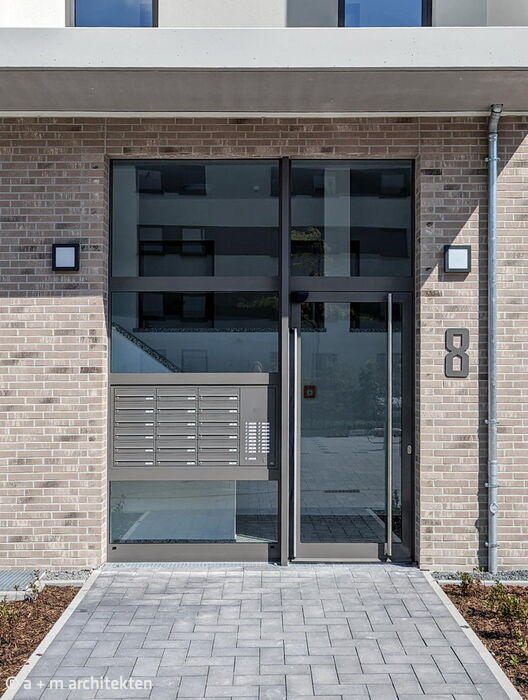
The design balances urban harmony with its context—drawing from the surrounding architecture and matching the office building's height. The six five-storey blocks break up their façades with recessed levels, gallery walkways, and a cascading top floor. Street-facing, the ground level distinguishes itself with warm brown clinker brick, typical of the neighbourhood, while upper storeys feature clean white plaster—a conscious nod to the area's established character. The building's rounded corners reference classic Krupp housing estates from the 1910s–1920s, grounding the project in local heritage. The inner courtyard—completely shielded from traffic noise—connects seamlessly from all stairwells and becomes a true amenity space. With planted beds, seating, play areas, and a boules court, it delivers exceptional quality of life. Green extends to the north and southwest forecourts and across the extensively landscaped roof. "Our challenge was managing sound from the commercial areas to the west and Frohnhauser Strasse traffic," explains project director Gabriele Bertram. "We solved this through thoughtful floor plans—orienting living spaces toward the quiet courtyard—and installing movable glass panels in the loggias of building five's corner units." The 100 units range from one-and-a-half to four rooms, spanning 43–101 m². All feature vinyl-design flooring, with select units offering wheelchair accessibility. Cast stone finished the stairwells. District heating supplies the building, while the green roof is equipped for future solar panels. The underground car park provides 78 spaces, with 17 additional surface parking. Dedicated bike and cargo-bike parking clusters near the basement entrance.
Photography:
a + m architects
(Published in CUBE Ruhrgebiet 03|24)

Minimal Means, Maximum Impact
How thoughtful design transformed a modest industrial-age garden into a verdant sanctuary
Ready for Wellness
Dortmund Fitness Lounge Reimagined as a Wellness and Performance Destination
A Split-Level Loft
A single-family home that captivates through openness and a dynamic interplay of multiple levels
Smart Design, Seamless Execution
Generous Living Space in a Prime Location