


Restored Dignity
Haus Meer in Meerbusch reclaims its former splendor while embracing Japanese-inspired design
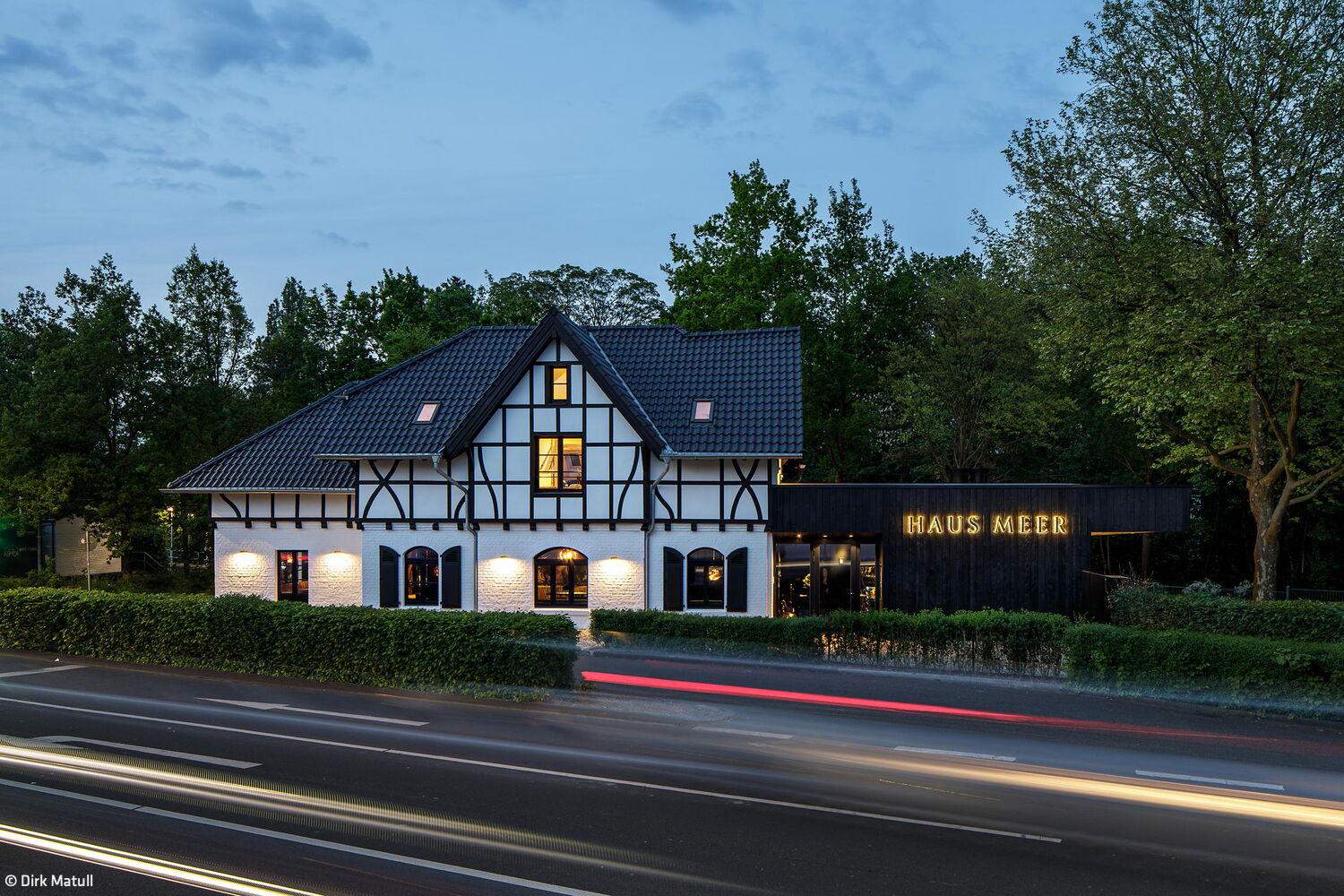


"It's like being in Tokyo!" – no higher compliment could the client have bestowed on his architect. After roughly twelve months of construction and an equally lengthy planning phase, the Japanese omakase sushi restaurant "Junsui" opened in the basement of the fully renovated and expanded "Haus Meer" two years ago.
Haus Meer stands among the historic buildings that transport visitors through the shared history of Meerbusch and Düsseldorf. Originally constructed as a railway station when the tram line between Düsseldorf and Krefeld opened in 1898—made possible by the Oberkasseler Bridge—the station became the catalyst for Meerbusch's transformation into an upscale garden city. From 1908 onward, it gave rise to the villa district that defines Meerbusch's exclusive character today. Decades later, the building was decommissioned in 1990 and repurposed primarily as a restaurant. When Ben Dieckmann Architects undertook the restoration, their mission was clear: return the structure to its original architectural character, which had been compromised by decades of modifications. The key intervention involved removing the plaster that obscured the half-timbered framework beneath—much of it had deteriorated and weakened the building's structural integrity. By exposing and restoring the original timber façade, the station building recovered its former dignity. Simultaneously, the architects upgraded both façade and roof for energy efficiency, replaced windows in a refined dark tone, and retrofitted all building systems with cutting-edge technologies including geothermal heating and radiant floor heating, bringing the entire structure to CO₂-neutral performance standards.
Though the building lacks formal heritage designation due to its conversion history, the architects exercised admirable restraint in adding to it: a single-story extension on the gable side expands ground-floor capacity for an additional restaurant while staying visually subdued with its black wooden exterior. The extension also creates a generous roof terrace for the top floor, where the client's offices occupy a space that feels expansive thanks to its exposed timber frame and open attic. Below, in the basement, lies "Junsui"—a carefully orchestrated culinary sanctuary. The sushi master's counter, facing six precisely positioned seats, anchors the intimate dining space. Pale Japanese matsu pine and backlit shoji screens craft an atmosphere of refined tranquility—a complete escape from the outside world where diners can surrender entirely to the culinary experience. Just as one might in Tokyo.
Photography:
Dirk Matull
www.dirkmatull.de
(Published in CUBE Cologne Düsseldorf 03|25)


Studying Living Waters
New Hydraulic Laboratory Prioritizes Sustainability
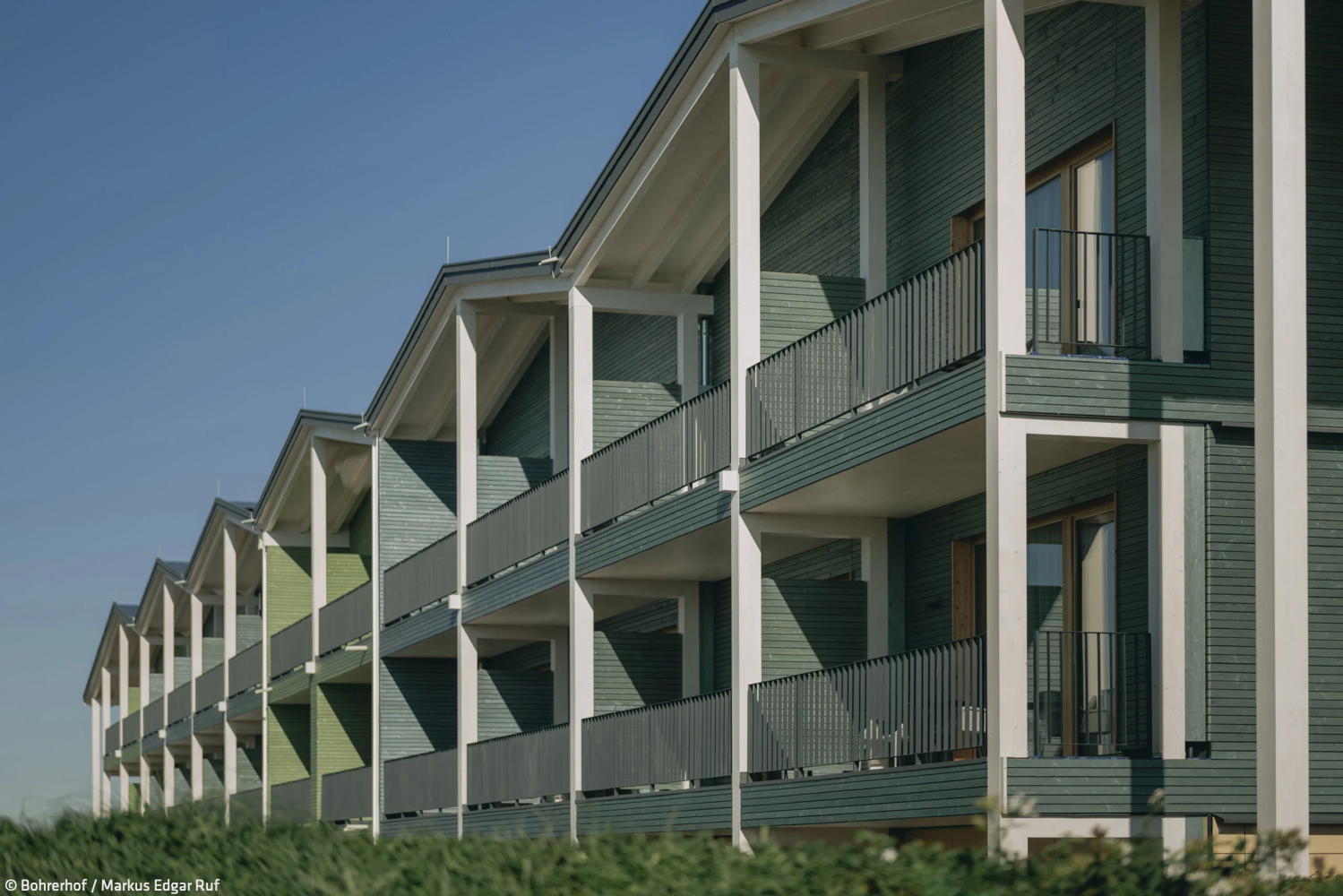
Mediterranean Spirit in the Markgräflerland
A timber-built hotel that puts sustainability first

Where linear meets round
Office Building with Integrated Lighting Design That Works
Design with Resilience
Asger Risborg