


Reimagining Shared Living
A student housing project that brings contemporary living to Ludwigsburg


Five universities and academies, along with the German-French Institute, call the baroque city of Ludwigsburg home. Like many university towns, affordable housing has been a persistent challenge—but a new "Housing for Students" initiative is beginning to change that. In 2023, the Stuttgart Student Union opened two buildings on the Königsallee campus, providing 229 residential units in total. The project was designed by Stuttgart-based Reichel Schlaier Architekten in collaboration with Koeber Landschaftsarchitektur, who won the competition.
The design's defining feature is its reinterpretation of the classic 1960s shared flat as a contemporary living model for young people. At its core is a philosophy of fostering meaningful community: residential units are organized as shared flats with generous communal spaces, accommodating groups of three to eight residents. Barrier-free accessibility is integrated throughout. Bold colour palettes in the communal areas enhance wayfinding while establishing the visual character of the residences. Zigzag ceiling fixtures add vibrancy and movement to these shared spaces. In their massing and material language, the two new buildings echo the existing site—a 19th-century barracks structure. Clinker brick facades wrap both structures consistently. Protruding bay windows articulate the façades rhythmically, while mosaic-like ground floors create visual distinction. Joint colouring varies by floor height, adding subtle sophistication. The first building anchors the south and east edges, fronting Friedrichstraße and Königsallee, while the second completes the ensemble with a defined courtyard edge, seamlessly connecting to the neighbouring residential tower and university buildings to the north. All structures embrace a verdant central plaza—a welcoming gathering space and heart of the community. Sustainability extends to mobility: working with Ludwigsburg's city planners, the Student Union developed a comprehensive mobility strategy that reduced underground parking by one-third while providing 200 bicycle spaces in a dedicated cellar and 30 additional spaces in the courtyard. Ten electric cargo bikes are available for app-based booking, and a bicycle repair workshop rounds out the offering. Above ground, three car-sharing spaces, 31 standard parking spaces, and four electric charging stations in the underground garage complete the infrastructure.
Photography:
Brigida González
www.brigidagonzalez.de
(Published in CUBE Stuttgart 03|24)


Material Symbiosis
Living and Working Beneath a Single Roof in the Countryside
Respectfully Balanced
Conversion of a Heritage-Protected 1907 Military Building into a District Court
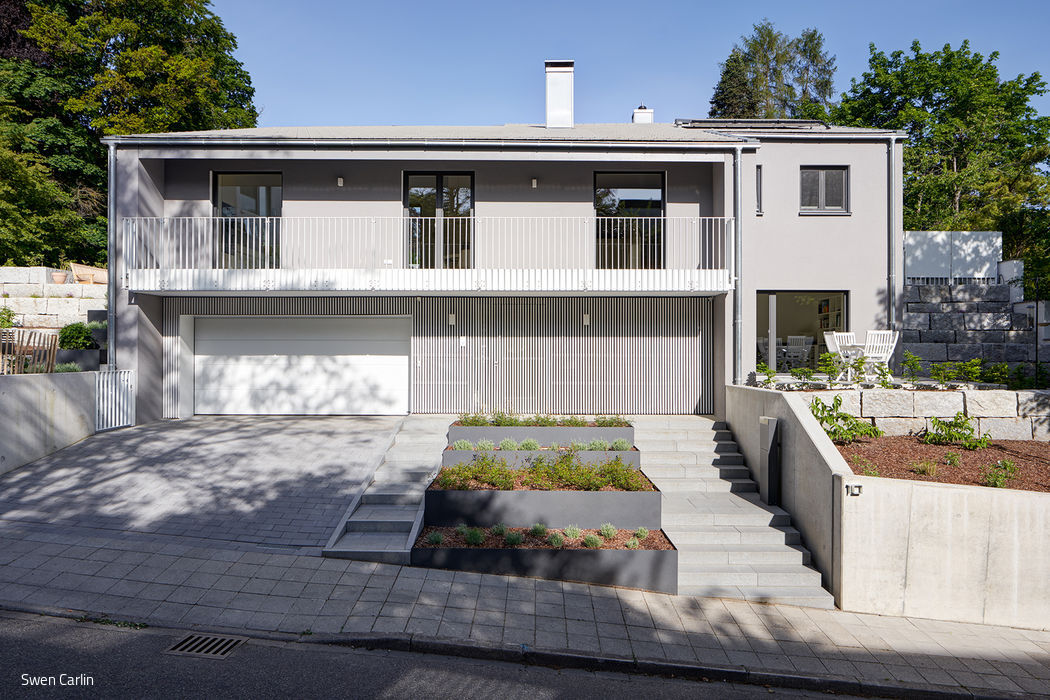
Transforming Spaces
A reimagined 1960s hillside home reveals its true potential
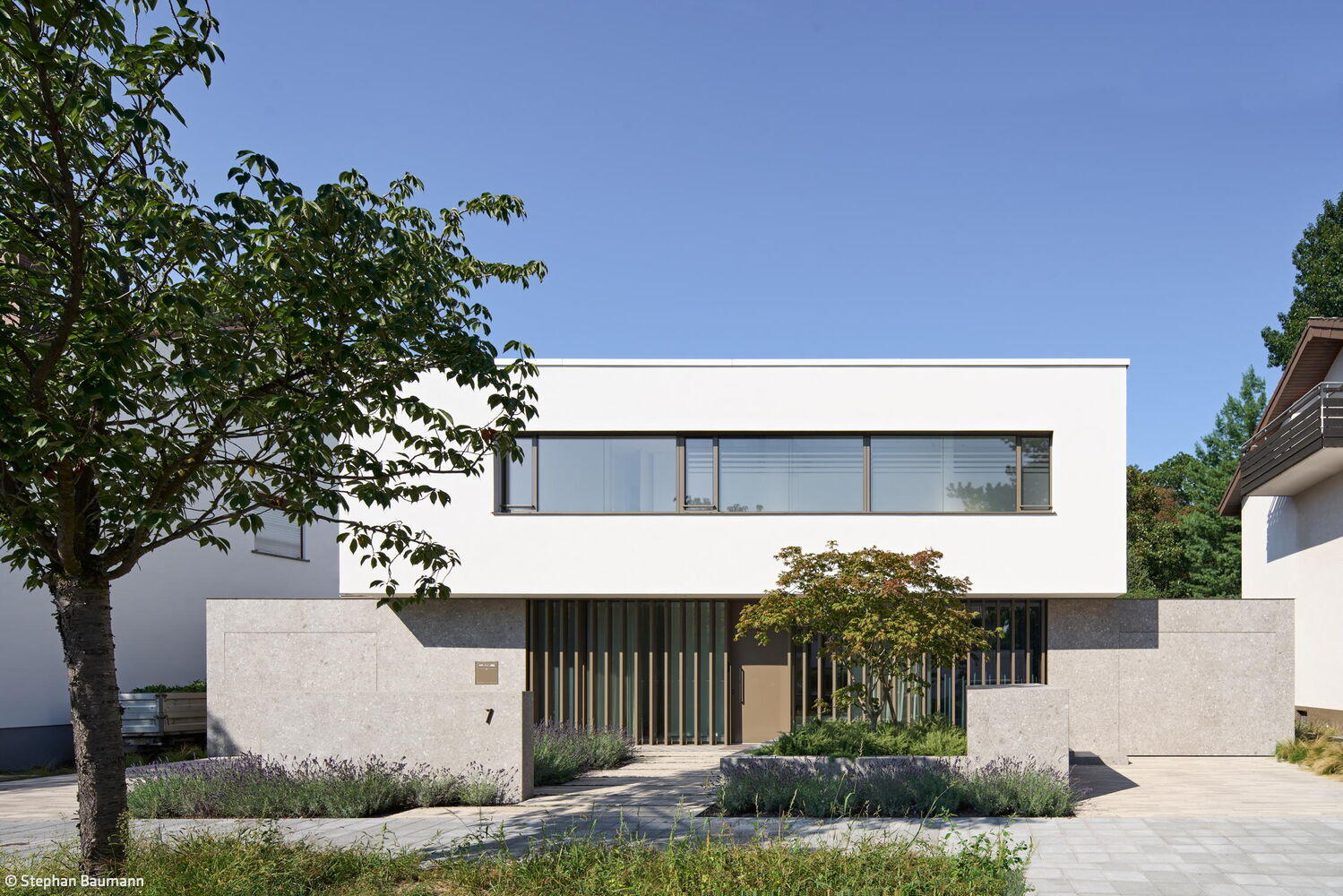
Just Right
A Bespoke Home Built on Sufficiency