


What Colour Is the Water?
Finding Balance: Variety and Repetition in Jenfelder Au


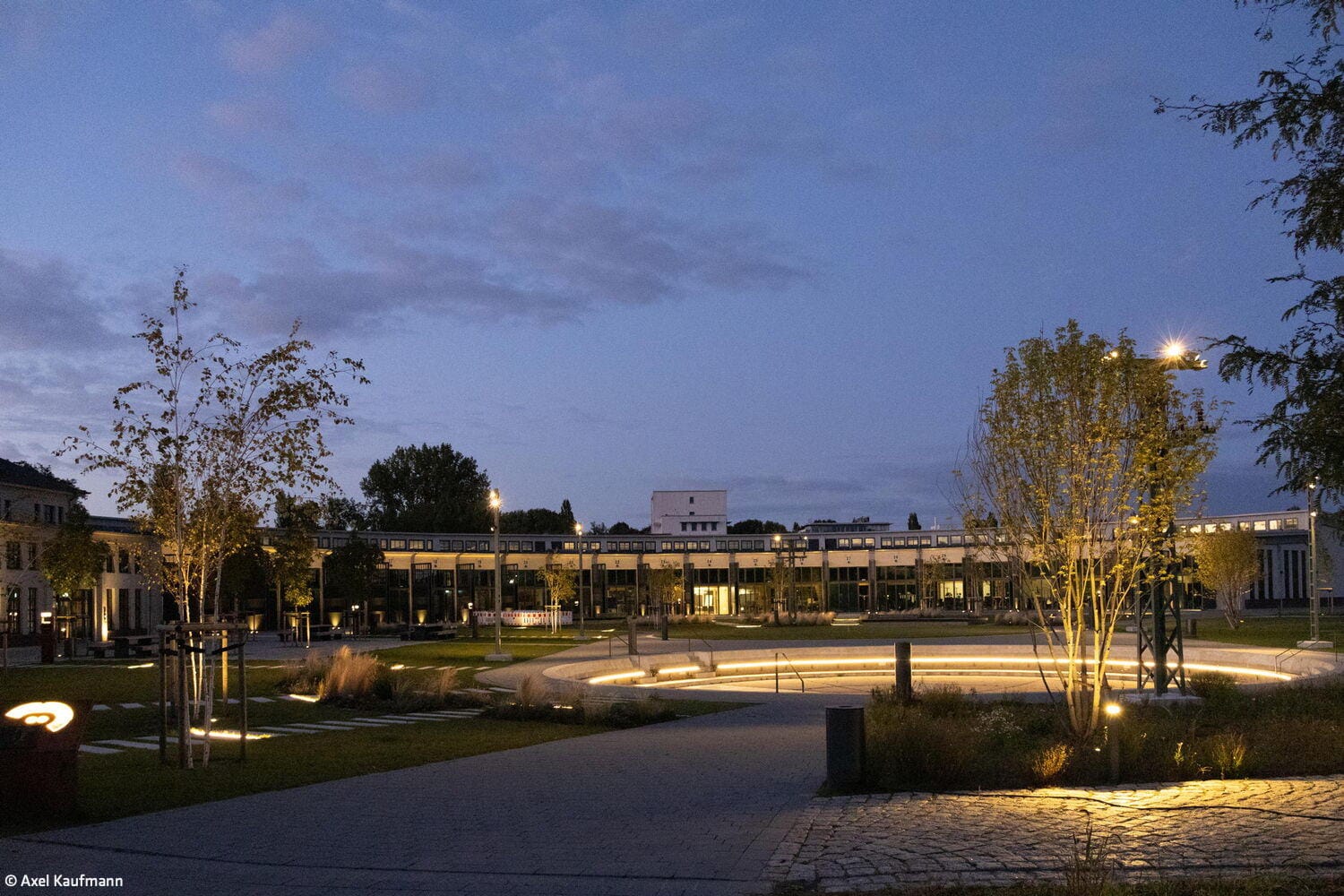
The new Jenfelder Au neighbourhood sits where Jenfeld and Tonndorf meet. On the 35-hectare grounds of the former Lettow-Vorbeck barracks, a finely grained urban quarter is taking shape—one featuring around 770 homes alongside spaces for social services and small businesses. The masterplan centres on a rich tapestry of urban townhouses and multi-storey residential buildings, offered as both rentals and owner-occupied units at accessible price points. Several structures from the original 1937 barracks complex retain protected heritage status and now serve new purposes, including student housing.
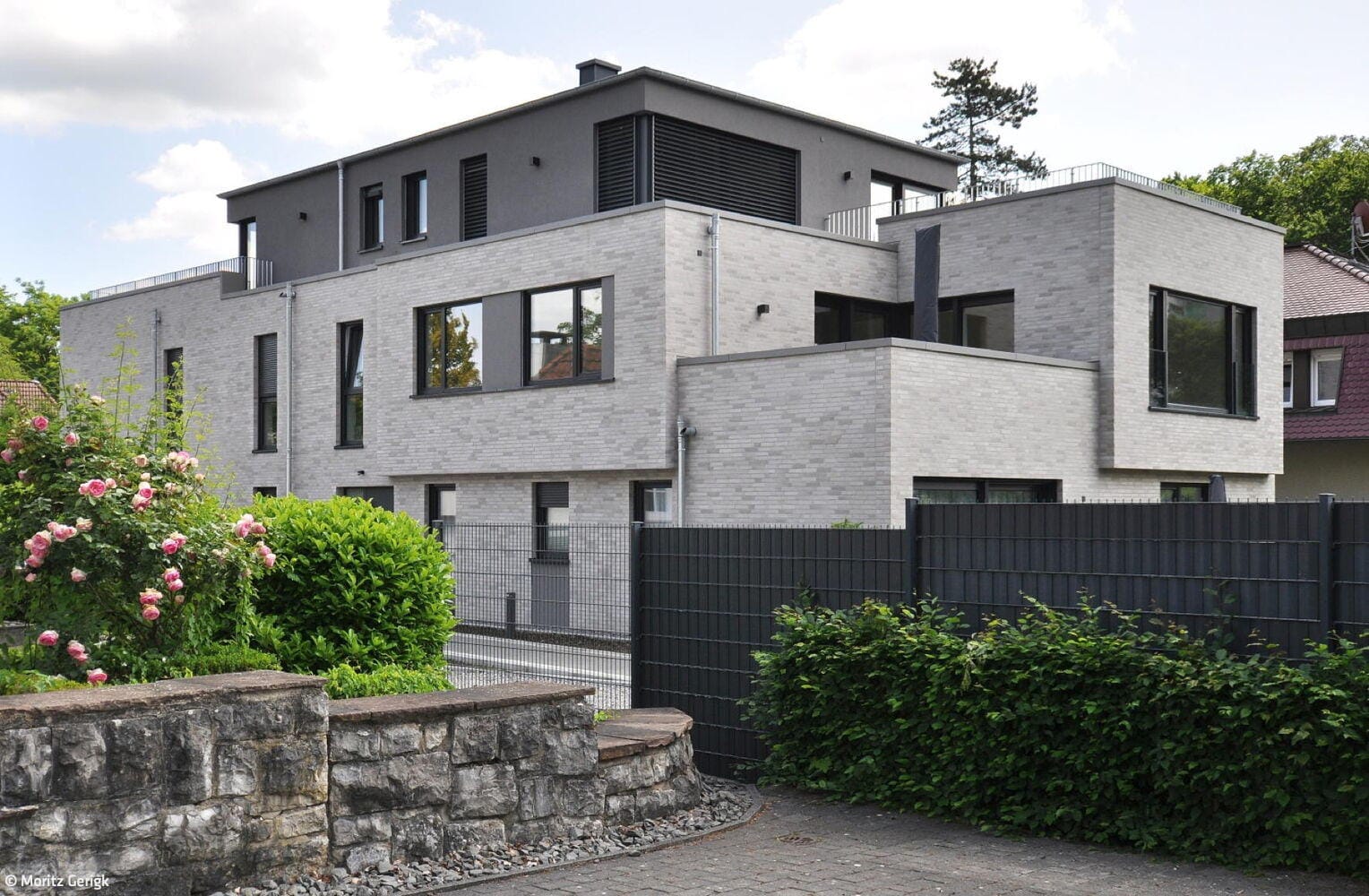
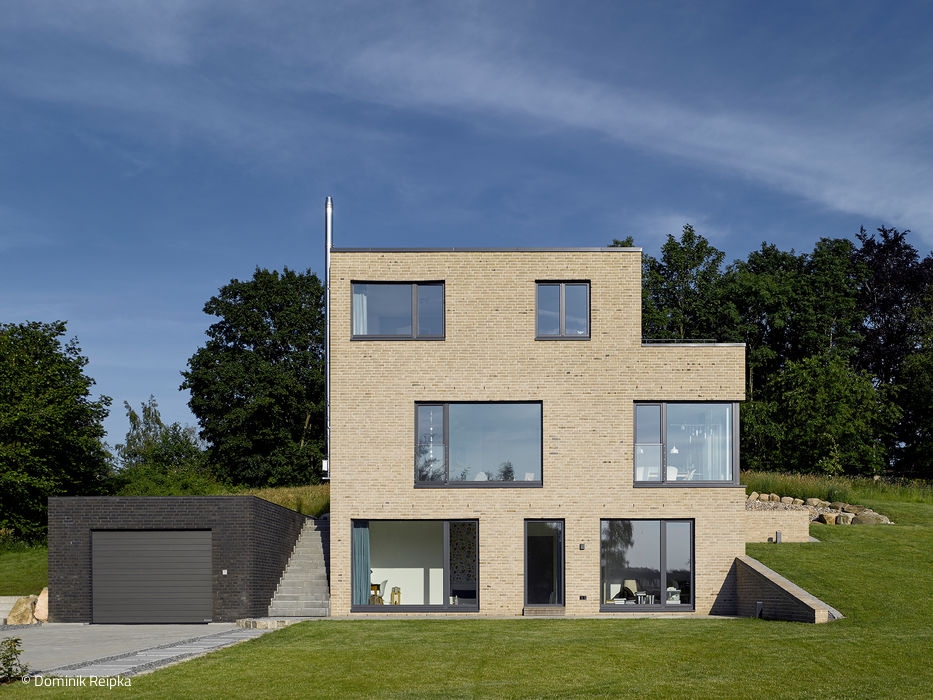
A verdant central spine, the Cascade Park, and a newly formed pond anchor the neighbourhood's identity. Water—in all its forms—is fundamental to Jenfelder Au's design philosophy. The Hamburg Water Cycle®, an innovative wastewater management system developed by Hamburg Wasser, premiered here at an unprecedented scale. Black water, grey water, and rainwater are collected and processed separately. Every household features vacuum toilets, channelling black water to a biogas facility that supplies the entire neighbourhood with climate-neutral heating and power. Grey water is cleaned and released into local waterways, while rainwater infiltrates or evaporates on-site rather than entering the sewer system. The architectural team underwent a name change in early 2024, transitioning from wwa Architekten to Planebene A Architektur. The building envelope encompasses seven townhouses and four apartments, with the street-facing elevation animated by balconies, loggias, roof terraces, and rhythmic setbacks in the facade. This visual dynamism extends throughout the apartment block, creating a streetscape that feels both coherent and varied. Three brick slip variations rotate across the buildings, ensuring each structure maintains its own distinct character while reinforcing residents' sense of belonging to their particular home.
The garden-facing side adopts a more understated vocabulary: a white rendered façade typical of Hamburg's traditional residential character, punctuated by brick-clad sections for visual interest. Darker render and slightly recessed clinker surfaces articulate the entrance zones and establish a unified base, creating a cohesive expression on all elevations. Window frames and metal detailing throughout are finished in a grey tone that complements the varied brick tones. The townhouse floor plans prioritize family living: despite their compact footprints, spaces generously open toward private gardens, while ingeniously positioned niches accommodate essentials—kitchen, bathroom—around the central entrance.
Photos:
Jürgen Schmidt
(Published in CUBE Hamburg 02|24)
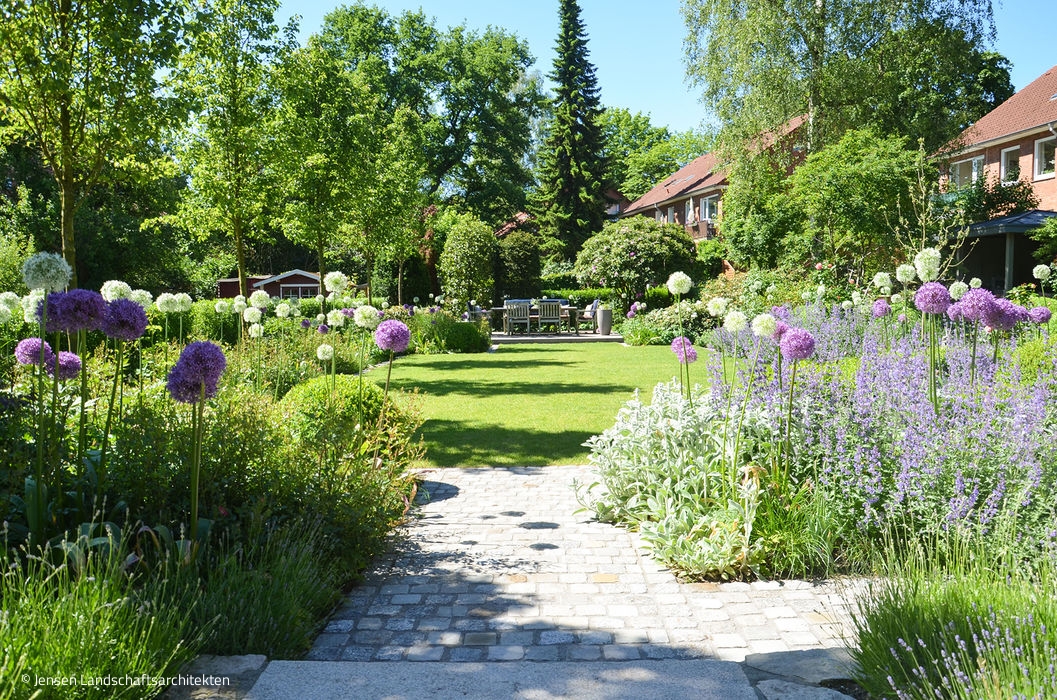
One Plus One Equals One Plus
The older garden retained geometrically composed classical curves and a tea pavilion opening on two sides with a forecourt...
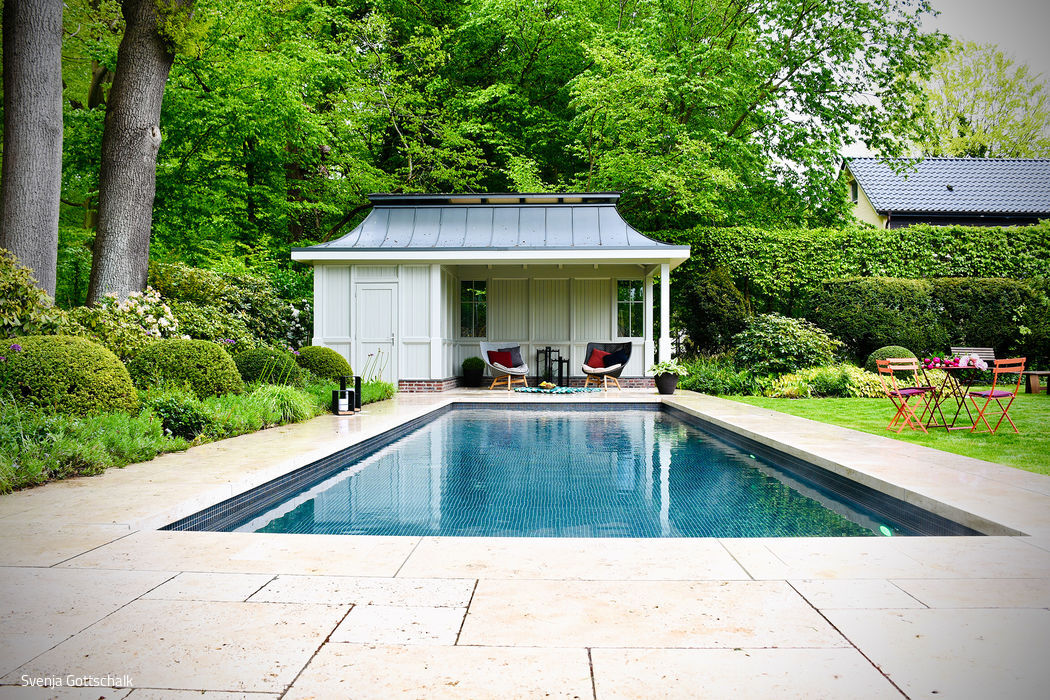
Historic Bathing Pleasure
A pool house in a heritage-protected garden that proves to be a true masterpiece.
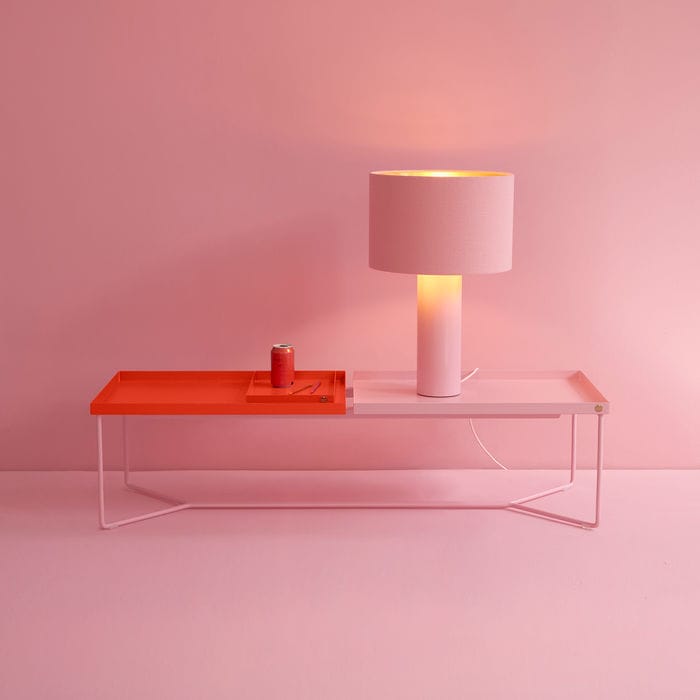
Color and Form
The Victor Foxtrot collection is obsessive attention to detail made tangible.
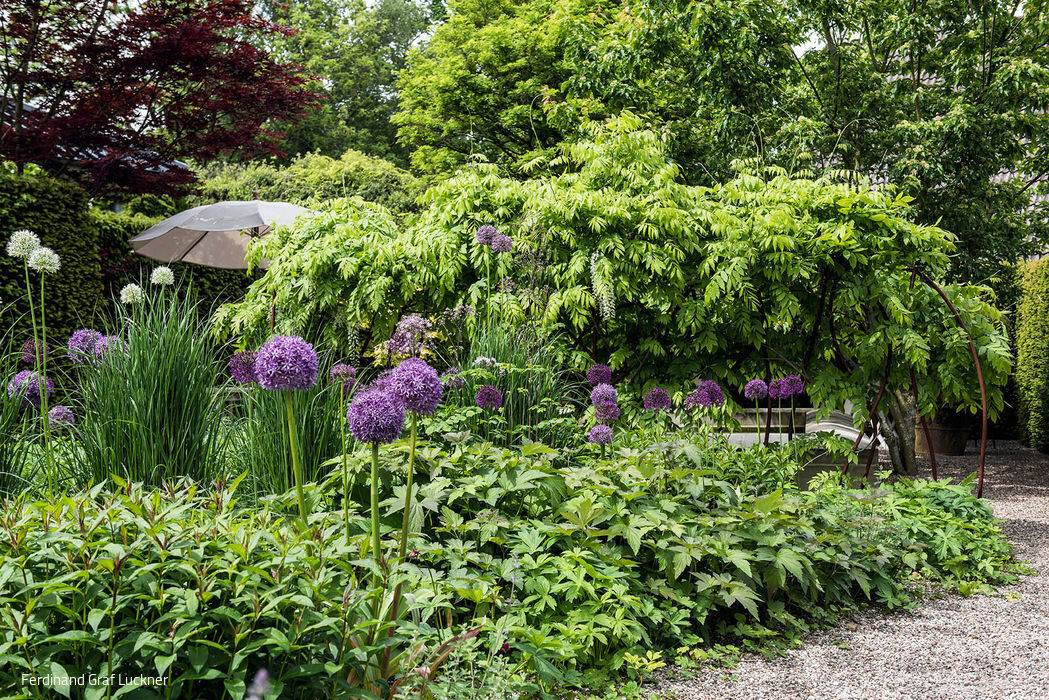
French Elegance
Stone, water, and plant—a trinity that forms the garden's backbone.