


Past and Future
With courage and confidence, something extraordinary was created here
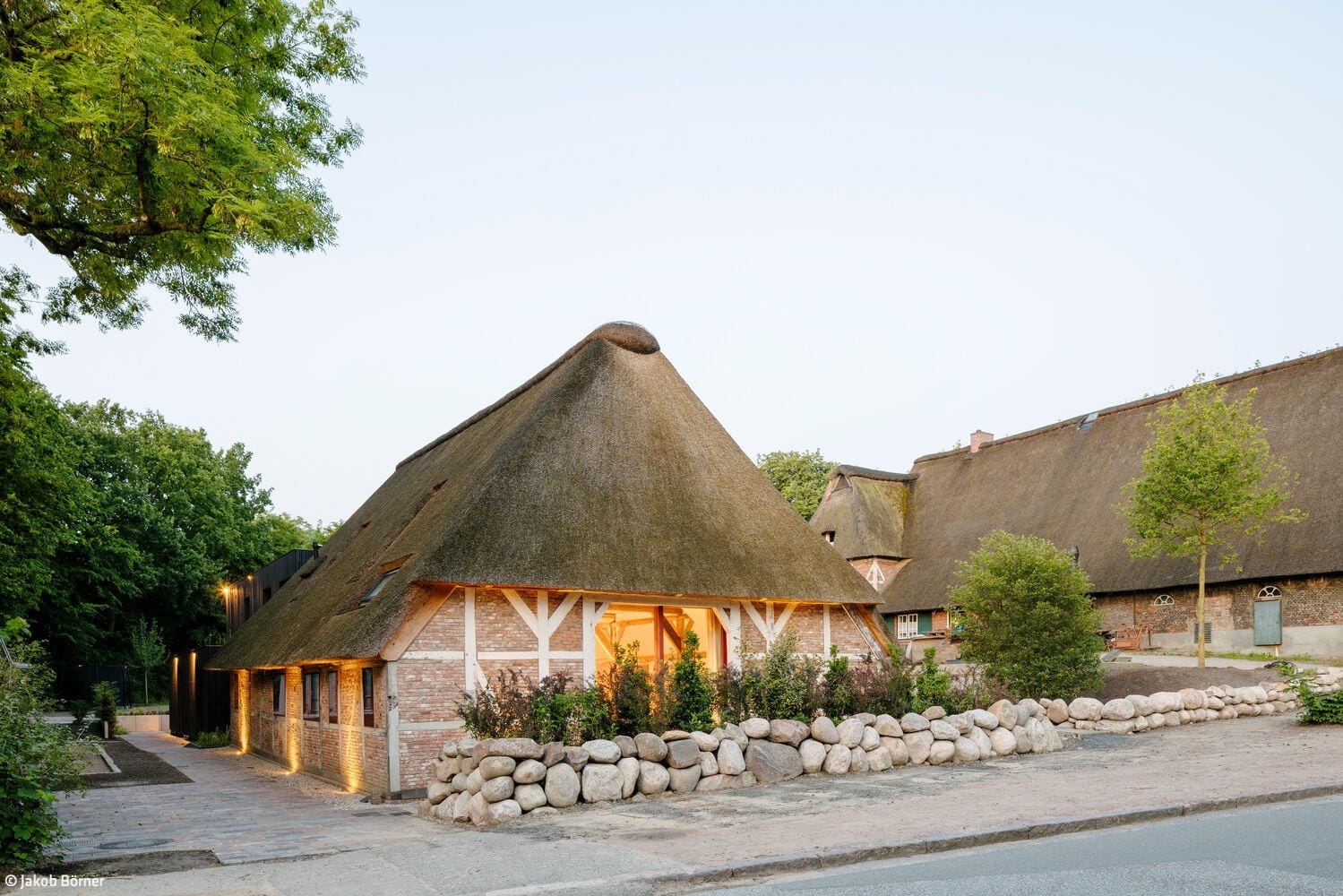
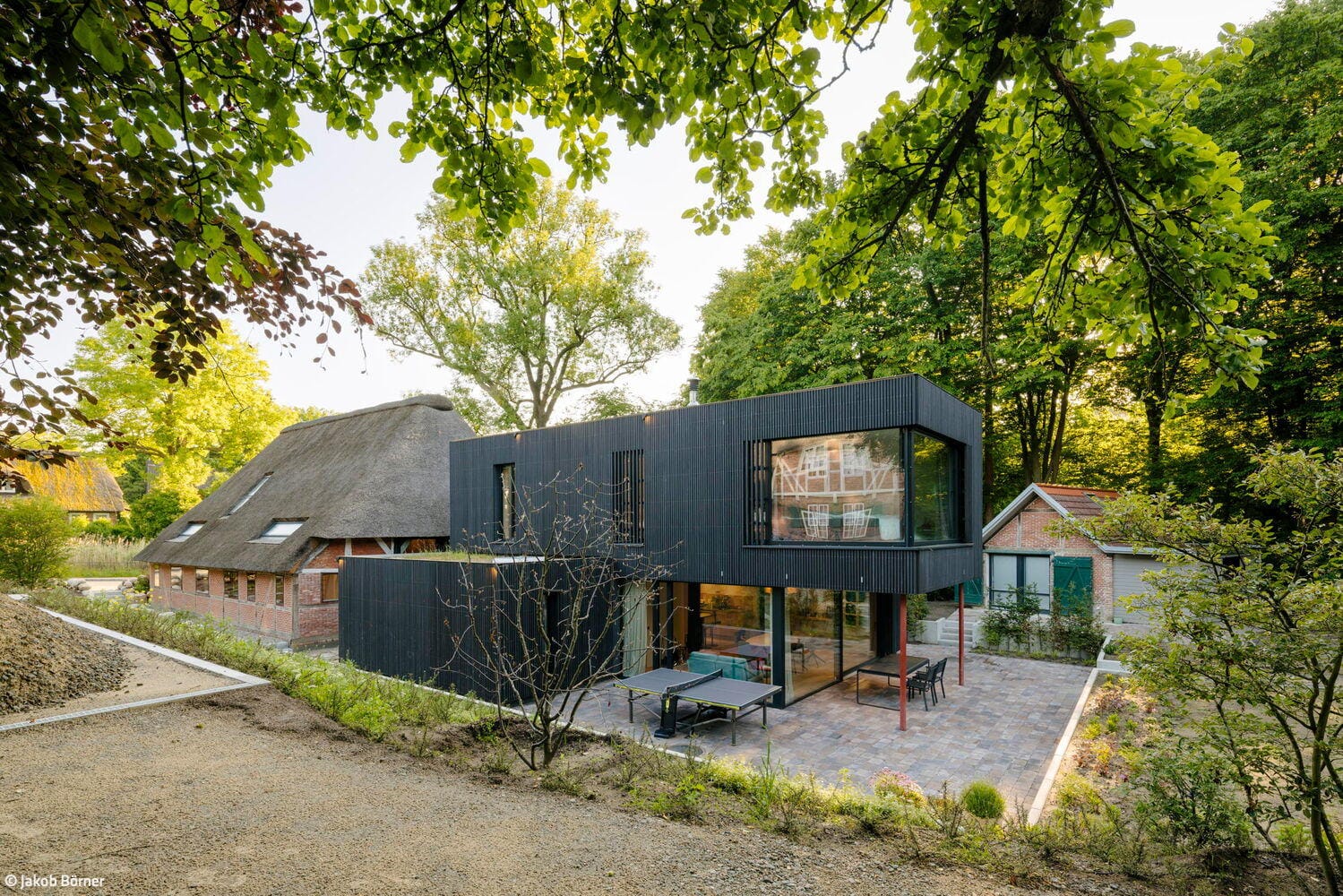



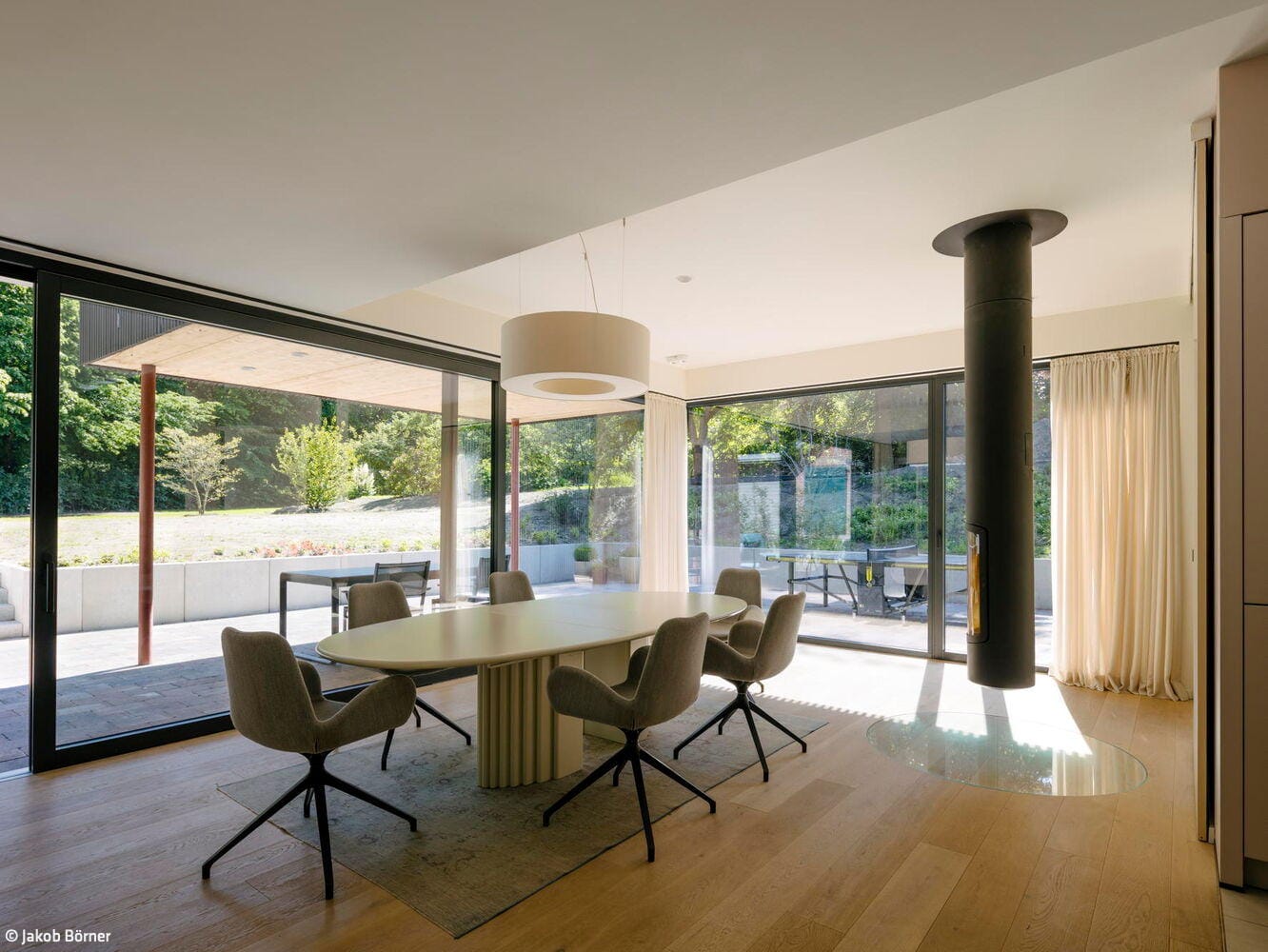
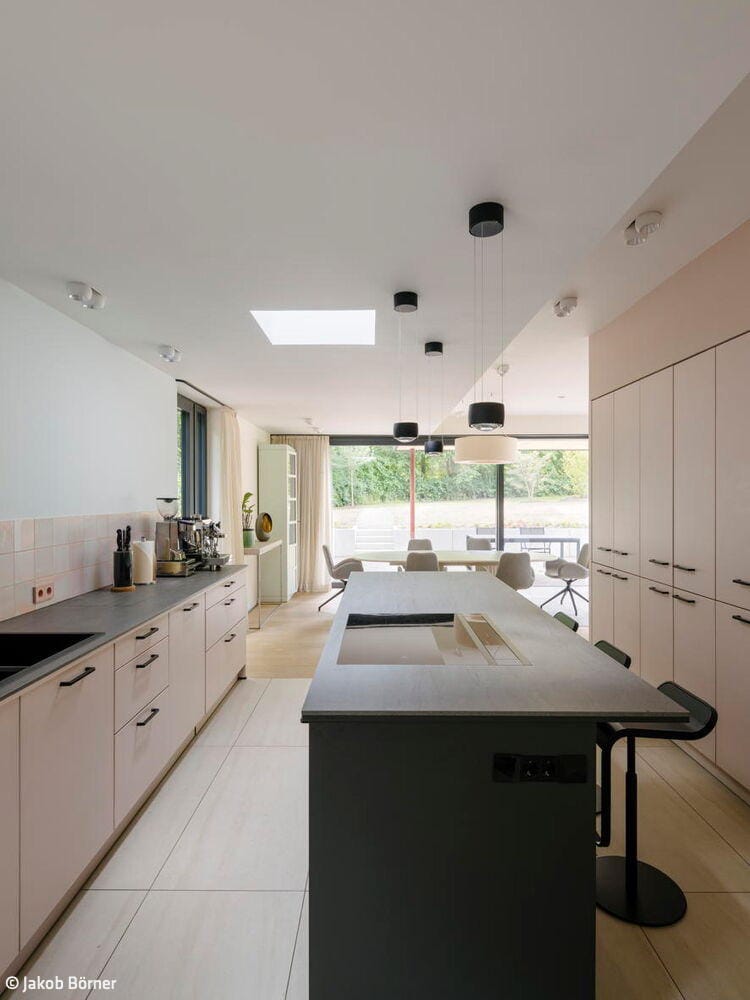
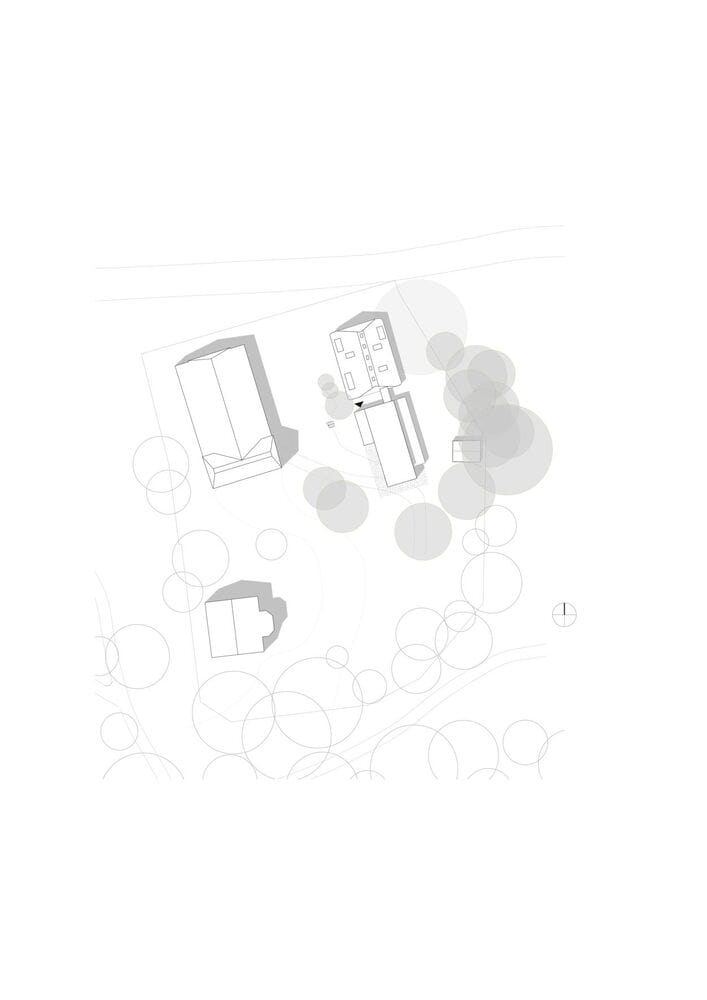


Directly adjacent to Jenisch Park lies a property of approximately 5,000 m², held in family ownership for eight generations. Historic maps show it marked as a homestead alongside Baron Caspar Voght's model estate, the "ornamented farm." Since 1785, Voght combined agricultural use with social reform ideals and uniquely designed parklands in the Elbe suburbs—landscapes that remain among Europe's most beautiful and expansive today. Three heritage-protected buildings stand on this historic homestead site, two of which are thatched timber-frame houses. The residential-agricultural building was constructed in 1814, and the so-called retirement cottage in 1898; both continue to be inhabited by family members. The barn, built before 1810, had fallen into disrepair and disuse. As the growing family wished to continue living together across generations on this historic property, the idea emerged to revitalize and expand the barn. On recommendation, the architecture firm acollage was commissioned with the project.
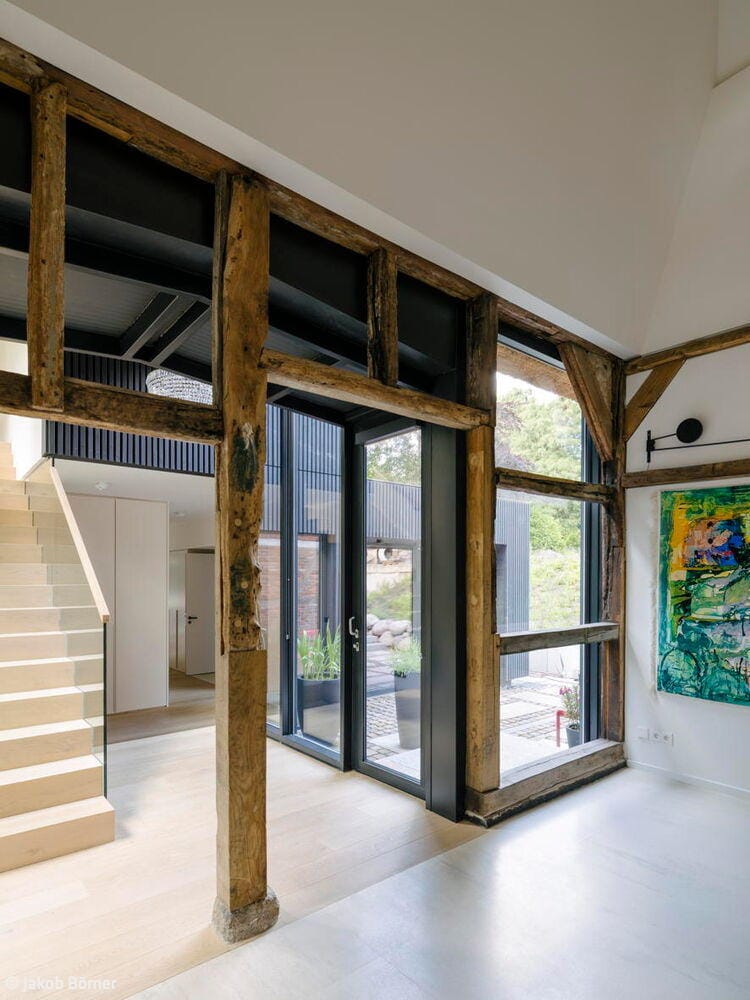
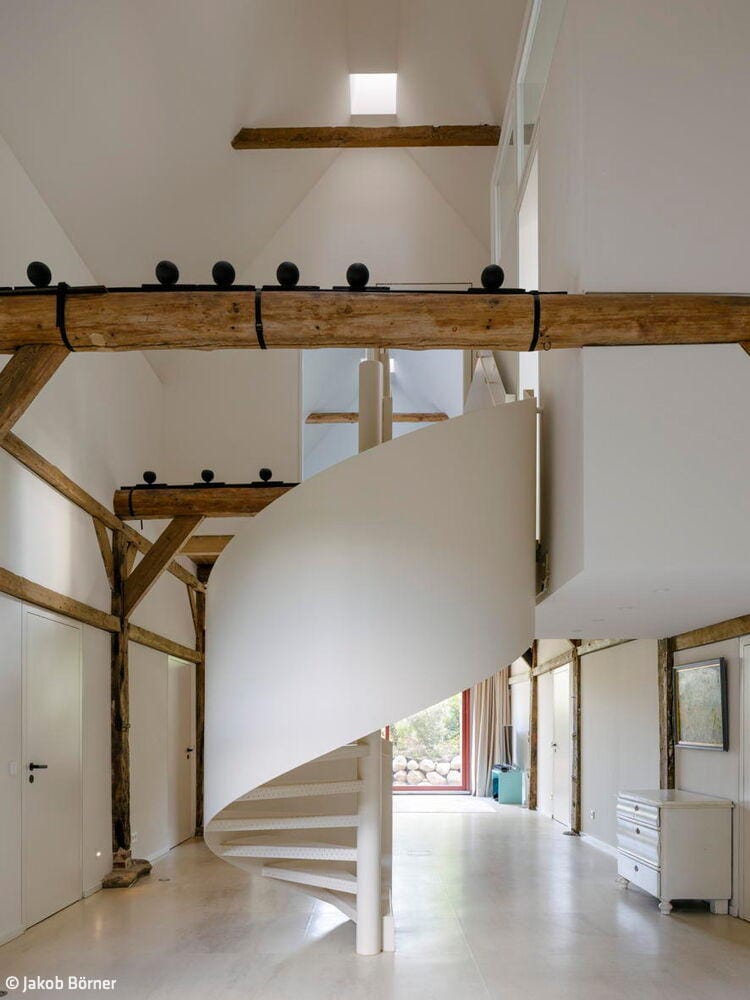
The property is located in a designated rural area, where construction projects are permissible only in exceptional circumstances and solely for agricultural purposes. Through the development of a detailed preservation concept and intensive coordination with the heritage conservation office and the Altona district, an exception—and thus building approval—was secured. The barn, originally built to house livestock and store harvests, determined the three-part floor plan structure of the new building. Separated by a transparent joint, it reads as a profile-true extension of the existing structure, dissolved into cubic forms. Unlike the historic building with its steeply pitched thatched roof and red brick timber framing, the cubic extension presents itself with a completely unadorned, dark façade that conceals rather than reveals the functions within. The barn and its extension provide living space for the five-member family. Both building components are organized so they could function independently as dwellings. From the spacious central threshing floor in the barn, a glazed connecting corridor leads to the new building with open-plan layout. Expansive south-facing glazing creates a direct connection between interior and garden. A particular challenge was providing adequate natural light to the barn, which originally had no windows other than the large three-part barn door. Through daylight simulation and in consultation with the heritage conservation office, new window openings and roof lights were created, ensuring not only sufficient illumination but also dramatic light composition. The property owners and architect Gerald Kappelmann succeeded in carrying this historic site into the future.
Living area: 305 m²
Property share: 1,375 m²
Construction period: 2021–2023
Construction method: Solid construction
Energy concept: Heat pump
Photos:
Jakob Börner
www.jakobboerner.com
(Published in CUBE Hamburg 01|26)
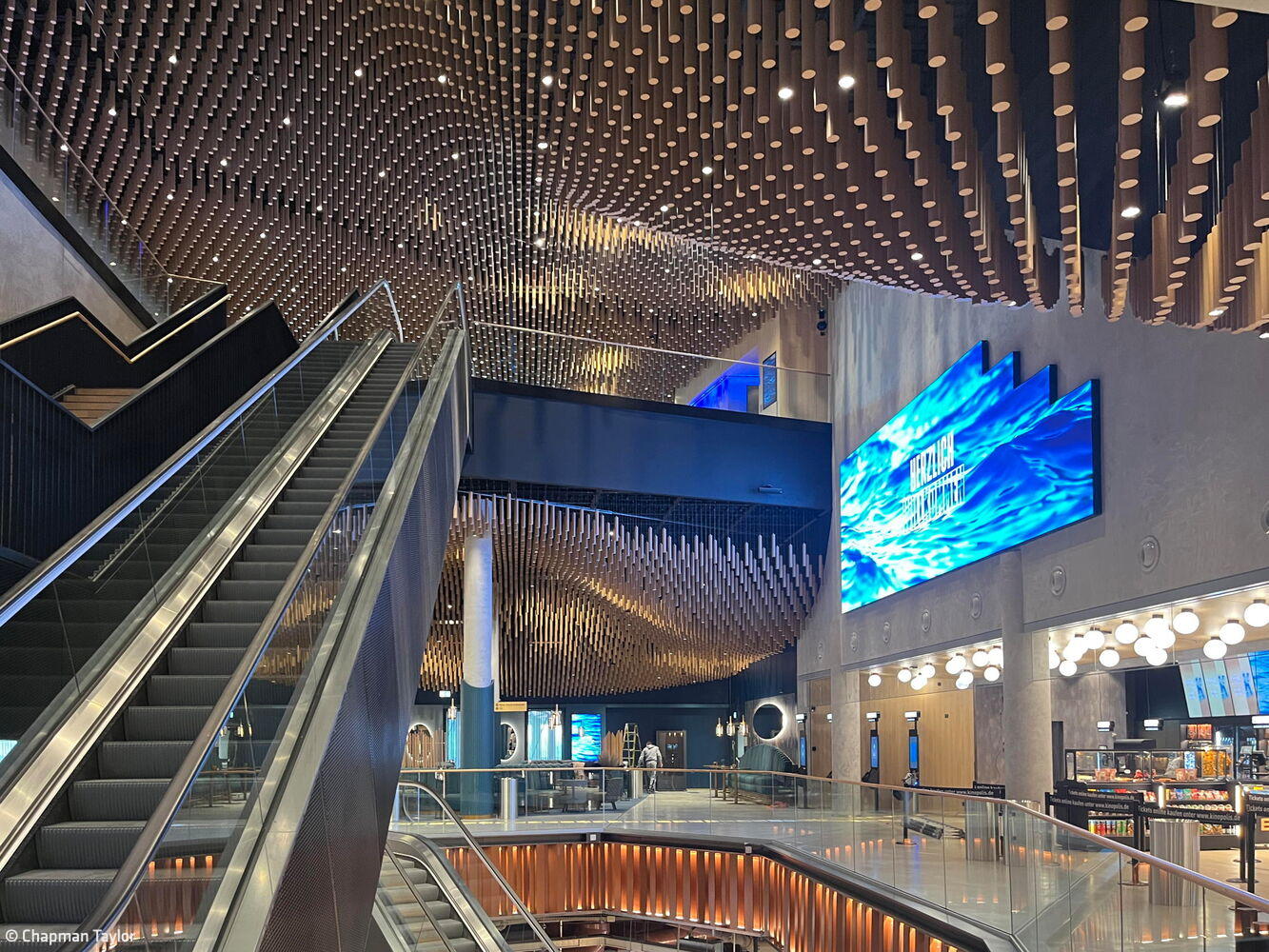
Hamburg's Largest Cinema
Where design, service, and cutting-edge technology converge to captivate cinema enthusiasts
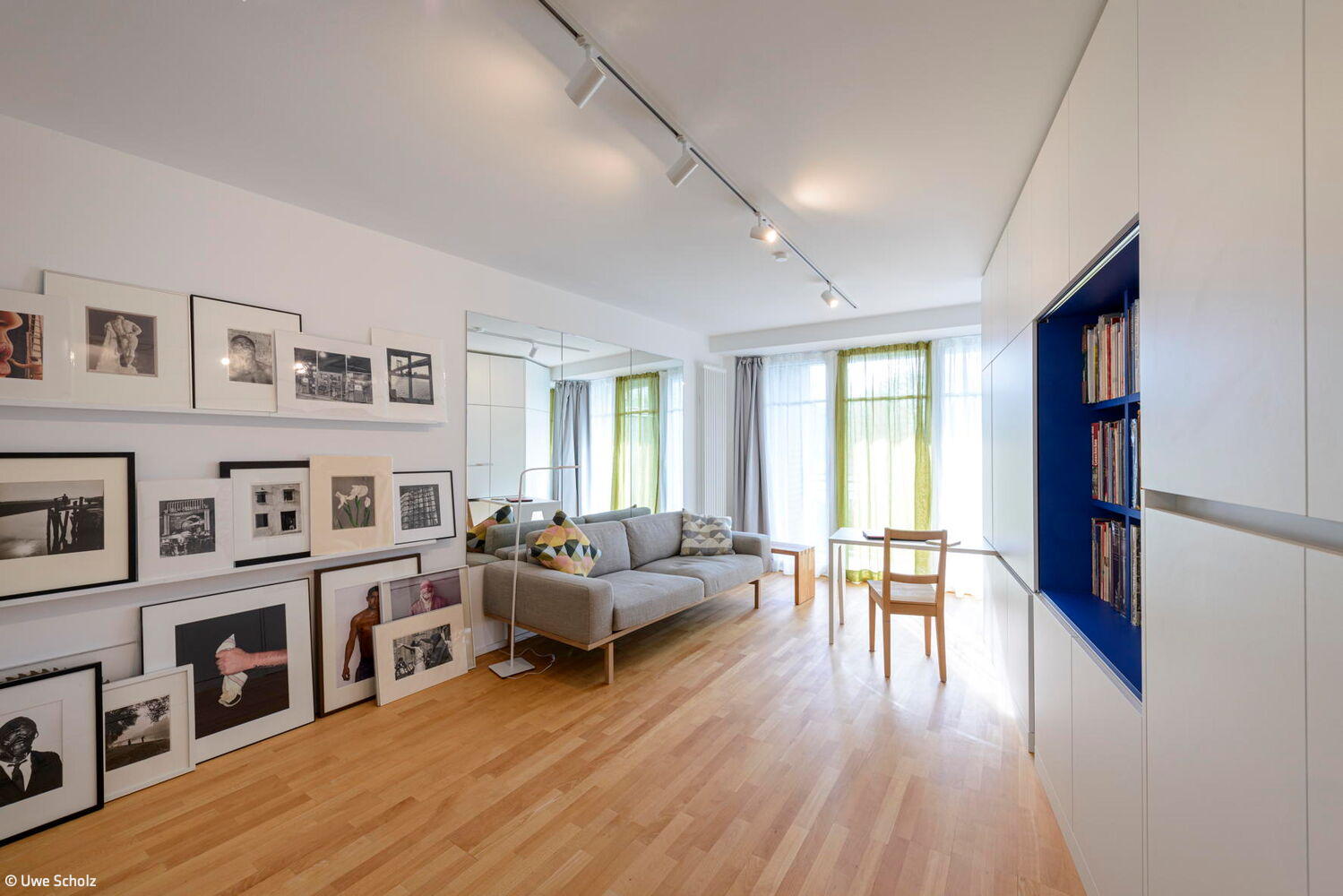
Compact Space Wonder
Small spaces can achieve extraordinary spatial quality.
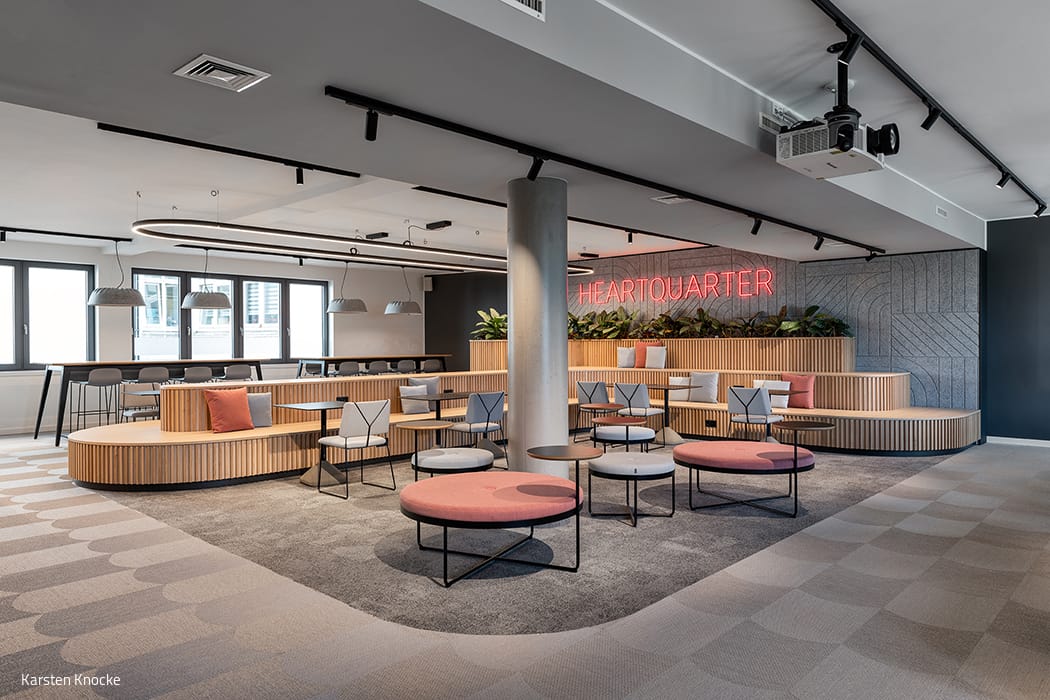
A New Hub
Reimagined spaces for New Work culture: creating an inspiring workplace
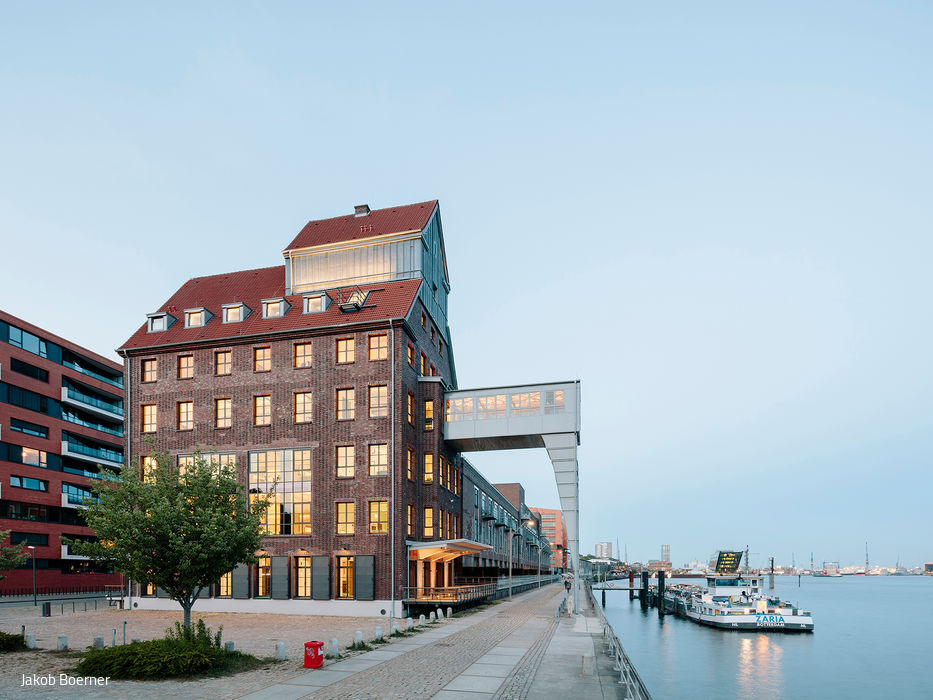
Living Testament to an Era
The Former Granary: A Living Workplace