


Restraint and Openness
A protected historic villa stripped back and thoughtfully reimagined, refined to its essentials
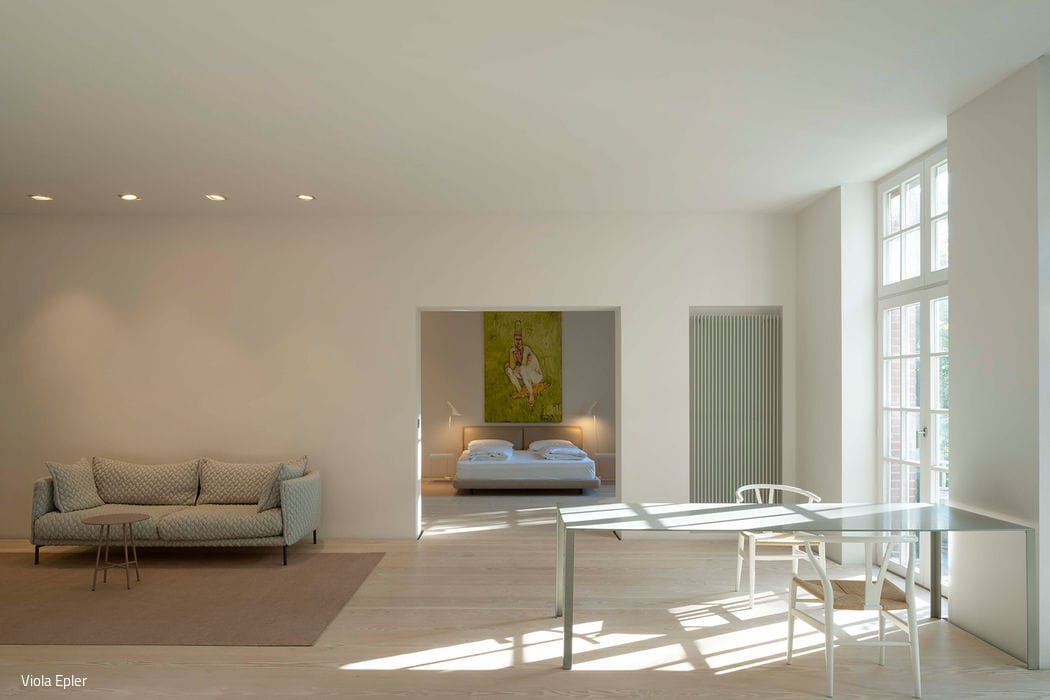

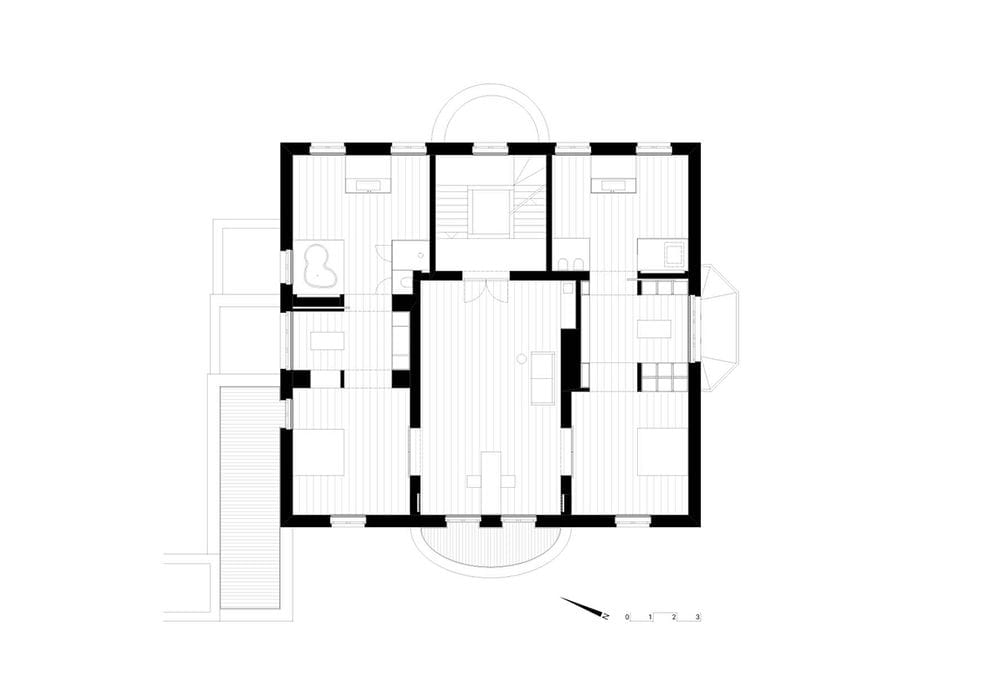
When a café acquaintance first mentioned to Cologne architect Uwe Bernd Friedemann that he was buying a property and planning renovations, his initial response was characteristically modest: "Attic conversion? Plenty of architects do that." But something about the man's composed, philosophical way of discussing life's opportunities caught his attention. What Friedemann didn't realize until an informal site visit was that this wasn't a simple attic project—it was a grand villa requiring complete interior transformation. Once the architect's initial concepts won approval and rapport with the client was instant, a three-and-a-half-year collaboration of unusual depth began in 2001.
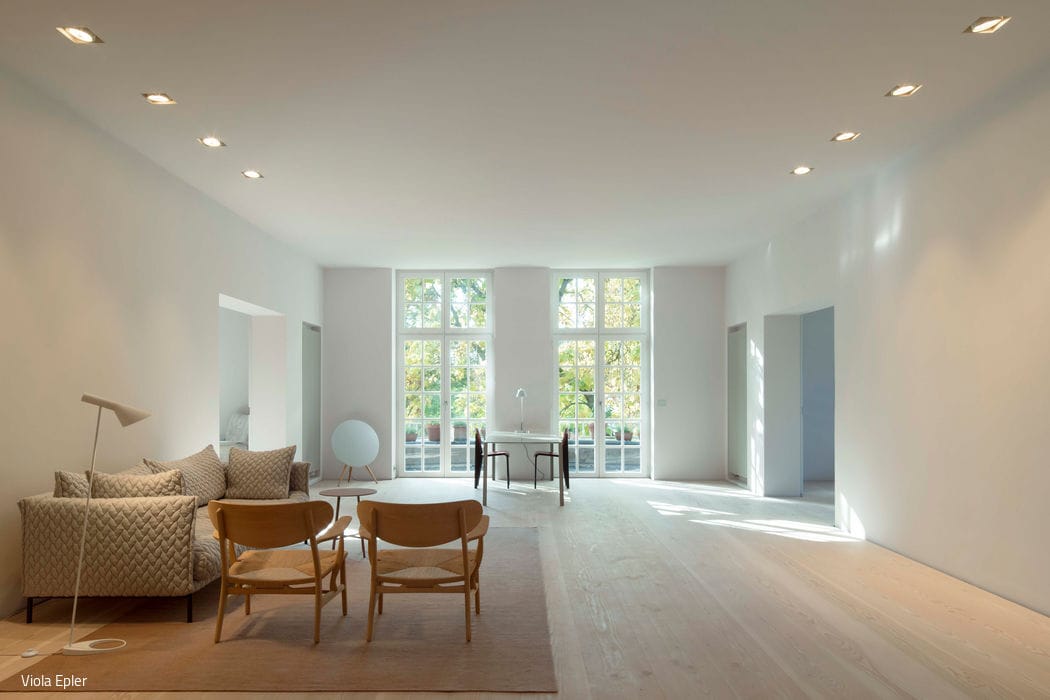
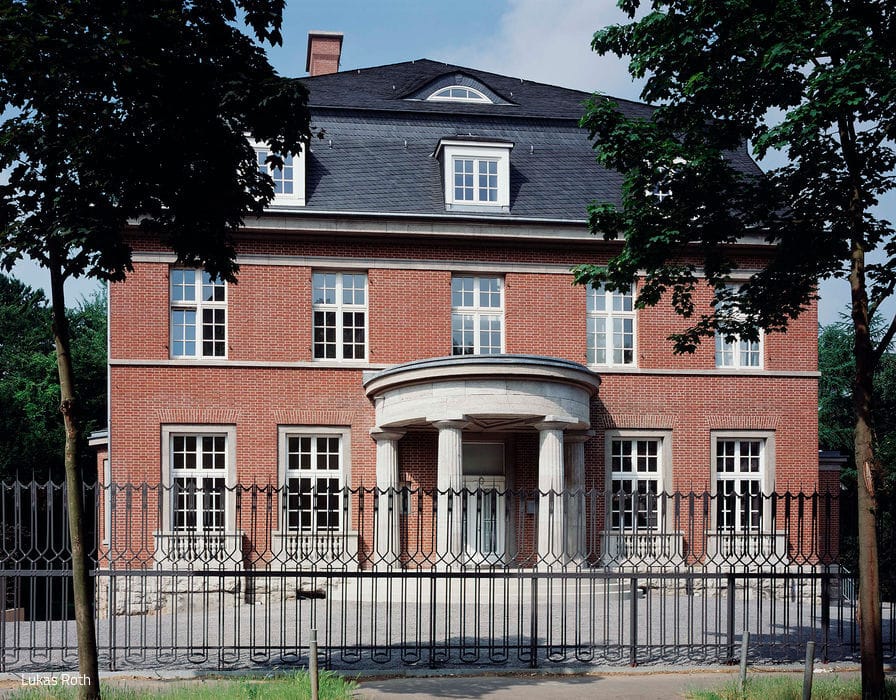
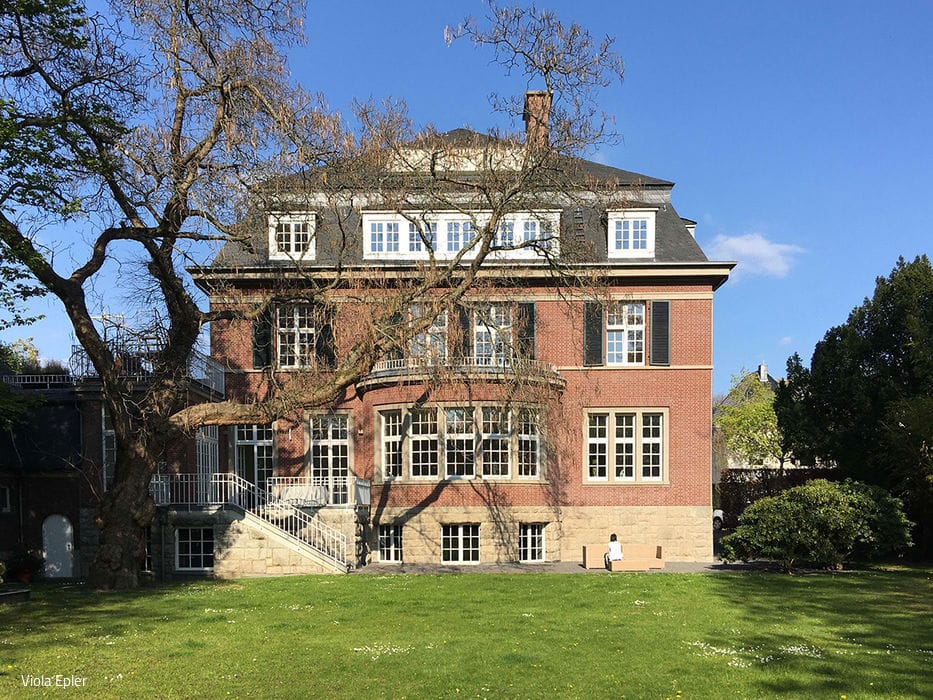
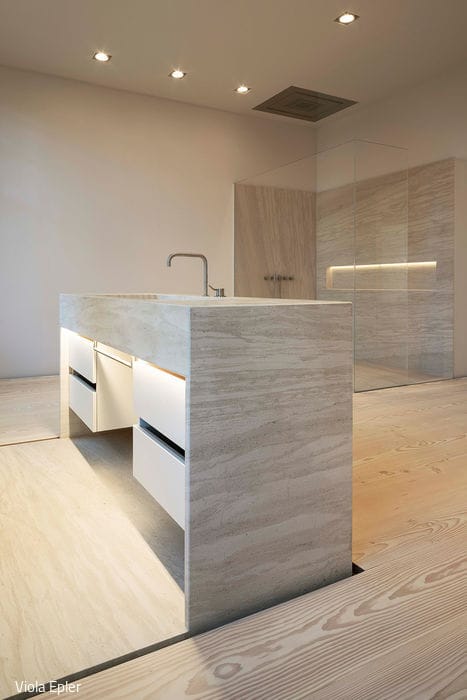
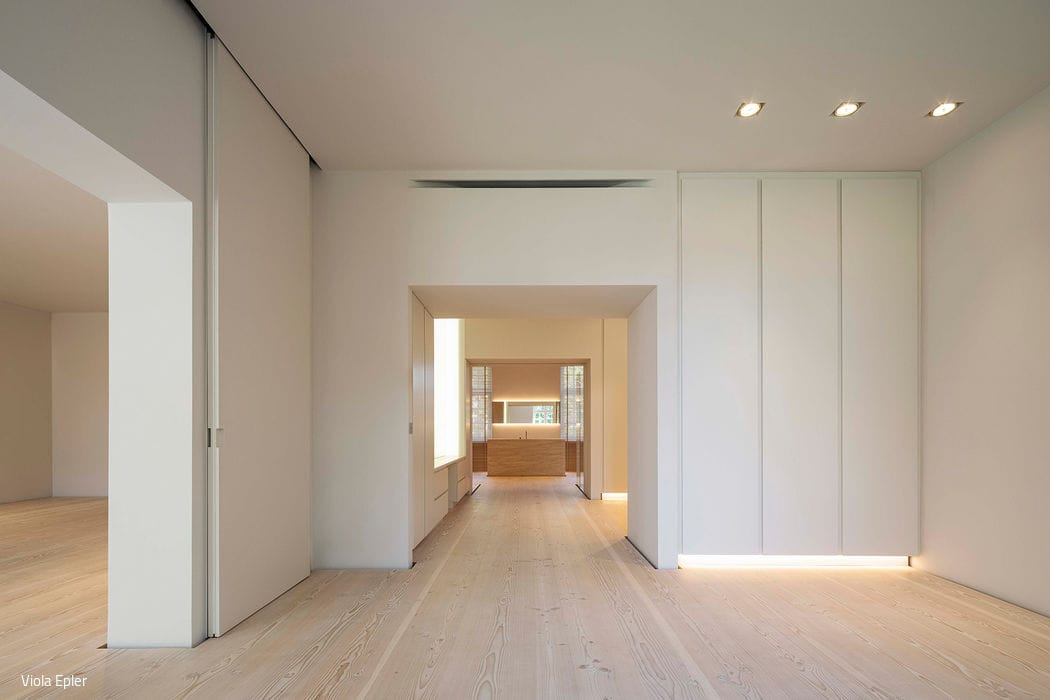
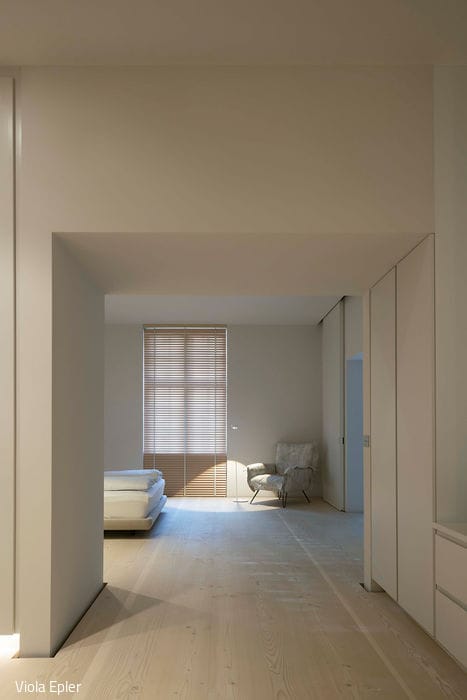
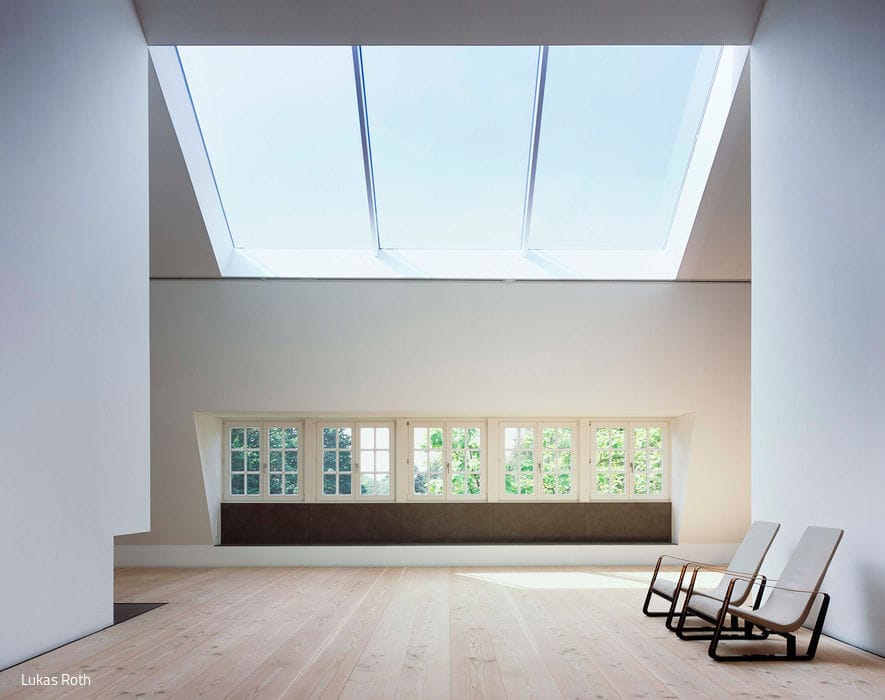
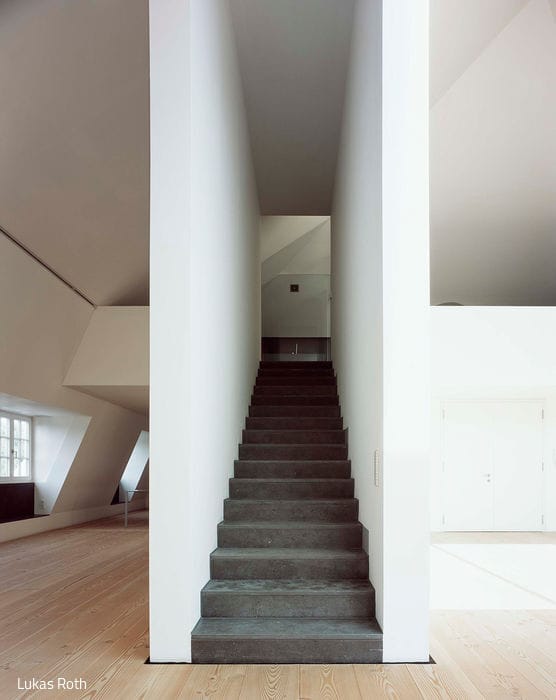
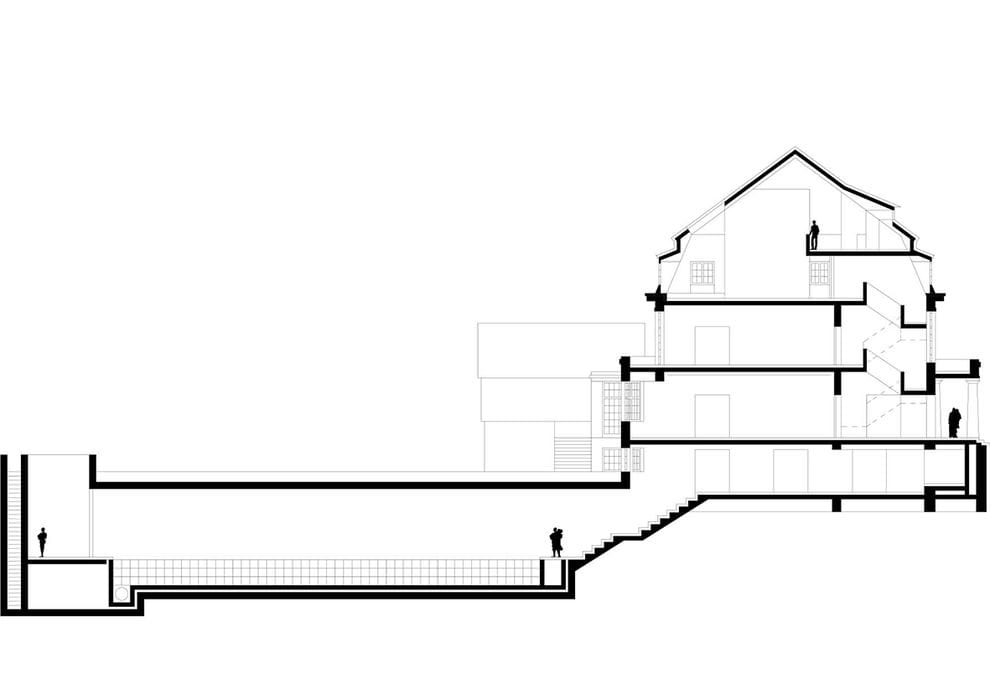
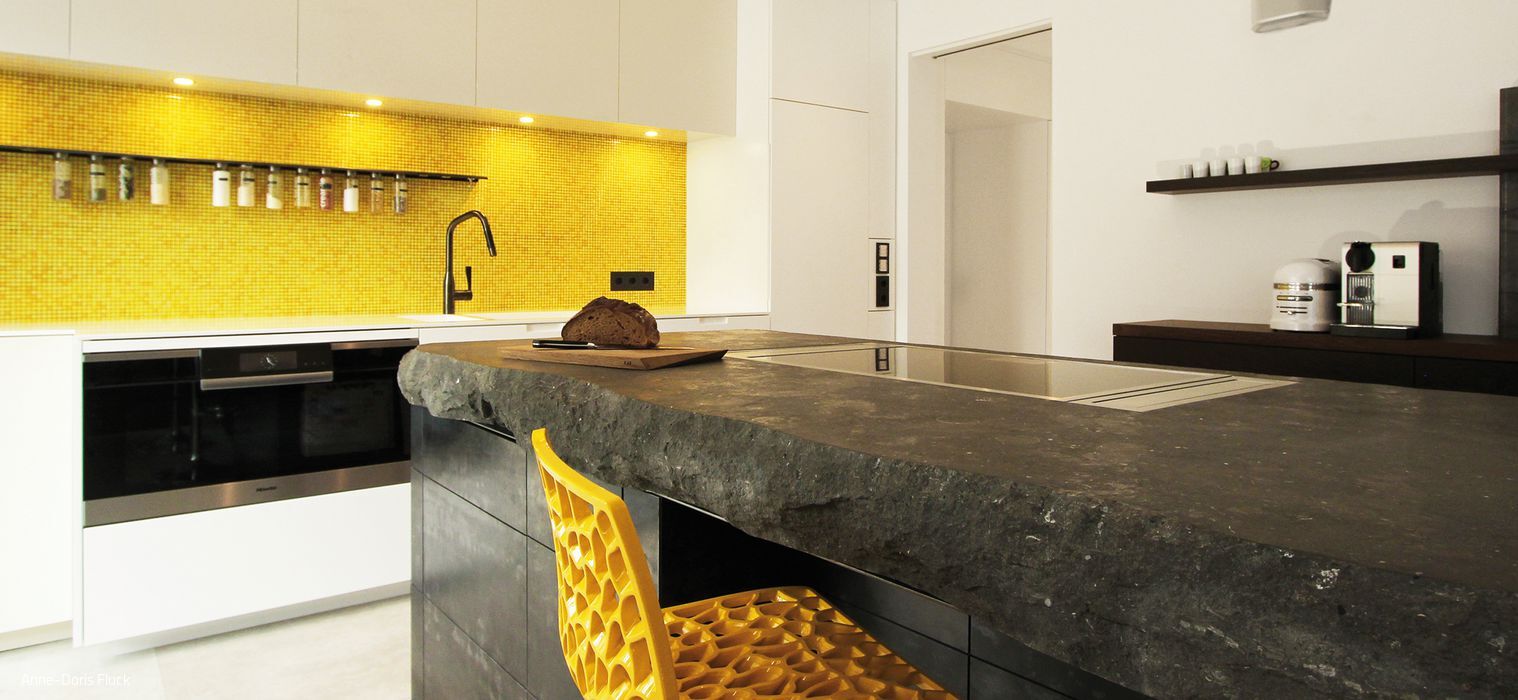
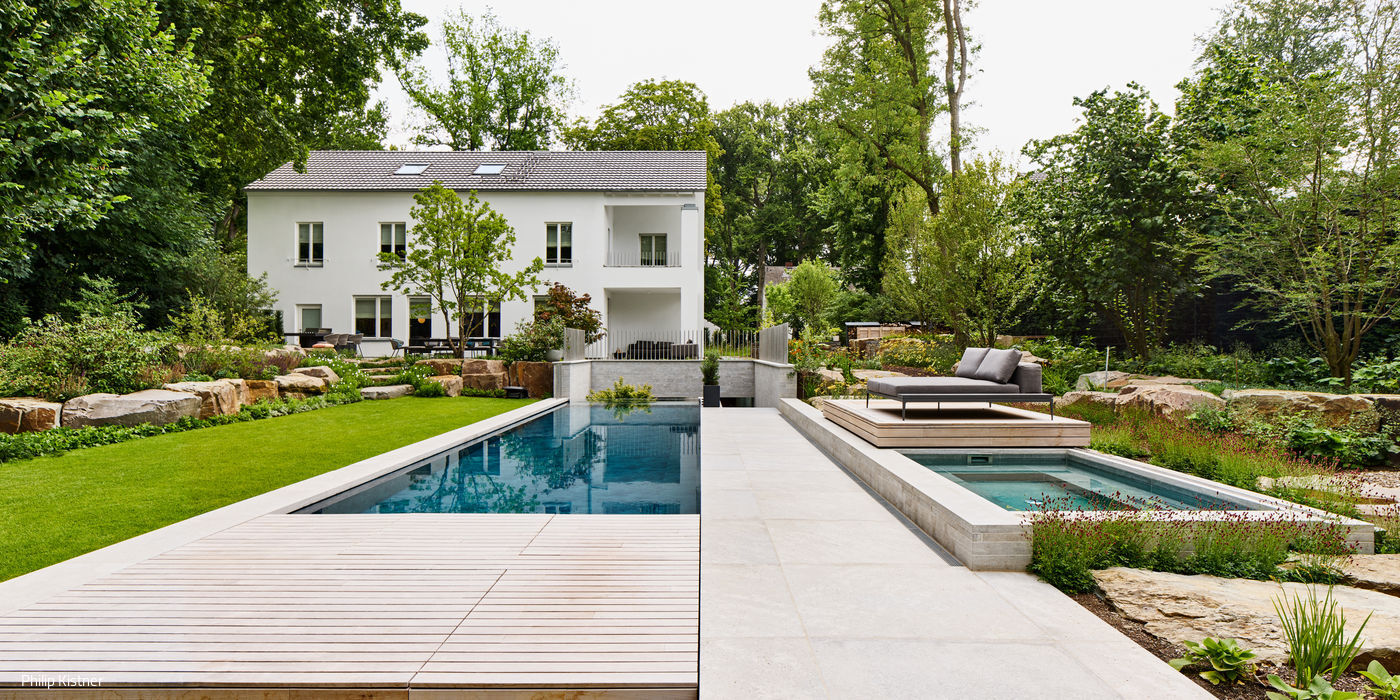
The 1913 mansion, situated within an exclusive villa enclave, retained its historic exterior—heritage regulations left no room for debate. Monument protection even mandated restoration of the original mansard roof, which had been replaced with a hipped roof after World War II. Yet the city conservator permitted one significant concession: a generous roof opening facing the garden to flood the interior with light. Since the existing rooms held no historical value worth preserving, the structure was gutted down to the load-bearing walls. To fulfill the client's vision of contemporary, highly functional living spaces, Friedemann developed a concept rooted in disciplined reduction and discovery. The result: a strikingly minimal aesthetic spanning 1,400 m² that stands in bold dialogue with the historic envelope. The ground floor unifies kitchen, lounge, bar, and library into one flowing social space for gatherings with friends, family, and colleagues. Materials speak through restraint: white-rendered walls, dark grey natural stone, and blonde Douglas fir floorboards that run the full length of rooms, separated from walls by a subtle continuous joint. Every detail—from kitchen and bathroom fixtures to the high-tech Corian bar—embodies the architect's philosophy. A new sculptural staircase ascends through the house, culminating in a 300 m² top-floor loft with no interior divisions.
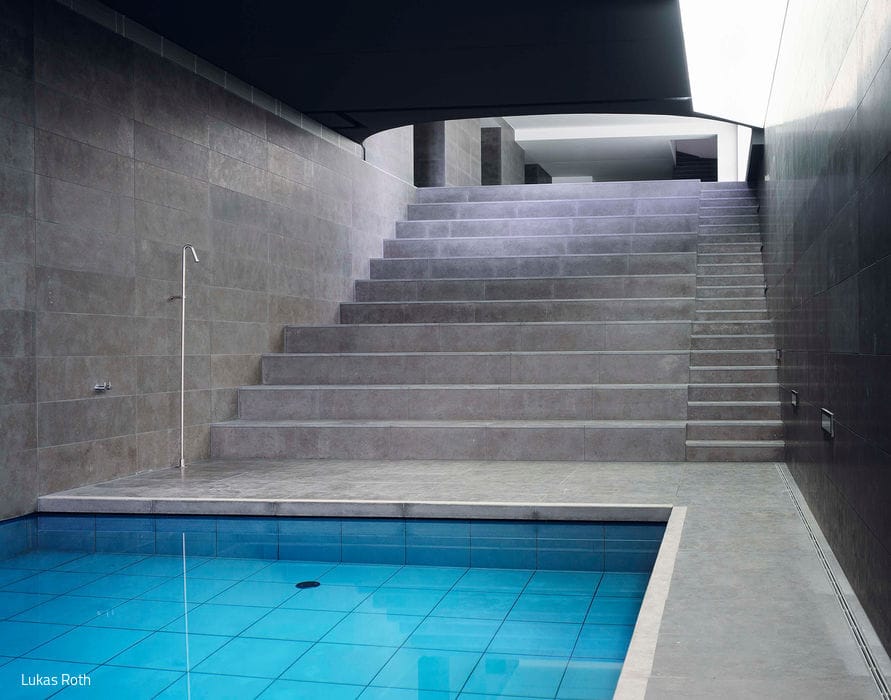
Here, the renovation's architectural logic crystallizes: essential reduction paired with courageous openness. Beneath the ground floor lies a wellness zone featuring a 25-metre swimming lane that stretches underground across the garden to the property line. At its far end, a monumental glass sliding door glides open at the push of a button.
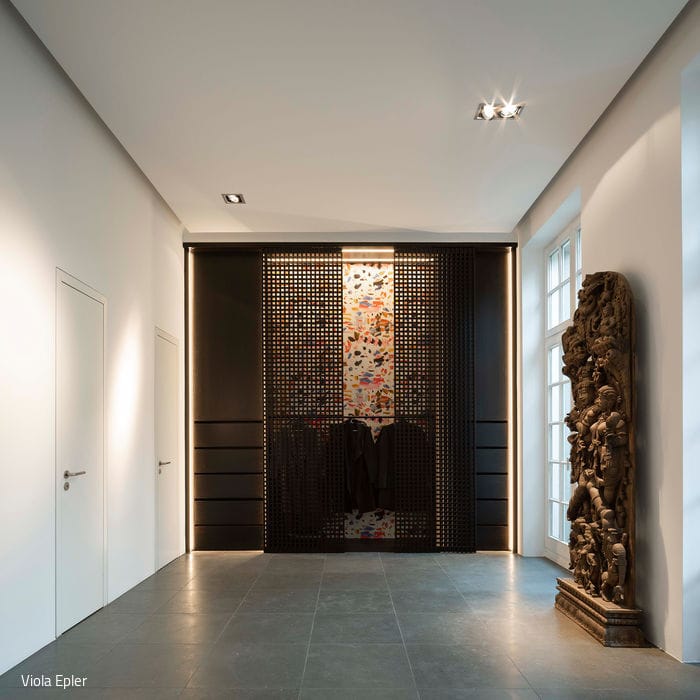
Nearly two decades later, the architect and client returned to extend their collaboration. In early 2020, the mezzanine level—left unfinished during the original work—was completely reconceived. The client and his family again sought a unified design approach, with several concepts developed for consideration. Drawing on two decades of experience, Friedemann refined the timeless minimalism further and sharpened the focus on functionality. Walls rendered in subtle grey coordinate precisely with matte-lacquered built-ins and doors. The room-length Douglas fir floorboards and warm beige-grey natural stone elements in bathrooms and kitchenette integrate quietly, almost invisibly. The greatest luxury here is space—reserved for what matters most: the people who inhabit it.
Photography Credits:
Viola Epler
www.violaepler.de
Lukas Roth
www.lukas-roth.de
(Featured in CUBE Cologne Bonn 02|22)
Renovation as Remembrance
Expanding a family home with respectful modernization that honors its heritage
Spectacularly Staged
A gathering place for motorsport enthusiasts and seekers of tranquility alike
Authentic and Grounded in Nature
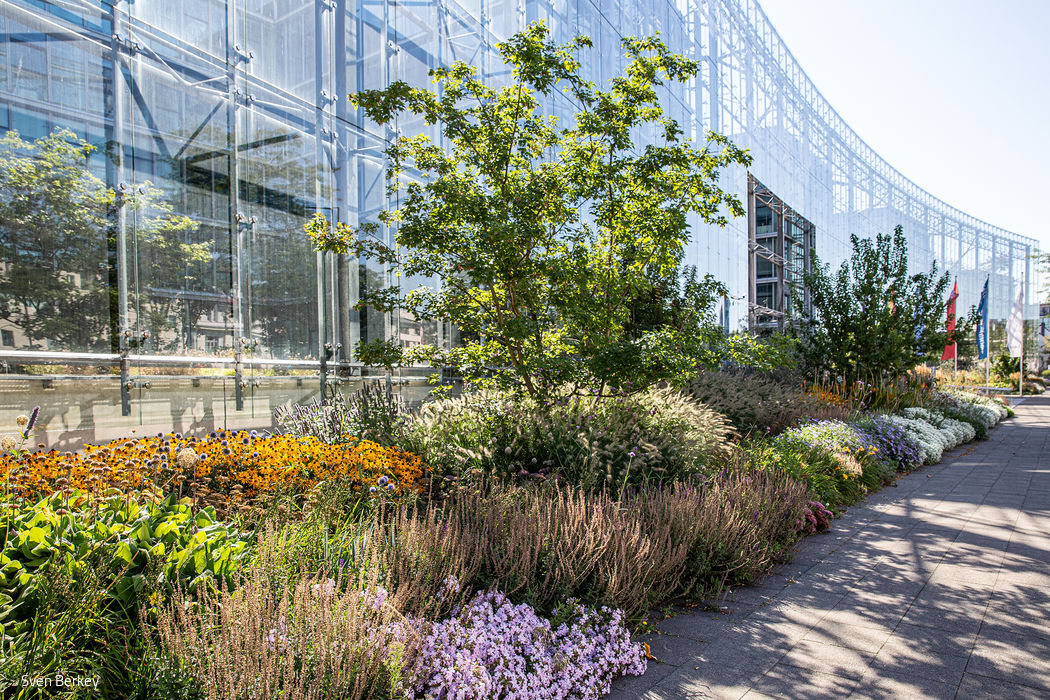
The Neven-DuMont House in Niehl greets its visitors with a blooming hillside landscape.
Flexibly Rentable
Home renovation as dialogue between past and present