


Renewed
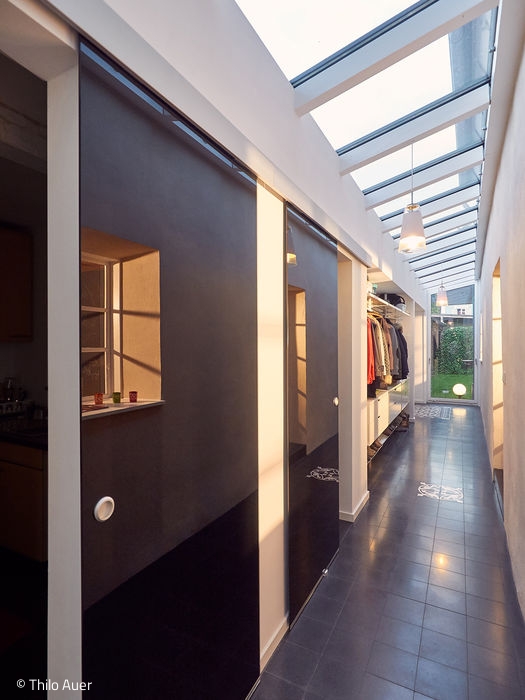
A separate office and guest annex, a covered walkway, and an extension housing the entrance and service areas create a secluded atrium courtyard with garden—framed by the historic cemetery wall.
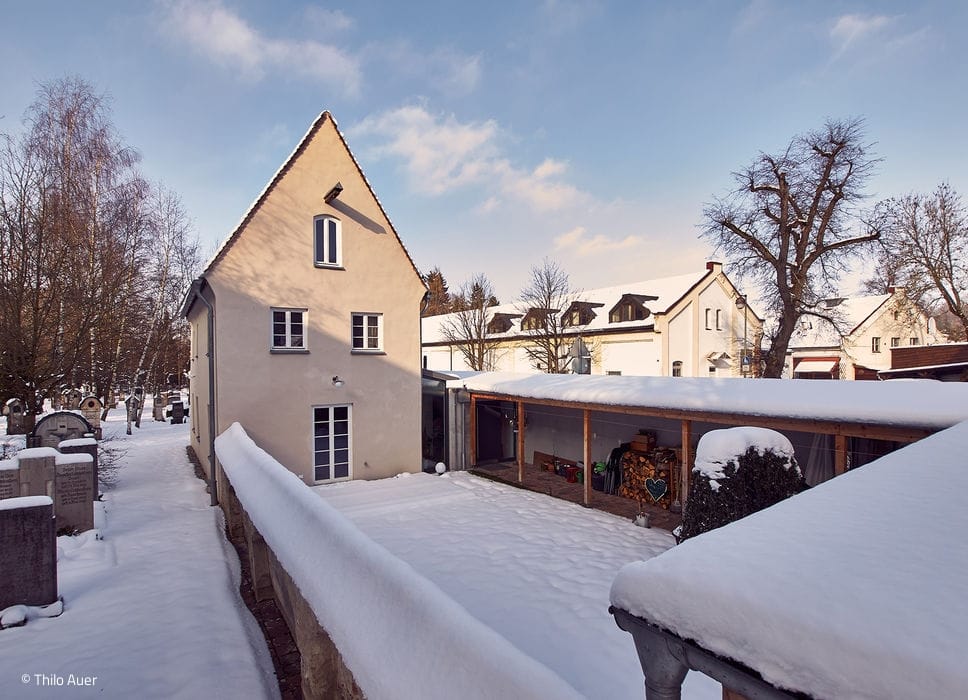
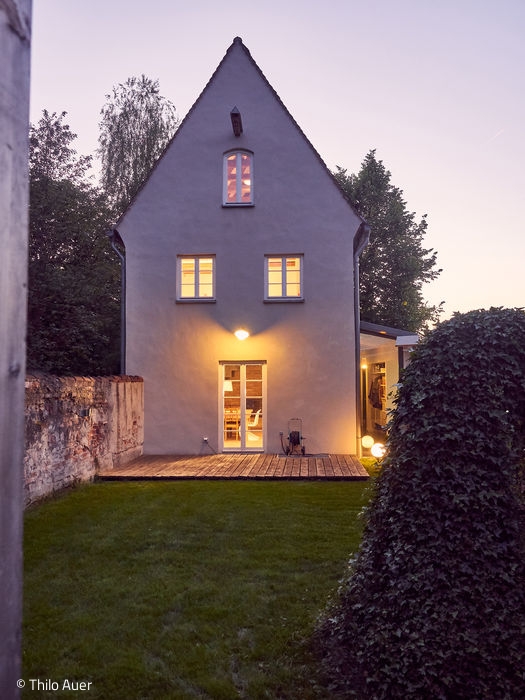
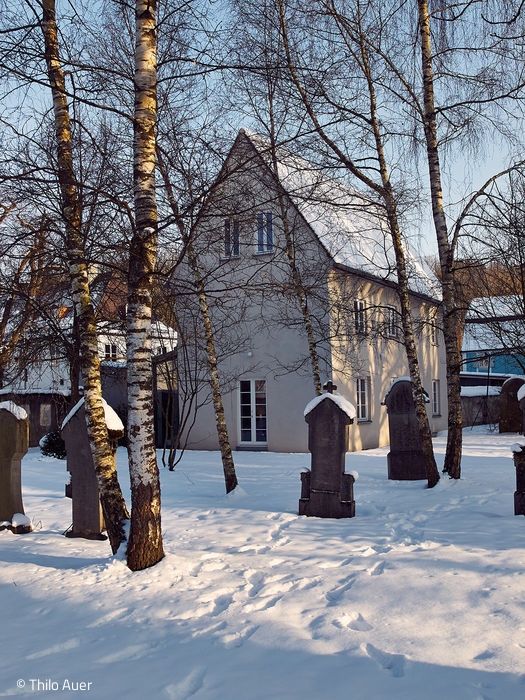
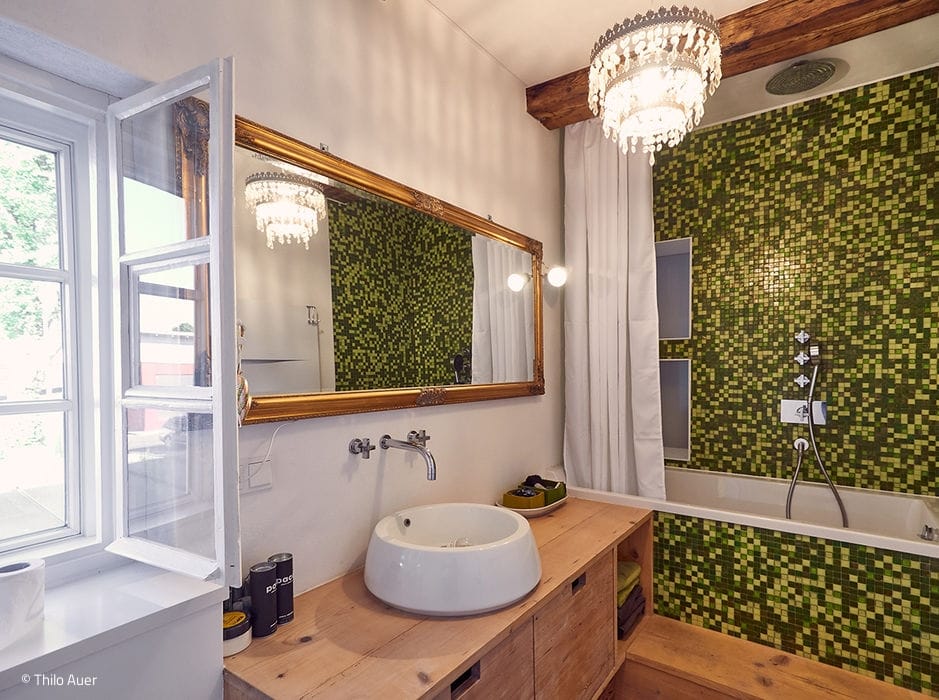
"Four walls in ruins"—that was the craftsmen's blunt assessment before restoration began on this 1604 listed sacristan's house at the Trinity Cemetery in Landsberg/Lech. The exterior walls and building as a whole were indeed in deplorable condition. Here, architect and client were one and the same: Martin Steger fulfilled a lifelong dream by renovating and reimagining the sacristan's house with his partner. After four years of construction, a forward-thinking, energy-efficient family home emerged—built to modern standards and featuring extensive exposed concrete throughout.
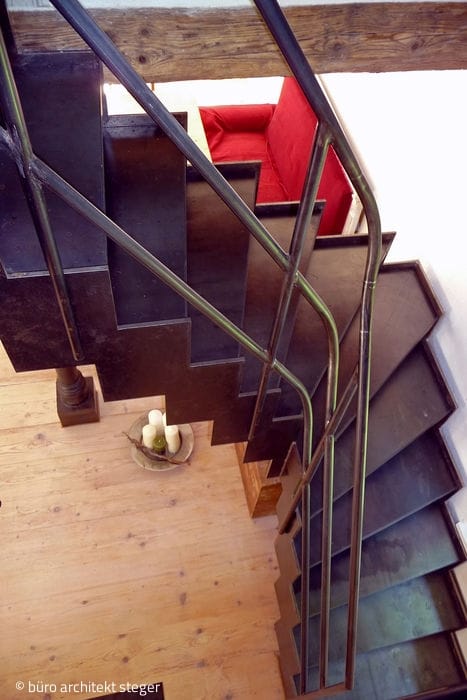
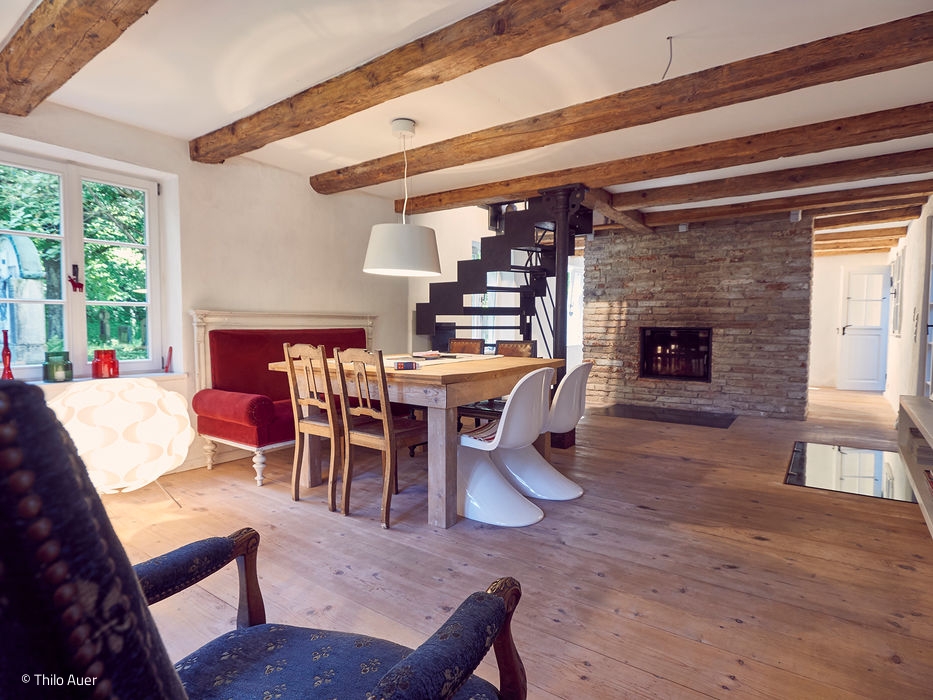
The narrow lot and direct proximity to a busy road presented the central challenge. The solution: a protective wall of prefabricated exposed concrete thermal elements running parallel to the street, doubling as a sound barrier. Behind it sits a separate office and guest building, a covered walkway, and an extension with entrance and service areas—all arranged around the historic cemetery wall to create a private atrium courtyard and garden. The construction employed traditional craft methods throughout, with much of the painstaking work completed by hand. Original materials were salvaged and reused where possible; missing sections of the 30 mm solid wood floor were carefully sourced. A centrally positioned wood-burning stove on the ground floor works in concert with external wall heating to maintain a comfortable climate across all levels, while the open staircase and modern black steel stringers distribute warmth efficiently to the attic above.
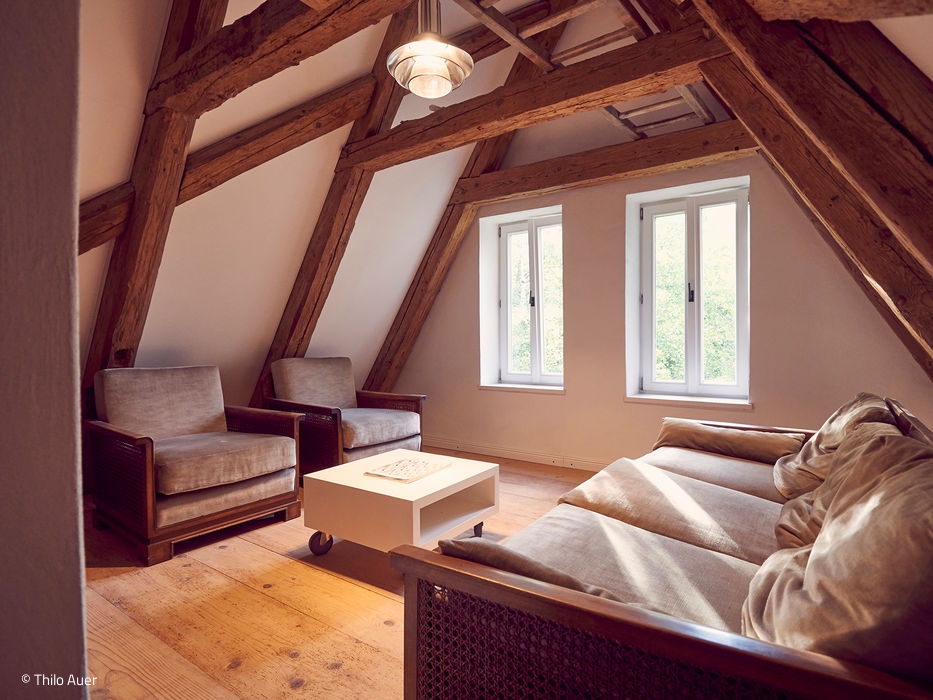
The home captivates through its original character—the period windows, interior doors, aged ceiling beams, and wooden floorboards—and most importantly, through the dialogue between old and new. An extension with glass corridor, entrance, and service areas bridges the residential building and cemetery wall. The newly created atrium courtyard, centered on a centuries-old ivy-covered arch, became the defining gesture in the complex's conception and design.
Photography Credits:
Thilo Auer
www.thiloauer.com
(Published in CUBE Munich 01|20)

Back to the Roots
A farmhouse reclaimed: how quiet elegance returns to an architectural icon
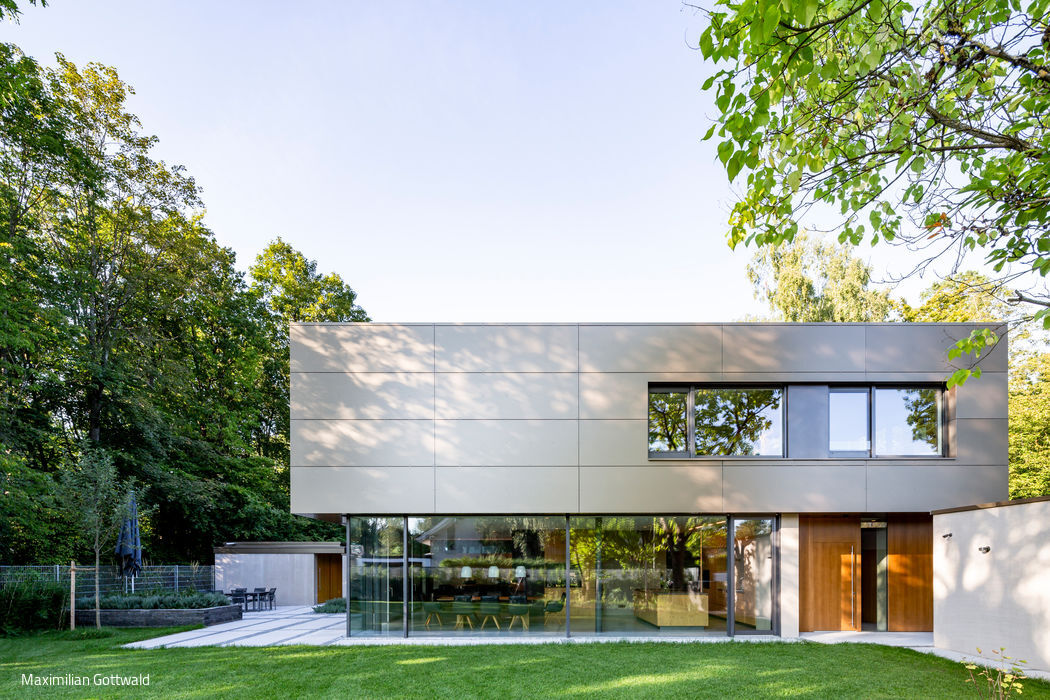
Optical Levitation
A Floating Villa of Glass, Concrete, and Steel
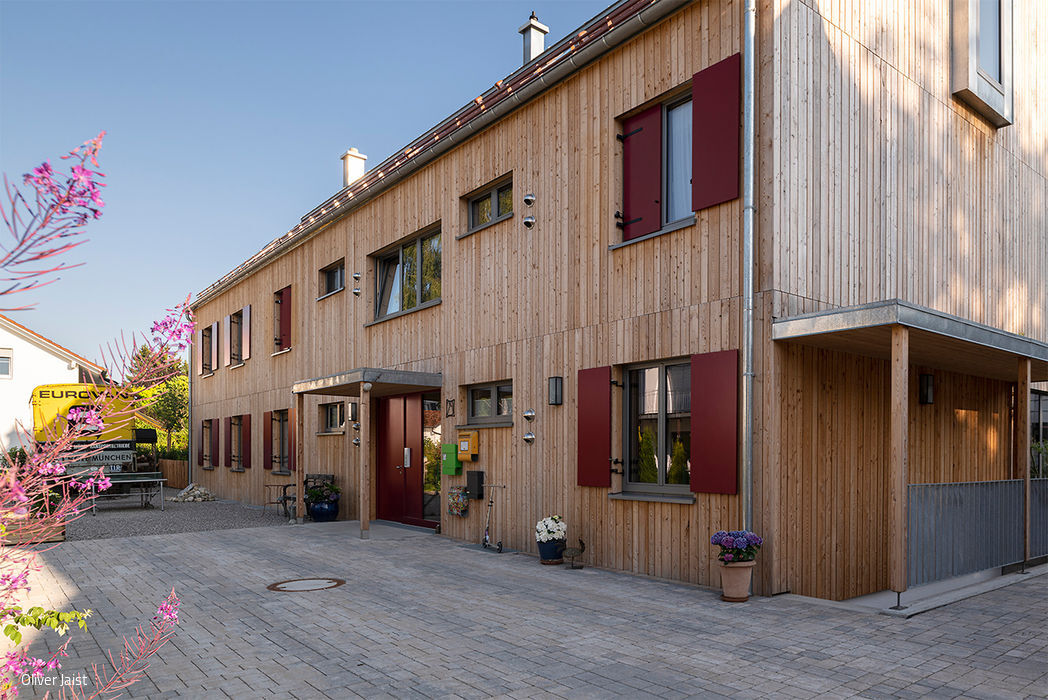
Living Better Together
Multi-Generational Home in Gauting: Five Households, Thirteen Residents
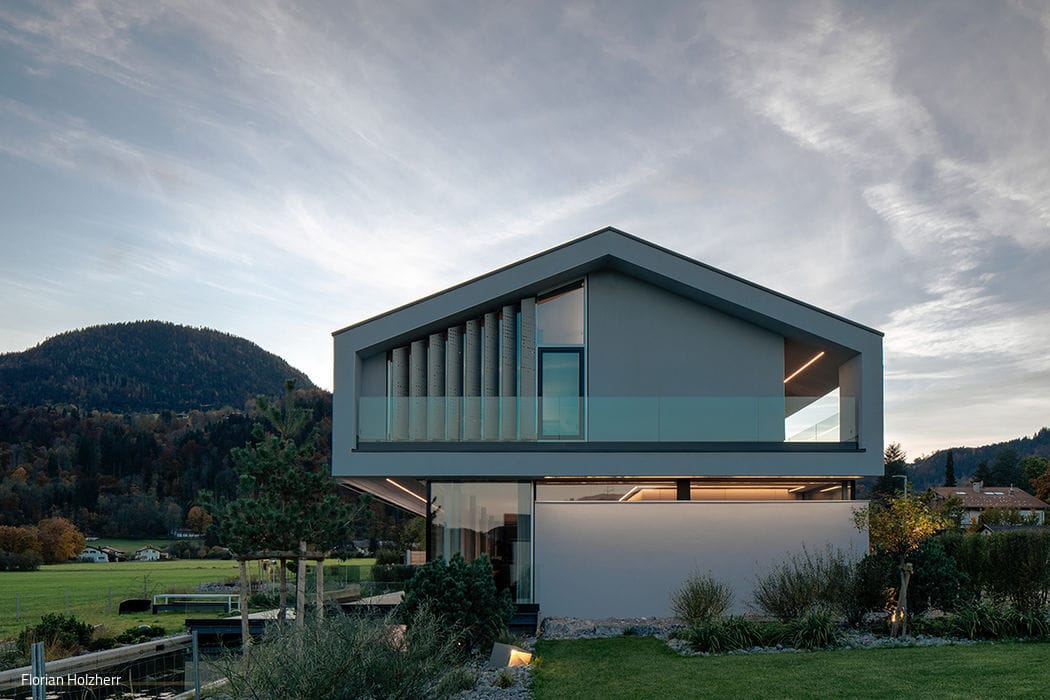
Shine a Light
Regional Heritage, Contemporary Vision