


Built for the 21st Century
Comprehensive modernization, renovation, and expansion of a secondary school
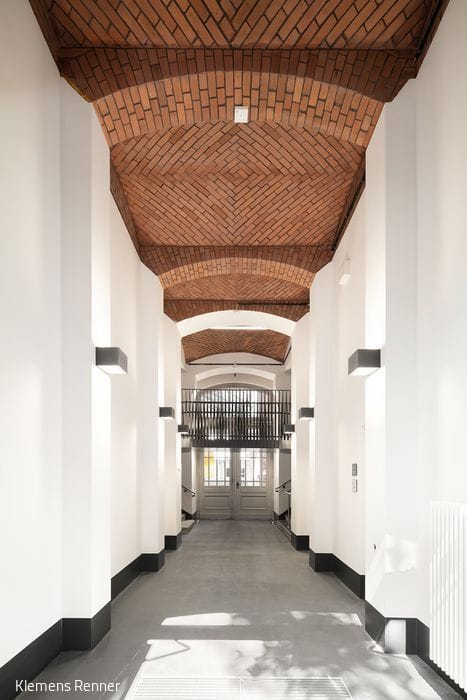
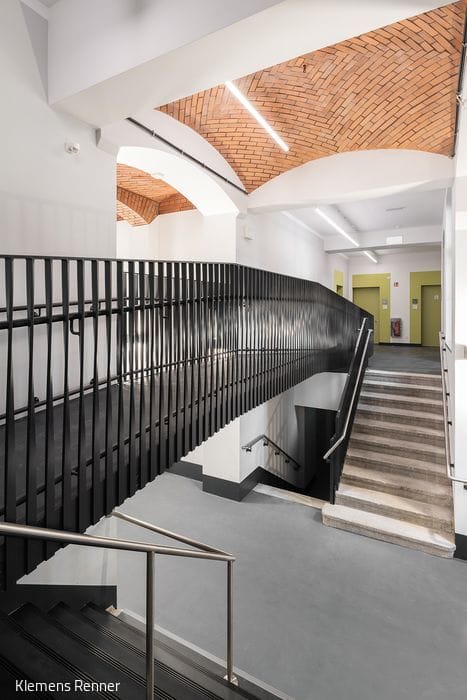
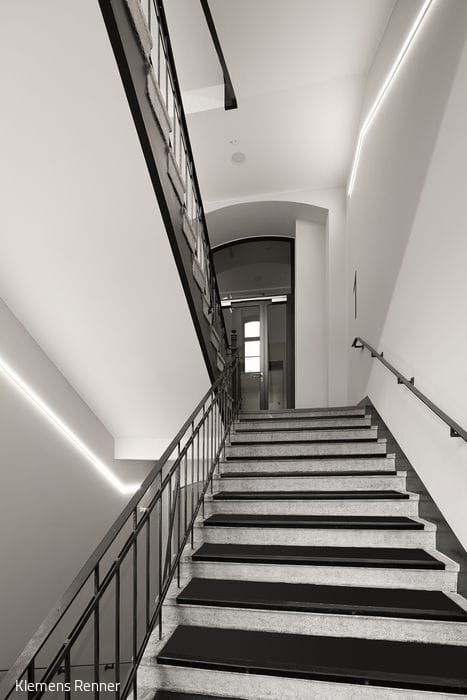
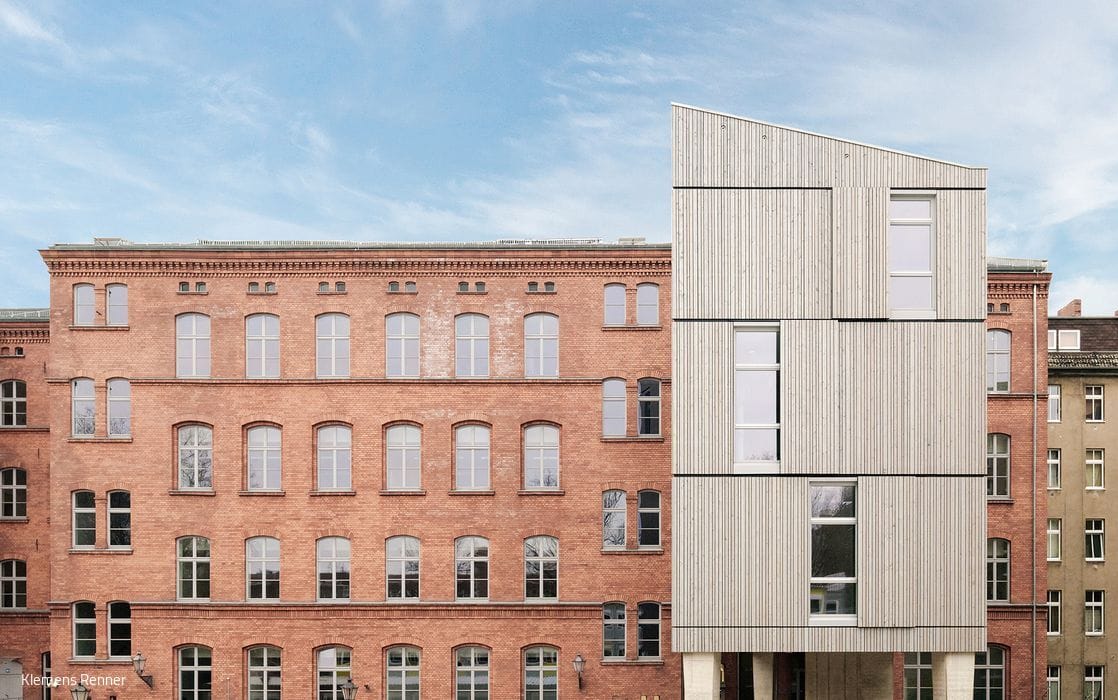
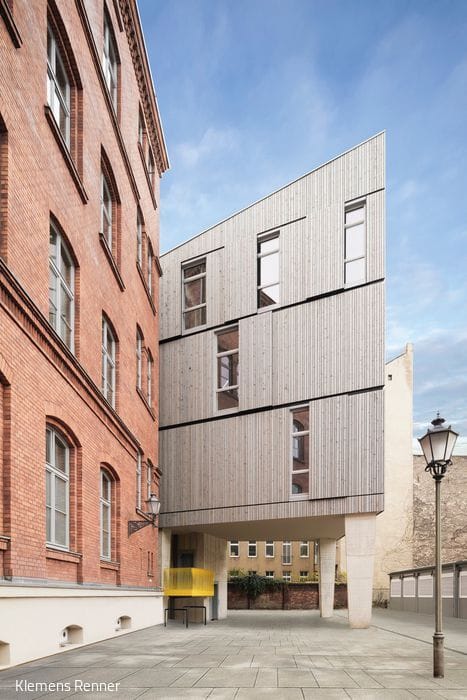
The Robert Koch Gymnasium, built in 1875/76 on Dieffenbachstraße, represents one of 120 schools and municipal buildings designed by architect and city planner Hermann Blankenstein (1829–1910) throughout his distinguished career. Like many structures from that era, these schools have long outgrown their original footprint and no longer meet contemporary educational needs. The Berlin office of SSP, a nationally recognized architectural practice, undertook the comprehensive renovation under the banner "SSP Rüthnick." Spanning 2017 to 2021, the project encompassed a complete reimagining of the floor plan, modernization of all science facilities, conservation-sensitive roof renovation, replacement of all technical systems, and a critical upgrade to fire safety standards. The team also introduced full accessibility and implemented a contemporary interior design strategy. Among the most pressing challenges was addressing fire protection—a necessity that ultimately shaped much of the intervention.
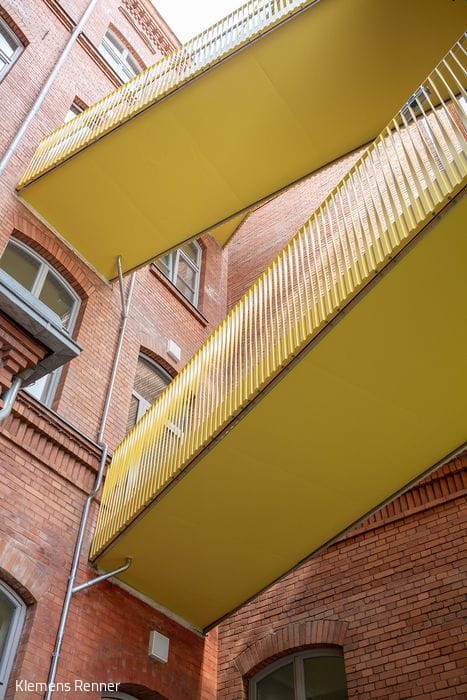
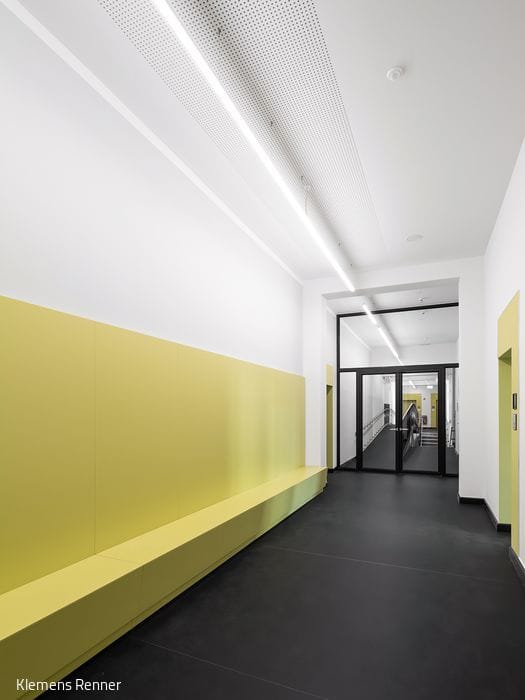
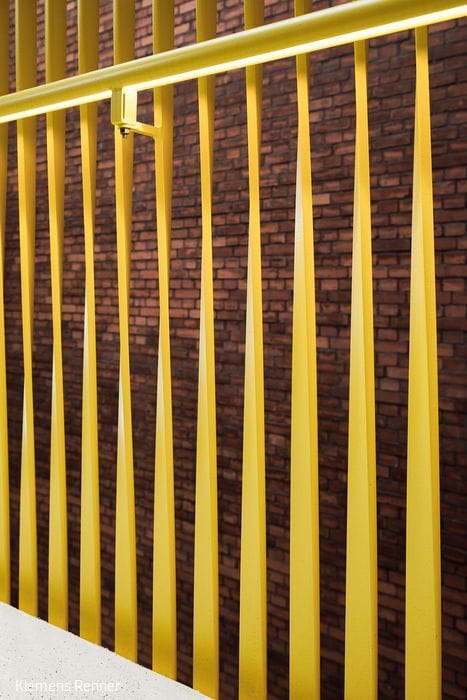
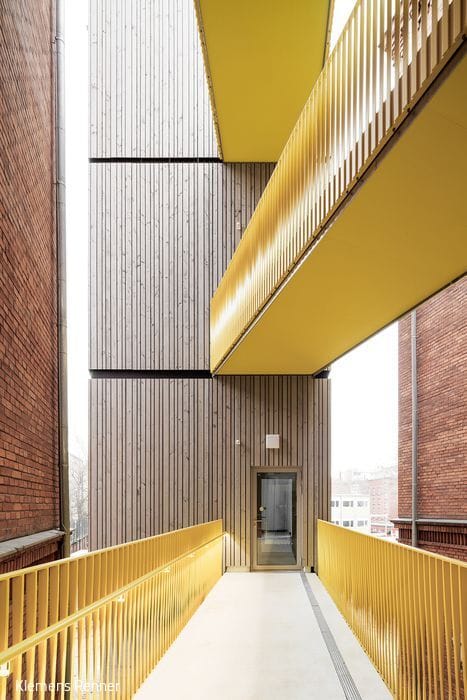
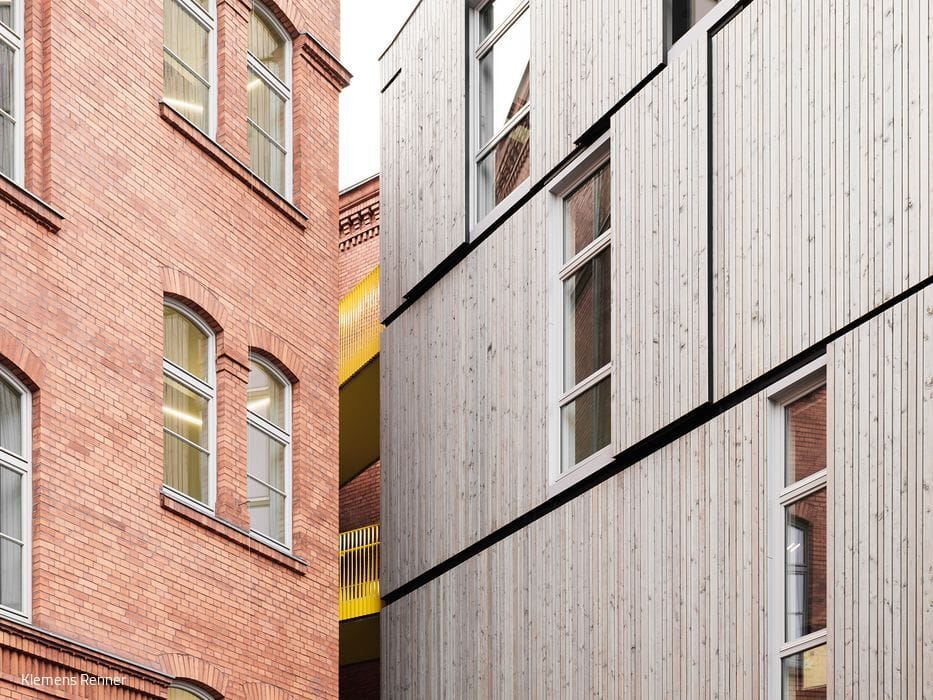
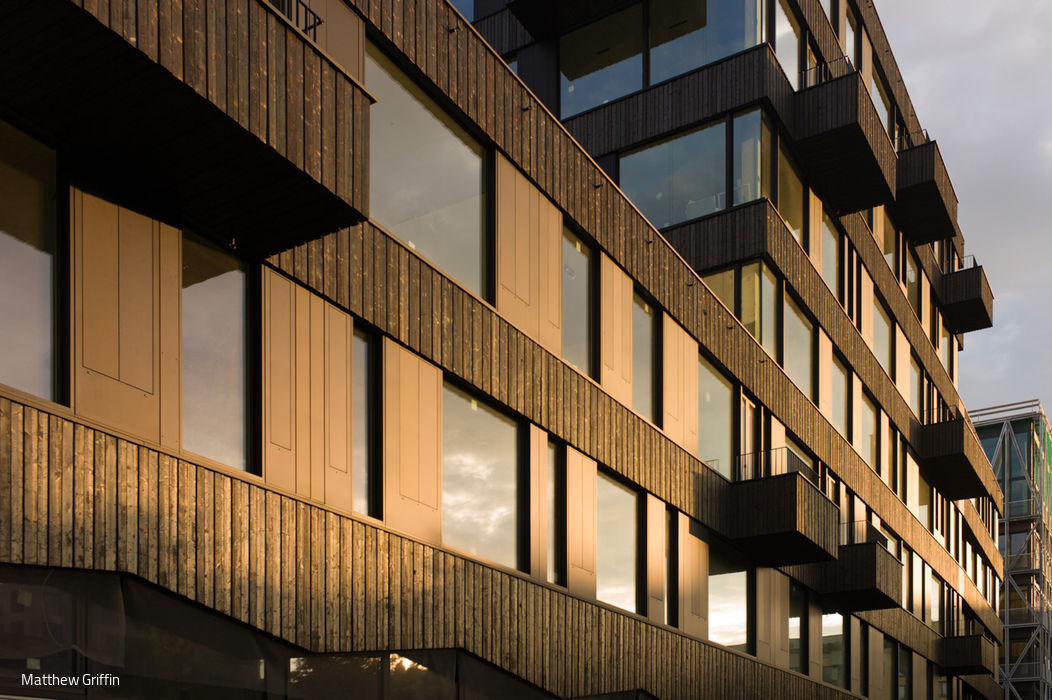
The design philosophy centered on forward-thinking pedagogy at every turn. This approach allowed the team to activate the generous corridor spaces as learning and working zones, effectively expanding usable square footage. A three-storey elevated extension rises from the courtyard, carefully set apart from the historic structure and linked by open, mustard-yellow walkways. The extension's geometry is distinctive: a clean facade faces the schoolyard, while an acute angle marks its connection to the original building. Clad in timber, the new wing houses specialized teaching spaces and the essential elevator serving the existing structure. Kinetic wooden sliding panels—manually operated—animate the façade with their shifting geometry, functioning simultaneously as glare and solar protection. Notably, when the school first opened, it operated under the name "Doppelschule am Urban," serving both girls and boys, albeit in rigorously separate classrooms.
Today, of course, that's changed. The historic building is now protected as a listed monument, which meant accessibility improvements required careful planning. The new lift in the annex and the connecting bridges—with their distinctive yellow finish—provide essential access while visually lightening the structure. These colour accents continue throughout the interior spaces. To minimize disruption, construction took place while the building stood empty, with a temporary container facility serving as interim accommodation during the work.
(Published in CUBE Berlin 01|23)

Child-Friendly Design
A School Playground Within an Industrial Heritage Landmark
Prime Location – Distinguished Character
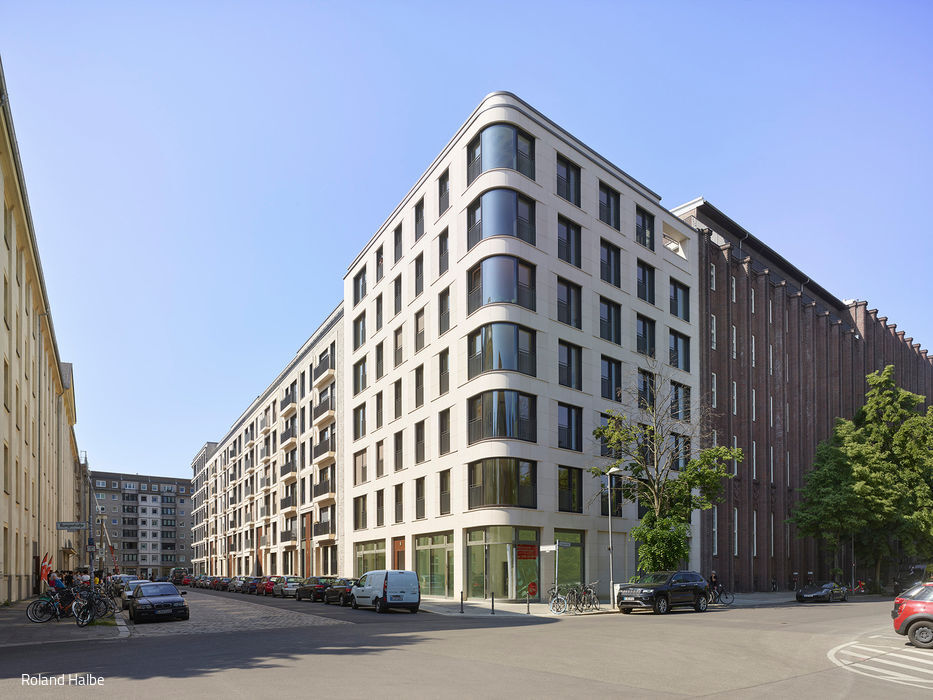
Embassy – A New Residential Community at Köllnischer Park
With the Fish Among the Trees
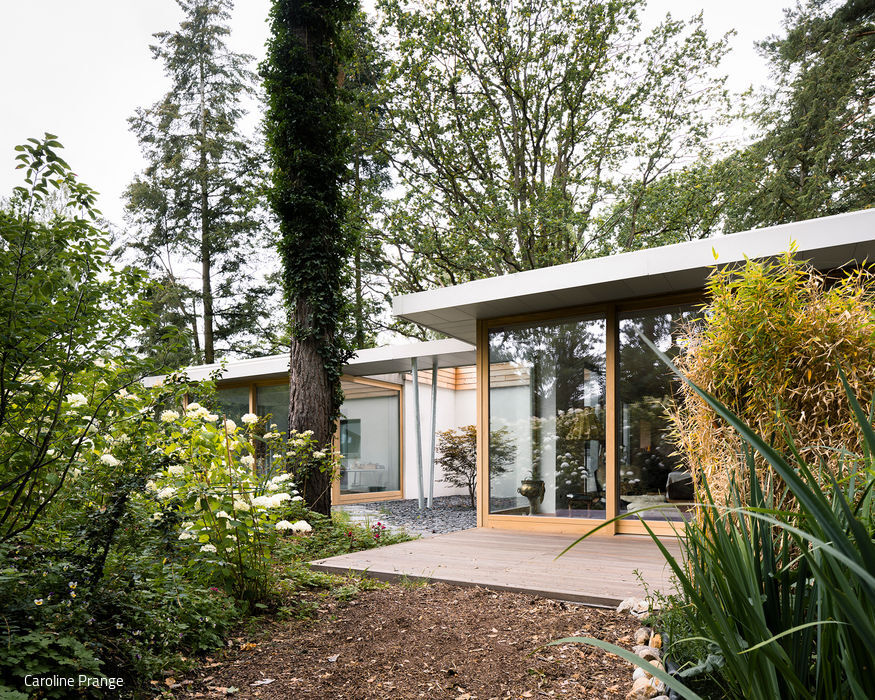
Through thoughtful interventions, the house glows anew, appearing light and transparent.
Revitalized East German Beauty
Revitalising a 1970s Apartment on Leipziger Strasse