


Preserved old building charm
A historic inn lives on in a modern dental practice
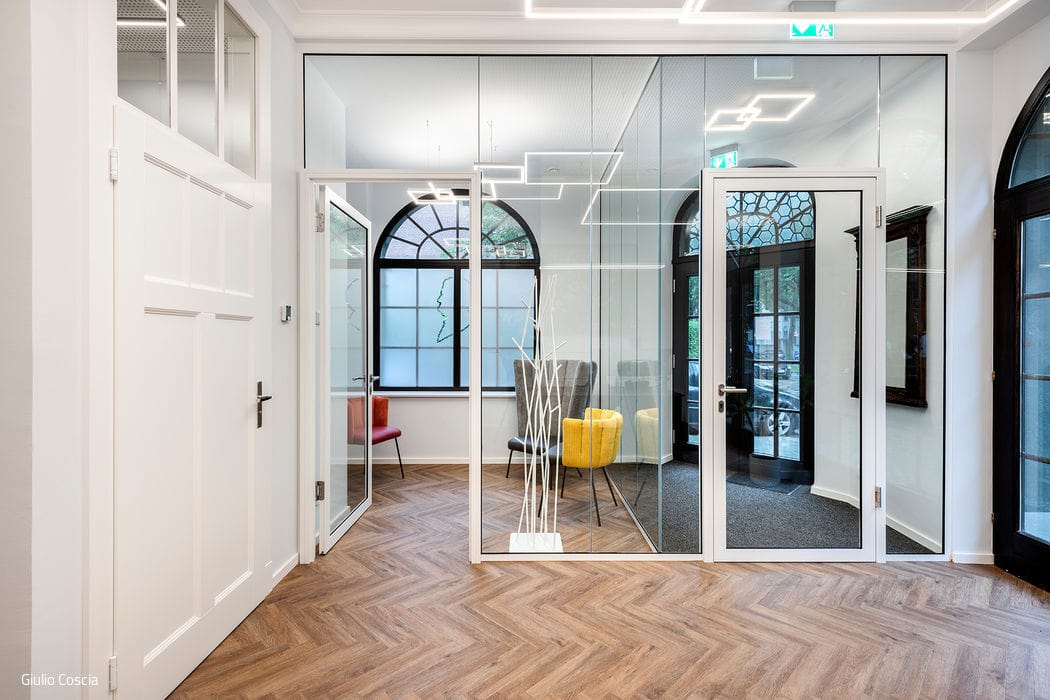


The Richard Wagner was an institution: conveniently located on the city border between Rheydt and Gladbach, not far from the campus of the Niederrhein University of Applied Sciences, this historic inn had been here since 1900 for many generations. Once it became clear that the tenant did not want to continue running the restaurant for economic reasons, a new use had to be found. A neighbouring dentist was impressed by the historic building and its spacious rooms, purchased the ground floor of the Wilhelminian-style building and commissioned Sillmanns Architects and Engineers from Mönchengladbach to convert it into a modern dental practice.
With its large rooms and high ceilings, as well as existing sanitary and technical rooms, the L-shaped floor plan seemed to offer ideal conditions for practice rooms with short distances for staff and patients. However, the structural construction measures were very complex and involved additional costs due to the extremely high requirements for air conditioning and ventilation technology, emission control, fire protection and monument preservation. For example, the infrastructure of the condominiums above the practice rooms had to be specially protected, adapted or even replaced as a precautionary measure. Apart from new building services equipment in the inner courtyard, there were no noticeable changes to the listed exterior façade: the classic arched windows and entrance doors were retained or replicated and at the same time upgraded in terms of functionality and energy efficiency. Inside, too, the familiar entrance to the traditional restaurant with its warm welcome at the bar and inviting dining room was to be preserved in all its generosity. Accordingly, the stucco friezes and Art Nouveau doors were faithfully reproduced and integrated into the functional interior design as a matter of course. Glass partitions of various designs were used to preserve the open character of the former dining room. In order to protect the privacy of patients during consultations with their doctors, the system walls of the treatment rooms are double-skinned and thus designed to provide maximum sound absorption. In the visible area, a switchable film is also applied to the inside, whose electrochromic property mattifies the pane at the touch of a button, thus preventing unwanted glances. Instead of the original wooden parquet flooring, an LVT covering of high aesthetic quality was laid in a herringbone pattern for reasons of high hygiene requirements and frequency of maintenance. The discreetly integrated modular furniture and the lovingly staged Art Deco furniture contribute to the cosy atmosphere. Pictures by a friend who is an artist round off the ambience. Daylight floods the rooms and is artificially enhanced by direct and indirect LED frames. Their rectangular shape echoes the ceiling design, which is framed by friezes, profiles and grids. At the same time, the pendant lights dancing at different heights break up this linear austerity and playfully enliven the acoustic ceiling with their varied shadows.
Photography Credits:
Giulio Coscia
www.fotografie-coscia.de
(Published in CUBE Düsseldorf 03|22)
Reductive design
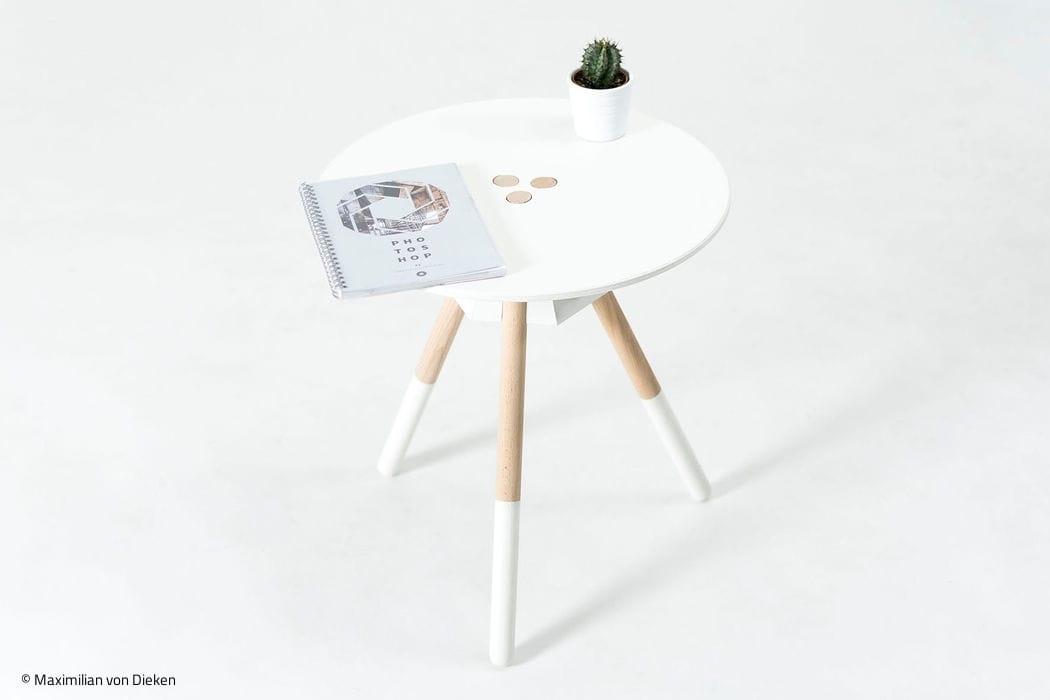
Maximilian von Dieken: Furniture with a Personal Signature
Sustainable and digital
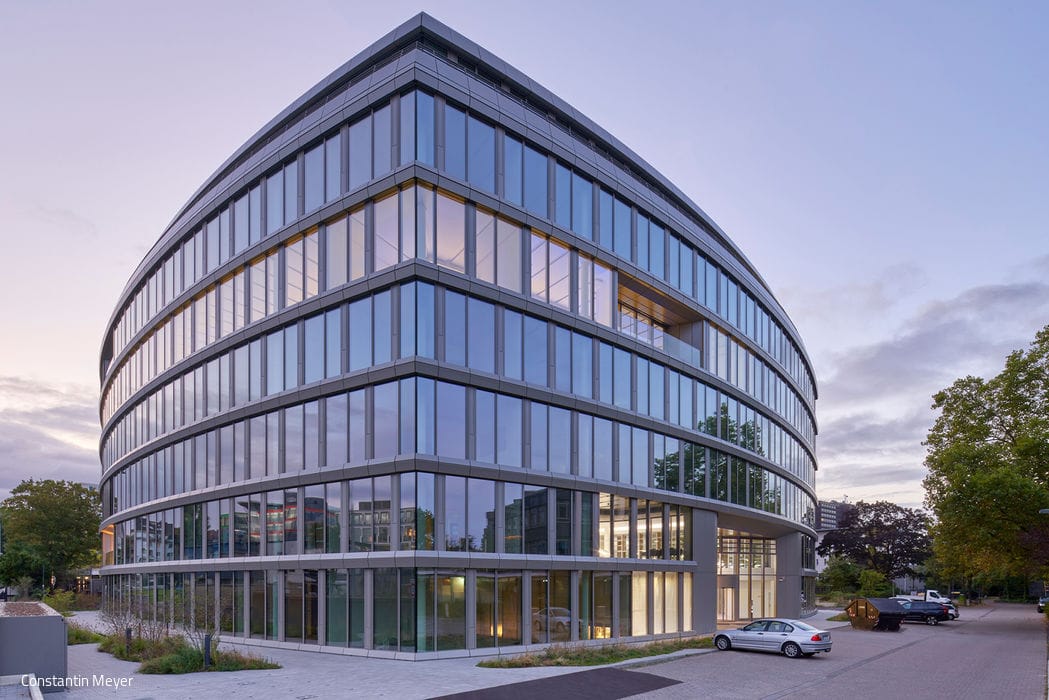
"The Oval" in Golzheim: The Blueprint for Intelligent New Work
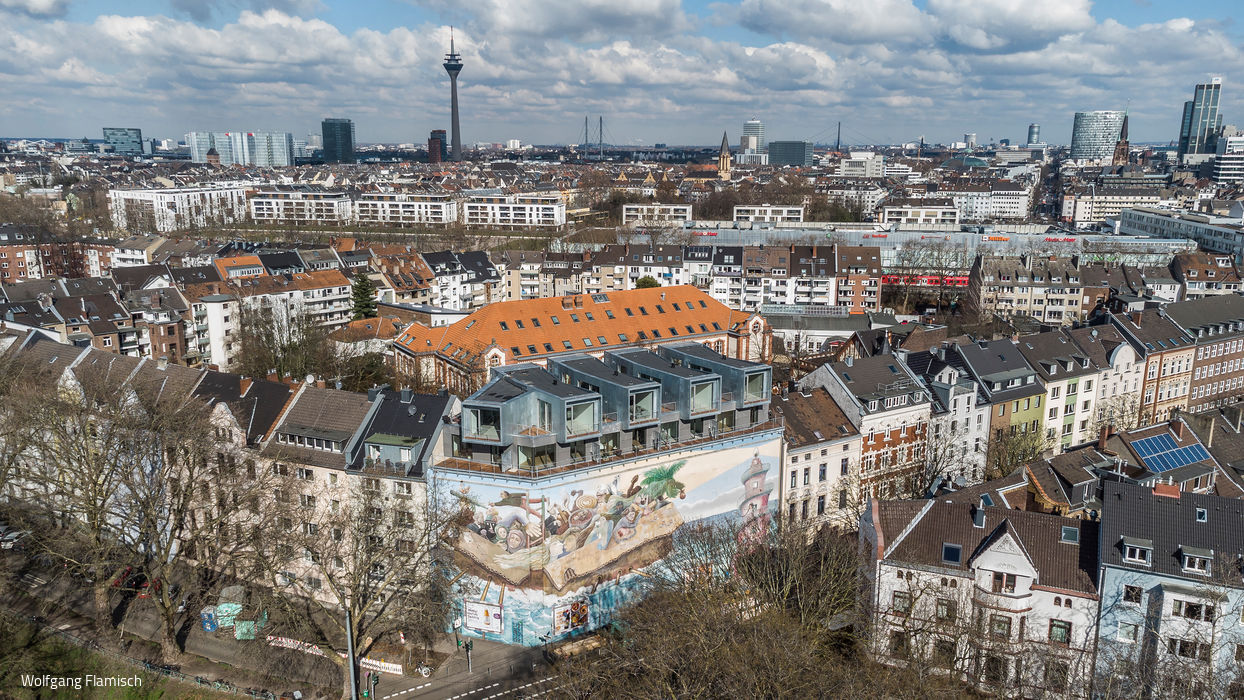
Transforming the Roofscape
Through strategic expansion, the Bilker Bunker becomes one of the city's most distinctive residential destinations.
Intimate Lounge Living
The design incorporates the four classical elements—fire, water, earth, and air—expressed through minimalist forms with restrained...