


Confident Connection
Two landmark spaces in the historic town hall receive a refined new presence


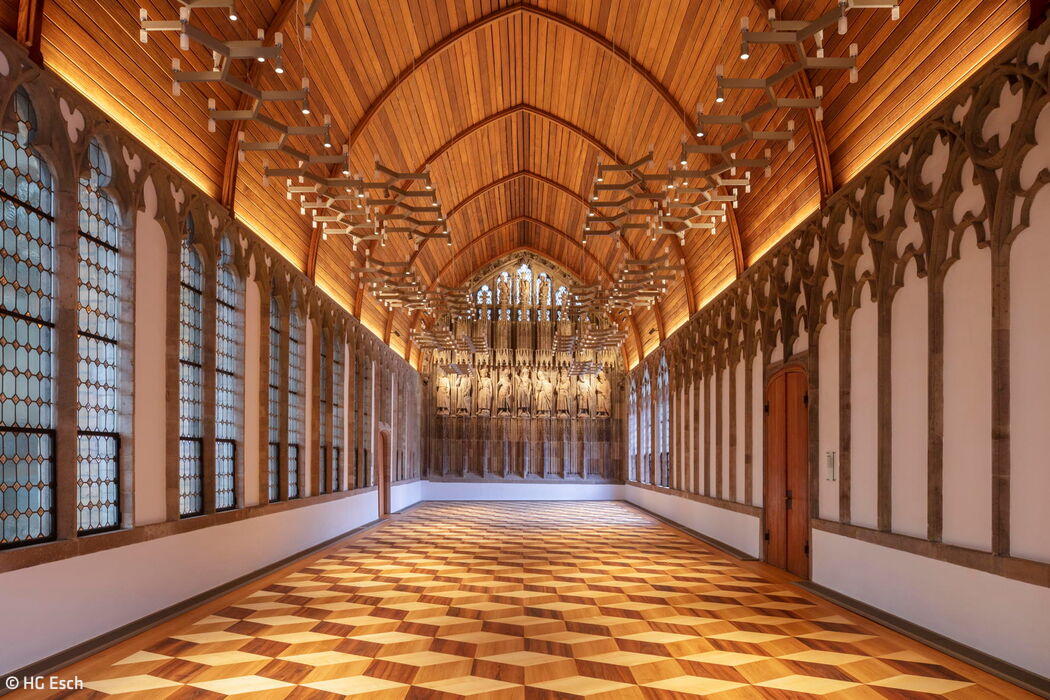


Allowing history and the present to radiate confidently side by side – this is the guiding principle behind two design interventions conceived and realized by Cologne-based architecture and interior design firm Lepel & Lepel at the Historic Town Hall for the City of Cologne. Both projects—the Hansasaal and its preceding Piazzetta—share a common mission: they amplify both the functional and atmospheric qualities of the architecture, enriching vacant and activated spaces alike with new dimensions. Working closely with heritage preservation authorities, the firm has masterfully woven the old and new into a harmonious whole.
Inaugurated in 1972, the Piazzetta, designed by renowned Cologne post-war architect Karl Band, is distinguished by its restrained elegance and clarity. The challenge lay in positioning a podium with such precision on the "Free Plaza"—as the architect conceived the building's principle—that the original idea of a mobile platform became unnecessary. The polygonal podium that was ultimately realized is defined by carefully considered sight lines and pedestrian pathways. Its strong visual dialogue with the ceiling sculpture "Baldachin" by Hann Trier (1980), colloquially known as "Cloud," is evident and intentional. The troweled, homogeneous concrete surface complements the robust and generous materiality of the Piazzetta. Contrasting this, leather has been applied exclusively to all contact surfaces, lending appropriate detail refinement throughout. Fully accessible, the podium represents a thoroughly democratic offering to the citizenry: its edge functions as informal seating, the platform accommodates symposiums and lectures, and integrated rear lighting in various configurations provides an elegant backdrop for photography. The 30-meter Hansa Hall, a Gothic structure dating to the early 14th century, is widely considered Cologne's most significant secular interior space, distinguished by its continuous tracery and figural ornamentation at both ends. Transformed across centuries and now protected as a historic monument, it stands today as a vital focal point of civic life. The renewed flooring and new lighting system equally reflect both formal and art-historical concerns: the honeycomb pattern of the parquet floor references the tessellation patterns of the Italian Renaissance, which likewise shaped the Löwenhof courtyard, Senate Chamber, and Renaissance loggia within the Historic Town Hall. Through the design strategy of scale enlargement, the hall—characterized by its wooden pointed barrel vault restored only in 1972—acquires a dramatic presence. In concert with the honeycomb structures of the new chandeliers, which interpret the tracery of the historic windows, a new and coherent sense of proportion emerges.
Photography:
HG Esch
www.hgesch.de
(Featured in CUBE Cologne Bonn 03|24)
Harmonious Collaboration
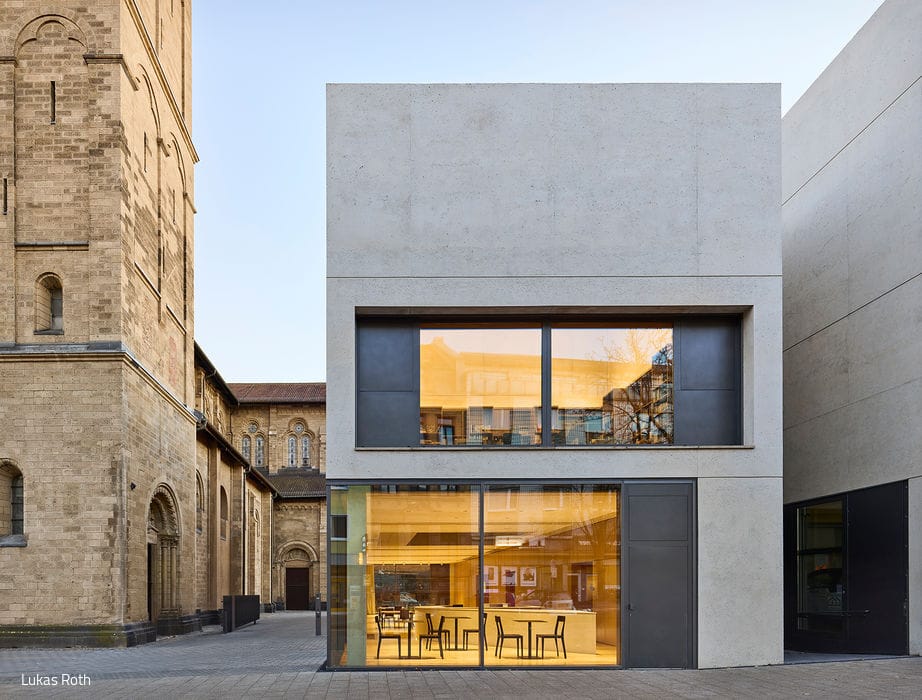
The Forum at Deutzer Dom: Urban Gathering Spaces, Inside and Out
Farmhouse Becomes Holiday Residence
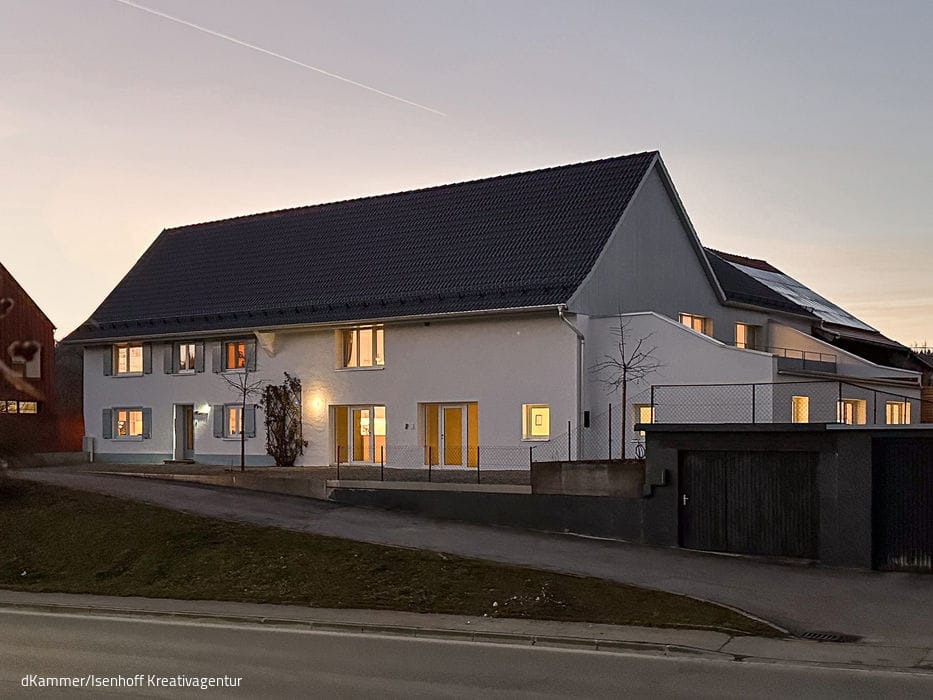
Renovation with Purpose: Merging Heritage Architecture with Contemporary Design
Elevated Prinzen View
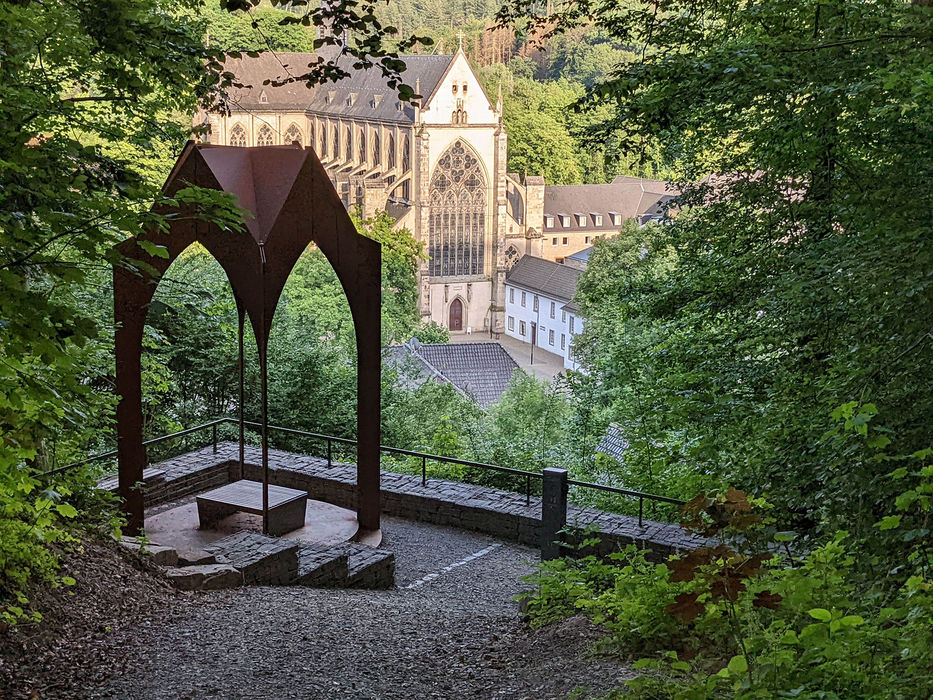
Prinzenplatz at Altenberg Cathedral reimagined as a sheltered landscape balcony
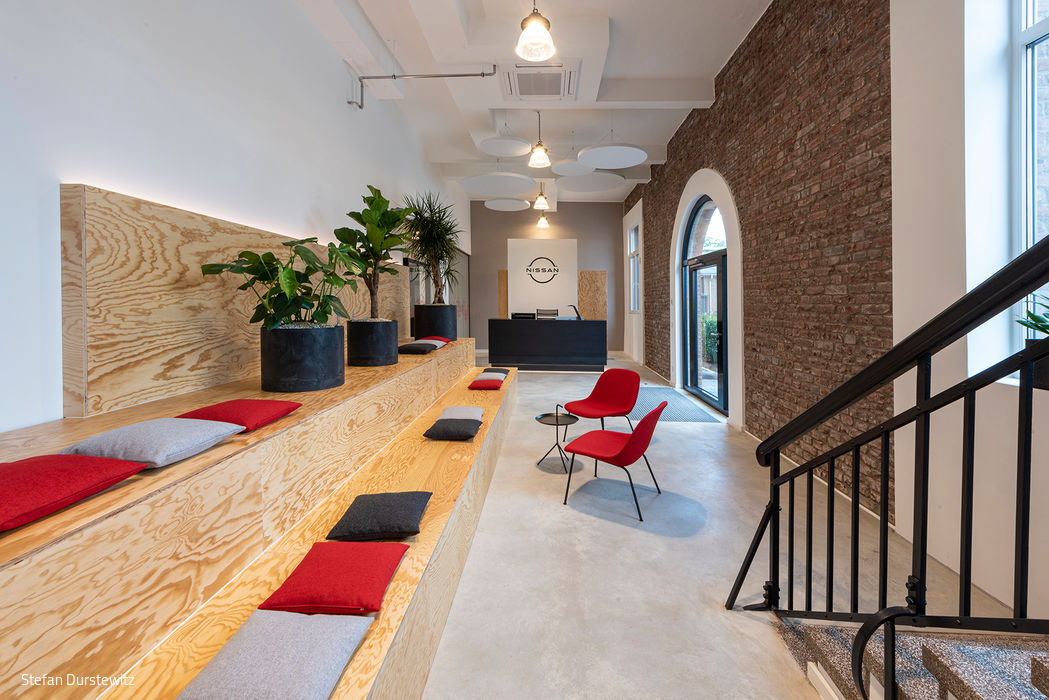
New Working in Historic Halls
German Automotive Leader Embraces Flexible Workplaces