


Everything Flows: Panta Rhei(n)
A neurological practice in Pradus draws inspiration from the Rhine's flowing path
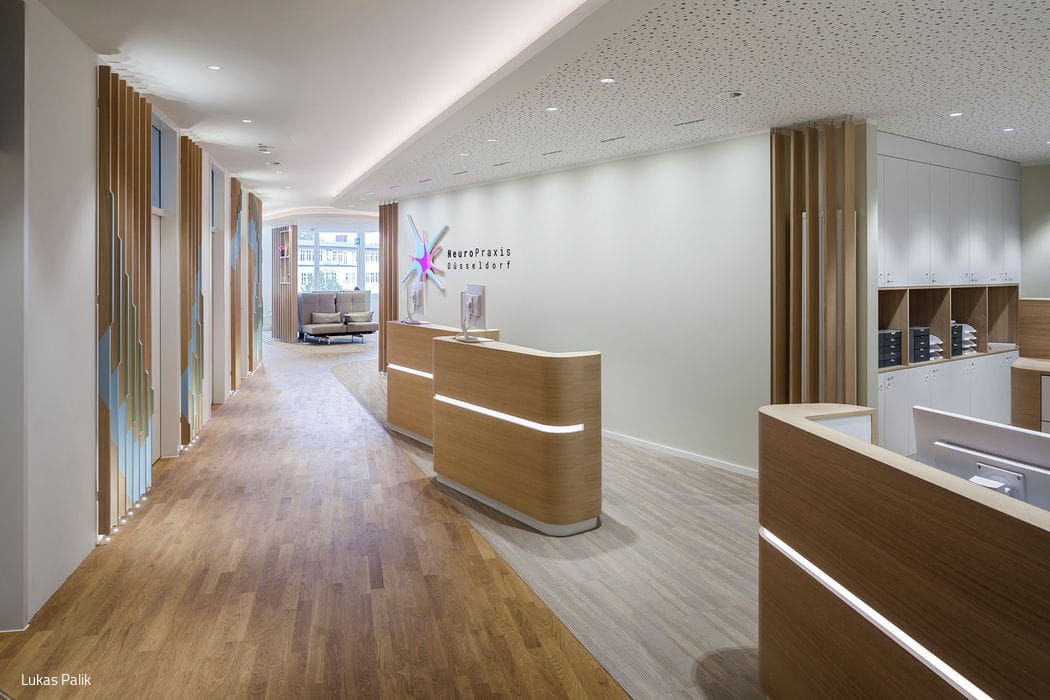

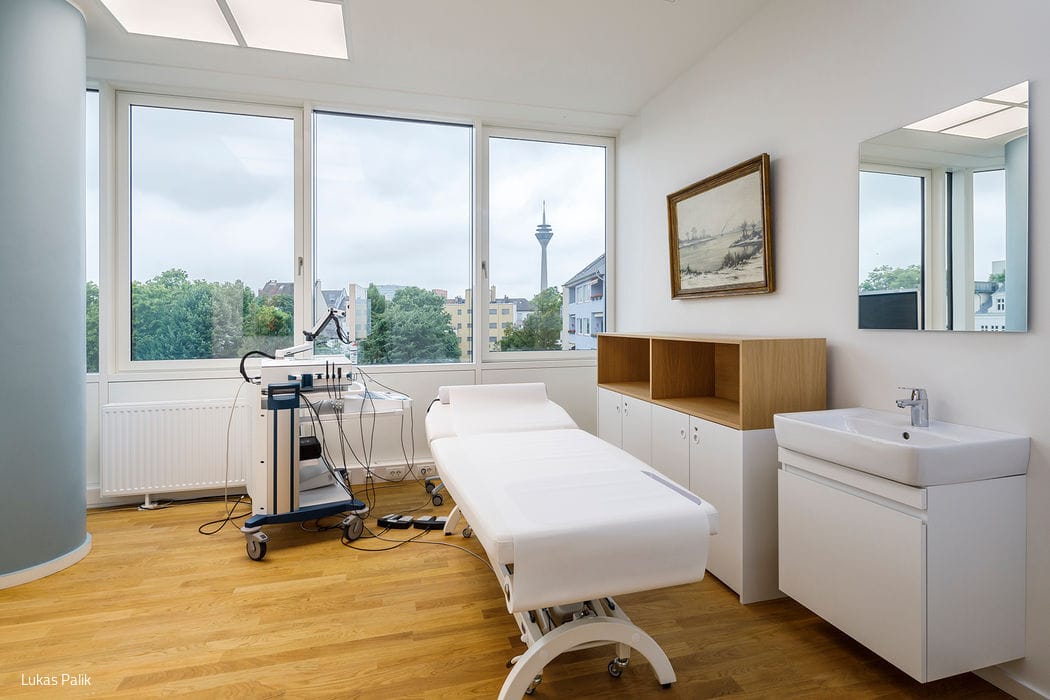

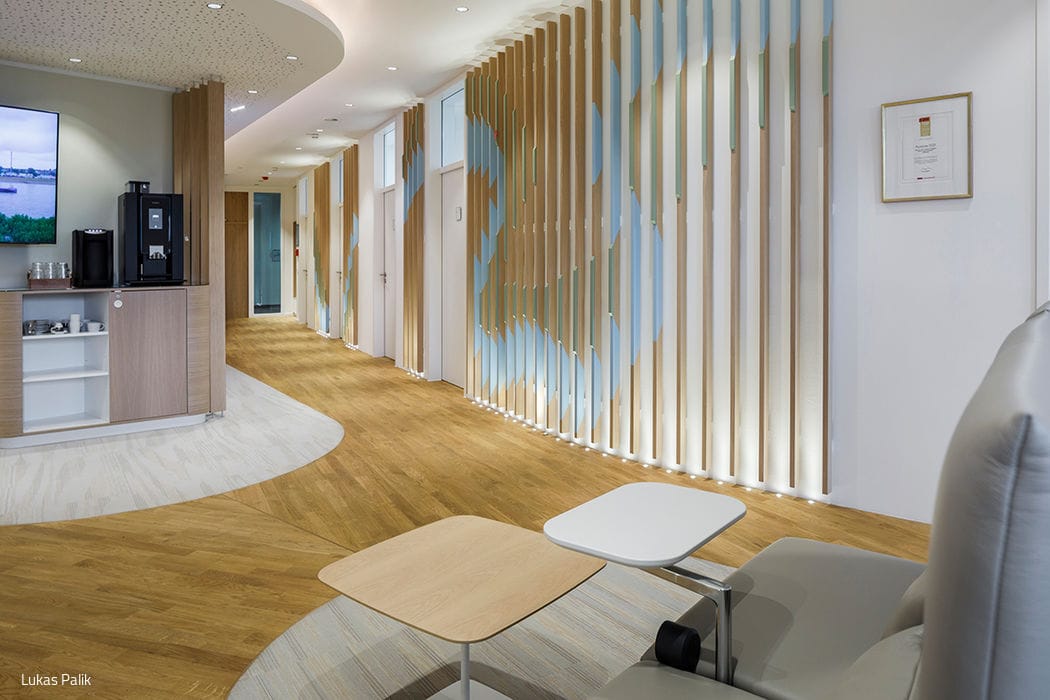

The COVID-19 pandemic disrupted industries across the board. Yet it also created unexpected partnerships—connections that might never have formed otherwise. Such was the case for Düsseldorf-based architecture firm Scheßl Weismüller, specialists in international trade fair and exhibition design. When pandemic-related project delays and cancellations suddenly freed up their schedule, they found themselves available for new opportunities. Simultaneously, neurologist Prof. Dr. Christina Haubrich was preparing to launch her own private practice on an accelerated timeline. The lease for practice space at Pradus, Düsseldorf's largest medical complex, was ready to sign—but one critical piece was still missing: a cohesive design vision and spatial concept. The partnership clicked immediately. Eleven months later, the completed 350 m² practice stands as proof of how seamlessly functionality and compelling design can work together.
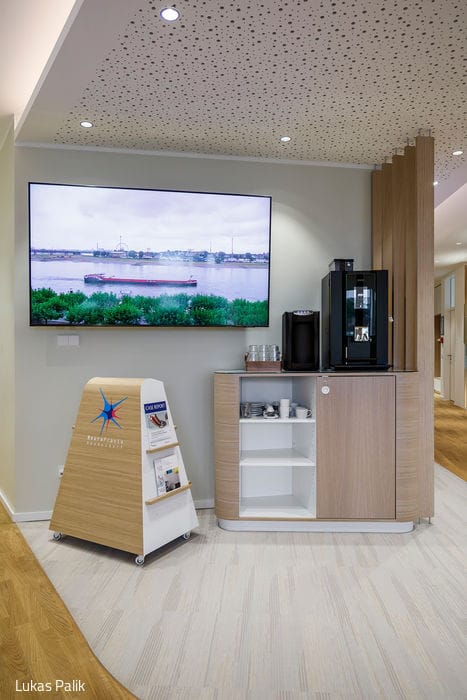
The vision was to create a distinctive environment within Pradus that would enhance both the practice's functionality and its atmosphere. Patient experience—meeting on equal terms—was paramount, as was supporting the workflow of the clinical and administrative team through careful spatial planning. Furnishings and technical systems were integral to the design brief. Working closely with the client, the design team identified a unifying theme that would serve as the conceptual thread throughout the space and its finishes: the Rhine River. The practice's proximity to the river inspired a design rooted in water's flowing nature. The floor plan itself traces a gentle arc mirroring the river's curve through the city. A sculptural wooden slatted wall becomes a narrative focal point, its sinuous form echoing the river's path. This element also serves a functional purpose—it subtly divides the open plan into distinct zones: a flowing public realm encompassing reception, waiting lounge, and back office, anchored by private clinical spaces including consultation rooms, labs, and examination areas. This organization ensures natural light permeates all occupied spaces, with only the laboratories separated from exterior views. Shifts in flooring and ceiling materials further articulate the open plan, reinforcing its generous proportions while cultivating a warm, serene atmosphere that distinctly sets the practice apart from the medical center's utilitarian corridors. The lighting design completes the concept: through thoughtful illumination that delineates circulation paths, rest zones, and functional areas, it amplifies the practice's sense of fluid, continuous space.
Photography Credits:
Lukas Palik
www.lukaspalik.de
(Published in CUBE Düsseldorf 03|23)

Concept Done Right
Löbbeckestraße Housing Quarter Nominated for German Building Award
Mr Gatsby's Second Home
Grande Étoile d'Or: Bringing Glamour to Carlstadt

Flooded with Light
A detached house in Meerbusch impresses with its flowing lines of sight
Thoughtful Transformation
The Langersgut in Kalkum: a historic ensemble thoughtfully modernized and repurposed as a live-work studio.