


A Labour of Love
How precision, care, and creative vision transform a Wilhelminian mansion into vibrant new life
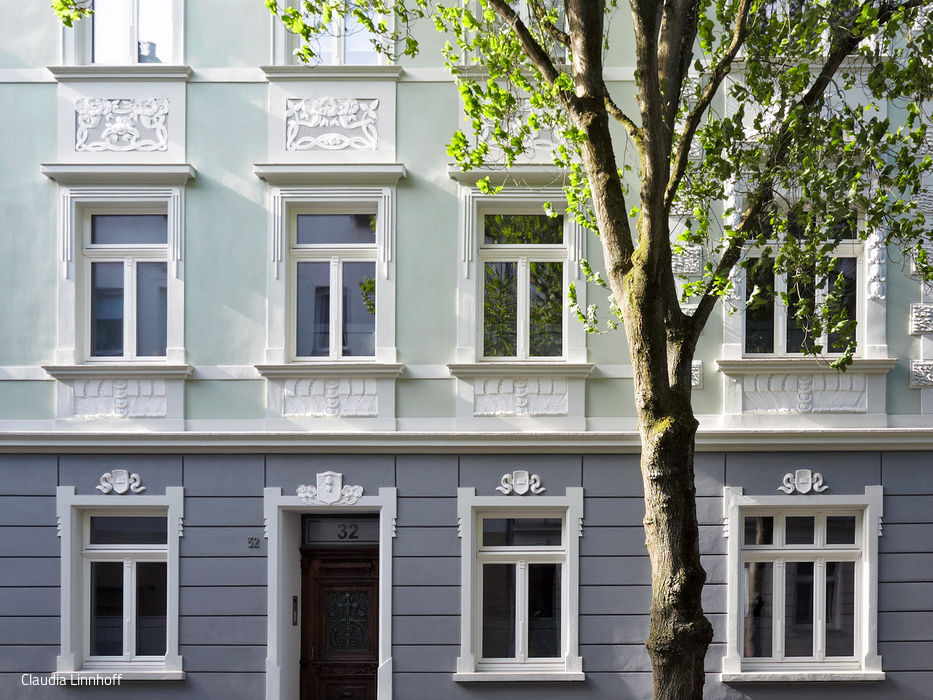


Nach acht Jahren war die intensive Suche beendet. Architekt und Bauherr Rodolfo Nogales hatte sein Traumhaus gefunden: Ein vernachlässigtes, äußerst sanierungsbedürftiges Gründerzeithaus von 1903. Von Charme und Großzügigkeit klassischer Altbauten sehr weit entfernt. Doch früher als andere erkannte Nogales das versteckte Potenzial, das sich hinter dem alten Gemäuer befand. Bis zur Neubelebung war es ein mühsamer Weg. Der Architekt setzte besonderes Vertrauen in insgesamt über 50 Facharbeiter, die ihn acht Monate mit außergewöhnlichen Ideen unterstützten. Das Ergebnis kann sich sehen lassen.
Den ersten richtigen Eindruck von den Räumlichkeiten bekam Nogales erst nach Auszug aller Mieter, die in einer Art Wohngemeinschaft lange Jahre dem Haus seine Seele gegeben haben. Je Etage gab es drei Wohnungen; das WC im Treppenhaus wurde, wie vor über 100 Jahren üblich, auch im neuen Jahrhundert noch gemeinsam genutzt. Für die Neugestaltung wollte Nogales die einzelnen Etagen als jeweils eine Wohneinheit mit rund 95 m² ausbilden. „Mein Ziel war es, einen effizienten Grundriss zu gestalten und die Raumstrukturen an heutige Wohn- und Lebensanforderungen anzupassen.“ Doch zunächst ein Blick auf die Fassade: „Ein Kapitel für sich“, versichert der Architekt. „Die reich dekorierte Stuckfassade war mit einem groben Acrylputz versehen, der in Teilen hinter die Abdichtungsebenen eingedrungen ist. Aus bautechnischen und optischen Gründen habe ich mich dafür entschieden, den Putz komplett zu entfernen.“ Ein Unterfangen, das es in sich hatte. Abschleifen, Sandstrahlen, Trockeneisstrahlen, alle Versuche führten nicht zum gewünschten Resultat. Der letzte Versuch lautete Abbrennen. Und tatsächlich, Schicht für Schicht konnte der Putz über Wochen abgebrannt und entfernt werden. „Der Stuck war unter dem Putz so gut konserviert worden mit dem Erfolg, dass die Fassadenelemente völlig unversehrt wieder zur Geltung gekommen sind.“
Der sorgsame Umgang mit dem wertvollen Bestand setzt sich im Innern fort. Wer heute im Treppenhaus steht, der kann auch dort nur noch erahnen, in welchem Zustand sich das Haus noch vor Kurzem befand. So sind beispielsweise Treppenstufen, Geländer, Wände, Decken und Türen fachgerecht aufgearbeitet worden. In Verbindung mit sichtbar gelassenen alten Leitungssträngen an den Wänden dokumentieren sie auf künstlerische Weise Geschichte und Erinnerungen. In den eigenen vier Wänden, in denen Nogales mit seiner Familie lebt, hat er auf überflüssige Flure verzichtet, stattdessen bilden heute Eingang, Küche, Wohn- und Essbereich eine Einheit. In dem auffallenden, im feinsten Büffelleder angefertigten Kubus in der Küche verbergen sich somit nicht Kühlschrank und Küchengeräte, sondern die Garderobe. Angrenzend bildet eine Kücheninsel, die gleichzeitig als „Empfangstresen“ für Gäste dient, das Zentrum der Wohnküche. Der benachbarte Küchentisch selbst ist ein übriggebliebenes Relikt des Vormieters. Die ehemals weißen Oberflächen wurden abgeschliffen und erhielten ihre natürliche Holzfarbe zurück. Trotz jahrelanger Nutzung lässt sich der Tisch auch heute noch bis zu drei Metern erweitern und bietet somit ausreichend Platz für die gern gesehenen Gäste. Als weiterer Blickfang sticht die Rückwand der Küchenzeile hervor, die als hinterleuchtete, bedruckte Glasoberfläche ausgeführt wurde. „Auch an dieser scheinbar gewöhnlichen Stelle wollte ich ein Stück Geschichte des Hauses sichtbar machen. Ich habe mich sehr schnell für ein Motiv aus dem Gewölbekeller entschieden, das ein Freund bei einer unserer Fotosessions mit der ‚Light Painting‘-Technik fotografiert hat. Das Bild entstand im Dunkeln bei extrem langer Belichtungszeit, erst beim Auslösen wurde mit einem Handstrahler kurz belichtet“, erläutert Nogales und ergänzt: „Sehr beeindruckend.“
Auf der anderen Seite der Küche befindet sich das Wohnzimmer. Auch dort verfolgte der Architekt die Idee, „einen Raum im Raum“ zu verwirklichen: „Die Wand des Badezimmers zum Wohnraum wurde mit Schiefer in horizontaler Schichtung ausgeführt. Mit diesem Materialwechsel löst sich der ‚raumhohe Kubus‘ auf elegante Weise gewissermaßen vom Wohnraum ab.“ Die präzisen handwerklichen Arbeiten wurden bis ins kleinste Detail wie Fensterlaibungen, Türzargen und Beschläge fortgeführt mit dem Ziel, die prägnanten architektonischen Merkmale aus vergangenen Zeiten heute wieder eindrucksvoll hervorzuheben. „Wir genießen jeden Tag das Resultat“, fügt Nogales zum Abschluss hinzu.
(Published in CUBE Düsseldorf 01|21)
Solid and Authentic
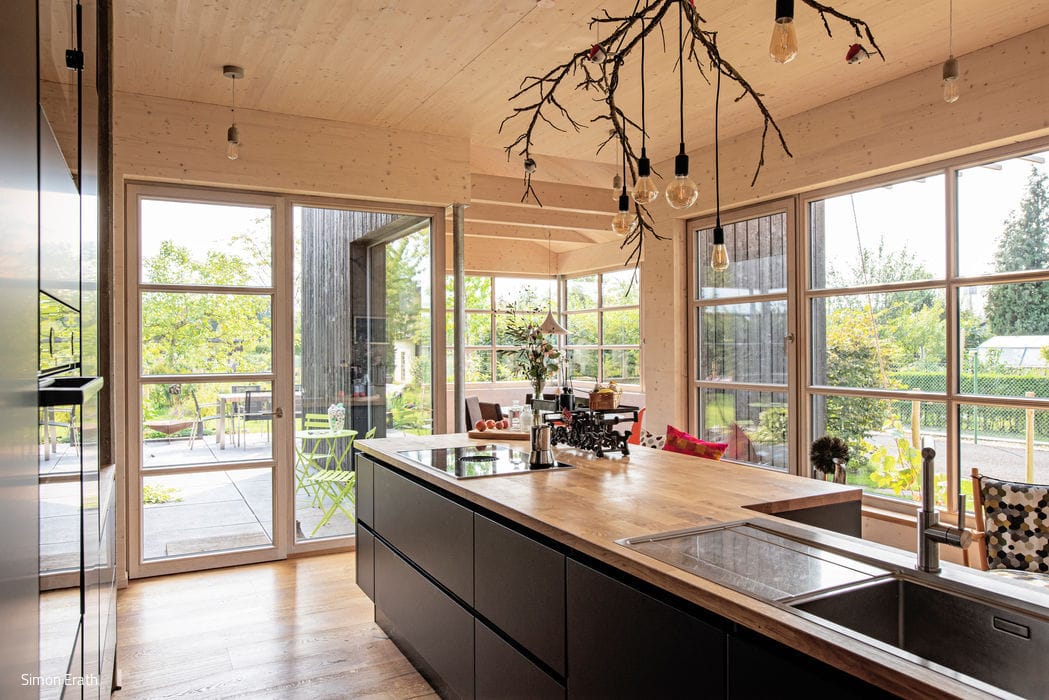
A residential home emerges from a low-tech design philosophy
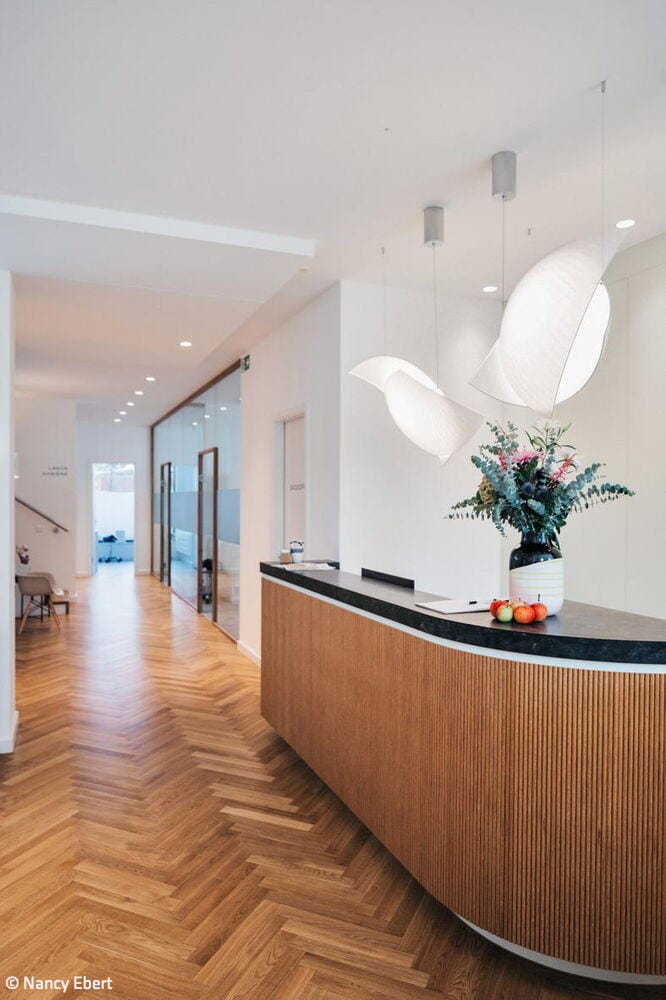
Reassuringly Residential
An orthodontic practice has a welcoming atmosphere and avoids sterile-looking rooms
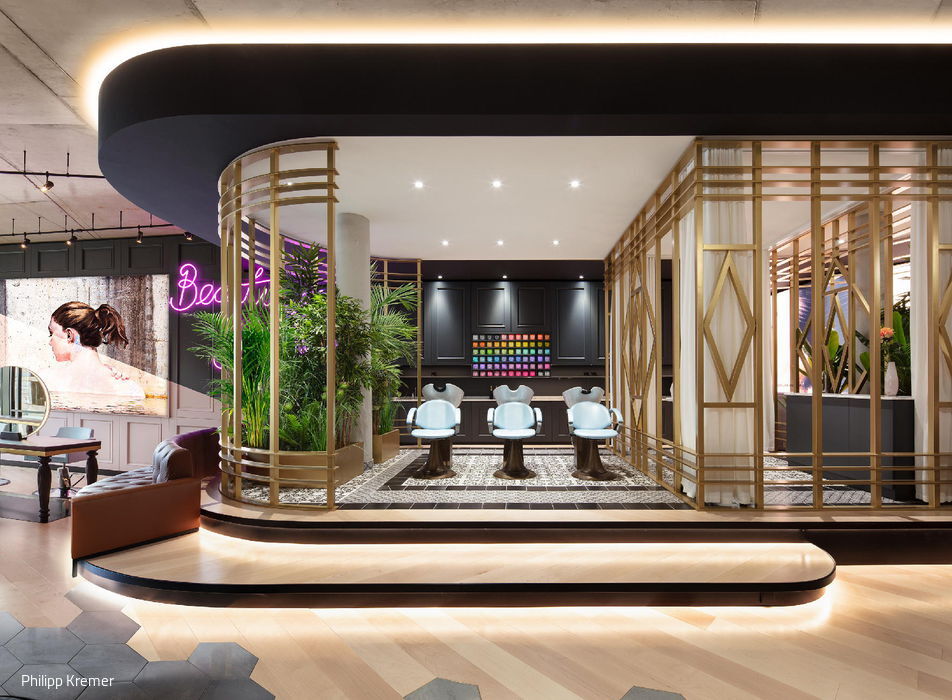
Art Deco Meets Concrete
Mondenero at Kö-Bogen: Where Fashion, Café Culture, and Beauty Converge in One Inspired Concept

The Possibility Makers
Ambitious renovation and modernisation projects are core to who we are at Schwitzke Project.