


Mission Red in Ampfing
Sherpa automotive diagnostic equipment supplier at its comprehensively redesigned headquarters
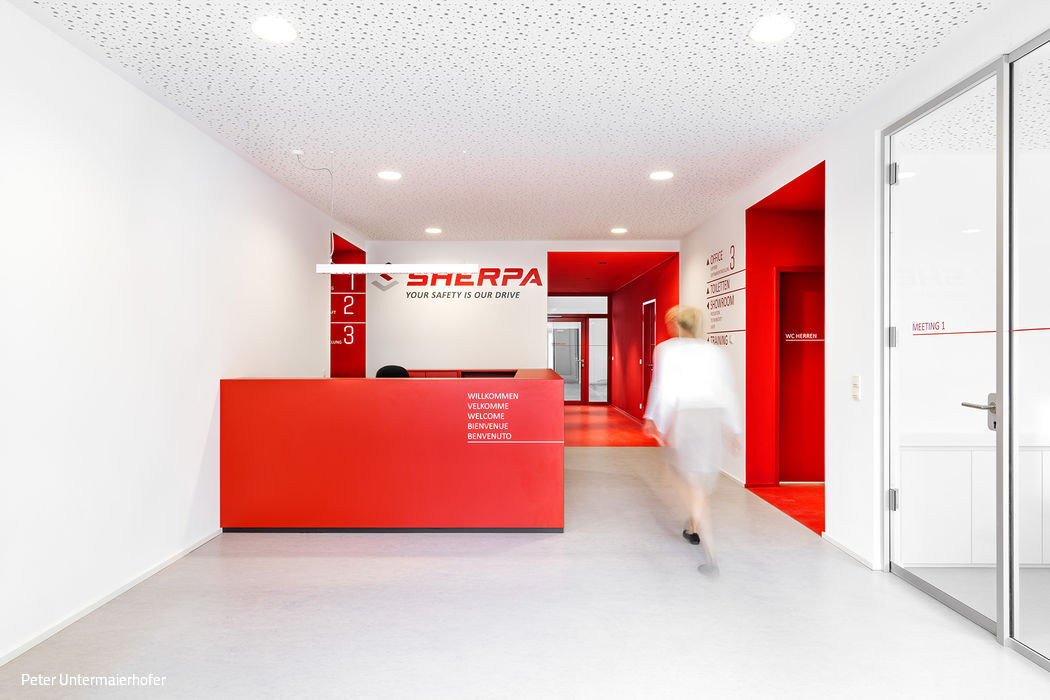




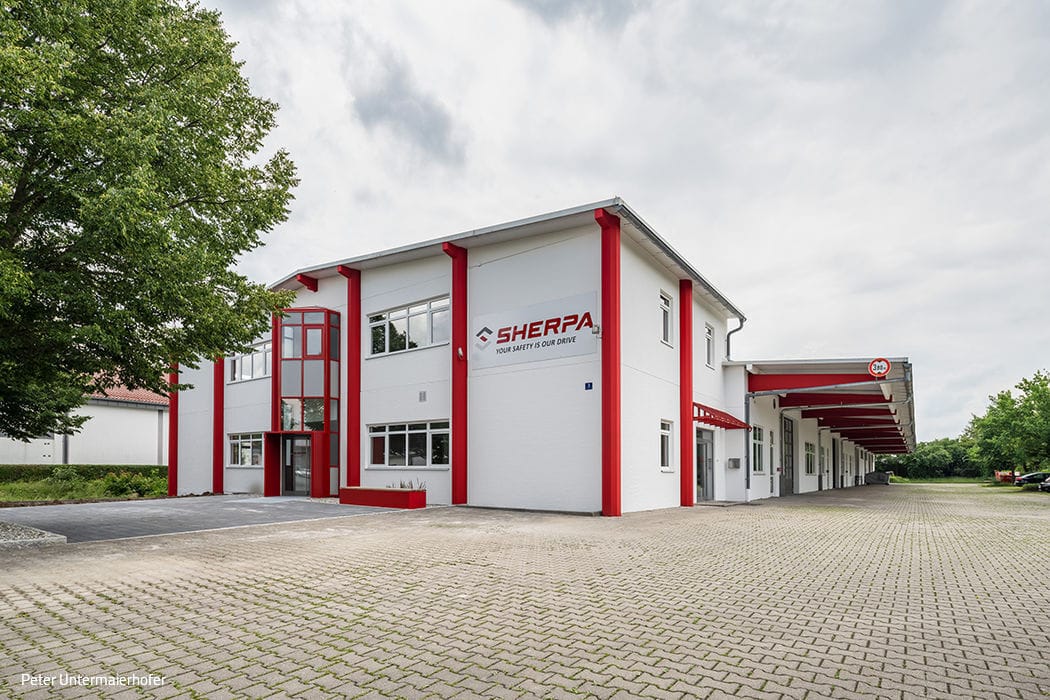
Erste Anlaufstelle für Besucher der Sherpa Autodiagnostik ist der Counter im neuen klaren Corporate Design der Firma Sherpa. Eine Schreinermaßanfertigung in Signalrot, passend zum Logo des Werkstattausrüsters aus Ampfing im bayerischen Landkreis Mühldorf am Inn. In nur vier Monaten gestaltete der Neuöttinger Architekt Robert Maier die neue Firmenzentrale am neuen Unternehmenssitz und traf mit seinem Konzept voll ins Schwarze – beziehungsweise ins Rote. Hier wurde ein Bestandsgebäude saniert, umgebaut und auf insgesamt 4.600 m² die bisherigen Sherpa-Standorte in Mühldorf und Neuötting vereint. Neben neuen Bürotrakten gibt es nun auch moderne Schulungs- und Trainingsräume sowie einen Showroom, in dem Besucher und Interessenten aktuelle Technologien und deren Anwendung direkt erleben können.
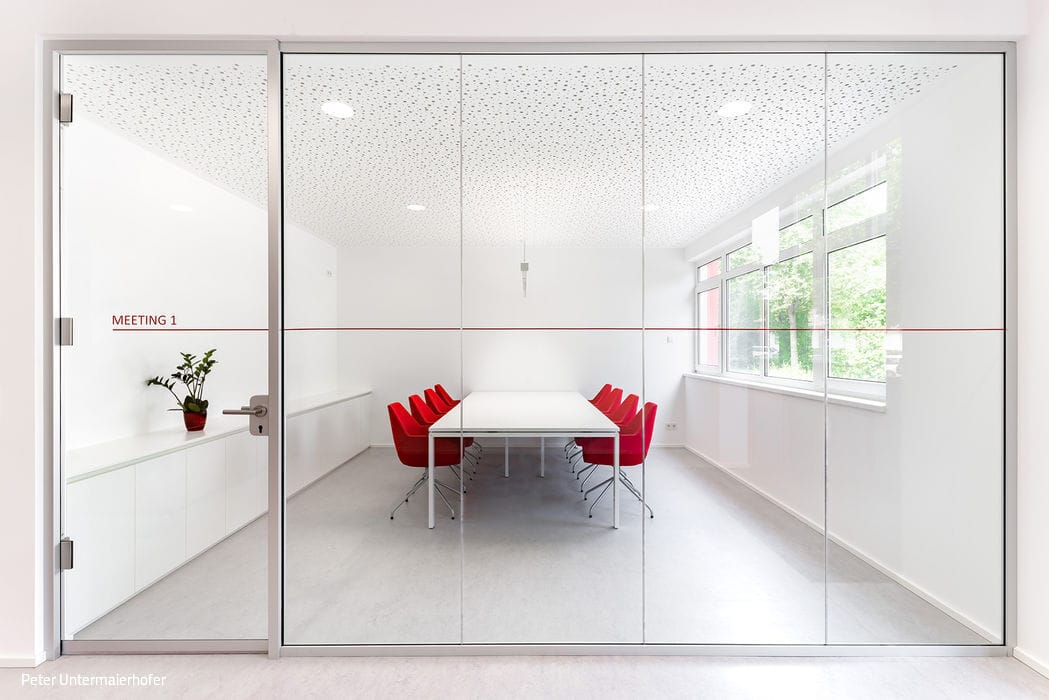
Die Mitarbeiter zeigen sich sehr zufrieden mit dem neuen, kühn und futuristisch anmutenden Interieurkonzept von Maier, das einige interessante Details inkludiert. Es orientiert sich an den Unternehmensfarben Weiß, Hellgrau und Rot und dieses Farbenspiel wiederholt sich in allen Bereichen – sei es im Besprechungszimmer mit den roten Konferenzstühlen als i-Tüpfelchen oder bei den extra für das Objekt angefertigten Schränken von Assmann Büromöbel mit roten Einsätzen. „Im Prinzip haben wir mit einer Mixtur zwischen Liefermöbeln und Maßanfertigung gearbeitet“, sagt Maier. Herzstück des Ganzen ist die Mitarbeiterkantine, die sich fast kathedralenhaft zum Oberlicht öffnet und mit einer Gipskartonstreulochdecke mit unterschiedlich hoch abgehängten Kugelleuchten, die wolkenartig über dem Geschehen schweben, quasi zum Kunstwerk wurde. Die gelochten Akustikelemente wiederholen sich in den Räumen, wo sie mit Einbauleuchten versehen wurden und ebenso künstlerisch wirken. In der Mensa zieht auch wieder das rote Highlight alle Blicke auf sich: Die Küche ist eine Maßanfertigung und kontrastiert mit den in ruhigem Weiß und Grau gehaltenen Wänden und Böden. Rot weist auch den Weg vom zentralen Zugangsbereich in die verschiedenen Arbeitszonen: Vom Boden bis zur Decke in der Signalfarbe gehaltene Flure führen zu den verschiedenen „Schotten“ hin. Diese sind das eigentlich Futuristische an dem Entwurf, denn alle Büros und Flächen sind so vorgerichtet, dass sie künftig, je nach Bedarf und Anforderung, verändert werden können. Derzeit sind pro Schotte zwei Arbeitsplätze vorhanden, sie kann aber auch mit zwei Arbeitsplätzen plus einem Besprechungsbereich oder Büros mit drei bis vier Arbeitsplätzen gestaltet werden. Dabei wird mit Glasabtrennungen gearbeitet, damit das insgesamt lockere Raumgefühl nicht eingeschränkt wird.
Photography Credits:
Peter Untermaierhofer
www.untermaierhofer.de
(Published in CUBE Munich 02|21)
Like in a Hotel
Warm, Inviting Design Transforms a Dental Practice Into a Sanctuary
A House for a Pianist
A Resonant Space in Silver Fir
Preserving & Protecting
"Green Hospital" Specialty Clinic Designed as a Healing Environment
Living Together Inclusively
Contemporary Living Reimagined: A New Vision for Neuhausen's Historic Neighbourhood