


Living Through and Through
A single-family home with guest apartment designed entirely for accessibility
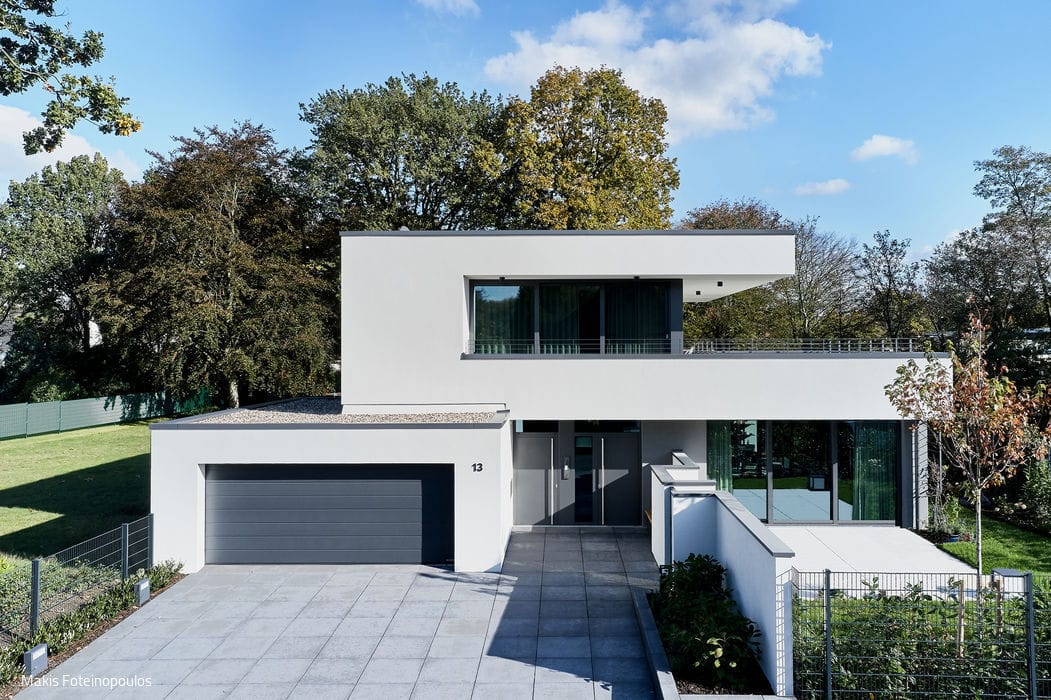
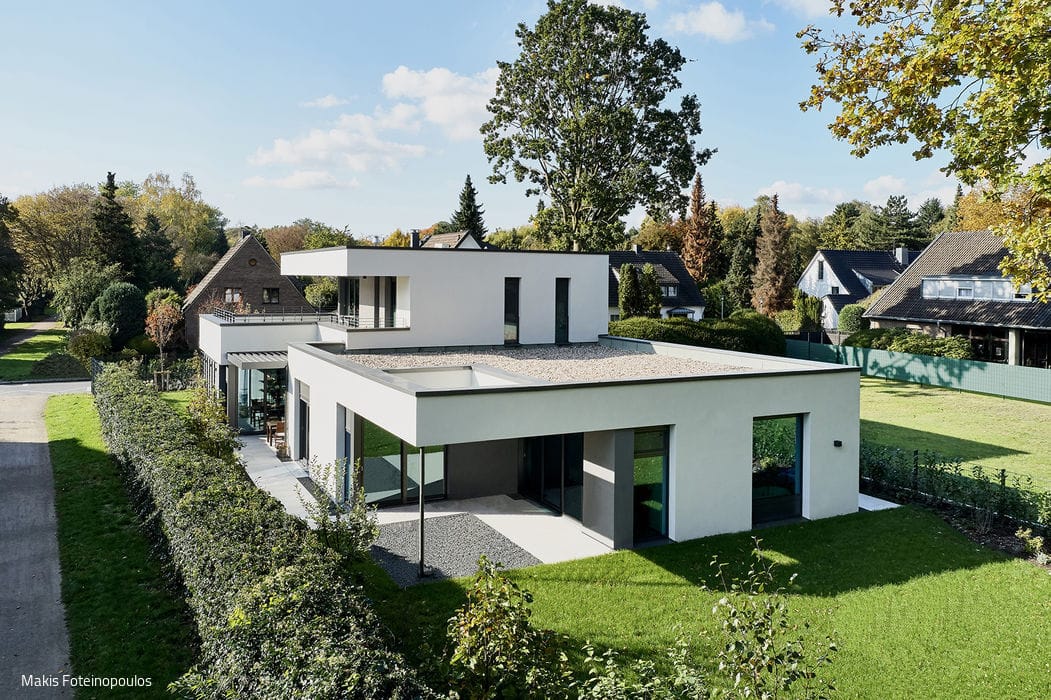
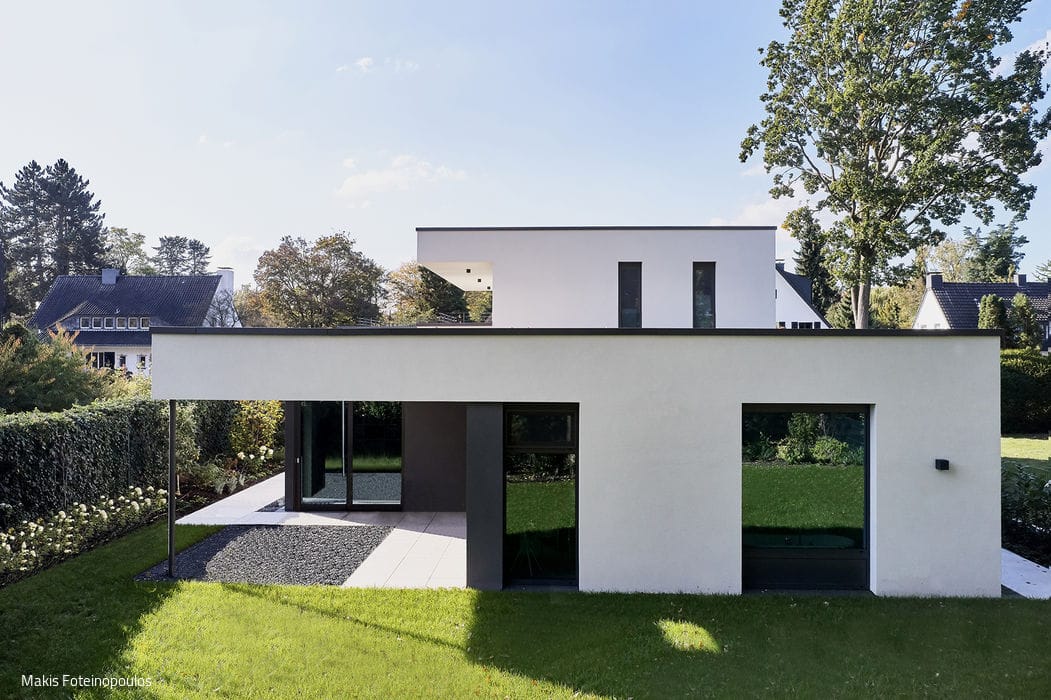


Seeking to prepare for their retirement years, the client's parents-in-law wanted their home redesigned as a fully accessible residence. When the commissioned Krefeld-based firm Remscheid Comes determined that retrofitting the existing structure would be impractical, a new approach took shape: on an undeveloped lot acquired by the son-in-law, the architects designed a contemporary residence that seamlessly combines a generously proportioned, fully accessible living unit on the ground floor with a guest apartment on the upper level, accessed through a separate entrance.
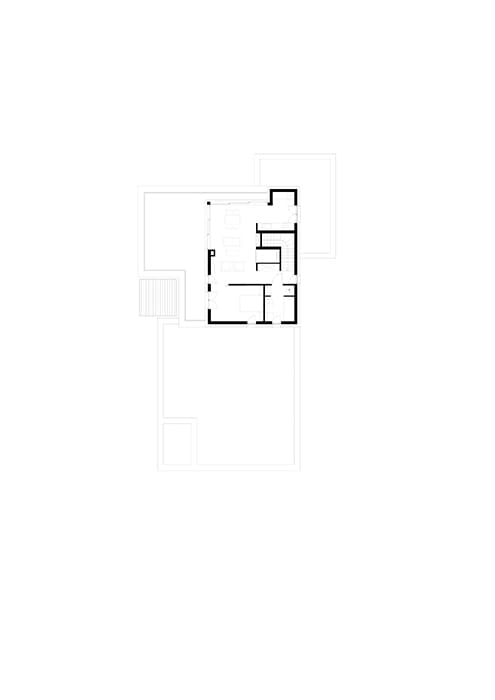
The building echoes the open urban character of Krefeld's Blumenviertel, aligning with neighboring structures to run parallel to the footpath and deep into the site. Its white plaster exterior draws from the surrounding residential vernacular, yet translates these references into a refined modern language—crisp cubic forms punctuated by dark horizontal window bands. Given the elevated groundwater table, the partially basement structure required a white concrete waterproofing system. The architect faced an intriguing challenge: creating generous barrier-free living space on the ground floor while shielding south-facing private areas from a neighboring three-story residential building. The solution unfolded in two complementary moves: first, a sunken patio carved into the volume, organizing the living, kitchen, and dining zones around its perimeter; second, the private sleeping area steps back, opening toward a forecourt terrace with a minimalist stone garden that draws light through a roof aperture. Both the patio—sheltered from direct sun by an adjustable louvre roof—and the terrace canopies create dynamic shadow patterns across the façade. Interior and exterior spaces develop along a central sight line and circulation axis, extending from entry through to the master bedroom with flexible ensuite and integrated sauna. This orchestrates fluid movement and ever-changing sightlines throughout. The building's bold façade vocabulary set the tone for the interior design, developed in close partnership with Raumobjekt Hammermeister, who designed, fabricated, and installed the kitchen, built-in furnishings, and sauna features. A striking focal point is the gas fireplace, elegantly integrated into a media sideboard. Designed to KfW 70 efficiency standards, the house leverages geothermal heating and cooling for optimal energy performance. A smart home system controls essential functions—heating, access, lighting, alarm, and ceiling-integrated audio. Additional features include a centralized vacuum system and automated garden irrigation.
Photography Credits:
Makis Foteinopoulos
www.makis-photography.de
(Published in CUBE Düsseldorf 04|21)
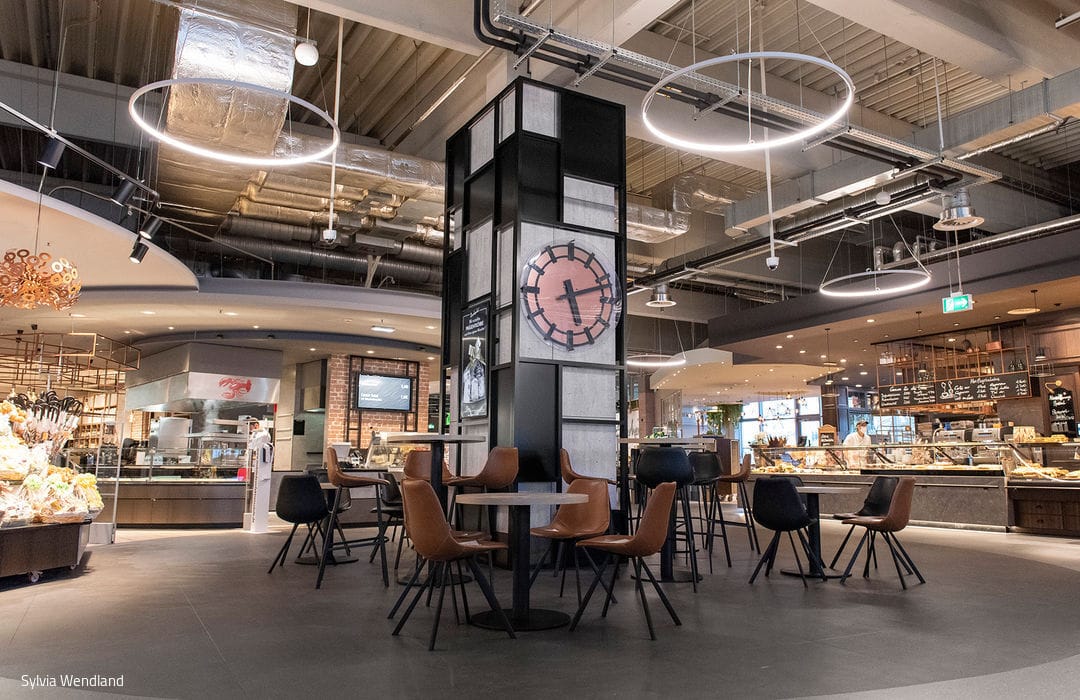
Reimagining the supermarket
Sustainability was the primary driver behind the Zurheide food market's comprehensive renovation and redesign.
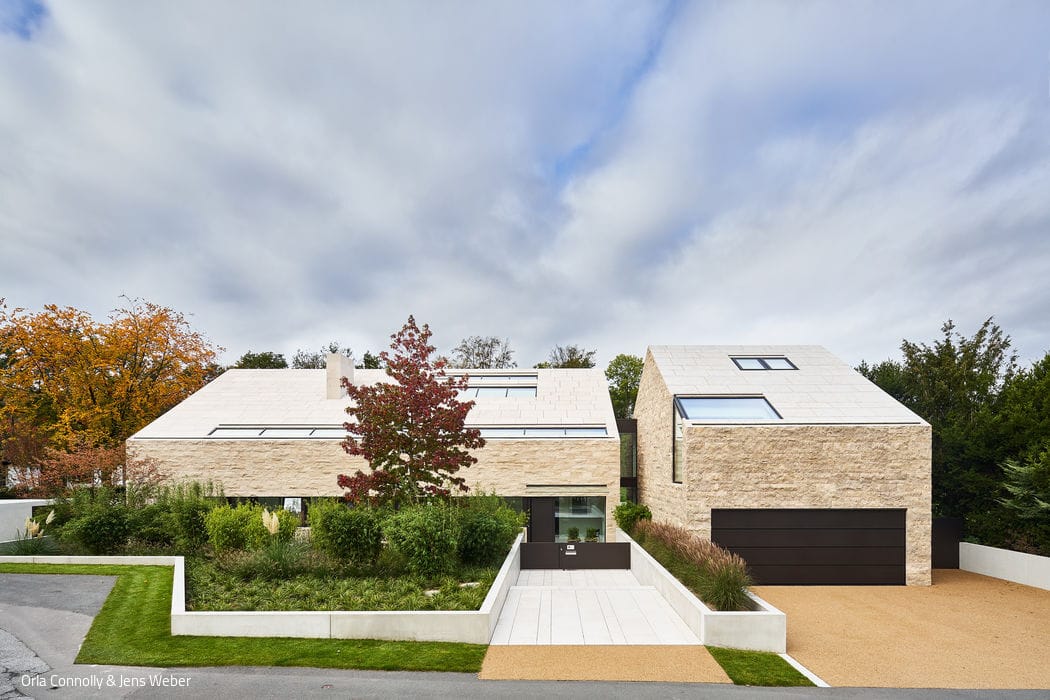
Stone Wrapped
Contrasts in Dialogue: A Study in Perfect Symbiosis
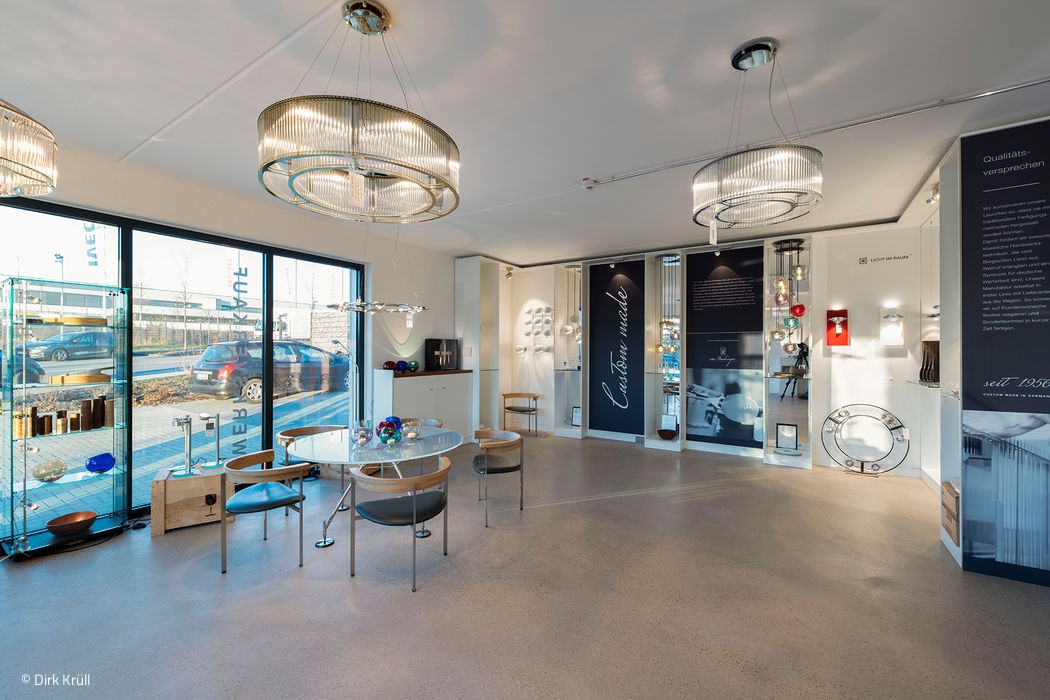
A new home for brilliant ideas
Design studio, workshop, and showroom of Licht im Raum
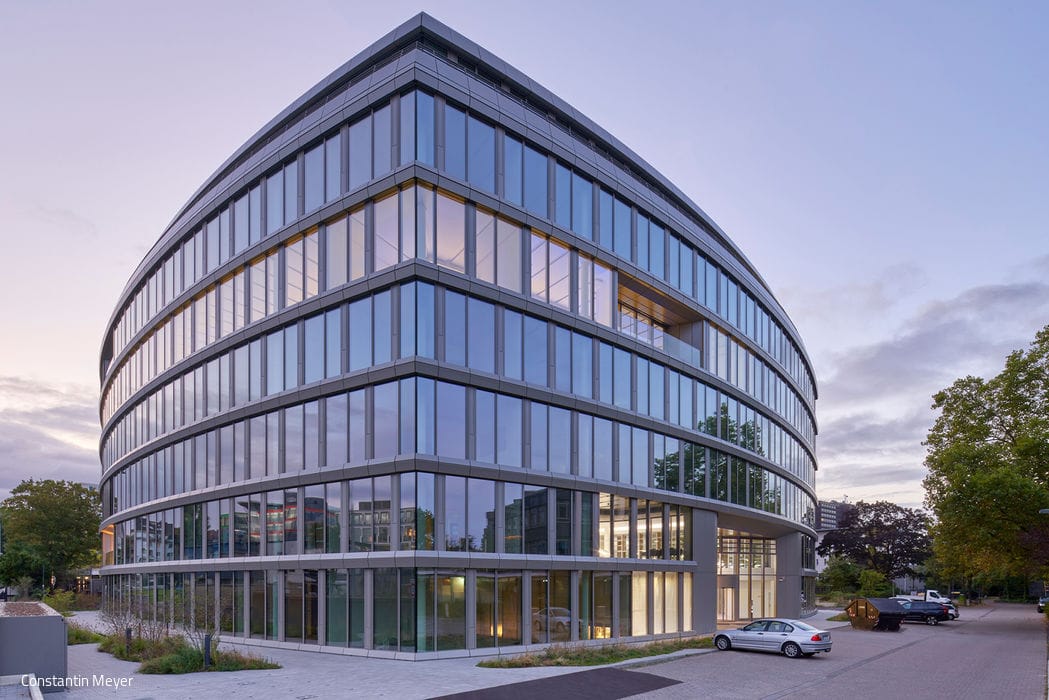
Sustainable and digital
"The Oval" in Golzheim: The Blueprint for Intelligent New Work