


Temporary use in your own style
Distinctive interior design with elements of corporate identity
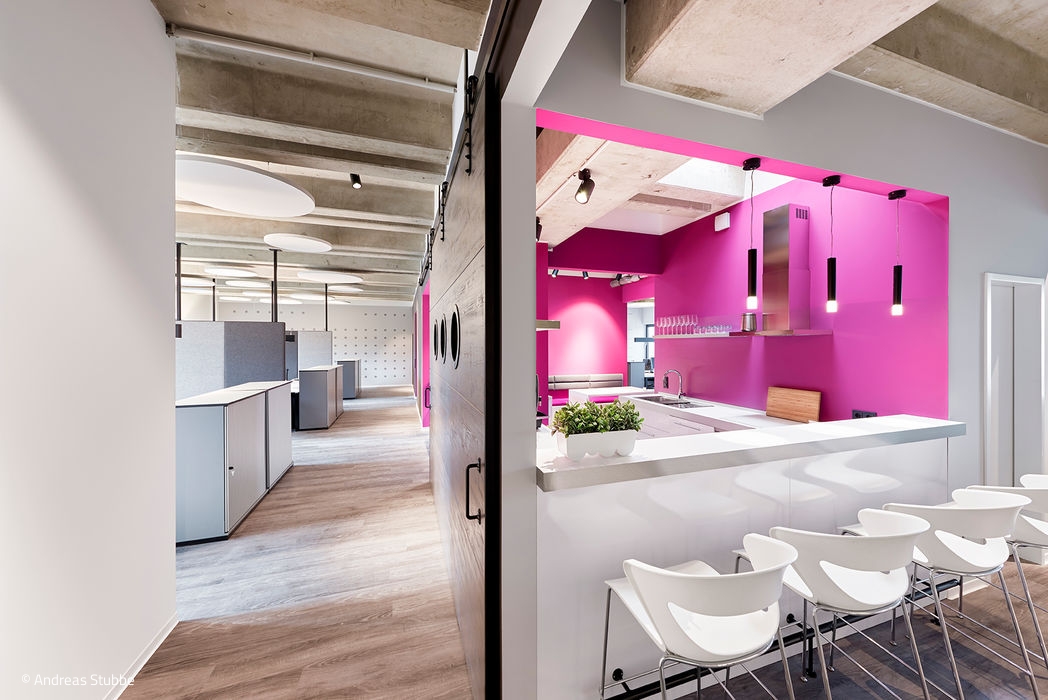
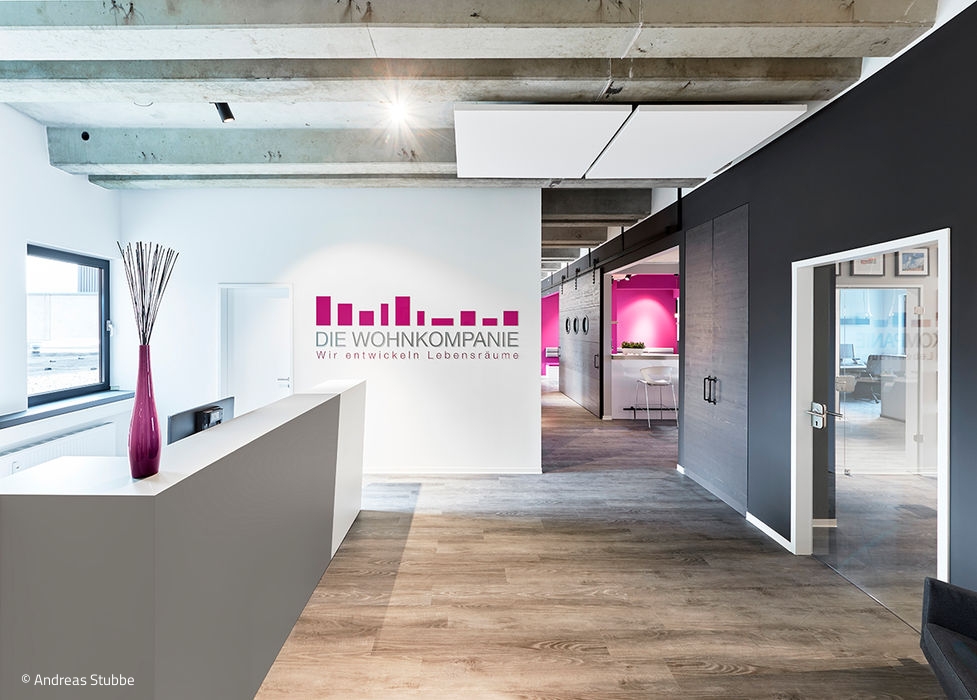
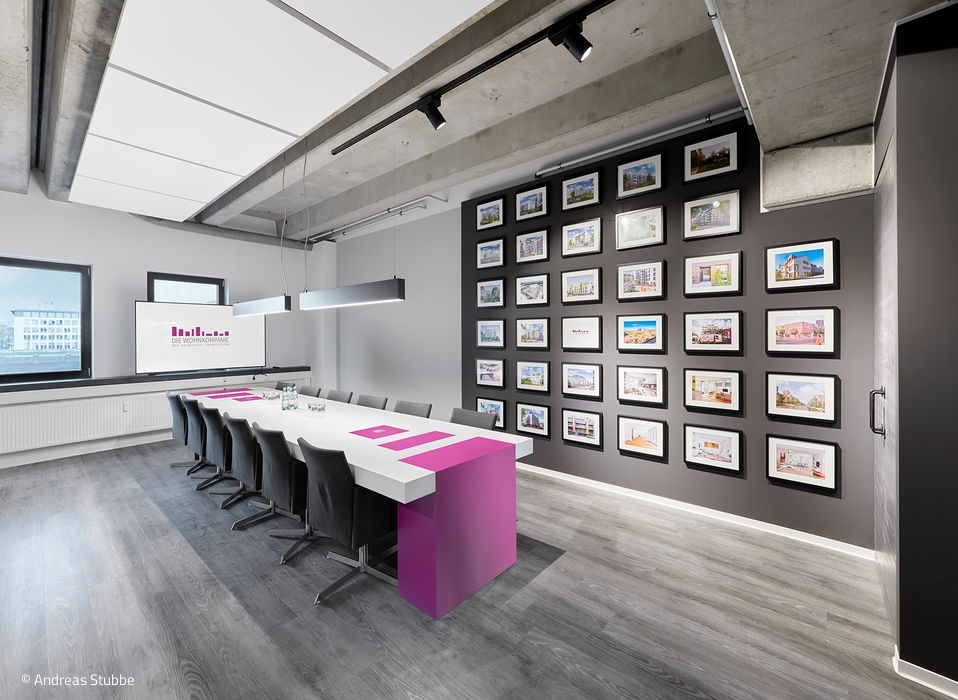
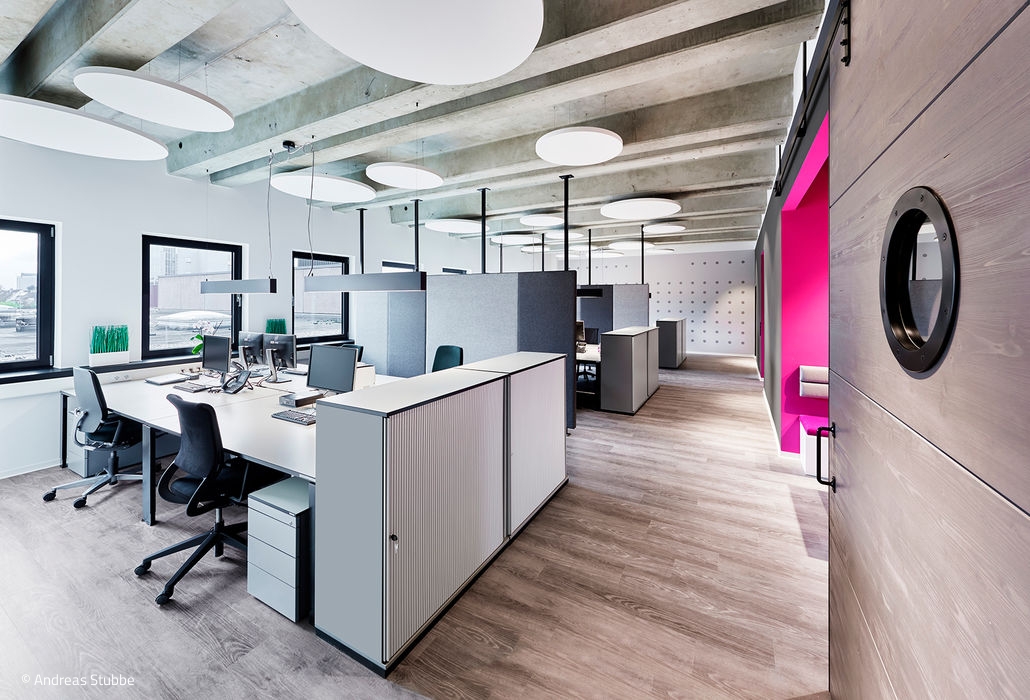
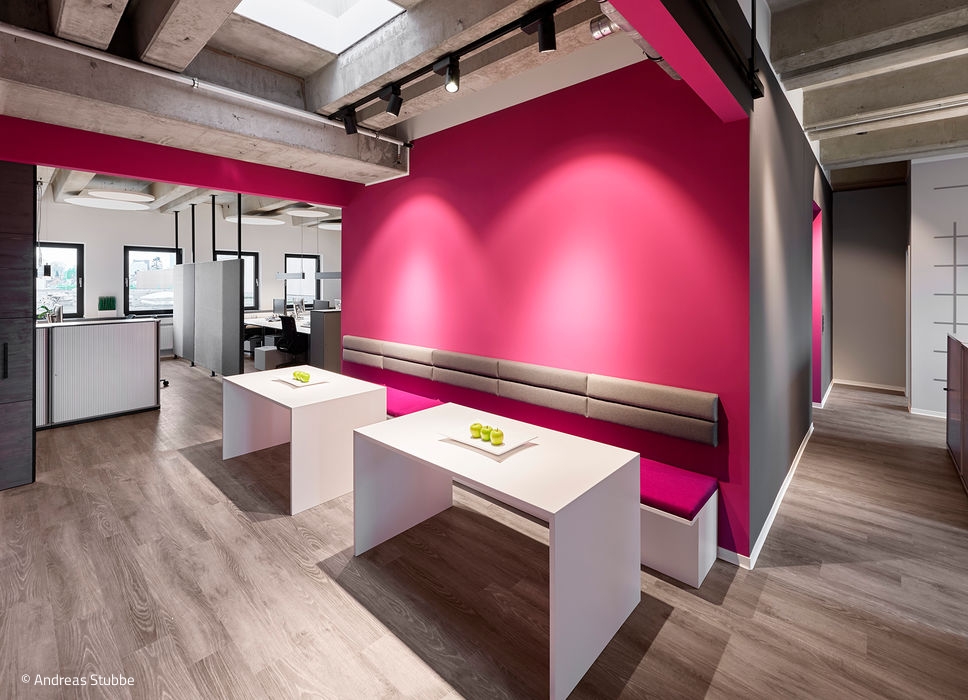
A new neighbourhood is being built in Heerdt by 2025, the Vierzig549 project, with a mix of residential and commercial units. This means that living and working will be close together. But before the life that the city and the owners want to see here can begin, construction must first take place. And that will take a long time. That is why the project developer Die Wohnkompanie NRW has decided to temporarily set up its tents – in the form of offices – right in the middle of the action. The company is developing the neighbourhood, located on a former industrial wasteland, in collaboration with Bauwens Development. So what could be more obvious than to use the existing buildings? A former canteen proved to be ideal for the pop-up offices, and the interior design firm Raum-Haus-Form was brought in to help with the redesign.
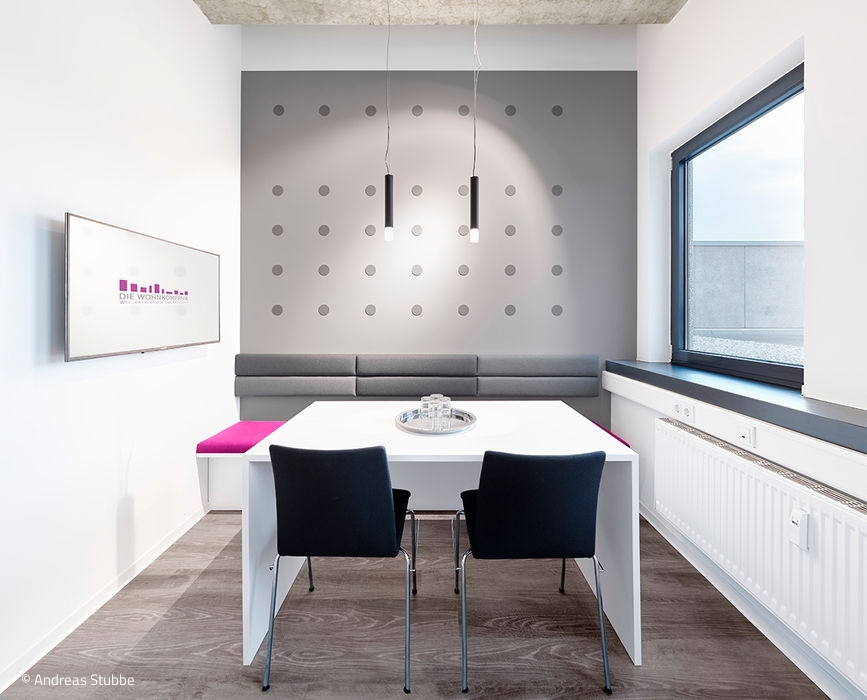
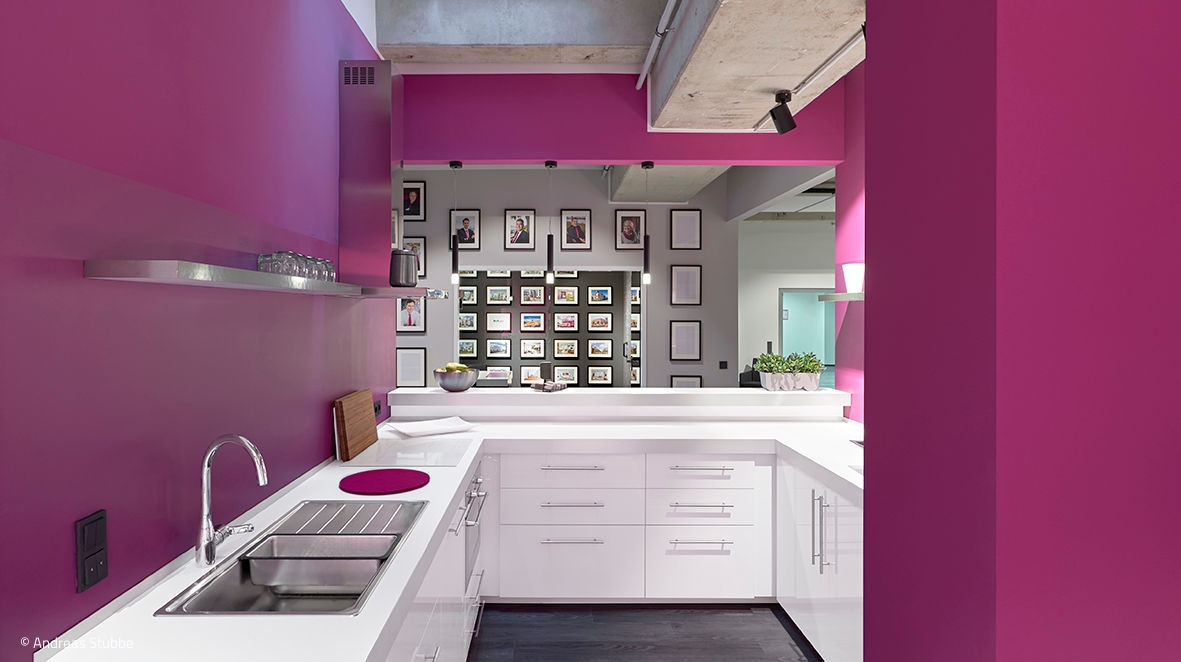
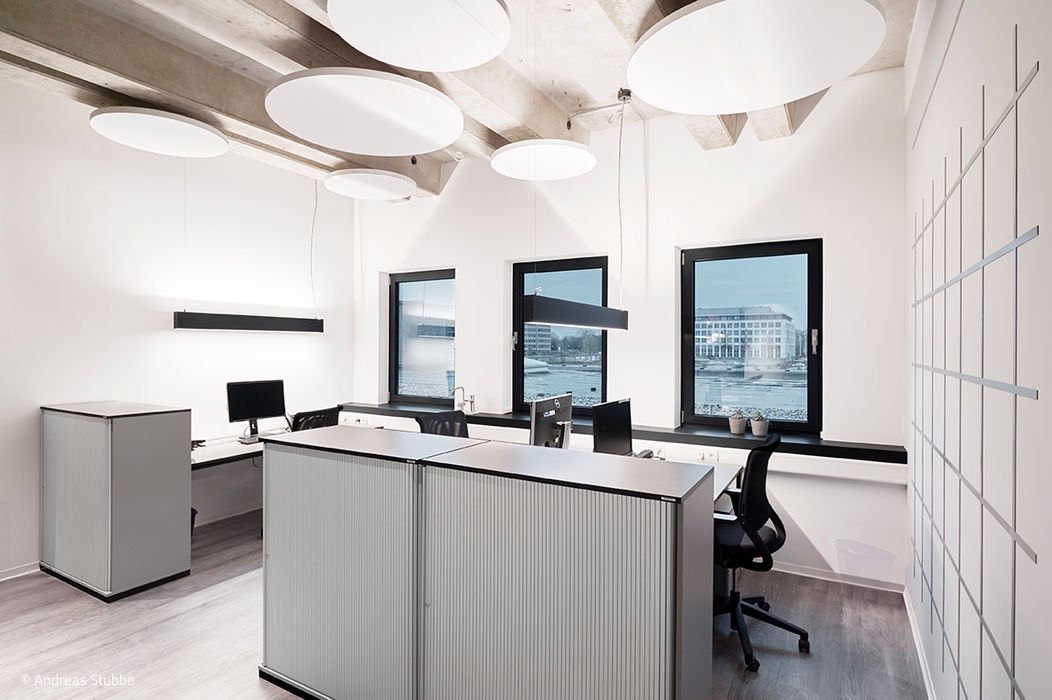
"When a project spans such a long period of time, it is helpful to be right there on site," explains Oliver Degel from Raum-Haus-Form. The 310 m² former canteen is located in a building from the 1980s. The aim was to create an appealing working atmosphere without major construction work. Of course, even though the use was only temporary, it would still last for several years, so technical standards had to be taken into account when it came to the fittings. "We positioned the general infrastructure, i.e. the printer and storage room, toilets, kitchen and break room, in the middle, like a ship," says Degel, describing the floor plan, which is divided into three open-plan sections. To the left and right, the workstations are arranged as open-plan, single or double offices. Sliding doors provide noise protection and can be used to separate the areas from each other. When the partitions are closed on both sides, a large meeting room with a catering area is created in the middle.
Designed in the company colours, the central section represents a strong corporate identity. This has a more subtle effect in the offices, which have also been designed using elements of the corporate identity. A conference table, for example, brings the company logo into the third dimension, the wall design picks up on the pattern of the notepad, and the fields of the pinboard are backed with magnets so that notes can only be attached in a DIN grid. The work here is focused, which is also conveyed by the restrained colour scheme. Acoustic elements provide additional support.
Photography Credits:
Andreas Stubbe
(Published in CUBE Düsseldorf 02|20)

Everything in a Box
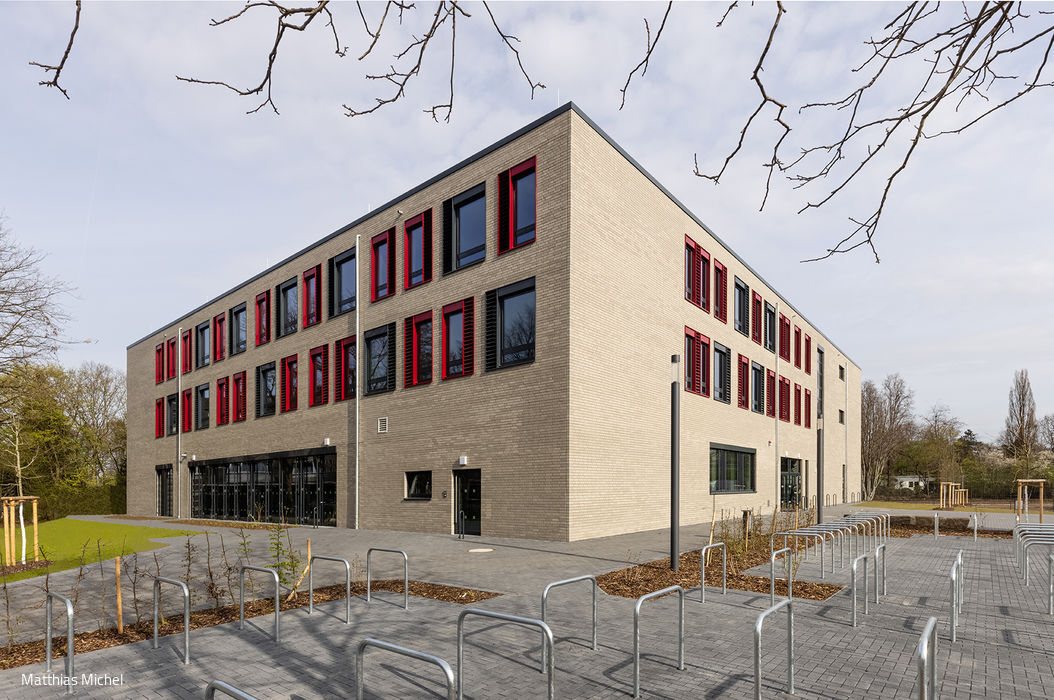
A compact three-storey extension for a comprehensive school in Neuss unites cafeteria, foyer, and classrooms under one efficient design.
Appreciation for the Natural
From garage to generously proportioned kitchen house
Classically Restrained
A 1960s home in Büttgen reimagined: energy-efficient renovation meets contemporary design.
Modern Counterpoint
A Protected Heritage Pavilion Thoughtfully Restored and Imaginatively Extended