


Revived Farmhouse
Historic structures in Niederkassel reimagined for modern living while honoring their original character
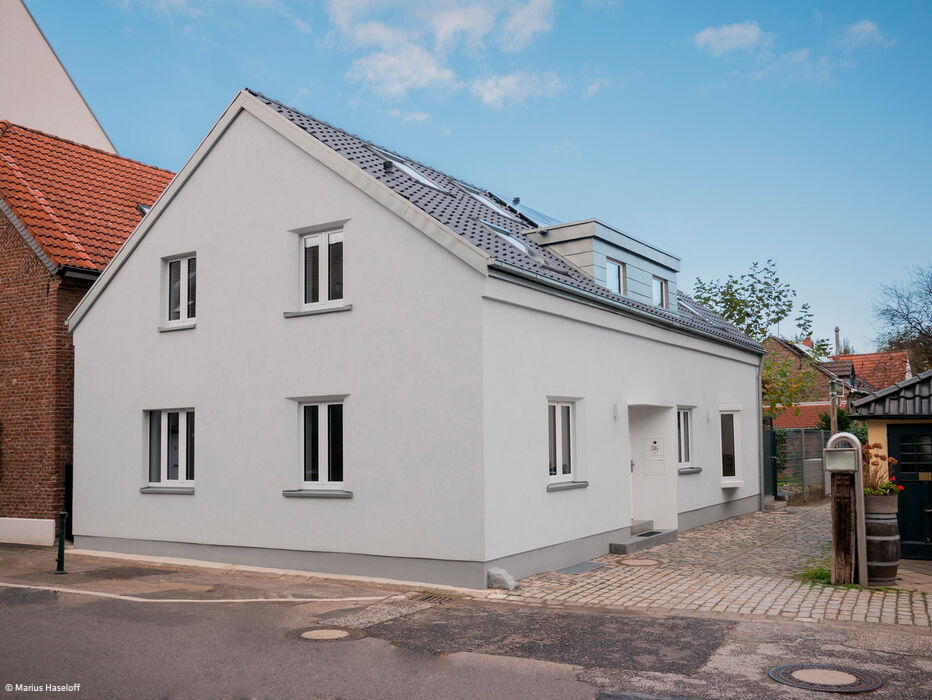




Alt-Niederkassel, located on the left bank of the Rhine, is among the districts of the state capital that have preserved their village character to this day. Düsseldorf-based architect Jonas Hofmann of the Hofmann Architects Group also spent his childhood here—as did the owner of a former farmhouse that was to be converted into a family residence. It was a matter of the heart for both to modernize the vacant building dating from 1866 with such respect that the original typology remains recognizable and the gable-end house continues to be perceived as part of the organically grown village structure.
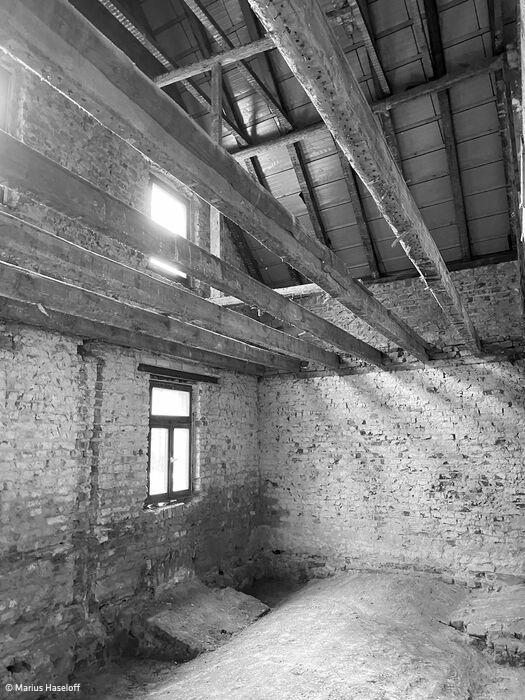
Renovation constraints demanded creative restraint: existing building codes and setback requirements ruled out any demolition or extension. The building retained its original proportions entirely, while its plaster façade received a comprehensive upgrade using sustainable, durable insulation crafted from ecological materials. Externally, the house preserves its authentic character—only carefully conceived details reveal the thoughtful intervention: a subtly projecting entry portal and slightly chamfered window recesses signal the layering of old and new. The eaves-side bay window, a contemporary addition, revives the rural tradition of "keeping an eye on the street"—observing who passes by the door or lingers in the lane. Inside, modern living expectations merge seamlessly with the house's traditional layout. Ground-floor living and dining spaces open onto a rear courtyard anchored by a plane tree, while bedrooms and children's rooms occupy the attic story. The loft was strategically opened, with a suspended safety net defining a distinctive play and leisure zone. Compact room sequences were thoughtfully reorganized to allow flexible reconfiguration into larger units, preserving the farmhouse's spatial logic. The restoration revealed unexpected challenges: the deteriorated structure necessitated nearly complete internal reconstruction. Yet the original roof frame and historic wooden staircase survived—the latter ingeniously adapted to the new floor heights. Building systems required equal care, threaded through existing spaces with precision. Today, the airtight, heavily insulated home—equipped with a ground-source heat pump, radiant floor heating, PV arrays, and balanced ventilation with heat recovery—meets KfW 70 efficiency standards.
Photography:
Marius Haseloff
(Published in CUBE Düsseldorf 02|24)

Courtyard House With Pool
A generous solid-wood residence that mirrors the aesthetic of a classic brick building
Sustainable Wellness Sanctuary
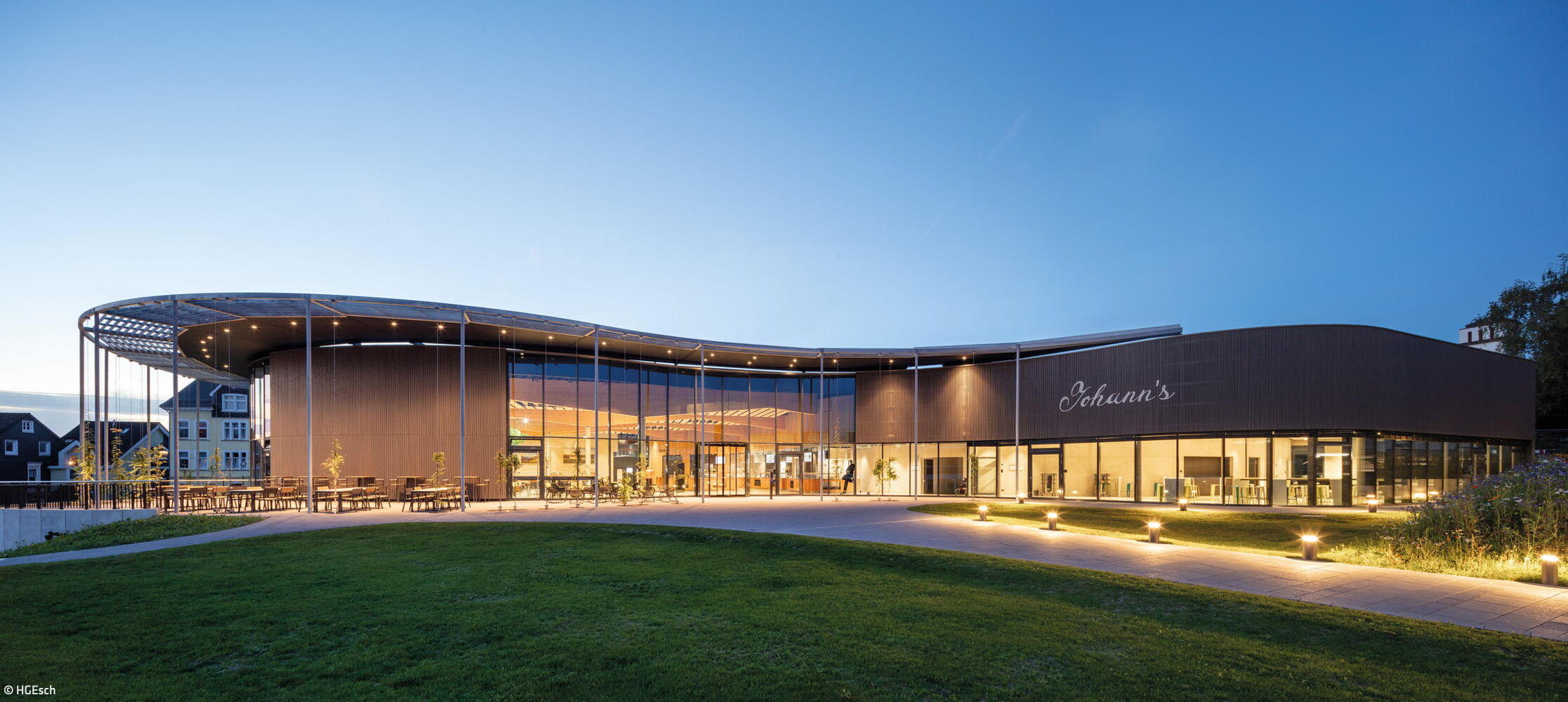
Where Curved Forms and Timber Create a Modern Staff Restaurant

Innovative Transformation
From Retail Vacancy to Vibrant Homes: Mörsenbroich's Reimagined Future

Housing First Düsseldorf
Unhoused people receive a new home without preconditions