


A Museum Without Right Angles
The Sudeten German Museum's new building demonstrates the transformative power of architecture
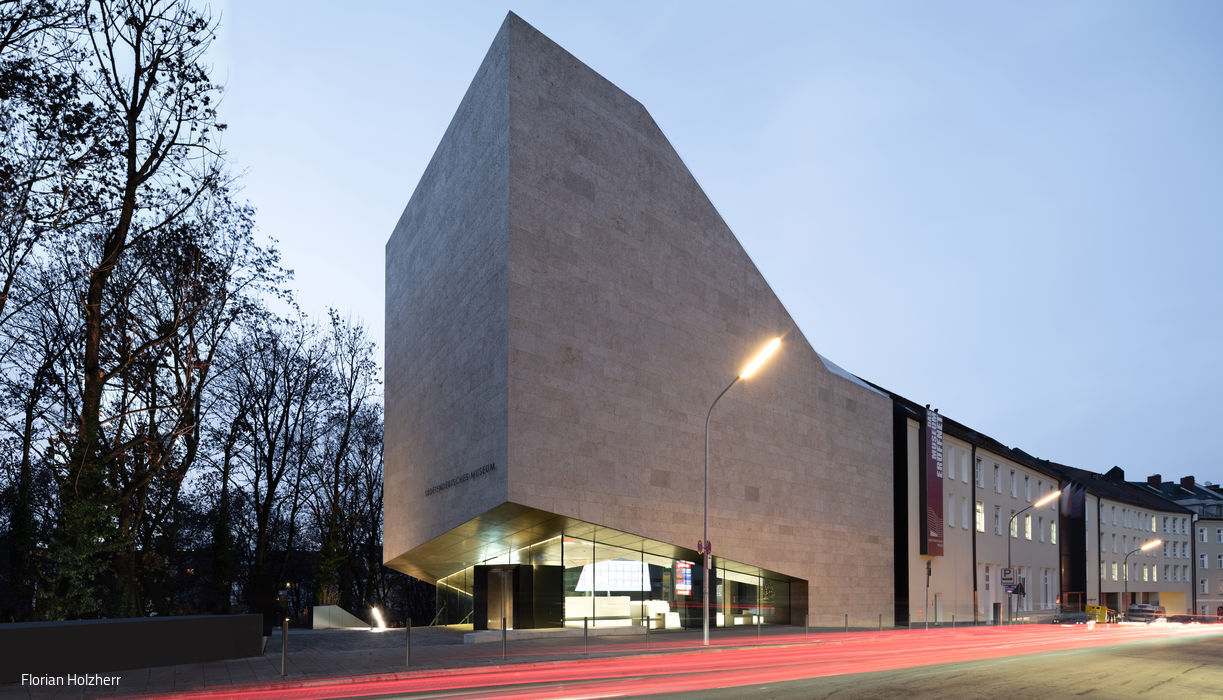
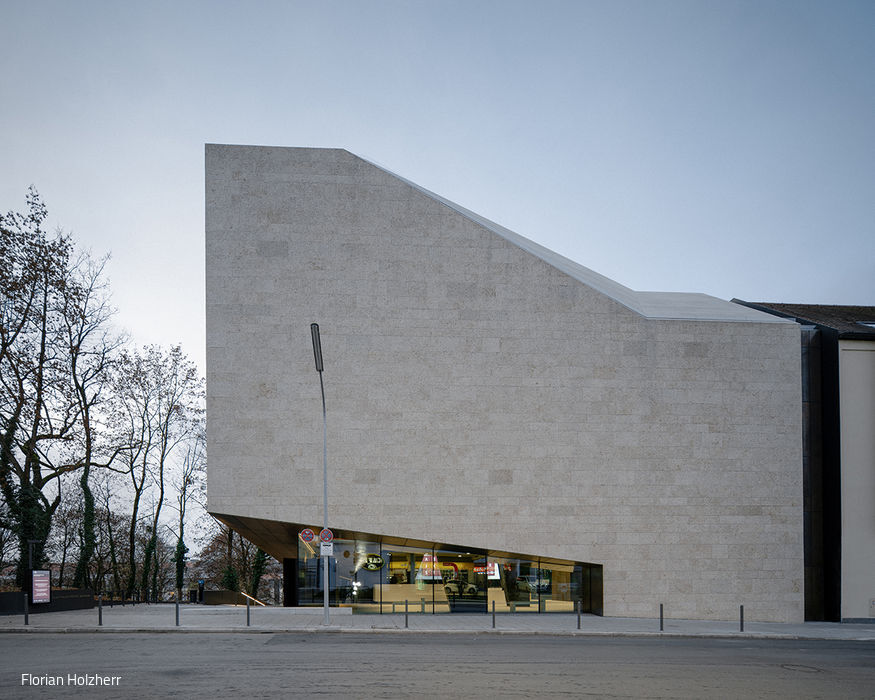
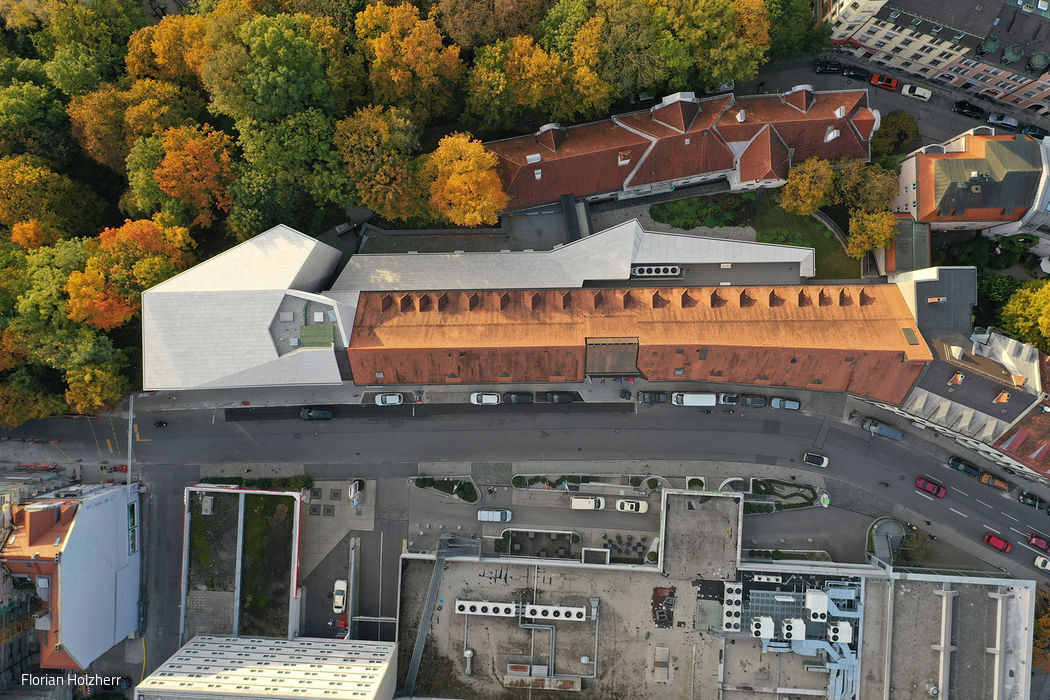
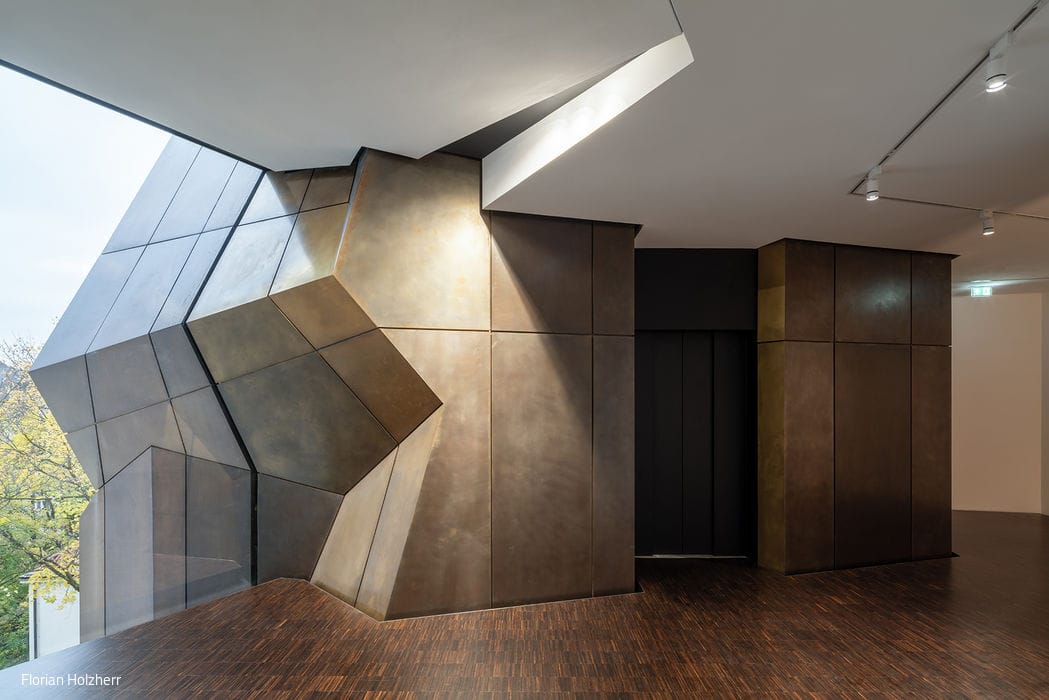
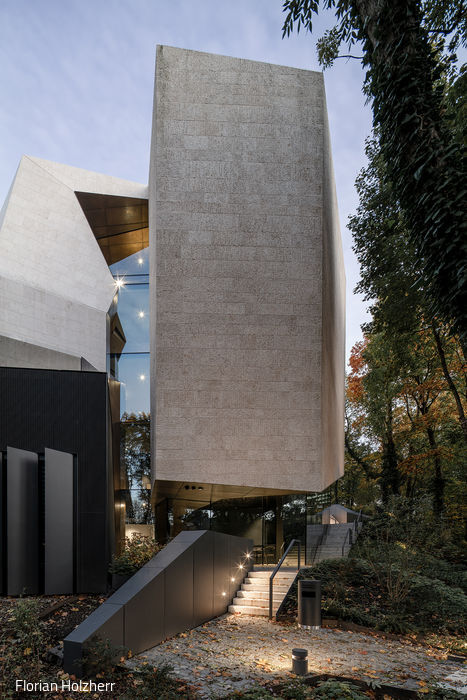
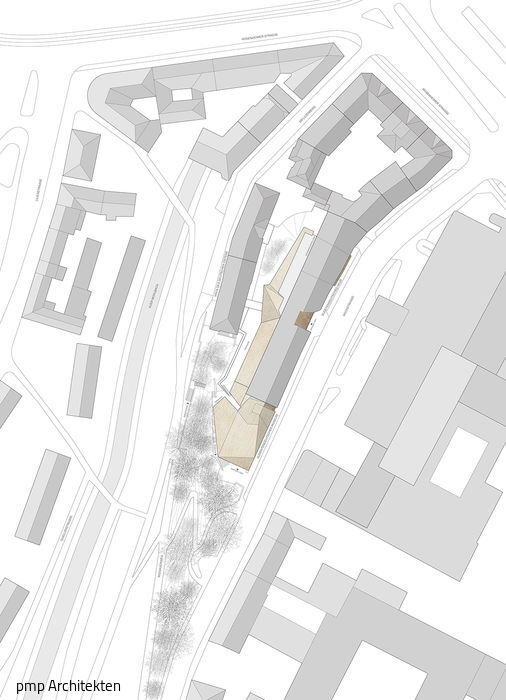
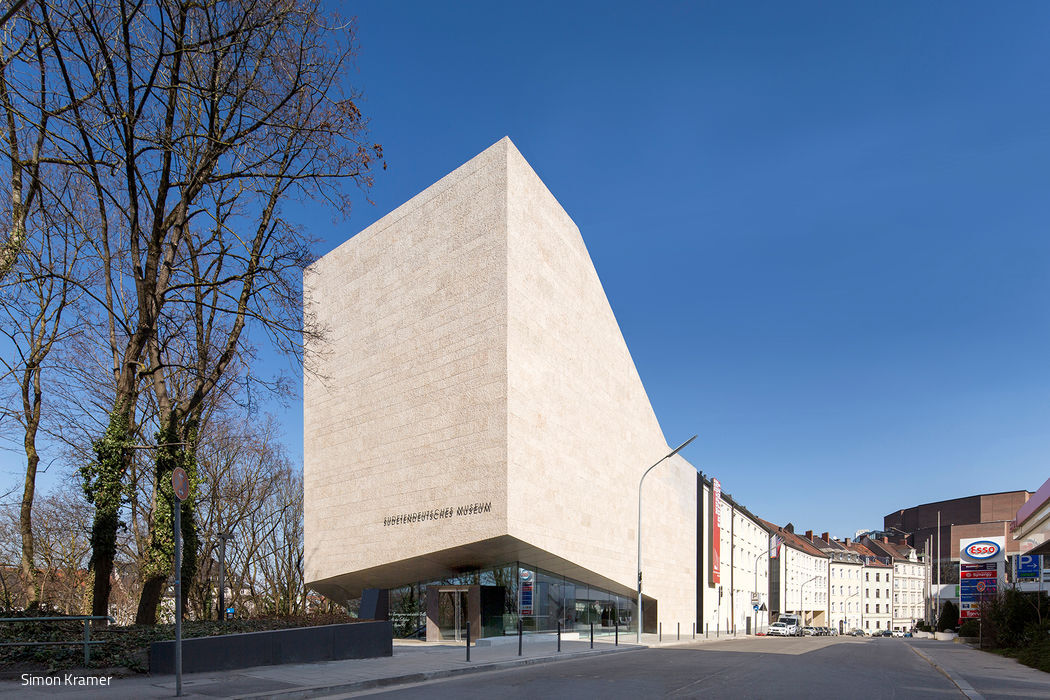
On a challenging, steeply sloping site, pmp Architects—winners of the competition to design the Sudeten German Museum—pulled off a remarkable feat: creating an impressively bold, polygonal structure. Only the former Wallenstein-Stuben inn was sacrificed to realize this vision. The modest 3,315 m² plot was ingeniously transformed into a gross floor area of 11,830 m², quadrupling the usable space. The exhibition experience begins on the fifth floor and descends through five levels to the first basement. The building essentially spirals down into the hillside, creating an immersive journey through the landscape.
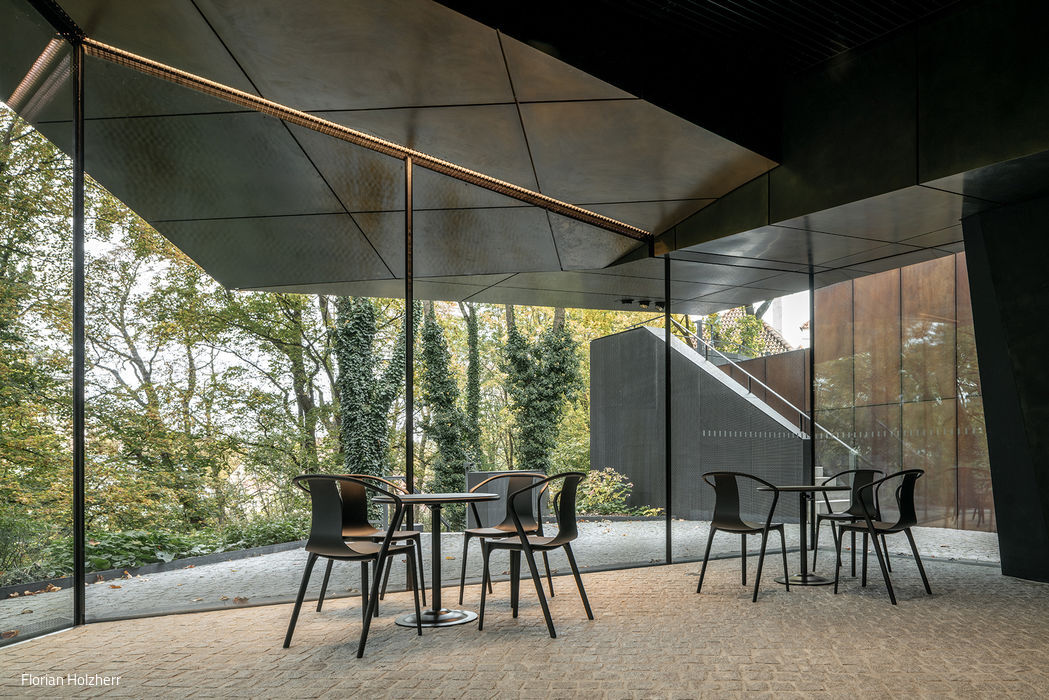
In his opening remarks, Minister President Markus Söder articulated why Munich was the ideal choice: approximately 3 million Sudeten Germans forcibly displaced from their homeland ultimately settled in Bavaria, where they became the fourth major ethnic group alongside Old Bavarians, Swabians, and Franconians—all considering Bavaria their home. This institution, Monika Grütters, Minister of State for Culture, noted at the October 2020 opening, was long overdue. The building reveals itself gradually; you must experience it firsthand to fully grasp how it integrates with the slope. From street level, it presents as a monolithic form, wrapped in a three-dimensional stone envelope of Dithfurt limestone. At the entrance, the cube rises on pillars, seeming to float on a glass platform.
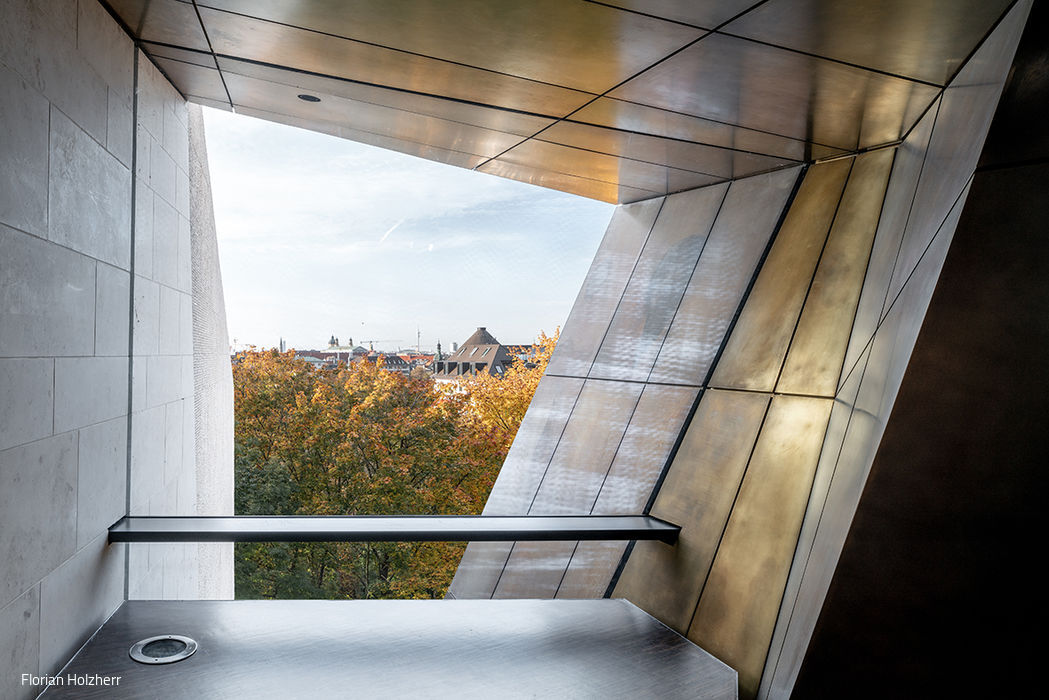
An external staircase descends from the slope toward Auer Mühlbach and the Isar, allowing visitors to trace the building's contours and discover how it expands into the basement levels. A second staircase ascends to a stone terrace, revealing how the structure extends horizontally as an addition to the original Sudeten German House. A glass incision through the "tower"—the prominent structure on Hochstraße—makes strikingly clear just how dramatically the building rises on its rear façade.
The permanent exhibition unfolds across five floors in five chapters, chronicling the thousand-year history of Sudeten Germans in Bohemia and Moravia—now the Czech Republic—through their expulsion in 1945 and their resettlement across Bavaria and other German states.
Photography Credits:
Florian Holzherr
www.florian-holzherr.com
Simon Kramer
(Published in CUBE Munich 04|21)
Inward Densification
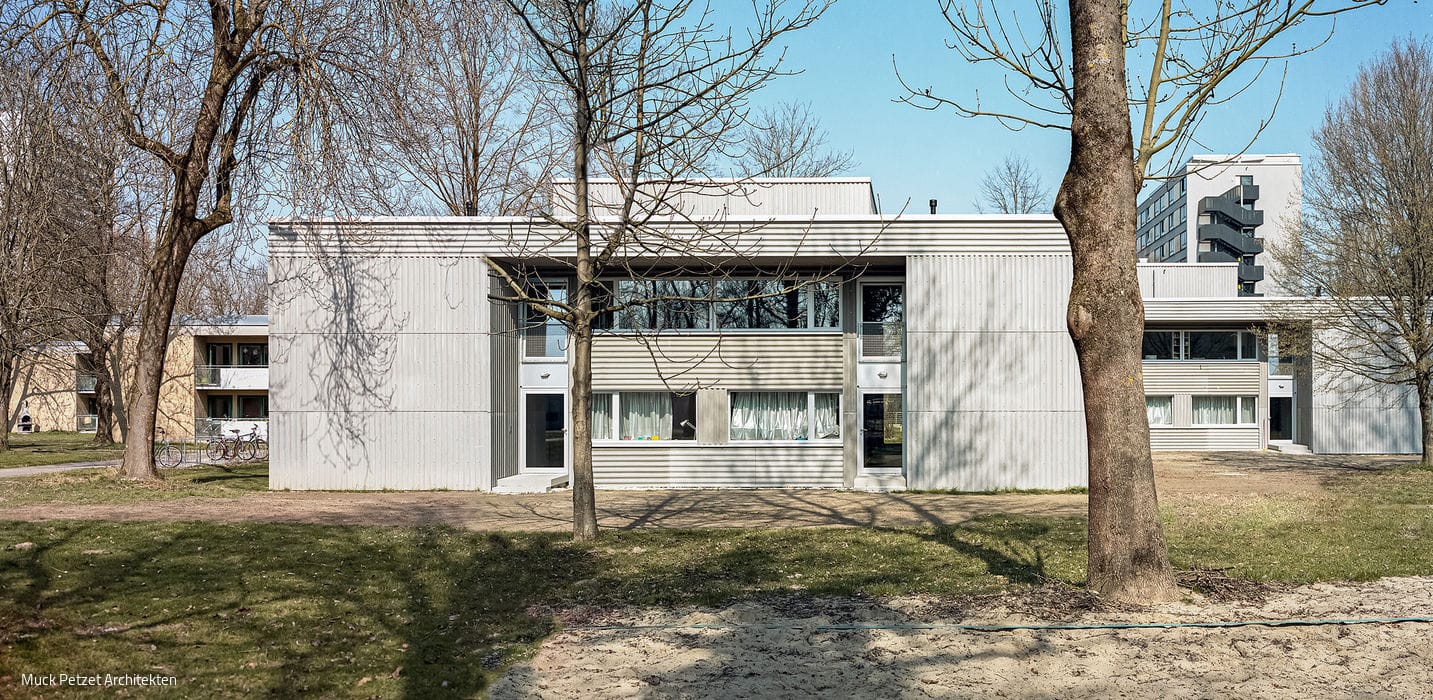
Redesign, Restoration, and Systems Renewal of the Atrium Houses at Freimann Student Village
In the Melting Pot
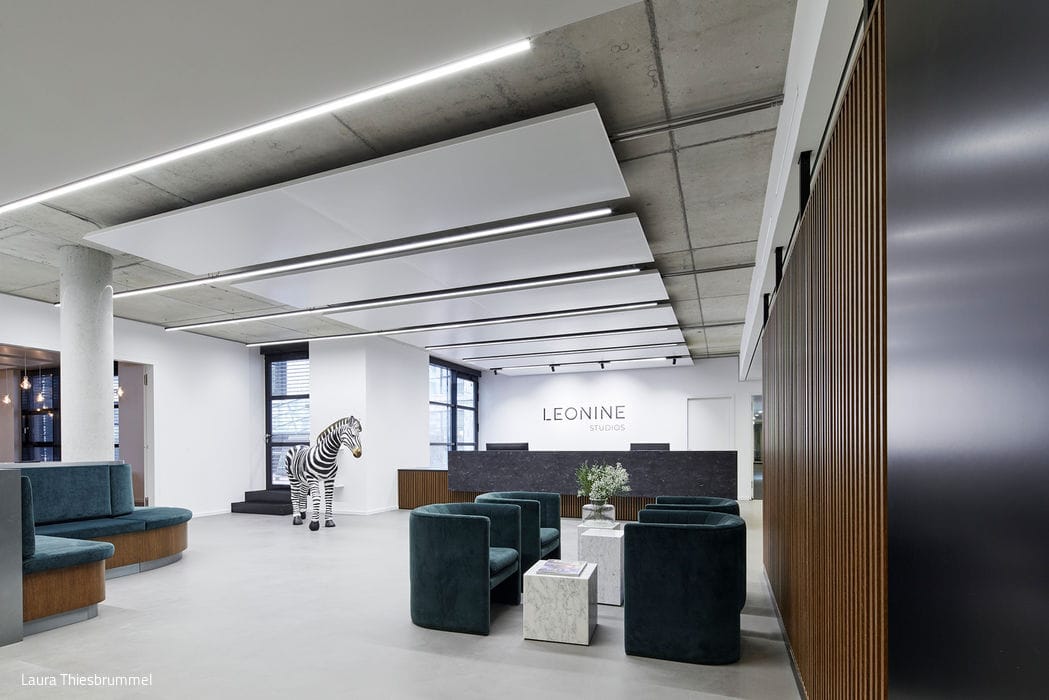
New Workspaces for a Munich Media Company
Living Beneath Sloped Roofs
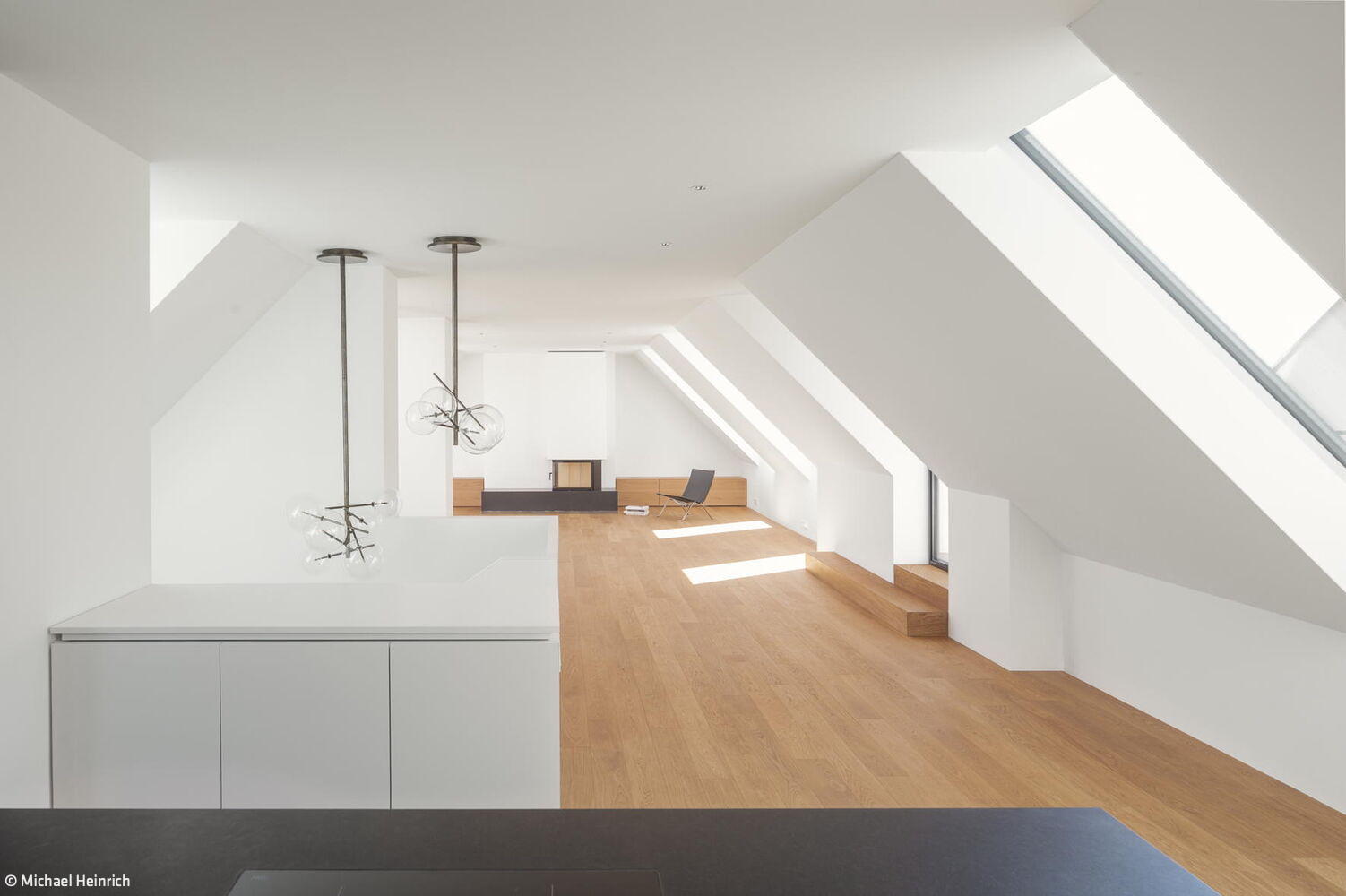
Smart Roof Space Design: Maximizing Every Square Metre
Serene Yet Vibrant
With smart design moves, privacy screens become landscape architecture.