


New Work in Sustainability
Flexibility and Environmental Consciousness as Design Principles
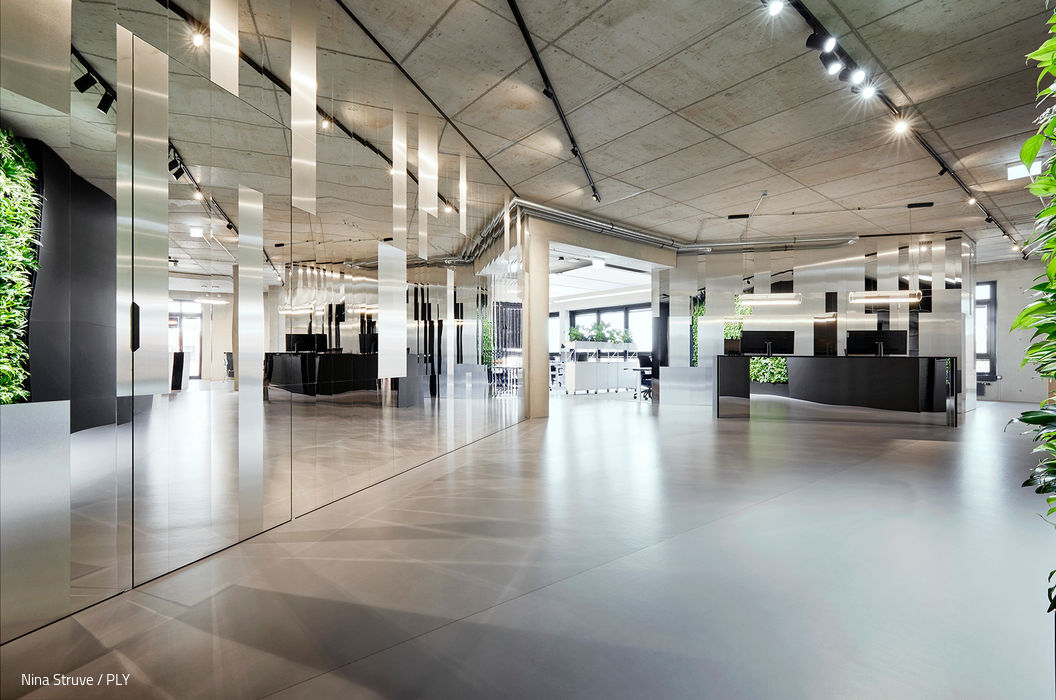


As a global engineering, architecture, and consulting firm with 1,100 employees in Germany alone, Ramboll develops sustainable solutions for companies worldwide. When realizing its new headquarters in Hamburg, sustainability and environmental consciousness naturally took center stage in the project requirements. Equally important was the demand for flexible spatial configuration and usage patterns—a key consideration that PLY Atelier integrated into the design development from the outset.
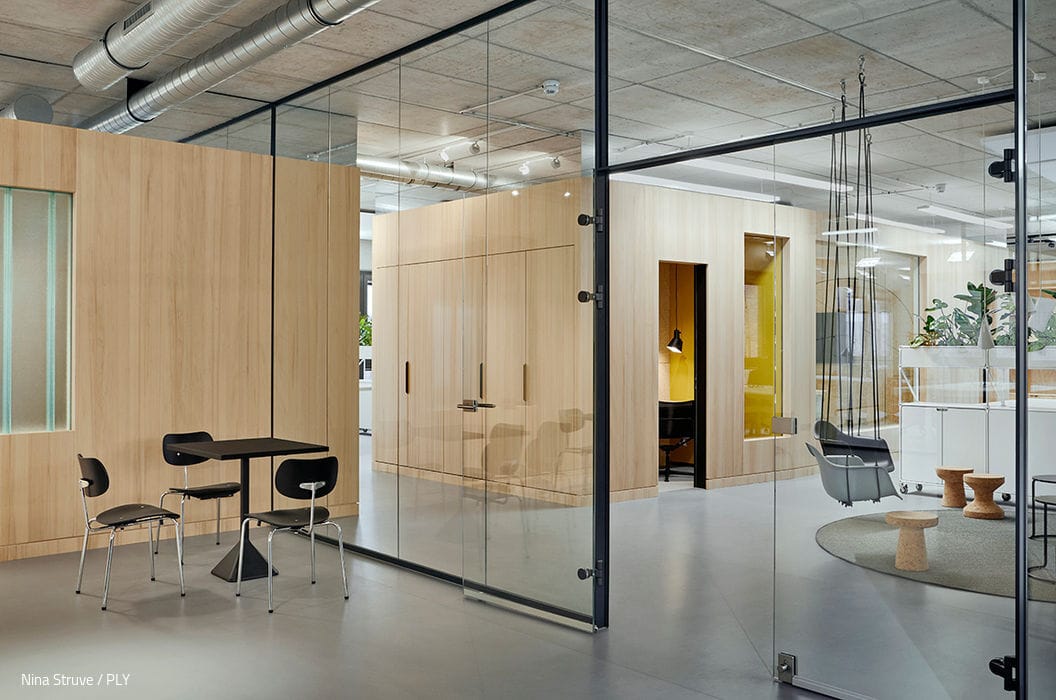
Based on these principles, the marzipan factory has evolved into a workplace that provides the 440 employees at the Hamburg location with optimal conditions for new work. Creativity, communication, and corporate culture are clearly the priorities here. As part of the energy transition, Ramboll's connection to water, wind, and vegetation is reflected in the architectural spatial concept. This, in turn, drives a strong focus on sustainable design—evident in both the choice of materials and the interior design of the new office spaces. The scheme features locally sourced timber with short supply chains, linoleum as a natural material with cork acoustic insulation, and loose-laid carpets made entirely from recycled material. Like the carpets, wood fiber panels used throughout the space contribute positively to acoustics and indoor climate. With emphasis on regional manufacturers, durability, and flexibility, the furniture comes exclusively from Europe.
A prime example is the storage furniture from Berlin, which functions as a modular system that can be disassembled and reassembled in different configurations as needed. The commitment to sustainability extends to the smallest details, as demonstrated by the choice of desk lamp from a Hamburg lighting manufacturer, winner of the German Sustainability Design Award 2021. The spatial layout follows a clear logic: desks are positioned along the windows of the exterior walls, while the central zone features a continuous series of flexible work areas—phone booths, library spaces, lounge zones, and copy and meeting rooms. Since these central zones are uniformly finished in fir wood and meander through the entire 200-meter length like a wood grain pattern, they serve simultaneously as a wayfinding element, spatial division, and identity marker.
Photography Credits:
Nina Struve / PLY
www.ninastruve.de
(Published in CUBE Hamburg 03|23)
A New Headquarters
Reimagined spaces for New Work culture: creating an inspiring workplace
Sustainable and partially reversible
Living in Harmony with Nature
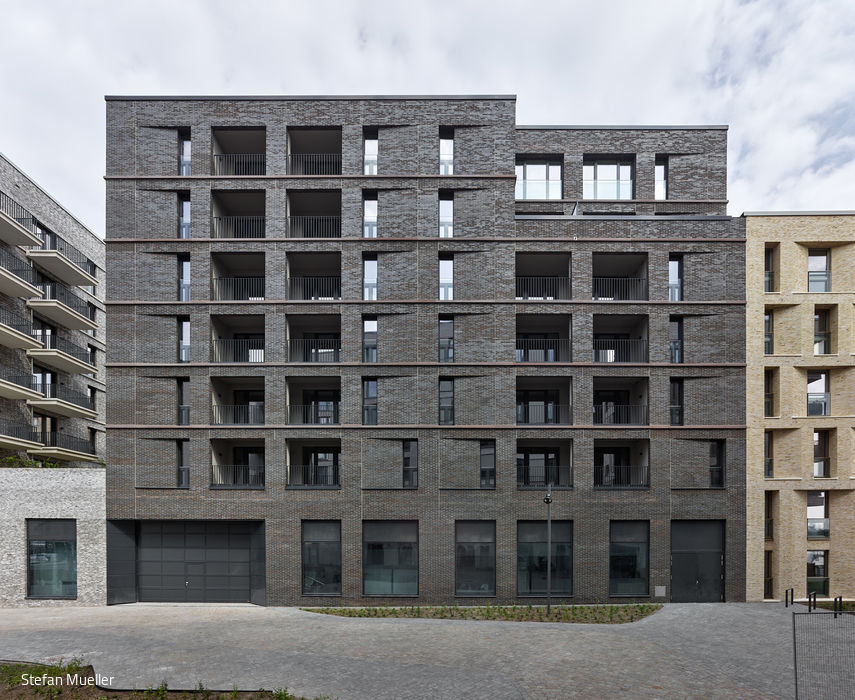
In the Heart of It All
Vibrant Diversity and Public Housing in the Multigenerational Quarter
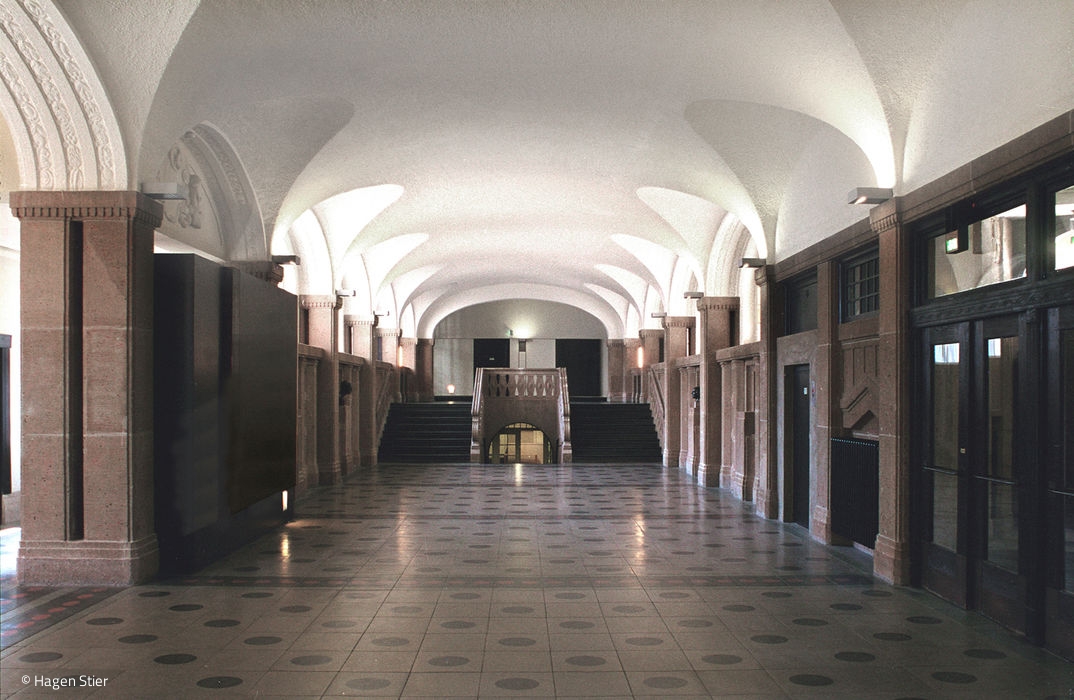
100 Years Young
Heritage-Conscious Renovation and Modernization of the University's Main Building