


A Sculptural Composition
In Gerresheim, a cooperative housing development demonstrates that quality and affordability can go hand in hand.


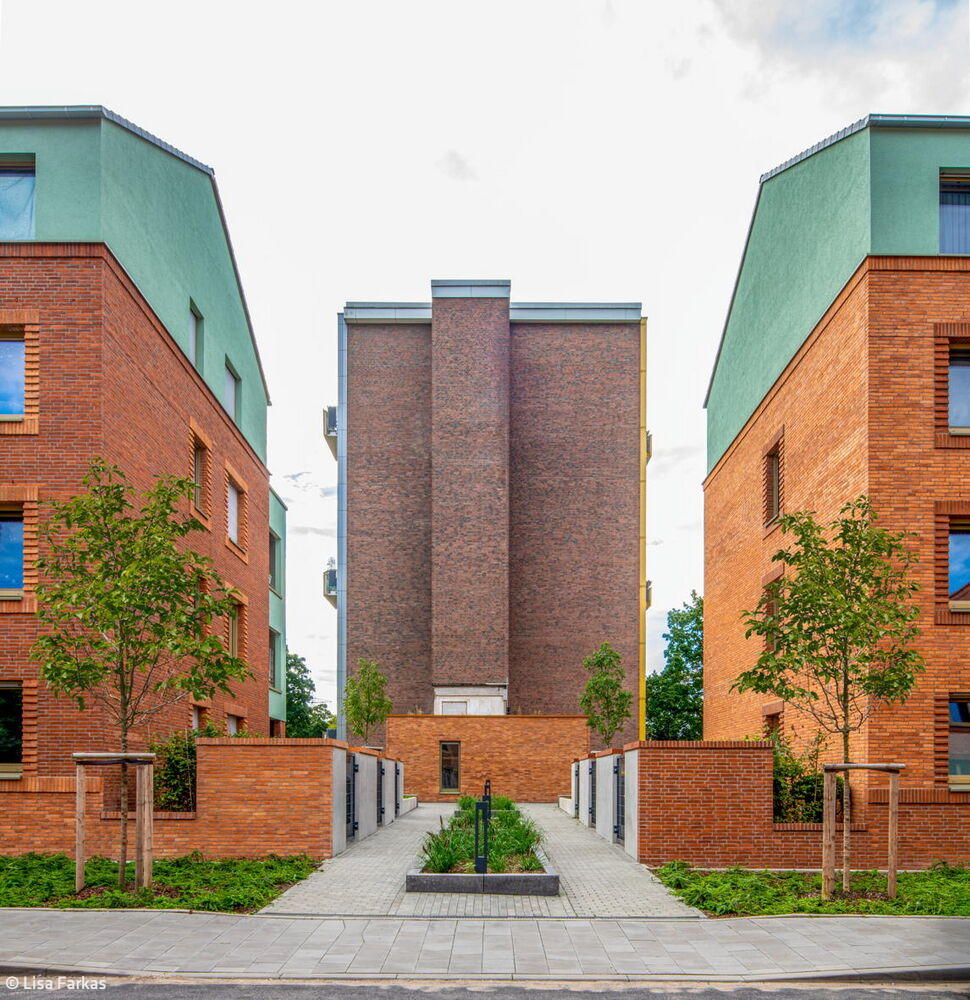
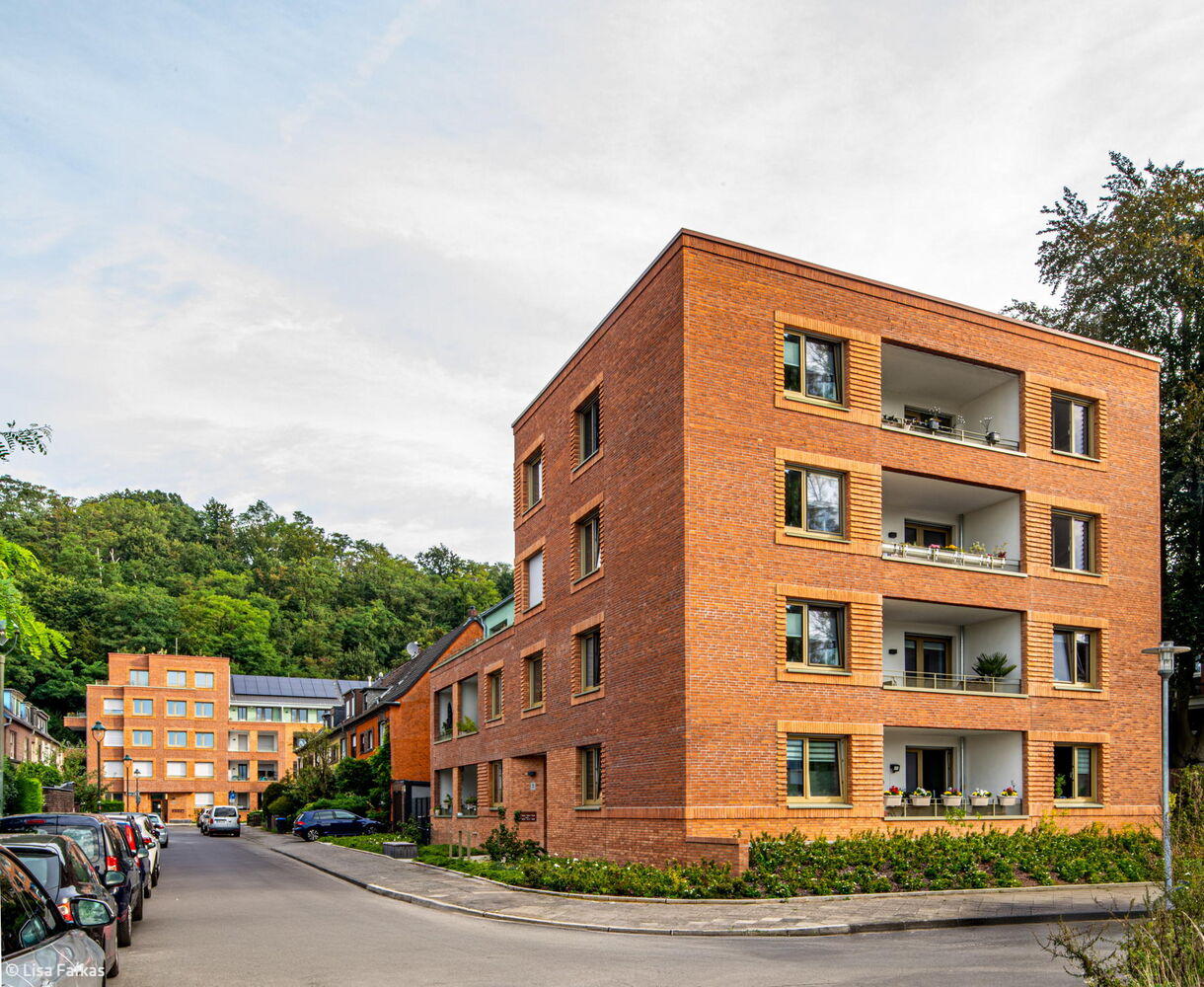


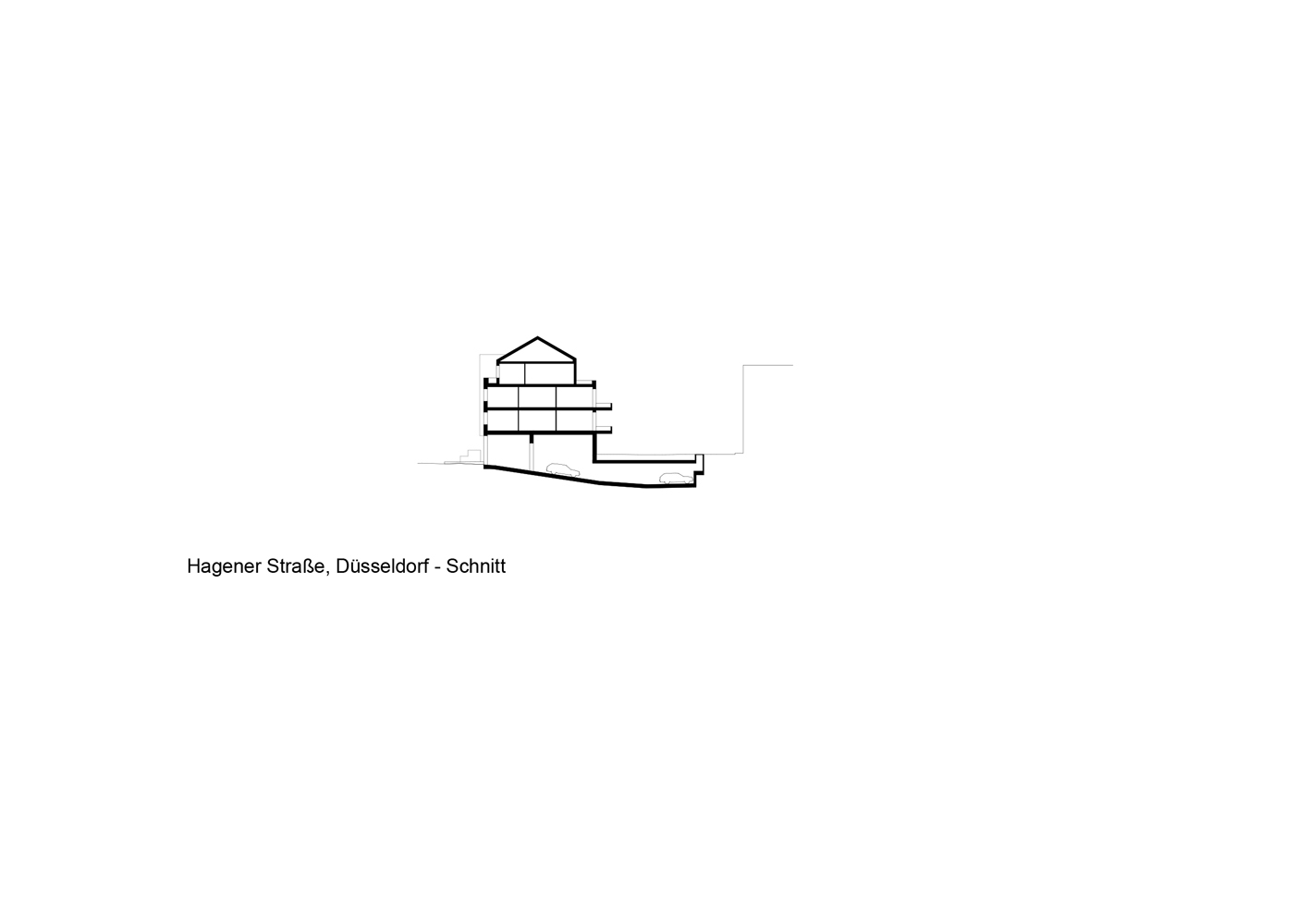


The aging housing stock along Hagener Straße, situated in a peaceful woodland setting, had reached the end of its serviceable life and required complete redevelopment. Through a collaborative workshop process involving members of the Düsseldorf housing cooperative Wogedo and local residents, a new vision for both sides of the street emerged. Frankfurt-based architects Stefan Forster were ultimately entrusted with bringing this ambitious vision to life, creating a cohesive residential ensemble that reads as a unified whole while showcasing carefully considered design variations.
Urbanism shapes the ensemble as a rhythmically articulated composition: three buildings rise on each side of the street, separated by public passages that forge direct links to the adjoining woodland and the cooperative courtyards beyond. Anchoring the neighbourhood's entry points to the west and east are five-storey corner structures. The street-facing facades come alive through recessed entrances, projecting bay windows, and interrupted rooflines—each rendered in two contrasting brick tones that create sculptural depth. By contrast, the courtyard-facing sides employ lime-green rendered plaster above the base level, a material choice that, paired with pitched roofs, respectfully reinterprets design elements from the earlier complex while elevating them to contemporary architectural quality. An additional building at the corner of Lüdenscheider and Morper streets both completes the ensemble and signals the neighbourhood's arrival. Beyond communal spaces—a shared laundry house and tea pavilion—the development also accommodates an integrated daycare facility.
The majority of the 188 apartments are oriented on both sides and feature floor plans suited to diverse household types. Across seven buildings, the two- to five-room units range from 37 to 112 m² and all include a balcony, loggia, or garden terrace on the ground floor—most offering verdant views. Twelve percent of the units set a genuine benchmark for sustainability, operating completely CO₂-free while maintaining attractive, partially inclusive rents. Beyond sustainability, the project makes a significant social impact: with a voluntary commitment to 36 percent publicly funded units and 52 percent price-controlled apartments, the Hagener Straße development advances affordable housing in Düsseldorf's constrained market.
Photos:
Lisa Farkas
www.lisafarkas.de
(Published in CUBE Düsseldorf 04|24)

Transparent Lightness
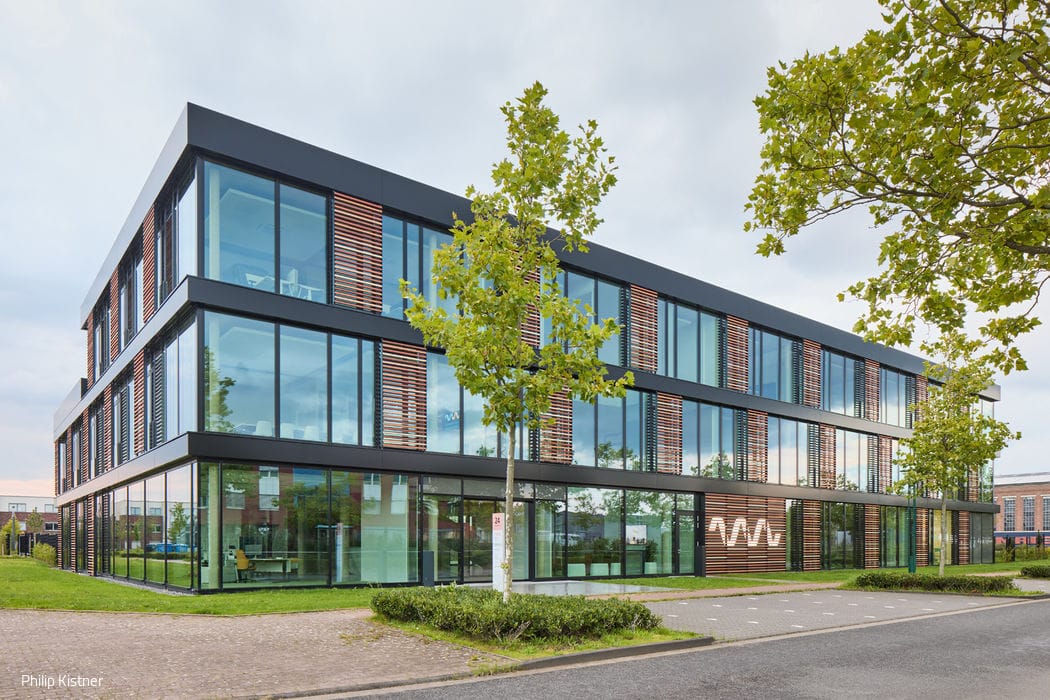
A new energy company headquarters in Willich embodies openness and flexibility.
Sustainable High-Rise Construction
What a high-rise can offer the city
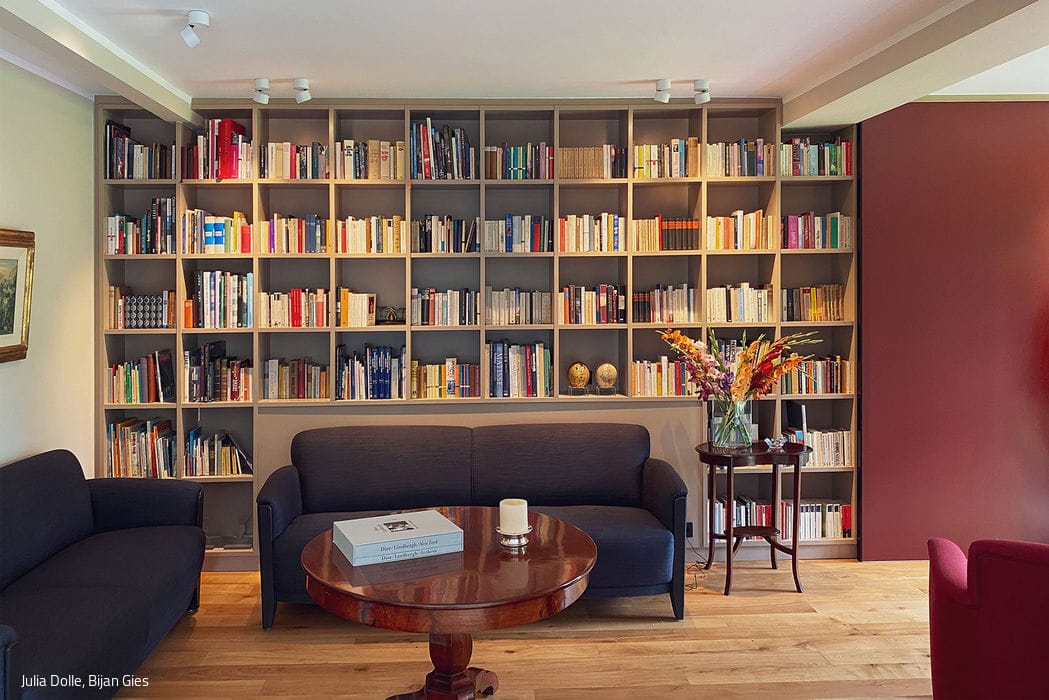
Masterfully Staged
A 1930s residence in Neuss undergoes thoughtful modernization and sensitive redesign
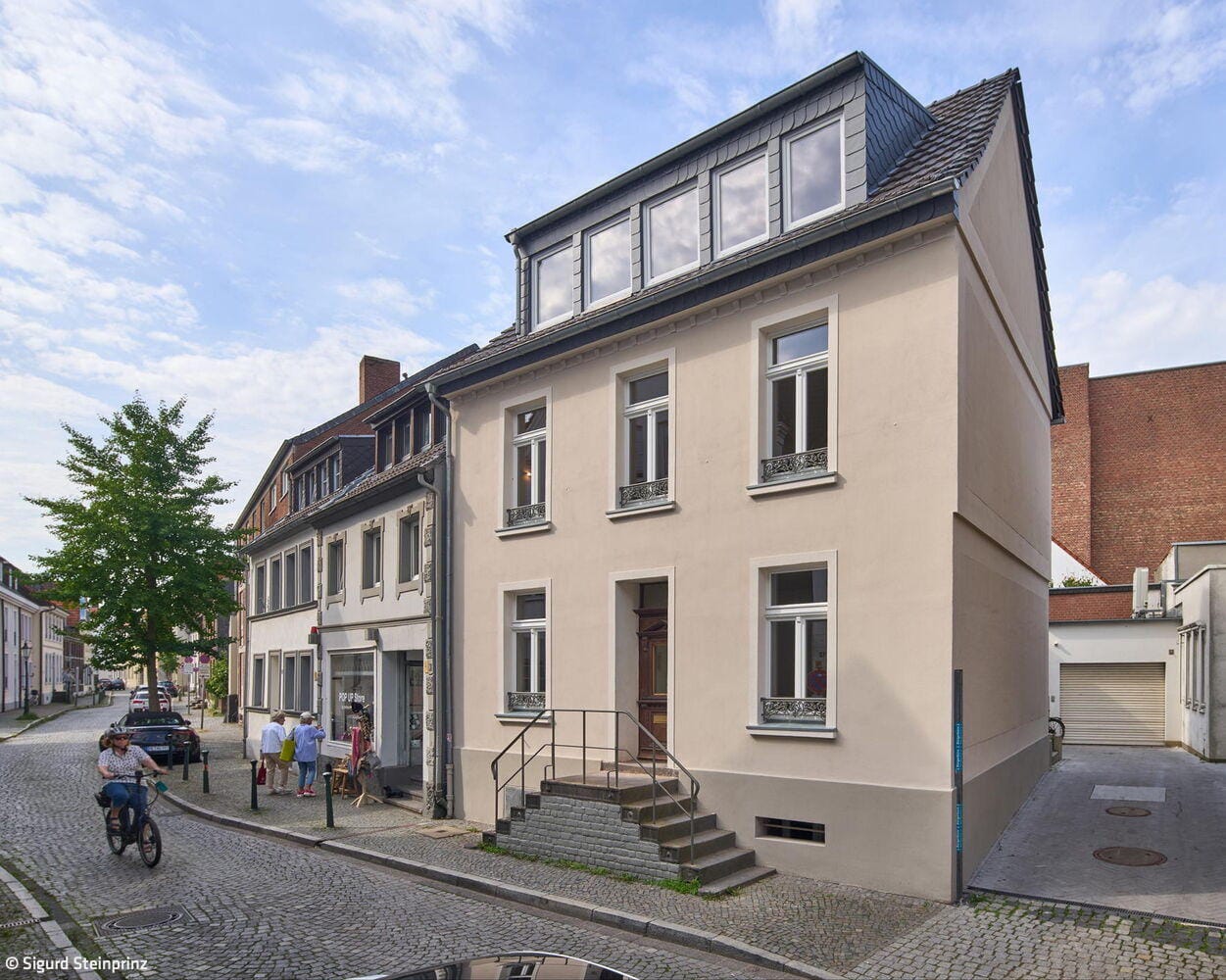
Urban Single-Family Home
A landmark-protected townhouse in Kaiserswerth undergoes renovation and reorganization