


A Delicate Balance
The expansion of Cecilien-Gymnasium in Niederkassel demonstrates architectural restraint and sensitivity
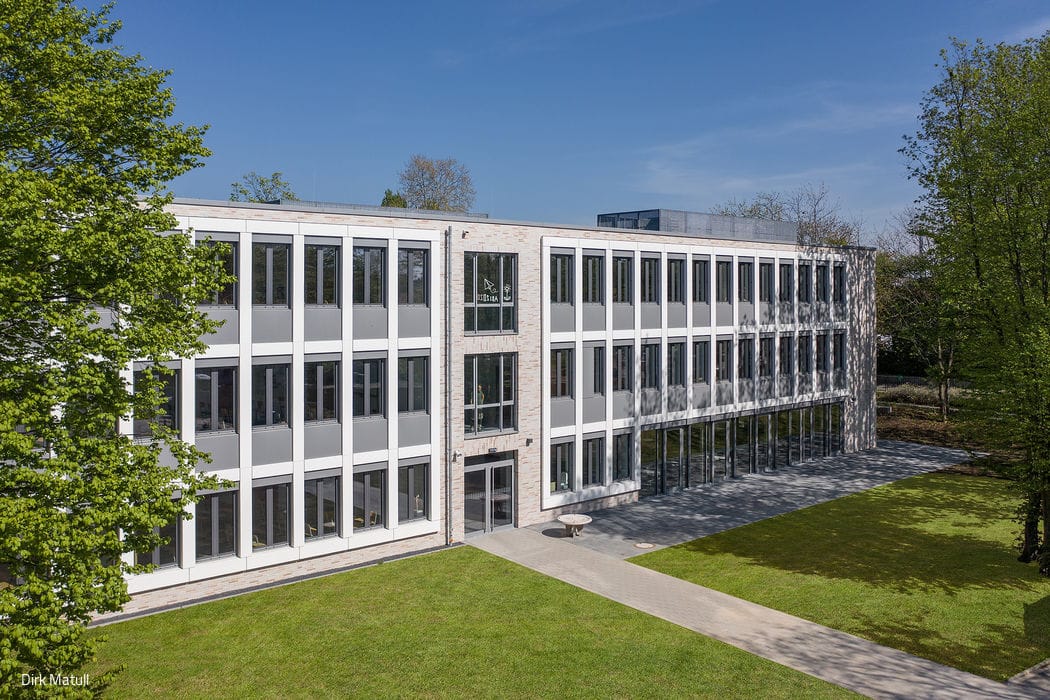
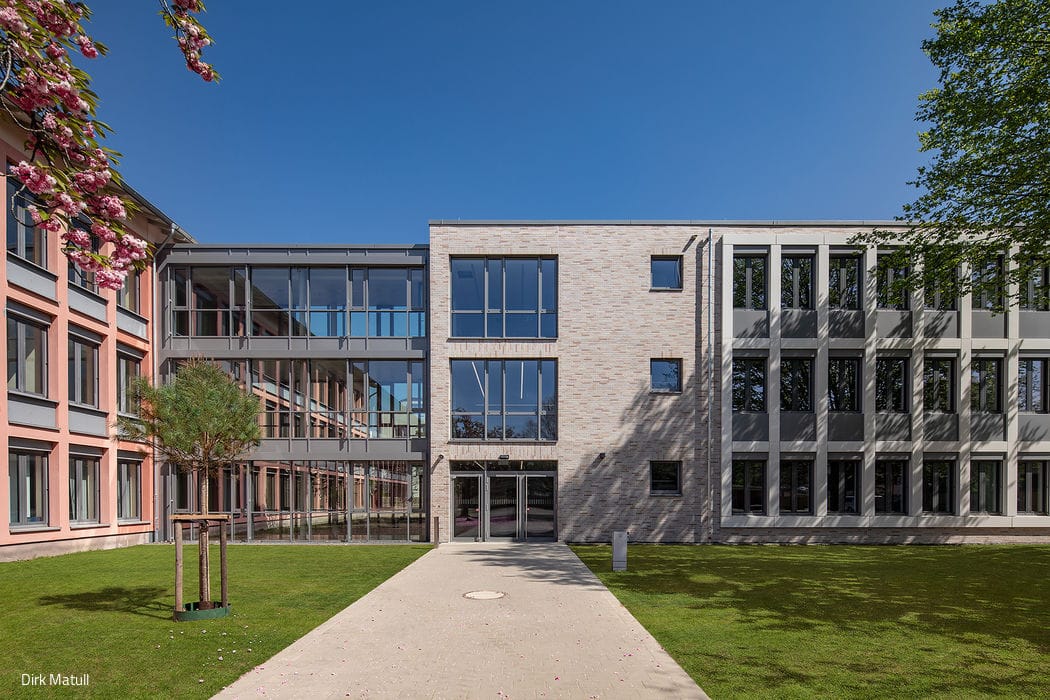
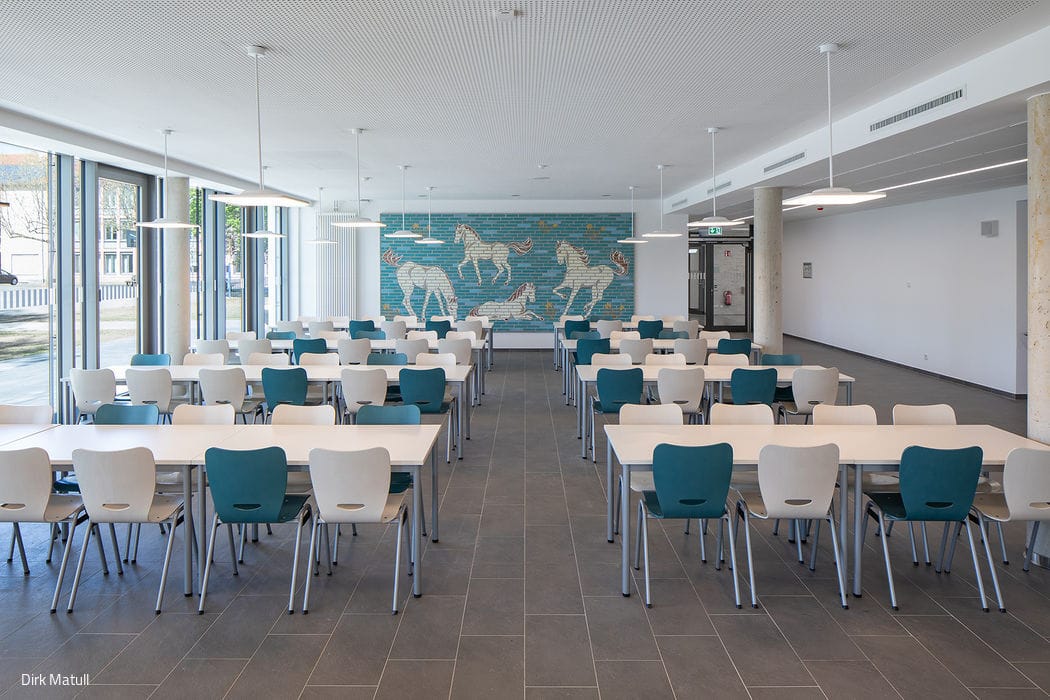
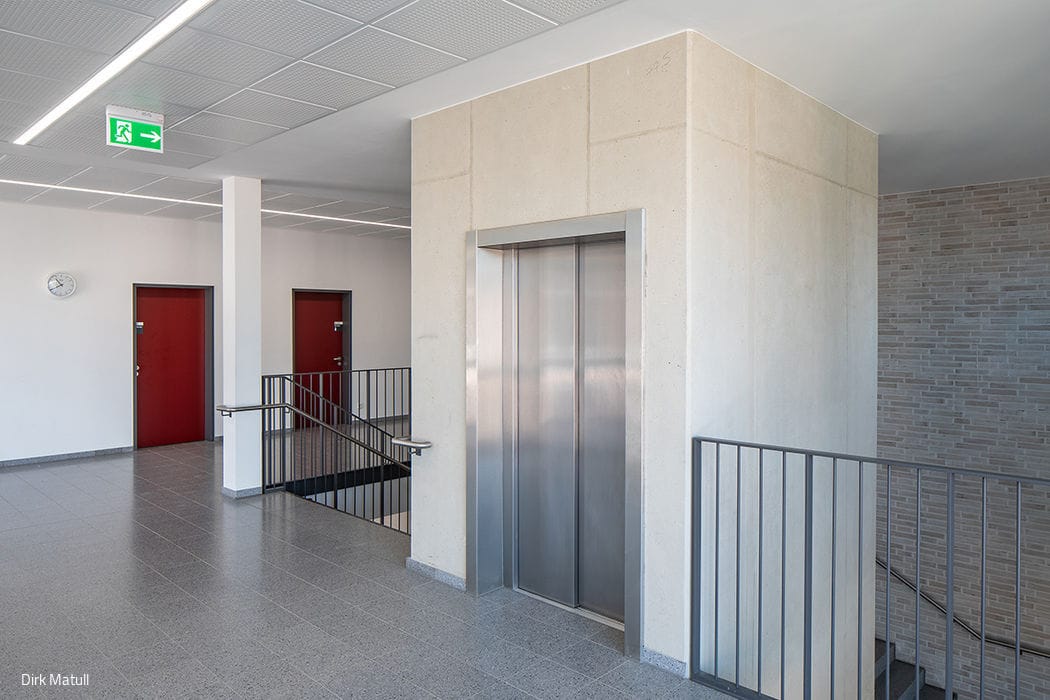
The original Cecilien-Gymnasium building, opened in 1958, represents one of many school structures erected during Germany's post-World War II reconstruction, overseen by Düsseldorf's Building Authority. Its director, Julius Schulte-Frohlinde, became a controversial figure among modernist architects after the war due to his Nazi-era involvement. His architectural signature—a blend of traditionalism, classical ornamentation, and measured modernism—defined the school's distinctive character. A comprehensive renovation proved necessary in 2004/2005. When the school expanded from three to five classes, PASD Architects from Hagen designed an extension in 2019 that creates a contemporary learning environment for both students and faculty.
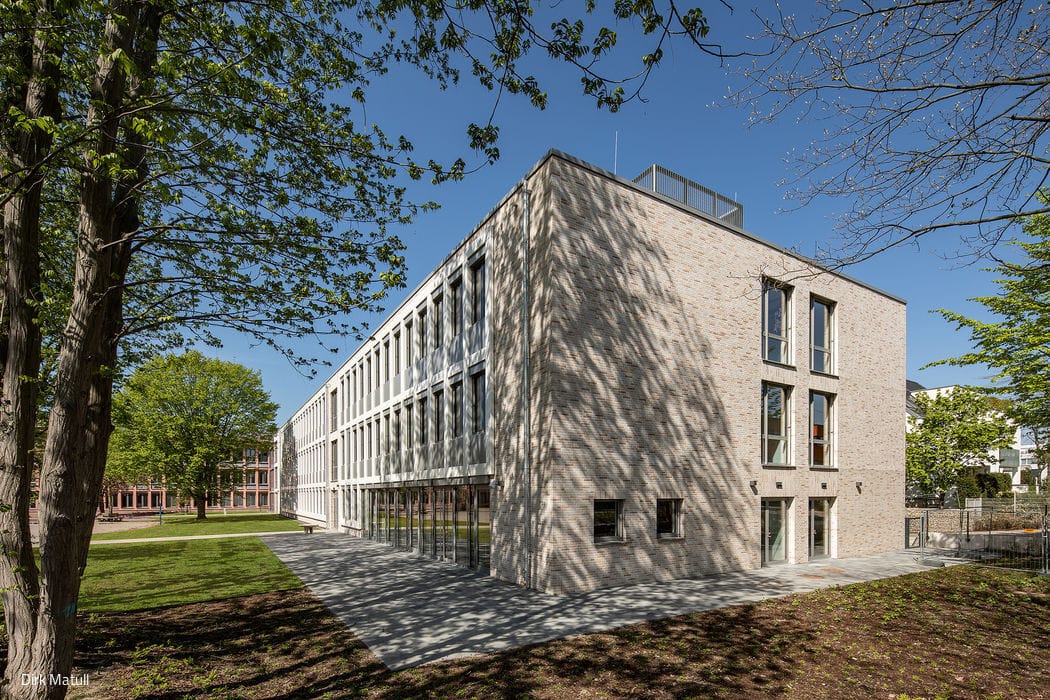
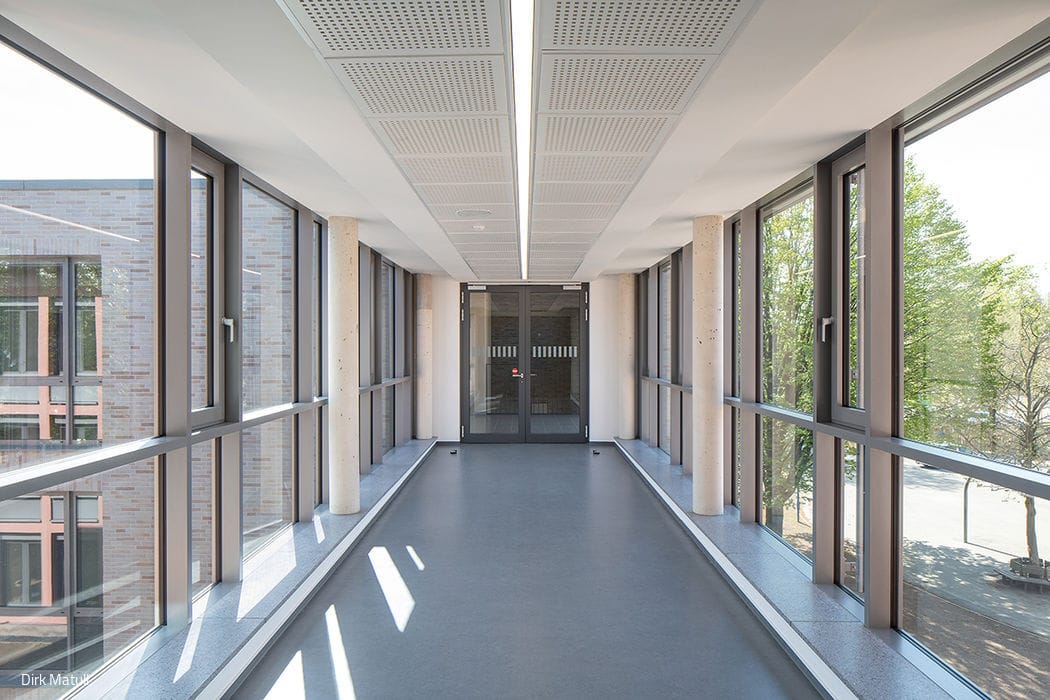
Rather than a scattered pavilion layout, a three-storey solid-construction building now anchors the Schorlemerstraße campus, topped with an extensively vegetated flat roof and preserving 80 percent of the site's mature trees. Along the eastern property line, it establishes a defined boundary while creating the schoolyard's first truly coherent edge. A glazed connector links it to the existing building, respectfully echoing and reinterpreting the original structure's grid façade. The new classroom wing features a rhythmic window pattern with aluminum cladding, framed by light-colored brick at either end. This durable, low-maintenance design—conceived for longevity and economy—is animated by generous glazing along the corridors and dining hall. These large openings prevent the extended form's façade grid from feeling rigid or monotonous. The material palette deliberately mirrors the existing building, though with greater restraint. Together, the two structures form a unified ensemble that preserves the distinct identity of each building phase.
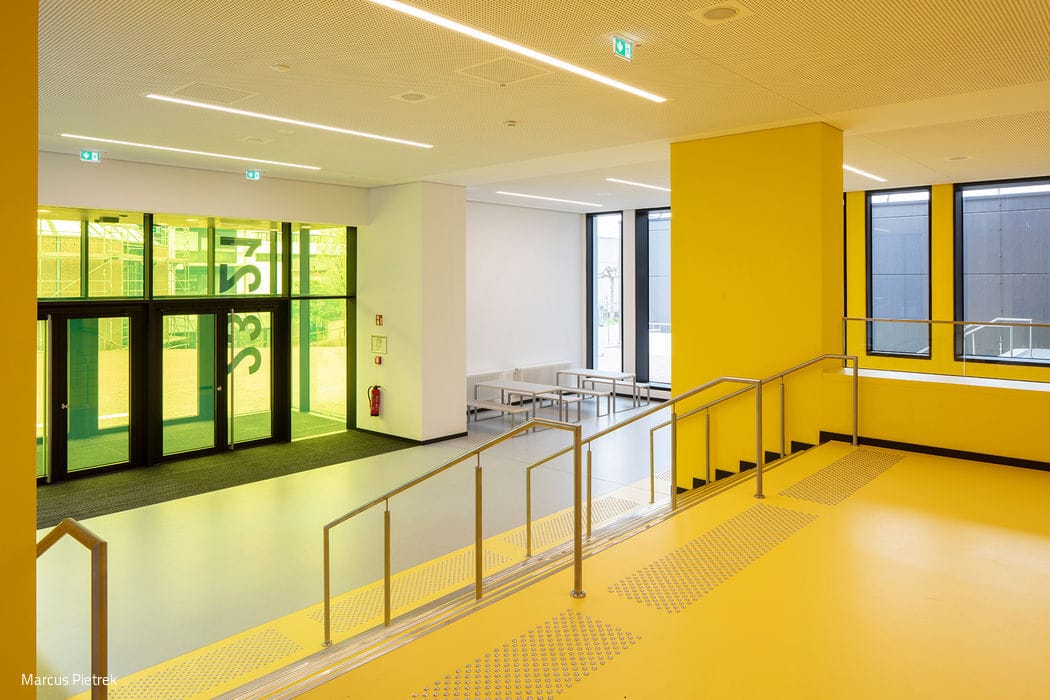
The extension opens directly to the schoolyard at ground level, while primary access continues through the existing building. For the first time, the school achieves full accessibility throughout, thanks to elevators in the new wing. The clear, linear design maximizes spatial efficiency. The program includes classrooms, specialized teaching spaces, multifunctional rooms, support facilities, and a cook-and-chill cafeteria with 80 seats plus a 130 m² outdoor terrace. Generous lounge zones separate the classroom and teaching areas, breaking up corridor circulation while supporting both social interaction and natural light penetration. A combined heat and power plant with gas peak boiler provides heating. Energy-efficient LED lighting with motion sensors illuminates the entire building. Rainwater harvesting supplies the toilet flushing systems. The building exceeds Düsseldorf's energy efficiency standards for new construction and reduces Energy Saving Ordinance requirements by 36.5 percent.
Photography Credits:
Dirk Matull
www.dirkmatull.de
(Published in CUBE Düsseldorf 03|21)
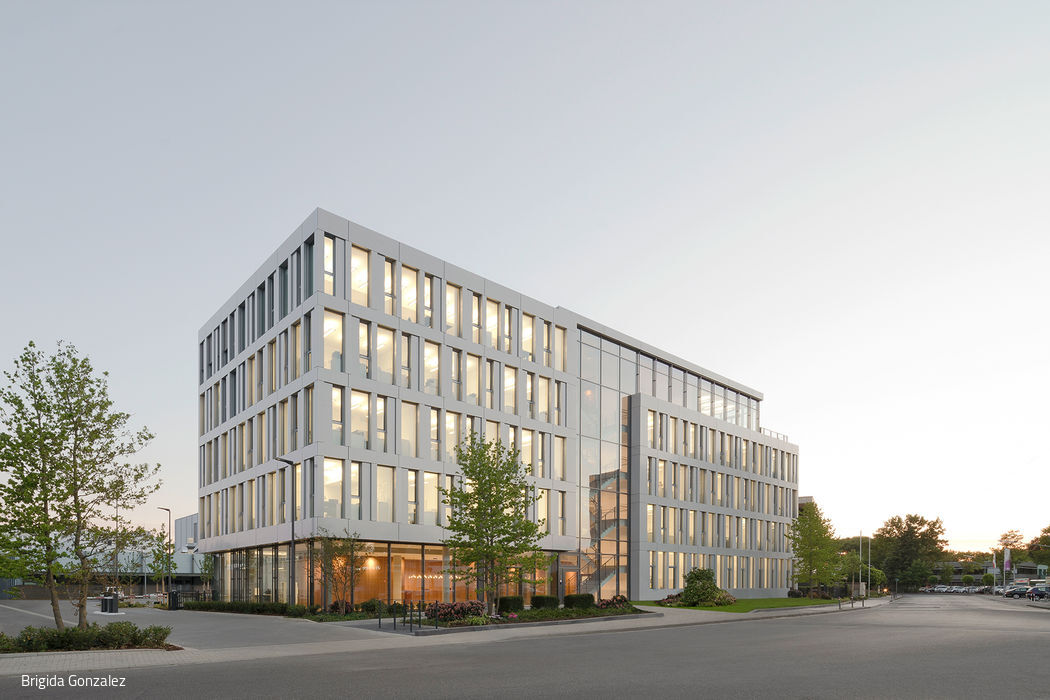

A Modern Counterpoint
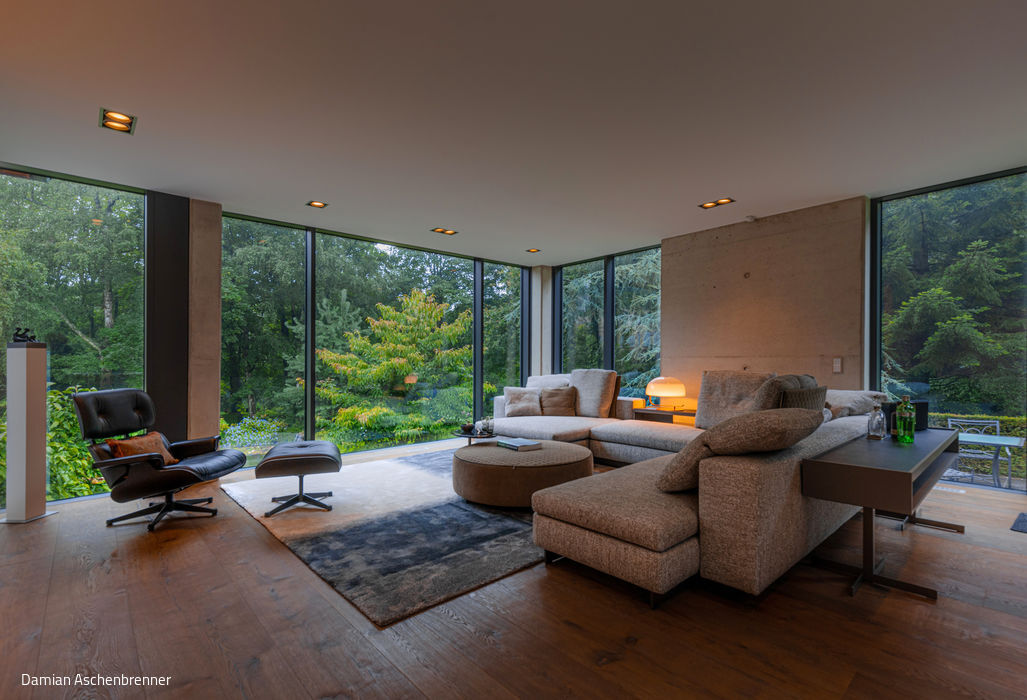
A Protected Heritage Pavilion Thoughtfully Restored and Imaginatively Extended
Dynamic and Transformative
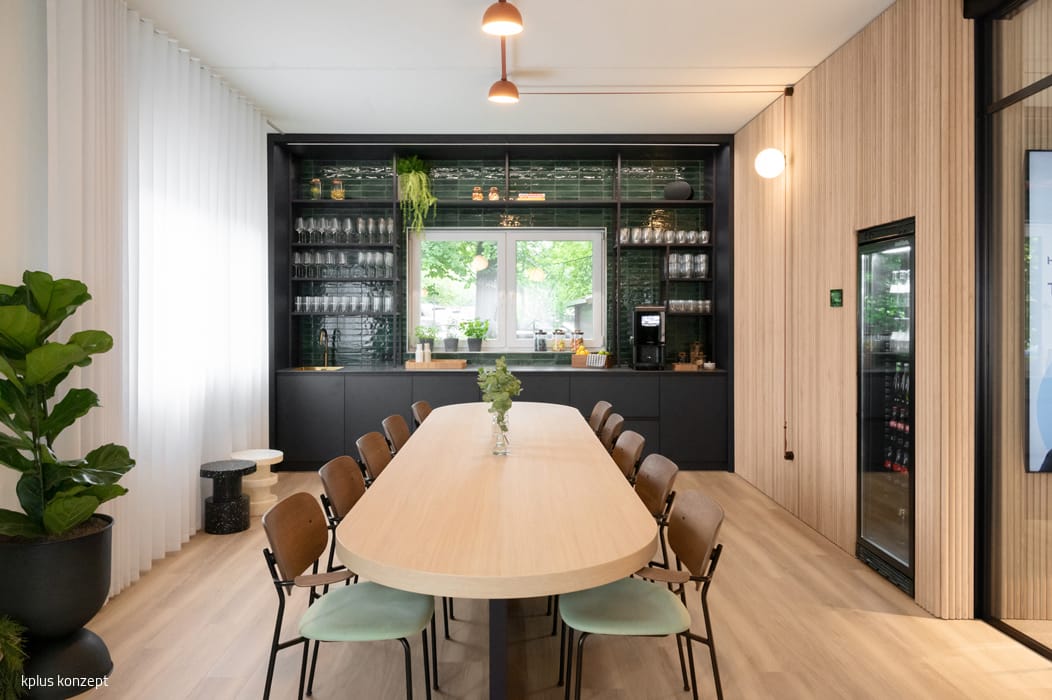
A training centre distinguished by thoughtfully curated spaces—each uniquely designed
Building with Contrast
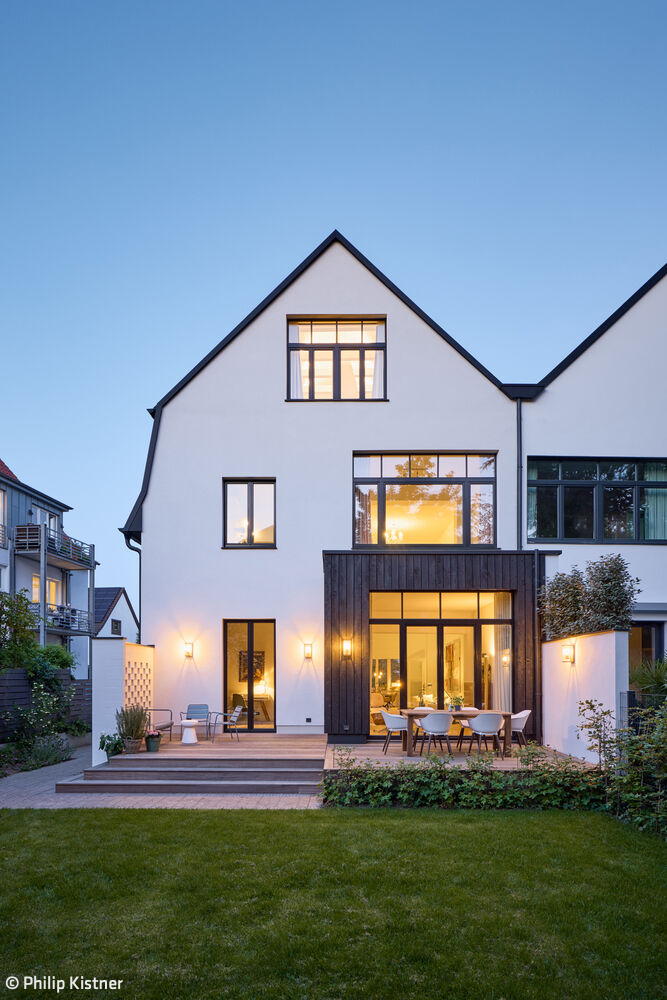
A restored semi-detached house: where architectural layers speak to one another.
Picturesquely Presented
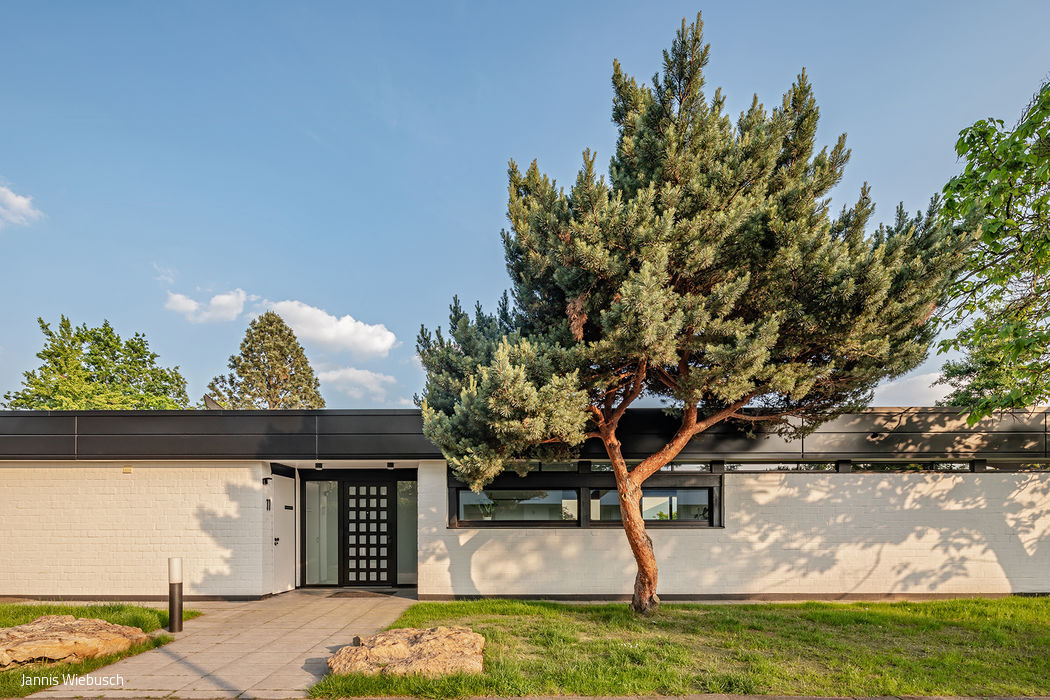
A 1960s bungalow restored with period precision