


A Haven of Spatial Variety
The Antoniter Quarter captivates through its understated urban renewal nestled between two vibrant shopping streets.
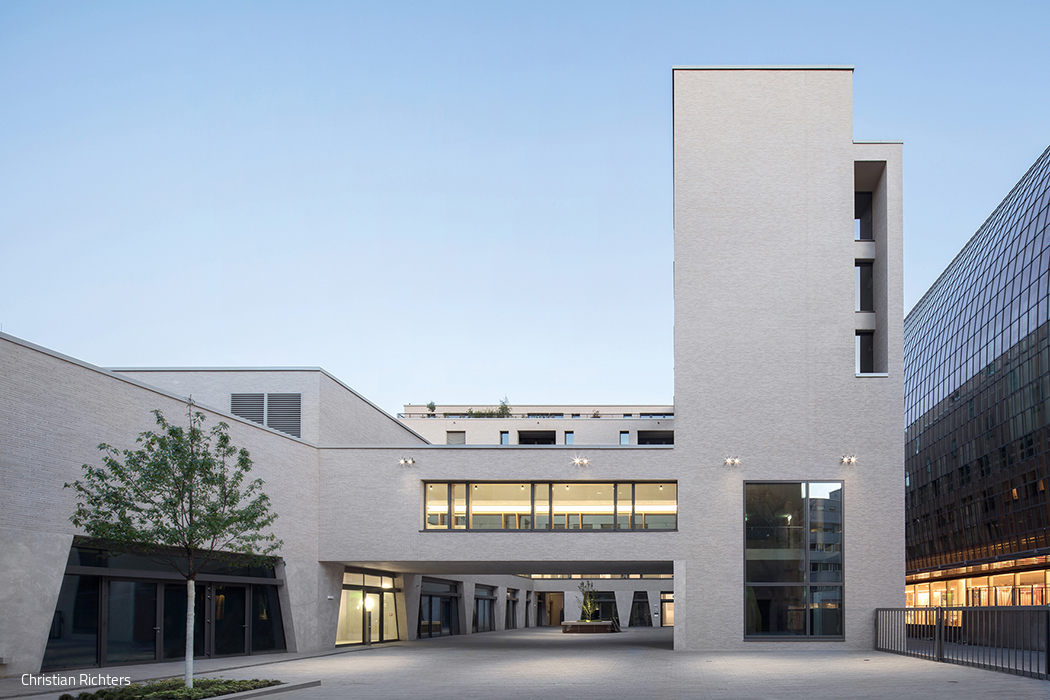
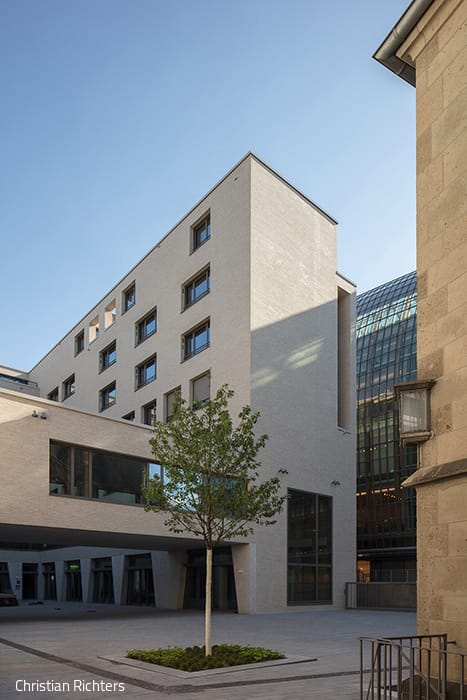


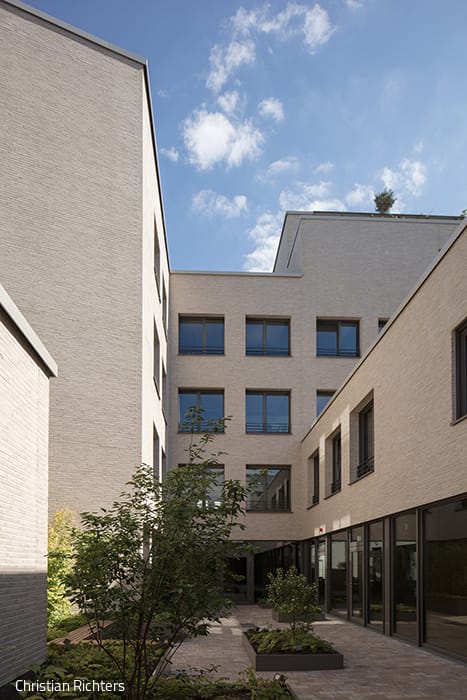


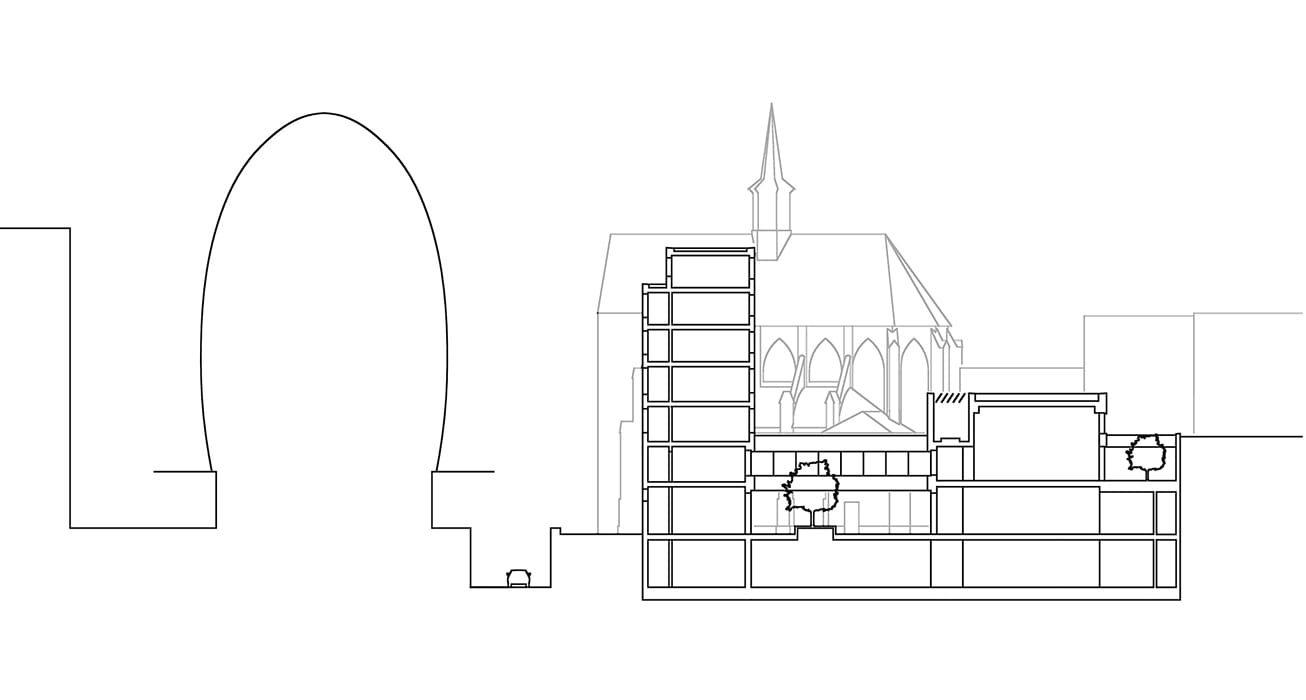
Set back from the bustling Schildergasse and directly across from Renzo Piano's iconic Weltstadtkaufhaus, the former monastery grounds of the Antonite Order lay dormant. Secularized in 1794 and subsequently transferred to the Protestant Church, the site housed not only the small Gothic Antoniter Church but also a deteriorating cluster of 1960s-era buildings. The client, the Evangelical Community of Cologne, envisioned something transformative: a city church centre for the inner-city Protestant congregation—a space that would welcome and celebrate diverse, interfaith programming. To secure its financial sustainability, the project strategically integrated complementary uses: restaurants, offices, and residential units, creating a vibrant mixed-use hub.
The Cologne-based architects at trint + kreuder d.n.a. orchestrated a building ensemble that guides visitors through a carefully calibrated journey—from the energy of Schildergasse to the calm of a new church plaza, culminating in a sheltered inner courtyard that offers sanctuary to the restaurant spaces. The now-complete block shields itself from two sides of noise with a bold angular form that maximizes allowable height and holds its own against the imposing Weltstadtkaufhaus. Toward Schildergasse, this corner transforms into an elegant tower that engages in dynamic dialogue with the Antoniter Church's western gable. A second, lower corner form completes the architectural composition, framing an inner courtyard at its heart—seamlessly connected to the adjacent plaza at ground level. Encircling this courtyard on the first floor is a floating gallery—a contemporary "cloister" of sorts, lined with windows opening to the courtyard. These recessed window bays invite stillness and conversation. The foyer bridge welcomes visitors, hosts rotating exhibitions, and frames spectacular views of the Gothic church facade. Four multipurpose halls and the parish office cluster around the Antonitergärten, a verdant courtyard anchored by the adjacent party walls. The restaurant level above, positioned strategically along the west side of the gallery, integrates culinary services into the city church experience. Throughout, the design speaks in the language of restraint: construction and materials reflect thoughtful simplicity. The warm stone tones of the facades echo the church's natural materials, while concrete and timber elements within radiate tranquility and permanence. The result is a nuanced urban intervention that weaves the evangelical inner-city community seamlessly into public life while introducing a cherished refuge within the city fabric.
Photography Credits:
Christian Richters
(Published in CUBE Cologne Bonn 03|22)
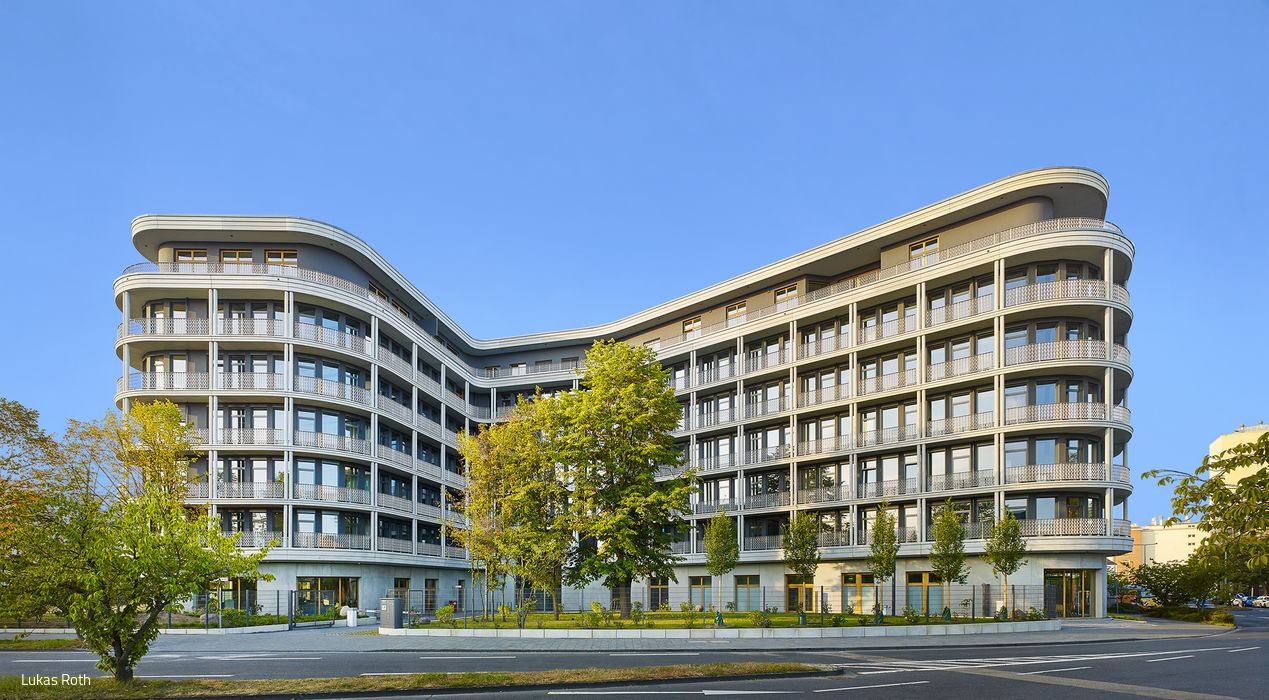
A Monolithic Statement
The new LVR administration building in Deutz showcases a refined exposed-concrete façade.
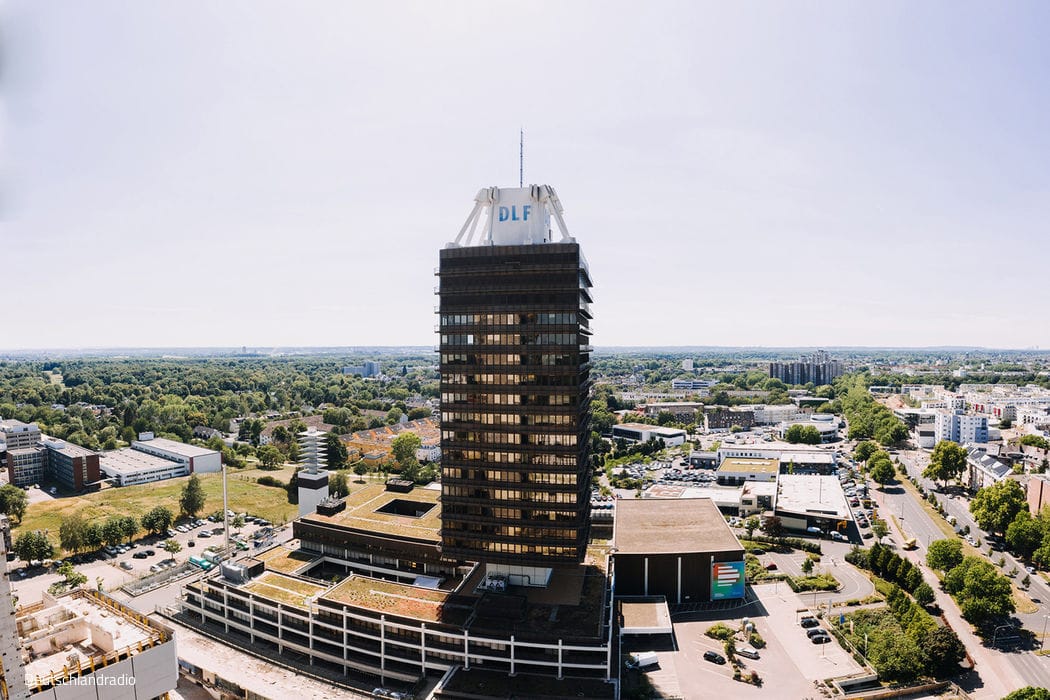
High-Rise on Stilts
The Deutschlandfunk Tower in Northern Marienburg is now a protected landmark
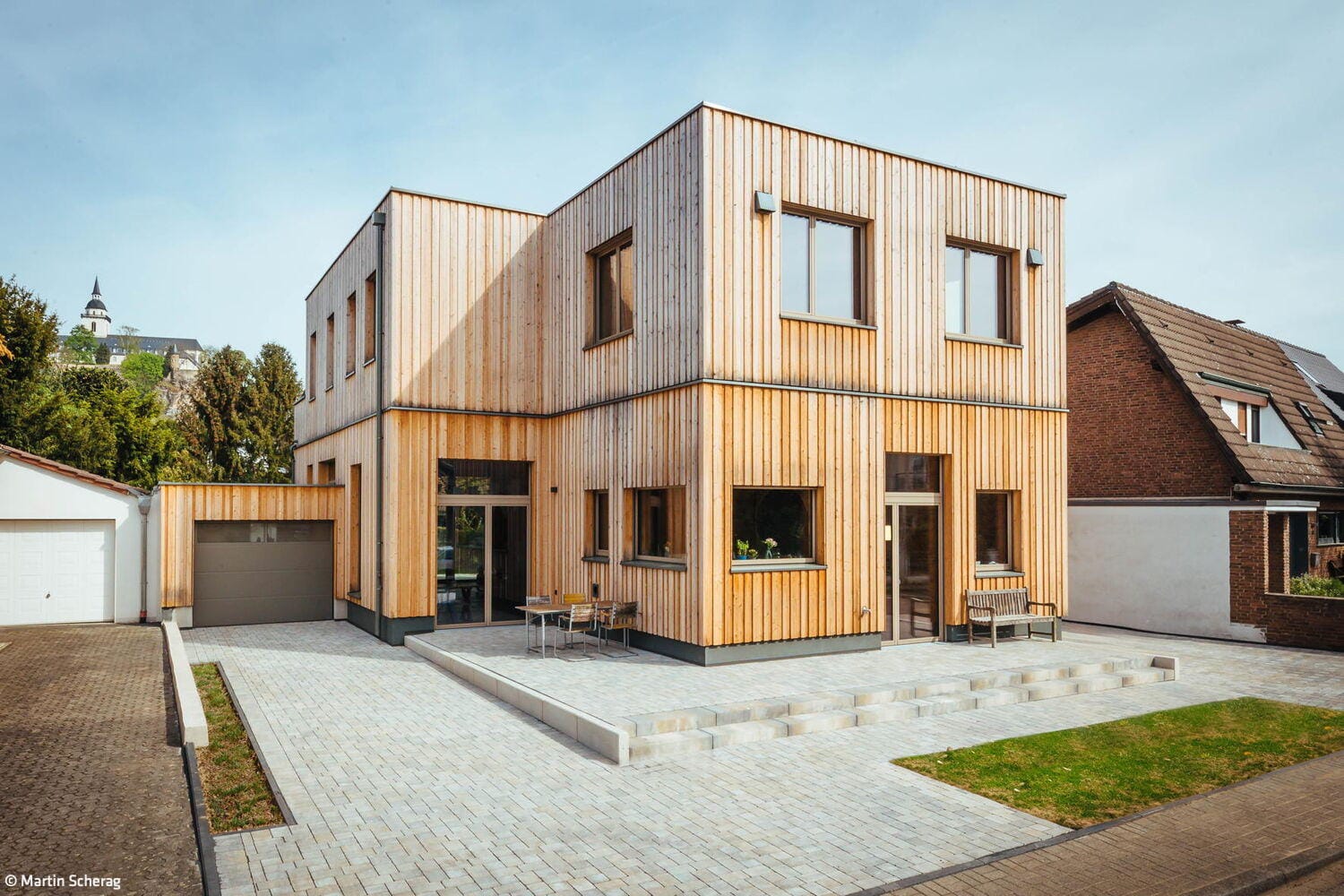
Expansive Living Spaces
A timber-frame residence marries expansive views with generous ceiling heights.
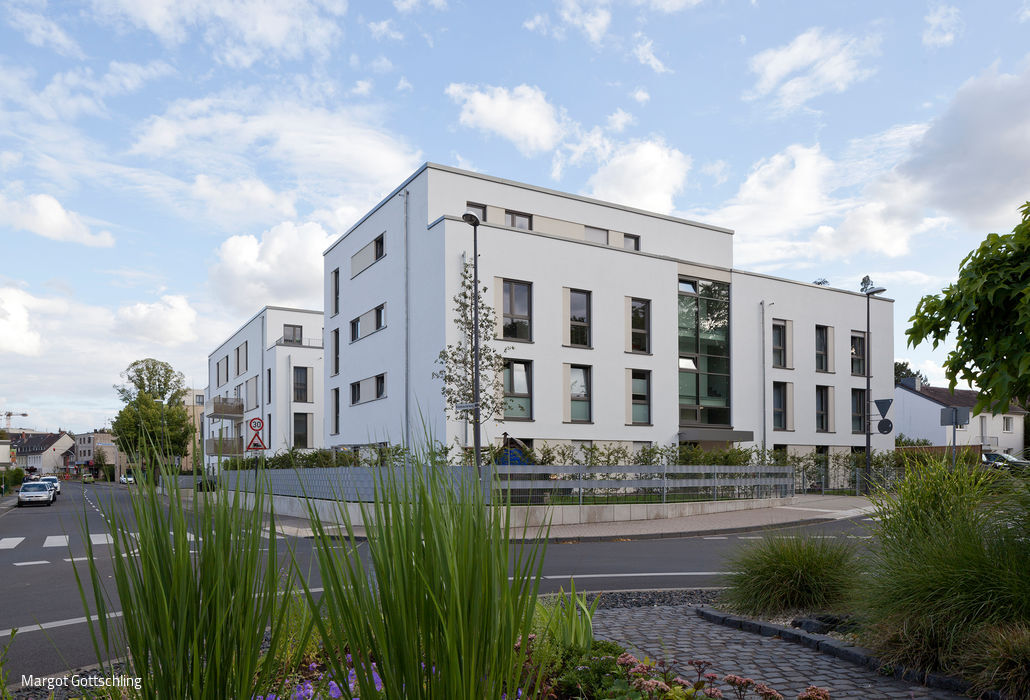
Country Living or City Living? Yes, Both!
New residential buildings now stand where old stables once did.