


Dual-function unit
Where light and dark wood meet light and shadow
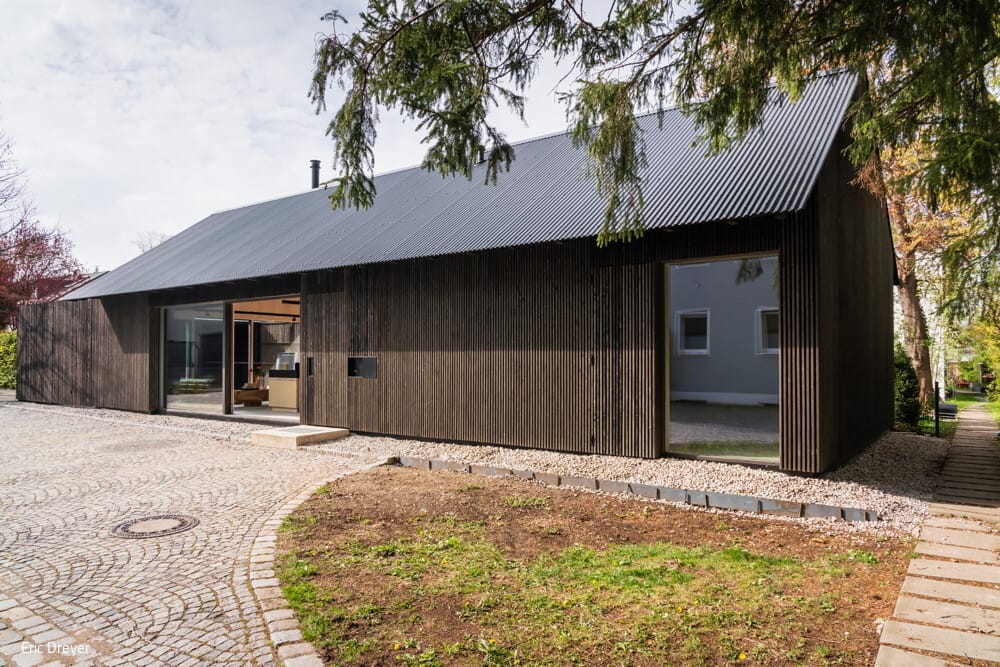
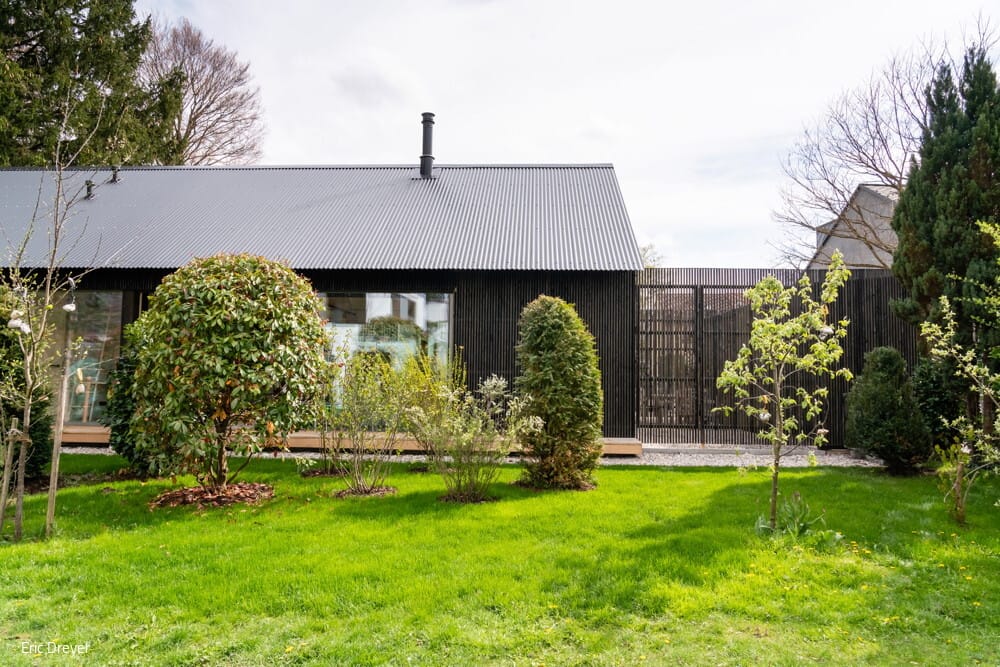
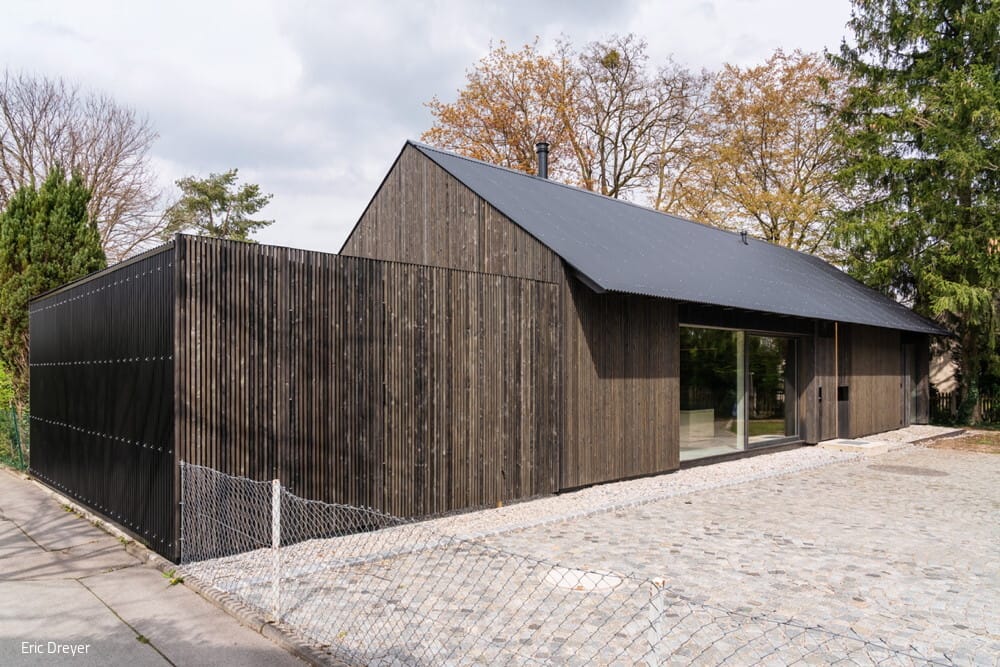
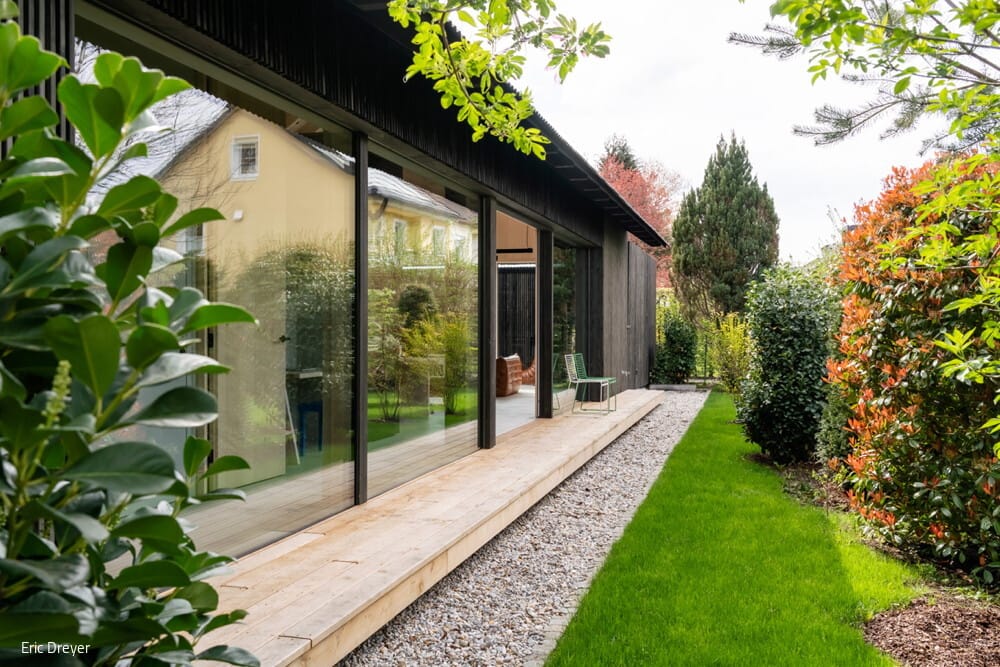
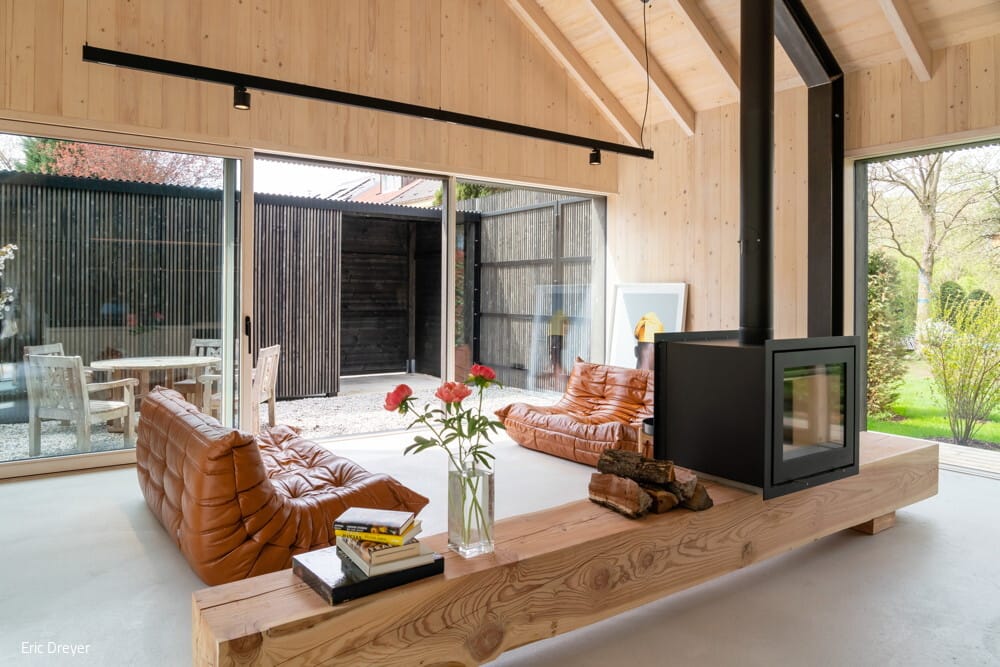
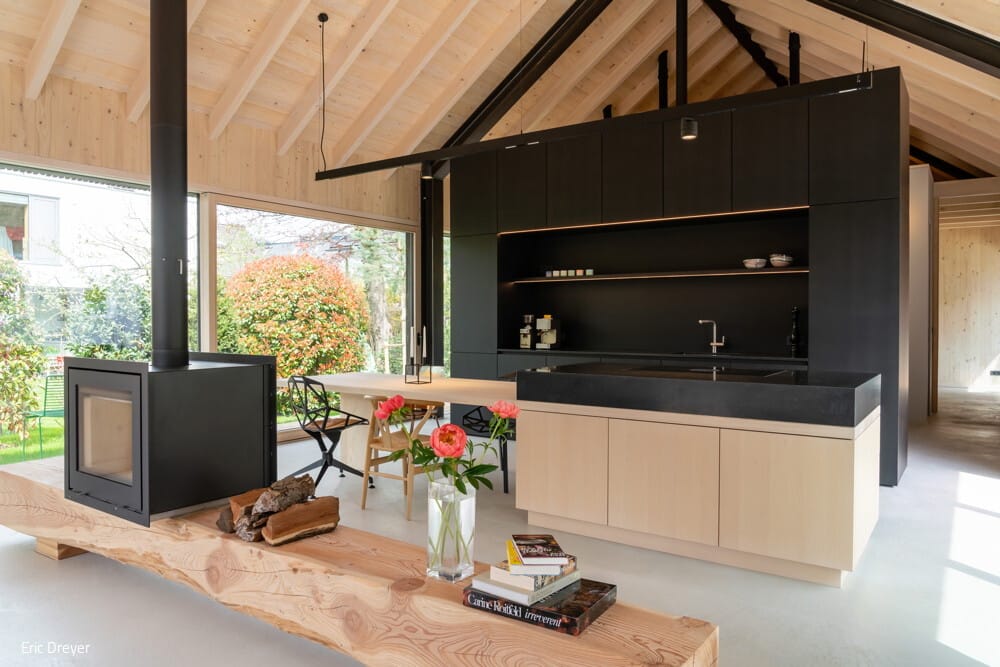
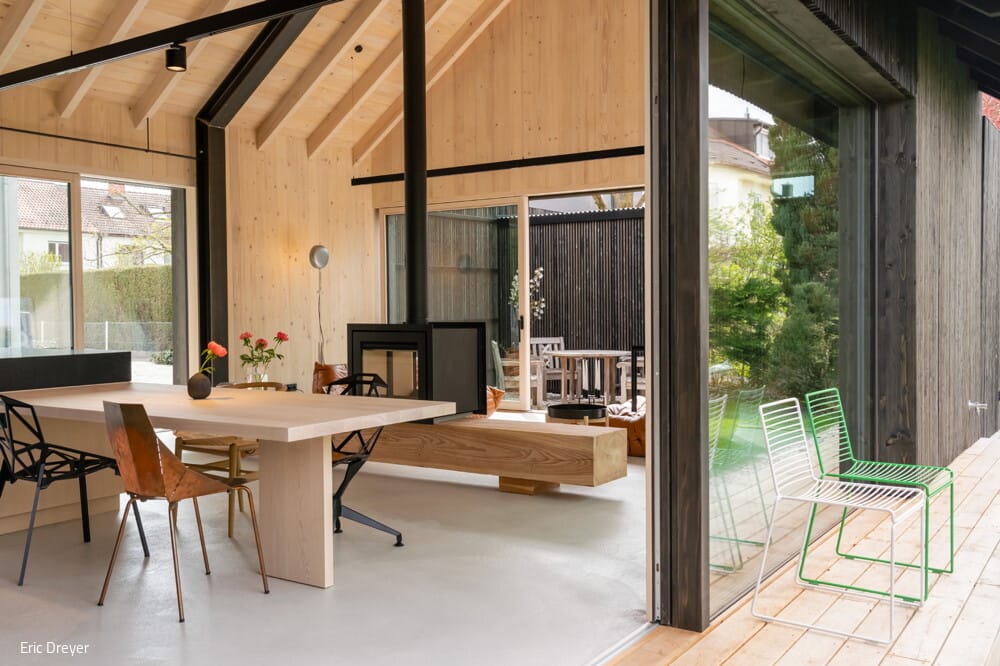


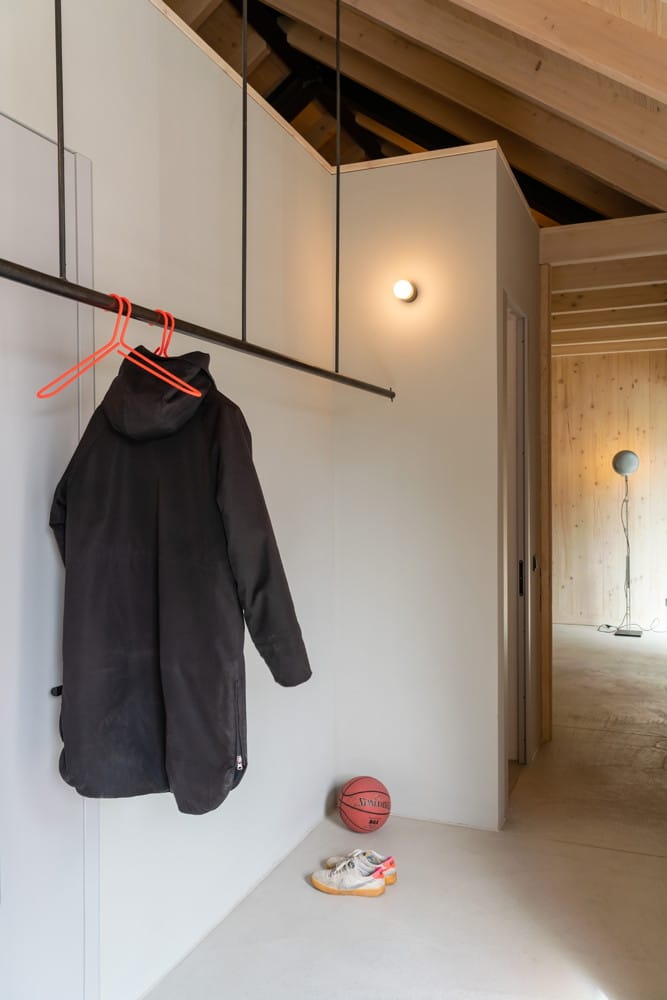
Tucked away in the historic Hartmannshofen district, an unassuming rear building reveals itself as a solid wood treasure. Built on the site of a former garage row, this single-storey residence strategically nestles behind the street-facing residential and commercial structure, preserving sightlines for surrounding homes. The path to building approval proved contentious, as architect Philipp Neutard of Munich's Neutard Schneider firm recalls—a surprise, given that the project creates family housing, maintains courtyard parking, and introduces no additional sealed surfaces. This exemplifies intelligent infill development and deserves recognition as a positive contribution to Munich's housing challenge. The solid wood structure employs white fir from Lower Bavaria, harvested according to lunar phases. Its design is refreshingly straightforward: a clean rectangular footprint without the visual complexity of overlapping volumes or façade cutaways. Entrance door and floor-to-ceiling wooden shutters integrate seamlessly into the wooden lattice exterior. An east-side shed functions as a bicycle garage. Presented toward the street with a closed appearance—its darkly-stained white fir lattice creating visual restraint—the interior tells a completely different story: floor-to-ceiling sliding windows flood the spaces with natural light. The house sits unembellished on the earth, resting on a simple reinforced concrete slab atop an insulating layer of recycled glass. Just three steel frames provide the structural backbone. The solid timber walls measure 20 centimetres thick, augmented by 10 centimetres of wood fibre insulation and lathing, rising uninterrupted to the flat gable roof ridge, where they form the exposed timber interior shell. At 93 m², the living space is divided by a custom-designed wooden core: kitchen, dining, and living areas flow openly, while two bathrooms, a work zone, and utility room nestle within the timber core. Beyond lies the master bedroom and children's room. The open rafter ceiling runs continuously, preserving the spatial integrity of the whole. External wood fibre insulation provides thermal protection in both directions. An air-source heat pump provides heating, with underfloor heating loops laid beneath light grey screed. The result: a home conceived entirely around ecological principles.
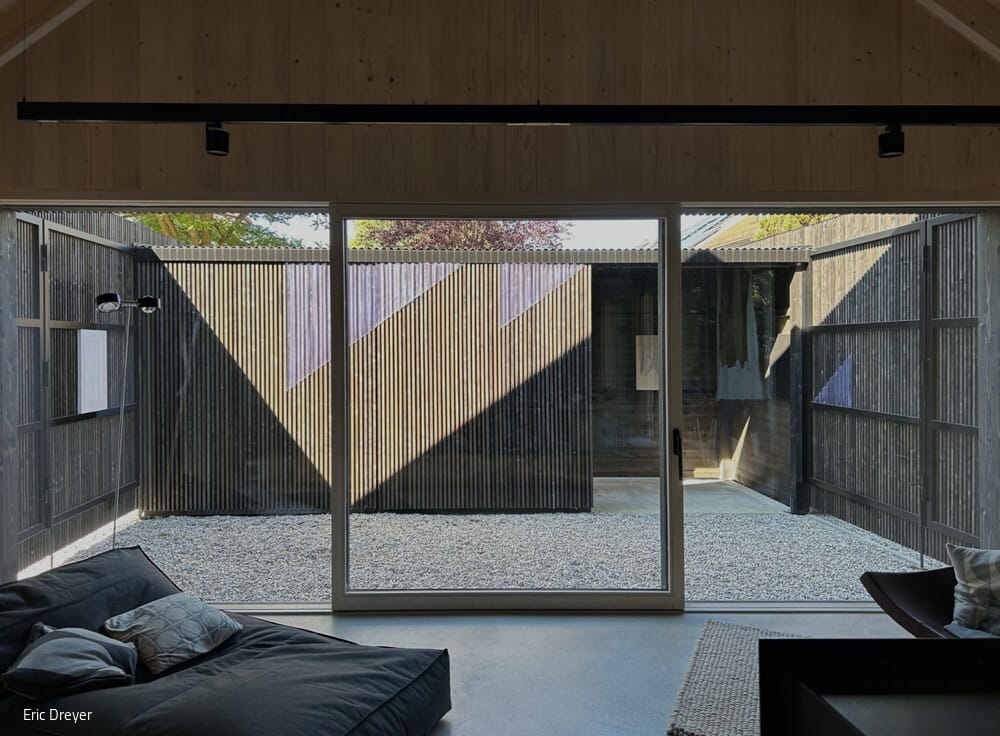
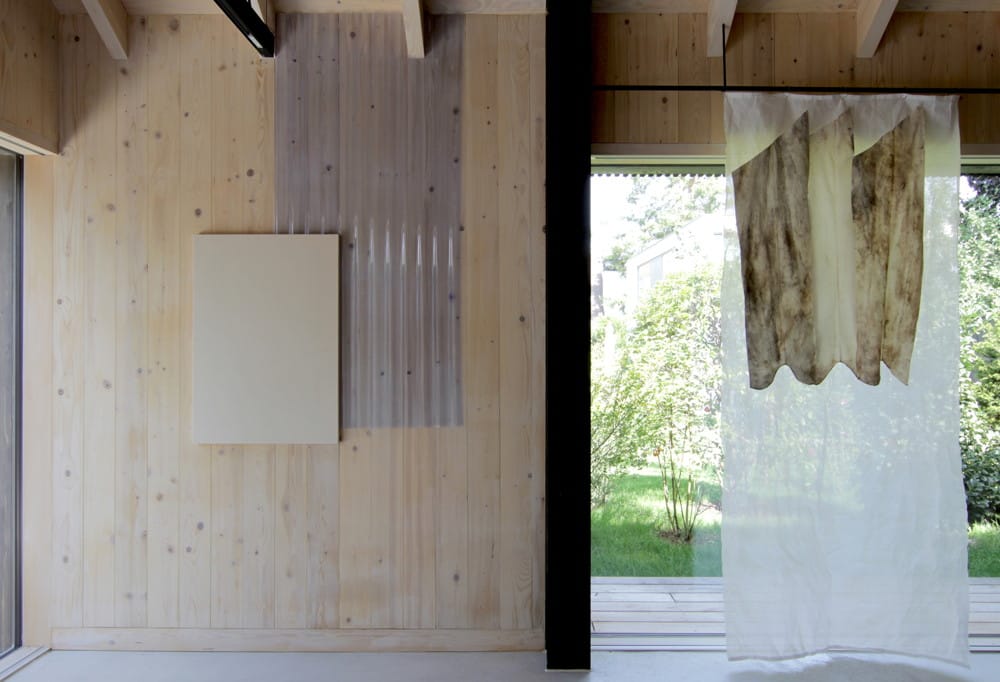
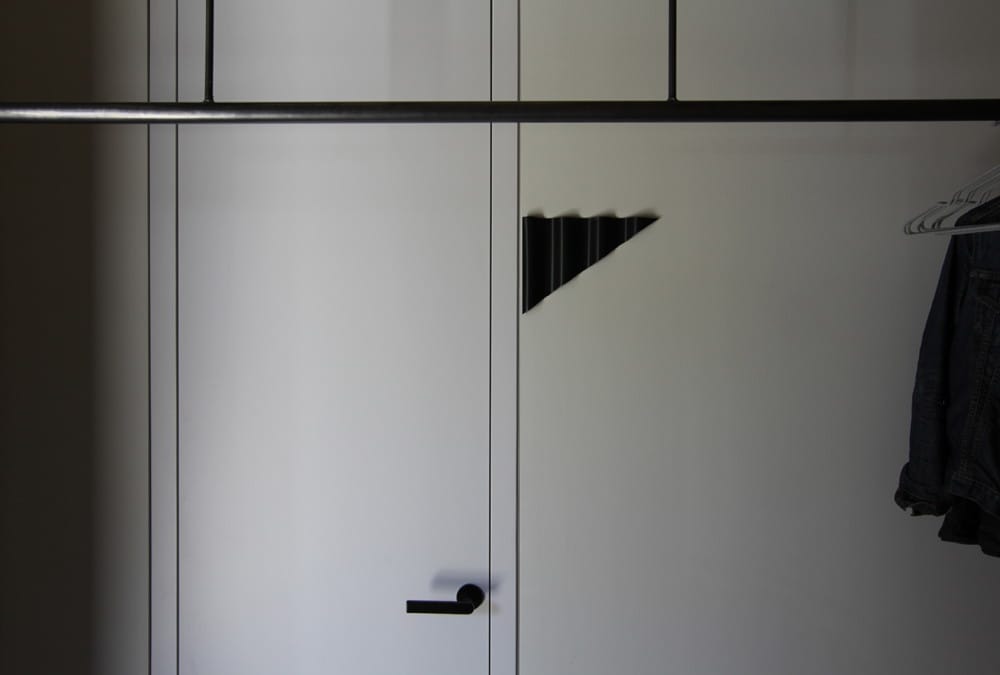
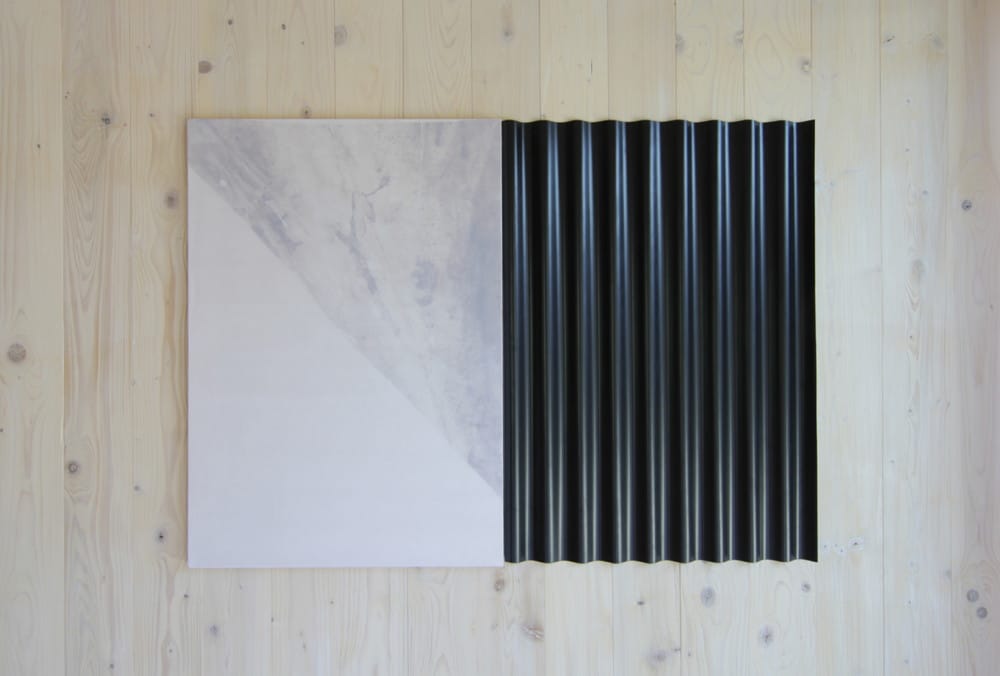
Art plays an essential role here—specifically, a site-responsive commission by Berlin-based artist Linus Rauch. Spending several days in residence, Rauch developed a concept intimately tied to the building's architecture and the sun's passage. Working characteristically with humble, often literally "found" materials, Rauch introduced transparent plastic panels in the patio whose corrugated surface echoes the roofing material. The undulating wave form mirrors a sine curve—a visual thesis that names the work "Sinus." This motif recurs throughout the interior and patio, positioned with such precision that shifting sunlight continuously redraws the interplay of light and shadow. A scrap of fabric Rauch discovered during a hike—likely from a discarded parasol—bears the same sine curve, becoming a curtain and subject for several paintings. These recurring elements weave through the entire house, creating a dialogue between shelter and art, each enlivening the other.
www.neutardschneider.com
www.linusrauch.com
Photography Credits:
Eric Dreyer
www.erikdreyer.de
(Published in CUBE Munich 04|23)
Glass House with Special Effects
A Head-Turning Design That Masquerades as a Single-Family Home
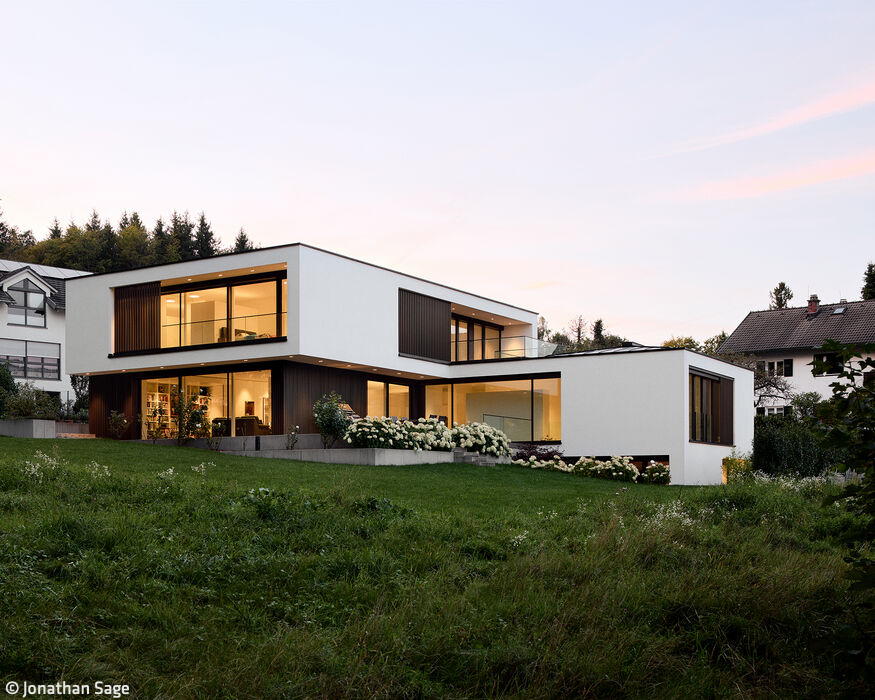
Hillside with Lake View
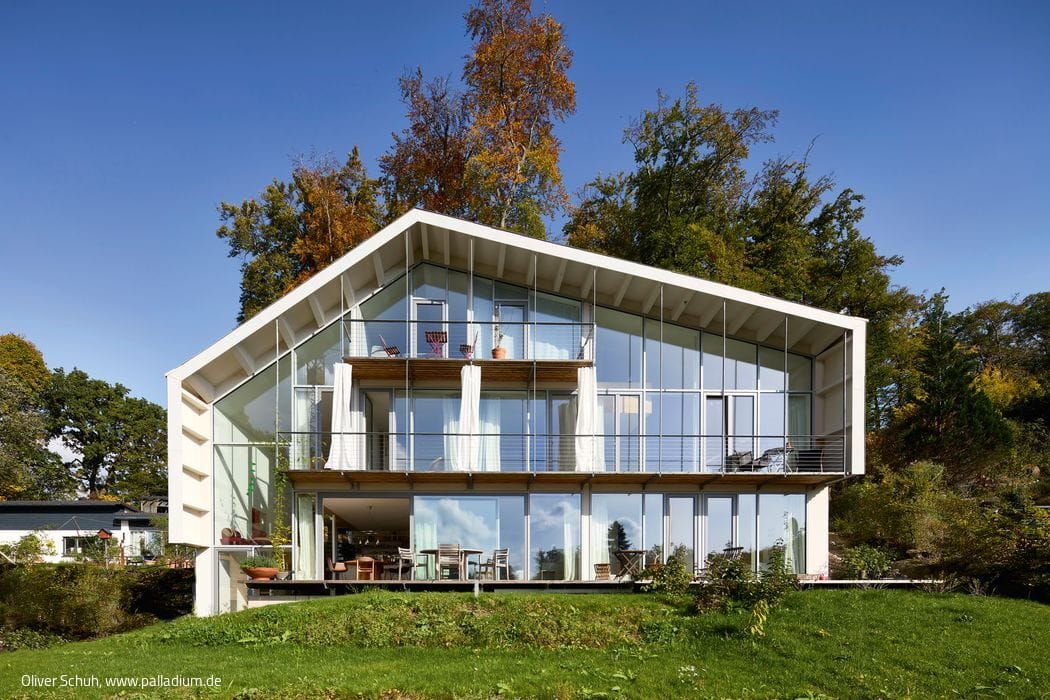
This luxury residence possesses everything the discerning owner seeks: a commanding location—and remarkably, much more besides.
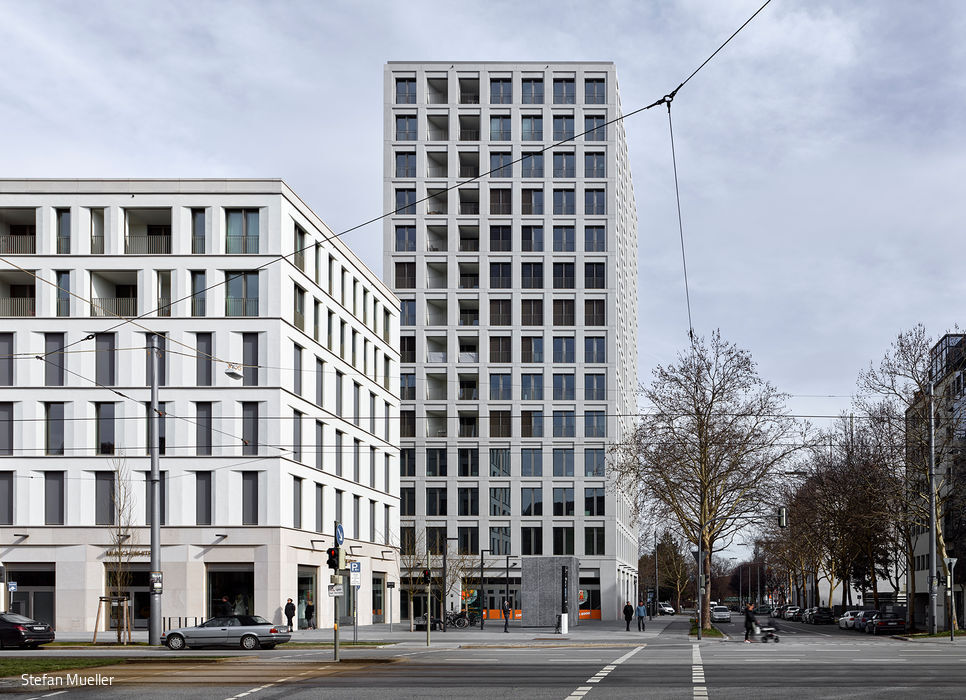
Gateway to Schwabinger Tor
Chicago's Original Skyscraper Reimagined for Today
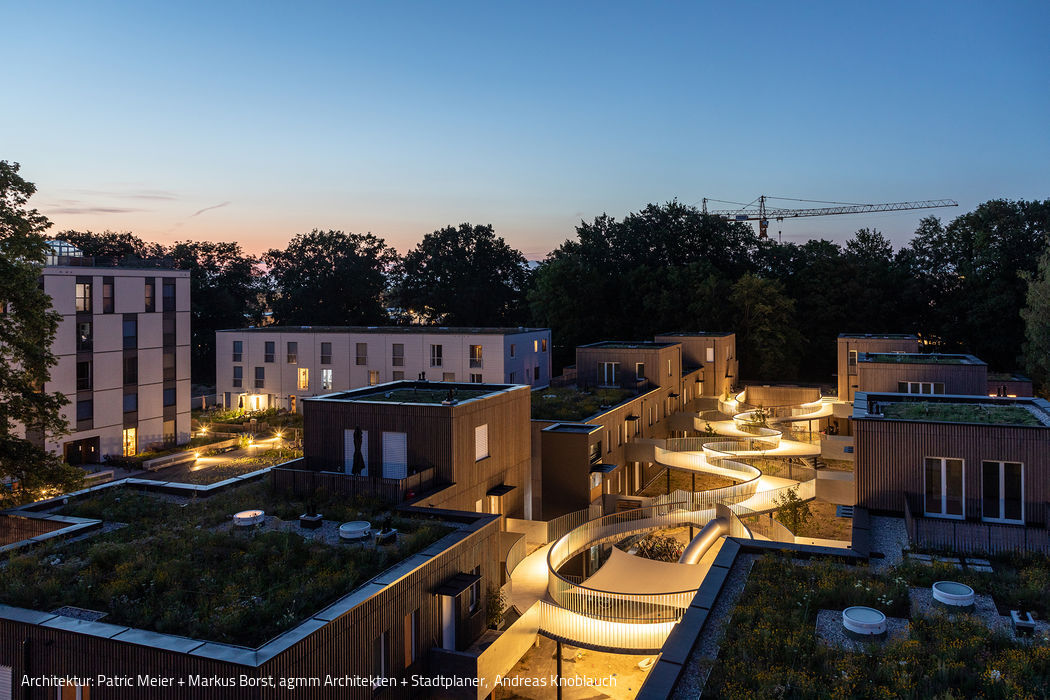
Timber Takes Center Stage
Timber-Built Model Settlement on the Former Prinz-Eugen Site