


Density with Purpose
A neighbourhood in north-east Düsseldorf that creates new living space while preserving green open areas
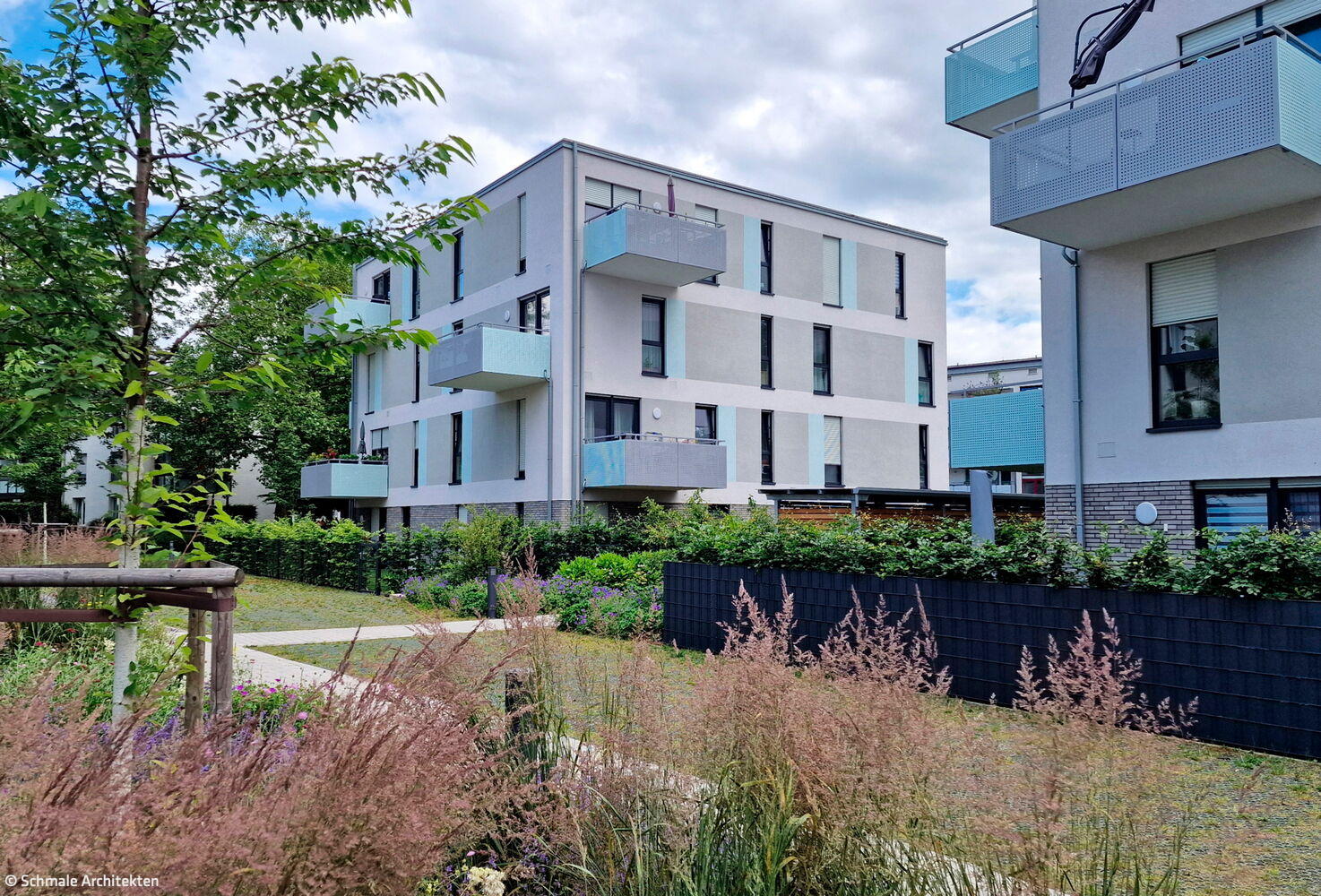
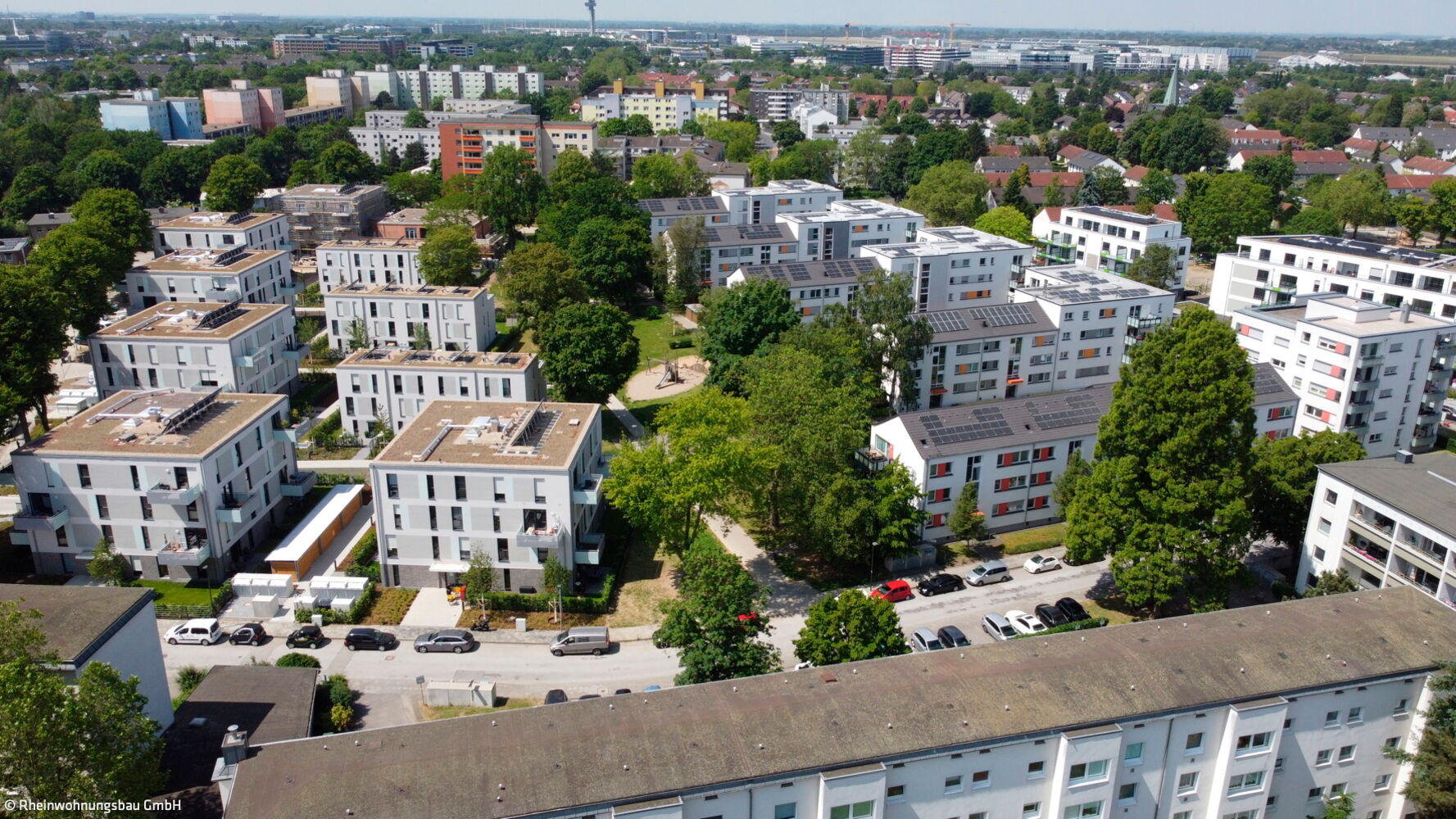
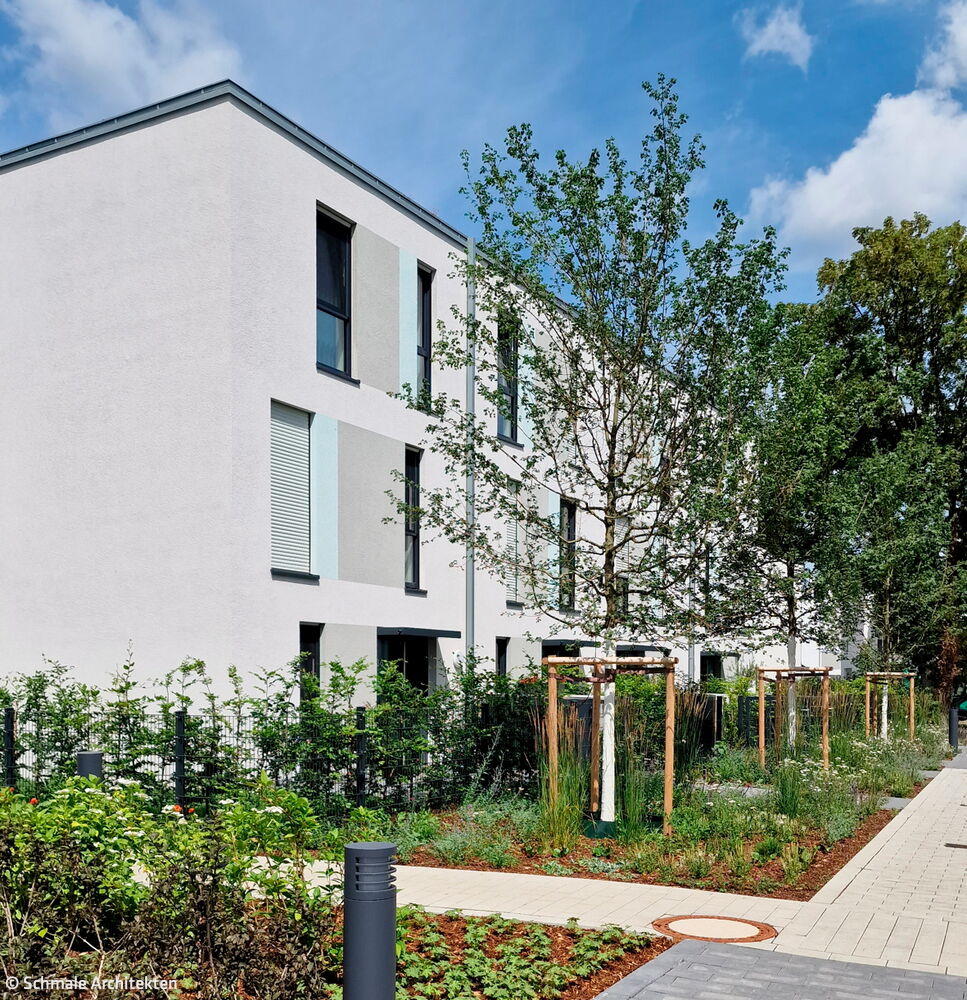
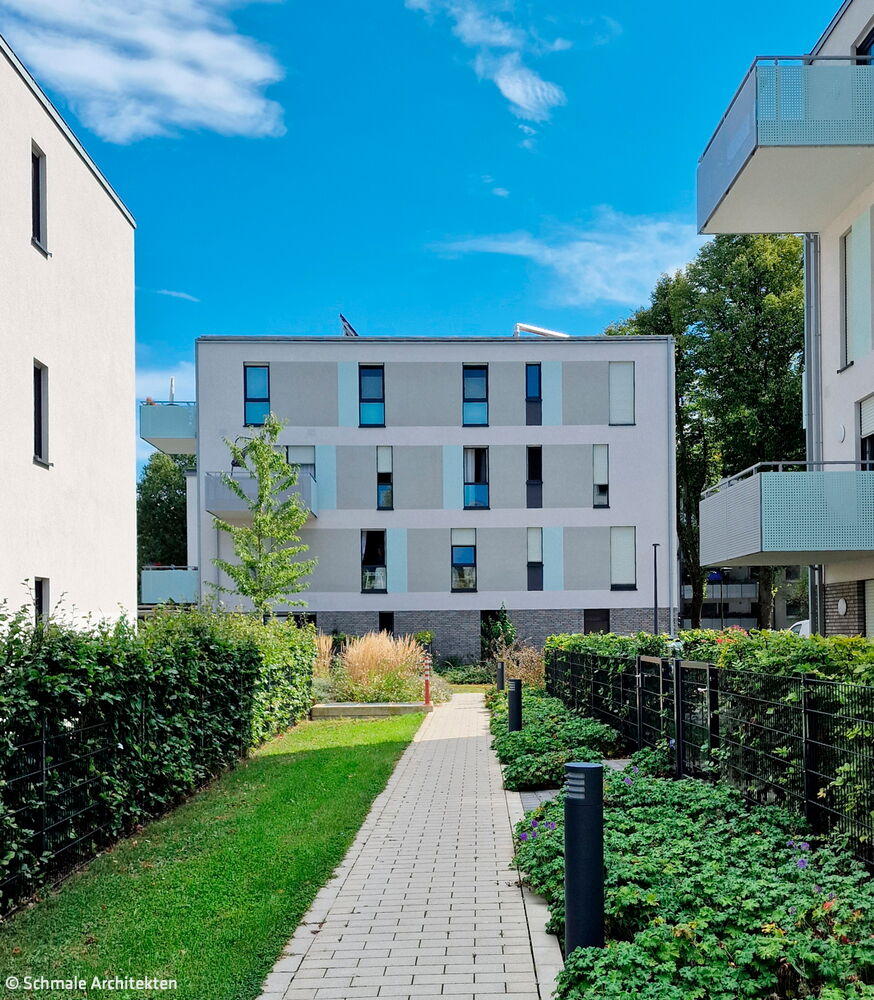
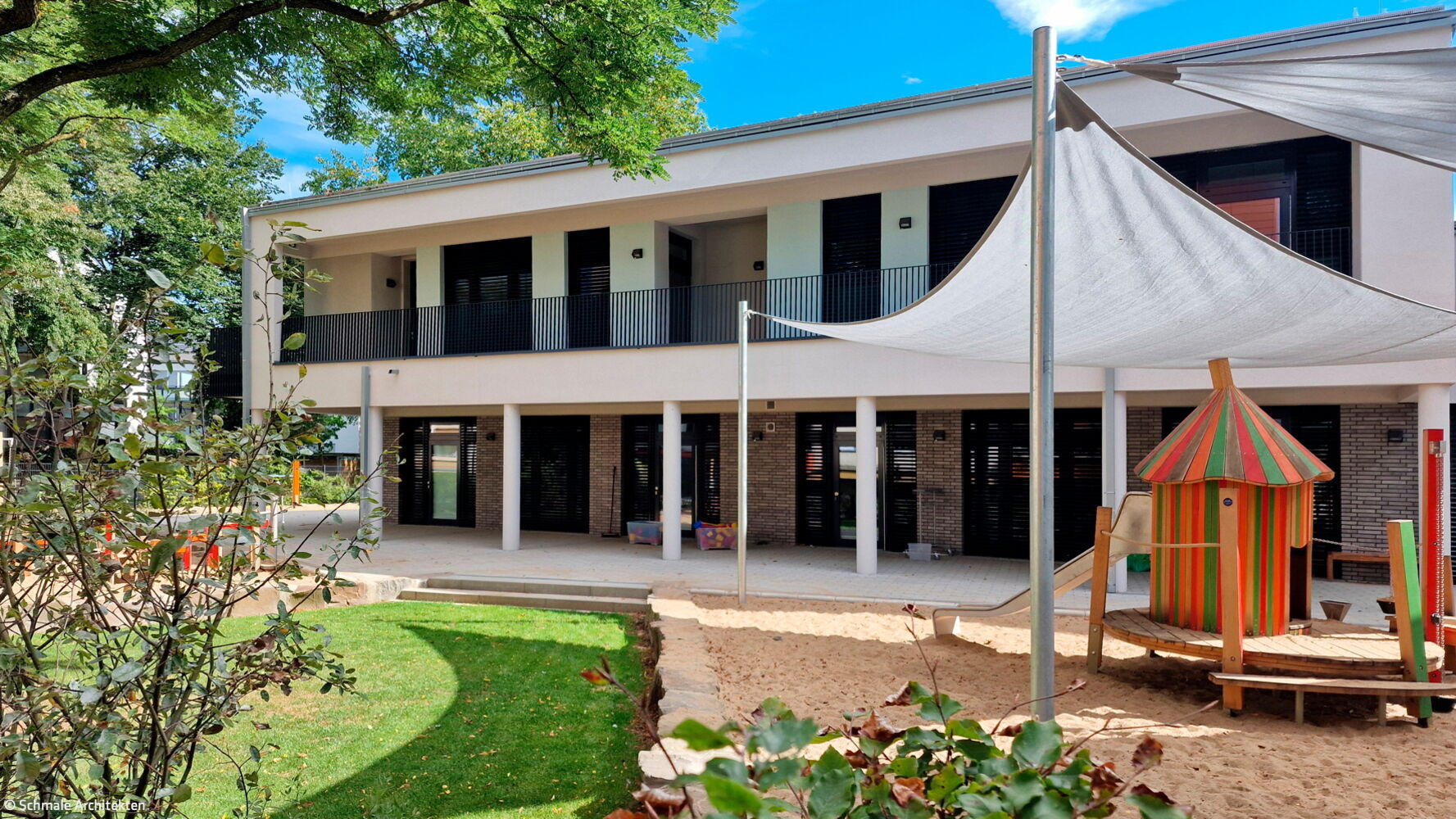
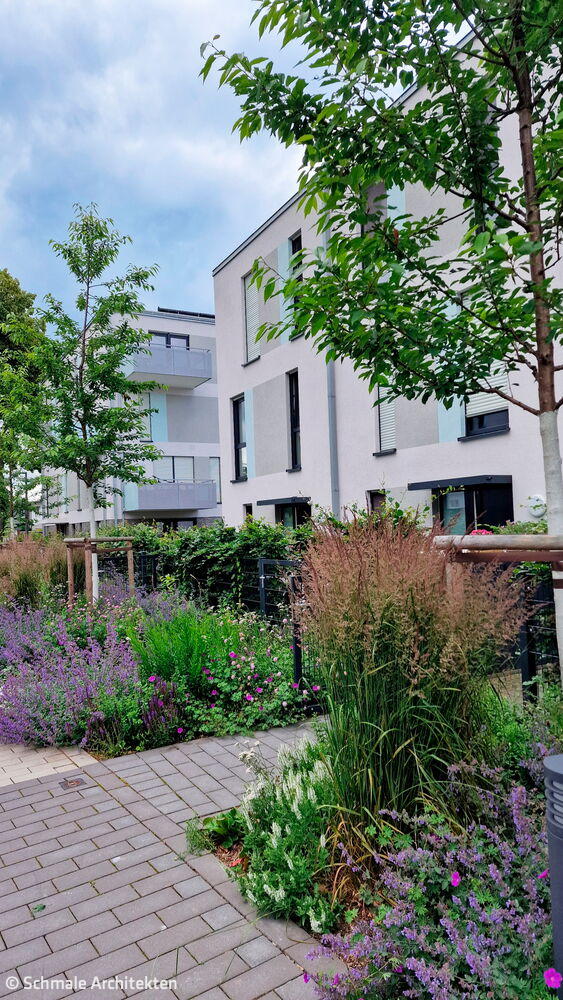
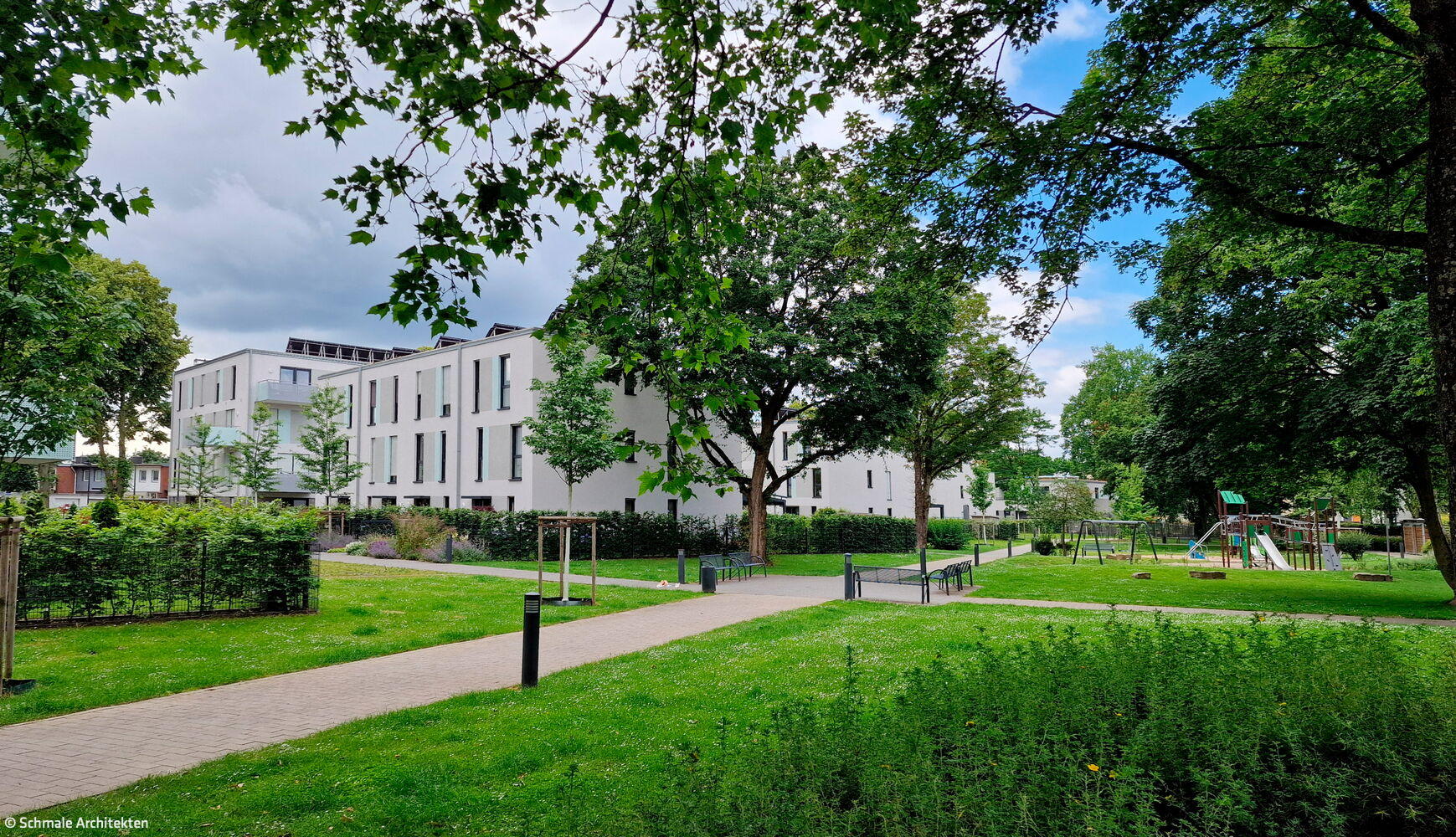
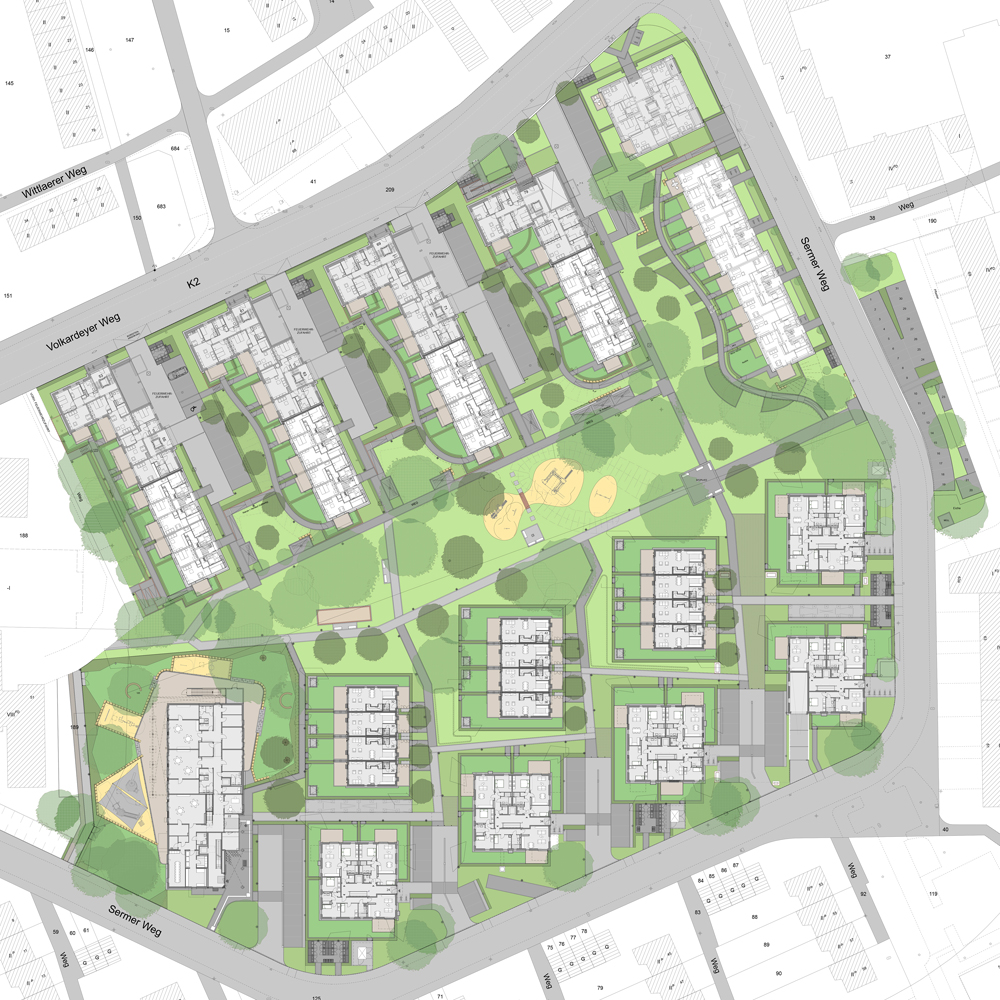
The "Sermer Weg/Volkardeyer Weg" neighbourhood project in Lichtenbroich demanded vision and patience: Düsseldorf's Rheinwohnungsbau didn't simply want to modernize the 1960s housing stock—they set out to selectively demolish and rebuild it. In the first two construction phases, hector3 architekten both renovated and replaced the existing row buildings. From 2017, Schmale Architekten of Grevenbroich took the helm for phase three, designing additional residential buildings and a daycare facility with one guiding principle: safeguard and enhance the settlement's mature green spaces. This integrated approach—combined with the sustainable, monolithic construction methods employed—earned the project the prestigious 2024 German Building Owners' Prize in the "Replacement New Construction" category. The original terraced buildings along Sermer Weg gave way to five four-storey point towers. Within the neighbourhood's core, a series of lower-rise terraced housing blocks were strategically positioned to leave the existing landscaping and generous tree canopy largely undisturbed, preserving the green heart of the quarter. The residential architecture strikes a refined balance: clean, minimalist forms paired with façades that play vertically-oriented windows against a timeless colour palette. The neighbourhood embraces generational diversity through a mix of publicly subsidized and privately financed apartments, owner-occupied units, and an integrated daycare. In total, 243 new homes were created, predominantly one to four-room units. An inclusive residential support group, community meeting hub, and on-site medical practice further activate the neighbourhood. Universal accessibility throughout all rental units enables residents of all ages to live and thrive together. Beyond fostering social diversity, the development distinguishes itself through rigorous energy performance and climate resilience: portions meet the 3I standard (max. 35 kWh/m²a), with new construction achieving KfW 40 certification and renovations meeting KfW 55 requirements. This is realized through centralized wood-pellet heating for space and hot water, heat-recovery ventilation, solar thermal systems, and the consistently monolithic construction of hollow-brick new buildings—negating the need for additional insulation. A central underground parking structure and strategic reduction of sealed surfaces maximize permeable and planted areas, enhancing rainwater infiltration, biodiversity, and the neighbourhood's microclimate. The retained mature trees provide natural cooling while supporting the urban climate. Green spaces and playgrounds function as shared recreational anchors, fostering community connection.
www.rheinwohnungsbau.de
www.schmale-architekten.com
Photos: Schmale Architekten
(Published in CUBE Düsseldorf 04|24)
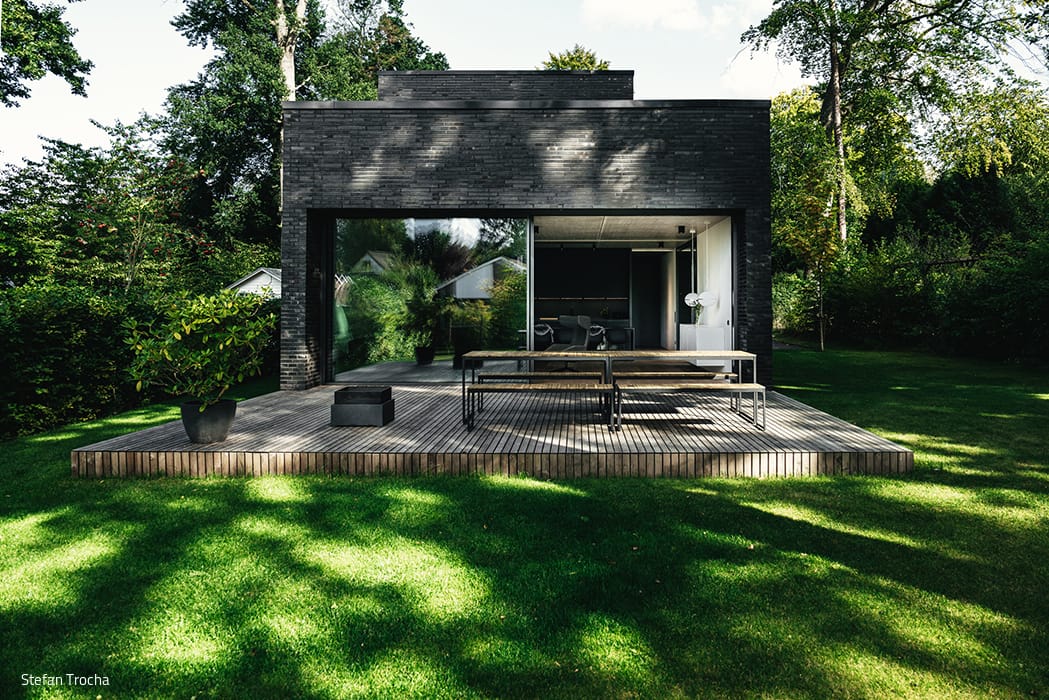
Among Ancient Oaks
A Minimalist Home Composed Around the Trees

Between Casual and Artful
New hotel with distinctive interior design opens downtown
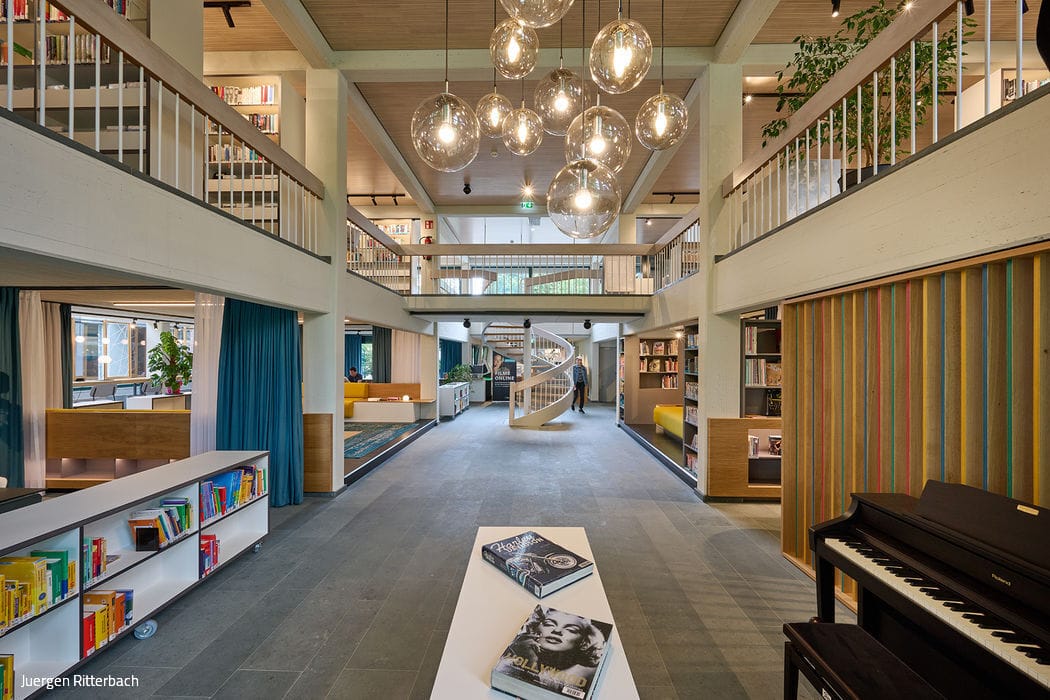
Public Living Room
Monheim's redesigned library draws stylistic inspiration from the existing building's architecture.
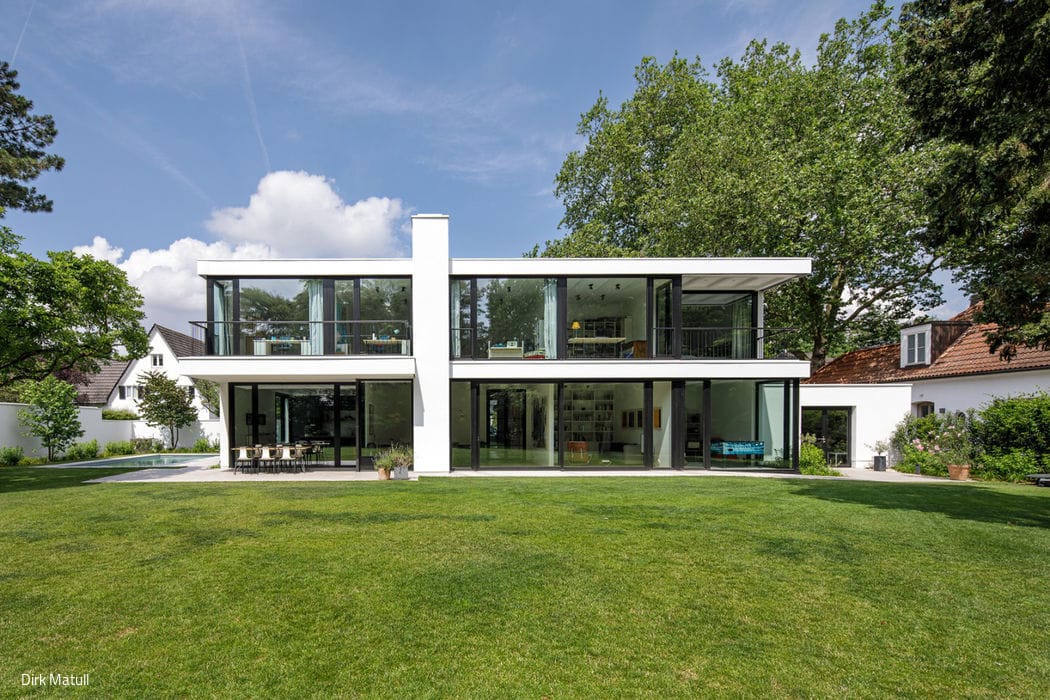
Bungalow 2.0
A modern family home that excels through sustainable timber construction