


Sustainable and Purposeful
The new Duisburg food bank was designed with both function and cost-efficiency in mind.


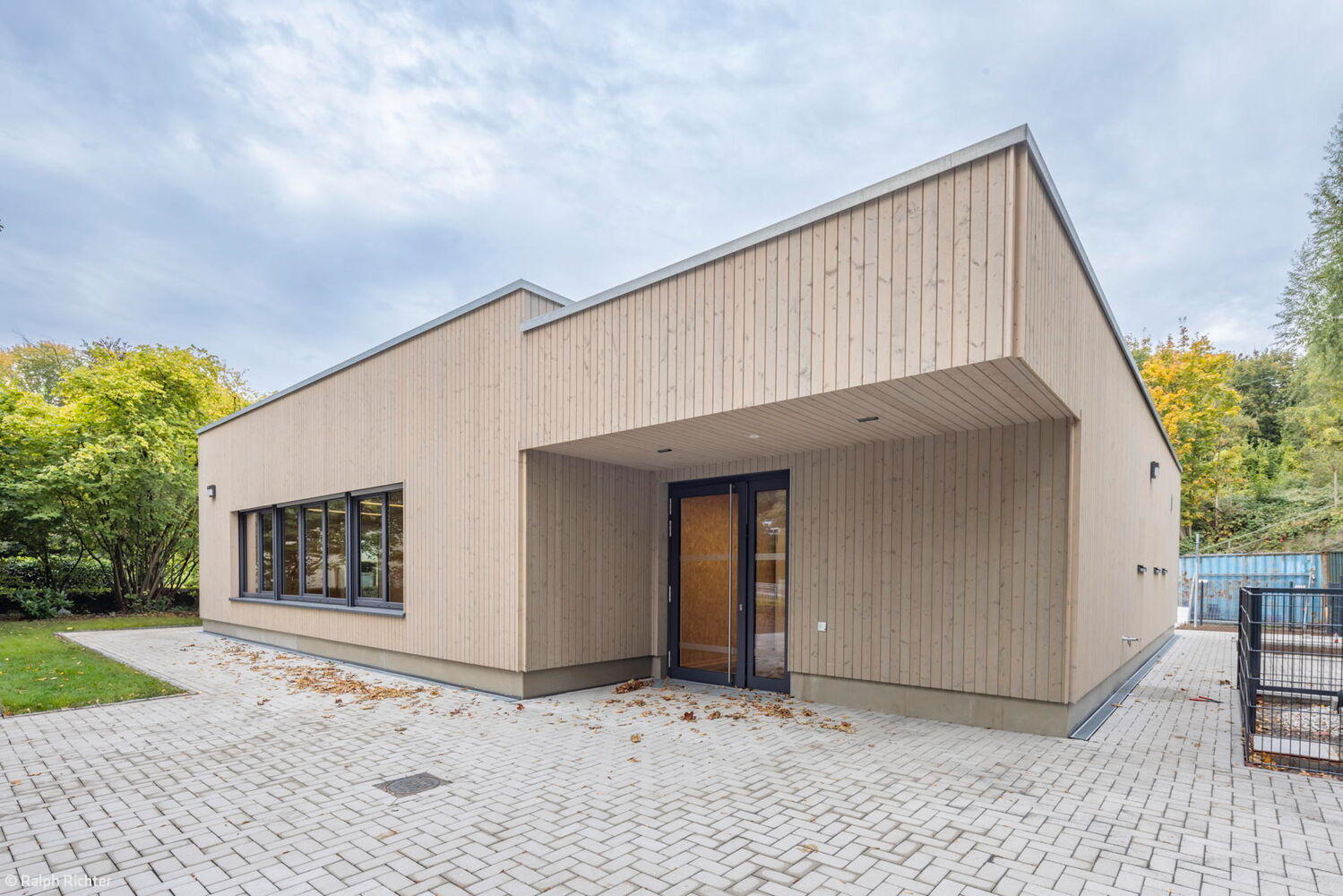


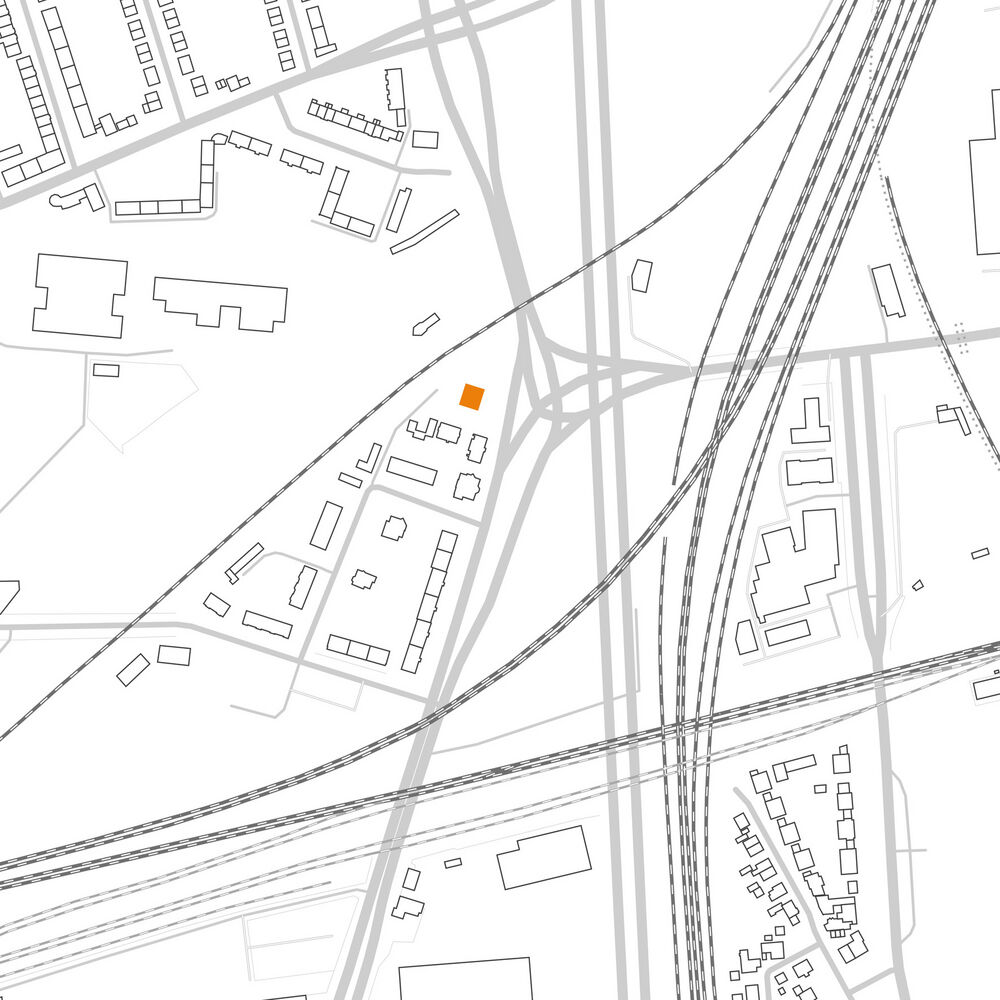

When the Duisburg food bank burned down at the end of 2018, the search for a new home ultimately led back to the original site in Wanheimerort. With approximately 1,500 m² of land and strong economic viability, it proved the ideal location to rebuild the facility, which now serves roughly 4,800 Duisburg residents. From day one, the Duisburg-based firm Druschke Architektur partnered with the food bank through every phase—from site selection to design planning. Securing financing and submitting the building permit took until 2023, but the outcome was worth the wait. Dirk Druschke reflects on the process: "We stayed flexible, replanning as needed and approaching existing furnishings and unexpected challenges with practical, solution-focused thinking. This adaptability allowed us to open the building just ten months after breaking ground."
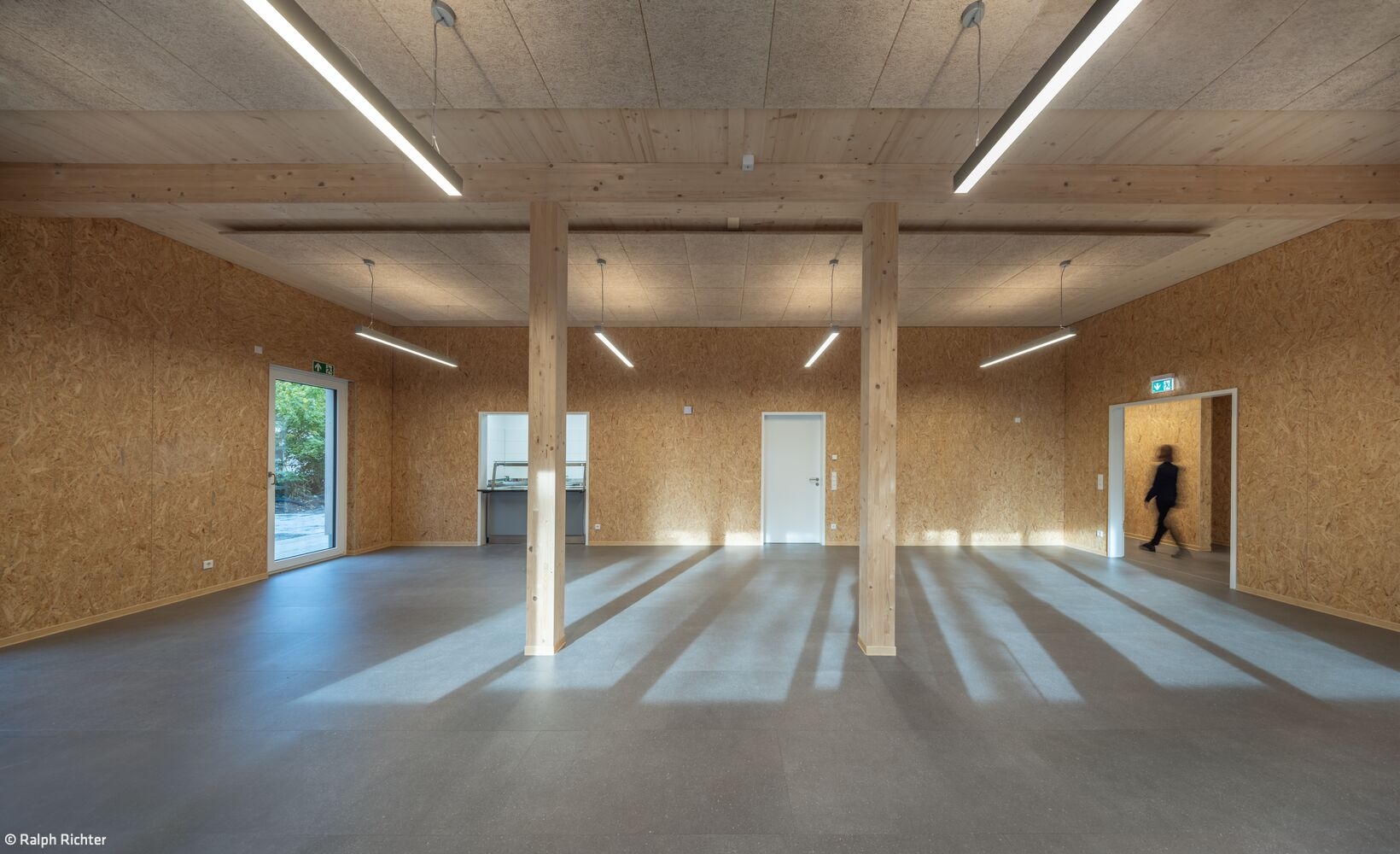
The newly landscaped site features barrier-free access and is bounded by steel fencing and hedging. Beyond the welcoming forecourt stands a single-storey timber cube, wrapped in Nordic spruce and nestled behind mature trees. Its clean lines are interrupted only by a recessed entry. Inside, a luminous central corridor connects all facilities—dining hall, restrooms, and showers. The heart of the operation is the dining hall, its suspended linear lights casting warm illumination across the space, which opens onto Düsseldorfer Strasse through double doors. Robust untreated OSB panels clad the walls, while natural wood-wool acoustic panels line the ceiling. The kitchen and staff quarters nestle alongside. Support functions and storage are housed in a rear structure that also accommodates deliveries.
This forward-thinking building serves a vital purpose—providing warmth and refuge for those in need—while delivering sustainability on multiple fronts. Constructed as a timber structure with a ventilated facade, the timber frame and solid wood ceilings were prefabricated off-site (including windows and electrical outlets) for efficiency, then assembled quickly with minimal neighborhood disruption. The green roof is complemented by photovoltaic panels and an air-to-water heat pump system. Compared to conventional construction using brick and concrete, this approach achieves approximately 30% CO₂ reduction.
Photos:
Ralph Richter
www.gurkenland.de
(Published in CUBE Ruhrgebiet 04|24)
Do Not Disturb
A meticulously crafted timber house, engineered for energy efficiency and designed around the lives of those who inhabit it.
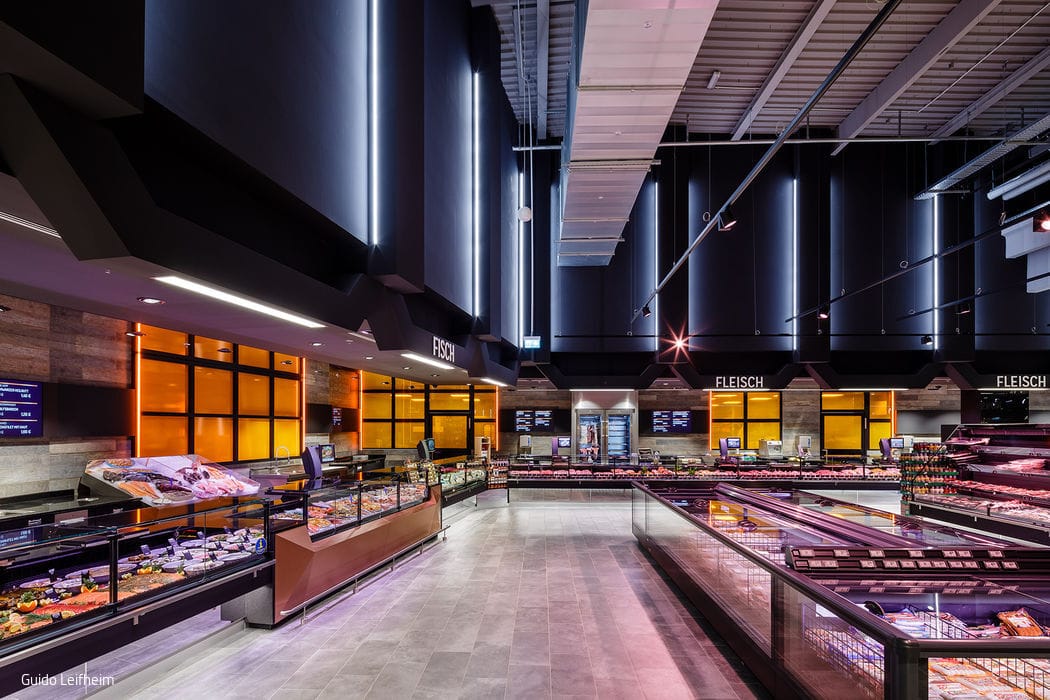
Don't Overshadow the Space
Clean industrial design lets the products shine
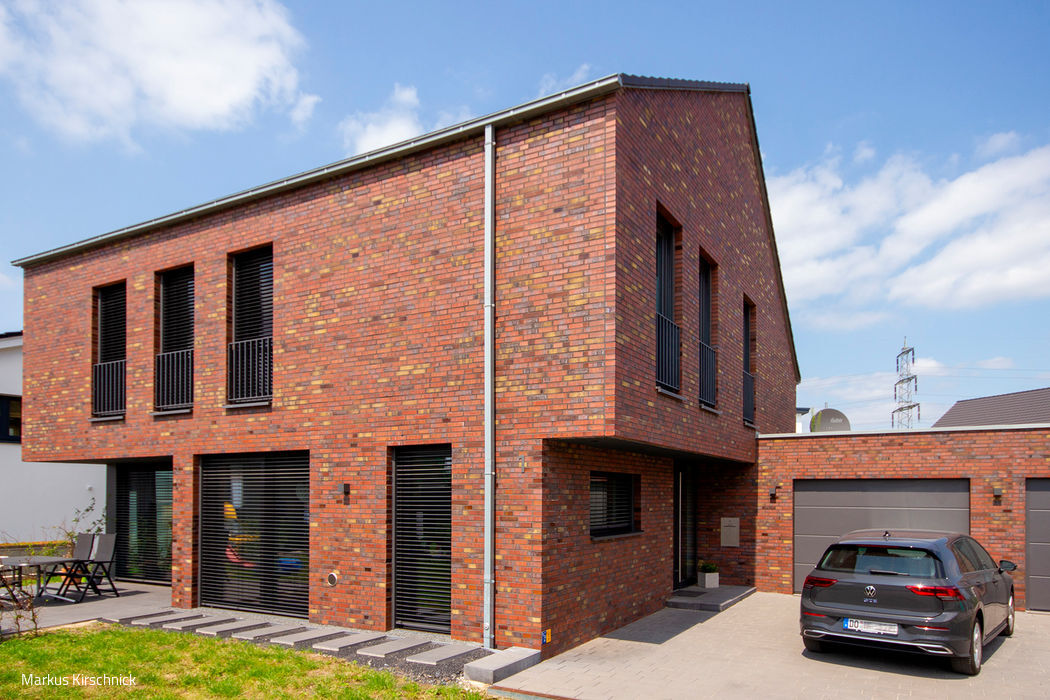
Boldly Pitched
A detached home: balancing rigor and refinement
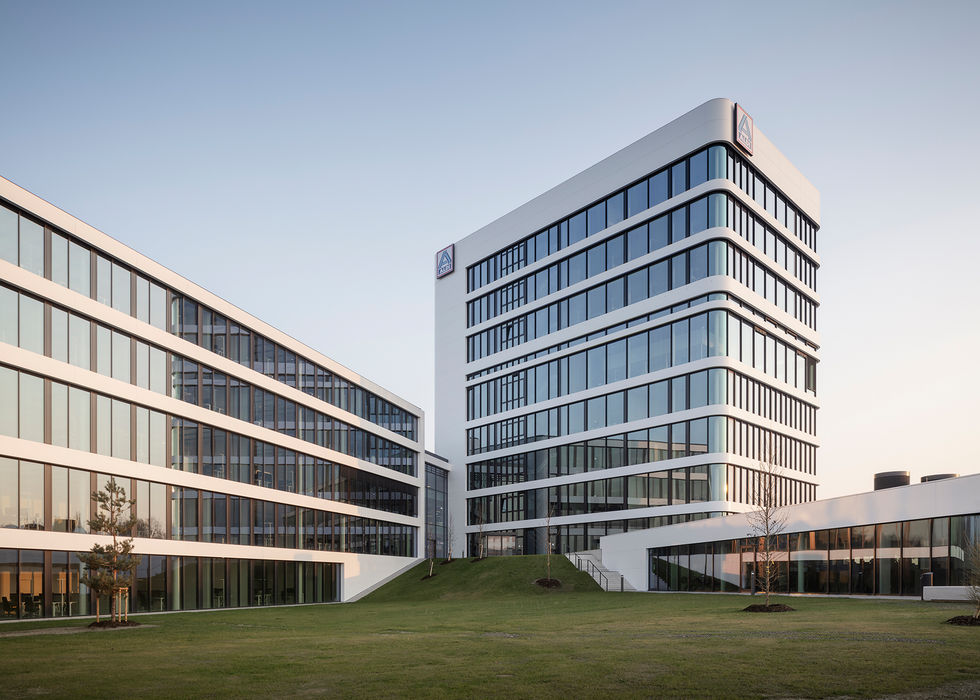
Designed for Tomorrow
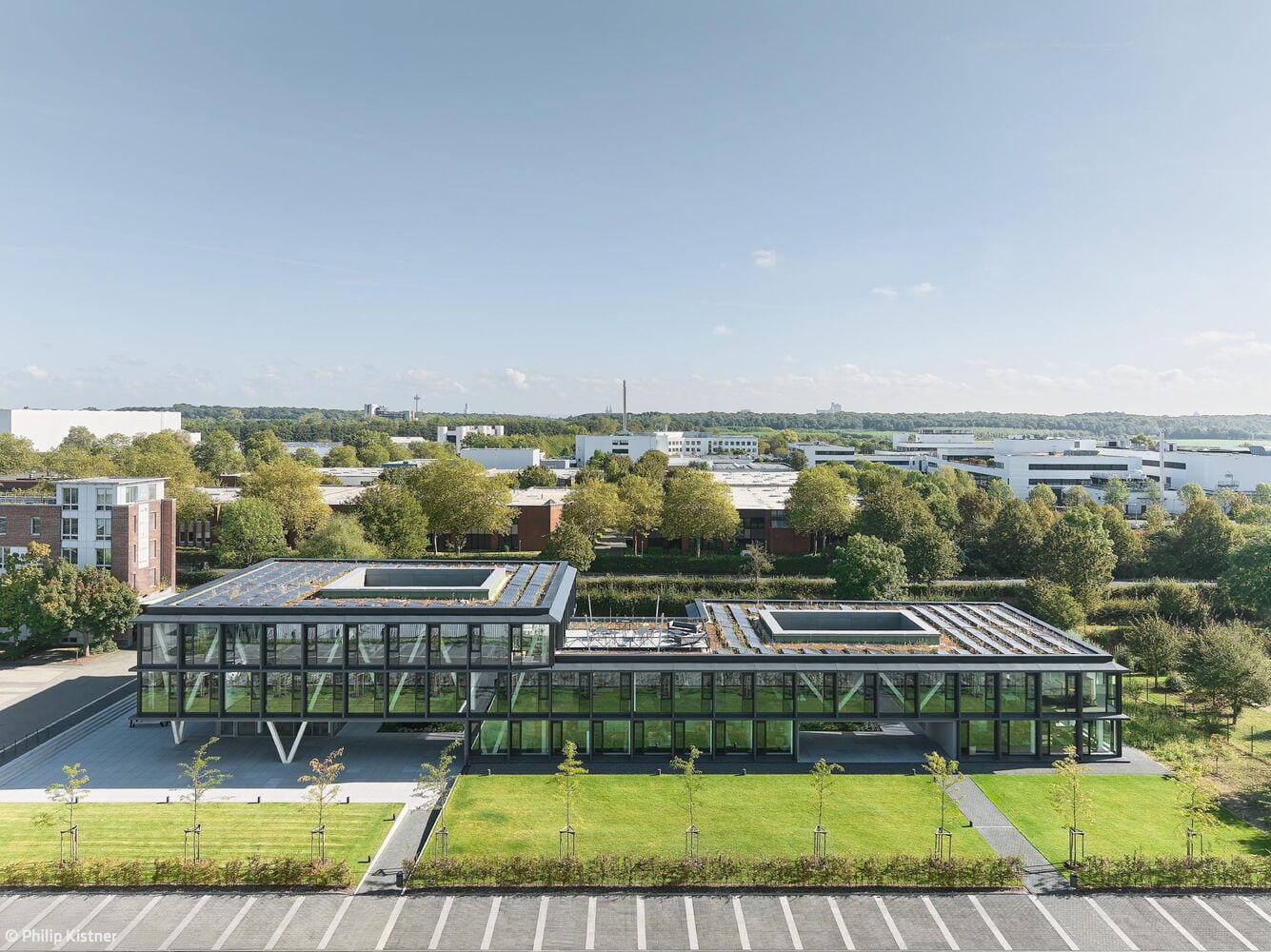
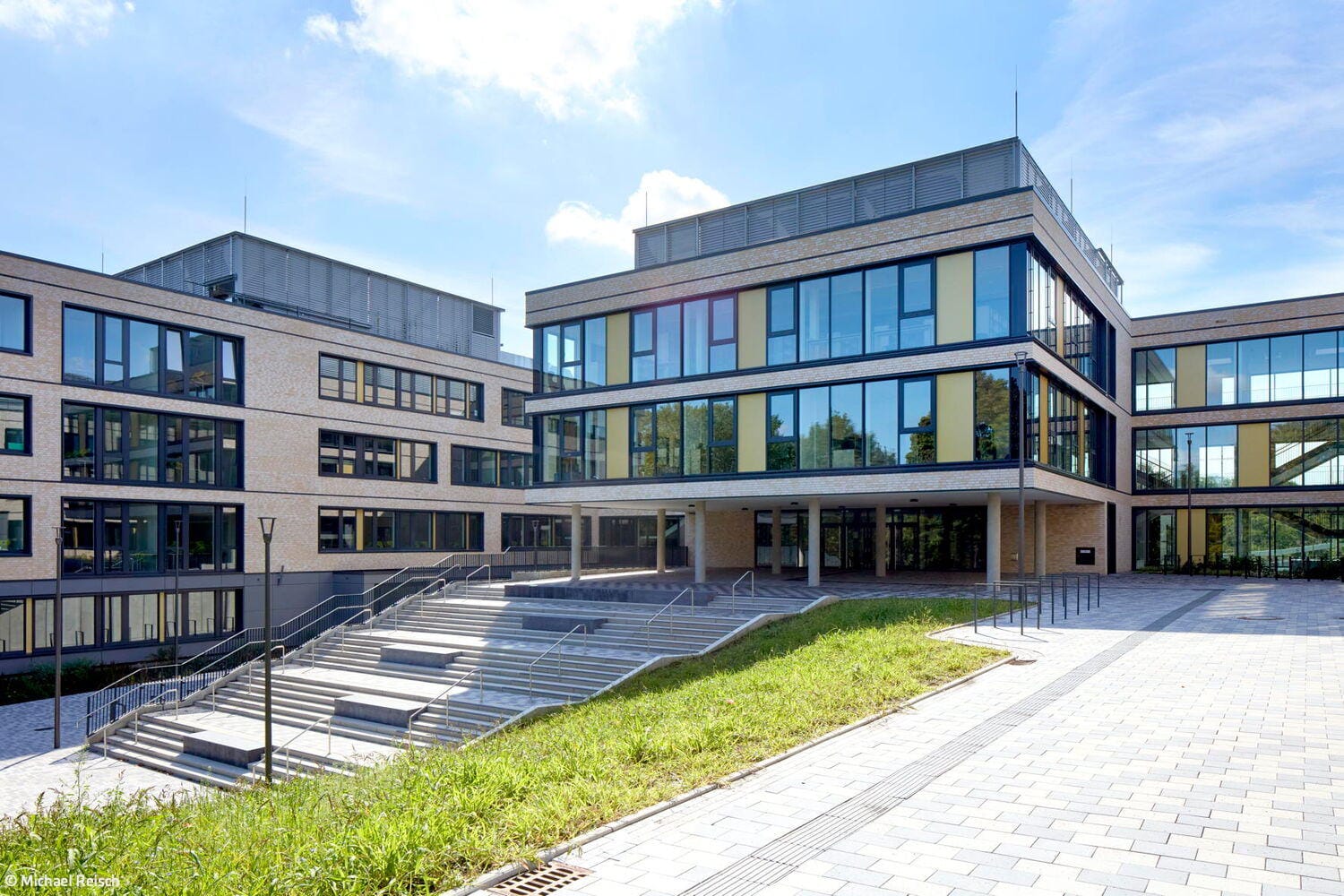
The architecture of Aldi Nord Campus fosters collaboration and embodies sustainable design principles.